Have you noticed your Subaru cruise control light flashing on the dashboard and wondered what it means? You’re not alone. This warning is one of the most common concerns reported by Subaru owners, and it often appears unexpectedly, even when the vehicle seems to be driving normally.
Many drivers assume the problem is related to the cruise control system itself. However, in most Subaru models, a flashing cruise control light is actually a warning that another issue has been detected by the vehicle’s engine management system. As a safety measure, Subaru automatically disables cruise control whenever certain faults are present, helping prevent potential performance or drivability problems from becoming more serious.
The situation can be frustrating. You may be asking yourself whether it’s safe to continue driving, how expensive the repair might be, or why the warning appeared in the first place. In some cases, the cause may be as simple as a loose gas cap. In others, it could point to a sensor failure, engine-related fault code, or electrical issue that requires further diagnosis.
In this guide, we’ll explain what a flashing Subaru cruise control light means, the most common causes behind it, how to diagnose the problem, and the most effective ways to fix it. By the end, you’ll have a clear understanding of what to do next and how to avoid unnecessary repair costs.
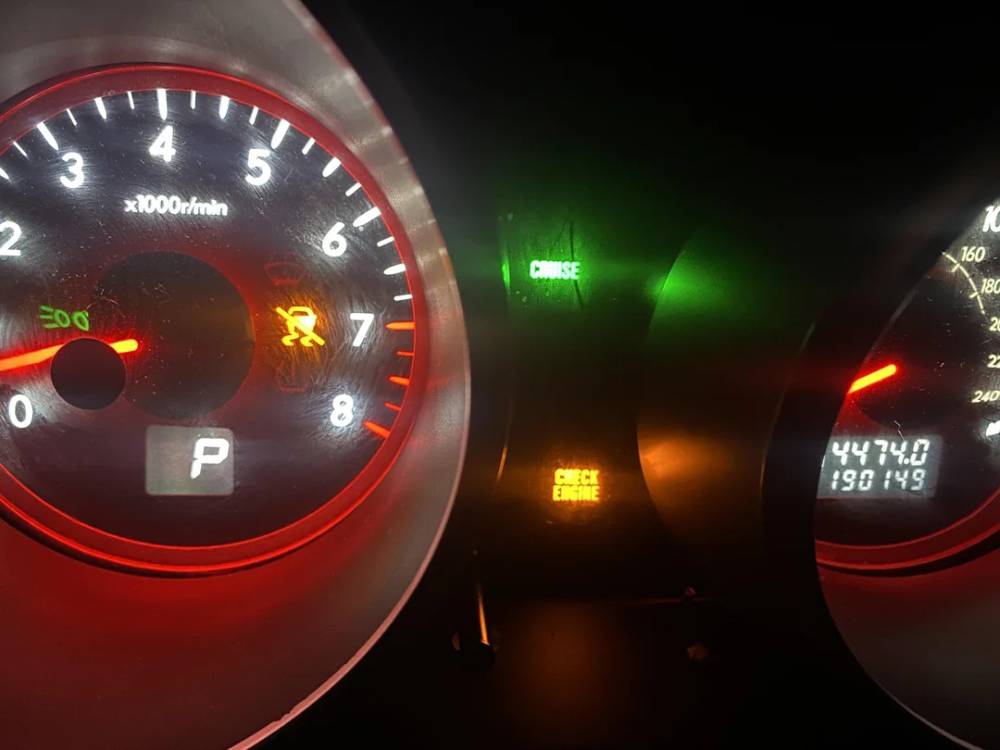
What Does a Flashing Cruise Control Light Mean on a Subaru?
A flashing cruise control light on a Subaru often causes concern because many drivers assume the cruise control system itself has failed. In reality, the warning usually indicates that the vehicle has detected a problem elsewhere and has automatically disabled the cruise control function as a precaution.
Unlike many other manufacturers, Subaru integrates the cruise control system closely with the Engine Control Module (ECM). When the ECM detects certain faults that could affect engine performance, emissions, or vehicle safety, it stores a diagnostic trouble code and disables cruise control. The flashing light serves as a secondary warning designed to alert the driver that the vehicle requires attention.
In many cases, the cruise control light appears alongside other dashboard warnings. The most common combination includes the Check Engine Light, although some Subaru models may also display Vehicle Dynamics Control (VDC), traction control, or ABS warning lights at the same time. This can make the issue appear more serious than it actually is.
The important thing to understand is that the flashing cruise control light is rarely the root problem. Instead, it is often a symptom of another issue that must be diagnosed and repaired. Ignoring the warning may allow a minor problem to develop into a more costly repair later.
Before replacing any cruise control components, the first step should always be identifying any stored diagnostic trouble codes. These codes provide valuable information about the actual fault that triggered the warning and can save significant time and money during the repair process.
Most Common Causes of a Subaru Cruise Control Light Flashing
Several issues can trigger a flashing cruise control light in a Subaru. Understanding the most common causes can help narrow down the problem before visiting a repair shop.
Check Engine Light Related Faults
The most frequent cause is an engine-related fault code. Subaru’s system automatically disables cruise control whenever the Check Engine Light is activated. Problems such as a failing oxygen sensor, ignition misfire, mass airflow sensor malfunction, catalytic converter issue, or EVAP system leak can all trigger the warning.
Loose or Damaged Gas Cap
Many Subaru owners are surprised to learn that a loose gas cap can cause the cruise control light to flash. If the fuel system detects a vapor leak due to an improperly sealed gas cap, the ECM may store an EVAP-related code and disable cruise control. This is often one of the easiest and least expensive issues to fix.
Faulty Brake Light Switch
The brake light switch plays a critical role in cruise control operation. When the driver presses the brake pedal, the switch signals the system to disengage cruise control. A faulty switch can send incorrect signals, preventing cruise control from functioning properly and triggering warning lights.
Wheel Speed Sensor Failure
Modern Subaru vehicles rely on wheel speed sensors for multiple systems, including ABS, traction control, stability control, and cruise control. If one sensor fails, the vehicle may lose accurate speed information, causing the cruise control light to flash.
Electronic Throttle Body Problems
The electronic throttle body regulates airflow into the engine. Carbon buildup, sensor failures, or electrical issues can affect throttle response and trigger fault codes. Since cruise control relies on precise throttle control, the system may be disabled when a problem is detected.
Battery and Charging System Issues
Low battery voltage can create unexpected electronic faults throughout the vehicle. A weak battery, failing alternator, or corroded battery terminals may interfere with communication between modules, leading to multiple warning lights including the flashing cruise control indicator.
Because these causes vary widely in severity, proper diagnosis is essential before replacing parts or attempting repairs.
Subaru Models Commonly Affected
A flashing cruise control light can occur on virtually any Subaru model equipped with electronic cruise control. However, some models and model years tend to generate more owner reports due to common component failures and age-related wear.
Subaru Forester
The Forester is one of the most frequently discussed models when it comes to flashing cruise control lights. Owners commonly report issues related to oxygen sensors, wheel speed sensors, and EVAP system leaks. Vehicles manufactured between 2010 and 2018 appear particularly susceptible due to normal sensor aging.
Subaru Outback
The Outback often experiences cruise control warnings linked to emissions-related fault codes. Loose gas caps, purge valve failures, and EVAP leaks are among the most common causes. Because these issues may not noticeably affect drivability, many owners are surprised when the warning lights appear.
Subaru Crosstrek
The Crosstrek generally maintains a strong reliability record, but sensor-related issues can still trigger cruise control warnings. Wheel speed sensors, brake light switches, and occasional battery voltage problems are among the most commonly reported causes.
Subaru Impreza
Impreza owners sometimes encounter flashing cruise control lights alongside Check Engine Light warnings caused by ignition system faults, misfires, or emissions system problems. These issues often require a diagnostic scan to identify accurately.
Subaru Legacy
The Legacy shares many mechanical and electronic components with the Outback, meaning similar faults can trigger warning lights. Sensor failures and EVAP system issues are commonly reported as vehicles accumulate mileage.
Subaru WRX
Performance-oriented WRX models may experience cruise control deactivation when engine management systems detect tuning-related issues, boost leaks, sensor malfunctions, or ignition faults. Because these vehicles are often modified, diagnosis may require additional attention to aftermarket components.
Regardless of model, the flashing cruise control light follows the same principle: it serves as an alert that another system has detected a fault requiring investigation.
How to Diagnose a Flashing Subaru Cruise Control Light
When the cruise control light begins flashing, proper diagnosis is essential. Replacing parts without identifying the actual cause can lead to unnecessary expenses and frustration. Fortunately, a systematic approach can help pinpoint the problem quickly.
Check for Additional Warning Lights
Start by examining the dashboard carefully. A flashing cruise control light is often accompanied by other warning indicators. The Check Engine Light is the most common companion warning, but ABS, traction control, and Vehicle Dynamics Control lights may also appear.
The combination of warning lights provides important clues about which system is experiencing problems. For example, an ABS light appearing alongside the cruise control warning may suggest a wheel speed sensor issue.
Scan for Diagnostic Trouble Codes
The most effective diagnostic step is connecting an OBD2 scanner to the vehicle’s diagnostic port. This allows you to retrieve stored trouble codes directly from the Engine Control Module.
Even if the vehicle appears to drive normally, the stored codes can reveal hidden problems involving emissions systems, sensors, ignition components, or electrical circuits. Record all codes before clearing them, as they serve as valuable information during repairs.
Inspect the Gas Cap
Because EVAP system leaks are a common cause of Subaru warning lights, inspect the gas cap carefully. Ensure it is tightened properly and check for cracks, worn seals, or physical damage. A defective gas cap is inexpensive to replace and can sometimes resolve the issue immediately.
Test Brake Light Operation
Have someone stand behind the vehicle while you press the brake pedal. Verify that all brake lights illuminate correctly. If the lights behave inconsistently or fail to operate, the brake light switch may require replacement.
Check Battery Condition
Electrical voltage problems can trigger unexpected warning lights. Use a multimeter to test battery voltage. A healthy battery should measure approximately 12.6 volts with the engine off and between 13.7 and 14.7 volts while the engine is running. Values outside this range may indicate battery or charging system problems.
Following these diagnostic steps can help identify the underlying fault before investing in unnecessary repairs.
How to Fix a Subaru Cruise Control Light Flashing
The correct repair depends entirely on the fault that triggered the warning. Because the flashing cruise control light is usually a secondary symptom, addressing the root cause is the key to restoring normal operation.
Repair the Underlying Problem
Once diagnostic trouble codes have been identified, repairs should focus on the affected system. For example, replacing a faulty oxygen sensor, repairing an EVAP leak, correcting an ignition misfire, or installing a new wheel speed sensor may eliminate the warning.
Many owners make the mistake of focusing solely on the cruise control system itself. In reality, the cruise control feature is often functioning correctly and has simply been disabled by the vehicle’s computer.
Clear Diagnostic Trouble Codes
After repairs are completed, stored fault codes should be cleared using an OBD2 scanner. In some cases, the warning lights will disappear automatically after several driving cycles. However, manually clearing the codes often speeds up the process.
If the warning returns shortly after clearing the codes, the original issue may still be present or another related fault may exist.
Replace Faulty Sensors
Sensors play a major role in Subaru’s engine management and safety systems. Components commonly responsible for flashing cruise control lights include oxygen sensors, wheel speed sensors, throttle position sensors, and mass airflow sensors.
Replacing a failed sensor often restores normal vehicle operation and prevents additional warning lights from appearing.
Repair Electrical Problems
Electrical faults can be more challenging to diagnose because they may occur intermittently. Damaged wiring, corroded connectors, poor grounding points, or weak batteries can all contribute to communication errors between vehicle modules.
A thorough electrical inspection may be necessary if warning lights appear randomly or continue returning after repairs.
Perform Preventive Maintenance
Routine maintenance can reduce the likelihood of future warning lights. Regular inspections of battery terminals, ignition components, air filters, and emissions system parts help ensure the vehicle’s systems continue operating correctly.
Addressing small issues early often prevents larger and more expensive repairs in the future.
Repair Cost Estimates
One of the first questions Subaru owners ask after seeing a flashing cruise control light is how much the repair will cost. The answer depends entirely on the underlying cause. Some problems can be resolved for only a few dollars, while others require more significant repairs.
A loose or improperly tightened gas cap is often the least expensive solution. In many cases, simply securing the cap correctly costs nothing. If replacement is needed, a new gas cap typically costs between $10 and $30.
Brake light switch replacement is generally affordable, with most repairs ranging from $50 to $200 depending on labor rates and vehicle model.
Oxygen sensor replacement is one of the more common repairs associated with Subaru warning lights. Depending on sensor location and vehicle configuration, costs typically range from $150 to $500.
Wheel speed sensor replacement generally falls between $100 and $400. Costs vary based on sensor accessibility and whether additional diagnostic work is required.
Throttle body repairs can be more expensive. Cleaning may cost less than $200, while replacement of the entire unit can exceed $800 in some situations.
Battery replacement costs typically range from $100 to $300. If the alternator is failing, repair expenses can increase significantly, often reaching $300 to $1,000 depending on the model and labor involved.
While these figures provide general guidance, obtaining an accurate diagnosis before approving repairs is the best way to avoid unnecessary expenses. Many warning light issues share similar symptoms, making professional testing an important step when the cause is unclear.
Is It Safe to Drive With a Flashing Subaru Cruise Control Light?
A flashing cruise control light does not automatically mean your Subaru is unsafe to drive. In many situations, the vehicle remains fully operational, and the warning simply indicates that the cruise control function has been temporarily disabled due to a detected fault.
If the vehicle is running smoothly, accelerating normally, and showing no signs of overheating or severe performance issues, it is generally safe to continue driving for a short period while arranging a proper diagnosis. Many Subaru owners discover that the underlying cause is a relatively minor issue such as a loose gas cap, an aging oxygen sensor, or a brake light switch malfunction.
However, the warning should never be ignored indefinitely. The cruise control light is often linked to the engine management system, which means the root cause may affect vehicle performance, fuel efficiency, emissions, or long term reliability. Delaying repairs can allow a minor fault to become a more expensive problem over time.
There are situations where driving should be avoided until the vehicle is inspected. If the Check Engine Light is flashing rather than remaining steady, this may indicate an active engine misfire capable of damaging the catalytic converter. Rough idling, hesitation during acceleration, loss of power, unusual noises, burning smells, or excessive exhaust smoke are also signs that immediate attention is required.
The safest approach is to view the flashing cruise control light as an early warning system. While the vehicle may still be drivable, identifying and repairing the underlying fault as soon as possible will help maintain performance, reduce repair costs, and prevent future breakdowns.
Frequently Asked Questions
Why is my Subaru cruise control light flashing but the car drives normally?
This is one of the most common situations reported by Subaru owners. The vehicle’s computer may have detected a fault that does not immediately affect drivability. As a precaution, Subaru disables cruise control until the issue is resolved. The vehicle may continue operating normally even though a diagnostic trouble code is stored.
Why are the cruise control light and Check Engine Light on at the same time?
Subaru vehicles are designed to disable cruise control whenever certain engine related fault codes are present. The flashing cruise control light is often a secondary warning triggered by the same issue that activated the Check Engine Light.
Can a loose gas cap cause the cruise control light to flash?
Yes. A loose, damaged, or improperly installed gas cap can create an EVAP system leak. When the vehicle detects the leak, it may trigger a Check Engine Light and disable cruise control until the fault is corrected.
Will disconnecting the battery reset the warning light?
Disconnecting the battery may temporarily clear stored fault codes on some Subaru models. However, if the underlying problem still exists, the warning light will usually return after a short period of driving.
Can a weak battery cause a flashing cruise control light?
Yes. Low battery voltage can affect communication between electronic control modules and sensors. In some cases, this may result in multiple warning lights appearing on the dashboard.
How much does it cost to fix a flashing cruise control light?
Repair costs vary depending on the cause. A loose gas cap may cost little or nothing to fix, while sensor replacements, throttle body repairs, or charging system repairs can range from a few hundred dollars to over one thousand dollars.
Should I clear the codes before diagnosing the problem?
No. Diagnostic trouble codes provide valuable information about the fault that triggered the warning. Clearing them before recording the codes can make troubleshooting more difficult.
Conclusion
A flashing Subaru cruise control light can be alarming at first, especially when it appears without warning. Fortunately, the issue is often misunderstood. In most cases, the cruise control system itself is not defective. Instead, the flashing light serves as a notification that another fault has been detected somewhere within the vehicle’s engine management, emissions, braking, or electrical systems.
Common causes include oxygen sensor failures, EVAP system leaks, faulty brake light switches, wheel speed sensor problems, throttle body issues, and battery related electrical faults. Because many of these issues can produce similar symptoms, obtaining diagnostic trouble codes is the most effective way to identify the true source of the problem.
Ignoring the warning may lead to reduced fuel efficiency, poor vehicle performance, or more expensive repairs in the future. On the other hand, addressing the issue early can save both time and money while helping maintain the reliability Subaru vehicles are known for.
If your Subaru cruise control light is flashing, begin by checking for other warning lights and scanning the vehicle for trouble codes. A simple diagnosis today could prevent a major repair tomorrow. By understanding what the warning means and responding appropriately, you can keep your Subaru running safely and efficiently for years to come.