If you’ve recently started your car only to see the message “Stop/Start Unavailable Service Stop/Start System” displayed on the dashboard, you’re not alone. This warning is one of the most common issues reported by drivers of modern vehicles equipped with automatic engine stop/start technology. While the message can be alarming, it doesn’t always indicate a serious mechanical failure. In many cases, the problem is caused by something as simple as a weak battery or temporary operating conditions.
The Auto Stop/Start system is designed to improve fuel efficiency and reduce emissions by automatically shutting off the engine when the vehicle comes to a complete stop, then restarting it when you release the brake or engage the clutch. When the system detects a condition that could affect its safe or reliable operation, it temporarily disables the feature and displays a warning message.
The challenge is that the same warning can be triggered by dozens of different issues, ranging from low battery voltage and faulty sensors to charging system problems, software glitches, or damaged wiring. Without understanding the root cause, many vehicle owners end up replacing expensive parts unnecessarily or paying for repairs they didn’t actually need.
In this comprehensive guide, you’ll learn what the “Stop/Start Unavailable Service Stop/Start System” warning really means, the most common reasons it appears, how to diagnose the issue yourself, effective reset methods, estimated repair costs, and when it’s time to seek professional assistance. By following this step-by-step guide, you’ll be able to identify the problem more confidently and potentially save both time and money.
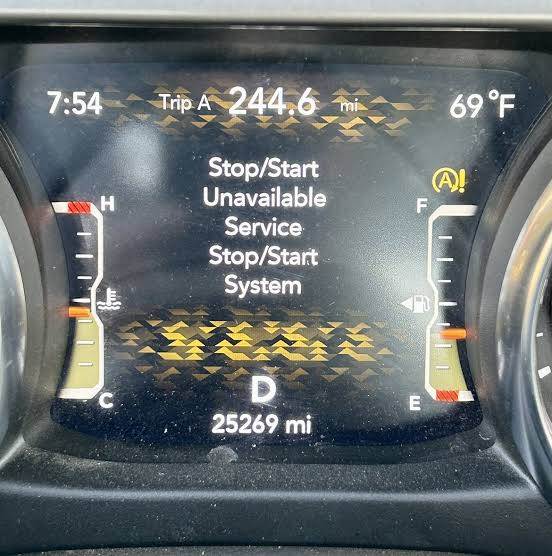
The message “Stop/Start Unavailable Service Stop/Start System” means that your vehicle has temporarily disabled the automatic engine stop/start feature because one or more operating conditions are not being met, or because the control system has detected a fault.
The Auto Stop/Start system is designed to reduce fuel consumption and exhaust emissions during short stops. When the vehicle comes to a complete stop, such as at a traffic light, the system may shut off the engine automatically. Once the driver releases the brake pedal or presses the accelerator, the engine restarts within a fraction of a second.
Although the feature appears simple from the driver’s point of view, it depends on several components working together. These may include the main battery, an auxiliary battery, the alternator, the brake pedal switch, the hood latch sensor, engine temperature sensors, the cabin climate control system, the battery monitoring sensor, and the vehicle’s electronic control modules.
If any of these systems cannot guarantee a smooth and reliable restart, the vehicle disables the stop/start function. The engine will usually continue running normally, but it will no longer shut off automatically when the vehicle stops.
In many cases, the warning does not mean that the engine itself is failing. It often means the vehicle is protecting battery power or avoiding a situation in which the engine might not restart reliably.
For example, the Auto Stop/Start system may remain unavailable when:
The engine has not reached its normal operating temperature.
The battery charge is too low.
The cabin requires strong heating or air conditioning.
The steering wheel is turned sharply.
The driver’s seat belt is unfastened.
The hood is not fully closed.
The vehicle is parked on a steep incline.
The windshield defroster is operating.
The outside temperature is extremely hot or cold.
A door is open.
These are often normal operating limitations rather than mechanical failures. In these situations, the warning may disappear once the battery is sufficiently charged, the engine warms up, or the cabin reaches the selected temperature.
However, the phrase “Service Stop/Start System” is more significant than a simple “Stop/Start Not Ready” message. It may indicate that the vehicle has stored a diagnostic trouble code related to the battery, charging system, sensor network, wiring, or control module.
The exact wording varies by manufacturer. Jeep, Chrysler, Dodge, RAM, Ford, Chevrolet, GMC, Land Rover, Jaguar, and other brands may use slightly different messages. Some vehicles display “Stop/Start Unavailable,” while others show “Auto Start/Stop Fault,” “Service Start/Stop System,” or “Start/Stop System Malfunction.”
Regardless of the wording, the meaning is generally similar. The system has either detected unsuitable operating conditions or found a fault that prevents safe operation.
It is also important to understand that the warning may appear even when the vehicle starts normally. A battery can still have enough power to start the engine while being too weak to support repeated stop/start cycles. Automatic stop/start systems place greater demands on the battery than conventional starting systems. For this reason, many vehicles use enhanced flooded batteries or absorbed glass mat batteries designed for frequent engine restarts.
A conventional battery may not provide the correct charging performance or cycle life. If the wrong battery type has been installed, the system may remain unavailable even though the engine starts without difficulty.
The warning can also appear after battery replacement. Some vehicles require a battery registration, battery monitoring reset, or relearn procedure. Without this step, the vehicle may continue using old battery data and incorrectly assume that the new battery is weak.
The best way to interpret the message is to look at the entire situation. If the warning appears briefly during cold weather and then disappears after driving, it may be related to battery charge or temperature. If it remains on every time the vehicle is started, a stored fault is more likely.
You should also pay attention to other symptoms. Dim headlights, slow cranking, electrical warnings, flickering dashboard lights, or repeated battery problems may point to a weak battery or charging system issue. A check engine light may indicate an engine sensor problem that is also disabling the stop/start feature.
In most cases, the vehicle can still be driven because the stop/start function is a fuel saving feature rather than a system required for normal engine operation. However, the underlying cause should not be ignored. A weak battery, failing alternator, damaged sensor, or wiring fault may eventually create starting problems or affect other electronic systems.
Several conditions can trigger the “Stop/Start Unavailable Service Stop/Start System” message. Some are temporary and harmless, while others require diagnosis and repair.
1. Weak or Failing Battery
A weak battery is one of the most common reasons the Auto Stop/Start system becomes unavailable.
The system must be confident that the battery has enough stored energy to restart the engine every time the vehicle stops. If battery voltage, state of charge, temperature, or estimated battery health falls below a programmed threshold, the control module disables the feature.
This can happen even when the vehicle still starts normally. Starting the engine once requires a short burst of power. A stop/start system may restart the engine many times during a single trip, so it requires a battery that can handle repeated cycling.
Common signs of a weak battery include slow engine cranking, dim interior lights, electrical warnings, reduced accessory performance, and a stop/start function that works inconsistently.
Short trips can make the problem worse. If the vehicle is driven for only a few minutes at a time, the alternator may not have enough time to restore the energy used during startup. Over time, the battery state of charge gradually decreases.
Cold weather also reduces battery performance. During winter, a battery that seemed acceptable in warm weather may no longer meet the requirements of the stop/start system.
Battery age matters as well. Many automotive batteries begin losing capacity after several years, although actual life depends on climate, driving habits, vehicle design, and maintenance.
A proper battery test should measure more than resting voltage. A battery may show an acceptable voltage without being able to supply adequate current under load. A conductance test or load test provides a more accurate picture of battery health.
If the battery needs replacement, the correct type and capacity must be installed. Vehicles designed for AGM batteries should generally receive an AGM replacement with the correct cold cranking amps and reserve capacity.
Installing a standard flooded battery in a vehicle designed for frequent stop/start operation may lead to early battery failure, recurring warnings, and unreliable system performance.
2. Intelligent Battery Sensor Problems
Many modern vehicles use an Intelligent Battery Sensor, often called an IBS, to monitor battery voltage, current flow, temperature, charge level, and battery condition.
The sensor is usually attached to the negative battery terminal. It sends information to the vehicle’s battery management system, which uses the data to control charging and determine whether the Auto Stop/Start feature can operate.
If the sensor becomes loose, contaminated, damaged, or electrically disconnected, the control module may receive incorrect battery information. As a precaution, the vehicle disables the stop/start system.
Corrosion around the battery terminal can interfere with sensor readings. A poorly tightened battery cable may create unstable voltage or communication faults. Damage can also occur during battery replacement if the sensor or connector is handled roughly.
In some cases, the sensor is functioning correctly, but the battery monitoring system has not been reset after a new battery was installed. The vehicle may still calculate battery condition using data from the old battery.
Symptoms of an IBS problem may include inconsistent charging voltage, stop/start warnings, battery saver messages, electrical system warnings, or a battery that seems to discharge unexpectedly.
Diagnosis usually requires a scan tool capable of reading battery management data. A technician can compare the reported battery state of charge with actual battery test results and inspect the sensor for stored fault codes.
Cleaning the terminals, repairing the wiring, reconnecting the sensor, or completing a battery relearn may solve the problem. If the sensor itself has failed, replacement may be required.
3. Alternator or Charging System Problems
The alternator supplies electrical power while the engine is running and recharges the battery after startup. If the alternator is not producing enough power, the battery charge gradually falls and the stop/start system becomes unavailable.
Charging problems may be caused by a failing alternator, worn internal components, a loose drive belt, a damaged pulley, corroded cables, poor ground connections, or a faulty voltage regulator.
Modern vehicles often use computer controlled charging systems. Alternator voltage may change depending on battery condition, electrical demand, engine load, and fuel efficiency strategies. Because of this, a single voltage reading does not always provide a complete diagnosis.
However, consistently low charging voltage, unstable voltage, or a battery warning light should be investigated.
A weak alternator may first cause the Auto Stop/Start feature to stop working before creating more obvious symptoms. This happens because the vehicle disables nonessential functions to preserve enough power for starting and basic operation.
Other signs may include flickering lights, warning messages, a discharged battery, unusual electrical behavior, or an engine that stalls after the battery becomes depleted.
Charging system diagnosis should include battery testing, alternator output testing, voltage drop testing, belt inspection, and examination of the battery cables and ground connections.
Replacing the battery without correcting a charging problem may provide only temporary relief. The new battery can eventually become discharged and the warning will return.
4. Engine Temperature Outside the Required Range
The Auto Stop/Start system usually operates only when the engine is within a specific temperature range.
When the engine is cold, the vehicle may keep it running so it can warm up more quickly, maintain proper lubrication, reduce emissions, and provide cabin heat. During this period, the stop/start feature may display as unavailable without indicating a fault.
The system may also remain disabled if the engine is too hot. Keeping the engine running allows the cooling system, radiator fan, and coolant circulation to control temperature.
A faulty coolant temperature sensor can create a similar condition. If the sensor reports an incorrect temperature, the control module may believe the engine is too cold or too hot for stop/start operation.
Possible signs include inaccurate temperature gauge readings, poor fuel economy, hard starting, cooling fan problems, a check engine light, or unusual engine performance.
Low coolant can also affect temperature readings and engine operation. If the warning appears together with an overheating message, high temperature gauge reading, coolant leak, or steam from the engine compartment, the vehicle should not continue to be driven until the cause is identified.
Additional Causes of the Stop/Start System Warning
5. Faulty Hood Latch Sensor
The stop/start system needs to know that the hood is completely closed before it can shut off and restart the engine automatically.
If the hood latch switch is faulty, misaligned, contaminated, or damaged, the vehicle may incorrectly detect that the hood is open. The system then disables the automatic restart function as a safety measure.
This prevents the engine from restarting unexpectedly while someone is working in the engine compartment.
A faulty hood switch may not always trigger a separate hood open warning. In some vehicles, it only affects the stop/start system. The warning may appear continuously even though the hood is securely closed.
Inspecting the latch area for dirt, corrosion, loose wiring, or physical damage is a useful first step. Sometimes cleaning and lubricating the latch mechanism restores normal operation. In other cases, the switch or entire latch assembly must be replaced.
6. Brake Pedal Switch Malfunction
On vehicles with automatic transmissions, the brake pedal position is a critical input for the Auto Stop/Start system.
The system needs to determine whether the driver is holding the vehicle stationary and when the driver intends to move again. A faulty brake pedal switch may send an incorrect or intermittent signal.
As a result, the engine may not shut off at stops, the stop/start warning may appear, or the system may restart unexpectedly.
A brake switch problem can also affect the brake lights, cruise control, transmission shift interlock, and electronic stability control system.
If the brake lights remain on, fail to illuminate, or respond inconsistently, the brake pedal switch should be inspected immediately. Driving with malfunctioning brake lights is dangerous because other road users may not know when the vehicle is slowing down.
The switch may require adjustment, wiring repair, or replacement. A scan tool can often display live brake pedal data to confirm whether the signal changes correctly when the pedal is pressed and released.
7. High Climate Control Demand
The Auto Stop/Start system may remain unavailable when the heating, ventilation, or air conditioning system requires continuous engine operation.
For example, on a hot day, the engine may need to keep running to power the air conditioning compressor and maintain the selected cabin temperature. During cold weather, the engine may continue running to provide heat.
The windshield defroster can also disable the feature because clear visibility is a higher priority than fuel savings.
This is generally normal behavior and does not indicate a failed component.
You can sometimes confirm this by reducing the climate control demand. Turn down the fan speed, raise the air conditioning temperature slightly, or switch off the defroster. If the stop/start function becomes available afterward, the system is likely operating as designed.
However, a faulty interior temperature sensor, ambient temperature sensor, pressure sensor, or climate control module can incorrectly report excessive heating or cooling demand. In that case, professional diagnosis may be needed.
8. Faulty Engine or Transmission Sensors
The Auto Stop/Start system depends on accurate information from many engine and transmission sensors.
If the engine control module detects a fault that could affect starting, idling, emissions, or drivability, it may disable the stop/start feature.
Possible causes include problems with the mass airflow sensor, manifold absolute pressure sensor, throttle position sensor, crankshaft position sensor, camshaft position sensor, coolant temperature sensor, transmission range sensor, or vehicle speed sensor.
A check engine light often accompanies these faults, although not always.
The stop/start warning may be a secondary symptom rather than the main problem. For example, a faulty crankshaft position sensor can affect engine starting, so the control module disables automatic shutdown to reduce the risk of a failed restart.
Similarly, a transmission fault may prevent the system from confirming that the vehicle is safely stopped in the correct gear.
Scanning all available control modules is important. A basic code reader may only access engine codes, while the relevant fault may be stored in the body control module, battery control module, transmission module, or gateway module.
9. Software or Control Module Issues
Modern stop/start systems rely heavily on software. A temporary communication error, outdated calibration, low voltage event, or interrupted battery connection may cause the system to behave incorrectly.
Sometimes the warning appears after the battery has been disconnected, replaced, or deeply discharged. Control modules may lose learned values or require time to complete self checks.
A software update may be available for certain vehicles if the manufacturer has identified false warnings, charging strategy problems, sensor interpretation issues, or restart concerns.
Updating vehicle software usually requires manufacturer compatible diagnostic equipment. Disconnecting the battery is not a substitute for proper programming and may create additional faults or erase stored settings.
Before replacing expensive modules, a technician should check for diagnostic codes, technical service information, software updates, power supply problems, and network communication faults.
10. Fuse, Wiring, or Ground Connection Problems
A blown fuse, damaged connector, broken wire, or poor ground can interrupt communication between the stop/start system and its supporting components.
Battery terminals and ground straps are especially important. Even minor corrosion or looseness can cause voltage drops that affect sensitive control modules.
Wiring problems may develop near the battery, starter, alternator, hood latch, brake pedal, or areas exposed to moisture and engine heat.
Rodent damage is another possible cause. Chewed wires may create intermittent faults that appear and disappear depending on vibration or temperature.
A visual inspection can identify obvious damage, but many wiring issues require electrical testing. A circuit may appear intact while still having excessive resistance under load.
Replacing a fuse may restore operation temporarily, but a blown fuse should not be ignored. Fuses usually fail because of an overload or short circuit. If the replacement fuse blows again, the underlying electrical problem must be repaired.
The most effective repair depends on the actual cause. Since the same warning can be triggered by many different conditions, replacing parts without testing can become expensive. A systematic diagnosis beginning with the battery, charging system, stored fault codes, terminals, and basic sensor inputs usually provides the fastest path to a reliable solution.
How to Diagnose the Stop/Start System Yourself
Before replacing expensive parts or scheduling a repair appointment, you can perform several basic checks to narrow down the cause of the “Stop/Start Unavailable Service Stop/Start System” warning. A systematic approach not only saves money but also prevents unnecessary component replacement.
Step 1: Check the Battery Voltage
The battery should always be the first component to inspect because it is responsible for the majority of Stop/Start system issues.
Using a digital multimeter, measure the battery voltage after the vehicle has been parked for several hours.
A healthy fully charged battery typically reads around 12.6 volts.
A reading between 12.4 and 12.5 volts usually indicates the battery is partially charged.
Anything below approximately 12.2 volts suggests the battery may be discharged or nearing the end of its service life.
Keep in mind that voltage alone does not determine battery health. An aging battery may still show acceptable voltage while lacking the reserve capacity needed for repeated engine restarts.
If your battery is more than four or five years old, consider having it professionally load tested.
Step 2: Inspect the Battery Terminals
Open the hood and examine both battery terminals.
Look for corrosion, loose clamps, damaged cables, or signs of moisture around the battery.
White or green corrosion deposits can increase electrical resistance and interfere with battery sensor readings.
Clean the terminals if necessary and ensure all connections are tight.
Also inspect the negative battery cable, since many vehicles mount the Intelligent Battery Sensor on this terminal.
Step 3: Check the Charging System
Start the engine and measure charging voltage across the battery terminals.
Most charging systems operate between approximately 13.5 and 14.8 volts under normal conditions.
If the alternator consistently produces less than the expected charging voltage, the battery may never fully recharge, causing the Stop/Start system to remain disabled.
You should also listen for unusual noises from the alternator or drive belt and watch for flickering headlights or electrical accessories that operate inconsistently.
Step 4: Scan for Diagnostic Trouble Codes
An OBD-II scanner is one of the most valuable tools for diagnosing Stop/Start problems.
Even if the Check Engine Light is not illuminated, the vehicle may have stored fault codes related to the battery management system, brake switch, charging system, or body control module.
Professional scan tools provide additional information, including battery state of charge, battery health, charging history, and live sensor data.
Record all stored and pending codes before clearing anything. These codes provide valuable clues about the root cause of the warning.
Step 5: Verify the Hood Latch Switch
Open and close the hood several times to ensure it latches securely.
Inspect the hood latch assembly for dirt, corrosion, damaged wiring, or a loose electrical connector.
A faulty hood switch may incorrectly report that the hood is open, preventing the Stop/Start system from operating.
Step 6: Test the Brake Pedal Switch
Press the brake pedal and verify that the brake lights illuminate immediately.
If the brake lights fail to work properly or remain on continuously, the brake pedal switch may require adjustment or replacement.
A malfunctioning brake switch can disable the Stop/Start system because the vehicle cannot accurately determine when the driver intends to stop or move.
Step 7: Evaluate Driving Conditions
Sometimes the warning appears because operating conditions are not suitable rather than because of a mechanical failure.
Ask yourself the following questions.
Has the vehicle only been driven a short distance?
Is the engine still cold?
Is the outside temperature extremely hot or cold?
Is the air conditioner or heater working at maximum capacity?
Is the windshield defroster turned on?
If the answer to any of these questions is yes, the system may return to normal operation once conditions improve.
Step 8: Look for Additional Warning Lights
The Stop/Start warning rarely appears completely by itself.
Pay attention to other dashboard messages, including:
Battery Warning Light
Check Engine Light
Charging System Warning
Service Vehicle Soon
ABS Warning
Electronic Stability Control Warning
Multiple warning lights often indicate a broader electrical or communication problem rather than an isolated Stop/Start issue.
Step 9: Consider Recent Repairs
Think about any recent work performed on the vehicle.
Did you recently replace the battery?
Was the alternator repaired?
Has the vehicle recently undergone electrical work?
Some vehicles require battery registration or a battery management system reset after battery replacement. If this step is skipped, the Stop/Start system may remain unavailable despite having a brand-new battery.
Following these diagnostic steps can often identify the source of the problem before major repairs become necessary.
How to Reset the Stop/Start System
Many drivers assume the warning can simply be reset by disconnecting the battery or clearing fault codes. While this occasionally works, the reset will only be successful if the underlying problem has already been corrected.
Method 1: Perform a Simple System Restart
The easiest reset method involves allowing all vehicle modules to power down completely.
Park the vehicle safely.
Turn off the engine.
Remove the key or switch off the ignition.
Lock the vehicle.
Wait for approximately ten to fifteen minutes.
Restart the vehicle and check whether the warning has disappeared.
Temporary communication errors sometimes clear after a complete shutdown.
Method 2: Drive the Vehicle Normally
If the warning was triggered by low battery charge, taking the vehicle on a longer drive may solve the problem.
Drive continuously for at least thirty to forty-five minutes at highway speeds whenever possible.
This allows the alternator enough time to recharge the battery.
Avoid relying solely on short city trips, as they often do not provide sufficient charging time.
Method 3: Reset After Battery Replacement
Replacing the battery alone does not always restore Stop/Start functionality.
Many modern vehicles require one or more of the following procedures.
Battery registration
Battery monitoring system reset
Battery adaptation
Energy management recalibration
Battery relearn procedure
These procedures tell the control module that a new battery has been installed and allow it to calculate charging strategy correctly.
Without completing the required reset, the system may continue to operate as though the old battery were still installed.
Method 4: Clear Diagnostic Trouble Codes
If the original fault has been repaired, clearing stored trouble codes with a diagnostic scanner may restore Stop/Start operation.
However, clearing codes without fixing the actual problem usually results in the warning returning after a short period.
Always diagnose first and erase codes only after repairs have been completed.
Method 5: Perform a Software Update
Manufacturers occasionally release software updates that improve battery management, charging strategy, or Stop/Start system operation.
If your vehicle has a known software issue, the dealership or a qualified repair facility may recommend updating one or more control modules.
Software updates should only be performed using approved diagnostic equipment.
Method 6: Disconnecting the Battery
Some owners disconnect the battery for several minutes in an attempt to reset the system.
Although this may temporarily clear certain memory values, it is generally not recommended as the primary repair method.
Disconnecting the battery may erase radio presets, window calibration, seat memory, steering angle calibration, and other learned settings.
More importantly, it does not repair the fault that originally triggered the warning.
When a Reset Will Not Work
No reset procedure will permanently remove the warning if any of the following conditions still exist.
The battery is weak.
The alternator is failing.
A sensor has malfunctioned.
A fuse has blown.
The wiring is damaged.
A control module has stored an active fault.
The battery monitoring system requires registration.
In these situations, repairing the underlying issue is the only permanent solution.
Can You Continue Driving With the Warning On?
One of the most common questions drivers ask is whether it is safe to continue driving after seeing the “Stop/Start Unavailable Service Stop/Start System” message.
In most situations, the answer is yes.
The Auto Stop/Start system is designed primarily to improve fuel economy and reduce emissions. It is not required for basic engine operation.
When the warning appears, the engine typically continues to start, idle, accelerate, and drive normally. The only difference is that it no longer shuts off automatically when the vehicle stops.
For many drivers, the vehicle behaves almost exactly like a model that was never equipped with Stop/Start technology.
However, the warning should never be ignored indefinitely because it may be the first indication of a larger electrical problem.
A weak battery, failing alternator, deteriorating battery sensor, or charging system fault can initially disable the Stop/Start feature before eventually causing starting difficulties.
You can generally continue driving if:
The vehicle starts normally.
No other warning lights are illuminated.
The engine runs smoothly.
The battery warning light is off.
There are no unusual electrical symptoms.
The warning appeared only once or during extreme weather conditions.
On the other hand, you should arrange repairs as soon as possible if you notice any of the following.
Slow engine cranking.
Repeated battery discharge.
Dim or flickering headlights.
Electrical accessories operating erratically.
Multiple warning lights appearing together.
Engine stalling.
Charging system warnings.
Burning electrical odors.
Visible battery leaks or damaged wiring.
These symptoms suggest that the issue extends beyond the Stop/Start feature and may eventually affect the vehicle’s reliability.
Stop driving immediately if the battery warning light remains illuminated while driving, the engine begins overheating, you lose power steering assistance, or the vehicle repeatedly stalls.
These conditions could indicate a serious charging system failure or another mechanical problem requiring immediate attention.
Although many Stop/Start warnings turn out to be relatively minor, diagnosing the cause early is always preferable to waiting until the vehicle refuses to start altogether. Addressing a weak battery or faulty sensor promptly is usually far less expensive than dealing with a complete electrical system failure later.
Stop/Start System Repair Costs
The cost of repairing a “Stop/Start Unavailable Service Stop/Start System” warning varies significantly depending on the underlying cause. In some cases, the issue can be resolved with a simple battery recharge or software reset. In others, replacing major electrical components may be necessary.
Below are average repair cost estimates for common Stop/Start system problems. Actual prices will vary depending on your vehicle’s make, model, labor rates, and geographic location.
| Repair | Estimated Cost (USD) |
|---|---|
| Battery Diagnostic Test | $20–$80 |
| Battery Charging Service | $30–$80 |
| AGM Battery Replacement | $250–$500 |
| EFB Battery Replacement | $180–$350 |
| Battery Registration or Programming | $50–$150 |
| Intelligent Battery Sensor Replacement | $120–$350 |
| Hood Latch Switch Replacement | $80–$250 |
| Brake Pedal Switch Replacement | $70–$220 |
| Alternator Replacement | $450–$1,000 |
| Wiring Repair | $100–$600 |
| Fuse Replacement | $20–$80 |
| ECU Software Update | $80–$250 |
| Engine Sensor Replacement | $120–$500 |
Weak Battery
The battery is responsible for the majority of Stop/Start system failures. If testing confirms that the battery no longer holds sufficient charge, replacement is usually the most effective solution.
Modern Stop/Start vehicles typically require an AGM (Absorbent Glass Mat) or EFB (Enhanced Flooded Battery). These batteries are specifically designed to withstand frequent engine restarts and deeper charge cycles.
Installing a conventional battery in a vehicle designed for AGM or EFB technology can lead to reduced battery life, repeated warning messages, and poor Stop/Start performance.
Battery Registration
Many newer vehicles require battery registration after installing a new battery.
During this process, the Battery Management System records information about the new battery, including its capacity and charging characteristics. Without registration, the charging strategy may continue using values learned from the old battery, preventing the Stop/Start system from functioning correctly.
Skipping this step can lead to premature battery wear and recurring dashboard warnings.
Alternator Replacement
A failing alternator is usually more expensive than replacing the battery.
Besides charging the battery, the alternator supplies electrical power to all onboard systems while the engine is running. If charging voltage becomes unstable or falls below specification, the Stop/Start system is often one of the first features to be disabled.
Alternator replacement costs vary widely because labor time differs between vehicle models.
Sensor Repairs
Brake switches, hood latch sensors, battery sensors, and engine sensors are generally less expensive than replacing major electrical components.
However, identifying the faulty sensor may require professional diagnostic equipment capable of reading live data and manufacturer-specific fault codes.
Electrical Repairs
Electrical issues are among the most unpredictable repairs.
A loose ground connection may take only a few minutes to fix, while damaged wiring hidden inside the engine bay or dashboard can require several hours of labor.
Rodent damage, corrosion, water intrusion, and previous repair mistakes can all increase repair costs.
Is It Worth Repairing?
In most situations, yes.
Even if you are not concerned about the Stop/Start feature itself, the warning often indicates an underlying electrical issue that could eventually affect vehicle reliability.
Repairing a weak battery or charging system early is generally much less expensive than waiting until the vehicle fails to start unexpectedly.
How to Prevent Future Stop/Start Problems
Although not every failure can be prevented, regular maintenance significantly reduces the likelihood of seeing the “Stop/Start Unavailable Service Stop/Start System” warning.
Drive Long Enough to Recharge the Battery
Frequent short trips are one of the biggest contributors to battery deterioration.
Each engine start consumes a large amount of electrical energy. If the alternator is not given enough time to recharge the battery, its state of charge gradually decreases.
Whenever possible, take the vehicle on a longer drive every week, especially if it is mainly used for commuting or city driving.
Test the Battery Regularly
Do not wait until the battery fails completely.
Annual battery testing can identify declining capacity before it begins affecting the Stop/Start system.
Most automotive repair shops and battery retailers can perform this test quickly.
Keep Battery Terminals Clean
Corrosion increases electrical resistance and can interfere with accurate battery monitoring.
Inspect the battery terminals periodically and clean away corrosion using approved battery cleaning products if necessary.
Always ensure that battery cables remain tight after maintenance.
Use the Correct Battery
Always replace the original battery with one that meets the manufacturer’s specifications.
Battery capacity, technology, reserve capacity, and cold cranking performance all influence Stop/Start operation.
Using a lower-quality replacement battery may reduce reliability and shorten service life.
Monitor the Charging System
If you notice dim headlights, slow engine cranking, repeated battery discharge, or charging warnings, have the charging system inspected immediately.
Replacing a worn alternator before it fails completely can prevent additional electrical damage.
Keep Software Updated
Vehicle manufacturers occasionally release software updates that improve charging strategies, battery management, and Stop/Start performance.
Ask your dealership whether your vehicle has any outstanding software updates or technical service bulletins related to the Stop/Start system.
Address Warning Lights Promptly
Many engine or electrical faults automatically disable the Stop/Start system.
Ignoring warning lights can allow relatively minor problems to develop into more expensive repairs.
Diagnosing problems early almost always reduces repair costs.
Protect the Vehicle From Moisture
Water intrusion is a common cause of electrical connector corrosion.
Avoid directing high-pressure water at electrical connectors during engine cleaning, and repair any damaged weather seals that could allow moisture into the engine compartment.
Follow the Maintenance Schedule
Routine maintenance plays an important role in keeping electrical systems operating correctly.
Regular inspections of the battery, alternator, drive belt, electrical connections, and engine management system help reduce the risk of unexpected Stop/Start failures.
Frequently Asked Questions
This message usually appears because the vehicle has detected a condition that prevents the Auto Stop/Start system from operating safely. Common causes include a weak battery, charging system problems, faulty sensors, software issues, or operating conditions such as low engine temperature.
Can a weak battery cause the Stop/Start warning?
Yes. A weak or aging battery is the most common reason the Stop/Start system becomes unavailable. Even if the engine still starts normally, the battery may not have enough reserve capacity for repeated automatic restarts.
Will replacing the battery fix the problem?
In many cases, yes. However, the new battery must match the manufacturer’s specifications, and some vehicles require battery registration or battery management system calibration after installation.
Can I drive with the warning displayed?
Usually, yes. The warning generally disables only the Stop/Start feature, allowing the engine to operate normally. However, if additional warning lights appear or the vehicle develops starting or charging problems, it should be inspected as soon as possible.
Can I reset the Stop/Start system myself?
You may be able to clear temporary faults by fully charging the battery, performing a complete vehicle shutdown, or using a diagnostic scanner after repairs have been completed.
If the underlying fault remains, the warning will usually return.
Does cold weather affect the Stop/Start system?
Yes. Low temperatures reduce battery performance and increase electrical demand. Many vehicles temporarily disable Stop/Start operation until the battery and engine reach suitable operating conditions.
Does hot weather disable the Stop/Start system?
Yes. During extremely hot weather, the vehicle may keep the engine running to maintain air conditioning performance and protect engine cooling.
Why did the warning appear after replacing my battery?
Your vehicle may require battery registration or battery monitoring system recalibration.
Without completing this procedure, the control module may continue using charging data from the old battery, preventing normal Stop/Start operation.
Is the Stop/Start warning covered under warranty?
Coverage depends on the vehicle manufacturer, warranty period, and the failed component. Electrical modules and sensors may be covered under the factory warranty, while batteries are often covered separately with different warranty terms.
Conclusion
The “Stop/Start Unavailable Service Stop/Start System” warning can be frustrating, but it does not automatically mean that your vehicle has a major mechanical problem. In most cases, the system is simply protecting itself because it has detected a condition that could prevent reliable engine restarts.
A weak battery remains the leading cause of this warning, followed by charging system faults, battery management issues, faulty sensors, and temporary operating conditions such as extreme temperatures or high climate control demand. Fortunately, many of these problems can be identified through a logical diagnostic process that begins with the battery and charging system before moving on to more advanced electrical testing.
If the warning appears only occasionally and disappears after a longer drive or once the engine reaches operating temperature, the issue may be temporary. However, if the message remains on continuously, returns frequently, or is accompanied by additional warning lights, it should not be ignored. Early diagnosis can prevent more serious electrical failures and reduce repair costs over time.
Regular battery testing, routine maintenance, software updates, and using the correct replacement battery are among the best ways to keep the Auto Stop/Start system functioning reliably. By understanding how the system works and addressing problems as soon as they appear, you can improve your vehicle’s reliability, maintain fuel efficiency, and avoid unnecessary repairs in the future.