A Range Rover HDC System Fault warning can appear at any time and leave many drivers wondering what went wrong. In some cases, the problem is minor and easy to fix. In others, the warning points to an issue that affects several important vehicle systems. Understanding the cause is the first step toward a safe and cost effective repair.
Hill Descent Control, or HDC, helps your Range Rover maintain a steady speed when driving down steep slopes. The system works with the ABS, Dynamic Stability Control, Terrain Response, and several electronic sensors. If one of these components stops working correctly, the HDC warning may appear on the dashboard.
Many owners replace expensive parts without identifying the real problem. As a result, they spend more money while the warning continues to return. A proper diagnosis helps you avoid unnecessary repairs and saves valuable time.
Fortunately, many HDC faults have simple causes. A weak battery, a faulty wheel speed sensor, or a damaged brake light switch can all trigger the warning message. However, software issues, wiring faults, and ABS module failures can also produce the same alert. Knowing the difference allows you to choose the right repair from the beginning.
This guide explains everything you need to know about a Range Rover HDC System Fault. You will learn what the warning means, why it appears, how to diagnose the problem, how to reset the system, and when professional repair becomes necessary. By the end of this article, you will have a clear understanding of the most common causes and the most effective solutions for restoring your vehicle to normal operation.
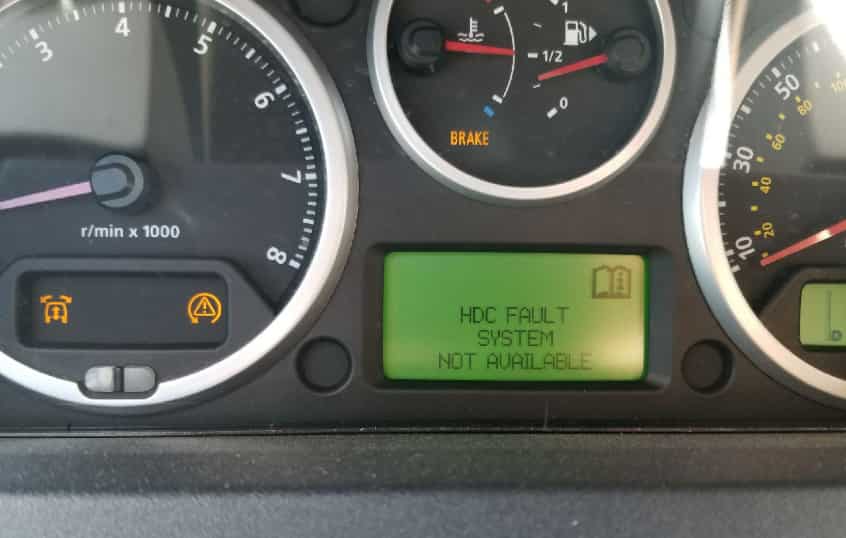
What Does a Range Rover HDC System Fault Mean?
A Range Rover HDC System Fault indicates that the vehicle has detected a problem affecting the Hill Descent Control system. Although the warning may seem alarming, it does not always point to a serious mechanical failure. In many cases, the issue involves an electrical component, a sensor, or a communication error between control modules. Even so, the warning should never be ignored because the HDC system plays an important role in maintaining stability and traction during challenging driving conditions. Identifying the cause early can prevent additional faults and reduce repair costs.
Hill Descent Control, commonly known as HDC, helps your Range Rover maintain a controlled speed when driving down steep slopes. Instead of relying entirely on the driver to manage braking, the system automatically applies the correct amount of brake pressure to each wheel. It works together with the Anti lock Braking System, Dynamic Stability Control, Terrain Response, wheel speed sensors, and the electronic control unit to deliver smooth and stable downhill performance. These systems exchange data continuously, allowing the vehicle to respond quickly whenever road conditions change.
Because the HDC system depends on several electronic components, a fault in one area can trigger the dashboard warning. A weak battery, a faulty wheel speed sensor, damaged wiring, a defective brake light switch, or an ABS module failure can all interrupt communication within the system. As soon as the control unit detects inaccurate data, it stores a diagnostic trouble code and displays the warning message. Understanding what the warning means is the first step toward an accurate diagnosis and a reliable repair that restores your Range Rover to safe operating condition.
Common Causes of Range Rover HDC System Fault
A Range Rover HDC System Fault can occur for many reasons because the Hill Descent Control system depends on several electronic modules working together. Instead of operating as an independent feature, HDC continuously exchanges information with the Anti lock Braking System, Dynamic Stability Control, Terrain Response, steering angle sensor, and wheel speed sensors. If any of these components fail to provide accurate data, the control module disables the system and displays the warning message to protect vehicle safety.
One of the most common causes is low battery voltage. Modern Range Rover models require a stable electrical supply to keep every control module operating correctly. When the battery weakens or the charging system fails, voltage fluctuations can trigger multiple warning messages, including HDC, ABS, and Terrain Response faults. Faulty wheel speed sensors also cause HDC failures because they provide real time information about wheel rotation. If one sensor becomes dirty, damaged, or disconnected, the system can no longer calculate braking force accurately during downhill driving.
Electrical problems are another frequent source of HDC warnings. Corroded connectors, damaged wiring, and poor ground connections may interrupt communication between control modules. A defective brake light switch can also prevent the system from recognizing brake pedal input, while an incorrectly calibrated steering angle sensor may affect vehicle stability calculations. In some cases, outdated software, ABS module failure, suspension faults, or transfer case problems produce the same warning because these systems share information through the vehicle network. Performing a complete diagnostic scan remains the most effective way to identify the exact cause, avoid unnecessary parts replacement, and restore normal HDC operation quickly and safely.
Symptoms of a Range Rover HDC System Fault
Recognizing the symptoms of a Range Rover HDC System Fault can help you diagnose the problem before it leads to more serious issues. The most obvious sign is the HDC warning message displayed on the instrument cluster. In many cases, the message appears together with warning lights for the Anti lock Braking System, Dynamic Stability Control, or Terrain Response. When several alerts appear at the same time, they often indicate that multiple systems have stopped sharing accurate data rather than separate mechanical failures.
Drivers may also notice changes in vehicle performance, especially when driving on steep hills or uneven terrain. The Hill Descent Control system may become unavailable, preventing the vehicle from maintaining a controlled speed during downhill driving. As a result, the driver must apply the brakes manually, which can reduce confidence and vehicle stability on loose or slippery surfaces. Some vehicles may also disable Terrain Response features because these systems work together to improve traction and handling.
Additional symptoms can include inconsistent brake performance, unexpected traction control intervention, or warning messages that appear and disappear after restarting the engine. In some situations, the vehicle may enter a reduced performance mode to protect critical components until the fault is repaired. Although the vehicle often remains safe for normal road use, ignoring these symptoms can allow a minor electrical or sensor problem to develop into a more expensive repair. A prompt diagnostic inspection helps identify the underlying cause, restores normal system operation, and prevents additional warning messages from appearing.
How to Diagnose a Range Rover HDC System Fault
Diagnosing a Range Rover HDC System Fault requires a systematic approach because several vehicle systems work together to support Hill Descent Control. Replacing parts without identifying the root cause often increases repair costs and fails to resolve the warning. A complete inspection should begin with the simplest components before moving to advanced electronic diagnostics.
Start by checking the battery condition and charging system. Low voltage is one of the most common reasons for HDC, ABS, and Dynamic Stability Control warnings. Measure the battery voltage with a digital multimeter and inspect the alternator if the reading falls below the recommended level. A healthy electrical system provides a stable foundation for every control module.
Next, inspect the wheel speed sensors and their wiring. Dirt, corrosion, damaged cables, or loose connectors can interrupt communication with the ABS module. A professional diagnostic scanner can display live wheel speed data and quickly identify a sensor that reports incorrect values. At the same time, inspect the brake light switch and steering angle sensor because both components directly influence the operation of the HDC system.
The final step involves scanning every electronic control module for diagnostic trouble codes. A compatible Land Rover diagnostic tool can detect stored faults, communication errors, and software issues that may not trigger visible symptoms during normal driving. If the scan identifies an ABS module fault, suspension problem, or transfer case error, repair those issues before attempting to reset the HDC warning. Completing a full diagnostic process ensures the correct repair, prevents repeated warning messages, and restores the Hill Descent Control system to normal operation with confidence.
How to Fix a Range Rover HDC System Fault
Fixing a Range Rover HDC System Fault begins with identifying the exact cause rather than clearing the warning message. Although some faults disappear after restarting the vehicle, the warning usually returns if the underlying problem remains. A proper repair not only restores the Hill Descent Control system but also prevents additional faults from affecting other safety features.
If the battery no longer provides stable voltage, replacing it may solve the problem immediately. After installing a new battery, inspect the charging system to confirm the alternator delivers the correct output. Stable electrical power allows every control module to communicate without interruption and reduces the chance of repeated warning messages.
Faulty wheel speed sensors should be cleaned or replaced if they no longer report accurate data. Dirt, road debris, and moisture can interfere with sensor performance, while damaged wiring may interrupt communication with the ABS module. If diagnostic testing confirms a failed brake light switch or steering angle sensor, replacing or recalibrating the affected component usually restores normal HDC operation.
Software related issues require a different approach. Updating the control module software or recalibrating the electronic systems with a compatible Land Rover diagnostic tool can resolve communication errors that trigger false warnings. If the diagnostic scan identifies an ABS module, suspension system, or transfer case fault, those problems must be repaired before attempting to reset the HDC warning. Ignoring these faults may cause the warning to return and increase long term repair costs.
After completing the necessary repairs, clear the stored diagnostic trouble codes and perform a road test under normal driving conditions. Confirm that no warning messages reappear and verify that the Hill Descent Control system operates correctly when activated. A complete repair restores vehicle safety, improves off road capability, and helps prevent future electronic system faults.
Range Rover HDC System Fault Repair Cost
The cost of repairing a Range Rover HDC System Fault depends on the component causing the warning. Some repairs are simple and inexpensive, while others require specialized diagnostic equipment or replacement of major electronic modules. Identifying the exact fault before replacing parts helps reduce unnecessary expenses and prevents repeated repairs.
A weak battery or faulty brake light switch usually represents the most affordable repair. Wheel speed sensors also cost relatively little compared with larger electronic components. However, problems involving the ABS control module, air suspension system, or transfer case often require additional labor, software programming, and system calibration, increasing the overall repair cost.
The table below provides estimated repair costs for the most common causes of an HDC warning. Actual prices vary depending on the vehicle model, labor rates, replacement parts, and your location.
| Repair Item | Estimated Cost |
|---|---|
| Battery Replacement | $200 to $500 |
| Wheel Speed Sensor Replacement | $150 to $350 |
| Brake Light Switch Replacement | $100 to $250 |
| Steering Angle Sensor Calibration | $100 to $300 |
| ABS Module Repair or Replacement | $800 to $2,000 |
| Suspension Sensor Replacement | $200 to $500 |
| Transfer Case Repair | $1,000 to $3,000 |
| ECU Software Update or Programming | $150 to $400 |
| Professional Diagnostic Scan | $100 to $250 |
Investing in an accurate diagnosis often saves money in the long run. Many HDC warnings result from minor electrical issues rather than expensive component failures. Repairing the correct part the first time restores system performance, improves vehicle safety, and helps prevent additional warning messages from appearing in the future.
How to Prevent a Range Rover HDC System Fault
Preventing a Range Rover HDC System Fault is often easier and less expensive than repairing it after the warning appears. Regular maintenance keeps the Hill Descent Control system operating correctly and reduces the risk of unexpected electronic faults. Since HDC depends on several connected systems, maintaining the overall health of the vehicle is the most effective way to improve long term reliability.
Battery maintenance should always be a priority because modern Range Rover models rely heavily on stable electrical power. Test the battery regularly, especially before winter or after several years of use. A weak battery can trigger multiple warning messages even when no major mechanical problem exists. Keeping the charging system in good condition also helps every electronic control module communicate without interruption.
Routine inspections of the wheel speed sensors, wiring, and electrical connectors can prevent many common HDC faults. Dirt, moisture, and corrosion may affect sensor performance over time, particularly if the vehicle is frequently driven on muddy trails or in harsh weather conditions. Cleaning these components during scheduled maintenance reduces the chance of communication errors and improves overall system accuracy.
Software updates also play an important role in preventing electronic faults. Manufacturers occasionally release updated control module software that improves system performance and resolves known issues. Combining regular diagnostic scans with timely software updates allows technicians to detect hidden problems before they trigger dashboard warnings. By following a consistent maintenance schedule and addressing small issues early, you can improve vehicle reliability, reduce repair costs, and keep the Hill Descent Control system operating safely in all driving conditions.
Frequently Asked Questions
Can I drive with a Range Rover HDC System Fault?
Yes, you can usually continue driving if the vehicle operates normally and no critical warning lights appear. However, the Hill Descent Control system will not function as intended, reducing traction and braking assistance on steep or slippery terrain. A diagnostic inspection should be performed as soon as possible.
Can a weak battery cause an HDC System Fault?
Yes. A weak or failing battery is one of the most common causes of an HDC warning. Low voltage can interrupt communication between electronic control modules and trigger additional warnings for the Anti lock Braking System, Dynamic Stability Control, and Terrain Response.
How do I reset a Range Rover HDC System Fault?
Resetting the warning without repairing the underlying fault rarely provides a permanent solution. After fixing the problem, use a compatible diagnostic scanner to clear the stored trouble codes. If no faults remain, the warning should not return.
What is the most common cause of an HDC System Fault?
Faulty wheel speed sensors, low battery voltage, damaged wiring, brake light switch failure, and ABS module problems are the most common causes. A professional diagnostic scan is the fastest way to identify the exact issue.
Will an HDC System Fault fail an inspection?
The answer depends on local inspection regulations. In many regions, warning lights related to vehicle safety systems may result in a failed inspection until the fault is repaired.
How much does it cost to repair an HDC System Fault?
Repair costs vary depending on the failed component. Minor repairs such as replacing a battery or wheel speed sensor are relatively inexpensive, while ABS module or transfer case repairs can cost significantly more. A complete diagnosis helps determine the actual repair cost.
Can I reset the HDC warning by disconnecting the battery?
Disconnecting the battery may temporarily clear some warning messages, but it does not repair the underlying fault. If the problem remains, the HDC warning will usually return after the vehicle completes another system check.
How can I prevent an HDC System Fault?
Regular battery testing, routine inspections of wheel speed sensors and electrical connectors, timely software updates, and scheduled diagnostic scans help reduce the risk of HDC faults and improve long term vehicle reliability.
Conclusion
A Range Rover HDC System Fault does not always indicate a serious mechanical failure, but it should never be ignored. In many cases, the warning results from a weak battery, a faulty wheel speed sensor, damaged wiring, or another electronic component that affects communication between vehicle systems. Identifying the exact cause early helps prevent unnecessary repairs and reduces long term maintenance costs.
Following a structured diagnostic process is the most reliable way to restore normal system operation. Checking the battery, inspecting sensors, scanning diagnostic trouble codes, and repairing confirmed faults provide a far more effective solution than simply clearing the warning message. Once the underlying issue has been resolved, the Hill Descent Control system can operate as intended and continue providing additional safety during challenging driving conditions.
Routine maintenance also plays an important role in preventing future HDC warnings. Keeping the electrical system in good condition, maintaining clean sensor connections, and installing recommended software updates can improve overall reliability and reduce the risk of unexpected dashboard alerts. By understanding the common causes, recognizing the early symptoms, and taking prompt corrective action, you can protect your Range Rover, improve driving confidence, and avoid more expensive repairs in the future.
If the warning remains after completing basic inspections, consult a qualified Land Rover technician with access to professional diagnostic equipment. An accurate diagnosis is always the fastest path to a safe, reliable, and lasting repair.