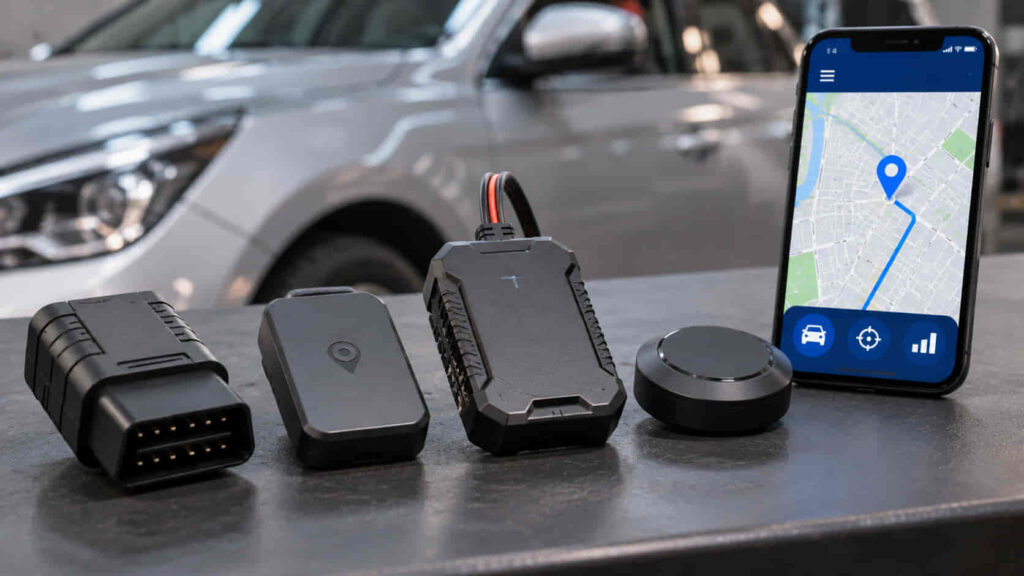
The best LoJack alternatives in 2026 include CarLock, OnStar, Bouncie, Spytec GPS, LandAirSea 54, Tracki Pro, and BrickHouse Livewire Pro. These vehicle tracking systems offer different combinations of GPS location monitoring, theft alerts, and stolen vehicle recovery capabilities. CarLock focuses on suspicious activity alerts, OnStar provides assisted recovery services for eligible GM vehicles, while Bouncie and Spytec GPS offer location tracking and vehicle monitoring. The right choice depends on the level of theft protection, installation requirements, and ongoing costs.
Finding a reliable LoJack replacement has become particularly relevant since March 26, 2026, when the legacy LoJack radio-frequency (RF) recovery network was discontinued in the United States. This shutdown affected certain older RF-based systems, not modern GPS-based LoJack services. Vehicle owners replacing an outdated system should therefore distinguish between basic GPS tracking devices and dedicated stolen vehicle recovery solutions that coordinate with law enforcement.
This guide compares seven LoJack alternatives based on tracking technology, theft detection features, recovery assistance, installation methods, and subscription costs. It also examines subscription-free options, explains the differences between GPS and traditional LoJack tracking, and identifies which systems are suitable for specific vehicle security needs.
What Are the Best LoJack Alternatives in 2026?
The seven best LoJack alternatives in 2026 are CarLock, OnStar, Bouncie, Spytec GPS, LandAirSea 54, Tracki Pro, and BrickHouse Livewire Pro. These systems provide different levels of vehicle security through GPS tracking, unauthorized movement alerts, location history, and stolen vehicle recovery assistance. CarLock is particularly suitable for theft detection, OnStar offers direct coordination with law enforcement for eligible vehicles, and Bouncie combines vehicle location tracking with driving diagnostics. Spytec GPS and BrickHouse Livewire Pro provide vehicle-powered tracking options, while LandAirSea 54 and Tracki Pro offer portable, rechargeable devices. Their differences in recovery services, power sources, and subscriptions determine which alternative best meets an owner’s needs.
CarLock is a strong LoJack alternative for drivers who prioritize early theft detection and immediate security notifications. The system connects to a compatible vehicle’s OBD-II port and uses GPS positioning, cellular connectivity, and motion sensors to monitor suspicious activity. CarLock sends smartphone alerts when the engine starts, the vehicle moves beyond its monitored area, unusual vibrations occur, or the tracking device is disconnected. For example, a driver can receive a movement notification if a parked vehicle is towed without authorization. Unlike a managed stolen vehicle recovery service, however, CarLock notifies the owner rather than automatically contacting law enforcement. Its tracking services also require an active subscription.
OnStar is one of the closest LoJack alternatives for owners who need professional assistance recovering a stolen vehicle. Available on eligible General Motors vehicles with qualifying services, OnStar connects vehicle location technology with trained advisors who cooperate with law enforcement. After the owner reports a theft to the police, OnStar can provide vehicle location information directly to authorized officers. Eligible vehicles may also support Remote Ignition Block, which prevents an engine from restarting after being turned off, or Stolen Vehicle Slowdown when authorities determine conditions are appropriate. Unlike standalone GPS trackers, OnStar does not provide stolen vehicle location information directly to owners during the recovery process. Its primary limitation is vehicle and service eligibility.
Bouncie is a practical LoJack alternative for drivers who want GPS tracking combined with everyday vehicle monitoring. Its compact device connects directly to the OBD-II diagnostic port of most compatible vehicles manufactured from 1996 onward. Bouncie records vehicle location, trip history, driving behavior, and diagnostic information through a smartphone application. Owners can monitor vehicle movements and receive notifications related to driving activity or defined geographic areas. For example, a family can review a vehicle’s travel history while also monitoring engine-related diagnostic codes. Although location information may assist authorities after a theft, Bouncie does not provide the same dedicated law enforcement recovery service as OnStar. The device requires a monthly subscription.
Spytec GPS is a versatile LoJack alternative for vehicle owners who want flexible installation and frequent location updates. Its vehicle tracking range includes plug-in OBD devices and hardwired tracking systems. The OBD version supports location reporting as frequently as once per second, while compatible wired devices offer configurable updates and vehicle-powered operation. Spytec’s tracking platform includes geofencing, driving behavior monitoring, and alerts for events such as device tampering or movement beyond designated boundaries. A hardwired tracker suits owners who prefer a permanent installation rather than a removable OBD device. However, reporting performance depends on cellular connectivity, and continued access to tracking functions requires a paid service plan.
LandAirSea 54 is a suitable LoJack alternative for drivers who prefer a portable GPS tracker without permanent vehicle installation. The compact device includes a built-in magnet, an IP67-rated enclosure, and 4G cellular connectivity. Owners can monitor location through the SilverCloud platform, review historical movements, and configure geofencing alerts. Its rechargeable battery supports approximately one to three weeks of operation under certain active tracking settings, while low-power operation can extend battery life substantially. Actual endurance depends on reporting frequency, signal conditions, and environmental factors. For example, a driver monitoring a vehicle daily must recharge the device more frequently than someone using less frequent location updates. A subscription is required for tracking.
Tracki Pro is a LoJack alternative designed for long-duration tracking without connecting directly to a vehicle’s electrical system. The device combines a 10,000 mAh rechargeable battery, 4G connectivity, a waterproof enclosure, and magnetic mounting accessories. According to the manufacturer, battery operation ranges from approximately two to twelve months depending on tracking settings and network conditions. This makes Tracki Pro relevant for vehicles, trailers, and other assets that remain parked for extended periods. Location reporting intervals vary by subscription plan, and frequent updates consume more battery power. Tracki Pro supplies location information and alerts but does not offer an equivalent managed police recovery service.
BrickHouse Livewire Pro is a LoJack alternative for owners who prefer a permanently powered GPS tracking system. Unlike rechargeable portable trackers, Livewire Pro connects to the vehicle’s electrical supply and supports ongoing location monitoring without routine charging. The device provides geofencing, location history, speed notifications, and reporting through the BrickHouse tracking platform. A small internal backup battery offers limited operation when external power is interrupted. Its hardwired configuration is particularly relevant for commercial vehicles and owners who want an installed tracking device rather than a removable plug-in unit. However, installation is more involved than connecting an OBD tracker, and continued monitoring requires a subscription.
The best LoJack replacement ultimately depends on whether the owner prioritizes theft alerts, vehicle recovery assistance, monitoring functions, or installation flexibility. OnStar offers a recovery service involving law enforcement for eligible GM vehicles, while CarLock emphasizes unauthorized activity detection. Bouncie supports broader vehicle monitoring, Spytec GPS and BrickHouse Livewire Pro suit vehicle-powered tracking needs, and LandAirSea 54 and Tracki Pro provide portable alternatives. None of these systems guarantees vehicle recovery, making their actual capabilities more important than the presence of GPS tracking alone.
Read more: Citroen Engine Fault Repair Needed
How Do the Best LoJack Alternatives Compare?
The best LoJack alternatives differ primarily in stolen vehicle recovery assistance, theft detection capabilities, installation methods, and tracking reliability. OnStar offers the most comparable assisted recovery service among the seven alternatives, while CarLock specializes in detecting suspicious vehicle activity. Bouncie, Spytec GPS, LandAirSea 54, Tracki Pro, and BrickHouse Livewire Pro primarily provide location monitoring and alerts rather than dedicated law enforcement recovery coordination. These differences matter because locating a stolen vehicle does not automatically mean a tracking provider will help authorities recover it.
The most important distinction is how each system responds to unauthorized vehicle movement. CarLock monitors activity such as unexpected movement, engine starts, and device disconnection, making it suitable for drivers who want early theft warnings. OnStar uses compatible factory-installed vehicle security equipment to generate theft alarm notifications and offers additional recovery assistance after a confirmed theft. Bouncie and Spytec GPS provide location monitoring, geographic boundary alerts, and trip information, allowing owners to identify unexpected vehicle movements. LandAirSea 54 and Tracki Pro offer similar location-based monitoring through portable devices, while BrickHouse Livewire Pro supports continuous monitoring through a hardwired connection. However, receiving a notification depends on the device, its settings, and available connectivity.
Installation and power supply create another major difference between these LoJack replacements. OBD-II trackers such as CarLock and Bouncie require minimal installation but can be disconnected from the vehicle’s diagnostic port. Hardwired devices such as BrickHouse Livewire Pro and compatible Spytec GPS models draw power from the vehicle’s electrical system, reducing routine charging requirements. Battery-powered devices such as LandAirSea 54 and Tracki Pro provide greater mounting flexibility but require battery management. Their operating duration depends on location reporting frequency, cellular reception, and power-saving settings. Therefore, hardwired devices are generally more convenient for long-term vehicle monitoring, whereas portable trackers are better suited to owners who need a removable tracking solution.
Subscription requirements also affect the comparison. The seven alternatives rely on paid service plans for their relevant connected tracking or recovery functions, although pricing structures and included features differ. A lower device purchase price does not necessarily produce a lower total ownership cost because cellular data access, monitoring services, and subscription renewals create ongoing expenses. Vehicle owners should evaluate these costs alongside the functions they actually need, rather than choosing a tracker based solely on its advertised hardware price.
Which LoJack Alternative Is Best for Recovering a Stolen Vehicle?
OnStar is the strongest LoJack alternative for assisted stolen vehicle recovery among the seven systems compared, provided the vehicle and service plan are eligible. Unlike standard consumer GPS trackers, OnStar offers a recovery process that connects trained advisors with law enforcement. After police confirm a vehicle has been stolen, OnStar can provide its location to authorities and assist with recovery. Eligible vehicles also support Remote Ignition Block, which prevents an engine from restarting after it has been turned off, and Stolen Vehicle Slowdown, which allows advisors to reduce the speed of a moving stolen vehicle when police determine that conditions are appropriate. These functions make OnStar more comparable to LoJack’s dedicated recovery services than a standalone tracking device.
However, OnStar is not a universal replacement for LoJack because its stolen vehicle recovery features depend on compatible General Motors vehicles and qualifying service plans. Owners of unsupported vehicles need to consider aftermarket solutions. CarLock provides theft-related alerts and GPS tracking, while Spytec GPS and BrickHouse Livewire Pro offer vehicle-powered location monitoring. Portable alternatives such as LandAirSea 54 and Tracki Pro provide another way to obtain vehicle location information after a theft. These systems can supply information useful to an investigation, but they should not be described as equivalent to a recovery service that coordinates directly with police.
A GPS tracker helps police locate a stolen car by providing geographic coordinates, recent movement information, or recorded location history. GPS satellites allow a compatible tracker to determine its position, while cellular communication transmits that information to the tracking platform. For example, a vehicle owner who discovers that a car has disappeared from a parking area may use an active GPS tracker to identify its last reported location and share the information with investigating officers. However, a device that loses cellular coverage, runs out of battery, or becomes disconnected may stop sending current location updates. Location information alone also cannot establish whether a vehicle is accessible or safe to recover.
Vehicle owners should report a theft to local law enforcement immediately and provide the vehicle identification number, license plate number, make, model, and available tracking information. The National Insurance Crime Bureau emphasizes the importance of prompt reporting because early recovery opportunities are time-sensitive. Owners should also notify their insurance provider and avoid attempting to confront suspected thieves or retrieve a stolen vehicle themselves. A reliable LoJack alternative therefore needs more than GPS functionality: its practical recovery value depends on timely alerts, accessible location information, dependable connectivity, and effective cooperation with law enforcement.
How Much Do LoJack Alternatives Cost in 2026?
LoJack alternatives generally involve two expenses: the initial device purchase and the recurring subscription required for connected tracking services. Some systems also require professional installation. In 2026, several aftermarket GPS trackers cost less than $70 upfront, while their monthly service fees can range from approximately $10 to $25 or more, depending on the tracking frequency, coverage, and included features. The total cost of ownership is therefore more important than the advertised device price when comparing vehicle security systems.
CarLock is among the more affordable options, with a listed device price of $49.95 and a monthly subscription of $9.95. The subscription covers cellular connectivity, GPS monitoring, theft alerts, and access to the CarLock application. Bouncie also uses a one-time hardware purchase and a monthly subscription for each active device, with no activation fees or long-term contract. However, its current public pricing page does not consistently display a verifiable dollar amount for the device and service, so buyers should confirm the total during checkout.
Spytec GPS uses a different pricing structure by including tracking hardware at no additional charge with a service plan. Its Pulse OBD tracker is listed at $14.95 per month with monthly billing or an effective $8.95 per month when paid annually. LandAirSea 54, by comparison, has a listed promotional device price of $29.95, with monthly service starting at $19.95 for location updates every three minutes. Increasing the reporting frequency raises the subscription cost, reaching $49.95 per month for three-second updates. These differences demonstrate how tracking intervals influence the price of cellular GPS monitoring.
Tracki Pro is available through manufacturer listings at approximately $24–$29 for the device, while its published subscription schedule lists $19.95 per month for one-minute location updates. BrickHouse Livewire Pro has a listed hardware price of $69.95, with its personal Basic tracking plan costing $24.99 per month when billed monthly. Longer billing commitments can reduce the effective monthly rate, although professional installation may increase the initial expense. OnStar uses a subscription-based service model rather than a separately purchased aftermarket tracker. For eligible 2025 and newer vehicles, its Protect plan starts at $19.99 per month and includes Stolen Vehicle Assistance.
The three-year cost of a LoJack alternative illustrates how subscription fees accumulate. Based on 36 fully billed months at the listed month-to-month rates, CarLock costs approximately $408.15, including its $49.95 device, while LandAirSea 54 costs approximately $748.15 using its $19.95 monthly plan and $29.95 promotional hardware price. Spytec’s Pulse OBD totals approximately $538.20 under its $14.95 monthly plan with included hardware. These calculations exclude taxes, optional accessories, installation, promotional free months, and future price changes. Buyers should compare plans with equivalent tracking capabilities before determining which system provides the best long-term value.
Are There Any LoJack Alternatives Without Monthly Fees?
Apple AirTag is a subscription-free location-finding option, but it is not a direct replacement for LoJack or a dedicated cellular GPS tracker. Apple’s second-generation AirTag, introduced in January 2026, costs $29 for one device or $99 for a four-pack in the United States. It uses Bluetooth signals and Apple’s Find My network to help locate attached belongings without requiring a separate cellular tracking subscription. An AirTag can provide supplementary location information for a vehicle, but it does not offer continuous GPS reporting, dedicated theft detection, or professional stolen vehicle recovery assistance.
The main limitation of AirTag is its dependence on nearby compatible Apple devices participating in the Find My network. Unlike a cellular GPS tracker that determines its position and transmits location updates through a mobile network, AirTag broadcasts Bluetooth signals that nearby participating devices can detect. Those devices securely relay location information to the Find My network, allowing the owner to view a reported location. Consequently, location updates depend on the presence of compatible devices rather than a fixed reporting interval. A vehicle parked in an isolated area without nearby participating devices may not generate a recent location update.
AirTag also incorporates anti-stalking protections that limit its suitability as a concealed vehicle security system. Apple and Google support unwanted-tracking alerts that warn individuals when an unfamiliar compatible Bluetooth tracker appears to be traveling with them. An AirTag separated from its owner can also emit a sound under certain conditions. These protections are designed to discourage unauthorized tracking, but they also mean an AirTag should not be treated as a covert stolen vehicle recovery device.
Most dedicated real-time GPS trackers require subscriptions because they use cellular networks to transmit vehicle location data to remote servers. These fees support mobile data connectivity, cloud-based location history, tracking applications, notifications, and customer support. CarLock, Bouncie, Spytec GPS, LandAirSea 54, Tracki Pro, and BrickHouse Livewire Pro all require active service plans for their connected tracking functions. A device that records GPS coordinates locally without cellular connectivity may avoid a recurring service fee, but it cannot provide remote location updates when a vehicle disappears.
For vehicle owners seeking the lowest recurring expense, AirTag offers a low-cost supplementary location-finding option rather than equivalent LoJack functionality. A subscription-based GPS tracker is more appropriate when the primary requirement is remote vehicle monitoring, configurable movement alerts, and regular location updates. Owners who prioritize coordinated police recovery assistance should evaluate eligible managed recovery services instead of assuming that a subscription-free tracking accessory provides the same protection.
What Should You Look for When Choosing a LoJack Alternative?
Choosing the best LoJack alternative requires evaluating six factors: stolen vehicle recovery assistance, GPS tracking reliability, theft detection alerts, power supply, vehicle compatibility, and total ownership cost. These factors determine whether a system can detect unauthorized activity, report a vehicle’s location, and support recovery after a theft. A vehicle owner who needs immediate theft notifications has different requirements from someone seeking professional recovery assistance. The right tracking system must therefore match the owner’s security priorities rather than simply offer the greatest number of advertised features.
Stolen vehicle recovery assistance is the most important factor when replacing LoJack’s dedicated recovery service. GPS trackers provide location information, but not every tracking company coordinates directly with law enforcement. OnStar, for example, allows trained advisors to assist authorities in locating eligible stolen vehicles after a police report has been confirmed. CarLock and Spytec GPS instead provide monitoring features that allow owners to access location information and share relevant details with investigating officers. This distinction matters because professional recovery coordination and owner-managed tracking involve different responsibilities. Drivers primarily concerned with recovering a stolen vehicle should verify whether a provider offers a dedicated recovery process or only access to tracking data.
GPS tracking reliability depends on location accuracy, cellular coverage, and reporting frequency. GPS-enabled devices determine their geographic position using satellite signals, while cellular connectivity allows that information to reach a remote tracking platform. A tracker with frequent location updates provides a more detailed movement history than one reporting every several minutes, although faster reporting does not guarantee successful recovery. Underground parking garages, enclosed structures, cellular dead zones, and signal interference can reduce tracking performance. For example, a vehicle entering an area without mobile coverage may continue moving while its tracking application displays an older location. Buyers should examine network compatibility, location update intervals, and how the system handles temporary connection failures.
Theft detection alerts help vehicle owners recognize suspicious activity before they discover that a vehicle is missing. Relevant security functions include unauthorized movement notifications, engine-start alerts, vibration detection, geofencing, and device disconnection warnings. CarLock combines several of these functions to identify activity around a monitored vehicle, while other GPS trackers emphasize geographic boundaries and location history. The usefulness of an alert depends on how quickly it reaches the owner’s smartphone and whether the event represents a genuine security concern. For instance, a movement alert can reveal that a parked vehicle has left its monitored area, but the notification alone cannot determine whether the movement was authorized. Drivers should prioritize configurable alerts that match their parking conditions and vehicle usage.
Power supply determines how consistently a LoJack alternative can operate without maintenance. OBD-II and hardwired trackers draw electricity from the vehicle, making them convenient for continuous monitoring without routine recharging. However, a disconnected device may stop transmitting once its backup battery is depleted. Battery-powered trackers provide greater placement flexibility but require periodic charging, with battery life affected by reporting frequency and cellular signal strength. A tracker configured to transmit frequent updates generally consumes more energy than one using longer reporting intervals. Owners who need uninterrupted monitoring should examine backup battery capabilities, power consumption, and disconnection notifications rather than relying exclusively on advertised battery life.
Vehicle compatibility and installation requirements affect whether a tracking system is practical for a particular car. OBD-II devices offer straightforward installation in compatible vehicles, while hardwired trackers require electrical connections and may benefit from professional installation. Portable magnetic trackers avoid permanent wiring but require suitable mounting arrangements and battery access. Factory-integrated services such as OnStar depend on supported vehicles and qualifying subscriptions, making them unsuitable for many vehicles outside their eligible range. Before purchasing a LoJack replacement, drivers should verify the vehicle’s model year, electrical compatibility, installation requirements, and the provider’s supported service area.
Total ownership cost should include the device, installation, subscription fees, and service requirements over the intended period of use. A tracker with inexpensive hardware can become more expensive than a competing system when monthly subscription charges accumulate. Some providers also offer different reporting frequencies or additional features through higher-priced plans. Comparing three-year expenses provides a clearer picture of long-term affordability than comparing upfront prices alone. Vehicle owners should also review cancellation conditions, network coverage, warranty terms, and subscription renewal policies to avoid paying for services that do not meet their security needs.
The best LoJack alternative is ultimately the system that provides the required level of security with dependable operation and manageable long-term costs. Owners prioritizing assisted vehicle recovery should examine eligible manufacturer-supported services, while drivers focused on theft notifications should emphasize responsive alerts and reliable location reporting. Those seeking routine vehicle monitoring may benefit from additional driving and diagnostic features. Matching these capabilities to actual vehicle usage produces a more useful purchasing decision than selecting a tracker based solely on price or advertised GPS accuracy.
Is LoJack Still Available After the 2026 RF Shutdown?
LoJack is still available in 2026, but its legacy radio-frequency (RF) vehicle recovery network in the United States was permanently decommissioned on March 26, 2026. The shutdown affected certain older LoJack RF systems sold and installed before the March 2021 sale of the company’s U.S. stolen vehicle recovery business. These devices relied on a dedicated radio network that allowed specially equipped law enforcement vehicles to locate stolen cars. With that network discontinued, affected legacy devices can no longer provide their original RF-based recovery service. However, the shutdown does not apply to modern GPS-based LoJack products or services operating outside the affected U.S. legacy network.
Modern LoJack continues to offer stolen vehicle recovery through GPS positioning and cellular connectivity. Following Spireon’s acquisition of the U.S. LoJack business in 2021, the brand introduced an updated GPS-based platform that combines vehicle location monitoring, connected car features, and professional recovery assistance. When a protected vehicle is stolen, the owner first reports the theft to law enforcement and obtains a police report. The LoJack recovery team can then coordinate with authorities using location information from the active tracking system. This approach differs from the original RF network because it uses modern vehicle connectivity rather than police vehicles equipped with dedicated RF tracking receivers.
Owners of older LoJack systems should verify their device’s technology before assuming that their vehicle remains protected. Installation records, purchase dates, service agreements, and vehicle identification information can help determine whether a system depends on the discontinued network. CalAmp advises affected customers to review their warranty or protection program documentation and contact the company about their specific product. The RF shutdown does not automatically establish eligibility for a refund, replacement, or compensation because those rights depend on individual agreement terms. Owners whose devices are no longer supported should consider an active GPS tracking or stolen vehicle recovery system to restore the relevant protection.
How Do GPS Trackers Differ From LoJack Recovery Systems?
GPS trackers differ from traditional LoJack recovery systems in their positioning technology, communication methods, and relationship with law enforcement. Standard GPS vehicle trackers use satellite signals to calculate geographic coordinates and cellular networks to transmit location information to a smartphone application or online tracking platform. The original LoJack system instead relied on radio-frequency transmitters that police could locate using specialized tracking equipment. Modern LoJack uses GPS and cellular technology, so its main distinction from ordinary aftermarket trackers is the dedicated stolen vehicle recovery service rather than a fundamentally different positioning method.
A GPS tracker determines its position by receiving timing and location signals from multiple satellites. Its receiver calculates geographic coordinates from these signals, while a separate communication module sends the resulting information to a tracking platform. This separation means a GPS device may determine its location even when cellular service is unavailable, although it cannot immediately transmit that location without a working communication connection. Signal obstruction also affects performance. For example, a tracker inside an underground parking garage may have difficulty receiving satellite signals, while a device traveling through an area without cellular coverage may display an outdated position in the owner’s tracking application.
Traditional LoJack RF systems operated through a different recovery mechanism. After a stolen vehicle was reported to police and entered into the relevant law enforcement system, a radio signal activated the concealed LoJack transmitter. The transmitter then broadcast a uniquely coded signal that police vehicles or aircraft equipped with LoJack tracking receivers could detect. Officers followed the signal to locate the vehicle rather than relying on GPS coordinates displayed through a consumer application. RF tracking could provide advantages in certain enclosed environments where satellite reception was limited, but the system depended on its dedicated activation infrastructure and specially equipped law enforcement resources.
The most important difference for vehicle owners is whether a tracking provider supplies location information alone or actively assists with vehicle recovery. Consumer GPS trackers such as CarLock, Bouncie, and Spytec GPS give owners access to vehicle monitoring and location data, which they can share with police after a theft. Modern LoJack adds a managed recovery process in which its recovery team works with law enforcement after receiving the required theft report. Consequently, a GPS tracker can provide useful evidence for locating a stolen car without offering the same recovery assistance as LoJack. Drivers comparing LoJack alternatives should evaluate recovery procedures, tracking reliability, and service eligibility instead of treating all GPS-enabled security products as equivalent.
How Do You Install a LoJack Alternative in Your Car?
Installing a LoJack alternative depends on whether the tracking device uses an OBD-II connection, a hardwired electrical connection, or a rechargeable battery. OBD-II trackers offer the simplest installation, while hardwired GPS systems connect directly to the vehicle’s power supply. Portable trackers require no electrical modifications and can be transferred between authorized vehicles. The installation method affects device accessibility, maintenance requirements, and tracking reliability, making it an important consideration when selecting a replacement for an older LoJack system.
OBD-II GPS trackers such as CarLock and Bouncie connect to the vehicle’s onboard diagnostic port, generally located beneath the dashboard near the steering column. Most passenger vehicles sold in the United States since the 1996 model year include a standardized OBD-II connector, although compatibility should be verified for each vehicle. Installation involves locating the port, connecting the tracking device, activating the manufacturer’s application, and allowing the system to establish GPS and cellular connections. Bouncie, for example, requires users to register their device information and drive the vehicle to initialize tracking. This plug-and-play installation eliminates the need for electrical modifications, but an accessible device can be unplugged, interrupting tracking until power is restored.
Hardwired LoJack alternatives such as BrickHouse Livewire Pro and Spytec GPS wired trackers connect to the vehicle’s electrical system instead of occupying the diagnostic port. Depending on the device, installation involves connecting constant power and ground wires, with certain models requiring an additional ignition connection. The tracker receives electricity from the vehicle battery, allowing it to operate without routine charging as long as sufficient power remains available. A correctly installed hardwired device also avoids obstructing the diagnostic port and can be mounted away from frequently accessed vehicle controls. Professional installation is advisable when the owner lacks automotive electrical experience because incorrect connections can damage electrical components, interfere with existing vehicle systems, or prevent reliable tracking.
Battery-powered GPS trackers such as LandAirSea 54 and Tracki Pro provide an installation method that does not require access to the vehicle’s wiring. These devices use internal rechargeable batteries and compatible mounting accessories, including magnetic attachments on suitable metal surfaces. Placement affects both GPS satellite reception and cellular connectivity because surrounding metal, reinforced structures, and other obstructions can weaken signals. For example, LandAirSea recommends testing reception at the selected mounting location and avoiding excessive metal obstruction or high-temperature areas. After activation, owners should verify the reported location, confirm that tracking notifications function correctly, and establish a charging schedule appropriate to the device’s reporting frequency.
Regardless of installation method, a LoJack alternative should be tested before it is relied upon for vehicle security. Owners should confirm that the application displays the correct vehicle location, records movement as expected, and delivers configured alerts. This initial verification identifies compatibility, power, and connectivity problems that could otherwise remain unnoticed until a theft occurs.
Will LoJack Alternatives Work Without Cellular Service?
Most cellular GPS-based LoJack alternatives cannot provide live remote location updates without an available cellular data connection, even when their GPS receivers can still determine the vehicle’s position. GPS positioning and cellular communication perform separate functions: satellite signals establish geographic coordinates, while mobile networks transmit those coordinates to a tracking application. A device may continue receiving satellite signals outside cellular coverage, but its owner generally cannot view newly recorded positions until communication is restored. This limitation affects both portable and vehicle-powered trackers that rely on cellular data for remote monitoring.
The effect of losing cellular service depends on the tracker’s internal storage and software capabilities. Some devices continue recording location information locally and upload the stored data when connectivity returns. Bouncie, for example, states that its device continues storing trip information during cellular outages and transfers the information after service is restored. This preserves useful travel history but does not provide live tracking while the device remains disconnected. Other trackers have different storage capacities and synchronization behavior, so owners should confirm whether their chosen system retains location history during network interruptions.
GPS reception can also fail independently of cellular connectivity. Satellite signals become weaker when vehicles enter underground parking structures, tunnels, or locations surrounded by substantial physical obstructions. In these environments, a tracker may lose its ability to determine an accurate position even when cellular coverage remains available. Conversely, a device traveling through a remote area may receive sufficient GPS signals but lack the cellular coverage needed to transmit its position. These two conditions produce similar symptoms in a tracking application, including delayed updates and outdated map locations, but they originate from different technical limitations.
For stolen vehicle recovery, a loss of cellular communication creates a period during which current vehicle movements may remain unavailable to the owner or recovery provider. Stored location records can help reconstruct the vehicle’s route after connectivity returns, but they cannot replace timely location reporting during an active investigation. Vehicle owners should therefore evaluate the provider’s coverage area, supported cellular networks, last-known-location features, and offline data storage capabilities. Reliable GPS reception and dependable cellular communication are both essential for maintaining the practical effectiveness of a connected LoJack alternative.
Is It Legal to Use a LoJack Alternative to Track a Vehicle?
Using a LoJack alternative to track a vehicle is generally legal in the United States when the tracking is authorized and complies with applicable state privacy laws. Vehicle owners commonly install GPS tracking systems to monitor their cars, protect against theft, and locate missing vehicles. However, ownership does not automatically authorize every form of tracking, particularly when a device is used to monitor another person’s movements without consent. The legality of vehicle tracking depends on the state’s laws, the relationship between the vehicle owner and driver, and the purpose of collecting location information.
Several states have specific restrictions on electronic tracking devices. California Penal Code Section 637.7 generally prohibits using an electronic tracking device to determine a person’s location or movements but provides an exception when the registered owner, lessor, or lessee consents to tracking the vehicle. Rhode Island General Laws Section 11-69-1 restricts tracking a vehicle’s operator or occupants without their consent, subject to exceptions that include qualifying theft recovery systems and certain business fleet operations. These differences demonstrate why permission to install a GPS device does not always establish permission to monitor everyone who drives or occupies the vehicle.
Businesses using GPS trackers in company vehicles must also consider employee privacy and applicable workplace monitoring requirements. Fleet tracking systems can record routes, vehicle locations, driving behavior, and operating hours, creating records connected to identifiable employees. Employers should establish clear tracking policies, notify affected drivers where required, and restrict access to location information to authorized personnel. Similar considerations apply to shared vehicles, leased cars, and vehicles operated by individuals other than the registered owner.
Vehicle owners should review applicable state laws before installing a LoJack alternative, especially when another person regularly drives the vehicle. Secretly tracking a spouse, former partner, or unrelated individual can violate stalking, harassment, or privacy laws even when the tracking device itself is commercially available. A GPS tracker should be used for legitimate vehicle security purposes with the necessary authorization, rather than as a tool for monitoring someone without their knowledge.
Can LoJack Alternatives Prevent a Car From Being Stolen?
LoJack alternatives can help deter vehicle theft and improve recovery opportunities, but most GPS tracking systems cannot physically prevent a car from being stolen. Their primary functions are detecting unauthorized movement, sending security notifications, and identifying a vehicle’s location after it disappears. Devices such as CarLock alert owners to suspicious activity, while GPS trackers from Spytec, Bouncie, and other providers supply location information that may assist an investigation. These features improve awareness and support recovery, but they do not automatically stop a thief from entering or driving away in the vehicle.
Theft prevention and stolen vehicle recovery involve different security mechanisms. The National Highway Traffic Safety Administration distinguishes between visible or audible deterrents, immobilizing devices, and vehicle recovery systems. Steering wheel locks and audible alarms are intended to discourage unauthorized access, while electronic immobilizers restrict the operation of essential vehicle systems. GPS tracking devices primarily support location monitoring and recovery after theft. For example, a tracker may notify an owner that a parked vehicle has started moving, but the notification does not independently disable its engine or prevent the vehicle from leaving the parking area.
Certain manufacturer-supported recovery services provide additional vehicle-control capabilities. OnStar offers Remote Ignition Block for eligible vehicles, allowing an advisor to prevent a stolen vehicle’s engine from restarting after it has been switched off. Its Stolen Vehicle Slowdown feature can also assist law enforcement by reducing a stolen vehicle’s speed when the required safety conditions are met. These services require an eligible vehicle, an appropriate service plan, and coordination with law enforcement. They should not be confused with ordinary GPS trackers, which generally cannot control a vehicle’s engine or braking systems.
The most effective approach combines vehicle tracking with physical theft deterrents and consistent security practices. The National Insurance Crime Bureau recommends locking vehicle doors, removing keys, avoiding unattended idling, and parking in well-lit locations. Mechanical steering wheel locks, factory-installed immobilizers, audible alarms, and GPS tracking systems provide different layers of protection rather than interchangeable functions. A LoJack alternative therefore works best as part of a broader vehicle security strategy that addresses both theft prevention and recovery. Although no single device guarantees that a car will remain secure, combining deterrence, timely alerts, and reliable tracking reduces dependence on any one security measure.