A “Check AEB System” warning on a vehicle from Kia often causes immediate concern for drivers. The message appears on the dashboard and signals a problem in one of the most important safety systems in modern cars.
The AEB system stands for Autonomous Emergency Braking. It is part of the ADAS safety suite. This system uses front radar sensors and cameras to monitor traffic ahead. It detects obstacles and helps apply the brakes when a collision risk appears. This feature improves safety and reduces accident risk in real driving conditions.
The warning appears when the system stops working correctly. In many cases, the issue comes from blocked sensors, software errors, weak battery voltage, or calibration problems after repairs. Weather conditions such as heavy rain or fog can also affect system performance.
Drivers often feel unsure when this warning shows up. Many do not know if the car is safe to drive or needs immediate repair. This creates confusion and stress, especially during daily driving.
This article explains the Kia Check AEB System warning in detail. It covers the meaning of the alert, the main causes, the safety risks, and the step by step methods to fix the problem. The goal is to help you understand the issue clearly and restore the system safely.
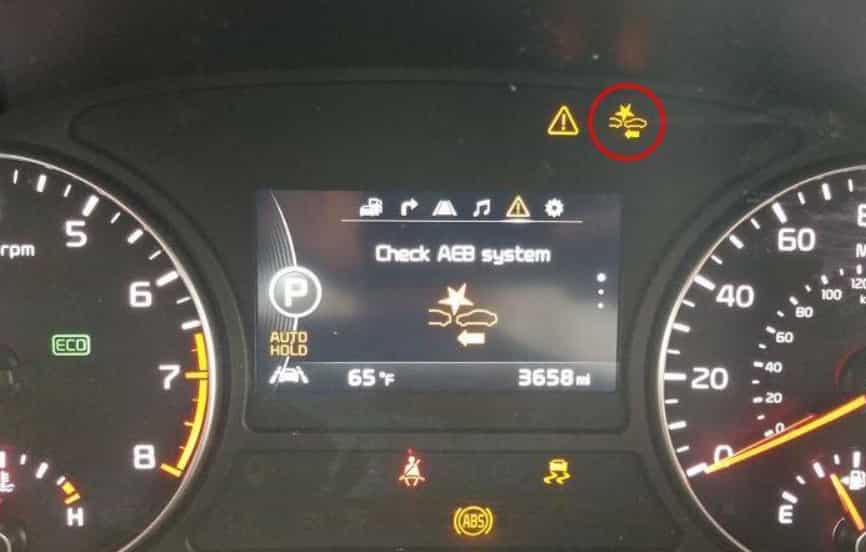
What Does Kia Check AEB System Mean?
The “Check AEB System” message indicates a fault or limitation in the Autonomous Emergency Braking system on a vehicle from Kia. The system cannot operate normally when this warning appears. It may disable automatic emergency braking until the issue is resolved.
The AEB system is part of the Advanced Driver Assistance System. It helps prevent collisions by monitoring the road ahead. The system uses radar sensors and a front camera to detect vehicles, pedestrians, and obstacles. When it detects a high risk of impact, it activates braking automatically or warns the driver to react.
When the system detects abnormal conditions, it triggers the “Check AEB System” warning. This does not always mean a serious hardware failure. In many cases, the system only loses proper input data. A dirty sensor, blocked camera, or unstable signal can cause this issue. Software errors or temporary calibration mismatches can also trigger the warning.
In this state, the vehicle may still drive normally. However, the emergency braking function may not work as expected. This reduces the overall safety level, especially in sudden braking situations.
The warning acts as a protection signal. It tells the driver that the system cannot guarantee full operation. The vehicle needs inspection or reset before the AEB system can return to normal function.
Common Causes of Kia Check AEB System Warning
The “Check AEB System” warning on a vehicle from Kia usually appears when the system detects abnormal input or performance issues. Several common causes can trigger this alert, and most of them relate to sensors, software, or environmental conditions.
One of the most frequent causes is a blocked or dirty front sensor. The AEB system relies on a radar sensor and a front camera to read the road. Dirt, mud, rain, snow, or even stickers on the windshield can reduce accuracy and cause the system to stop working correctly.
Low battery voltage is another common reason. The AEB system needs stable electrical power to operate. When the battery becomes weak or unstable, the system may fail to initialize and display a warning on the dashboard.
Software glitches can also trigger the alert. The vehicle’s control module may temporarily misread sensor data or lose synchronization. This often happens after a sudden restart, software update, or electronic interference.
Weather conditions can affect system performance as well. Heavy rain, fog, or strong sunlight may reduce sensor visibility and lead to temporary system shutdown.
In some cases, the warning appears after a minor accident or bumper repair. If the radar sensor is misaligned, the system cannot calculate distance correctly. This calibration error forces the system to deactivate until it is reset.
These causes are usually not permanent, but they still require inspection. Identifying the correct reason helps restore the AEB system faster and prevents unnecessary repairs.
Is It Safe to Drive When Kia Check AEB System Appears?
When the “Check AEB System” warning appears on a vehicle from Kia, the car can usually still be driven, but the safety level is reduced. The key concern is that the Autonomous Emergency Braking function may not work as expected.
The AEB system helps reduce collision risk by detecting obstacles and applying braking automatically in emergency situations. When this system is disabled or limited, the driver loses an important layer of protection. The car still relies on normal braking, but it no longer has automatic intervention support.
In most cases, the vehicle does not lose basic driving functions. Steering, acceleration, and manual braking still work normally. However, the absence of AEB increases risk in situations where the driver reacts too slowly or fails to notice a hazard.
Drivers should treat this warning as an early safety alert. It does not always mean immediate danger, but it does require attention as soon as possible. Continuing to drive for a short distance is usually acceptable if traffic conditions are normal. However, long trips or high speed driving are not recommended until the issue is checked.
The safest approach is to inspect the system as soon as possible. If other warning lights appear at the same time, the risk level increases and the vehicle should be checked immediately by a qualified technician.
How to Fix Kia Check AEB System Warning Light
When the “Check AEB System” warning appears on a vehicle from Kia, you can often resolve the issue without major repairs. Many cases come from simple sensor or system conditions rather than serious hardware failure.
The first step is to inspect and clean the front sensor area. The AEB system depends on a radar sensor and a front camera to read traffic conditions. Dirt, mud, rain residue, or stickers on the windshield can block signals. Cleaning these areas carefully often restores normal operation.
The second step is to restart the vehicle. Turn off the engine and wait a few minutes before starting it again. This helps reset temporary software glitches that may affect the system.
The third step is to check the battery condition. A weak or unstable battery can interrupt communication between electronic control modules. If the battery voltage is low, replacing or recharging it may solve the warning.
The fourth step is to run a diagnostic scan using an OBD tool. This helps identify specific error codes related to the AEB system. It also helps confirm whether the issue comes from sensors, software, or calibration.
The fifth step is ADAS recalibration. If the vehicle has recently undergone bumper repair or windshield replacement, the radar or camera may be misaligned. A professional calibration ensures the system detects objects correctly again.
If the warning remains after these steps, the vehicle should be inspected at a service center. Persistent errors often require advanced diagnostic tools and expert adjustment.
When to Visit a Kia Service Center
If the “Check AEB System” warning continues on a vehicle from Kia after basic troubleshooting, you should visit a service center for a deeper inspection. Some issues cannot be fixed with simple cleaning or a system reset.
You should seek professional help when the warning stays on even after restarting the car and cleaning the front sensor area. This often indicates a deeper problem with the radar sensor, camera system, or control module.
Another clear sign is when multiple warning lights appear at the same time. If the AEB warning shows together with other ADAS or braking system alerts, the problem may involve the wider safety system. This increases the risk level and requires immediate diagnosis.
You should also visit a technician if the vehicle had a recent accident or bumper repair. Even a minor impact can shift the radar sensor position. In this case, the system needs professional recalibration using specialized equipment.
Unusual braking behavior is another warning sign. If the car hesitates to brake or the driver assistance features feel inconsistent, the system may not be processing data correctly. This situation should not be ignored.
A service center can perform advanced diagnostics that go beyond standard OBD scans. Technicians can test sensor accuracy, update software, and recalibrate the ADAS system to restore full functionality.
Repair Cost and Final Conclusion
The cost to fix a “Check AEB System” issue on a vehicle from Kia depends on the root cause of the problem. In many cases, the issue is minor and does not require expensive repairs. Simple fixes like sensor cleaning or system reset usually cost nothing or very little if done at home or during a basic inspection.
If the problem comes from calibration, the cost increases slightly. ADAS recalibration requires specialized tools to adjust the radar sensor and front camera. This service is often performed after windshield replacement or bumper repair. The price varies depending on the workshop and model, but it is generally a moderate service cost rather than a major repair.
More expensive cases involve damaged sensors or control modules. If the radar sensor is faulty or the camera system fails, replacement may be required. This type of repair costs significantly more because the components are part of the vehicle’s advanced safety system.
In most situations, the warning does not indicate a severe failure. It usually comes from external factors such as dirt, weather, or temporary software issues. However, ignoring the warning for a long time can reduce driving safety because the emergency braking function may not activate when needed.
The best approach is to diagnose the issue early and apply the correct fix based on the cause. Regular maintenance of sensors and timely software updates also help prevent this warning from appearing again.
Understanding the Kia Check AEB System warning helps drivers respond correctly, avoid unnecessary repair costs, and maintain full safety performance while driving.