Nothing is more frustrating than getting into your Jeep, pressing the Start button, and seeing the message “Key Fob Not Detected” appear on the dashboard. Whether you’re heading to work, embarking on a road trip, or simply running errands, this warning can leave you stranded and wondering what went wrong.
Fortunately, this issue doesn’t always mean your key fob is broken or that an expensive repair is necessary. In many cases, the problem is caused by something as simple as a depleted key fob battery, signal interference, or a weak vehicle battery. However, more complex issues, such as a malfunctioning RF Hub, damaged keyless entry antenna, or lost key programming, can also prevent your Jeep from recognizing the smart key.
In this comprehensive guide, you’ll learn why your Jeep says “Key Fob Not Detected,” how the keyless ignition system works, and the most common reasons this error occurs. We’ll also walk you through proven troubleshooting steps, explain how to start your Jeep when the key fob isn’t detected, discuss repair costs, and share practical maintenance tips to help prevent the problem from happening again.
By the end of this article, you’ll know exactly how to diagnose the issue, determine whether you can fix it yourself, and recognize when it’s time to seek professional assistance.
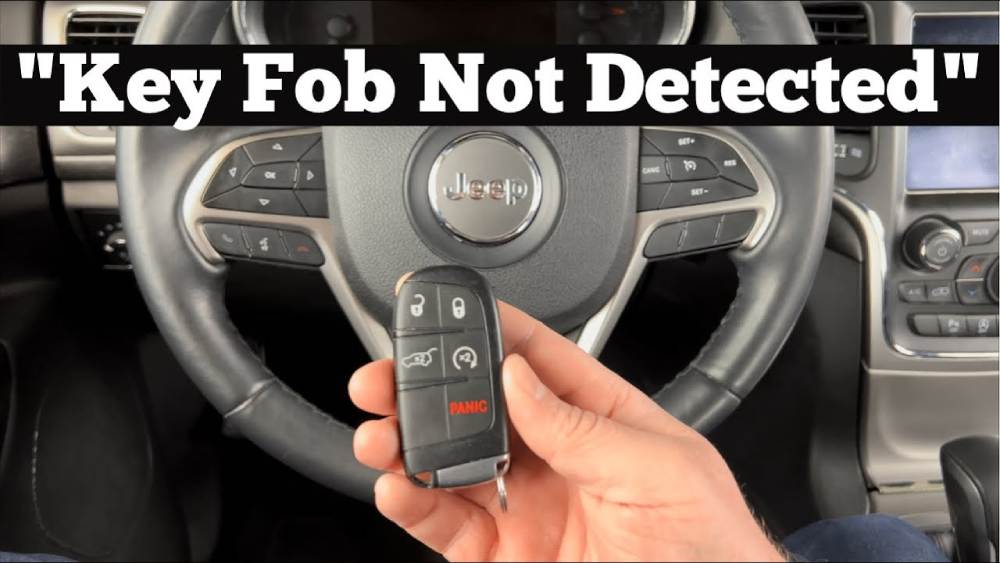
What Does “Jeep Key Fob Not Detected” Mean?
The “Jeep Key Fob Not Detected” warning appears when your vehicle cannot establish a reliable connection with the electronic key. Modern Jeep models use a smart key system that allows you to unlock the doors and start the engine without inserting a traditional metal key into the ignition. Instead, the vehicle communicates with the key fob through short-range radio signals.
When you enter the vehicle and press the Start button, the Jeep’s keyless ignition system searches for an authorized key fob inside the cabin. The fob transmits a coded signal, and the vehicle checks whether that code matches the information stored in its security system. If the signal is valid, the immobilizer is disabled and the engine is allowed to start.
If the vehicle cannot receive or verify that signal, it may display the “Key Fob Not Detected” message and prevent the engine from starting. This security feature is designed to stop unauthorized users from operating the vehicle, but it can also create problems when the key fob battery is weak, the signal is blocked, or one of the vehicle’s electronic components is malfunctioning.
The warning does not always mean the key fob has completely failed. In many cases, the fob may still lock and unlock the doors while failing to communicate properly with the push-button ignition system. This can happen because the buttons and proximity detection features may rely on different signal strengths or communication methods.
Some Jeep owners notice the warning only occasionally. The vehicle may detect the key after several attempts, after the key is moved closer to the Start button, or after the driver leaves and reenters the cabin. Intermittent detection often points to a weak battery, signal interference, damaged battery contacts, or a developing problem with the vehicle’s keyless entry receiver.
Understanding what the warning means is important because it helps you separate a simple key fob issue from a larger electrical or security system problem. Before paying for a replacement key or dealership diagnosis, you should test a few basic possibilities and observe exactly when the warning appears.
Dead or Weak Key Fob Battery
A dead or weak battery is the most common reason a Jeep key fob is not detected. The battery inside the fob powers the electronic circuit that transmits the identification signal to the vehicle. As the battery loses strength, the signal becomes weaker and less reliable.
You may first notice that the remote only works when you stand close to the Jeep. The lock, unlock, panic, or remote start buttons may respond slowly or require several presses. Eventually, the vehicle may stop recognizing the key inside the cabin and display the “Key Fob Not Detected” warning.
Key fob batteries often weaken gradually rather than failing without warning. Hot weather, cold temperatures, frequent use, moisture exposure, and long storage periods can all affect battery performance. A battery may also fail earlier than expected if it is old stock or a low-quality replacement.
Many Jeep key fobs use a coin-cell battery, commonly a CR2032, although the correct battery type can vary by model year and key design. Before purchasing a replacement, check the number printed on the old battery or consult the owner’s manual. Installing the wrong battery may cause poor contact or prevent the fob from operating correctly.
When replacing the battery, pay close attention to its orientation. The positive and negative sides must match the markings inside the key fob. A battery installed upside down will not power the circuit. You should also avoid touching both flat surfaces excessively because oil and moisture from your fingers can reduce contact quality.
After installing a fresh battery, close the housing firmly and test the lock and unlock buttons. Then enter the Jeep and try starting the engine normally. In many cases, the warning disappears immediately without any programming or reset procedure.
If the Jeep still does not detect the key, reopen the fob and inspect the battery contacts. Bent, corroded, or loose metal terminals may prevent power from reaching the circuit board. Gently cleaning the contacts and making sure the battery sits securely may restore normal operation.
It is also helpful to test the spare key fob. If the spare works normally, the original fob is likely the source of the problem. If neither key is detected, the issue may involve the Jeep’s 12-volt battery, receiver antenna, RF Hub, or another part of the vehicle’s electronic system.
Radio Signal Interference
Radio signal interference can prevent your Jeep from detecting the key fob even when the battery is in good condition. The fob and the vehicle communicate using low-power radio-frequency signals. If another device or nearby source produces a stronger signal on a similar frequency, the Jeep may struggle to recognize the key.
This problem often occurs in crowded parking areas, near communication towers, around security systems, or close to buildings filled with wireless equipment. Certain electronic devices, charging cables, aftermarket accessories, and poorly shielded transmitters may also interfere with the keyless entry system.
Objects carried with the key fob can sometimes contribute to the problem. Keeping the fob next to a mobile phone, power bank, wireless charger, laptop, or another electronic key may weaken or disrupt communication. A thick metal key case or a bag lined with signal-blocking material can also prevent the Jeep from receiving the fob’s signal.
If the “Jeep Key Fob Not Detected” warning appears unexpectedly, remove the fob from your pocket or bag and hold it in your hand. Move your phone and other electronics away from it. Then place the fob closer to the Start button and try again.
You can also step out of the vehicle, lock it manually, wait briefly, and reenter before attempting another start. If the problem occurs in one specific location, move the Jeep a short distance once you are able to start it. A warning that disappears after leaving the area strongly suggests environmental interference.
Some owners experience signal problems after installing aftermarket remote starters, dash cameras, trackers, alarm systems, or USB accessories. These devices may not always cause interference, but they should be considered if the issue began shortly after installation. Disconnecting a recently added accessory may help identify the source.
Signal interference is usually temporary and does not mean the key fob or vehicle requires replacement. However, repeated problems in different locations may indicate a weak key fob battery, damaged internal antenna, loose electrical connection, or failing receiver module rather than outside interference.
To reduce future problems, keep the key fob separate from other electronics, avoid storing it inside metal containers, and use a protective case that does not block radio signals. If the warning continues under normal conditions, test the spare fob and move on to checking for physical damage or vehicle battery problems.
Damaged Key Fob
A physically damaged key fob is another common reason your Jeep may fail to recognize it. Although modern key fobs are designed to withstand everyday use, they are not indestructible. Years of being dropped, exposed to moisture, or carried in pockets and bags with heavy objects can gradually damage the internal components.
One of the first things to inspect is the exterior housing. Cracks, broken seams, or missing buttons may allow dust and moisture to enter the key fob. Even if the remote still locks and unlocks the doors, internal damage can interfere with the proximity signal required for the push-button start system.
Water damage is especially problematic. Accidentally dropping the key fob into water, leaving it in wet clothing, or exposing it to heavy rain can corrode the electronic circuit board. Corrosion may not appear immediately, and the key fob might continue working for several days before intermittent failures begin to occur.
Dropping the key fob onto a hard surface can also loosen battery contacts or crack solder joints on the circuit board. These issues often cause inconsistent behavior. Sometimes the Jeep recognizes the key immediately, while other times it repeatedly displays the “Key Fob Not Detected” warning.
To inspect the key fob, carefully open the housing and remove the battery. Check for corrosion, dirt, loose battery terminals, cracked plastic, or signs of moisture inside the case. If corrosion is present, gently clean the contacts using a cotton swab and isopropyl alcohol. Allow the components to dry completely before reinstalling the battery.
If the buttons feel stuck or fail to click properly, the internal switches may have worn out. Likewise, if the battery no longer fits securely because of bent contacts or broken plastic clips, replacing the battery alone will not solve the problem.
When visible damage is severe, replacing the entire key fob is usually more reliable than attempting repairs. A new OEM key fob can be programmed by a Jeep dealership or a qualified automotive locksmith, restoring full functionality and long-term reliability.
Vehicle Battery Problems
Many drivers assume the warning is caused only by the key fob, but a weak or failing vehicle battery can produce exactly the same message. The keyless entry system, RF receiver, Body Control Module, and push-button ignition all depend on a stable 12-volt power supply. When battery voltage drops below normal operating levels, these electronic systems may not function correctly.
A weak vehicle battery often produces several warning signs before complete failure. You may notice slow engine cranking, dim headlights, flickering interior lights, or multiple warning messages appearing on the dashboard. In some cases, the Jeep may unlock normally but refuse to detect the key once you attempt to start the engine.
Cold weather can make this problem even worse. Battery capacity naturally decreases in low temperatures, and an aging battery may no longer provide sufficient voltage to support all electronic systems during startup. If your Jeep is several years old and still has its original battery, it is worth testing the battery before replacing the key fob.
Using a digital multimeter is one of the easiest ways to evaluate battery health. A fully charged battery should typically read around 12.6 volts with the engine turned off. Readings significantly below this level may indicate the battery requires charging or replacement. Most automotive parts stores also offer complimentary battery testing.
Loose or corroded battery terminals can produce similar symptoms. Corrosion increases electrical resistance and limits the amount of current flowing through the system. Cleaning the battery terminals and ensuring the cable connections are tight may restore normal operation without replacing any components.
If the battery is in good condition but the warning persists, the charging system should also be inspected. A failing alternator may not recharge the battery properly, leading to recurring low-voltage problems that affect the vehicle’s electronic modules.
Addressing battery issues early not only restores reliable key detection but also prevents unnecessary strain on other electrical components throughout the vehicle.
Faulty Keyless Entry Antenna
If both the key fob and the vehicle battery are functioning correctly, the next possible cause is a faulty keyless entry antenna or receiver module. These components are responsible for detecting the signal transmitted by the smart key whenever it is near the vehicle or inside the cabin.
Modern Jeep models use multiple antennas positioned throughout the vehicle to determine the location of the key fob. These antennas communicate with the RF Hub or Body Control Module, allowing features such as Passive Entry, Push Button Start, and remote key authentication to operate seamlessly.
When one of these antennas becomes damaged or develops an electrical fault, the Jeep may fail to recognize the key even though the key fob itself is working normally. In some cases, the doors may unlock without difficulty, but the engine will not start because the interior antenna cannot verify that the key is inside the cabin.
A defective receiver module can produce intermittent problems that are difficult to diagnose. The warning may appear only in certain locations, after driving over rough roads, or during periods of high humidity. Loose wiring, damaged connectors, or moisture intrusion inside the antenna assembly can all interrupt communication between the key and the vehicle.
One simple diagnostic step is to test both the primary and spare key fobs. If neither key is consistently detected, especially after installing fresh batteries, the problem is more likely to originate within the vehicle rather than the keys themselves.
Another useful test is to hold the key fob directly against the Start button while attempting to start the engine. If the Jeep starts using this emergency detection method but frequently fails during normal operation, the interior antenna or receiver system may require professional inspection.
Diagnosing antenna failures typically requires specialized scan tools capable of communicating with the Body Control Module and RF Hub. A Jeep dealership or experienced automotive locksmith can check for diagnostic trouble codes, verify antenna operation, and determine whether software updates, wiring repairs, or component replacement are necessary.
Software or ECU Issues
While battery-related problems account for most “Jeep Key Fob Not Detected” errors, software glitches and electronic control module failures can also prevent the vehicle from recognizing the smart key. Modern Jeep vehicles rely on multiple interconnected modules that constantly exchange information to verify the key’s identity before allowing the engine to start.
The Body Control Module (BCM), RF Hub, Wireless Control Module (WCM) on certain older models, and Powertrain Control Module (PCM) all play important roles in the authentication process. If one of these modules experiences corrupted software, outdated firmware, or communication errors, the keyless entry system may fail even when both the vehicle battery and key fob are in excellent condition.
Software-related issues often appear after a low battery event, jump-starting the vehicle, replacing electrical components, or performing aftermarket modifications. In some situations, the modules temporarily lose synchronization, causing intermittent recognition problems that seem to disappear and return without warning.
Symptoms of a software issue may include multiple dashboard warning messages, intermittent failure to detect either key fob, delayed response from the push-button start system, or random electrical behavior affecting other vehicle functions. Drivers may also notice that the problem becomes more frequent after the vehicle has been parked for an extended period.
A basic system reset may resolve minor software glitches. Turn the vehicle completely off, remove the key fob from the cabin, lock all doors, and wait several minutes before trying again. If the problem persists, disconnecting the negative battery terminal for approximately ten to fifteen minutes may reset certain electronic modules. Before disconnecting the battery, make sure you know any radio security codes or settings that could be affected.
If the warning continues after performing these basic steps, the vehicle should be scanned using a professional diagnostic tool capable of communicating with Jeep-specific control modules. Diagnostic Trouble Codes (DTCs) can help identify communication failures, module faults, or software errors that are not visible through standard dashboard warnings.
Manufacturers occasionally release software updates that improve communication between electronic modules and correct known bugs. If your Jeep has not received recent firmware updates, a dealership may recommend reprogramming the affected module rather than replacing expensive hardware.
Electronic control module failures are less common than battery or key fob issues, but they should not be overlooked when all basic troubleshooting steps have failed.
Key Fob Lost Programming
In some cases, the key fob itself may lose synchronization with the vehicle. When this happens, the Jeep no longer recognizes the encrypted identification code stored inside the key, resulting in repeated “Key Fob Not Detected” warnings even though the battery is new and the remote appears undamaged.
Key programming problems can occur for several reasons. Electrical interruptions, module replacement, software updates, failed programming attempts, severe battery discharge, or internal memory corruption may all affect the communication between the key fob and the vehicle’s security system.
One indication that programming has been lost is when neither the lock nor unlock buttons function properly, even after installing a fresh battery. In other situations, the buttons may continue working, but the push-button start system refuses to recognize the key inside the vehicle. This inconsistency can make the problem difficult to identify without proper testing.
The easiest way to narrow down the cause is to test a spare key fob. If the spare starts the vehicle normally while the original key does not, the original key likely requires reprogramming or replacement. If both keys fail, the problem is more likely related to the vehicle’s receiver system or electronic modules.
Unfortunately, most newer Jeep models do not allow owners to program a smart key at home without specialized equipment. Programming typically requires a professional scan tool that communicates securely with the vehicle’s immobilizer system. A Jeep dealership or qualified automotive locksmith can erase lost keys, register new ones, and verify that each programmed key communicates correctly with the vehicle.
Attempting to use incompatible aftermarket programming devices may create additional problems or erase existing key information. For this reason, owners should always confirm that replacement keys are designed specifically for their model year and trim level.
If a key fob repeatedly loses programming shortly after being reprogrammed, the problem may not be the key itself. Underlying issues such as a faulty RF Hub, damaged antenna, unstable battery voltage, or failing Body Control Module should also be investigated.
Restoring proper programming ensures that the Jeep recognizes the authorized key quickly and consistently while maintaining the security features designed to prevent unauthorized vehicle access.
How to Fix Jeep Key Fob Not Detected: Replace the Key Fob Battery
Replacing the key fob battery is the first troubleshooting step every Jeep owner should perform because it is inexpensive, quick, and often solves the problem immediately. Most battery replacements take less than ten minutes and require only a small flat-head screwdriver or a plastic trim tool.
Before beginning, purchase the correct replacement battery for your specific key fob. Many Jeep models use a CR2032 lithium coin battery, although some model years use different battery types. Always verify the battery number printed on the old battery or consult your owner’s manual.
Begin by removing the emergency mechanical key from the key fob. Most Jeep smart keys include a small release button that allows the emergency key to slide out of the housing.
Next, carefully insert a plastic pry tool or a small flat-head screwdriver into the seam of the key fob and gently separate the two halves. Work slowly to avoid damaging the plastic clips that hold the housing together.
Once the housing is open, remove the old battery and observe its orientation before installing the new one. The positive side must face the same direction as the original battery. Installing the battery incorrectly will prevent the key fob from operating.
Inspect the battery contacts for corrosion, dirt, or bent metal tabs. Clean any contamination using a cotton swab and isopropyl alcohol. If the contacts appear loose, gently adjust them to ensure firm contact with the battery.
Insert the new battery, reassemble the key fob, and reinstall the emergency key. Press each button to confirm that the lock and unlock functions respond normally.
Finally, enter the vehicle with the key fob and press the Start button. If the warning message disappears and the engine starts normally, the weak battery was the source of the problem.
If replacing the battery does not resolve the issue, continue with the remaining troubleshooting steps, including testing the spare key, checking for radio interference, inspecting the vehicle battery, and verifying that the key fob has not lost its programming.
Try the Spare Key
One of the quickest ways to determine whether the problem lies with the key fob or the vehicle itself is to use the spare key. This simple test can save time, reduce unnecessary repairs, and help narrow down the source of the “Jeep Key Fob Not Detected” warning.
If your spare key starts the vehicle without any issues, the original key fob is almost certainly the cause of the problem. It may have a weak battery, internal damage, faulty battery contacts, or lost programming. In many cases, replacing the battery or reprogramming the original key is all that is required.
On the other hand, if both key fobs produce the same warning, the issue is more likely related to the vehicle. A weak 12-volt battery, defective RF Hub, damaged keyless entry antenna, software malfunction, or electrical wiring problem should then become your primary focus.
When testing the spare key, move the original key well away from the vehicle. Having two programmed keys inside the cabin at the same time can occasionally confuse the system and make diagnosis more difficult. Keep only the spare key with you while performing the test.
Pay attention to whether the spare key consistently unlocks the doors, starts the engine, and operates other remote functions. Intermittent operation may indicate a vehicle-side problem rather than an issue with a specific key.
If you do not have a spare key, consider having one made before an emergency occurs. Many Jeep owners only realize they have a key problem after losing or damaging their only working fob. A spare key not only simplifies troubleshooting but also provides valuable peace of mind should your primary key fail unexpectedly.
If neither key works properly, professional diagnostic testing is usually the next logical step. A technician can determine whether the problem originates from the security system, communication modules, or other electronic components within the vehicle.
Hold the Key Fob Against the Start Button
Many Jeep owners are unaware that their vehicle includes an emergency starting procedure designed specifically for situations in which the key fob battery is weak or the vehicle cannot detect the smart key normally.
If your dashboard displays “Key Fob Not Detected,” do not immediately assume the vehicle cannot be started. Most push-button start Jeep models can still recognize the key through close-range communication when the key fob is placed directly against the Start/Stop button.
Begin by sitting in the driver’s seat with the transmission in Park and your foot firmly on the brake pedal. Hold the key fob so that it is touching or nearly touching the Start button. While maintaining contact, press the Start button as you normally would.
This procedure allows the vehicle to read the key’s embedded transponder even if the battery is nearly depleted or the wireless signal is too weak for normal detection. If the engine starts successfully, there is a strong possibility that the key fob battery requires replacement or that signal strength has become unreliable.
If the vehicle still refuses to start using this method, repeat the process once more to eliminate the possibility of poor positioning. Should the warning remain after multiple attempts, the problem may involve key programming, a damaged key fob, the RF receiver, or another component within the keyless ignition system.
After successfully starting the vehicle using the emergency method, replace the key fob battery as soon as possible. Continuing to rely on the emergency procedure may eventually leave you unable to start the vehicle if the battery fails completely.
Because emergency starting procedures can vary slightly between Jeep models and model years, it is always a good idea to review your owner’s manual for the instructions specific to your vehicle.
Move Away from Signal Interference
Electronic interference is often overlooked, yet it can temporarily prevent your Jeep from communicating with the key fob. Since the smart key relies on low-power radio frequency signals, nearby electronic devices or environmental conditions may occasionally block or weaken that communication.
If the warning appears unexpectedly, move the key fob out of your pocket or bag and hold it directly in your hand. Remove it from areas containing multiple electronic devices such as smartphones, wireless earbuds, portable chargers, GPS units, or laptop computers. These devices rarely cause permanent problems, but they can occasionally interfere with signal transmission.
You should also avoid placing the key fob inside metal containers, aluminum wallets, Faraday-style protective pouches, or bags with heavy metallic lining. These materials can significantly reduce the signal reaching the vehicle.
If possible, move the Jeep to another location. Parking garages, apartment complexes, airports, communication towers, industrial facilities, and areas with numerous wireless transmitters may generate higher levels of radio frequency activity. If the warning disappears after relocating the vehicle, environmental interference was likely contributing to the problem.
Aftermarket accessories installed on the vehicle can also become a source of interference. Remote starters, alarm systems, GPS tracking devices, dash cameras, and certain USB-powered electronics may affect the operation of the factory keyless entry system if they are improperly installed or malfunctioning.
If the problem began shortly after installing an aftermarket electronic accessory, temporarily disconnecting that device may help determine whether it is responsible. Should the warning disappear after removal, consult the installer before reconnecting the equipment.
Although radio interference is generally temporary, repeated signal problems in different environments may indicate that the key fob battery is weakening or that the vehicle’s receiver system requires inspection. If interference has been ruled out, continue with the next troubleshooting steps to examine the vehicle battery, reset the electronic systems, and inspect the key fob for hidden damage.
Check the Vehicle Battery
Although many drivers immediately suspect the key fob, the vehicle’s 12-volt battery is just as important for the operation of the keyless entry and push-button start system. A weak battery may not provide enough voltage for the electronic control modules to communicate correctly, causing the Jeep to display a “Key Fob Not Detected” warning even when the key itself is functioning properly.
Start by checking for common signs of a weak battery. If the engine cranks slowly, the headlights appear dim, interior lights flicker, or multiple dashboard warning lights illuminate simultaneously, the battery may be nearing the end of its service life.
If you have access to a digital multimeter, measure the battery voltage with the engine turned off. A healthy, fully charged battery typically reads around 12.6 volts. Readings below approximately 12.4 volts indicate the battery is partially discharged, while readings closer to 12.0 volts often suggest that charging or replacement is necessary.
Next, inspect the battery terminals. Corrosion, loose cable connections, or damaged terminals can interrupt power delivery to the vehicle’s electronic systems. White or greenish corrosion around the battery posts should be cleaned using an approved battery terminal cleaner or a mixture of baking soda and water. Always disconnect the negative terminal before cleaning and reconnect it securely afterward.
If your battery is more than three to five years old, it is advisable to have it professionally tested. Many automotive parts stores perform battery and charging system tests at no cost. These tests evaluate both battery capacity and alternator performance, helping determine whether the battery is still capable of supporting the vehicle’s electrical demands.
Do not overlook the alternator. Even a brand-new battery will eventually discharge if the alternator fails to recharge it properly. If you repeatedly experience low battery voltage after driving, the charging system should be inspected by a qualified technician.
After charging or replacing the battery, test the key fob again. Many Jeep owners find that restoring proper battery voltage immediately resolves the “Key Fob Not Detected” message without requiring any additional repairs.
Restart the Vehicle Electronics
Electronic control modules occasionally experience temporary communication errors that can prevent the Jeep from recognizing the key fob. In these situations, performing a simple system restart may restore normal operation without replacing any parts.
Begin by turning the vehicle completely off. Remove the key fob from the cabin and ensure all doors are closed. Lock the vehicle using the remote or the mechanical key, then wait for at least five minutes. This pause allows many electronic modules to enter sleep mode and reset their communication processes.
After waiting, unlock the vehicle and attempt to start the engine again using the key fob. If the warning no longer appears, the issue may have been caused by a temporary software glitch.
If the problem persists, you may consider performing a battery reset. Disconnect the negative battery cable and leave it disconnected for approximately ten to fifteen minutes. This procedure allows several control modules to lose residual power and restart when the battery is reconnected.
Before disconnecting the battery, verify that you understand the potential consequences. Some vehicles may lose stored radio presets, clock settings, seat memory, or other personalized preferences. In rare cases, certain aftermarket accessories may also require reconfiguration after power is restored.
Reconnect the negative battery terminal securely and tighten it according to the manufacturer’s specifications. Start the vehicle and observe whether the “Key Fob Not Detected” message returns.
If the warning disappears temporarily but comes back repeatedly over the following days, a more serious software or hardware issue may be present. A diagnostic scan can identify communication errors stored within the Body Control Module, RF Hub, or other electronic systems that are not visible through standard dashboard warnings.
Restarting the vehicle electronics is a simple troubleshooting step that costs nothing and often eliminates temporary faults before more advanced repairs become necessary.
Inspect the Key Fob for Damage
If replacing the battery and restarting the vehicle do not solve the problem, perform a thorough inspection of the key fob itself. Some forms of damage are not immediately visible but can significantly reduce the key’s ability to communicate with the vehicle.
Carefully examine the outer housing for cracks, broken corners, missing buttons, or signs that the case has separated. Damage to the housing may allow moisture or dirt to enter the electronic compartment and affect the internal circuit board.
Open the key fob and inspect the battery compartment. Look for corrosion, moisture residue, loose battery contacts, bent metal terminals, or broken plastic clips. Even minor corrosion can interrupt the flow of electricity between the battery and the electronic components.
Check that the battery fits tightly within the compartment. If the battery moves freely or loses contact while the key fob is being handled, the signal may become intermittent. Bent battery contacts can often be adjusted carefully, but severely damaged contacts usually require replacement of the entire key fob.
Inspect each button individually. Buttons that feel soft, remain pressed, or fail to click normally may indicate worn internal switches. Dirt and debris can also accumulate beneath the rubber button membrane, preventing reliable operation.
If the key fob has been dropped into water or exposed to significant moisture, inspect the circuit board closely for discoloration or corrosion. Cleaning light corrosion with isopropyl alcohol may restore functionality, but extensive water damage often causes permanent electronic failure.
Another useful test is to compare the damaged key with your spare key. If the spare key consistently operates the vehicle while the original does not, replacement is generally more cost-effective than attempting extensive repairs.
Finally, avoid using excessive force when opening or closing the key fob. The plastic retaining clips are designed for occasional battery replacement and may break if handled roughly. If the housing no longer closes securely after inspection, replacing the shell or the complete key fob may be the most reliable long-term solution.
A careful visual inspection often reveals problems that are easily overlooked, allowing you to identify simple repairs before investing in professional diagnostics or purchasing a new key fob.
Reprogram the Key Fob
If your Jeep still displays the “Key Fob Not Detected” message after replacing the battery, checking for damage, and ruling out electrical problems, the key fob may need to be reprogrammed. Programming ensures that the encrypted security code stored in the key fob matches the information stored in the vehicle’s immobilizer and security modules.
Key programming is sometimes required after replacing a damaged key fob, installing a new Body Control Module, replacing the RF Hub, updating vehicle software, or experiencing severe electrical issues that interrupt communication between the vehicle and the smart key.
One common misconception is that replacing the battery automatically requires reprogramming. In most cases, simply installing a new battery does not erase the programming stored inside the key fob. If the key stops working immediately after a battery replacement, the cause is more likely an incorrectly installed battery, poor battery contact, or physical damage rather than lost programming.
Some older Jeep models allow limited owner programming procedures when two working keys are already available. However, most modern Jeep vehicles equipped with proximity keys and push-button start systems require specialized diagnostic equipment to register new keys or restore lost programming.
A professional scan tool communicates securely with the vehicle’s immobilizer system, verifies ownership credentials when required, and transfers the correct identification information to the new or existing key fob. This process usually takes less than an hour when performed by an experienced technician.
Before scheduling programming, verify that the replacement key fob is compatible with your Jeep’s model year, trim level, and frequency specifications. Purchasing an inexpensive aftermarket key that does not match your vehicle may result in repeated programming failures or limited functionality.
If your key has already been reprogrammed but the warning continues to appear, additional diagnosis is necessary. The problem may involve the RF Hub, keyless entry antenna, Body Control Module, or another electronic component rather than the key itself.
Proper programming restores secure communication between the key and the vehicle while ensuring that all remote functions, including Passive Entry, remote start, and push-button ignition, operate as intended.
Visit a Jeep Dealer or Locksmith
If none of the previous troubleshooting steps resolve the problem, it is time to seek professional assistance. Both Jeep dealerships and qualified automotive locksmiths have the equipment needed to diagnose advanced keyless entry system faults and determine whether the issue involves the key fob, security modules, or vehicle electronics.
A dealership is often the best choice when software updates, warranty repairs, or replacement control modules are required. Factory technicians have access to manufacturer-specific diagnostic tools, technical service bulletins, and the latest software calibrations for your vehicle. They can also verify whether your Jeep is affected by any known service campaigns related to the keyless entry or ignition system.
Automotive locksmiths are another excellent option, particularly for key replacement and programming. Many mobile locksmiths can travel to your location, create a replacement key, program it to the vehicle, and test the system without requiring the vehicle to be towed. In many situations, their services are also more affordable than dealership pricing.
Before authorizing repairs, request a complete diagnostic report explaining the source of the problem. A professional diagnosis can identify whether the issue is caused by a defective key fob, failed RF Hub, damaged antenna, wiring fault, weak vehicle battery, software malfunction, or another electrical component.
If replacement parts are recommended, ask whether original equipment manufacturer (OEM) components or high-quality aftermarket alternatives will be used. OEM parts generally provide the best compatibility and long-term reliability, although reputable aftermarket products may offer a more cost-effective solution in certain situations.
It is also worthwhile to ask whether the repair includes programming, key cutting, labor charges, and warranty coverage. Understanding the total cost beforehand helps prevent unexpected expenses and allows you to compare quotes from multiple service providers.
Professional diagnosis may seem like an additional expense, but it often prevents unnecessary parts replacement and ensures that the underlying cause of the “Jeep Key Fob Not Detected” warning is corrected the first time.
How to Start Your Jeep When the Key Fob Is Not Detected
If your Jeep suddenly displays the “Key Fob Not Detected” message, you may still be able to start the vehicle using its built-in emergency starting procedure. This feature is available on most Jeep models equipped with a push-button ignition system and is designed to work even when the key fob battery is weak.
Begin by making sure the transmission is in the Park position and press the brake pedal firmly. Hold the key fob directly against the Start/Stop button with the front or back of the key fob touching the button, depending on your model. While maintaining contact, press the Start button once.
The vehicle will attempt to read the transponder chip inside the key fob through very close-range communication. If the battery inside the key fob is weak but the transponder remains functional, the engine should start normally.
If the engine does not start on the first attempt, reposition the key fob and try again. Ensure that no other electronic devices are placed between the key and the Start button, as interference can occasionally affect communication.
Owners of the Jeep Wrangler, Grand Cherokee, Cherokee, Compass, Gladiator, Renegade, and several other recent models generally follow this same emergency starting procedure, although slight differences may exist depending on the model year and ignition system. Consulting the owner’s manual is the best way to confirm the exact procedure for your specific vehicle.
If the emergency starting method works, drive the vehicle only if it is safe to do so and replace the key fob battery as soon as possible. Continuing to rely on the emergency procedure increases the risk of becoming stranded if the battery fails completely.
However, if the vehicle still cannot detect the key when it is held directly against the Start button, the issue is unlikely to be caused by a weak battery alone. At this stage, professional diagnosis is recommended because the problem may involve lost key programming, a defective RF Hub, a failed keyless entry antenna, or another component within the vehicle’s electronic security system.
Emergency starting should be viewed as a temporary solution rather than a permanent fix. Once the vehicle is running, complete the remaining troubleshooting steps outlined in this guide to identify and correct the root cause of the problem before it becomes more serious.
Jeep Models Commonly Affected
The “Jeep Key Fob Not Detected” warning can occur on virtually any modern Jeep equipped with a smart key and push-button start system. While the underlying causes are generally the same across the lineup, some models are more frequently reported by owners due to their popularity and specific electronic configurations.
| Jeep Model | Common Cause | Recommended Solution |
|---|---|---|
| Jeep Wrangler | Weak key fob battery, RF interference | Replace the key fob battery and perform the emergency start procedure |
| Jeep Grand Cherokee | RF Hub or software issues | Scan the vehicle for diagnostic trouble codes and update software if necessary |
| Jeep Cherokee | Lost key programming | Test the spare key and reprogram the affected key fob |
| Jeep Compass | Weak vehicle battery | Check battery voltage and charging system performance |
| Jeep Gladiator | Receiver antenna problems | Inspect the keyless entry antenna and related wiring |
| Jeep Renegade | Low battery voltage or damaged key fob | Replace the battery and inspect the key for physical damage |
Although these models may experience similar symptoms, diagnosing the root cause should always begin with the simplest possibilities. Replacing the key fob battery, testing the spare key, and checking the vehicle battery can eliminate the majority of common issues before more advanced diagnostics become necessary.
When Should You Replace the Key Fob?
A key fob is designed to last for many years, but it is not immune to wear and damage. If your Jeep repeatedly fails to detect the key despite installing a fresh battery and performing the recommended troubleshooting steps, replacement may be the most practical solution.
Consider replacing the key fob if you notice any of the following symptoms:
- The buttons no longer respond consistently.
- The operating range becomes significantly shorter.
- The vehicle frequently displays “Key Fob Not Detected.”
- The housing is cracked or no longer seals properly.
- The key has suffered water damage.
- The battery contacts are broken or severely corroded.
- The key repeatedly loses programming.
- The emergency start procedure no longer works.
Replacing the key fob before it fails completely can help prevent unexpected breakdowns and eliminate the inconvenience of being locked out of your vehicle or unable to start the engine.
Whenever possible, choose an OEM replacement key fob or a high-quality aftermarket unit that is specifically designed for your Jeep model and year. Inferior replacement keys may have limited range, poor durability, or compatibility issues that lead to recurring problems.
How Much Does It Cost to Fix a Jeep Key Fob?
Repair costs vary depending on the actual cause of the problem. Fortunately, many issues can be resolved with inexpensive maintenance rather than major repairs.
The following estimates represent typical costs in the United States.
| Repair | Estimated Cost |
|---|---|
| Replace key fob battery | $5 to $15 |
| Replacement key fob shell | $10 to $30 |
| Aftermarket key fob | $40 to $150 |
| OEM Jeep key fob | $150 to $350 |
| Key programming | $50 to $150 |
| Automotive locksmith service | $100 to $300 |
| Dealership key replacement | $250 to $600 |
| RF Hub or antenna repair | $300 to $900 or more |
| Body Control Module replacement | $500 to $1,200 or more |
Prices vary depending on your Jeep model, location, labor rates, and whether original or aftermarket parts are used.
Before approving expensive repairs, ask for a complete diagnostic report. In many cases, replacing a weak battery or repairing a loose connection costs far less than replacing electronic control modules.
Tips to Prevent Future Key Fob Problems
Preventive maintenance is the easiest way to avoid future key detection issues.
Replace the key fob battery every two to three years, even if it still appears to function normally. Waiting until the battery fails completely increases the likelihood of unexpected starting problems.
Keep the key fob dry and avoid exposing it to rain, spilled liquids, or excessive humidity. Moisture can corrode the internal circuit board and permanently damage the electronics.
Avoid dropping the key onto hard surfaces. Repeated impacts may crack solder joints, loosen battery contacts, or damage the transponder chip.
Store the key away from strong magnetic fields and electronic devices whenever possible. Although occasional exposure is unlikely to cause permanent damage, reducing radio interference improves communication with the vehicle.
Keep your vehicle’s battery in good condition. A healthy charging system ensures the keyless entry modules receive stable voltage and operate reliably.
Test your spare key every few months. This confirms that it still functions correctly and provides a reliable backup if your primary key suddenly fails.
If your Jeep receives a manufacturer software update during routine maintenance, ask the technician to verify that all keyless entry modules are operating with the latest available firmware.
Simple preventive habits can significantly reduce the chances of encountering the “Jeep Key Fob Not Detected” warning in the future.
Frequently Asked Questions
Why does my Jeep suddenly say “Key Fob Not Detected”?
The most common causes include a weak key fob battery, radio signal interference, a low vehicle battery, damaged key fob electronics, lost programming, or problems with the RF Hub or keyless entry system.
Can I start my Jeep with a dead key fob battery?
Yes. Most Jeep models with push-button start allow you to hold the key fob directly against the Start button to perform an emergency start. However, you should replace the battery as soon as possible.
Will replacing the key fob battery erase its programming?
No. Replacing the battery normally does not erase the programming stored inside the key fob. If the key stops working afterward, check that the battery is installed correctly and inspect the battery contacts for damage.
How long does a Jeep key fob battery last?
Most Jeep key fob batteries last between two and four years, depending on usage, environmental conditions, and battery quality.
Can a locksmith program a Jeep key fob?
Yes. Many professional automotive locksmiths have the equipment needed to cut and program Jeep smart keys, often at a lower cost than a dealership.
Why is my Jeep key fob not detected after replacing the battery?
If a new battery does not solve the problem, the key fob may have internal damage, lost programming, or there may be an issue with the vehicle’s receiver antenna, RF Hub, Body Control Module, or electrical system.
Can cold weather affect my key fob?
Yes. Extremely cold temperatures reduce battery performance and may temporarily weaken the signal transmitted by the key fob. Replacing an aging battery before winter can help prevent unexpected failures.
Conclusion
Seeing the “Jeep Key Fob Not Detected” warning can be frustrating, but in most cases the solution is simpler than many drivers expect. A weak key fob battery, low vehicle battery, radio signal interference, or minor electronic glitch accounts for the majority of reported cases. By following a logical troubleshooting process, you can often identify and resolve the problem without expensive repairs.
Start with the basics by replacing the key fob battery, testing your spare key, checking the vehicle battery, and using the emergency start procedure. These simple steps eliminate the most common causes and may restore normal operation within minutes. If the warning continues after completing these checks, professional diagnostics can determine whether the issue involves key programming, the RF Hub, the Body Control Module, or another component of the keyless entry system.
Routine maintenance also plays an important role in preventing future problems. Replacing the key fob battery every few years, maintaining a healthy vehicle battery, protecting the key from physical damage, and keeping your Jeep’s software up to date will improve long-term reliability.
If you’ve experienced the Jeep Key Fob Not Detected warning, share your experience and the solution that worked for you. Your insight may help other Jeep owners diagnose the same issue more quickly and get back on the road with confidence.