VTOMAN is a good brand for budget-conscious buyers looking for portable power stations and automotive jump starters with practical features at competitive prices. Its products offer useful capabilities for roadside emergencies, car camping, and backup power. However, customer service complaints and limited independent long-term reliability data make VTOMAN a less certain choice for buyers who prioritize dependable after-sales support.
VTOMAN manufactures portable power equipment, including lithium battery jump starters and LiFePO4 portable power stations. Its products are designed to provide emergency starting power for vehicles, operate electrical devices, and support off-grid activities. Features such as battery protection systems, multiple charging options, and expandable power capacity vary by model, making product selection important.
The brand’s overall value depends on four factors: product quality, real-world performance, warranty support, and price compared with competing brands. While VTOMAN offers attractive specifications for its price range, technical capabilities alone do not establish long-term durability or consistent customer support.
This article evaluates VTOMAN’s reliability, jump starter performance, portable power station quality, customer reviews, and warranty coverage. It also compares VTOMAN with established competitors to help car owners determine whether the brand is worth buying.
Is VTOMAN a Good and Reliable Brand?
VTOMAN is a good budget-oriented portable power brand, particularly for buyers who prioritize battery capacity, power output, and practical features over premium customer support. Its product lineup includes automotive jump starters and portable power stations designed for roadside emergencies, outdoor activities, and backup electricity. However, the brand’s reliability varies by product, and limited independent long-term testing makes it difficult to establish consistent durability across its entire lineup.
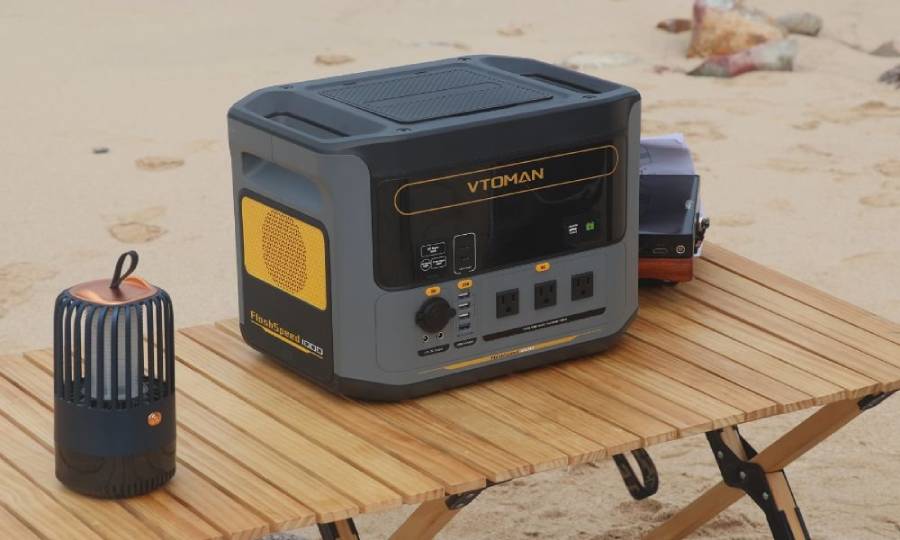
One advantage of VTOMAN is its combination of features and competitive pricing. For example, the VTOMAN Jump 1000 portable power station combines LiFePO4 battery technology with AC and DC outputs, allowing users to power small appliances, automotive accessories, and electronic devices. Its jump-starting functionality also distinguishes it from conventional portable power stations. These features make VTOMAN attractive to drivers who want multiple emergency power functions in one device.
Product specifications alone do not guarantee reliability. Battery lifespan, electrical protection, charging performance, and component durability determine how well a power device performs over time. VTOMAN offers models with battery management systems and lithium-based battery technology, but buyers should evaluate the specifications and independent testing of individual products rather than assume every VTOMAN device performs equally.
What Are the Main Drawbacks of VTOMAN Products?
The main drawbacks of VTOMAN products are inconsistent customer service experiences, limited independent long-term durability data, and model-specific performance limitations. These concerns matter because emergency power equipment must remain dependable after extended storage and repeated charging cycles.
Customer feedback on review platforms includes complaints about delayed responses, delivery problems, and difficulties resolving warranty claims. Such reports do not establish that all VTOMAN products are unreliable, but they highlight potential risks when purchasing equipment that may require technical assistance or replacement parts.
Performance limitations also differ between product categories. Some portable power stations have relatively slow charging speeds or noticeable cooling fan noise compared with competing models. For example, an independent Notebookcheck evaluation of the VTOMAN Jump 2200 identified competitive value and solid efficiency while noting charging speed and fan noise as weaknesses. These findings apply to the tested model rather than the entire VTOMAN lineup.
Are VTOMAN Products Good Quality?
VTOMAN products offer good quality for their price category, particularly models equipped with LiFePO4 batteries, battery management systems, and multiple electrical outputs. However, overall product quality depends on battery chemistry, construction, thermal management, and electrical performance rather than brand reputation alone.
Battery technology is a major quality factor in VTOMAN portable power stations. Models such as the Jump 1000 use lithium iron phosphate (LiFePO4) batteries, which provide greater thermal stability and longer potential cycle life than conventional lithium-ion chemistries such as nickel manganese cobalt oxide (NMC). LiFePO4 batteries also resist thermal runaway more effectively under comparable conditions. Actual battery longevity still depends on operating temperature, discharge depth, charging behavior, and the manufacturer’s battery management system.
VTOMAN products also incorporate electrical protection features designed to reduce damage during operation. Depending on the model, these include overcurrent protection, short-circuit protection, overvoltage protection, and temperature monitoring. A battery management system monitors operating conditions and limits unsafe charging or discharging when specified thresholds are reached. For automotive jump starters, correct clamp connections and reverse-polarity protection are especially important because incorrect battery connections can damage vehicle electronics or create electrical hazards.
Construction quality and thermal management further influence product reliability. Portable power stations generate heat when converting stored DC battery energy into AC electricity through an inverter. Cooling fans and ventilation systems help regulate internal temperatures, but their effectiveness varies with output load and ambient conditions. A power station operating near its rated output for extended periods experiences greater thermal stress than one powering low-wattage accessories.
Overall, VTOMAN provides a competitive combination of battery technology, electrical protection, and practical functionality. Nevertheless, these features establish technical capability rather than proven long-term reliability. Buyers should compare model-specific specifications, independent performance tests, and warranty conditions before selecting a VTOMAN product for emergency automotive use.
Are VTOMAN Jump Starters Reliable?
VTOMAN jump starters are designed to provide reliable emergency starting power for compatible 12V vehicles, but their actual performance depends on battery condition, engine size, temperature, and the specific jump starter model. The brand offers portable lithium battery jump starters intended for gasoline and diesel vehicles, including cars, SUVs, and trucks. However, advertised peak current ratings do not guarantee successful starting under every operating condition.
A jump starter’s reliability depends on three main factors: its ability to deliver sufficient starting current, maintain battery charge during storage, and protect the vehicle’s electrical system. Starting current must overcome the electrical resistance of the starter motor and engine, particularly when engine oil becomes more viscous in cold temperatures. Battery capacity and discharge capability also determine whether the jump starter can support repeated starting attempts.
VTOMAN jump starters incorporate model-dependent safety features, including protection against incorrect electrical connections and excessive current. These safeguards help reduce the risk of damage during emergency use. However, drivers should verify engine compatibility, operating temperature limits, and battery voltage requirements before relying on a VTOMAN jump starter for roadside emergencies.
Can VTOMAN Jump Starters Start a Dead Car Battery?
VTOMAN jump starters can start vehicles with discharged 12V batteries when the selected model provides sufficient starting current and supports the vehicle’s engine specifications. Their internal lithium batteries supply electrical power directly to the vehicle’s starting system, allowing the starter motor to turn the engine without relying entirely on the discharged battery.
Starting success depends on the difference between a discharged battery and a physically damaged battery. A battery with insufficient charge may still support a normal starting procedure when connected to a compatible jump starter. However, a battery with internal damage, severe deterioration, or an electrical short may prevent successful starting or create safety risks. A jump starter also cannot correct mechanical engine problems, starter motor failures, or fuel delivery issues.
Some jump starters provide an override or boost function for batteries with extremely low voltage. This feature is model-specific and may bypass normal connection-detection safeguards. Drivers should use it only when the manufacturer’s instructions explicitly permit it and the vehicle battery is confirmed to be compatible.
How Do VTOMAN Jump Starters Perform in Cold Weather?
VTOMAN jump starters can experience reduced starting performance in cold weather because lithium batteries deliver less usable power as their internal temperature decreases. This limitation affects lithium battery jump starters generally and is not unique to VTOMAN. The severity depends on battery chemistry, charge level, temperature, and the electrical demands of the vehicle.
Low temperatures increase internal battery resistance and slow the electrochemical reactions responsible for delivering electrical energy. At the same time, cold engine oil increases the torque required to turn the engine, while a vehicle’s lead-acid battery also loses starting capability. These combined effects make winter starting more demanding than starting the same vehicle in moderate temperatures.
Drivers should store jump starters within the manufacturer’s specified temperature range, maintain an adequate charge, and inspect the device periodically. Keeping a jump starter in a vehicle throughout winter may expose it to temperatures below its recommended operating range. Independent cold-weather testing for specific VTOMAN models is needed to establish how their performance compares with competing jump starters under identical conditions.
Are VTOMAN Portable Power Stations Reliable?
VTOMAN portable power stations offer practical reliability for vehicle camping, portable electronics, and temporary backup power when their output capacity matches the connected equipment. Models equipped with LiFePO4 batteries are designed for repeated charging and discharging, while integrated inverters provide AC electricity for compatible devices. However, battery chemistry alone does not establish inverter durability, long-term reliability, or consistent performance under heavy electrical loads.
Battery capacity and inverter output are the two primary specifications that determine a portable power station’s usefulness. Battery capacity, measured in watt-hours (Wh), indicates the amount of energy stored, while inverter output, measured in watts (W), determines how much electrical power the station can deliver at one time. For example, a 1,000Wh power station supplying a continuous 100W load has a theoretical runtime of 10 hours. Actual runtime is shorter because of inverter losses, internal power consumption, and operating conditions.
LiFePO4 battery technology contributes to the potential service life of compatible VTOMAN power stations. This chemistry generally supports more charge-discharge cycles than conventional NMC lithium-ion batteries under comparable conditions. Nevertheless, cycle-life ratings represent specified testing conditions rather than a guarantee of identical performance in everyday use. Heat exposure, frequent deep discharging, and high charging currents can accelerate battery degradation.
Charging performance also affects reliability during extended road trips. VTOMAN power stations support different charging methods depending on the model, including AC wall charging, vehicle charging, and compatible solar panels. These options provide flexibility when access to electricity is limited. However, charging times depend on input power limits, battery capacity, temperature, and the charging source. Some independently tested VTOMAN models have shown slower charging performance than competing portable power stations.
For automotive applications, VTOMAN portable power stations can operate compatible accessories such as portable refrigerators, LED camping lights, tire inflators, and electronic devices. A portable refrigerator drawing an average of 40W, for example, would theoretically consume 320Wh over eight hours. Actual consumption depends on compressor cycling, ambient temperature, and the refrigerator’s insulation. Users must also account for conversion losses and verify that the power station supports the appliance’s startup power requirements.
VTOMAN portable power stations are therefore suitable for planned, moderate power demands when buyers select an appropriately rated model. For critical backup applications, long-term durability, documented safety certifications, and dependable warranty support deserve additional consideration. Buyers should distinguish manufacturer specifications from independently verified performance before treating any portable power station as a guaranteed emergency electricity source.
What Do Customer Reviews Say About VTOMAN?
Customer reviews of VTOMAN show mixed experiences, with positive feedback about product features and affordability alongside complaints about customer service, shipping, and warranty assistance. This distinction matters because a portable power device can deliver satisfactory performance while its manufacturer provides an inconsistent ownership experience. Buyers should evaluate both product functionality and after-sales support before purchasing emergency automotive equipment.
Positive feedback generally focuses on the practical capabilities of VTOMAN portable power stations, including multiple charging outputs, LiFePO4 battery technology, and competitive pricing. These features appeal to customers who need portable electricity for camping equipment, vehicle accessories, and temporary power outages. Independent testing also provides evidence of product-level strengths. For example, Notebookcheck’s evaluation of the VTOMAN Jump 2200 identified solid efficiency and competitive value, although the reviewer also noted limitations involving charging speed and fan noise.
Customer review platforms provide a different perspective from controlled product testing. Reviews describe individual purchasing experiences, including delivery, product operation, communication with the seller, and attempts to obtain support. However, online ratings are influenced by voluntary participation, the age of submitted reviews, and the tendency of dissatisfied customers to report negative experiences. Consequently, a review platform’s average rating should not be interpreted as a statistically representative product reliability measurement.
What Are the Most Common VTOMAN Customer Complaints?
The most prominent reported VTOMAN customer complaints concern customer service communication, delivery problems, and difficulties obtaining satisfactory resolutions when products develop faults. These issues appear in consumer feedback, although the available evidence does not establish their frequency across all VTOMAN purchases.
Customer support complaints are particularly relevant for battery-powered equipment because diagnosing a fault may require technical guidance, replacement components, or warranty service. For example, a portable power station that stops charging may have a problem involving its charging adapter, input circuitry, battery management system, or internal battery. Without effective manufacturer support, identifying the cause and obtaining an appropriate repair becomes more difficult.
Delivery and warranty complaints introduce additional purchasing risks. Customers may report delayed shipments, difficulties arranging returns, or unsatisfactory responses to product problems. These experiences should be distinguished from verified manufacturing defects because shipping providers, third-party sellers, and warranty eligibility can influence the outcome of an individual case.
Buyers should therefore examine recent reviews for the exact VTOMAN model they intend to purchase rather than relying exclusively on the brand’s overall rating. Reviews that identify the product model, purchase date, operating conditions, and customer service outcome provide more useful evidence than brief ratings without supporting details.
Does VTOMAN Offer a Good Warranty?
VTOMAN advertises warranty and after-sales support for its portable power products, but the value of that coverage depends on the applicable product terms, purchase location, and effectiveness of the claims process. The brand has promoted a two-year warranty and five-year after-sales service, although buyers should verify whether these provisions apply to their specific jump starter or portable power station.
Warranty duration and after-sales service duration are not necessarily equivalent. A product warranty generally covers eligible defects during a defined period, subject to exclusions and proof-of-purchase requirements. After-sales service may include technical assistance or access to support beyond the warranty period without guaranteeing free replacement parts or repairs. Buyers should not interpret an advertised five-year service period as five years of comprehensive warranty protection.
Warranty eligibility also depends on the circumstances of the product failure. Battery equipment may be subject to exclusions involving physical damage, unauthorized modifications, improper charging, water exposure, or operation outside specified environmental limits. For example, a jump starter damaged by an incorrect electrical connection may be treated differently from a device that develops an internal manufacturing defect during normal use. The manufacturer’s written terms determine whether either situation qualifies for coverage.
Customer support quality is an additional consideration because a warranty provides limited practical value when claims are difficult to resolve. Consumer complaints involving communication delays and warranty assistance indicate that prospective buyers should evaluate the support process alongside the advertised coverage. However, individual complaints do not establish the percentage of claims successfully handled by VTOMAN.
Before purchasing, buyers should confirm the warranty period for the exact model, identify the responsible seller, review the return policy, and retain the purchase receipt. Purchasing through an authorized retailer with clearly documented return procedures can provide an additional route for resolving problems. For automotive emergency equipment, these precautions are particularly important because a failed jump starter or portable power station may remain unused for months before its next critical application.
Are VTOMAN Products Worth the Money?
VTOMAN products can be worth the money for buyers who prioritize battery capacity, versatile power outputs, and automotive emergency features at competitive prices. The brand’s value proposition is strongest when its specifications meet a buyer’s actual power requirements without the additional cost of premium features. However, purchase value also depends on charging efficiency, long-term durability, warranty coverage, and customer support.
For portable power stations, value is determined by more than the advertised battery capacity. Buyers should compare usable energy in watt-hours (Wh), continuous inverter output in watts (W), charging speed, battery cycle life, and available output ports. For example, a 1,000Wh power station priced at $500 has a nominal battery cost of $0.50 per watt-hour. A competing 1,000Wh model priced at $700 costs $0.70 per watt-hour. These hypothetical figures illustrate a basic price comparison, but they do not account for inverter efficiency, charging performance, or warranty differences.
VTOMAN’s multifunctional products can also offer practical value for vehicle owners. A portable power station with compatible jump-starting capability can serve multiple purposes, including powering camping accessories, charging electronics, and assisting with a discharged vehicle battery. However, buyers must verify whether the selected model includes the necessary jump-starting hardware and supports their vehicle’s engine specifications. A standard portable power station should not be assumed to function as a car jump starter.
Lower purchase prices do not automatically translate into lower ownership costs. A product that requires replacement sooner, charges inefficiently, or creates difficulties during warranty claims may become more expensive over time. Independent testing of the VTOMAN Jump 2200 has identified competitive value alongside limitations in charging speed and fan noise, demonstrating why buyers should evaluate the complete ownership experience rather than capacity and price alone.
Overall, VTOMAN is worth considering for occasional roadside assistance, car camping, and noncritical portable power applications. Buyers who require proven long-term durability, extensive independent testing, or highly dependable after-sales support should compare VTOMAN with established alternatives before making a purchase.
Who Makes VTOMAN Products?
VTOMAN is a consumer portable power equipment brand that markets automotive jump starters, portable power stations, and related charging accessories. Its products are sold under the VTOMAN name through online retail channels and the brand’s official website. However, the brand name alone does not establish the identity of every company involved in product design, manufacturing, distribution, or warranty administration.
Portable power equipment brands can operate through multiple business entities, including trademark owners, manufacturers, regional distributors, and authorized retailers. These companies may perform different functions even when products carry the same brand name. Consequently, identifying the legal manufacturer requires documentation such as product labels, regulatory filings, warranty terms, or official corporate records rather than assumptions based on a brand’s marketing website.
For buyers, the most important company information includes the legal entity responsible for warranty claims, the authorized sales channels, and the availability of technical support. These details determine which organization customers must contact when a jump starter or portable power station requires repair, replacement, or troubleshooting.
Where Are VTOMAN Products Made?
VTOMAN is associated with the Chinese portable power equipment industry, but the manufacturing location of every VTOMAN product should not be assumed without model-specific documentation. A brand’s country of origin, corporate registration, and product manufacturing location are separate facts that require independent verification.
The most reliable way to establish a particular product’s manufacturing origin is to inspect its country-of-origin label, packaging, user manual, or applicable import documentation. For example, a product marked “Made in China” identifies its declared manufacturing country but does not necessarily reveal the factory responsible for producing its battery cells, inverter components, or final assembly.
Manufacturing location alone does not determine product quality. Battery chemistry, component selection, quality control, electrical protection, and compliance with applicable safety standards provide more meaningful evidence of reliability. Buyers evaluating VTOMAN should therefore prioritize verified technical specifications, model-specific safety documentation, independent testing, and warranty accountability over assumptions about manufacturing origin.
Read more: How to Use Stanley FATMAX Jump Starter: Step-by-Step
How Does VTOMAN Compare With Other Brands?
VTOMAN competes with brands such as NOCO, EcoFlow, Jackery, and Hulkman, but the best alternative depends on whether buyers need a dedicated automotive jump starter or a portable power station. VTOMAN emphasizes multifunctional power equipment and competitive pricing, while its competitors offer different combinations of specialized features, charging performance, product selection, and support services.
For portable power stations, VTOMAN and EcoFlow offer products designed to supply electricity away from conventional outlets. Both brands have models using LiFePO4 battery technology, but their charging systems, inverter capabilities, and available accessories differ. EcoFlow offers models with fast AC charging and app-based monitoring, while selected VTOMAN products emphasize expandable battery capacity and integrated emergency power functions. These differences should be evaluated using comparable models rather than general brand claims.
Jackery is another alternative for buyers interested in portable electricity for camping and vehicle-based travel. Its product lineup includes compact power stations and higher-capacity systems designed for outdoor and backup applications. When comparing Jackery with VTOMAN, buyers should examine usable battery capacity, charging input limits, inverter output, weight, and warranty terms. Similar advertised capacities do not guarantee identical runtime because conversion efficiency and internal power consumption vary.
Is VTOMAN Better Than NOCO for Jump Starters?
VTOMAN is not universally better than NOCO for automotive jump starters because the two brands offer different product ranges, and starting performance depends on the specific models being compared. NOCO specializes in automotive battery equipment, including its Boost series of lithium jump starters, while VTOMAN offers jump-starting equipment alongside portable power stations and other power accessories.
NOCO jump starters are designed primarily for emergency vehicle starting, with model-specific peak current ratings, engine compatibility limits, and electrical protection systems. VTOMAN jump starters also provide portable starting power, but buyers should verify their specifications against the vehicle’s engine size, battery voltage, and operating conditions. Advertised peak amperage alone is insufficient to establish which device will start a particular vehicle more reliably.
Safety and storage requirements are equally important. Both brands offer products with protective electrical features, although the available safeguards and operating procedures differ by model. Buyers should compare reverse-polarity protection, low-voltage battery detection, storage temperature limits, and recommended recharge intervals. Independent cold-weather testing and repeated-start performance measurements provide stronger evidence than manufacturer peak-current claims.
VTOMAN may appeal to buyers seeking affordable emergency power equipment or multifunctional products. NOCO may be more suitable for drivers who prefer a dedicated automotive jump starter with a broad selection of vehicle-specific models. A definitive performance winner requires direct testing of comparable devices under identical conditions.
Who Should Buy VTOMAN Products?
VTOMAN products are best suited to budget-conscious drivers, occasional car campers, and buyers who need portable electricity for noncritical applications. The brand offers equipment that can support roadside emergencies, recreational travel, and temporary backup power, provided the selected model meets the required electrical specifications. Buyers who prioritize established long-term reliability evidence and highly responsive warranty support should evaluate alternatives before purchasing.
Drivers seeking emergency jump-starting equipment should choose a VTOMAN model specifically rated for their vehicle’s battery voltage and engine type. For example, a driver with a 12V gasoline-powered SUV should verify the jump starter’s supported engine displacement, operating temperature range, and starting procedure. The device should also be charged and inspected periodically because lithium batteries gradually lose charge during storage.
Car camping enthusiasts can benefit from VTOMAN portable power stations when their equipment requires moderate amounts of electricity. Portable refrigerators, LED lighting, mobile devices, and small electronics are examples of compatible loads when their electrical requirements fall within the power station’s rated limits. A buyer planning to operate a 60W appliance for eight hours needs at least 480Wh of delivered energy, with additional battery capacity required to account for conversion losses and other consumption.
VTOMAN is less suitable for buyers who require guaranteed power availability for critical equipment or whose applications demand extensive independent reliability evidence. Portable power stations are not substitutes for permanently installed automotive electrical systems, and standard power stations cannot automatically replace dedicated jump starters. Buyers should also avoid connecting equipment that exceeds the manufacturer’s continuous output or surge power limits.
For most automotive buyers, the decision comes down to three considerations: vehicle compatibility, realistic power requirements, and confidence in after-sales support. VTOMAN offers useful features and potentially strong value, but purchasing the correct model is more important than choosing the brand based on price alone. Comparing the best portable jump starters for cars or equivalent portable power stations can help buyers identify equipment that meets their needs without paying for unnecessary capacity or features.