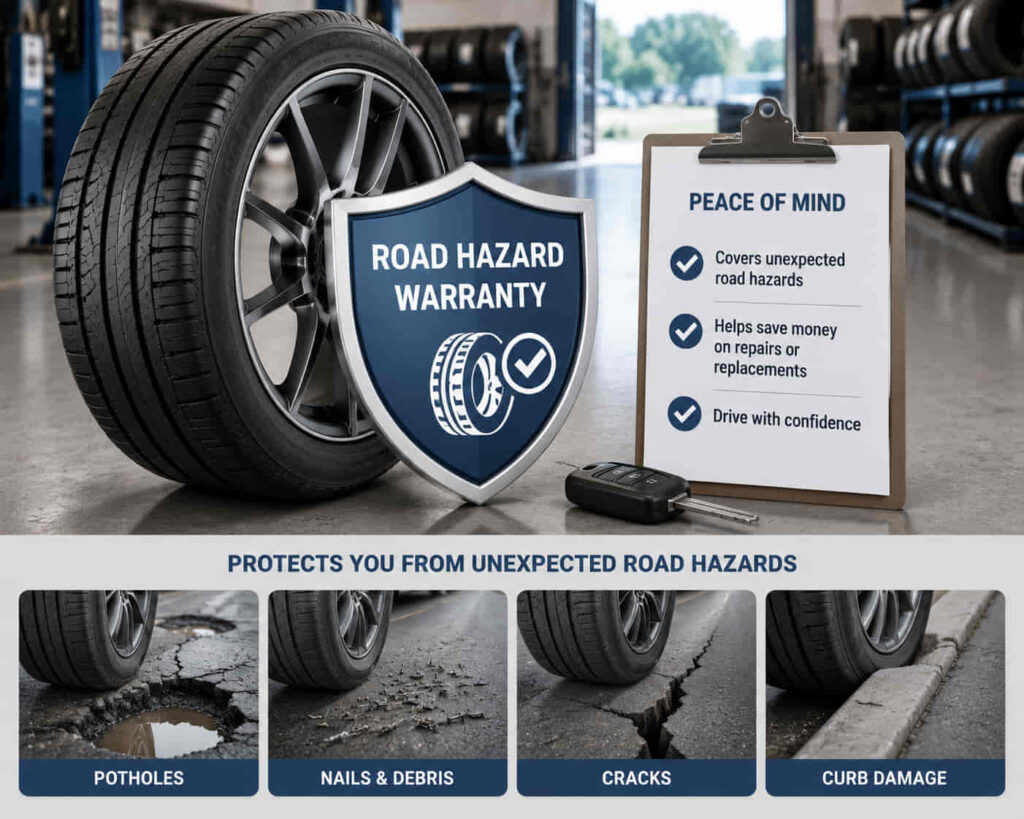
A road hazard warranty can be worth buying for drivers who want financial protection against unexpected tire damage caused by external road conditions, but its value depends on tire cost, driving environment, and the likelihood of needing repairs or replacement. This type of protection is designed to reduce the financial impact of tire damage that happens during normal driving situations rather than problems caused by manufacturing defects or regular wear.
Tires are exposed to unpredictable hazards every day, including nails, sharp debris, potholes, and damaged road surfaces. Even a relatively new tire can become unusable after a sudden impact or puncture, creating an unexpected replacement expense for vehicle owners.
A road hazard warranty provides additional protection by covering certain types of accidental tire damage according to the terms of the plan. It works differently from a standard tire warranty, which usually focuses on defects in materials or workmanship rather than damage caused by outside conditions.
However, a road hazard warranty is not automatically valuable for every driver. Someone with expensive tires, frequent driving habits, or regular exposure to poor road conditions may receive more benefit than someone who drives occasionally on well-maintained roads.
This guide explains how road hazard warranties work, what they cover, their limitations, the financial value they provide, and whether purchasing this type of tire protection makes sense for different drivers.
What Does Road Hazard Warranty Cover?
A road hazard warranty covers certain types of unexpected tire damage caused by external conditions on the road, helping drivers reduce repair or replacement costs when qualifying damage occurs. The purpose of this protection is to address situations that are outside normal tire ownership, such as sudden punctures or impact damage that cannot always be prevented through regular maintenance.
Road hazards are common causes of unexpected tire problems because they happen during normal driving. Nails, screws, broken pavement, potholes, and other debris can damage a tire even when the tire has plenty of tread remaining and has been properly maintained.
One of the main benefits of road hazard protection is coverage for puncture-related damage. A tire that can be safely repaired may receive repair support, while damage that makes the tire unsafe to use may qualify for replacement depending on the specific warranty terms.
The value of this coverage becomes more noticeable with expensive tires. Modern vehicles often use larger tires, performance tires, or specialty tires that can cost significantly more to replace. In these situations, a single unexpected tire failure can create a much larger expense compared with the cost of adding protection.
However, coverage details vary between providers and plans. Some warranties may cover specific road hazards while excluding certain types of damage or limiting reimbursement based on tire condition, mileage, or remaining tread depth.
For example, a driver who runs over a sharp piece of metal and experiences a sudden puncture may benefit from road hazard coverage if the damage meets the warranty requirements. Without protection, the driver may need to pay the entire repair or replacement cost immediately.
What Does Road Hazard Warranty Not Cover?
A road hazard warranty does not cover every tire problem because it is designed for unexpected external damage rather than normal wear, maintenance issues, or tire misuse. Understanding these limitations is important because many tire problems develop from causes that are not related to road hazards.
Normal tread wear is one of the most common exclusions. Tires naturally lose tread as they accumulate mileage, and this gradual reduction in performance is considered part of normal ownership. A road hazard warranty is not intended to replace tires simply because they have reached the end of their expected lifespan.
Maintenance-related problems are also typically outside the purpose of road hazard protection. Issues caused by incorrect tire inflation, poor wheel alignment, improper rotation, or neglect can create uneven wear and reduce tire life, but these problems are usually preventable through proper vehicle care.
Damage caused by improper use may also not qualify for coverage. Using tires beyond their recommended limits, driving on severely damaged tires, or operating tires in conditions they were not designed for can affect warranty eligibility.
This distinction separates road hazard protection from general tire maintenance. The warranty protects against unpredictable events, while drivers remain responsible for keeping tires properly maintained and replacing them when they naturally wear out.
For example, a tire with excessive inner-edge wear caused by poor alignment is a maintenance issue, not a road hazard event. In contrast, a tire damaged by hitting a large pothole may represent the type of unexpected incident that road hazard coverage is designed to address.
Read more: Are All Season Tires Good in Snow
Is Road Hazard Warranty Worth the Cost?
A road hazard warranty is worth the cost when the potential expense of unexpected tire damage is higher than the price of the protection plan itself. The financial value of this coverage depends on three main factors: the cost of the tires, the driver’s exposure to road hazards, and the likelihood of needing a repair or replacement.
The biggest reason drivers purchase road hazard protection is to avoid unexpected tire expenses. A single damaged tire can create a significant cost, especially for vehicles using large SUV tires, truck tires, run-flat tires, or premium performance tires. In these situations, replacing one tire may cost hundreds of dollars, making additional protection more valuable.
Driving environment also plays an important role in determining whether the warranty provides good value. Drivers who frequently travel through construction areas, roads with potholes, rural routes, or regions with poor pavement conditions face a higher chance of experiencing tire damage caused by external hazards.
However, the financial benefit is not the same for every driver. Someone with inexpensive tires who drives limited miles on well-maintained roads may pay for coverage that is rarely used. In contrast, a driver with expensive tires and frequent road exposure may recover the cost of the warranty after one qualifying incident.
The decision should be based on risk rather than the warranty price alone. A road hazard warranty functions as a form of financial protection, similar to other optional coverage products. It provides value by reducing uncertainty rather than guaranteeing savings for every customer.
For example, a driver who purchases a set of premium tires for an SUV may find the warranty worthwhile because replacing one damaged tire could cost significantly more than the original protection fee.
What Are the Benefits of Road Hazard Warranty?
The main benefits of a road hazard warranty are reduced unexpected expenses, easier tire replacement decisions, and additional financial security when accidental tire damage occurs. These advantages make the protection more appealing for drivers who prefer predictable vehicle ownership costs.
One major benefit is protection from sudden repair bills. Tire damage often happens without warning, and drivers may need immediate solutions to continue commuting, working, or traveling. A road hazard warranty can reduce the financial pressure created by these unexpected situations.
Another benefit is convenience. Without protection, a driver with a damaged tire must evaluate repair options, replacement costs, and available services during an unexpected event. A warranty simplifies this process by providing a predefined support system through the tire retailer or service provider.
Road hazard coverage can also protect the value of a tire investment. Modern vehicles often use specialized tires that are more expensive because of their size, performance characteristics, or construction. Protecting these tires can help reduce the financial impact of damage before the tires reach the end of their normal lifespan.
The benefit is especially relevant for drivers who keep their vehicles for several years. Longer ownership periods increase the number of miles driven and the opportunities for encountering road hazards.
For example, a person who drives daily on highways with frequent construction zones may receive more practical value from road hazard protection than someone who only drives short distances occasionally.
What Are the Downsides of Road Hazard Warranty?
The main downsides of a road hazard warranty are the additional upfront cost, coverage restrictions, and the possibility that some drivers may never use the benefits. While this protection can reduce financial risk, it is not always the most cost-effective choice for every vehicle owner.
One limitation is that the warranty increases the initial cost of purchasing tires. Drivers must pay extra for protection at the beginning, even though the benefit only becomes valuable if qualifying tire damage occurs later. If the tires remain in good condition throughout their lifespan, the customer may not recover the cost of the plan.
Another limitation is that coverage conditions can be specific. A driver may expect the warranty to cover any tire problem, but protection usually applies only to certain types of damage caused by road hazards. Normal wear, improper maintenance, and preventable tire issues are generally handled differently.
The value of the warranty also depends on tire replacement costs. For lower-priced tires, purchasing additional protection may provide limited financial advantage because replacing the tire may not be significantly more expensive than the warranty cost itself.
Some drivers may also prefer saving money independently instead of paying for additional coverage. This approach can make sense for people with low driving mileage, reliable road conditions, or vehicles equipped with affordable tires.
For example, a driver who rarely uses a vehicle and primarily travels on well-maintained roads may have a lower chance of experiencing road hazard damage. In this situation, the warranty may provide less practical value compared with someone who drives thousands of miles each year.
Who Should Buy Road Hazard Warranty?
A road hazard warranty is most suitable for drivers who want additional financial protection against unexpected tire damage, especially those with expensive tires, high mileage, or frequent exposure to poor road conditions. The decision should be based on driving habits and risk level rather than assuming every driver needs the same type of protection.
Drivers with expensive tires often receive the greatest potential value from road hazard coverage. Premium tires, large SUV tires, truck tires, and specialty tires can require significant replacement costs, making protection more useful when unexpected damage occurs.
High-mileage drivers are another group that may benefit because more time on the road increases exposure to hazards. Daily commuters, business drivers, and people who frequently travel long distances encounter more opportunities for punctures, impacts, and other tire-related problems.
Location also affects the value of protection. Drivers in areas with poor road surfaces, frequent construction, heavy traffic, or seasonal pavement damage may face a higher risk of tire damage compared with drivers in areas with consistently maintained roads.
However, some drivers may not need additional protection. People with inexpensive tires, low annual mileage, or a strong ability to handle unexpected repair costs may find that a road hazard warranty provides limited financial benefit.
The best decision comes from evaluating three factors: the cost of replacing the tires, the likelihood of encountering road hazards, and personal preference for predictable expenses. A driver who wants to minimize unexpected costs may value the warranty more than someone who is comfortable paying for repairs only when problems occur.
Is Road Hazard Warranty Worth It?
A road hazard warranty can be worth buying for drivers who want protection against unexpected tire damage and prefer reducing financial uncertainty when tire problems occur. However, the value of this protection depends on individual driving conditions, tire costs, and the likelihood of experiencing road-related damage.
For drivers with expensive tires, frequent mileage, or regular exposure to poor road conditions, a road hazard warranty can provide meaningful financial protection. A single qualifying repair or replacement may offset much of the warranty cost, especially when the damaged tire is expensive to replace.
However, the warranty is not automatically the best choice for every driver. People with low-cost tires, limited driving habits, or minimal exposure to road hazards may receive less value because they may never use the coverage during the tire’s lifespan.
The most important factor is understanding what the warranty actually covers and comparing that protection with the potential cost of replacing a damaged tire. A road hazard warranty should be viewed as a risk management tool rather than a guaranteed way to save money.
Overall, road hazard warranty protection is most valuable for drivers who want predictable ownership costs and additional security against unexpected tire damage. When the risk of tire failure and replacement expenses is high, the convenience and financial protection provided by the warranty can make the additional cost worthwhile.