Many Hyundai owners first notice a steering coupler issue through a clicking sound in the steering wheel. At first, the noise seems small. Many drivers ignore it. However, the problem often grows over time.
The steering wheel can start to feel loose. It may also respond less smoothly during turns. Drivers notice this more at low speeds or on rough roads. The driving experience becomes less stable and less confident.
The Hyundai Steering Coupler Recall draws attention because it affects steering performance directly. The issue starts from a small rubber part inside the Motor Driven Power Steering system. This small part plays an important role in steering stability.
As the part wears out, drivers hear clicking or clunking sounds. Many owners report that the noise gets louder over time. Some drivers also feel vibration in the steering wheel. Others notice extra play when turning.
Several Hyundai models show this issue. These include Elantra, Sonata, Santa Fe, and Tucson. Some drivers detect the problem early. Others notice it only after months of use.
This guide explains the Hyundai Steering Coupler Recall in detail. It covers affected models, symptoms, repair costs, warranty coverage, and what owners should do next. The goal is to help drivers make safe and informed decisions.
What Is a Hyundai Steering Coupler?
The steering coupler is a small rubber component inside the Motor Driven Power Steering system. It connects the steering wheel to the electric steering motor. It also helps reduce vibration and noise during driving.
Hyundai designs this part to improve steering comfort. The coupler absorbs shock from road conditions. It also helps keep steering smooth and stable.
Over time, heat, vibration, and regular use can damage the coupler. The rubber can crack or wear down. When this happens, the connection inside the steering system becomes less stable.
Drivers then start to hear clicking sounds when they turn the steering wheel. The steering may also feel less precise. The wheel can feel slightly loose during normal driving.
The system does not usually fail completely at once. However, the problem slowly becomes worse. Steering feedback becomes less accurate. Noise becomes more frequent.
This issue appears more often in Hyundai vehicles with electric power steering. These systems rely on precise electronic support. Even small wear inside the coupler becomes noticeable to the driver.
Early detection helps reduce repair cost. It also prevents further damage to steering components.
Why Hyundai Issued Steering Coupler Recalls
Hyundai issued steering coupler recalls after many drivers reported steering noise and steering looseness. The issue did not affect engine performance. It directly impacted steering feel and driver control. This made it a safety concern for many owners.
The main cause comes from wear inside the rubber steering coupler. This part sits inside the Motor Driven Power Steering system. It connects key steering components and helps control vibration. Over time, the rubber material breaks down faster than expected in some vehicles.
Drivers started to report clicking sounds when turning the steering wheel. Many also felt extra play in the steering. The steering wheel did not feel as tight or responsive as before. These complaints increased across several Hyundai models.
Hyundai and safety regulators reviewed these reports. They found a pattern linked to coupler wear. In many cases, the coupler did not last as long as intended. This created inconsistent steering feedback for drivers.
Hyundai responded with service campaigns and recalls for affected models. The goal was to inspect the steering system and replace the worn coupler. In many cases, dealers replaced the part without charging owners.
It is important to understand that this issue does not usually cause sudden steering failure. However, it reduces steering precision. It can also increase driver fatigue because the steering feels unstable.
The recall decision focused on improving safety and restoring proper steering feel. Hyundai aimed to fix the issue before it caused more serious driving risks or customer dissatisfaction.
Hyundai Models Affected by the Steering Coupler Issue
The steering coupler issue appears in several Hyundai models across different production years. The problem mainly affects vehicles equipped with Motor Driven Power Steering systems. These systems rely on a small rubber coupler that can wear out over time.
One of the most commonly reported models is the Hyundai Elantra. Many Elantra owners describe clicking noises and loose steering feel, especially at low speeds. The issue often becomes noticeable during parking or slow turning.
The Hyundai Sonata is another model frequently linked to steering coupler wear. Drivers report steering wheel vibration and reduced steering precision. In some cases, the noise becomes more obvious after several years of use.
Hyundai Santa Fe models also appear in customer complaints. Owners often mention clunking sounds when turning the wheel. Some drivers notice the steering feels less stable on uneven roads.
The Hyundai Tucson is also included in many reports. The symptoms are similar, including steering noise and slight looseness in the wheel. These signs usually develop gradually.
Some Kia models share similar steering systems and may experience related issues. This includes vehicles like Kia Optima in certain production years. The root cause is often similar coupler wear inside the steering system.
Not every vehicle in these model lines is affected. The issue depends on production year, driving conditions, and component wear. However, these models are the most commonly associated with steering coupler complaints.
Hyundai dealers typically check the steering system during inspection. They confirm whether the coupler shows signs of wear or damage before recommending replacement.
Common Symptoms of Steering Coupler Failure
A failing steering coupler usually shows early warning signs before the problem becomes serious. Most drivers notice these symptoms gradually while driving in normal conditions.
One of the first signs is a clicking noise from the steering wheel. The sound often appears when the driver turns the wheel at low speed. Many drivers hear it when parking or making slow turns in tight spaces.
Another common symptom is a loose steering feel. The steering wheel may feel less tight than usual. It can also feel slightly disconnected from the movement of the front wheels. This creates a lack of confidence while driving.
Some drivers also notice vibration in the steering wheel. The vibration becomes more obvious when driving on uneven roads. In some cases, the vibration increases over time as the coupler wears further.
Steering responsiveness can also change. The wheel may feel delayed when the driver makes small adjustments. This can make the vehicle feel less stable during lane changes or turns.
In more advanced cases, drivers hear a clunking sound when going over bumps. This happens because the worn coupler allows extra movement inside the steering system. The sound becomes more frequent as wear increases.
These symptoms do not always mean immediate steering failure. However, they indicate that the steering system is no longer operating at full precision. Ignoring these signs can lead to more discomfort and higher repair costs later.
Early inspection helps confirm whether the steering coupler is the cause. A dealer or technician can quickly identify wear and recommend replacement if needed.
Is the Hyundai Steering Coupler Problem Dangerous?
The steering coupler problem is not usually a sudden failure issue. Most drivers do not lose steering completely. However, it can still affect driving safety in important ways.
The main risk comes from reduced steering precision. When the coupler wears out, the steering wheel may feel loose. The driver may need more effort to keep the vehicle straight. This can increase stress during long drives or highway travel.
Another concern is delayed steering response. The vehicle may not react as quickly as expected when the driver turns the wheel. This can become more noticeable during lane changes or emergency maneuvers. Even a small delay can reduce driving confidence.
In severe cases, the steering wheel can produce strong clicking or clunking noises. These sounds indicate more movement inside the steering system. While the car remains drivable, the steering feel becomes less stable.
Most safety experts consider this issue a low to moderate risk problem. It does not usually cause immediate loss of control. However, it can increase the chance of driver error, especially if the symptoms are ignored for a long time.
Driving with a worn coupler is not recommended for extended periods. The problem tends to worsen gradually. Steering comfort and accuracy continue to decline. This can make everyday driving less predictable.
The safest approach is early inspection and repair. Fixing the coupler restores proper steering feel. It also reduces unnecessary risk and improves overall vehicle control.
Hyundai Steering Coupler Repair Costs
The repair cost for a steering coupler issue depends on the vehicle model, labor rates, and where the repair is done. In many cases, the coupler itself is not an expensive part. The main cost comes from labor and inspection time.
At authorized Hyundai dealerships, the repair cost can vary depending on location and vehicle condition. Some drivers report relatively low costs when the issue is covered under service campaigns or extended warranty programs. In these cases, the coupler is replaced without charge.
If the vehicle is not covered, the cost usually includes parts and labor. The steering column needs partial disassembly to access the coupler. This increases labor time compared to simple repairs. As a result, total cost can rise depending on workshop pricing.
Independent repair shops may offer lower labor rates. However, the quality of diagnosis and parts may vary. Some owners choose dealerships to ensure proper inspection and correct replacement procedures.
In most cases, the repair does not require replacing the entire steering system. Only the rubber coupler is replaced. This helps keep costs lower compared to major steering repairs.
Repair time is usually short. Many technicians complete the work within a few hours. However, waiting time may increase depending on workshop schedule and part availability.
Overall, the steering coupler repair is considered a moderate-cost repair if not covered by warranty. When covered, it becomes a simple and low-cost service for the owner.
Warranty Coverage and Recall Policies
Hyundai steering coupler repairs may be covered under warranty or a service campaign depending on the vehicle’s model year and eligibility. Coverage rules are not the same for all vehicles, so owners need to check their specific case.
In many situations, Hyundai has offered extended warranty coverage or special service programs for steering coupler issues. These programs allow dealerships to inspect and replace the coupler at no cost to the owner if the problem matches the covered condition.
If the vehicle is still under the standard factory warranty, the repair is usually covered as well. The dealer will confirm whether the steering noise or looseness comes from a defective coupler. If confirmed, the part is replaced free of charge.
Some older vehicles may no longer fall under standard warranty coverage. In these cases, eligibility depends on whether a recall or service campaign is still active. Owners may still receive free repairs if their VIN is included in the program.
Checking VIN status is the most reliable way to confirm coverage. Hyundai provides official tools for owners to verify whether their vehicle is affected. Dealers can also run a direct inspection and confirm eligibility during service visits.
It is important to understand the difference between a recall and a warranty extension. A recall usually means a safety-related issue that requires correction. A warranty extension often applies to known defects that Hyundai agrees to repair for a longer period.
In both cases, affected owners may benefit from free inspection and repair. However, approval depends on the vehicle’s production year, condition, and official program terms.
How Hyundai Dealers Fix the Steering Coupler Problem
Hyundai dealers follow a structured process to repair steering coupler issues. The goal is to restore proper steering feel and remove noise from the system. The process is usually straightforward and does not require major component replacement.
First, the technician performs a steering system inspection. They check for clicking sounds, steering looseness, and vibration. They also test the steering wheel movement to confirm where the noise comes from.
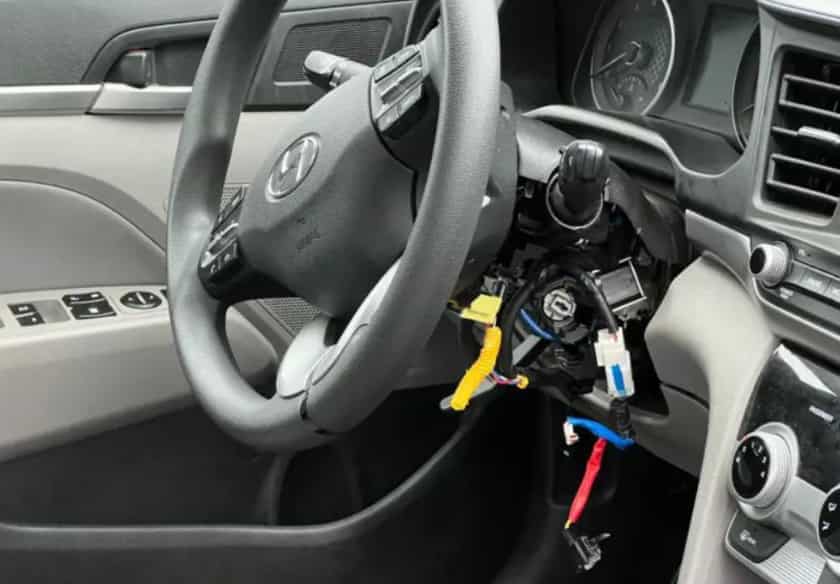
Next, the technician removes parts of the steering column assembly. This step is necessary to access the steering coupler inside the Motor Driven Power Steering system. Careful disassembly is important to avoid damage to surrounding components.
After accessing the coupler, the technician removes the worn rubber part. In most cases, the coupler shows signs of cracking or deformation. This confirms the source of the steering noise and looseness.
The technician then installs a new steering coupler. The replacement part is designed to restore proper connection between the steering wheel and the steering motor. This helps eliminate noise and improves steering precision.
Once installation is complete, the steering system is reassembled. The technician then performs calibration and testing. They check steering response, wheel alignment feel, and noise levels during movement.
Finally, a road test is conducted. This step ensures the steering feels stable and responsive under real driving conditions. If everything works correctly, the repair is considered complete.
In most cases, the entire process takes only a few hours. However, waiting time at the dealership may vary depending on workload and parts availability.
Can You Drive With a Bad Steering Coupler?
Driving with a bad steering coupler is possible in most cases, but it is not ideal. The vehicle will usually still steer and function normally. However, the steering feel becomes less precise and less stable over time.
The main issue is reduced steering accuracy. The steering wheel may feel loose or slightly delayed. This can make the driver work harder to keep the car centered on the road. The problem becomes more noticeable during highway driving or long trips.
At low speeds, the symptoms are often easier to notice. Drivers may hear clicking sounds when turning the wheel. Parking and tight turns can feel less smooth than usual.
As the coupler wears further, the steering noise may increase. The steering wheel may also develop more play. This creates a weaker connection between the driver’s input and the vehicle’s response.
In most cases, the problem does not lead to sudden steering loss. However, continued driving without repair can reduce driving confidence. It can also increase the chance of small steering errors, especially in stressful situations.
Short term driving is generally possible. Long term driving without repair is not recommended. The issue tends to worsen gradually and does not improve on its own.
The safest approach is to schedule inspection as soon as symptoms appear. Early repair helps restore normal steering feel and prevents further wear in the steering system.
Frequently Asked Questions
What causes Hyundai steering coupler failure?
The steering coupler wears out due to heat, vibration, and long-term use. The rubber material inside the Motor Driven Power Steering system gradually breaks down over time. This leads to looseness and noise in the steering system.
Is the steering coupler recall free?
In many cases, yes. If your vehicle is covered under a recall or service campaign, Hyundai may replace the coupler at no cost. Coverage depends on your VIN, model year, and program eligibility.
How long does steering coupler replacement take?
Most repairs take only a few hours. The technician needs time to access the steering column, replace the coupler, and test the system. Waiting time at the dealership may be longer depending on workload.
Can a bad steering coupler cause accidents?
It does not usually cause sudden loss of steering. However, it can reduce steering precision. This may increase the risk of driver error, especially at high speeds or during emergency maneuvers.
Which Hyundai models are most affected?
Commonly reported models include Hyundai Elantra, Sonata, Santa Fe, and Tucson. Some Kia models with similar steering systems may also experience the same issue.
How do I know if my vehicle is affected?
You can check your VIN with an official Hyundai dealer. They will confirm if your vehicle is part of any recall or service campaign.
Conclusion
The Hyundai Steering Coupler Recall highlights a small component that can have a big impact on driving comfort and steering confidence. While the issue does not usually cause sudden steering failure, it can make the vehicle feel less stable over time.
Early warning signs like clicking noises, steering looseness, and vibration should not be ignored. These symptoms often indicate wear inside the steering coupler. When left untreated, the problem can worsen and affect driving experience.
Repair costs are usually manageable, especially when covered under warranty or service campaigns. In many cases, Hyundai dealers can replace the coupler quickly and restore normal steering performance.
For vehicle owners, the most important step is early inspection. Checking symptoms and verifying VIN eligibility helps ensure safety and prevents unnecessary repair costs in the future.
If your vehicle shows any of the signs described in this guide, scheduling a dealer inspection is the best next step to maintain safe and stable driving performance.