You are already running late. You walk toward your Toyota, press the unlock button, and suddenly nothing happens. You press it again. Still no response. At first, many drivers think something serious has gone wrong with the vehicle or the key itself. The reality is often much simpler.
A weak or dead key fob battery is one of the most common issues Toyota owners experience. It can happen unexpectedly and usually appears at the worst possible moment. Maybe the remote range becomes shorter, the buttons stop responding consistently, or your vehicle suddenly struggles to detect the smart key. These small warning signs are easy to ignore until the key fob stops working entirely.
The good news is that Toyota key fob battery replacement for Camry, Corolla, RAV4, and Highlander models is typically a quick and affordable fix you can handle at home. You do not need advanced tools, expensive equipment, or a trip to the dealership in many cases. With the right battery type and a few simple steps, you can restore your key fob in just minutes.
This complete guide will show you how to identify the correct battery, replace it safely, avoid common mistakes, and troubleshoot issues if your Toyota key fob still does not work after replacement.
Why Toyota Key Fob Batteries Die
Many Toyota owners never think about their key fob battery until the remote suddenly stops working. Unlike larger car batteries, key fob batteries are small coin cell batteries designed for long life rather than high power output. Over time, they gradually lose capacity through daily use.
Most Toyota key fob batteries typically last between two and four years. However, actual lifespan depends on several factors. Frequent use, climate conditions, and advanced smart key features can shorten battery life. Drivers who constantly use remote start, keyless entry, or push button start systems may notice faster battery drain.
There are usually warning signs before complete battery failure occurs. The first symptom is often reduced signal range. You may need to stand much closer to your vehicle before the buttons respond. Another common issue is delayed operation. You press unlock once and the doors respond seconds later.
Some newer Toyota models may also display smart key warning notifications on the dashboard. Ignoring these small signals can create unnecessary stress later. Many drivers only realize there is a problem when they are standing in a parking lot pressing buttons repeatedly while running late.
Understanding these early symptoms helps avoid inconvenient surprises and can save time before your Toyota key fob battery completely dies.
Toyota Key Fob Battery Types for Camry, Corolla, RAV4 and Highlander
One of the most common mistakes during Toyota key fob battery replacement is buying the wrong battery size. Although many Toyota key fobs look similar, battery requirements can vary depending on model year and key design.
Below is a general guide to commonly used battery types.
| Toyota Model | Common Battery Type |
|---|---|
| Camry | CR2032 or CR2450 |
| Corolla | CR2032 |
| RAV4 | CR2032 |
| Highlander | CR2032 or CR2450 |
Toyota Camry owners should pay special attention because battery type may change depending on generation and whether the vehicle uses a traditional remote key or smart key system.
Toyota Corolla models most commonly use CR2032 batteries. Because Corolla is one of Toyota’s best selling models worldwide, many DIY owners assume every Toyota uses the same battery. That assumption can create frustration later.
RAV4 smart key systems frequently rely on CR2032 batteries, especially newer generations with proximity features.
Highlander owners should verify battery requirements carefully because trim levels and smart key configurations may vary.
Before purchasing a replacement battery, open the key fob and check the existing battery label directly. Spending ten extra seconds checking the number can prevent unnecessary trial and error.
How to Replace Toyota Key Fob Battery Step by Step
The good news about Toyota key fob battery replacement is that the process is usually simple and takes less than five minutes.
Step 1: Remove the emergency key
Most Toyota smart keys include a small release button on the side. Press this button and pull out the hidden mechanical key.
Step 2: Open the key fob housing
Locate the slot near the opening. Use a small flathead screwdriver or a coin to gently separate the two halves of the key fob. Apply light pressure only. Forcing the case may crack the plastic housing.
Step 3: Remove the old battery
Inside the key fob, you will see the circular battery seated inside a small compartment. Carefully remove it using your fingers or a non metal tool.
Step 4: Install the new battery
Insert the replacement battery in the exact same orientation as the original. Pay close attention to positive and negative positioning. Installing the battery upside down is one of the most common DIY mistakes.
Step 5: Reassemble the key fob
Snap both halves back together carefully. Reinsert the emergency key into its slot.
Step 6: Test all functions
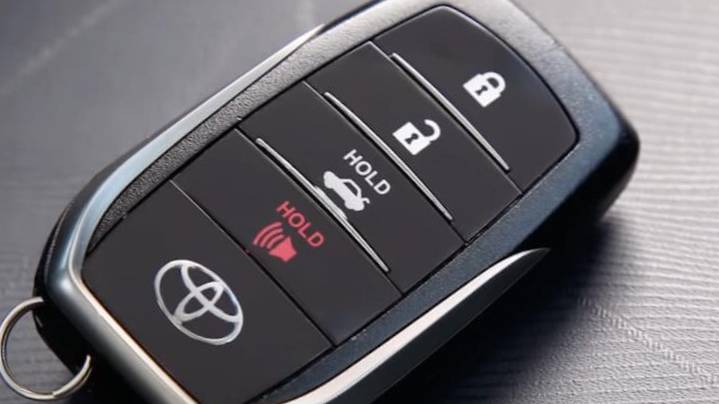
Stand near your vehicle and test lock, unlock, panic alarm, trunk release, and push start detection if equipped.
Many Toyota owners are surprised by how quickly this repair can be completed. A dealership visit that may cost time and money can often be replaced with a five minute DIY solution at home.
Common Mistakes to Avoid During Toyota Key Fob Battery Replacement
Replacing a Toyota key fob battery may seem simple, but small mistakes can create unnecessary frustration and make drivers think the key fob has become defective. In many situations, the issue is not the battery itself. It is the installation process.
One of the most common mistakes is installing the battery in the wrong direction. Coin batteries have positive and negative sides that must align exactly with the original setup. Even a brand new battery will fail if orientation is incorrect. Many people rush through replacement and forget to check positioning before closing the case.
Another frequent problem is purchasing the wrong battery model. CR2032 and CR2450 batteries may appear similar at first glance, but they differ in thickness and capacity. Choosing the incorrect size can create poor contact inside the key fob.
Some owners also force the key housing open with excessive pressure. Toyota key fobs are designed to separate carefully. Applying too much force can damage plastic clips or internal components. Once broken, the housing may no longer close securely.
Battery quality can also affect performance. Extremely cheap batteries may have shorter life spans or inconsistent output. Saving a few dollars on unknown brands sometimes creates larger problems later.
A surprising number of replacement failures happen because users accidentally touch battery contact points excessively. Oils and moisture from hands can occasionally interfere with clean electrical contact.
Taking a few extra moments during installation can prevent hours of troubleshooting afterward.
Toyota Key Fob Not Working After Battery Replacement
You replaced the battery successfully, snapped the key fob back together, pressed unlock, and nothing happened. This situation creates panic for many Toyota owners, especially if they assume they damaged something during installation.
Fortunately, battery replacement does not usually erase Toyota key programming. In most cases, the problem is much simpler.
The first thing to check is battery orientation. Remove the cover and compare the battery position against the previous setup. Reversed installation remains one of the most common causes of immediate failure.
Next, inspect whether the battery is seated securely. Sometimes the battery shifts slightly during reassembly and loses proper contact with terminals inside the key fob.
If your Toyota uses a smart key system, move closer to the vehicle and test all functions again. Weak battery output or contact issues may temporarily reduce operating range.
Also examine the metal battery contacts carefully. If these connectors become bent or loose while replacing the battery, signal transmission may become unreliable.
For newer Toyota models with push button start, try holding the key fob directly against the start button while pressing the brake pedal. Many Toyota vehicles include an emergency detection feature designed for low battery situations.
If all functions still fail after multiple checks, key fob damage or internal electronic failure may require professional inspection.
DIY vs Dealership Toyota Key Fob Battery Replacement
When a Toyota key fob stops working, many owners immediately assume a dealership visit is necessary. While dealerships can replace batteries quickly, this option is not always the most practical solution.
The biggest difference is cost. Replacing a key fob battery yourself often requires only a replacement battery and a few minutes of time. The total expense can be very low. A dealership visit may involve service charges or additional fees depending on location.
Convenience also matters. Imagine discovering a dead key fob before work, during travel, or late at night. Scheduling service appointments and driving to a dealership creates unnecessary inconvenience for a problem that often takes less than five minutes to solve.
DIY replacement gives owners immediate control over the situation. Learning this simple maintenance task can also help prevent future stress because key fob batteries eventually fail again.
However, dealership service does provide advantages in certain situations. If the key fob housing is damaged, electronic components fail, or reprogramming becomes necessary, professional assistance may save time and reduce confusion.
For most Camry, Corolla, RAV4, and Highlander owners, battery replacement is one of the easiest vehicle maintenance tasks to perform at home.
Frequently Asked Questions About Toyota Key Fob Battery Replacement
How long does a Toyota key fob battery last?
Most Toyota key fob batteries last between two and four years under normal conditions. Actual battery life depends on usage habits, climate, and vehicle features. Smart key systems with push button start and remote functions may consume battery power more frequently than traditional remote keys.
If you begin noticing reduced operating range or delayed button response, battery replacement may be needed soon.
Can I start my Toyota if the key fob battery dies?
Yes. Most modern Toyota vehicles include an emergency backup method. Even if the key fob battery is completely dead, you can often use the hidden mechanical key to access the vehicle.
For push button start models, many Toyota vehicles allow owners to hold the key fob directly against the start button while pressing the brake pedal. This built in feature can help the car detect the key even when battery power is low.
Many drivers do not realize this function exists until they experience a dead battery unexpectedly.
How much does Toyota key fob battery replacement cost?
DIY replacement is usually inexpensive. The main cost is the battery itself.
Dealership replacement can cost more because labor or service fees may be included. While professional service is convenient, many owners prefer replacing the battery themselves because the process often takes only a few minutes.
Will replacing the battery erase key programming?
No. Replacing the battery generally does not erase Toyota key fob programming or disconnect the key from the vehicle.
If your key stops functioning after replacement, battery orientation, poor contact, or installation issues are usually responsible rather than lost programming.
Conclusion
Toyota key fob battery replacement for Camry, Corolla, RAV4, and Highlander models is a simple maintenance task that many drivers can complete at home without specialized tools or technical experience. Understanding the correct battery type and following the right installation steps can save time, reduce stress, and prevent unnecessary dealership visits.
Small warning signs often appear before complete battery failure. Reduced operating range, inconsistent button response, and delayed unlocking are easy to overlook until the key suddenly stops working at an inconvenient moment. Learning how to identify these symptoms early helps avoid frustration and keeps your vehicle accessible when you need it most.
The good news is that replacing a Toyota key fob battery rarely takes more than a few minutes. A quick DIY fix can restore normal operation and help you avoid unexpected inconvenience during busy days.
Have you replaced your Toyota key fob battery before? Which Toyota model do you drive? Share your experience and tips in the comments. Your insight may help other Toyota owners solve the same problem faster.