Seeing a warning light appear on your car dashboard can be stressful, especially when it relates to the braking system. If you drive a MINI Cooper, you may have encountered the brake pads warning light turning on unexpectedly. For many drivers, this moment raises immediate concern: is it safe to continue driving, or does it signal a serious brake failure?
The truth is, this warning light is one of the most important maintenance indicators in your vehicle. It is designed to alert you before your brake pads become dangerously worn. However, many drivers misunderstand what it actually means, often confusing it with other brake system alerts such as brake fluid or ABS warnings.
In this guide, you will learn exactly what the MINI Cooper brake pads warning light means, how the system works, what causes it to appear, and what actions you should take when it shows up. Understanding this warning can help you avoid costly repairs, prevent further damage to your braking system, and most importantly, keep you safe on the road.
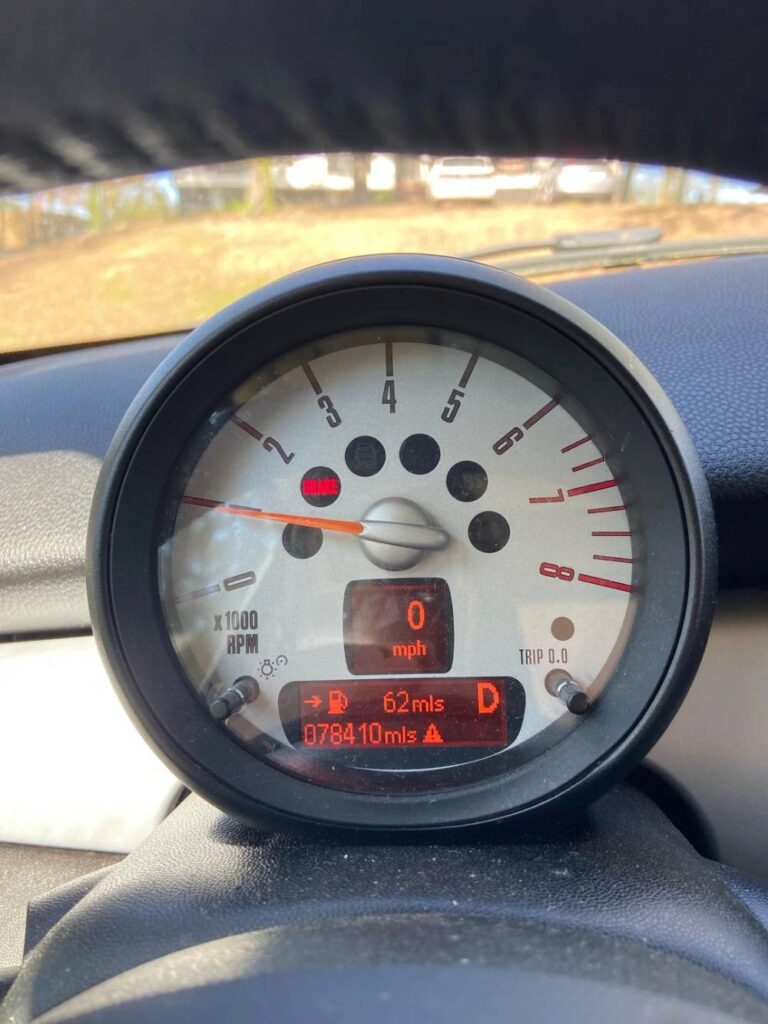
What Does Mini Cooper Brake Pads Warning Light Mean?
The brake pads warning light on a MINI Cooper indicates that the brake pads have worn down to a critical level or that the brake pad wear sensor has been triggered.
In most cases, it is not an immediate brake failure warning. Instead, it is a maintenance alert telling you that your brake pads are nearing the end of their usable life and should be replaced soon.
This warning light is different from other brake-related alerts:
- Brake Pads Warning Light → Worn brake pads or triggered wear sensor
- Brake Fluid Warning Light → Low brake fluid level or hydraulic issue
- ABS Warning Light → Anti-lock braking system malfunction
Understanding this difference is important because each warning requires a different type of action. The brake pads warning light is usually the earliest sign that your braking performance may soon decline if no maintenance is performed.
How MINI Cooper Brake Pad Sensors Work
The brake pad warning system in a MINI Cooper is designed with a simple but effective mechanism.
A small wear sensor is embedded in the brake pad. As the pad wears down over time due to friction, the sensor gradually gets closer to the brake disc. Once the pad reaches a minimum thickness, the sensor makes contact with the rotor and breaks an electrical circuit.
When this happens, the system sends a signal to the vehicle’s onboard computer, which activates the warning light on the dashboard.
This system is important because it helps prevent:
- Metal-to-metal contact between brake pad and disc
- Damage to brake rotors
- Reduced braking efficiency in emergency situations
In short, the sensor acts as an early warning system that helps you replace brake pads at the right time before serious damage occurs.
Common Causes of the Warning Light
While worn brake pads are the most common reason, there are several other possible causes:
One of the most frequent issues is simply normal brake pad wear due to driving habits such as heavy braking or city driving.
However, the warning light may also appear due to:
- A damaged or broken brake pad sensor
- Incorrect installation after brake pad replacement
- Wiring issues or loose electrical connections
- Moisture or corrosion affecting the sensor
- Rare electronic faults in the control system
Because of these possibilities, it is important not to assume the brake pads are always worn out. A proper inspection is needed to confirm the exact cause.
What You Should Do When the Warning Light Appears
When the brake pads warning light turns on, the first step is not to panic but to act quickly.
You should:
- Have the brake system inspected as soon as possible
- Check if the brake pads are physically worn
- Inspect or replace the brake pad wear sensor if needed
- Avoid long-distance driving until the issue is confirmed
- Replace brake pads if they are below safe thickness
- Reset the warning system after repairs are completed
Delaying action can lead to more expensive repairs, especially if worn pads begin damaging the brake rotors.
Is It Safe to Drive With the Warning Light On?
Driving with the brake pads warning light on depends on the actual condition of your brake pads.
If the pads are only slightly worn, you may still drive short distances to a repair shop. However, this should be treated as urgent maintenance.
If the pads are severely worn, you may notice symptoms such as:
- Squeaking or grinding noises
- Reduced braking response
- Longer stopping distance
In this case, continuing to drive can be dangerous and may lead to complete brake failure or rotor damage.
Safety should always come first, especially in a performance-oriented vehicle like the MINI Cooper.
Conclusion
The MINI Cooper brake pads warning light is not something to ignore. It is an early warning system designed to protect both your vehicle and your safety.
In most cases, it simply means your brake pads are worn and need replacement soon. However, it can also indicate sensor or wiring issues that require inspection.
By understanding what this warning means and responding quickly, you can avoid expensive repairs and ensure your braking system remains reliable.
Ultimately, paying attention to this small dashboard light can make a big difference in your driving safety and long-term maintenance costs.