Seeing the “Service Steering Column Lock” warning on your dashboard means the vehicle has detected a problem within the steering column locking system or one of its related electronic components. This warning should not be ignored because it can prevent the steering wheel from unlocking, stop the engine from starting, or leave the vehicle unable to restart after it has been turned off. In modern vehicles equipped with an Electronic Steering Column Lock (ESCL), the steering lock works with the immobilizer, ignition system, Body Control Module (BCM), and Engine Control Module (ECM) to verify vehicle security before allowing the engine to start.
Several conditions can trigger this warning. A weak battery, failing steering lock actuator, damaged wiring, blown fuse, software malfunction, or communication failure on the CAN Bus network can all interrupt the unlocking sequence. Although some causes are relatively inexpensive to repair, others require replacement of the steering column lock assembly and module programming. Identifying the root cause early helps avoid unnecessary parts replacement and reduces the risk of becoming stranded.
This guide explains what the Service Steering Column Lock warning means, the most common causes, symptoms to watch for, diagnostic procedures, repair options, and expected repair costs. It also discusses whether it is safe to continue driving and highlights preventive maintenance practices that can reduce the likelihood of future steering column lock failures.
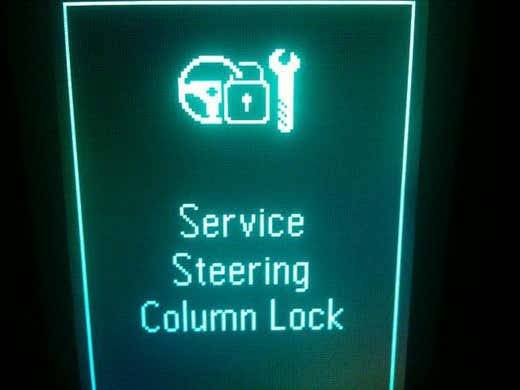
What Does “Service Steering Column Lock” Mean?
The Service Steering Column Lock warning indicates that the vehicle has detected a fault in the steering column locking system or one of its supporting electronic components. When this message appears, the Electronic Steering Column Lock (ESCL) may fail to lock or unlock the steering wheel correctly, preventing the engine from starting or causing the steering wheel to remain locked.
The steering column lock is an anti-theft device integrated into the vehicle’s security system. In modern vehicles equipped with push-button start or smart key technology, the system replaces the traditional mechanical steering lock with an electronically controlled locking mechanism. Before the engine starts, the Body Control Module (BCM) verifies the key fob, communicates with the immobilizer, and sends a command to the Electronic Steering Column Lock. Once the steering lock confirms that it has fully retracted the locking pin, the Engine Control Module (ECM) allows the ignition sequence to continue.
If any part of this communication process fails, the vehicle displays the Service Steering Column Lock warning. Depending on the manufacturer, the system may also disable the starter motor or prevent the ignition from switching to the RUN position as a security measure.
How Does an Electronic Steering Column Lock Work?
An Electronic Steering Column Lock operates through a combination of mechanical and electronic components designed to secure the steering shaft when the vehicle is parked. The primary components include the steering lock actuator, locking pin, electric motor, position sensors, BCM, ECM, immobilizer, and CAN Bus communication network.
When the driver approaches the vehicle with an authorized key fob, the BCM authenticates the key and communicates with the immobilizer. After successful authentication, the BCM commands the steering lock actuator to retract the locking pin from the steering shaft. Position sensors confirm that the steering lock has fully disengaged before the ECM authorizes engine starting.
When the engine is switched off and the driver exits the vehicle, the process is reversed. The BCM commands the actuator to extend the locking pin into the steering column, preventing unauthorized steering movement and adding an additional layer of theft protection.
Because multiple control modules participate in this sequence, a failure in any electrical, mechanical, or communication component can interrupt the unlocking process and trigger a warning message.
When Does the Warning Usually Appear?
The Service Steering Column Lock warning most commonly appears during vehicle startup because this is when the steering lock performs its self-check. If the actuator fails to move, the battery voltage drops below the required operating level, or communication between modules is interrupted, the system immediately stores a fault and displays the warning.
Many drivers first notice the warning under one of the following situations:
- The vehicle refuses to start after pressing the Start/Stop button.
- The steering wheel remains locked after entering the vehicle.
- The dashboard displays the warning intermittently before becoming permanent.
- Multiple security-related warning lights appear at the same time.
- The engine starts normally, but the warning remains illuminated.
Some manufacturers also display related messages such as “Steering Lock Malfunction,” “Steering Lock Fault,” or “Electronic Steering Lock Failure.” Although the wording differs, these messages generally indicate that the steering column locking system requires inspection.
What Causes a Service Steering Column Lock Warning?
A Service Steering Column Lock warning appears when the steering lock system cannot complete its normal locking or unlocking sequence. In most cases, the failure is caused by electrical problems, worn mechanical components, communication errors between control modules, or insufficient battery voltage. Identifying the root cause is essential because replacing the steering lock assembly without proper diagnosis may not resolve the problem.
Can a Weak Battery Trigger the Warning?
Yes. Low battery voltage is one of the most common causes of a Service Steering Column Lock warning.
Electronic steering locks require a stable power supply to operate the actuator motor and communicate with the BCM and ECM. When battery voltage drops below the manufacturer’s operating threshold, the actuator may stop before fully retracting or extending the locking pin. The control module interprets this incomplete movement as a system fault and stores a diagnostic trouble code.
Battery-related issues often occur after the vehicle has been parked for an extended period, during cold weather, or when an aging battery no longer holds sufficient charge. Corroded battery terminals and poor ground connections can produce the same symptoms even if the battery itself is in good condition.
Can a Faulty Steering Lock Actuator Cause the Problem?
Yes. A worn or failed steering lock actuator is one of the leading mechanical causes of steering column lock failures.
The actuator contains an electric motor and reduction gears that move the locking pin between the locked and unlocked positions. After thousands of operating cycles, the motor may weaken, internal gears may wear, or the locking mechanism may become jammed by debris or corrosion.
When the actuator cannot complete its movement within the expected time, the control module records a fault and disables the starting sequence to protect the vehicle’s security system.
Can a Damaged Wiring Harness or Fuse Interrupt the System?
Yes. Electrical supply problems frequently interrupt communication between the steering lock and control modules.
Broken wires, loose connectors, moisture intrusion, damaged terminals, or blown fuses can interrupt either power delivery or data transmission. Since the Electronic Steering Column Lock depends on both electrical power and CAN Bus communication, even a minor wiring defect may prevent successful system initialization.
Electrical faults are especially common after collision repairs, water damage, rodent activity, or improper aftermarket electrical installations.
Can the Body Control Module or ECM Cause the Warning?
Yes. A malfunctioning control module can generate steering column lock warnings even when the lock assembly itself is functioning correctly.
The BCM manages the vehicle’s security functions and controls communication with the Electronic Steering Column Lock. If the BCM fails to authenticate the key, loses synchronization with the immobilizer, or cannot communicate with the ECM, the steering lock sequence will not complete successfully.
Software corruption, module programming errors, internal circuit failures, or voltage spikes may all contribute to BCM- or ECM-related steering lock faults.
Can Software or CAN Bus Communication Failures Trigger the Message?
Yes. Communication failures between electronic control modules can prevent the steering lock from completing its operating sequence.
Modern vehicles rely on the CAN Bus network to exchange information between the BCM, ECM, steering lock module, immobilizer, and other electronic systems. If messages are delayed, corrupted, or blocked because of network faults, the steering lock cannot confirm its operating status.
Common causes include outdated software, failed CAN Bus wiring, poor electrical grounding, module synchronization errors, or defective communication circuits. Manufacturers occasionally release software updates to resolve known communication issues, making module reprogramming a recommended repair before replacing expensive hardware in certain vehicles.
What Symptoms Indicate a Steering Column Lock Failure?
A steering column lock failure typically affects both the vehicle’s security system and its ability to start. The symptoms often begin intermittently before developing into a permanent fault. Recognizing these warning signs early can prevent unexpected breakdowns and reduce the likelihood of replacing unnecessary components.
Steering Wheel Remains Locked
A steering wheel that stays locked after the vehicle recognizes the key is one of the clearest signs of a steering column lock failure. Under normal operation, the Electronic Steering Column Lock retracts the locking pin as soon as the Body Control Module authenticates the key fob. If the actuator motor fails, the locking pin jams, or communication between modules is interrupted, the pin remains engaged and prevents the steering wheel from turning.
Drivers may notice that the steering wheel cannot move in either direction even though the key fob battery is functional and the dashboard powers on normally. In some cases, repeatedly pressing the Start/Stop button temporarily releases the lock, but this usually indicates that the actuator is nearing the end of its service life rather than resolving the underlying problem.
The Vehicle Will Not Start
A no-start condition is one of the most common symptoms associated with a steering column lock malfunction. Modern anti-theft systems require confirmation that the steering lock has fully disengaged before the Engine Control Module allows the ignition sequence to continue. If the steering lock cannot verify its unlocked position, the vehicle blocks engine starting as a security precaution.
Depending on the manufacturer, pressing the Start/Stop button may produce no response, switch the ignition on without cranking the engine, or display additional warning messages related to the immobilizer or electronic security system.
Push-Button Ignition Does Not Respond
A push-button ignition that becomes unresponsive may indicate that the steering lock has failed to complete its initialization sequence. The ignition button relies on successful communication between the key fob, BCM, immobilizer, and steering column lock before it activates the starter system.
When communication fails, pressing the ignition button may do nothing, cycle between accessory mode and off, or display repeated prompts asking the driver to service the steering lock. Because the failure occurs before engine startup, many drivers mistakenly suspect a defective starter motor when the actual fault originates in the steering lock system.
Clicking Noise Near the Steering Column
Repeated clicking sounds from the steering column often indicate that the steering lock actuator motor is attempting to move but cannot complete its travel. The actuator repeatedly receives commands from the BCM to retract or extend the locking pin. If worn gears, internal motor damage, or a seized locking mechanism prevent movement, the motor continues cycling until the control module registers a fault.
The clicking noise usually occurs immediately after pressing the Start/Stop button or when switching the ignition off. As mechanical wear increases, the sound often becomes more frequent before complete actuator failure occurs.
Warning Message Appears Intermittently
An intermittent Service Steering Column Lock warning usually indicates an electrical or communication problem rather than immediate mechanical failure. Low battery voltage, loose connectors, oxidized terminals, or unstable CAN Bus communication can temporarily interrupt the steering lock sequence without causing permanent damage.
Initially, the warning may disappear after restarting the vehicle or charging the battery. However, repeated intermittent faults should not be ignored because they frequently develop into permanent failures as electrical resistance increases or actuator wear progresses.
Security Indicator Remains Illuminated
A security warning light that remains illuminated after the engine starts may indicate that the steering lock has not completed its self-diagnostic process successfully. Since the steering column lock operates as part of the vehicle’s anti-theft system, failures often trigger additional security-related indicators alongside the steering lock warning.
Drivers may observe immobilizer symbols, key recognition warnings, or electronic security messages on the instrument cluster. When multiple security warnings appear simultaneously, technicians typically inspect the BCM, immobilizer, steering lock module, and CAN Bus communication before replacing mechanical components.
Is It Safe to Drive With a Service Steering Column Lock Warning?
Driving with a Service Steering Column Lock warning is not recommended until the root cause has been diagnosed. Although some vehicles continue operating normally after the warning appears, the fault can progress without warning and eventually prevent the steering lock from unlocking or the engine from restarting.
When Can You Continue Driving?
You may be able to continue driving if the steering wheel unlocks normally, the engine starts without hesitation, and no additional security or electrical warning lights are present. In these situations, the fault may result from temporary low battery voltage, a software communication error, or an intermittent electrical connection.
Even if the vehicle appears to operate normally, scheduling a diagnostic inspection as soon as possible is advisable. Electronic faults often become more frequent over time, especially when caused by aging batteries, deteriorating wiring, or early actuator wear.
When Should You Stop Driving Immediately?
You should stop driving immediately if the steering wheel remains locked, the vehicle refuses to start consistently, or multiple security system warnings appear simultaneously. These symptoms indicate that the steering lock system can no longer complete its operating sequence reliably.
Continuing to drive with an active steering lock fault increases the risk that the vehicle will fail to restart after being parked. If the steering lock actuator completely fails, towing may become necessary because the electronic security system prevents engine startup until the fault is repaired.
What Are the Potential Risks?
Ignoring a Service Steering Column Lock warning can lead to progressively more severe electrical and mechanical failures. A failing actuator places additional load on the electric motor, repeated communication failures generate persistent diagnostic trouble codes, and unstable battery voltage can affect multiple electronic control modules beyond the steering lock itself.
As the condition worsens, repair costs typically increase because prolonged operation may damage additional components or require programming of replacement modules instead of a relatively simple electrical repair.
Can the Vehicle Fail to Restart After Parking?
Yes. A vehicle with a steering column lock fault can operate normally during a trip but fail to restart after the engine has been switched off. This occurs because the steering lock performs another locking and unlocking cycle every time the ignition is turned off and on. If the actuator fails during this sequence, the BCM cannot verify that the steering lock has disengaged, preventing the engine from starting.
For this reason, drivers who notice an intermittent Service Steering Column Lock warning should avoid repeatedly shutting the engine off until the vehicle has been professionally diagnosed. Addressing the issue early significantly reduces the risk of becoming stranded and helps prevent more extensive repairs.
How Do You Diagnose a Steering Column Lock Problem?
Diagnosing a steering column lock problem requires a systematic inspection of the vehicle’s electrical system, steering lock components, and communication modules. Because multiple systems work together during the ignition sequence, replacing the steering column lock without confirming the root cause can lead to unnecessary repair costs. Professional technicians typically begin with the simplest checks before performing advanced electronic diagnostics.
Check Battery Voltage
Verify battery voltage before inspecting any steering lock components. The Electronic Steering Column Lock relies on stable battery voltage to power the actuator motor and communicate with the Body Control Module. Even a partially discharged battery can prevent the actuator from completing its unlocking cycle.
Use a digital multimeter to measure battery voltage with the engine off. A healthy battery should typically measure around 12.6 volts, while readings below 12.2 volts indicate a low state of charge that may affect electronic systems. If the voltage drops significantly while pressing the Start/Stop button, perform a battery load test to determine whether the battery can supply sufficient current during startup.
Also inspect battery terminals, ground straps, and power cables for corrosion or loose connections. High electrical resistance at these locations can create the same symptoms as a failing battery.
Scan Diagnostic Trouble Codes (DTCs)
Scan all vehicle control modules for Diagnostic Trouble Codes before replacing any parts. Many steering column lock failures generate manufacturer-specific fault codes stored in the Body Control Module, Steering Lock Module, Immobilizer, or Engine Control Module.
A professional-grade diagnostic scanner provides significantly more information than a basic OBD-II code reader because many steering lock faults are stored outside the engine management system. In addition to active fault codes, technicians should review pending codes, freeze-frame data, and live data to determine whether the steering lock successfully completes its lock and unlock commands.
Manufacturer service information should always be consulted because identical warning messages may correspond to different DTCs depending on the vehicle model.
Inspect Fuses
Inspect every fuse associated with the steering lock, ignition system, and Body Control Module. A blown fuse interrupts electrical power to the steering lock actuator and prevents the module from completing its initialization sequence.
Do not rely solely on visual inspection. Test each fuse using a multimeter or test light because hairline breaks inside the fuse element may not be visible. If a replacement fuse blows immediately after installation, diagnose the underlying short circuit before installing another fuse.
Inspect Wiring and Connectors
Examine the wiring harness and electrical connectors for signs of physical damage or poor electrical contact. Wiring problems account for many intermittent steering lock warnings, particularly in vehicles exposed to moisture, collision damage, or aftermarket electrical modifications.
Inspect connectors for bent terminals, corrosion, loose locking tabs, water intrusion, or overheated pins. Follow the wiring harness from the steering column lock to the Body Control Module, checking for crushed insulation, broken conductors, or areas where wires rub against metal brackets.
Repair damaged wiring using manufacturer-approved repair procedures. Temporary splices or poorly insulated connections may create additional communication problems later.
Test the Steering Lock Actuator
Verify that the steering lock actuator moves freely and responds correctly to control commands. Most manufacturer diagnostic software allows technicians to perform an active actuator test that commands the steering lock to engage and disengage while monitoring position sensor feedback.
If the actuator motor receives voltage but fails to move, internal mechanical wear, seized gears, or a damaged locking pin is likely responsible. If the actuator operates normally during testing but fails intermittently under real-world conditions, the problem may instead originate from unstable voltage or communication errors.
Mechanical inspection should also include checking the steering shaft and locking mechanism for excessive wear, impact damage, or foreign debris that prevents smooth movement.
Verify BCM and ECM Communication
Confirm that the Body Control Module and Engine Control Module communicate correctly with the steering lock system. Modern steering lock systems depend on continuous communication across the CAN Bus network before engine startup is authorized.
Using manufacturer diagnostic software, verify that all related modules communicate normally and report valid data. Missing communication, synchronization errors, software mismatches, or failed module programming can prevent successful steering lock operation even when the mechanical components remain fully functional.
If communication faults are detected, software updates or module reprogramming may resolve the issue without replacing the steering column lock assembly.
How Do You Fix a Service Steering Column Lock Warning?
The correct repair depends entirely on the underlying cause of the warning. Some steering column lock problems require only battery maintenance or electrical repairs, while others involve replacing the Electronic Steering Column Lock assembly and programming new control modules. Performing repairs in the proper order minimizes unnecessary expenses and improves long-term reliability.
Recharge or Replace the Battery
Recharge or replace the battery if testing confirms insufficient voltage or poor load capacity. Low system voltage frequently causes intermittent steering lock warnings because the actuator motor cannot complete its operating cycle consistently.
After installing a fully charged battery, clear all stored fault codes and perform several ignition cycles to verify that the warning does not return. If the warning persists despite stable battery voltage, continue diagnosing other electrical or mechanical components.
Replace Damaged Fuses
Replace blown fuses only after identifying the reason they failed. Simply installing a new fuse without correcting the underlying electrical problem often results in repeated failures.
Inspect the affected circuit for damaged wiring, water intrusion, or shorted components before restoring power. Once repairs are complete, confirm that the steering lock completes both locking and unlocking cycles normally.
Repair Damaged Wiring
Repair damaged wiring or electrical connectors whenever communication or power delivery is interrupted. Broken conductors, corroded terminals, and loose connector pins increase electrical resistance and may prevent reliable communication between the steering lock and control modules.
Use manufacturer-approved wiring repair methods, including sealed connectors, heat-shrink tubing, and proper terminal replacement. High-quality repairs restore circuit integrity and reduce the likelihood of recurring intermittent faults.
Replace the Steering Lock Actuator
Replace the steering lock actuator if internal mechanical wear or motor failure prevents normal operation. Most actuators are not designed to be repaired internally because they contain integrated motors, gears, sensors, and security components.
After installation, perform any required calibration procedures and verify that the actuator successfully completes repeated lock and unlock cycles without generating new diagnostic trouble codes.
Reprogram or Update Control Modules
Update or reprogram control modules if manufacturer service information identifies software-related steering lock issues. Several vehicle manufacturers have released software updates that improve communication between the Body Control Module, Electronic Steering Column Lock, and Engine Control Module.
Module programming should be performed using factory-approved diagnostic equipment to ensure compatibility with the vehicle’s immobilizer and anti-theft system. Interrupting the programming process may render the module inoperative.
Replace the Complete Steering Column Lock Assembly
Replace the complete steering column lock assembly when multiple internal components have failed or the manufacturer does not supply individual replacement parts. Many modern vehicles integrate the actuator, locking mechanism, sensors, and electronic control circuits into a single sealed unit.
Complete assembly replacement is generally the most expensive repair option because it often includes additional labor for steering column disassembly, module programming, security initialization, and system calibration. However, replacing the entire assembly provides the highest level of long-term reliability when extensive internal wear or electronic failure is present.
How Much Does Steering Column Lock Repair Cost?
The cost to repair a steering column lock ranges from less than $100 for minor electrical repairs to more than $2,000 when the entire steering column lock assembly requires replacement. The final price depends on the failed component, vehicle make and model, labor rates, and whether module programming is required after the repair.
The table below provides typical repair cost ranges for common steering column lock problems.
| Repair Item | Estimated Parts Cost | Estimated Labor Cost | Total Estimated Cost |
|---|---|---|---|
| Battery replacement | $120–$350 | $20–$80 | $140–$430 |
| Fuse replacement | $5–$30 | $20–$80 | $25–$110 |
| Wiring repair | $20–$150 | $100–$400 | $120–$550 |
| Steering lock actuator replacement | $250–$700 | $200–$600 | $450–$1,300 |
| Module programming | $80–$250 | Included or $50–$150 | $80–$400 |
| Complete steering column lock assembly replacement | $500–$1,500 | $300–$800 | $800–$2,300 |
These figures represent average repair costs across many passenger vehicles. Luxury brands such as Mercedes-Benz, BMW, Audi, and Land Rover often have higher parts prices because the steering lock assembly is integrated with advanced security systems and requires factory-level programming equipment.
Battery Replacement Cost
Replacing a weak battery is usually the least expensive solution when low voltage triggers the steering column lock warning. Since electronic steering locks require stable voltage during startup, installing a new battery often resolves intermittent faults caused by insufficient electrical power.
Before replacing the battery, technicians should perform a charging system inspection to confirm that the alternator and voltage regulator are operating correctly. Otherwise, the replacement battery may experience the same low-voltage condition within a short period.
Fuse and Wiring Repair Cost
Electrical repairs generally cost significantly less than replacing steering lock components. Replacing a blown fuse may take only a few minutes, while repairing damaged wiring can require extensive disassembly depending on the location of the fault.
Vehicles that have experienced collision damage, water intrusion, or aftermarket electrical modifications typically require more diagnostic time because technicians must inspect multiple circuits before locating the failure.
Steering Lock Actuator Replacement Cost
Replacing the steering lock actuator is one of the most common repairs after mechanical failure has been confirmed. The repair usually involves removing steering column trim, disconnecting electrical connectors, installing the new actuator, and performing calibration or initialization procedures.
On some vehicles, the actuator can be replaced separately. On others, manufacturers supply the actuator only as part of the complete steering column lock assembly, increasing the overall repair cost.
Module Programming Cost
Programming control modules may be necessary after replacing the steering lock, Body Control Module, or Engine Control Module. Programming synchronizes the new component with the immobilizer, key fobs, and other security modules so the anti-theft system recognizes authorized starting requests.
Independent repair shops equipped with factory-compatible diagnostic software may perform this procedure at a lower cost than dealerships. However, certain manufacturers restrict security programming to authorized service centers.
Complete Steering Column Replacement Cost
Replacing the entire steering column lock assembly is the most expensive repair option. This procedure is recommended when the steering lock housing, actuator, position sensors, and electronic circuits are integrated into a sealed assembly that cannot be serviced individually.
Labor costs increase because technicians must remove steering column covers, disconnect electrical modules, transfer related components, perform system programming, and verify proper operation before returning the vehicle to service.
Which Vehicles Commonly Experience Steering Column Lock Problems?
Steering column lock failures can occur in any modern vehicle equipped with an Electronic Steering Column Lock system, but several manufacturers have reported higher failure rates in specific models. The underlying causes vary by brand, ranging from actuator wear to software defects and communication failures.
Mercedes-Benz
Mercedes-Benz vehicles are among the most frequently associated with steering column lock failures. Many models use an Electronic Steering Lock (ESL) integrated with the Electronic Ignition Switch (EIS). As these components age, internal motor wear, circuit board failure, or communication problems may prevent the steering lock from releasing.
Commonly affected models include various C-Class, E-Class, S-Class, GLK, CLS, ML, and GL vehicles equipped with electronic ignition systems.
Nissan
Several Nissan models have experienced Electronic Steering Column Lock failures related to actuator reliability and module communication. Some vehicles may display a steering lock warning, refuse to start, or require steering lock replacement after repeated startup attempts.
Models equipped with intelligent key systems are generally more susceptible because the steering lock is fully integrated into the electronic security system.
Infiniti
Infiniti vehicles share many steering lock components with Nissan models and can develop similar failures. Drivers may experience intermittent no-start conditions before complete steering lock failure occurs.
In certain cases, manufacturers have issued technical service information or warranty extensions addressing known steering lock issues for specific production years.
General Motors
Some Chevrolet, GMC, Cadillac, and Buick models equipped with electronic steering lock systems may develop faults caused by electrical failures or communication issues. Low battery voltage and damaged wiring are common contributing factors, particularly in vehicles with aging electrical systems.
Chrysler, Dodge, and Jeep
Electronic steering lock faults have also been reported in selected Chrysler, Dodge, and Jeep models using advanced push-button ignition systems. Failures often involve communication errors between security modules rather than mechanical steering lock damage.
Because symptoms vary between manufacturers, technicians should always follow model-specific diagnostic procedures instead of relying solely on the dashboard warning message.
How Can You Prevent Steering Column Lock Failure?
Preventive maintenance reduces the likelihood of steering column lock failure by maintaining stable electrical performance and minimizing unnecessary stress on the locking mechanism. Although mechanical wear cannot be eliminated completely, proper maintenance significantly extends the service life of the system.
Maintain Battery Health
Keep the battery in good condition to ensure consistent voltage during every ignition cycle. Replace aging batteries before they begin causing intermittent starting problems, and regularly clean battery terminals to minimize electrical resistance.
A healthy charging system also plays an important role. Periodically testing alternator output helps ensure that the battery remains fully charged under normal driving conditions.
Avoid Repeated Low-Voltage Starts
Repeatedly attempting to start a vehicle with a weak battery places additional strain on the steering lock actuator. Every unsuccessful startup requires the actuator motor to repeat its locking and unlocking sequence, increasing mechanical wear over time.
If the battery becomes discharged, recharge or replace it before continuing to operate the vehicle.
Keep Vehicle Software Updated
Install manufacturer-recommended software updates whenever they become available. Some steering column lock warnings result from communication software defects rather than hardware failures. Updated firmware can improve module synchronization, reduce false warning messages, and enhance overall system reliability.
Software updates are particularly important for vehicles that have previously experienced intermittent steering lock warnings without obvious mechanical problems.
Respond to Warning Messages Promptly
Investigate steering lock warnings as soon as they appear instead of waiting for the vehicle to become inoperable. Early diagnosis often identifies minor battery or wiring issues before they develop into actuator or module failures requiring significantly more expensive repairs.
Even if the warning disappears after restarting the engine, storing diagnostic trouble codes allows technicians to identify intermittent faults before they become permanent.
Inspect Electrical Connections During Routine Service
Include electrical connector inspections during scheduled maintenance, especially on older vehicles. Checking wiring harnesses, connector terminals, ground points, and fuse boxes for corrosion or physical damage helps prevent communication failures that can trigger steering column lock warnings.
Routine electrical inspections are particularly beneficial for vehicles frequently exposed to moisture, road salt, flooding, or harsh environmental conditions because these factors accelerate connector corrosion and wiring deterioration.
What Is the Difference Between a Steering Column Lock and an Ignition Switch?
A steering column lock and an ignition switch serve different functions, even though both are involved in the vehicle’s starting process. The steering column lock is primarily a security component that prevents unauthorized steering movement, while the ignition switch supplies electrical power and initiates engine startup.
The table below highlights the key differences between these two components.
| Feature | Steering Column Lock | Ignition Switch |
|---|---|---|
| Primary function | Locks and unlocks the steering wheel | Activates the vehicle’s electrical and ignition systems |
| Main purpose | Anti-theft protection | Engine starting and power distribution |
| Typical location | Steering column | Steering column or dashboard |
| Main components | Lock actuator, locking pin, position sensors | Electrical contacts, ignition cylinder or push-button module |
| Connected systems | BCM, ECM, immobilizer, CAN Bus | Starter relay, ECM, BCM, electrical system |
| Common failure symptoms | Steering wheel locked, no-start, steering lock warning | Engine won’t crank, intermittent power loss, dashboard blackout |
| Replacement complexity | Medium to high | Low to medium |
| Programming required | Often required | Depends on vehicle design |
Although both components participate in the starting sequence, they fail in different ways. A defective steering column lock prevents the anti-theft system from authorizing engine startup, while a faulty ignition switch interrupts electrical power to the ignition circuit or starter system.
How Can You Tell Which Component Has Failed?
The warning message displayed on the instrument cluster often provides the first clue. A vehicle showing “Service Steering Column Lock” or “Steering Lock Malfunction” usually indicates a fault within the steering lock system. In contrast, a defective ignition switch rarely generates a steering lock warning and is more likely to produce symptoms such as intermittent dashboard power, accessories losing power unexpectedly, or the starter failing to engage.
Professional diagnosis remains the most reliable approach because both components interact with the Body Control Module and Engine Control Module. Reading manufacturer-specific diagnostic trouble codes helps technicians determine whether the failure originates from the steering lock, ignition switch, wiring, or another control module.
Can a Faulty Ignition Switch Cause a Steering Column Lock Warning?
Yes, but only in certain situations. A failing ignition switch can interrupt the electrical power or communication required by the steering column lock system. If the steering lock does not receive the voltage or control signals necessary to complete its operating cycle, the Body Control Module may interpret the condition as a steering lock fault and display the warning message.
However, this situation is considerably less common than failures involving the steering lock actuator, battery, wiring harness, or Body Control Module. For that reason, technicians typically inspect these components before replacing the ignition switch.
Frequently Asked Questions About Service Steering Column Lock
Can I Reset a Steering Column Lock Myself?
Yes, but only if the warning is caused by a temporary electrical issue. In some cases, charging the battery, replacing a weak battery, or clearing diagnostic trouble codes after completing repairs may remove the warning. If the steering lock actuator or control modules have failed, resetting the system will not solve the underlying problem.
Will Disconnecting the Battery Clear the Warning?
Disconnecting the battery may temporarily clear stored warning messages, but it rarely fixes the actual fault. Once the steering lock system performs another self-test, the warning usually returns if the original problem still exists. Battery disconnection should never be considered a permanent repair.
How Long Does Steering Column Lock Replacement Take?
Most steering column lock replacements require between two and five hours. The exact repair time depends on vehicle design, steering column accessibility, module programming requirements, and whether additional diagnostic work is necessary. Vehicles requiring security initialization or software programming generally take longer to complete.
Can a Bad Key Fob Cause the Warning?
Yes. A defective key fob or weak key fob battery can contribute to steering column lock warnings in some vehicles. If the Body Control Module cannot authenticate the key correctly, it may prevent the steering lock from completing its unlocking sequence. Replacing the key fob battery is a simple first step before investigating more complex electronic faults.
Does Insurance Cover Steering Column Lock Replacement?
Insurance coverage depends on the reason for the failure and the terms of the policy. Mechanical wear, electrical failures, and age-related component deterioration are generally considered maintenance issues and are not covered by standard auto insurance. However, repairs resulting from theft, attempted theft, collision damage, flooding, or other insured events may qualify for coverage under comprehensive or collision policies.
Can You Drive With an Intermittent Steering Column Lock Warning?
Although some vehicles remain drivable with an intermittent warning, continuing to drive is not recommended. The warning often indicates an electrical or mechanical fault that can worsen over time. A vehicle that starts normally today may fail to restart after being parked if the steering lock cannot complete its next operating cycle.