WD-40 Multi-Use Product is generally safe on fully cured automotive paint and clear coat when applied correctly. Its petroleum-based formula helps loosen stubborn contaminants such as road tar, adhesive residue, and greasy deposits without normally damaging an intact factory paint finish. However, WD-40 is not a dedicated automotive paint cleaner, and improper application can leave oily residue or interfere with existing paint protection.
The effects of WD-40 on car paint depend on three main factors: paint condition, application method, and exposure duration. Factory-cured paint generally tolerates brief contact better than freshly repainted or damaged surfaces. WD-40 can also leave a thin oily film that attracts dust and temporarily changes the appearance of the finish. This residue should be removed with an appropriate automotive shampoo after treatment.
WD-40 does not repair paint scratches, restore damaged clear coat, or provide the long-term protection offered by automotive waxes and sealants. Although it can help remove certain contaminants, specialized detailing products are better suited for routine paint maintenance.
This guide explains whether WD-40 damages car paint, how it affects clear coat and protective coatings, the risks of improper use, and how to apply and remove it safely. It also compares WD-40 with dedicated automotive cleaning products.
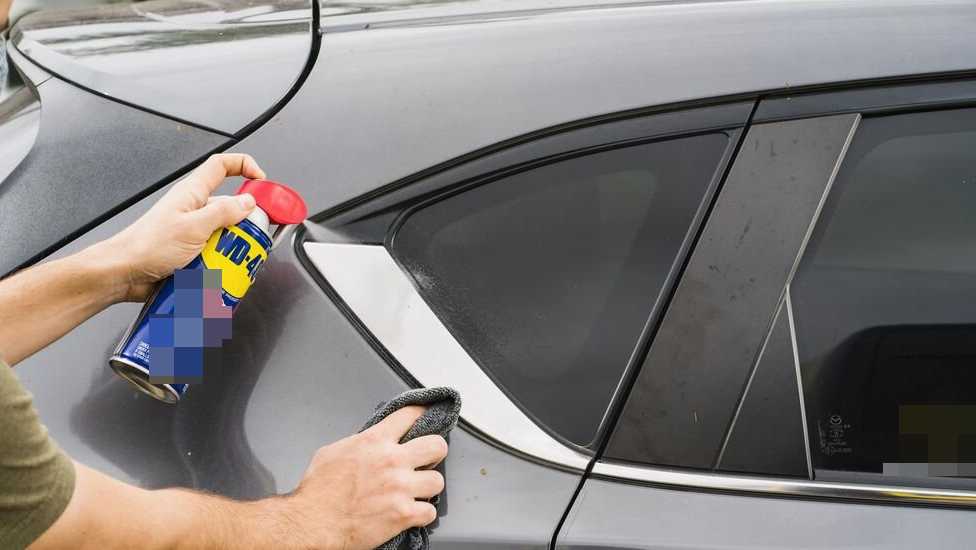
Is WD-40 Safe to Use on Car Paint?
WD-40 Multi-Use Product is generally safe for brief use on intact, fully cured automotive paint, including factory-painted body panels. Its formulation contains petroleum-based hydrocarbons that help loosen grease, adhesive residue, and road contaminants. WD-40 also leaves a lubricating film that reduces friction during application, although this does not eliminate the risk of scratching when dirt is present.
Paint compatibility depends on the condition of the finish and how the product is applied. Modern automotive paint systems typically consist of a primer, color base coat, and protective clear coat. The cured clear coat acts as the primary barrier between cleaning products and the underlying color layer. WD-40 is not expected to damage this intact barrier during brief, appropriate use, but damaged or deteriorated finishes require additional caution.
Is WD-40 Safe on Factory Car Paint?
WD-40 is generally compatible with fully cured factory car paint when used for localized cleaning. Factory paint undergoes controlled curing during vehicle manufacturing, producing a durable finish designed to withstand normal environmental exposure and appropriate cleaning products.
For example, a small amount of WD-40 can help loosen road tar attached to a painted door panel. Applying the product to a clean microfiber cloth allows more precise treatment than spraying an entire panel. The area should then be washed with automotive shampoo to remove the remaining oily film.
Freshly repainted panels require different precautions. Automotive refinishing systems vary in their curing requirements, and paint shops may restrict the use of certain chemical products during the initial aftercare period. Follow the refinisher’s instructions before applying WD-40 to repaired or newly painted surfaces.
Does WD-40 Damage Car Clear Coat?
WD-40 does not normally damage an intact, fully cured automotive clear coat during brief, controlled application. However, it is not a clear coat treatment or paint protection product. Its lubricating and water-displacing properties serve different purposes from the protective functions of automotive waxes, sealants, and ceramic coatings.
Clear coat is the transparent outer layer of a typical modern automotive paint system. It helps protect the underlying color coat from ultraviolet exposure, moisture, and environmental contamination. WD-40 can leave an oily film on this surface, temporarily changing its gloss and water-repellent behavior without necessarily altering the clear coat itself.
An oily film can also make existing scratches appear less visible by temporarily changing how light reflects from the surface. This cosmetic effect does not restore damaged clear coat or repair scratches. Once the WD-40 residue is removed, the original defects generally remain visible.
WD-40 may also interfere with the appearance or performance of existing waxes and paint sealants. The extent of any effect depends on the protective product’s formulation, condition, and exposure to WD-40. A single application should not automatically be assumed to remove an entire protective layer.
After using WD-40, wash the treated area with a suitable automotive shampoo and inspect the finish once it is dry. If water repellency or surface appearance has changed, follow the protective coating manufacturer’s maintenance instructions before applying additional products.
What Are the Risks of Using WD-40 on Car Paint?
The 4 main risks of using WD-40 on car paint are oily residue buildup, interference with protective coatings, potential problems on uncured paint, and scratches caused by improper wiping. These risks depend on the paint’s condition, the amount of product applied, and the cleaning method. WD-40 Multi-Use Product is generally compatible with intact, fully cured automotive paint, but compatibility does not mean every application is risk-free.
WD-40 contains petroleum-based ingredients that dissolve or loosen certain contaminants and leave a lubricating film on treated surfaces. This film is useful for loosening sticky deposits but can create problems when the product is applied excessively or left on the vehicle without cleaning. For example, spraying WD-40 across an entire painted door panel to remove a small adhesive spot creates unnecessary residue that must be washed away.
Mechanical damage is another concern. WD-40 does not prevent hard particles such as sand, road grit, or dried mud from scratching clear coat during wiping. Rubbing a contaminated surface with a dry cloth can produce fine scratches or swirl marks, particularly on dark-colored vehicles where these defects are more visible. Removing loose dirt before treatment and using a clean microfiber towel reduces this risk.
Can WD-40 Leave Stains or Oily Residue on Car Paint?
WD-40 can leave oily residue, streaks, and temporary surface discoloration on car paint, but these effects do not necessarily indicate permanent paint damage. The product contains lubricating components that remain on the surface after its more volatile ingredients evaporate. This residual film can change how light reflects from the finish, making treated areas appear darker, shinier, or uneven.
Oily residue also attracts and retains airborne contaminants, including dust, pollen, and road dirt. These particles can accumulate on treated panels and make the surface appear dirty shortly after cleaning. For example, WD-40 residue left around a door handle after adhesive removal may collect visible dust while the surrounding paint remains clean.
The distinction between surface residue and actual staining is important. Residue sits on top of the paint and can generally be removed with appropriate automotive shampoo. Genuine paint staining involves a persistent change in the coating’s appearance that remains after cleaning. If discoloration persists after washing and drying, the surface should be inspected before applying stronger chemicals or abrasive polishing compounds.
Can WD-40 Damage Fresh or Uncured Automotive Paint?
WD-40 should not be applied to freshly repainted or incompletely cured automotive paint unless the paint manufacturer or refinishing professional confirms compatibility. Newly applied automotive coatings undergo chemical curing and solvent release according to their formulation and application conditions. During this period, the finish may be more vulnerable to chemical exposure than fully cured factory paint.
Automotive refinishing systems include two-component urethane clear coats, waterborne base coats, and other specialized coating materials. Their curing requirements vary with product chemistry, temperature, film thickness, and the refinisher’s procedures. A panel that feels dry to the touch is not necessarily ready for unrestricted chemical cleaning or protective treatments.
For example, a recently repaired bumper may have a new base coat and clear coat applied at a body shop. Spraying WD-40 onto the repaired surface before the prescribed curing and aftercare period has ended introduces avoidable chemical exposure. The appropriate waiting period must come from the refinisher or coating manufacturer’s instructions rather than a universal number of days.
Existing paint damage also increases the need for caution. Cracked clear coat, peeling paint, exposed base coat, and deteriorated refinishing work provide less reliable protection against cleaning chemicals. WD-40 should not be used as a treatment for these defects because its oily film cannot restore coating adhesion, thickness, or structural integrity.
How Do You Safely Apply WD-40 to Car Paint?
To safely apply WD-40 to car paint, clean the affected area, test the product on a hidden spot, apply a small amount with a microfiber cloth, and remove the residue after treatment. This method limits chemical exposure, prevents unnecessary overspray, and reduces the risk of scratching the clear coat. WD-40 Multi-Use Product should be used for localized cleaning rather than as a general automotive paint treatment.
Follow these 6 steps to apply WD-40 safely:
- Clean the surface. Rinse away loose dirt, sand, and road debris before applying WD-40. Hard particles trapped between the cloth and clear coat can create scratches during wiping.
- Check the paint condition. Confirm that the surface is intact and fully cured. Avoid freshly repainted panels, peeling clear coat, and damaged paint unless a qualified professional confirms compatibility.
- Test a hidden area. Apply a small amount of WD-40 to an inconspicuous painted spot. Remove it and inspect the finish for unexpected changes before treating a visible area.
- Apply WD-40 to a microfiber cloth. Use only enough product to moisten the contact area. Controlled application reduces overspray and prevents excessive residue buildup.
- Gently remove the contaminant. Wipe the affected spot with light pressure. Allow the product to loosen adhesive or tar instead of aggressively rubbing the surface.
- Wash and dry the treated area. Use automotive shampoo and clean water to remove the remaining oily film. Dry with a clean microfiber towel and inspect the finish.
Apply WD-40 to a cool painted surface away from direct sunlight and ignition sources. Hot panels can accelerate the evaporation of volatile ingredients, while excessive product application increases the amount of residue requiring removal. Work in a well-ventilated area and follow the product label’s safety instructions.
WD-40 should remain on the paint only as long as necessary to complete the cleaning task. There is no universal exposure time that guarantees compatibility with every automotive finish. The appropriate contact period depends on the contaminant, paint condition, and product instructions. Remove the residue promptly rather than leaving WD-40 on the panel as a protective coating.
Should You Spray WD-40 Directly on Car Paint?
Applying WD-40 to a clean microfiber cloth is preferable to spraying it directly onto car paint for small cleaning tasks. Both methods bring the product into contact with the painted surface, but cloth application provides better control over the amount and placement of the liquid.
Direct spraying can spread WD-40 beyond the intended cleaning area. Overspray may reach rubber seals, plastic trim, windows, or existing protective coatings, creating additional surfaces that require cleaning. For example, spraying WD-40 directly onto adhesive residue near a painted door handle can distribute oily droplets across the surrounding door panel.
A microfiber cloth concentrates the product on the contaminated spot and limits unnecessary exposure. Use a clean section of the cloth and gentle pressure to loosen the deposit. If the contaminant remains firmly attached, repeat the controlled application rather than scraping the paint with a hard tool.
Direct application should only be considered when appropriate for the specific cleaning task and consistent with the product manufacturer’s instructions. Regardless of the method, avoid saturating the surface and remove the remaining film after treatment.
How Do You Remove WD-40 Residue From Car Paint?
WD-40 residue can generally be removed from intact automotive paint using car shampoo, clean water, and a soft microfiber wash mitt. Automotive shampoo contains surfactants that help lift oily contamination from the surface so it can be rinsed away without aggressive scrubbing.
Start by rinsing the treated panel with clean water to remove loose debris. Mix an automotive shampoo according to its label instructions and wash the affected area with a clean microfiber mitt. Use gentle, overlapping movements to distribute the cleaning solution across the oily film. Rinse thoroughly to carry away loosened residue and remaining shampoo.
Dry the surface with a clean microfiber drying towel and inspect it under good lighting. A properly cleaned panel should no longer feel greasy or display visible oily streaks. If residue remains, repeat the wash using the recommended shampoo concentration rather than immediately applying a strong solvent or abrasive cleaner.
For example, after removing sticker adhesive from a painted trunk lid with WD-40, washing the treated spot removes the lubricating film that would otherwise attract dust. The same procedure applies after using WD-40 to loosen small tar deposits on a lower door panel.
If the treated area has an existing wax, sealant, or ceramic coating, follow the protection manufacturer’s maintenance instructions after cleaning. Check the surface for persistent changes in appearance or water repellency. Avoid unnecessary polishing because abrasive products remove a small amount of surface material and are not appropriate for ordinary WD-40 residue.
What Should You Do If WD-40 Has Been Left on Car Paint?
Wash the affected surface with automotive shampoo and inspect the finish if WD-40 has been left on car paint for an extended period. Prolonged contact does not automatically mean the paint has been permanently damaged, especially when the finish is intact and fully cured. However, leaving WD-40 on a vehicle can produce oily buildup, attract contaminants, and interfere with the appearance of existing paint protection.
Begin by moving the vehicle into a shaded, well-ventilated area and allowing hot panels to cool. Rinse away accumulated dirt before washing the treated surface with a suitable automotive shampoo. Use a clean microfiber wash mitt, rinse thoroughly, and dry the panel without applying excessive pressure.
After cleaning, inspect the surface for three conditions: remaining oily residue, persistent discoloration, and visible coating defects. Residue that disappears after washing indicates surface contamination rather than confirmed paint damage. Persistent cloudiness, peeling clear coat, or changes in the paint texture require closer evaluation.
For example, WD-40 left on a painted fender overnight may leave a greasy film that collects dust. Removing that film with automotive shampoo can restore the surface’s normal appearance without additional treatment. If a visible defect remains after thorough cleaning, consult a professional automotive detailer or paint repair specialist before using stronger chemicals or polishing compounds.
Can WD-40 Remove Tar From Car Paint?
WD-40 Multi-Use Product can help remove road tar from fully cured car paint by loosening the sticky deposits that adhere to the surface. Its petroleum-based solvents can soften certain tar contaminants, making them easier to wipe away without aggressive scrubbing. However, a dedicated automotive tar remover is generally the better choice for extensive contamination because it is specifically formulated for this cleaning task.
Road tar consists of sticky bituminous materials that can transfer from asphalt onto vehicle surfaces. These deposits commonly accumulate on lower door panels, rocker panels, wheel arches, and areas behind the tires. Ordinary car shampoo may not remove hardened tar effectively because bituminous residues resist water-based cleaning solutions. WD-40 helps loosen these deposits through solvent action, reducing their adhesion to the painted surface.
To remove tar with WD-40, first wash the affected area to eliminate loose dirt and abrasive particles. Apply a small amount of WD-40 to a clean microfiber cloth and gently treat the tar deposit. Allow the product to work according to its instructions, then wipe away the loosened contamination without applying excessive pressure. Repeat the process only when necessary, and wash the treated area with automotive shampoo afterward.
For example, small black tar spots on the lower section of a painted car door may soften after localized WD-40 application. Once the deposits loosen, a clean microfiber cloth can lift them from the surface. Large deposits or widespread contamination are better handled with a paint-compatible automotive tar remover.
Avoid scraping hardened tar with fingernails, metal tools, or abrasive pads. These methods can scratch the clear coat even when the cleaning product itself is compatible with the paint. Recently repainted panels, deteriorated clear coat, and specialized protective coatings also require additional compatibility checks before treatment.
Can WD-40 Remove Adhesive Residue From Car Paint?
WD-40 can remove certain types of adhesive residue from car paint by softening the sticky material left behind by stickers, labels, and adhesive-backed accessories. Its solvent components help loosen some adhesive formulations, allowing residue to separate from the painted surface with gentle wiping. Effectiveness depends on the adhesive’s composition, age, thickness, and exposure to environmental conditions.
Adhesive residue commonly remains after removing dealership stickers, decorative decals, temporary labels, and adhesive-backed vehicle accessories. Pressure-sensitive adhesives can become more difficult to remove after prolonged exposure to sunlight and heat. As the adhesive ages, it may spread across the surface or leave a stubborn film that ordinary car shampoo cannot dissolve.
For localized adhesive removal, begin by washing the painted area and checking that the finish is fully cured and undamaged. Apply a small amount of WD-40 to a clean microfiber cloth, then gently work it over the residue. Allow the product to loosen the adhesive without excessive rubbing. Remove the softened material with a clean section of the cloth and wash the area thoroughly with automotive shampoo.
For example, removing a dealership sticker from a painted trunk lid may leave a thin layer of sticky adhesive. WD-40 can help loosen this residue so it can be wiped away without scraping the clear coat. Thick adhesive deposits may require repeated gentle treatment or a dedicated automotive adhesive remover.
WD-40 does not dissolve every adhesive formulation. Some cured adhesives, structural bonding compounds, and hardened residues require specialized removal products or professional techniques. If the adhesive remains firmly attached, avoid increasing pressure or using sharp tools because mechanical abrasion can damage the paint.
A paint-compatible automotive adhesive remover is generally preferable for larger areas or stubborn deposits. These products are designed for specific adhesive-removal applications, although their compatibility instructions must still be checked. After cleaning, inspect the treated surface for remaining residue and changes in the appearance of any existing wax, sealant, or ceramic coating.
Can WD-40 Remove Scratches From Car Paint?
WD-40 cannot permanently remove scratches from car paint because it does not repair or replace damaged clear coat. However, its oily film can temporarily make certain superficial scratches less visible by changing how light reflects from the painted surface. This cosmetic effect disappears when the residue is removed, leaving the underlying paint damage unchanged.
Automotive paint scratches fall into three main categories: superficial clear coat marks, deeper scratches within the clear coat, and scratches that penetrate the color coat or expose the primer. Superficial marks affect the outermost surface and may respond to appropriate polishing. Deeper scratches require more extensive correction, while damage reaching the primer or metal generally requires refinishing or touch-up paint.
WD-40 can temporarily reduce the visibility of some shallow marks because its lubricating film fills minor surface irregularities. These irregularities scatter reflected light, making scratches visible against the surrounding finish. When an oily substance covers the affected area, the difference in light reflection may decrease. However, WD-40 does not level the clear coat, restore missing paint, or permanently change the depth of a scratch.
For example, a light scratch on a black car door may appear less noticeable immediately after WD-40 application. Once the panel is washed with automotive shampoo, the oily film disappears and the scratch becomes visible again. This demonstrates temporary visual masking rather than actual paint correction.
Permanent scratch removal requires a method appropriate to the depth of the damage. Light clear coat scratches may be corrected with automotive polishing compounds, which remove a controlled amount of clear coat to level the surrounding surface. Scratches that penetrate the color coat may require touch-up paint or professional refinishing. Excessive polishing can reduce clear coat thickness, so deeper defects should be evaluated before correction.
WD-40 should not replace automotive scratch removers, polishing compounds, or paint repair products. Its primary value in this context is loosening certain surface contaminants, not restoring damaged paint.
Read more: Is WD-40 a Penetrating Oil? Uses and Differences
Is WD-40 Safe on Ceramic-Coated Cars?
WD-40 should not be assumed safe for every ceramic-coated car because compatibility depends on the coating formulation and the manufacturer’s maintenance instructions. Although WD-40 is generally compatible with intact, fully cured factory paint during brief use, ceramic coatings introduce an additional protective layer with different chemical resistance and maintenance requirements.
Automotive ceramic coatings commonly contain silicon-based compounds that form a protective layer over the clear coat. These coatings are designed to improve water repellency, reduce contaminant adhesion, and make routine cleaning easier. Their resistance to chemicals varies according to formulation, curing conditions, coating thickness, and product quality.
WD-40 leaves an oily film that can temporarily alter the surface behavior of a ceramic coating. This residue may interfere with water beading, attract dust, or reduce the apparent effectiveness of the coating until the film is removed. Changes in water repellency after WD-40 application do not automatically indicate permanent coating damage because surface contamination can produce similar effects.
For example, applying WD-40 to remove adhesive residue from a ceramic-coated hood may leave an oily patch where water behaves differently from the surrounding surface. Washing the area with a coating-compatible automotive shampoo can remove the residue and help determine whether the coating’s original behavior remains intact.
Ceramic coating manufacturers specify different maintenance requirements. Some coatings tolerate a broad range of cleaning chemicals, while others require approved shampoos and specialized decontamination products. WD-40 should therefore be tested only when its compatibility with the specific coating has been established.
For routine cleaning, use a ceramic-coating-safe shampoo or a contaminant remover approved by the coating manufacturer. Dedicated tar and adhesive removers may be suitable for particular coatings, but product compatibility should be verified before application.
If WD-40 has already been applied to a ceramic-coated surface, wash the affected area with an approved automotive shampoo and inspect it after drying. Persistent changes in gloss, water repellency, or surface texture should be evaluated according to the coating manufacturer’s maintenance guidance. Avoid abrasive polishing because it can remove or compromise the ceramic coating.
What Are Safer Alternatives to WD-40 for Cleaning Car Paint?
The best alternatives to WD-40 for cleaning car paint are automotive shampoos, tar removers, adhesive removers, detailing sprays, and paint-safe polishing compounds. Each product category addresses a specific type of contamination or surface defect. Choosing a cleaner designed for the intended task reduces unnecessary chemical exposure and helps preserve the vehicle’s clear coat and protective coatings.
Automotive shampoo is the preferred option for routine cleaning because it removes common contaminants such as road dust, dirt, pollen, and light traffic film. Unlike WD-40, which leaves a lubricating residue, automotive shampoos are formulated to lift dirt from painted surfaces and rinse away with water. A suitable car shampoo also provides lubrication during washing, reducing friction between the wash mitt and clear coat.
Dedicated automotive tar removers are more appropriate for stubborn asphalt deposits and bituminous contamination. These products contain cleaning agents selected to soften or dissolve road tar, allowing it to separate from the painted surface with less mechanical force. For example, black tar spots behind a vehicle’s front wheels can be treated with a paint-compatible tar remover rather than repeatedly rubbing the deposits with WD-40.
Automotive adhesive removers provide another targeted alternative. These cleaners are formulated to loosen sticker glue, decal residue, and certain pressure-sensitive adhesives without requiring aggressive scraping. Product instructions must be checked because compatibility varies among factory paint, repainted panels, plastic trim, and protective coatings.
Detailing sprays are useful for light surface contamination and maintenance between regular washes. They provide lubrication that helps reduce friction during gentle wiping, although heavily contaminated panels should be washed before using a detailing spray. Ceramic-coated vehicles should use products specifically approved for their coating systems.
For visible scratches, automotive polishing compounds are more appropriate than WD-40 because they can correct certain defects within the clear coat. Polishing uses controlled abrasion to level shallow surface irregularities rather than temporarily concealing them with an oily film. Deeper scratches that penetrate the color coat require different repair methods, including touch-up paint or professional refinishing.
The following table compares suitable automotive cleaning products for common paint maintenance tasks.
| Cleaning task | Recommended product | Primary function |
|---|---|---|
| General dirt and road grime | Automotive shampoo | Removes routine surface contamination |
| Asphalt and road tar | Paint-safe tar remover | Softens stubborn bituminous deposits |
| Sticker and decal residue | Automotive adhesive remover | Loosens adhesive contamination |
| Light dust and fingerprints | Automotive detailing spray | Provides lubrication for light cleaning |
| Minor clear coat scratches | Automotive polishing compound | Corrects suitable superficial defects |
| Ceramic-coated surfaces | Coating-compatible cleaner | Cleans while following coating maintenance requirements |
Dedicated automotive cleaners are generally preferable to WD-40 for regular paint maintenance because their formulations and instructions are tailored to specific detailing applications. However, no cleaning product is universally safe for every painted surface. Compatibility depends on the cleaner’s ingredients, the condition of the finish, and the presence of protective coatings.
For the safest results, identify the contaminant before selecting a product, follow the manufacturer’s instructions, and test unfamiliar cleaners on an inconspicuous area. Use clean microfiber tools and avoid excessive pressure during application. This approach removes contamination while minimizing unnecessary wear on the vehicle’s paint finish.