You are driving normally when a small warning light suddenly appears on your dashboard. You pull over, inspect your tires, and everything looks fine. Tire pressure seems normal, there are no visible punctures, and the vehicle drives exactly as expected. Yet the warning light remains there.
Many drivers immediately assume they have a tire problem, but the issue may actually come from a failing Tire Pressure Monitoring System sensor, commonly called a TPMS sensor. These sensors continuously monitor tire pressure and alert drivers when pressure falls below safe levels. They play a critical role in vehicle safety, fuel efficiency, tire lifespan, and overall driving performance.
The problem is that tire pressure sensors do not last forever. Their internal batteries eventually weaken, components wear out, and communication problems can develop over time. Because TPMS failures often begin with subtle symptoms, many drivers ignore early warning signs until the dashboard light becomes a constant source of frustration.
Ignoring these symptoms can lead to false alerts, unnecessary repair expenses, and uncertainty about whether your tires are actually safe. In this guide, you will discover the most common signs your tire pressure sensor is failing, learn why these symptoms occur, and understand what steps to take before a minor issue becomes a bigger problem.
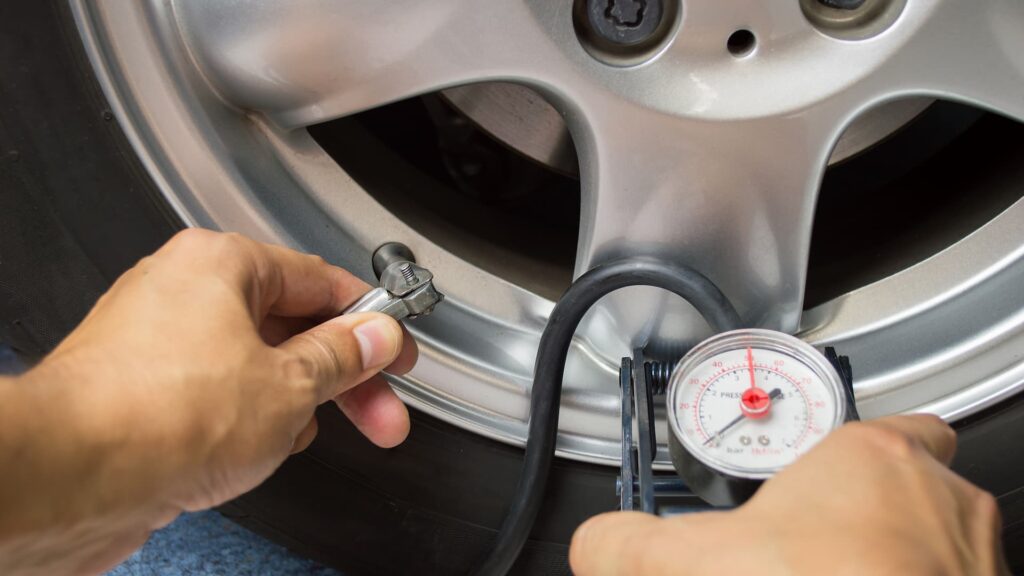
Top 7 Signs Your Tire Pressure Sensor Is Failing
1. TPMS Warning Light Stays On Constantly
One of the most obvious signs of a failing tire pressure sensor is a TPMS warning light that stays illuminated even after your tires have been properly inflated. Many drivers add air, reset the system, and expect the warning to disappear. When it does not, the issue may not be tire pressure at all.
A faulty sensor can transmit incorrect data or fail to communicate with the vehicle’s monitoring system.
Common symptoms
- TPMS light remains on after inflating tires
- Tire pressure appears normal
- Warning returns repeatedly
- No noticeable change in driving performance
Possible causes
- Sensor battery failure
- Internal sensor damage
- Signal communication problems
- Sensor aging
Why this matters
Constant warning lights create confusion. Over time, drivers may begin ignoring alerts completely, increasing the risk of missing real tire safety problems.
2. TPMS Light Blinks Before Staying On
Many drivers do not realize there is an important difference between a solid TPMS light and a blinking TPMS light.
A blinking TPMS warning often indicates a system malfunction rather than actual low tire pressure. In many vehicles, the light flashes for a short period after startup before remaining solid.
Common symptoms
- Light flashes for about one minute
- Warning becomes solid afterward
- Issue repeats every drive cycle
- Tire pressure remains normal
Possible causes
- Sensor communication failure
- Missing sensor signal
- Failed TPMS module
- Sensor programming issues
Why this symptom gets ignored
Drivers often assume temperature changes caused the warning. While weather can affect pressure readings, repeated blinking usually points toward an electronic issue.
3. Tire Pressure Readings Become Inconsistent
Modern vehicles equipped with individual tire pressure displays allow drivers to monitor each tire in real time. If readings suddenly fluctuate without reason, sensor failure may be developing.
For example, one tire may display 32 PSI one moment and jump to 41 PSI shortly afterward without any actual change in pressure.
Common symptoms
- Rapid pressure fluctuations
- Random reading changes
- Readings differ significantly from manual gauges
- Pressure numbers seem unrealistic
Possible causes
- Weak sensor battery
- Internal sensor electronics failure
- Interference with signal transmission
- Calibration issues
Hidden risk
Inconsistent readings make it difficult to know when tire pressure actually becomes unsafe.
4. One Tire Shows No Reading
If your vehicle displays individual tire pressure data and one tire suddenly stops reporting information, there is a strong possibility that a TPMS sensor is failing.
This symptom often appears gradually. At first, the reading may disappear occasionally and return later. As the sensor battery weakens or internal electronics begin failing, the signal eventually disappears completely.
Common symptoms
- One tire displays “–” or no data
- Pressure reading randomly disappears
- One wheel consistently shows delayed updates
- Dashboard warning appears intermittently
Possible causes
- Dead TPMS sensor battery
- Internal sensor failure
- Signal interference
- Sensor damage from road impact
Why this happens
Most TPMS sensors contain sealed batteries that cannot be replaced individually. Once battery life ends, the entire sensor usually requires replacement.
5. False Low Pressure Alerts
A failing tire pressure sensor can generate alerts even when tire pressure remains perfectly normal. This issue creates unnecessary stress and often leads drivers to repeatedly inspect or inflate tires that are already at the correct pressure.
Over time, false alerts become frustrating and may cause drivers to stop paying attention to dashboard warnings altogether.
Common symptoms
- Low pressure alerts with properly inflated tires
- Warning appears and disappears randomly
- Tire pressure matches manual gauge readings
- Alerts occur more frequently over time
Possible causes
- Weak sensor battery
- Sensor calibration problems
- Internal electronic failure
- Signal transmission errors
Hidden risk
When drivers become accustomed to false warnings, they may ignore a real low-pressure situation that requires immediate attention.
6. Sensor Stops Working After Tire Service
Many TPMS issues appear shortly after tire rotations, tire replacements, balancing services, or wheel repairs.
This does not always mean the sensor itself failed. Sometimes the sensor becomes damaged during tire work or simply needs a TPMS relearn procedure.
Common symptoms
- TPMS warning appears after tire service
- New tires installed but warning remains
- Sensor data missing after wheel rotation
- TPMS light suddenly activates after repair work
Possible causes
- Sensor accidentally damaged
- Improper installation
- Missing relearn procedure
- Valve stem damage
Why owners become confused
Because symptoms appear immediately after maintenance, drivers often assume the new tires caused the issue rather than the sensor system.
7. Sensor Battery Reaches End of Life
One of the most common reasons TPMS sensors fail is battery depletion.
Most tire pressure sensor batteries are sealed inside the unit and designed to last several years. Once battery capacity drops too low, signal transmission becomes weak and system reliability declines.
Average TPMS battery lifespan
Most sensors last approximately:
- 5 to 10 years
- 60,000 to 100,000 miles
- Depending on driving conditions and climate
Common symptoms
- Intermittent TPMS warnings
- Signal loss
- Missing tire readings
- Multiple sensor issues appearing close together
Important note
If your vehicle is approaching this age range, replacing multiple sensors at the same time may reduce future labor costs.
Conclusion
Tire pressure sensors are small components, but they play a major role in vehicle safety and everyday driving confidence. Because TPMS systems work quietly in the background, many drivers overlook early symptoms until dashboard warnings become persistent and frustrating.
The signs your tire pressure sensor is failing often start with subtle issues. A warning light that stays on, blinking TPMS alerts, inconsistent pressure readings, missing tire data, or repeated false alarms may not seem urgent at first. However, these symptoms can gradually become more frequent as the sensor battery weakens or internal components begin to fail.
Ignoring TPMS problems can create more than simple inconvenience. False warnings may cause drivers to ignore alerts entirely, increasing the chance of missing a genuine tire pressure issue. Improper tire pressure affects handling, braking performance, fuel economy, and tire wear. In more serious situations, it can also increase safety risks on the road.
The good news is that most TPMS problems can be diagnosed before they become major frustrations. Early inspection, proper maintenance, and replacing failing sensors at the right time can save money and help maintain accurate tire monitoring.
Have you experienced TPMS problems before? Did the issue turn out to be a weak battery, sensor damage, or something unexpected? Share your experience in the comments. Your insight may help other drivers diagnose their problem faster and avoid unnecessary repair costs.