Many Honda Pilot owners choose to disable Variable Cylinder Management (VCM) after experiencing engine vibration, excessive oil consumption, or spark plug fouling. Honda developed VCM to improve fuel economy by shutting down selected cylinders during light driving conditions. While the system reduces fuel consumption, many owners believe it also contributes to long term engine wear. This concern has made VCM one of the most discussed topics among Honda Pilot enthusiasts.
A VCM disabler keeps the J35 V6 engine running on all six cylinders at all times. It does not remove factory engine components or permanently change the vehicle when installed correctly. Many drivers report smoother acceleration, lower oil consumption, and more consistent engine performance after disabling VCM. However, the modification may slightly reduce fuel economy and may affect warranty decisions on newer vehicles.
This guide explains how Honda Pilot VCM works and why many owners decide to disable it. You will learn the main benefits, potential risks, and the best methods available today. The guide also compares popular VCM disablers, explains the installation process, and identifies the Honda Pilot model years that benefit the most from this modification. By the end, you will have the information needed to decide whether disabling VCM is the right solution for your vehicle.
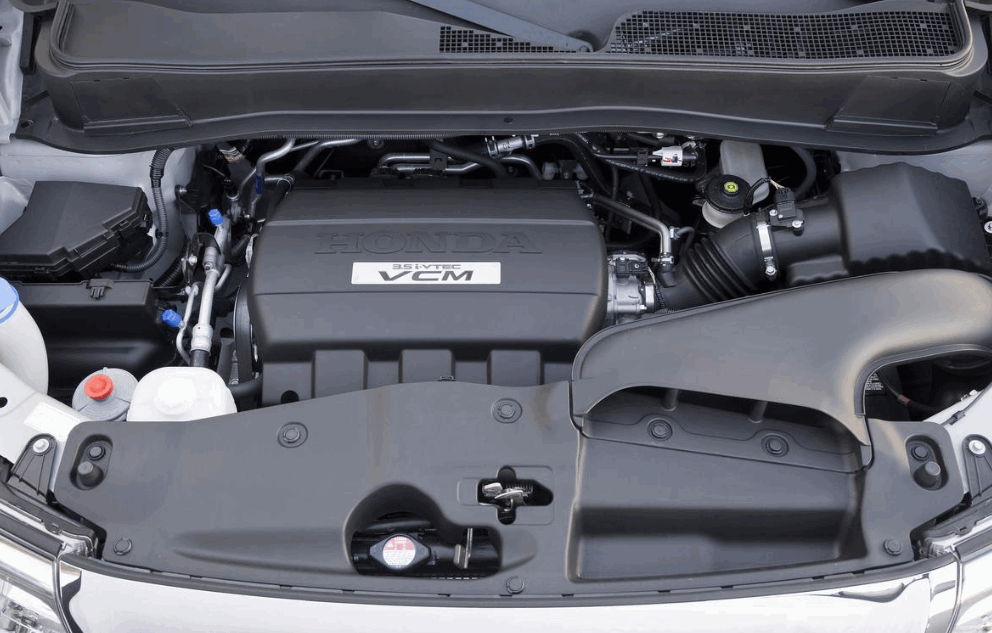
What Is Honda Pilot Variable Cylinder Management (VCM) and How Does It Work?
Variable Cylinder Management (VCM) is Honda’s cylinder deactivation technology that improves fuel efficiency under light driving conditions. Instead of using all six cylinders continuously, the system temporarily shuts down two or three cylinders when the engine requires less power. Honda introduced VCM on selected Honda Pilot models to reduce fuel consumption and lower exhaust emissions without sacrificing everyday drivability.
The Powertrain Control Module (PCM) manages the entire process in real time. It monitors engine load, throttle position, vehicle speed, coolant temperature, and other operating conditions before deciding whether to activate VCM. When the required conditions are met, the PCM deactivates specific cylinders by controlling the Variable Valve Timing and Lift Electronic Control system and fuel injection. The engine then switches between six-cylinder and three-cylinder operation within seconds. Most drivers do not notice the transition because Honda also uses Active Engine Mounts and Active Noise Cancellation to reduce vibration and cabin noise.
Honda designed VCM primarily for steady highway cruising and other low-load situations where the engine does not need maximum power. Once the driver accelerates, climbs a hill, or demands more torque, the PCM immediately restores all six cylinders. This continuous transition helps improve fuel economy during normal driving while maintaining the performance expected from the 3.5-liter J35 V6 engine.
Although the system achieves its intended purpose, many Honda Pilot owners question its long-term reliability. Frequent switching between cylinder modes creates different operating temperatures and combustion patterns inside the engine. Some owners associate these changing conditions with excessive oil consumption, spark plug fouling, engine vibration, and ignition misfires. These concerns explain why disabling VCM has become a popular modification among owners who value long-term engine durability more than modest fuel economy gains.
Why Do Many Honda Pilot Owners Disable VCM?
Many Honda Pilot owners disable VCM because they want to improve engine reliability and reduce recurring mechanical problems. While Honda developed the system to save fuel, some drivers believe the constant transition between six-cylinder and three-cylinder operation increases wear on engine components over time. This concern becomes more common as the vehicle accumulates mileage and the engine experiences thousands of VCM activation cycles.
Engine vibration is one of the most frequently reported complaints. The engine naturally produces different vibration levels when only part of the cylinders operate. Honda minimizes this effect with Active Engine Mounts and Active Noise Cancellation, but some owners still notice vibration during highway cruising or when the transmission shifts between gears. In many cases, the vibration becomes more noticeable as the engine mounts age or lose their effectiveness.
Oil consumption is another reason many owners choose to disable VCM. During cylinder deactivation, inactive cylinders operate at different temperatures than active cylinders. Over time, these temperature differences may contribute to piston ring deposits, allowing more engine oil to enter the combustion chamber. Excessive oil consumption can foul spark plugs, trigger engine misfires, and illuminate the Check Engine Light. Although these issues do not affect every Honda Pilot, they appear often enough to raise concerns among long-term owners.
Many drivers also prefer a more predictable driving experience. Keeping all six cylinders active provides consistent engine output during acceleration and highway driving. Owners frequently report smoother throttle response, steadier power delivery, and fewer unexpected changes in engine behavior after installing a VCM disabler. For drivers who plan to keep their Honda Pilot for many years, these long-term reliability benefits often outweigh the small reduction in fuel economy.
What Are the Benefits of Disabling VCM on a Honda Pilot?
Disabling VCM allows the Honda Pilot engine to operate on all six cylinders at all times. This consistent operating pattern eliminates repeated cylinder activation and deactivation during normal driving. Many owners choose this modification because they want smoother engine performance and greater long-term reliability instead of the small fuel savings provided by the factory system.
One of the biggest benefits is reduced engine vibration. VCM changes the engine’s firing pattern whenever it switches between six-cylinder and three-cylinder operation. Although Honda designed Active Engine Mounts and Active Noise Cancellation to mask these changes, they cannot eliminate every vibration. Keeping all six cylinders active creates a more balanced combustion cycle, which often results in smoother acceleration and a more refined driving experience.
Many owners also report lower oil consumption after disabling VCM. When every cylinder operates continuously, combustion temperatures remain more consistent across the engine. Stable operating conditions help reduce the formation of carbon deposits around the piston rings. As a result, the engine is less likely to burn excessive oil or foul the spark plugs. Fewer ignition problems also reduce the risk of engine misfires and unexpected Check Engine Light warnings.
Another important advantage is improved long-term durability. Continuous six-cylinder operation reduces the number of mechanical transitions that occur during every drive. Many owners believe this helps extend the service life of spark plugs, engine mounts, and other components affected by repeated cylinder deactivation. While disabling VCM does not guarantee that future repairs will never occur, it can reduce several issues that owners commonly associate with the factory system. For drivers who plan to keep their Honda Pilot for many years, this added peace of mind often becomes the most valuable benefit.
What Are the Risks of Disabling VCM?
Disabling VCM offers several long-term benefits, but it also involves tradeoffs that every Honda Pilot owner should understand before making the modification. Most disadvantages are relatively minor, yet they can influence fuel costs, warranty coverage, and legal compliance. Understanding these factors helps owners make an informed decision based on their driving habits and vehicle condition.
The most common drawback is a slight reduction in fuel economy. VCM improves efficiency by reducing the number of active cylinders during light engine loads. Once the system remains disabled, the engine burns fuel through all six cylinders at all times. Most owners report only a small decrease in fuel economy, especially during highway driving where VCM activates most frequently. For many drivers, the reduction is acceptable because they value smoother engine operation and improved reliability.
Warranty coverage is another important consideration. Installing a VCM disabler does not physically modify the engine, but dealerships may inspect aftermarket devices when diagnosing engine or powertrain problems. Warranty decisions often depend on the vehicle’s age, the specific repair, and the dealer’s inspection process. Owners of newer Honda Pilot models should review their warranty terms before installing any device that changes factory operating behavior.
Installation quality also affects the final result. A high-quality VCM disabler usually works without creating additional problems, while poorly designed devices may trigger diagnostic trouble codes or inaccurate engine temperature readings. Choosing a reputable product that matches the correct Honda Pilot model year significantly reduces these risks. Proper installation and routine vehicle maintenance remain essential for reliable engine performance after disabling VCM.
For most long-term owners, the disadvantages remain smaller than the potential reliability benefits. However, drivers who prioritize maximum fuel economy or want to maintain complete factory originality may prefer to leave the VCM system unchanged.
Which Honda Pilot Model Years Are Most Affected by VCM?
Not every Honda Pilot experiences the same level of VCM-related issues. The likelihood of vibration, oil consumption, or spark plug fouling depends on the model year, engine version, maintenance history, and driving conditions. Earlier generations receive the most attention because they have accumulated higher mileage and have spent more years operating with the VCM system.
The 2006 to 2008 Honda Pilot introduced VCM on selected trim levels equipped with the 3.5-liter J35 V6 engine. Many vehicles from this generation continue to perform well, but higher-mileage examples are more likely to develop engine vibration or increased oil consumption. Owners who plan to keep these vehicles for many more years often install a VCM disabler as a preventive measure instead of waiting for symptoms to appear.
The 2009 to 2015 Honda Pilot is the generation most frequently associated with VCM discussions. Many owners report vibration during highway cruising, excessive oil consumption, fouled spark plugs, and occasional engine misfires after years of regular use. Although these problems do not affect every vehicle, they appear often enough that aftermarket VCM disablers became especially popular among owners of this generation. Drivers who regularly tow trailers or travel long distances also prefer continuous six-cylinder operation for more consistent engine performance.
The 2016 to 2022 Honda Pilot received improvements in engine management and overall refinement, yet VCM remains part of the powertrain strategy. Reports of VCM-related concerns still exist, although they appear less frequently than on some earlier models. Newer models from 2023 onward also continue to use cylinder deactivation technology while benefiting from updated software and engineering changes. Owners of these vehicles should evaluate their driving experience, maintenance history, and warranty status before deciding whether disabling VCM provides meaningful long-term value.
What Is the Best Way to Disable VCM?
Several methods can disable VCM on a Honda Pilot, but they do not provide the same level of reliability or convenience. Most owners choose an aftermarket VCM disabler because it requires no permanent engine modification and allows the vehicle to return to its factory configuration if needed. Selecting the right device depends on the Honda Pilot model year, engine configuration, and long-term ownership plans.
The most popular solution is the S-VCM. Many Honda owners prefer this device because it automatically adjusts engine temperature signals without requiring manual settings. Once installed, it keeps the engine out of VCM mode while allowing the Powertrain Control Module to operate normally. Its plug-and-play design also makes installation simple for owners with basic mechanical experience. This combination of convenience and reliability has made S-VCM one of the most recommended options within the Honda community.
VCM Tuner II is another widely used solution. Like the S-VCM, it prevents cylinder deactivation by modifying the engine coolant temperature signal. Many owners appreciate its stable performance and high-quality construction. Some versions also include additional protection features that help maintain consistent operation under different weather conditions. Drivers who want a durable long-term solution often consider this device a premium alternative.
Older products such as the VCMuzzler remain available for certain Honda Pilot models. While these devices successfully prevent VCM activation, many require manual adjustment to match seasonal temperature changes. Modern alternatives generally offer better automation and require less maintenance throughout the year. Regardless of the product you choose, purchasing a model that matches your vehicle’s production year is essential. A properly designed VCM disabler provides the best balance between installation simplicity, engine reliability, and everyday driving performance.
How Do You Install a VCM Disabler?
Installing a VCM disabler is a straightforward process that most Honda Pilot owners can complete in less than thirty minutes. Most aftermarket devices use a plug-and-play design, so they connect to the engine without cutting wires or modifying factory components. The exact installation steps vary slightly between products, but the overall process remains very similar.
Before starting, park the vehicle on a level surface and allow the engine to cool completely. Open the hood and locate the engine coolant temperature sensor according to the instructions provided by the manufacturer. Disconnect the factory electrical connector from the sensor, then attach the VCM disabler between the sensor and the original wiring harness. Secure the wiring away from moving parts and high-temperature components to prevent damage during normal driving.
After completing the installation, start the engine and allow it to reach normal operating temperature. Confirm that no warning lights appear on the dashboard and verify that the engine runs smoothly. During the first few drives, monitor coolant temperature, engine performance, and fuel economy. A properly installed VCM disabler should operate without triggering diagnostic trouble codes or affecting normal engine operation.
Although installation is simple, following the manufacturer’s instructions remains essential. Each Honda Pilot generation uses different electrical connectors and engine layouts. Installing the correct device for the specific model year reduces compatibility problems and ensures reliable performance. Owners who are uncomfortable working around engine components should consider professional installation to avoid accidental damage and confirm that the system functions correctly from the first drive.
Does Disabling VCM Affect Fuel Economy and Engine Reliability?
Disabling VCM usually has a small impact on fuel economy, but it can improve long-term engine consistency. Once the system remains inactive, the engine operates on all six cylinders under every driving condition. This approach increases fuel consumption slightly during steady highway cruising, yet many owners consider the tradeoff worthwhile because they prioritize reliability over maximum efficiency.
Most Honda Pilot owners report a fuel economy reduction of about one to three miles per gallon after installing a VCM disabler. The exact difference depends on driving style, traffic conditions, vehicle maintenance, and terrain. Drivers who spend most of their time on highways may notice a slightly larger decrease because VCM activates most frequently during constant-speed cruising. In contrast, city driving often shows little measurable difference since the engine rarely remains in cylinder deactivation mode for extended periods.
The effect on engine reliability receives far more attention than the change in fuel economy. Continuous six-cylinder operation keeps combustion temperatures and engine loading more consistent across all cylinders. Many owners believe these stable operating conditions help reduce oil consumption, minimize spark plug fouling, and decrease the likelihood of engine vibration or ignition misfires. Although no aftermarket device can eliminate every possible mechanical problem, many long-term owners report fewer VCM-related issues after disabling the system.
The overall value depends on individual priorities. Drivers who focus on achieving the highest possible fuel economy may prefer to leave the factory system unchanged. However, owners who plan to keep their Honda Pilot for many years often accept a small increase in fuel consumption in exchange for smoother engine operation and greater confidence in long-term durability.
Is Disabling VCM Worth It for Your Honda Pilot?
Disabling VCM is worthwhile for many Honda Pilot owners who plan to keep their vehicles for the long term. The modification addresses concerns that many drivers associate with the factory cylinder deactivation system, including engine vibration, excessive oil consumption, spark plug fouling, and inconsistent engine operation. While the decision depends on individual priorities, many owners consider the long-term reliability benefits more valuable than the modest fuel savings provided by VCM.
Vehicle age is one of the most important factors to consider. Older Honda Pilot models with higher mileage are more likely to experience symptoms that owners commonly associate with VCM operation. In these cases, installing a quality VCM disabler can help maintain smoother engine performance and reduce the likelihood of recurring issues. Owners who have already noticed vibration or increased oil consumption often choose to install a disabler before those symptoms become more severe.
Newer Honda Pilot models require a different evaluation. Many recent vehicles continue to operate without noticeable VCM-related problems and remain protected by the manufacturer’s warranty. Owners should balance the potential reliability benefits against possible warranty considerations before installing an aftermarket device. Waiting until the warranty period expires may be the preferred approach for drivers who want to avoid any questions during future dealership repairs.
There is no universal answer because every Honda Pilot has a different maintenance history and driving pattern. However, drivers who value engine longevity, smoother performance, and predictable operation often find that disabling VCM is a practical investment. Choosing a reputable VCM disabler, installing it correctly, and continuing regular maintenance will provide the best opportunity to keep the J35 V6 engine performing reliably for many years.
Conclusion
Disabling VCM is a popular upgrade among Honda Pilot owners who value long-term engine reliability over maximum fuel economy. While Honda designed Variable Cylinder Management to improve efficiency, many drivers associate the system with engine vibration, increased oil consumption, spark plug fouling, and inconsistent performance after years of use. A quality VCM disabler allows the J35 V6 engine to operate on all six cylinders continuously, creating a more consistent driving experience.
The modification is not the right choice for every owner. Drivers with newer vehicles that remain under warranty or those who prioritize the highest possible fuel economy may decide to keep the factory system unchanged. However, owners of higher-mileage Honda Pilots often find that the small reduction in fuel economy is a reasonable tradeoff for smoother operation and greater confidence in long-term engine durability.
Before installing a VCM disabler, choose a product designed specifically for your Honda Pilot model year and follow the manufacturer’s installation instructions carefully. Combined with regular maintenance, quality engine oil, and timely service, disabling VCM can help maintain dependable performance for many years. Understanding both the benefits and the potential drawbacks allows you to make an informed decision that matches your driving habits, ownership goals, and expectations for your Honda Pilot.