Modern GM vehicles rely on an Electronic Throttle Control (ETC) system to precisely manage airflow into the engine, replacing the traditional mechanical throttle cable with advanced sensors and computer-controlled actuators. While this technology improves fuel efficiency, throttle response, and emissions, it also introduces an important maintenance step that many vehicle owners overlook: the GM throttle body relearn procedure.
If you’ve recently cleaned or replaced the throttle body on your Chevrolet, GMC, Buick, or Cadillac, you may notice unexpected symptoms such as rough idle, fluctuating RPM, engine stalling, sluggish acceleration, or even a Reduced Engine Power warning. In many cases, these issues are not caused by a faulty repair. Instead, the Engine Control Module (ECM) simply needs time to relearn the throttle body’s new position and operating characteristics.
Performing the correct GM throttle body relearn procedure ensures that the ECM accurately recalibrates the electronic throttle body, allowing the engine to maintain a stable idle and deliver smooth, consistent performance. Skipping this process can lead to drivability issues, unnecessary diagnostic trouble codes (DTCs), and costly repairs that could have been avoided.
In this comprehensive guide, you’ll learn when a throttle body relearn is required, how to perform the procedure with and without a scan tool, common mistakes to avoid, troubleshooting tips if the relearn fails, and vehicle-specific recommendations for popular GM models. Whether you’re a DIY enthusiast or a professional technician, this step-by-step guide will help you complete the relearn process safely and correctly.
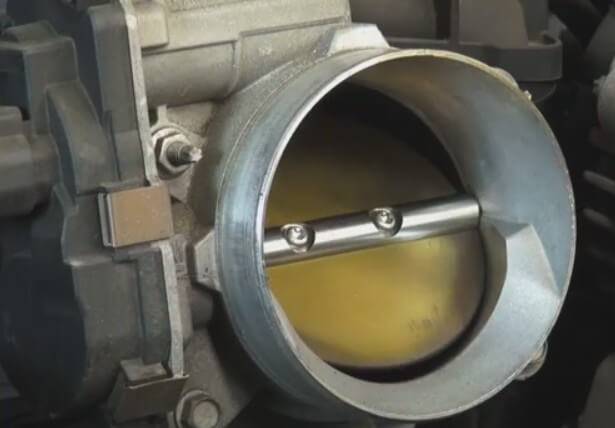
What Is a GM Throttle Body Relearn Procedure?
A GM throttle body relearn procedure is a calibration process that allows the Engine Control Module (ECM) to recognize and adapt to the current position of the electronic throttle body. Unlike older vehicles that used a mechanical throttle cable, most modern Chevrolet, GMC, Buick, and Cadillac models are equipped with an Electronic Throttle Control (ETC) system. This drive-by-wire technology uses sensors and electric motors to regulate airflow into the engine with exceptional precision.
The ECM continuously monitors information from the throttle position sensor, accelerator pedal position sensor, engine speed, coolant temperature, and other inputs to determine how far the throttle plate should open under different driving conditions. Over time, the module learns the normal operating characteristics of the throttle body and stores these values in its memory. This adaptive learning allows the engine to maintain a stable idle, improve throttle response, optimize fuel delivery, and reduce emissions.
When the throttle body is cleaned, replaced, or disconnected, the physical position of the throttle plate may change slightly. Even a small difference can cause the ECM’s previously learned values to become inaccurate. As a result, the engine may idle too high, too low, hesitate during acceleration, or display warning messages because the ECM is still operating with outdated calibration data.
The relearn procedure enables the ECM to establish a new baseline for throttle plate position and airflow. Once completed successfully, the engine can accurately control idle speed and throttle response, restoring smooth drivability and preventing unnecessary diagnostic trouble codes.
Although many GM vehicles can complete this process automatically after a short period of driving or idling, certain models require a specific ignition sequence or a professional scan tool to initiate the relearn. Understanding which procedure applies to your vehicle is essential for achieving the best results after throttle body service.
Why Does a GM Vehicle Need a Throttle Body Relearn?
A throttle body relearn is not required during routine maintenance, but it becomes an essential step whenever the relationship between the electronic throttle body and the ECM changes. Without recalibration, the ECM may continue using outdated airflow values, causing engine performance issues even though the throttle body itself is functioning correctly.
One of the most common situations occurs after cleaning the throttle body. Carbon deposits gradually accumulate around the throttle plate and bore, restricting airflow. Cleaning removes these deposits and changes the amount of air that passes through the throttle body at idle. Because the ECM has adapted to the previous airflow characteristics, it must relearn the new conditions to maintain the correct idle speed.
A relearn is also recommended after replacing the throttle body. Every replacement unit has slight manufacturing tolerances, and the throttle plate’s resting position may differ from the original component. Without recalibration, the ECM may struggle to control engine idle or throttle response accurately.
Disconnecting or replacing the battery can also erase adaptive memory on certain GM models. While not every vehicle loses throttle calibration after a battery disconnect, many require the ECM to rebuild its learned values during the next startup cycle.
Other situations that commonly require a relearn include replacing the Engine Control Module (ECM) or Powertrain Control Module (PCM), installing updated engine software, repairing electronic throttle control components, or addressing certain diagnostic trouble codes related to throttle position or idle control.
Ignoring the relearn procedure may lead to symptoms such as rough idle, unstable engine speed, delayed throttle response, reduced fuel economy, or the appearance of warning indicators like the Check Engine Light or Reduced Engine Power message. Completing the relearn process helps ensure the engine management system operates as intended and minimizes the risk of unnecessary repairs or misdiagnosis.
Symptoms That Indicate Your GM Vehicle Needs a Throttle Body Relearn
A vehicle that requires a throttle body relearn often exhibits symptoms that closely resemble those of a mechanical or electrical fault. Fortunately, many of these issues can be resolved simply by allowing the ECM to recalibrate the electronic throttle body after maintenance or component replacement.
One of the earliest warning signs is a rough or unstable idle. The engine may shake noticeably while stopped, or the idle speed may fluctuate between high and low RPM without any driver input. In some cases, the idle remains consistently higher than normal because the ECM is commanding an incorrect throttle plate position based on outdated learned values.
Another common symptom is engine stalling, particularly during cold starts or when shifting into gear. Since the ECM has not yet adapted to the new airflow characteristics, it may fail to provide enough air to keep the engine running smoothly at idle.
Drivers may also experience poor throttle response or hesitation during acceleration. Pressing the accelerator pedal may produce a delayed reaction, making the vehicle feel sluggish or unresponsive. This occurs because the ECM is struggling to match pedal input with the throttle body’s actual position.
Some GM vehicles may display a Reduced Engine Power warning on the instrument cluster. This protective mode limits engine performance when the electronic throttle control system detects a discrepancy between expected and actual throttle operation. A failed relearn, combined with stored fault codes, can contribute to this condition.
Additional symptoms include an illuminated Check Engine Light, inconsistent RPM during driving, decreased fuel economy, and occasional transmission shift irregularities caused by inaccurate engine load calculations.
If these problems appear immediately after cleaning or replacing the throttle body, there is a strong possibility that the ECM simply needs to complete the proper GM throttle body relearn procedure before normal performance can be restored.
Before You Begin
Before performing the GM throttle body relearn procedure, it’s important to ensure that your vehicle is in the proper condition. Skipping these preparation steps can cause the relearn process to fail or produce inaccurate throttle calibration. Taking a few minutes to verify everything beforehand will increase the chances of a successful relearn and prevent unnecessary troubleshooting later.
Start by confirming that the battery is fully charged. Electronic throttle control systems are highly sensitive to voltage fluctuations, and a weak battery can interrupt communication between the Engine Control Module (ECM) and the throttle body. If the battery voltage drops during the relearn process, the ECM may not store the new adaptive values correctly.
Next, inspect the throttle body to make sure it has been cleaned properly. Any remaining carbon deposits around the throttle plate can affect airflow and prevent the ECM from learning the correct idle position. If you recently installed a replacement throttle body, verify that it is the correct part number for your specific GM model and engine.
Before beginning the procedure, scan the vehicle for active Diagnostic Trouble Codes (DTCs). Faults related to the throttle position sensor, accelerator pedal position sensor, mass airflow sensor, or vacuum leaks should be repaired first. Attempting a relearn with unresolved engine faults often leads to unsuccessful calibration.
The engine should be warmed to normal operating temperature unless the service manual for your specific vehicle states otherwise. A cold engine uses different fuel and idle strategies, making it difficult for the ECM to establish accurate baseline values.
Park the vehicle on a level surface with the transmission in Park for automatic transmissions or Neutral for manual transmissions. Apply the parking brake and ensure that all electrical accessories, including the air conditioning, headlights, radio, heated seats, and rear defroster, are turned off. Additional electrical loads can alter engine idle speed during the relearn process.
Finally, avoid pressing the accelerator pedal unless the procedure specifically instructs you to do so. During initialization, the ECM expects the throttle plate to remain undisturbed while it calibrates its resting position. Any unintended pedal movement may interfere with the relearn and require the procedure to be repeated.
By completing these preparation steps, you create the ideal conditions for the ECM to accurately relearn throttle body operation and restore smooth engine performance.
GM Throttle Body Relearn Procedure Without a Scan Tool
Many late-model GM vehicles can complete a throttle body relearn without requiring a professional scan tool. Although the exact procedure may vary slightly depending on the model year and engine, the following method works for many Chevrolet, GMC, Buick, and Cadillac vehicles equipped with an electronic throttle body.
Step 1: Prepare the Vehicle
Verify that all preparation steps described above have been completed. The battery should be fully charged, the throttle body should be clean, and there should be no active throttle-related diagnostic trouble codes. Turn off all electrical accessories and place the transmission in Park.
Step 2: Turn the Ignition to the ON Position
Insert the ignition key and turn it to the ON position without starting the engine. For push-button start vehicles, press the Start button once without pressing the brake pedal. This powers the ECM and electronic throttle control system while keeping the engine off.
Leave the ignition on for approximately 30 seconds. During this time, you may hear a faint buzzing or clicking sound from the throttle body. This is normal and indicates that the throttle motor is performing its self-calibration sequence.
Step 3: Turn the Ignition Off
After waiting 30 seconds, switch the ignition completely off. Leave the vehicle undisturbed for another 30 to 60 seconds. This allows the ECM to complete its initial calibration and store preliminary throttle position data.
Step 4: Start the Engine
Start the engine without touching the accelerator pedal. Allow the engine to idle naturally. Avoid revving the engine or shifting into gear immediately after startup.
The idle speed may initially fluctuate or remain slightly higher than normal. This behavior is expected as the ECM continues adjusting fuel delivery and throttle position.
Step 5: Allow the Engine to Idle
Let the engine idle for approximately five to ten minutes or until the idle speed becomes stable. During this period, the ECM continuously fine-tunes throttle plate position based on sensor feedback, engine temperature, and airflow measurements.
Do not operate the air conditioning or other accessories while the idle relearn is taking place, as additional engine load can interfere with the calibration process.
Step 6: Perform a Road Test
Once the idle has stabilized, drive the vehicle under normal conditions for approximately 10 to 20 minutes. Include a combination of city driving, light acceleration, steady cruising, and several complete stops. This allows the ECM to continue adapting to real-world operating conditions.
A successful relearn is typically indicated by a smooth idle, normal throttle response, stable engine speed, and the absence of warning lights. If drivability problems remain after completing the procedure, further diagnosis may be necessary.
GM Throttle Body Relearn Procedure Using a Scan Tool
Some GM vehicles require a bidirectional scan tool to complete the throttle body relearn procedure, particularly after replacing the electronic throttle body, installing a new Engine Control Module, or performing certain software updates. A scan tool provides direct communication with the ECM, allowing it to initiate the relearn sequence more quickly and accurately than the manual method.
Begin by connecting a compatible scan tool to the vehicle’s OBD-II diagnostic port. Professional diagnostic equipment such as the GM Techline Connect system, GM MDI interface, or advanced aftermarket scanners from manufacturers like Autel, Launch, Snap-on, or Bosch typically include throttle body relearn functions. Ensure that the scan tool supports bidirectional controls for your specific GM model before beginning the procedure.
Turn the ignition to the ON position and establish communication with the ECM. Navigate through the service or special functions menu until you locate the throttle body relearn, idle learn, throttle position reset, or electronic throttle control calibration option. The exact menu names vary depending on the scan tool manufacturer.
Follow the prompts displayed on the scan tool. In most cases, the ECM will automatically command the throttle plate through a series of opening and closing movements while monitoring feedback from the throttle position sensor. During this process, avoid pressing the accelerator pedal or turning off the ignition unless instructed by the scan tool.
Once the relearn sequence is complete, start the engine and allow it to idle for several minutes. Monitor live data to verify that the throttle position, idle speed, and airflow readings remain stable. If any throttle-related diagnostic trouble codes are stored, clear them and repeat the verification process.
Finish by performing a road test under various driving conditions. Observe throttle response, idle quality, and engine performance to ensure the calibration was successful. If the scan tool reports that the relearn could not be completed, inspect the vehicle for wiring issues, vacuum leaks, sensor faults, or mechanical problems with the throttle body before attempting the procedure again. A successful scan tool relearn typically restores smooth idle quality, responsive acceleration, and consistent engine performance while eliminating unnecessary throttle-related fault codes.
Common Mistakes During a GM Throttle Body Relearn
Although the GM throttle body relearn procedure is generally straightforward, several common mistakes can prevent the Engine Control Module (ECM) from completing the calibration successfully. Understanding these errors can save time, reduce frustration, and eliminate unnecessary parts replacement.
One of the most frequent mistakes is pressing the accelerator pedal during the relearn process. The ECM expects the throttle plate to remain in its default position while it establishes new baseline values. Any movement of the accelerator pedal may interrupt the calibration and cause the relearn to fail.
Another common issue is attempting the relearn with a dirty throttle body. Even a thin layer of carbon buildup around the throttle plate can alter airflow enough to affect idle quality. If the throttle body has not been cleaned thoroughly before the relearn, the ECM may learn incorrect airflow characteristics, leading to continued rough idle or unstable engine speed.
A weak or partially discharged battery can also create problems. Electronic throttle control systems rely on stable voltage to operate the throttle motor and communicate with the ECM. Low battery voltage may interrupt the calibration sequence or prevent the ECM from storing the newly learned values.
Many DIY mechanics overlook existing engine problems before performing a relearn. Vacuum leaks, faulty throttle position sensors, damaged accelerator pedal position sensors, or active diagnostic trouble codes can all interfere with the calibration process. The relearn procedure cannot compensate for mechanical or electrical faults that already exist within the engine management system.
Another mistake is disconnecting the battery immediately after completing the relearn. Doing so may erase the adaptive memory on certain GM models, forcing the ECM to repeat the learning process from the beginning.
Some vehicle owners also replace expensive components without verifying that a relearn is actually required. Symptoms such as rough idle or delayed throttle response do not always indicate a failed throttle body. In many cases, a successful recalibration restores normal operation without replacing any parts.
Finally, using an incorrect relearn procedure for a specific model year can lead to confusion. GM has updated throttle control systems over the years, and procedures may vary between different engines and vehicle platforms. Always consult the factory service information when working on a specific model.
Avoiding these mistakes significantly increases the likelihood of a successful throttle body relearn and helps prevent unnecessary diagnostic work.
What If the Relearn Procedure Doesn’t Work?
If the GM throttle body relearn procedure does not restore normal engine operation, the problem may extend beyond the calibration process. While many idle and throttle response issues are resolved through a successful relearn, persistent symptoms usually indicate an underlying mechanical, electrical, or software-related fault that requires further diagnosis.
Begin by inspecting the throttle body itself. Carbon buildup, oil contamination, or physical damage to the throttle plate can prevent smooth movement and interfere with the ECM’s ability to control airflow accurately. Even recently cleaned throttle bodies should be inspected to ensure that no cleaning residue or debris remains.
Next, verify the operation of the throttle position sensor. An inaccurate or inconsistent sensor signal can prevent the ECM from determining the throttle plate’s exact position. Many modern GM electronic throttle bodies integrate the throttle position sensor into the throttle body assembly, meaning the entire unit may require replacement if the sensor fails.
The accelerator pedal position sensor should also be tested. Because the electronic throttle system relies on communication between the accelerator pedal and the throttle body, faulty pedal sensor readings can create throttle response problems that closely resemble a failed relearn.
Vacuum leaks are another common cause of unstable idle after throttle body service. Cracked vacuum hoses, leaking intake manifold gaskets, or loose air intake connections allow unmetered air to enter the engine, making it impossible for the ECM to maintain the correct idle speed regardless of calibration.
Inspect the wiring harness and electrical connectors for corrosion, loose terminals, damaged insulation, or broken wires. Poor electrical connections can interrupt communication between the ECM and the throttle body, preventing the relearn process from completing successfully.
Software issues should also be considered. Some GM vehicles require updated ECM programming following throttle body replacement or certain repairs. If the vehicle has an outdated calibration, the relearn may repeatedly fail until the latest software is installed using factory diagnostic equipment.
If all mechanical and electrical components test within specification, the throttle body itself may be defective. Internal motor failure, worn gears, or damaged electronics can prevent proper throttle movement even when no external damage is visible.
Professional diagnostic equipment capable of reading live data, monitoring throttle commands, and performing bidirectional control tests is often necessary to identify the root cause when manual troubleshooting fails.
Vehicle-Specific Notes for Popular GM Models
Although the general GM throttle body relearn procedure follows similar principles across most vehicles, individual models and engine families may have unique calibration requirements. Understanding these differences helps ensure that the correct procedure is used for your specific vehicle.
Chevrolet Silverado
Late-model Chevrolet Silverado trucks equipped with electronic throttle control often complete the relearn automatically after the throttle body has been cleaned or replaced. However, some engines may require an extended idle period followed by a short drive cycle before idle speed stabilizes completely. If the Reduced Engine Power message appears, a scan tool may be necessary to complete the calibration and clear stored fault codes.
Chevrolet Malibu
The Chevrolet Malibu commonly uses an adaptive idle strategy that continues learning during normal driving. After throttle body service, drivers may notice slightly elevated idle speed for the first several minutes of operation. In most cases, the ECM completes the learning process after multiple drive cycles, provided that no engine faults are present.
Chevrolet Equinox
The Equinox is particularly sensitive to vacuum leaks and intake air leaks following throttle body maintenance. Before repeating a relearn procedure, inspect all intake duct connections and vacuum lines to ensure they are properly sealed. Even a minor air leak can produce symptoms similar to an unsuccessful throttle body calibration.
GMC Sierra
The GMC Sierra shares many electronic throttle control components with the Chevrolet Silverado. Depending on the engine and model year, some vehicles require a manual relearn sequence, while others benefit from using a bidirectional scan tool. If idle quality does not improve after several drive cycles, further diagnostic testing is recommended.
GMC Yukon
Because the Yukon is frequently equipped with larger V8 engines and additional electronic systems, maintaining stable battery voltage during the relearn process is especially important. Low system voltage can interrupt calibration and cause intermittent throttle-related fault codes.
Cadillac Escalade
The Cadillac Escalade uses advanced engine management software that continuously adapts to changing operating conditions. After replacing the throttle body or updating ECM software, the vehicle may require both a scan tool relearn and a complete drive cycle before throttle response and idle quality return to normal. Following the manufacturer’s recommended calibration procedure helps ensure smooth performance and prevents unnecessary warning messages.
Regardless of the vehicle you own, always remember that procedures can vary by model year, engine size, transmission type, and software version. Consulting the factory service manual for your exact GM vehicle remains the most reliable way to verify the appropriate throttle body relearn procedure and avoid unnecessary troubleshooting.
Frequently Asked Questions About the GM Throttle Body Relearn Procedure
How long does a GM throttle body relearn take?
The time required depends on the vehicle model and the relearn method being used. A manual relearn procedure typically takes between 10 and 20 minutes, including the initial ignition cycle and idle period. Some GM vehicles continue refining throttle calibration during normal driving, meaning full adaptation may take one or more drive cycles. If you’re using a professional scan tool, the relearn process is often completed within a few minutes.
Do all GM vehicles require a throttle body relearn after cleaning?
Not always. Some newer GM models automatically relearn throttle position without any special procedure. However, many vehicles still benefit from a manual or scan tool relearn, especially if the throttle body has been heavily cleaned, replaced, or removed from the intake manifold. Performing the relearn is a simple preventative step that can eliminate rough idle and improve throttle response.
Can I drive my GM vehicle without performing a throttle body relearn?
In many cases, yes. The vehicle may still run and drive normally, but you could experience symptoms such as rough idle, inconsistent RPM, sluggish acceleration, or reduced fuel economy while the ECM attempts to adapt on its own. Some vehicles will eventually complete the learning process during normal driving, while others require a dedicated relearn procedure to restore optimal performance.
Does disconnecting the battery perform a throttle body relearn?
Disconnecting the battery does not perform a relearn by itself. On some GM vehicles, it may erase adaptive memory, requiring the ECM to relearn throttle position after power is restored. On others, battery disconnection has little or no effect on throttle calibration. Simply removing battery power should not be considered a replacement for the proper relearn procedure.
Can a dirty throttle body prevent the relearn procedure from working?
Yes. Carbon deposits around the throttle plate can restrict airflow and prevent the ECM from accurately calibrating idle speed. Before attempting any relearn procedure, make sure the throttle body has been cleaned thoroughly using a throttle body cleaner approved for electronic throttle control systems. Avoid forcing the throttle plate open unless the manufacturer specifically allows it.
Do I always need a scan tool?
No. Many Chevrolet, GMC, Buick, and Cadillac vehicles can complete the relearn without a scan tool by following the correct ignition and idle sequence. However, certain models require a bidirectional diagnostic scanner to initiate the calibration process, particularly after replacing the throttle body, ECM, or PCM. If a manual relearn fails repeatedly, using a professional scan tool is the next logical step.
What happens if the relearn procedure fails?
A failed relearn usually indicates that another issue is preventing proper calibration. Common causes include vacuum leaks, faulty throttle position sensors, damaged wiring, low battery voltage, software problems, or a defective electronic throttle body. Reading live data with a scan tool and checking for diagnostic trouble codes can help identify the underlying problem before replacing any components.
Will a throttle body relearn clear the Check Engine Light?
Not necessarily. If the Check Engine Light is caused by incorrect throttle adaptation, completing a successful relearn may resolve the issue after the fault codes are cleared. However, if the warning light is triggered by a mechanical or electrical fault, the relearn alone will not eliminate the problem. Always diagnose and repair the root cause before clearing any stored codes.
How often should I clean the throttle body?
Most automotive technicians recommend inspecting the throttle body every 30,000 to 50,000 miles, although the exact interval depends on driving conditions and engine design. Vehicles that spend a lot of time in stop-and-go traffic or operate in dusty environments may require more frequent cleaning. Regular maintenance helps prevent excessive carbon buildup and reduces the likelihood of idle-related issues.
Can I replace the throttle body myself?
Yes, replacing a throttle body is a manageable DIY repair for many experienced vehicle owners. However, proper installation is only part of the job. After replacement, the throttle body must be calibrated using the appropriate relearn procedure for your specific GM vehicle. Skipping this final step can result in poor drivability even if the new component is installed correctly.
Final Thoughts
Completing the GM throttle body relearn procedure is an essential step after cleaning, replacing, or servicing the electronic throttle body on many Chevrolet, GMC, Buick, and Cadillac vehicles. While the process may seem simple, it plays a critical role in allowing the Engine Control Module to establish accurate throttle position data, maintain stable idle speed, and deliver smooth acceleration.
Many drivability problems that appear after throttle body maintenance, including rough idle, fluctuating engine speed, hesitation during acceleration, or the Reduced Engine Power warning, are often the result of incomplete throttle calibration rather than defective parts. Taking the time to perform the correct relearn procedure can save hours of unnecessary troubleshooting and prevent expensive component replacements.
Whether your vehicle supports a manual relearn or requires a professional scan tool, following the manufacturer’s recommended procedure will provide the best results. Equally important is ensuring that the throttle body is clean, the battery is fully charged, and there are no active diagnostic trouble codes before beginning the calibration process.
If the relearn does not resolve the issue, avoid replacing parts based solely on symptoms. Instead, perform a thorough inspection of the throttle body, sensors, wiring, vacuum system, and engine management software to identify the true cause of the problem.
By understanding how the GM throttle body relearn procedure works and knowing when it should be performed, you can improve engine performance, restore smooth drivability, and extend the life of your vehicle’s electronic throttle control system.
Have you recently performed a throttle body relearn on your GM vehicle? Share your experience, the model you drive, and any challenges you encountered in the comments below. Your insights may help other owners diagnose similar issues and complete the procedure with confidence.