Fix-a-Flat is better for quick roadside emergencies, while Slime is a practical choice for drivers who already have a portable air compressor. Both products temporarily seal small punctures in tire tread areas, but they differ in application methods, inflation capabilities, and product formulations. Fix-a-Flat combines an aerosol sealant with an inflator, allowing drivers to treat a puncture without separate inflation equipment. Slime Emergency Tire Sealant uses a liquid formula that requires an external air source to restore tire pressure.
The main differences between Fix-a-Flat and Slime involve convenience, puncture-sealing capabilities, tire compatibility, and overall repair costs. Both products are designed for temporary tire repairs rather than permanent solutions. Their effectiveness depends on puncture size, damage location, tire condition, and proper application. Neither product is suitable for repairing damaged tire sidewalls or severely compromised tires.
This comparison examines how Fix-a-Flat and Slime work, which product is easier to apply, how they affect tire pressure monitoring systems (TPMS), and how long their temporary repairs last. It also compares their costs and identifies which tire sealant is more suitable for different roadside emergencies.
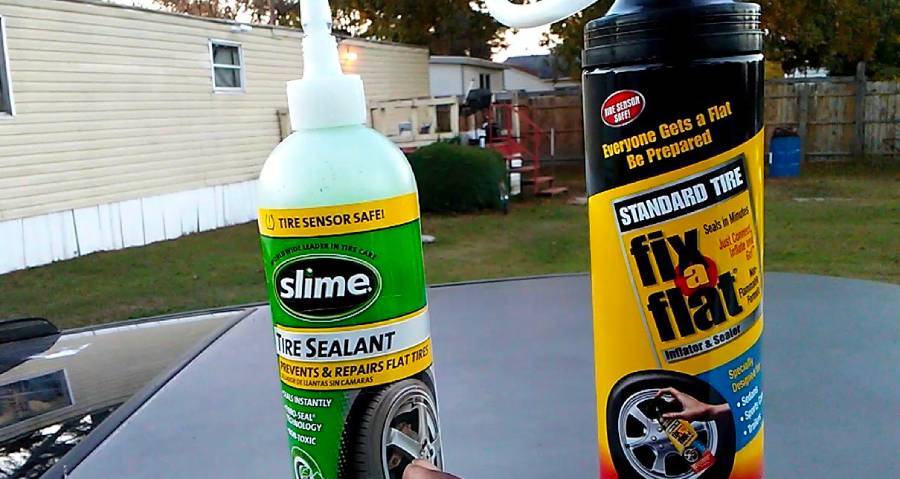
What Is the Difference Between Fix-a-Flat and Slime?
The main difference between Fix-a-Flat and Slime is that Fix-a-Flat combines tire sealant with an aerosol inflator, while Slime Emergency Tire Sealant uses a liquid sealant that requires a separate air compressor. Both products temporarily seal small punctures in tubeless tires, but their application methods, inflation capabilities, and equipment requirements differ.
Fix-a-Flat is designed for roadside emergencies where drivers need to seal a puncture and add air without carrying additional inflation equipment. Its aerosol can delivers sealant and propellant through the tire valve stem. However, the amount of inflation provided depends on the product size and tire condition, and additional air may still be necessary to reach the recommended tire pressure.
Slime Emergency Tire Sealant uses a liquid formula containing fibers and other sealing materials that accumulate around a puncture as the tire rotates. Unlike Fix-a-Flat, the bottled sealant does not inflate the tire independently. Drivers must use an air compressor or compatible tire inflator after adding the sealant.
The following table summarizes the main differences between Fix-a-Flat and Slime Emergency Tire Sealant.
| Feature | Fix-a-Flat | Slime |
|---|---|---|
| Product type | Aerosol sealant and inflator | Liquid tire sealant |
| Inflation capability | Provides inflation assistance | Requires a separate air source |
| Application | Connect aerosol can to valve stem | Add sealant through valve stem |
| Sealing mechanism | Sealant distributed by internal tire pressure and rotation | Fiber-containing sealant distributed by tire rotation |
| Additional equipment | May require extra air | Air compressor or inflator required |
| Primary use | Emergency roadside tire repair | Temporary puncture sealing |
| Repair type | Temporary | Temporary |
| Tire compatibility | Depends on product instructions | Depends on sealant formulation |
Fix-a-Flat prioritizes convenience, while Slime offers a liquid sealant option for drivers equipped with an air compressor. Neither product replaces professional tire inspection or a permanent repair.
How Do Fix-a-Flat and Slime Work?
Fix-a-Flat and Slime work by introducing sealing material into a tire, where internal pressure and tire rotation help distribute the sealant toward a puncture. The material accumulates around the opening to reduce air leakage. However, the products use different delivery systems and require different procedures to restore tire pressure.
Fix-a-Flat uses an aerosol can containing tire sealant and pressurized propellant. When the nozzle is connected to the tire valve stem and activated, the product releases its contents into the tire. The propellant helps deliver the sealant and adds pressure, while the sealant spreads across the inner tire surface as the wheel rotates. When the material reaches an eligible tread puncture, escaping air helps carry it toward the opening, where it forms a temporary seal.
Slime Emergency Tire Sealant uses a liquid formula containing suspended sealing particles and fibers. The sealant is introduced through the valve stem according to the product instructions. A separate compressor then restores tire pressure. As the tire rotates, the liquid spreads along the inner tread surface. When air escapes through a puncture, it carries sealing materials toward the opening, allowing the fibers and particles to accumulate and restrict further leakage.
The effectiveness of both mechanisms depends on three primary conditions: puncture size, puncture location, and tire condition. Small punctures within the repairable tread area are more suitable for sealant treatment than sidewall cuts, large tears, or structural damage. A tire that has separated from the wheel rim may also prevent either product from working because it cannot retain sufficient air pressure.
Neither sealant restores damaged tire cords, reinforces weakened sidewalls, or repairs structural damage. Even when a tire holds air after treatment, the seal remains an emergency measure. Drivers should follow the product’s driving restrictions and arrange professional inspection to determine whether the tire qualifies for permanent repair.
Which Seals Tire Punctures Better, Fix-a-Flat or Slime?
Neither Fix-a-Flat nor Slime is universally better at sealing tire punctures because their effectiveness depends on puncture size, location, tire pressure, and product formulation. Both products are designed to temporarily seal eligible punctures in the tire tread, but neither can reliably repair sidewall cuts, large tears, or structural tire damage.
Fix-a-Flat uses an aerosol delivery system that introduces sealant and pressurized propellant into the tire simultaneously. This combination allows drivers to begin sealing a puncture while adding air pressure. The sealant circulates as the tire rotates and accumulates around the puncture opening. Its effectiveness depends on whether the sealant reaches the damaged area and whether the tire can retain enough pressure for the sealing material to work.
Slime Emergency Tire Sealant uses a liquid formula containing sealing fibers and particles. When air escapes through a puncture, the escaping airflow carries these materials toward the opening, where they accumulate to restrict leakage. Slime specifies a maximum puncture diameter of 1/4 inch (6 mm) for certain emergency tire sealant formulations. This limit applies to eligible tread punctures, not sidewall damage or every product sold under the Slime brand.
Puncture location is as important as puncture size. A small nail puncture within the central tread area is more suitable for temporary sealant treatment than damage near the tire shoulder. Sidewall cuts, exposed cords, and damage caused by driving on a severely underinflated tire require professional assessment rather than sealant application.
Tire pressure also influences sealing performance. Fix-a-Flat provides inflation assistance through its aerosol system, although additional air may be necessary. Slime requires a separate compressor to restore pressure after the sealant is installed. Without sufficient pressure, either product may fail to seal the puncture effectively or keep the tire inflated.
For example, a driver who discovers a small nail puncture in the tread may be able to temporarily seal the leak using either product. However, a tire with a large sidewall cut cannot be made structurally safe simply by adding more sealant.
The practical verdict is that both products can temporarily seal eligible tread punctures, but there is insufficient comparable evidence to establish one as consistently more effective. Drivers should select a product based on its stated puncture limits, tire compatibility, and required equipment rather than assuming that one brand provides a stronger seal.
Which Is Easier to Use, Fix-a-Flat or Slime?
Fix-a-Flat is generally easier to use during a roadside emergency because its aerosol can combines sealant delivery with inflation assistance, while bottled Slime Emergency Tire Sealant requires a separate air compressor. This difference reduces the equipment needed for initial application and makes Fix-a-Flat more convenient for drivers without a portable inflator.
Using Fix-a-Flat involves connecting the can’s hose to the tire valve stem and dispensing the product according to the manufacturer’s instructions. The aerosol system transfers sealant and propellant into the tire without requiring the driver to remove the tire from the vehicle. After application, the driver must follow the specified distribution procedure, check tire pressure, and add air if necessary. Fix-a-Flat does not guarantee that every tire will reach its recommended operating pressure from the aerosol can alone.
Slime Emergency Tire Sealant requires additional preparation. Depending on the specific product, the driver may need to remove the valve core using the supplied tool, introduce the recommended amount of liquid sealant, reinstall the valve core, and inflate the tire with an air compressor. The tire must then be operated according to the product instructions to distribute the sealant and allow it to reach the puncture.
The difference becomes particularly relevant when a flat tire occurs away from home. A driver carrying only a compatible Fix-a-Flat can has access to both sealant and an initial inflation source. A driver carrying bottled Slime without an air compressor cannot complete the same repair process because the sealant itself does not provide the pressure needed to reinflate the tire.
However, Slime can be a practical option for drivers who already carry a portable tire inflator. Having a separate compressor allows them to adjust tire pressure after sealant application and use the compressor for routine inflation tasks. This advantage comes from the additional equipment rather than the sealant itself.
Fix-a-Flat wins for self-contained roadside convenience, while Slime is suitable for drivers who already have the necessary inflation equipment. Both products still require the driver to check tire pressure, follow the applicable driving restrictions, and arrange professional tire inspection. Neither should be used as a substitute for roadside assistance when the tire has significant damage or cannot maintain safe inflation pressure.
Is Fix-a-Flat or Slime Safer for Tires and TPMS Sensors?
Both Fix-a-Flat and Slime Emergency Tire Sealant have formulations designed for use with tire pressure monitoring systems (TPMS), but neither product is completely free from compatibility or maintenance concerns. Their safety depends on the specific sealant formulation, tire condition, correct application, and compliance with manufacturer instructions.
Tire sealants enter through the valve stem and spread across the tire’s interior, where they may contact the TPMS sensor, valve components, and wheel rim. Modern direct TPMS sensors measure air pressure inside the tire and transmit readings to the vehicle’s monitoring system. Sealant residue can interfere with these components when an incompatible product is used or when material accumulates around sensitive openings.
The main concerns associated with tire sealants include sensor contamination, valve obstruction, sealant residue, and delayed identification of tire damage. These risks do not mean that every sealant application damages a tire or TPMS sensor. However, drivers should verify product compatibility and inform their tire technician that sealant has been used.
Does Fix-a-Flat Damage TPMS Sensors?
Standard Fix-a-Flat formulations marketed as TPMS-safe are designed to work with compatible tire pressure monitoring systems when used according to the manufacturer’s instructions. However, TPMS-safe labeling does not guarantee that every sensor will remain unaffected under all conditions.
Fix-a-Flat introduces sealant through the tire valve stem, allowing the material to circulate inside the tire. During this process, sealant may contact the sensor housing and surrounding valve components. Excess residue or improper application can complicate sensor inspection and tire servicing, particularly when the sealant remains inside the tire for an extended period.
Drivers should check the compatibility statement on their specific Fix-a-Flat container before application. After using the product, a tire technician should inspect the puncture, assess the sensor and valve components, and determine whether cleaning or replacement is necessary.
Does Slime Damage TPMS Sensors?
Slime Emergency Tire Sealant formulations labeled TPMS-safe are intended for use with compatible tire pressure monitoring systems, but other Slime products may have different compatibility requirements. The distinction matters because Slime manufactures multiple sealants for different tire types and applications.
Slime’s liquid formula contains suspended sealing particles and fibers that circulate inside the tire. These materials are intended to accumulate around punctures, but sealant can also leave residue on internal tire surfaces and components. Using an incompatible formulation or failing to follow the recommended application procedure may increase the risk of valve obstruction or sensor contamination.
For passenger vehicles equipped with TPMS, drivers should select the appropriate emergency tire sealant rather than assuming that every Slime product is suitable. The product label should explicitly confirm compatibility with the vehicle’s tire monitoring system.
Neither Fix-a-Flat nor Slime has a universal safety advantage for TPMS-equipped vehicles. The better choice is the formulation approved for the intended application. Both products should be treated as temporary repair materials, and the tire should receive professional inspection after use.
How Long Does Fix-a-Flat Last Compared With Slime?
Fix-a-Flat and Slime provide temporary tire repairs, but their permitted driving durations depend on the specific product instructions rather than how long the sealant remains inside the tire. A puncture that stops leaking after sealant application has not necessarily received a permanent or structurally safe repair.
Fix-a-Flat is intended to help drivers reach a location where the tire can be inspected and properly repaired or replaced. The manufacturer recommends prompt professional attention after application, with driving restrictions varying by product. Drivers should follow the instructions printed on their specific container instead of assuming that the sealant will remain reliable for a fixed number of miles.
Slime Emergency Tire Sealant specifies a temporary repair period of up to 3 days or 100 miles (161 kilometers) for certain passenger-vehicle emergency formulations. This limit is not a guarantee that the tire will remain inflated throughout that period. The driver must follow the applicable speed restrictions, monitor tire pressure, and arrange professional repair as soon as practical.
Three factors influence how long a temporary seal remains effective: puncture characteristics, tire pressure, and operating conditions. A small puncture in the tread may retain pressure more effectively than an irregular opening. Continued air loss, repeated pressure drops, or tire deformation indicate that the temporary repair is not maintaining adequate inflation.
For example, a tire that initially holds pressure after sealant application may begin leaking again during driving if the puncture enlarges or the sealing material shifts. Continuing to drive on an underinflated tire increases heat buildup and can damage its internal structure, even when the original puncture appears small.
Neither product should be considered a long-term tire repair solution. Drivers should check inflation pressure after application, comply with the product’s driving limits, and have the tire professionally inspected. If the tire cannot maintain the vehicle manufacturer’s recommended pressure or shows signs of structural damage, driving should stop and roadside assistance should be used.
Which Costs Less, Fix-a-Flat or Slime?
Slime Emergency Tire Sealant generally has a lower equipment cost for drivers who already own an air compressor, while Fix-a-Flat offers a self-contained solution that does not require a separate inflator for initial application. The total cost depends on container size, retail pricing, required accessories, and whether the driver already owns tire inflation equipment.
Fix-a-Flat combines tire sealant and inflation assistance in a single aerosol can. This eliminates the need to purchase a separate compressor solely to begin an emergency sealant application. However, additional inflation equipment may still be necessary to restore the tire to its recommended pressure. The appropriate can size also depends on the tire dimensions, so drivers must select a product suitable for their vehicle.
Slime Emergency Tire Sealant is sold separately from the air compressor in its bottled form. Drivers who already own a portable inflator can use that equipment with a compatible Slime formulation. Those without an inflator must purchase one separately or choose a Slime emergency repair kit that includes inflation equipment.
The following table compares the main cost considerations.
| Cost Factor | Fix-a-Flat | Slime |
|---|---|---|
| Sealant purchase | Aerosol can | Liquid sealant bottle |
| Separate compressor | Not required for initial application | Required |
| Additional accessories | Generally included with the can | Depends on product package |
| Inflation equipment cost | Additional if needed | Additional unless already owned |
| Professional tire repair | Additional cost | Additional cost |
| Long-term value | Convenient emergency solution | Practical with an existing compressor |
Retail prices vary by container size, seller, and product configuration, so a reliable price comparison requires checking equivalent products at the time of purchase.
Fix-a-Flat is the more convenient single-product purchase, while Slime can offer better overall value when a compatible air compressor is already available. Neither eliminates the potential cost of professional tire repair or replacement.
Which Should You Choose, Fix-a-Flat or Slime?
Choose Fix-a-Flat for a convenient, self-contained emergency tire sealant, and choose Slime Emergency Tire Sealant when you already have a portable air compressor and prefer a bottled liquid sealant. Both products are intended for temporary treatment of eligible tread punctures, but their equipment requirements make them suitable for different roadside situations.
When Should You Choose Fix-a-Flat?
Fix-a-Flat is the better choice for drivers who want to minimize the equipment needed to handle a small tire puncture during a roadside emergency. Its aerosol system combines sealant delivery and inflation assistance, allowing drivers to begin treating a puncture without connecting a separate air compressor.
This makes Fix-a-Flat particularly practical for occasional drivers, commuters, and vehicle owners who do not carry a complete tire repair kit. For example, a commuter who discovers a small nail puncture in the tire tread may use a compatible Fix-a-Flat product to temporarily reduce air leakage and add enough pressure to begin the recovery procedure.
However, the aerosol can may not restore the tire to its recommended pressure. Drivers must check inflation levels and obtain additional air when necessary. Fix-a-Flat should not be used to justify driving on a severely damaged or inadequately inflated tire.
When Should You Choose Slime?
Slime Emergency Tire Sealant is a practical choice for drivers who already carry a portable air compressor and want a liquid sealant designed for temporary puncture repair. Its formulation uses suspended fibers and particles to restrict air leakage, while the separate compressor restores tire pressure.
This combination suits drivers who maintain an emergency tire repair kit containing a sealant bottle, portable inflator, and tire pressure gauge. For example, a driver who regularly travels long distances and already carries a 12-volt tire inflator can use a compatible Slime emergency sealant without purchasing another inflation device.
The separate compressor also provides a useful tool for checking and adjusting tire pressure after sealant application. However, Slime’s bottled emergency sealant cannot reinflate a flat tire independently, making it less convenient when no compressor is available.
Neither Fix-a-Flat nor Slime should be used on tires with sidewall cuts, major tread separation, exposed structural cords, or severe damage from driving while flat. These conditions require professional assessment, tire replacement, or roadside assistance rather than temporary sealant treatment.
For drivers prioritizing immediate convenience, Fix-a-Flat has the advantage. For drivers equipped with an air compressor, Slime offers an alternative temporary sealing method. The final decision should prioritize tire condition, product compatibility, and safe inflation pressure over brand preference.
Can You Permanently Repair a Tire After Using Fix-a-Flat or Slime?
A tire treated with Fix-a-Flat or Slime can still qualify for permanent repair if the puncture is within the repairable tread area and the tire has no structural damage. Using tire sealant does not automatically make a tire unrepairable, but a technician must inspect its internal condition before determining whether a permanent repair is safe.
Both Fix-a-Flat and Slime leave sealing material inside the tire after application. This residue must be considered during professional repair because it can cover the puncture opening, contaminate the inner liner, and interfere with the adhesion of repair materials. A tire technician generally needs to remove the tire from the wheel, locate the puncture, clean the affected area, and inspect the internal structure before applying an approved repair.
According to tire repair guidelines commonly used in the United States, passenger tire punctures are generally eligible for repair when they are no larger than 1/4 inch (6 mm) in diameter and are located within the repairable tread area. The tire must also be free from significant internal damage, sidewall injury, and other conditions that make continued use unsafe. These requirements apply regardless of whether Fix-a-Flat or Slime was previously used.
The recommended permanent repair method is a combination repair that fills the puncture channel and seals the inner liner. A properly installed repair unit addresses both the opening through the tread and the inner surface of the tire. This process differs from temporary sealant application, which reduces air leakage without restoring the damaged area through a permanent mechanical repair.
For example, a tire with a small nail puncture in the central tread may remain repairable after Fix-a-Flat or Slime has temporarily sealed the opening. However, a tire driven for an extended distance while severely underinflated may develop internal sidewall damage that makes replacement necessary, even if the original puncture was small.
Drivers should inform the tire technician which sealant was used and arrange an inspection as soon as practical. The technician must determine whether the tire meets the applicable repair criteria rather than relying on its ability to hold air after sealant treatment.
Read more: Is Fix-a-Flat Good? Effectiveness, Safety & Limits
Is Tire Sealant Better Than a Tire Plug or Patch?
Tire sealant is better suited for temporary roadside emergencies, while a professionally installed combination plug-and-patch repair is the preferred solution for eligible punctures requiring permanent repair. The methods serve different purposes because sealants temporarily restrict air leakage, whereas proper mechanical repairs seal both the puncture channel and the tire’s inner liner.
Fix-a-Flat and Slime allow drivers to treat certain tread punctures without removing the tire from the wheel. Their main advantage is convenience when immediate professional repair is unavailable. However, sealants cannot establish whether the tire has hidden internal damage, and their ability to maintain pressure does not confirm that the tire is structurally safe.
A standalone tire plug is inserted into the puncture channel from outside the tire. Although it may stop air leakage, an external plug alone does not provide the complete internal inspection and inner-liner sealing required for a recommended permanent passenger tire repair. Similarly, an internal patch used without filling the puncture channel does not address every part of the injury.
A combination plug-and-patch repair addresses both requirements. The technician removes the tire, inspects its internal surfaces, prepares the damaged area, fills the puncture channel, and seals the inner liner using an appropriate repair unit. This procedure helps prevent air loss and moisture from entering the tire structure through the puncture.
The main differences between these repair methods are summarized below.
| Repair Method | Primary Purpose | Tire Removal Required | Permanent Repair |
|---|---|---|---|
| Fix-a-Flat | Emergency puncture sealing and inflation assistance | No | No |
| Slime Emergency Tire Sealant | Temporary puncture sealing | No | No |
| External tire plug | Temporary puncture sealing | Generally no | Not recommended alone |
| Internal patch alone | Inner-liner sealing | Yes | Not recommended alone |
| Combination plug-and-patch | Complete repair of an eligible puncture | Yes | Yes, when properly installed |
Choose tire sealant when an eligible puncture requires immediate temporary treatment, and choose a professional combination repair when the tire meets permanent repair criteria. Neither method is appropriate for severe sidewall damage, exposed cords, or a tire whose internal structure has been compromised.
For example, a driver who experiences a small tread puncture on a highway may use Fix-a-Flat or Slime to reach a tire service facility, provided the tire can maintain safe pressure and the product’s driving restrictions are followed. Once at the facility, a technician can inspect the tire and determine whether a permanent combination repair is appropriate.
The safest repair decision depends on puncture location, injury size, internal tire condition, and the repair procedure. Temporary sealants provide emergency mobility, while professional inspection and approved repair methods determine whether the tire can safely return to normal service.
What Should You Keep in an Emergency Tire Repair Kit?
An emergency tire repair kit should contain five essential items: a compatible tire sealant, a portable air compressor, a tire pressure gauge, a spare tire or approved alternative, and basic roadside safety equipment. These tools help drivers respond to minor tread punctures, restore tire pressure, and manage roadside emergencies when professional assistance is not immediately available.
A tire sealant such as Fix-a-Flat or Slime Emergency Tire Sealant provides temporary treatment for eligible punctures. Fix-a-Flat combines sealant delivery with inflation assistance, while bottled Slime requires a separate air source. Drivers should select a formulation compatible with their vehicle’s tires and TPMS sensors and check the product’s expiration date before storing it.
A portable air compressor is particularly important when using Slime because the bottled sealant cannot inflate a tire independently. A 12-volt compressor or compatible rechargeable inflator also helps drivers restore tire pressure after using Fix-a-Flat if the aerosol does not provide sufficient inflation. A tire pressure gauge allows drivers to verify pressure against the vehicle manufacturer’s recommended value, typically displayed on the driver’s door-jamb label.
A properly maintained spare tire provides an alternative when sealant cannot address the damage. Vehicles without spare tires may instead rely on manufacturer-approved mobility kits or roadside assistance. Basic safety equipment, including a reflective warning triangle, high-visibility vest, and flashlight, improves visibility during roadside emergencies.
The most practical emergency kit combines a compatible tire sealant with reliable inflation equipment and a backup recovery option. Drivers should inspect their equipment periodically and avoid attempting sealant repairs on tires with major structural damage.