The Tire Pressure Monitoring System (TPMS) on a Dodge Challenger continuously monitors the air pressure in each tire and alerts the driver when one or more tires fall below the recommended inflation level. After inflating the tires, rotating them, replacing a wheel, or installing a new TPMS sensor, many owners expect the warning light to disappear immediately. However, the system does not always reset instantly, and the required procedure depends on the model year and the reason the warning light was triggered.
Most modern Dodge Challenger models do not have a dedicated TPMS reset button. Instead, they use an automatic relearn system that updates sensor data after the tires are inflated to the correct pressure and the vehicle is driven for a short distance. If the warning light remains illuminated, the issue may involve an incorrect tire pressure reading, a failed TPMS sensor, a depleted sensor battery, or a sensor that requires relearning with a TPMS programming tool.
This guide explains how to reset the tire pressure sensor on a Dodge Challenger step by step, identifies which model years support automatic TPMS relearning, and shows how to diagnose common TPMS problems when the warning light does not turn off. You will also learn when a TPMS relearn tool is necessary, how to verify that each sensor is functioning correctly, and the most common mistakes to avoid during the reset process.
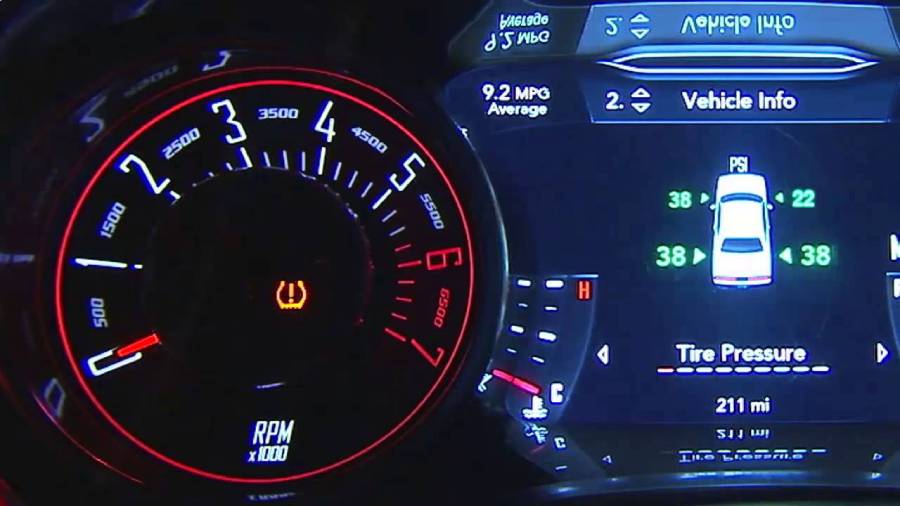
How Do You Reset the Tire Pressure Sensor on a Dodge Challenger?
What should you do before attempting a TPMS reset?
Verify that all four tires are inflated to the manufacturer’s recommended pressure before attempting any TPMS reset. The TPMS uses pressure readings from each wheel sensor, so the system will not complete a relearn if one or more tires remain underinflated or overinflated.
Before starting the reset process:
- Check the recommended tire pressure on the driver’s door jamb sticker.
- Inflate all tires, including the spare if your model is equipped with a monitored spare.
- Measure tire pressure while the tires are cold for the most accurate reading.
- Inspect each tire for punctures, valve leaks, or visible damage.
- Confirm that no TPMS sensor was recently replaced without programming.
Completing these checks eliminates the most common reasons why the TPMS warning light remains on after inflation.
How do you perform the standard TPMS reset procedure?
Most Dodge Challenger models reset the TPMS automatically after the correct tire pressure is restored. Unlike some vehicles that include a dedicated reset button, the Challenger relies on its automatic TPMS relearn function.
Follow these steps:
- Inflate every tire to the specified PSI.
- Turn the ignition off.
- Start the engine.
- Drive the vehicle at approximately 15–20 mph (25–32 km/h) or faster under normal driving conditions.
- Continue driving for 10–20 minutes to allow the TPMS module to receive updated pressure readings from each sensor.
- Verify that the TPMS warning light turns off after the relearn process is complete.
If the warning light remains illuminated after the drive cycle, the issue is typically related to a faulty sensor, incorrect sensor programming, or another TPMS system malfunction rather than an incomplete reset.
How long does the TPMS system take to relearn after driving?
Most Dodge Challenger vehicles complete TPMS relearning within 10 to 20 minutes of continuous driving. The exact time varies depending on vehicle speed, driving conditions, and whether the sensors are transmitting correctly.
The relearn process may take longer if:
- The vehicle has recently received new TPMS sensors.
- One or more sensors have weak batteries.
- Tire pressure changes significantly due to ambient temperature.
- The vehicle is driven at very low speeds with frequent stops.
If the TPMS warning light continues to stay on after completing the recommended drive cycle, proceed with system diagnosis instead of repeatedly attempting the reset. Checking sensor status with a TPMS scan tool is typically the fastest way to determine whether the problem is caused by a failed sensor, communication issue, or programming error.
Does a Dodge Challenger Have a TPMS Reset Button?
Most Dodge Challenger models do not have a dedicated TPMS reset button. Instead, Dodge uses a Direct Tire Pressure Monitoring System (Direct TPMS) that automatically relearns tire pressure values after the tires are inflated correctly and the vehicle is driven through a normal drive cycle.
Unlike vehicles that require pressing a reset button under the dashboard or inside the glove box, the Challenger’s TPMS communicates directly with wireless pressure sensors installed inside each wheel. Once the sensors transmit updated pressure readings, the TPMS module clears the warning light automatically if no faults are detected.
If the TPMS light does not turn off after driving, the problem is usually related to a sensor fault, incorrect tire pressure, or a relearn issue rather than the absence of a reset button.
Which model years support automatic TPMS relearn?
Most modern Dodge Challenger model years support automatic TPMS relearning. After correcting tire pressure, the system recognizes updated sensor data without requiring any manual reset sequence.
The relearn process generally follows this workflow:
| Model Years | Reset Method |
|---|---|
| 2008–2014 | Automatic relearn after driving |
| 2015–2023 | Automatic relearn through TPMS module |
| After TPMS sensor replacement | May require sensor programming or relearn tool |
Although the relearn logic is similar across generations, replacing a TPMS sensor introduces a new sensor ID. In this situation, some aftermarket sensors must be programmed before the vehicle can recognize them.
Where can you monitor TPMS information?
Most Dodge Challenger trims display individual tire pressures through the Driver Information Display or Uconnect system.
Drivers can usually verify:
- Pressure for each tire
- Low-pressure warnings
- TPMS malfunction messages
- Sensor communication status (on some diagnostic tools)
If one tire does not display a pressure reading while the others update normally, that wheel’s sensor is often the first component to inspect.
Why Is the TPMS Light Still On After Resetting?
Incorrect tire pressure
Incorrect tire pressure is the most common reason the TPMS warning light remains illuminated. Even if only one tire is a few PSI below the recommended specification, the TPMS module continues detecting an abnormal condition.
Common causes include:
- One tire was overlooked during inflation.
- Tire pressure was checked while the tires were hot.
- Seasonal temperature changes reduced tire pressure overnight.
- Slow leaks from nails or damaged valve stems.
Always verify all four tires with an accurate pressure gauge instead of relying solely on visual inspection.
Faulty TPMS sensor
A failed TPMS sensor prevents the system from receiving valid pressure data. Each sensor contains a pressure transducer, radio transmitter, and internal battery. If any component fails, the vehicle cannot identify the sensor correctly.
Typical symptoms include:
- One tire pressure is missing on the display.
- TPMS warning stays on continuously.
- TPMS malfunction message appears after starting the vehicle.
- Diagnostic scanner reports no communication with a specific sensor.
Sensor failure becomes increasingly common as the vehicle ages.
Dead TPMS sensor battery
TPMS sensor batteries typically last between 7 and 10 years. Because the battery is sealed inside the sensor housing, it cannot be replaced separately.
Signs of a depleted battery include:
- Intermittent TPMS warnings.
- Sensor stops transmitting after driving.
- Pressure reading disappears randomly.
- Warning light returns shortly after every reset.
Replacing the complete TPMS sensor is the standard repair once the battery reaches the end of its service life.
Sensor ID not recognized
The TPMS module cannot monitor a sensor whose identification code has not been learned. This situation commonly occurs after installing aftermarket sensors or swapping wheels from another vehicle.
A relearn or programming procedure may be required when:
- New TPMS sensors are installed.
- Winter wheel sets are fitted.
- Sensors were cloned incorrectly.
- Sensor IDs were erased during programming.
Using a TPMS scan tool allows the technician to register the new sensor IDs with the vehicle.
Damaged receiver or communication issue
Communication problems between the TPMS sensors and the vehicle can also keep the warning light illuminated. Although less common than sensor failure, receiver or radio-frequency issues should be considered when every sensor appears functional.
Possible causes include:
- TPMS receiver malfunction.
- Wiring damage.
- Electrical interference.
- Software issues within the TPMS control module.
If multiple sensors fail simultaneously or no tire pressures are displayed, diagnosing the TPMS module with a professional scan tool is recommended before replacing individual sensors.
When Do You Need a TPMS Relearn Tool?
After replacing a TPMS sensor
A TPMS relearn tool is often required after replacing a tire pressure sensor with a new unit. Every TPMS sensor has a unique identification code that the TPMS control module uses to associate pressure readings with a specific wheel. If the new sensor’s ID has not been registered, the vehicle cannot recognize it, even if the sensor is functioning correctly.
A relearn tool may be necessary to:
- Activate a newly installed TPMS sensor.
- Register the new sensor ID with the vehicle.
- Verify that the sensor is transmitting pressure and temperature data.
- Confirm successful communication with the TPMS module.
Some programmable aftermarket sensors must also be cloned or programmed before the relearn process begins.
After installing new wheels
Installing a second set of wheels may require a TPMS relearn if the replacement wheels contain different sensors. This situation commonly occurs when owners switch between summer and winter wheel packages.
If the replacement wheels use:
- Factory OEM sensors with recognized IDs, the vehicle may complete an automatic relearn after driving.
- New aftermarket sensors, programming or sensor registration may be required.
- Wheels without TPMS sensors, the warning light will remain illuminated because the system cannot detect valid pressure signals.
Verifying sensor compatibility before installation helps avoid unnecessary diagnostic work.
After changing sensor positions
Rotating tires normally does not require TPMS programming on most Dodge Challenger models. The system identifies each sensor by its unique ID rather than its physical location. However, if multiple sensors are replaced during the same service or cloned incorrectly, the vehicle may require a relearn procedure to update sensor locations.
A relearn tool can:
- Trigger each sensor individually.
- Assign the correct wheel position.
- Confirm that all four sensors are communicating properly.
This process reduces the risk of displaying the wrong tire pressure location on the dashboard.
When automatic relearn fails
A TPMS relearn tool becomes the fastest diagnostic solution when the automatic relearn procedure does not clear the warning light. Instead of repeating the drive cycle multiple times, the tool can identify the root cause within minutes.
A scan tool can determine whether:
- A sensor battery has failed.
- One sensor has stopped transmitting.
- The TPMS receiver cannot detect sensor signals.
- A replacement sensor was programmed incorrectly.
- A TPMS module fault is preventing communication.
Using diagnostic data prevents unnecessary replacement of working sensors.
How Can You Check Whether the TPMS Sensor Is Working?
Dashboard warning behavior
The dashboard warning light provides the first indication of TPMS system status. Understanding how the warning behaves helps distinguish between low tire pressure and a system malfunction.
Typical warning patterns include:
| Warning Behavior | Likely Cause |
|---|---|
| Solid TPMS light | One or more tires have low pressure |
| Flashing for about one minute, then stays on | TPMS system malfunction or sensor communication failure |
| Warning disappears after driving | Automatic relearn completed successfully |
| Warning returns repeatedly | Sensor fault or unresolved pressure issue |
Recognizing these patterns helps narrow the diagnosis before using specialized tools.
TPMS scan tool diagnosis
A TPMS scan tool is the most reliable way to verify sensor operation. Unlike the dashboard warning light, a scan tool communicates directly with each sensor and displays real-time diagnostic information.
Most professional TPMS tools can display:
- Sensor ID
- Tire pressure
- Internal sensor battery status
- Sensor temperature
- Radio signal strength
- Sensor transmission frequency
If one sensor fails to respond while the remaining sensors transmit normally, replacing that sensor is usually the most effective repair.
Reading live tire pressure data
Live TPMS data allows you to compare sensor readings with actual tire pressure measurements. Significant differences between the displayed values and a calibrated tire pressure gauge may indicate sensor calibration problems or sensor failure.
When reviewing live data:
- Compare each wheel’s displayed PSI with a manual gauge.
- Look for missing pressure readings.
- Verify that pressure changes after adding or releasing air.
- Confirm that all four sensors update consistently after driving.
Consistent live readings indicate that both the TPMS sensors and the control module are operating correctly.
What Tire Pressure Is Recommended for a Dodge Challenger?
The recommended tire pressure for a Dodge Challenger depends on the model year, trim level, wheel size, and factory tire specification. The correct pressure is listed on the certification label located on the driver’s side door jamb and should always take precedence over generic pressure recommendations.
Maintaining the specified pressure improves:
- Tire wear
- Braking performance
- Fuel efficiency
- Vehicle stability
- TPMS accuracy
Inflating tires above or below the recommended PSI may trigger the TPMS warning light and reduce overall handling performance.
Does tire pressure change with temperature?
Yes. Tire pressure changes naturally as ambient temperature rises or falls. As a general guideline, tire pressure changes by approximately 1 PSI for every 10°F (about 5.5°C) change in outside temperature.
For example:
- A cold winter morning may lower tire pressure enough to trigger the TPMS warning light.
- After driving, tire pressure increases as the air inside the tire expands.
- Tire pressure should always be adjusted when the tires are cold to match the manufacturer’s specification.
Seasonal pressure fluctuations are one of the most common reasons TPMS warnings appear even when no tire is damaged.
Where can you find the correct tire pressure specification?
The factory tire pressure specification is printed on the driver’s door jamb label. This label includes the recommended cold tire pressure for the original tire size installed by the manufacturer.
Avoid relying on:
- The maximum PSI printed on the tire sidewall.
- Pressure recommendations for different wheel packages.
- Generic online PSI charts.
The vehicle certification label provides the correct specification for your specific Dodge Challenger configuration.
What Causes TPMS Sensors to Fail?
Battery lifespan
A depleted internal battery is the most common cause of TPMS sensor failure. Every factory TPMS sensor contains a sealed lithium battery that powers the pressure sensor and radio transmitter. Because the battery is permanently integrated into the sensor, it cannot be replaced separately.
Most TPMS sensor batteries last 7–10 years, depending on:
- Vehicle mileage
- Driving frequency
- Ambient temperature
- Sensor transmission intervals
As the battery weakens, the sensor may transmit intermittently before failing completely. Drivers often notice that the TPMS warning light appears only during cold mornings before remaining on permanently.
Physical damage
TPMS sensors can fail due to physical damage during tire service or road impacts. Since the sensor is mounted inside the wheel near the valve stem, improper tire mounting or dismounting can crack the sensor housing or damage the valve assembly.
Common causes include:
- Improper tire machine operation
- Impact from potholes
- Curb strikes
- Wheel damage after collisions
Replacing damaged sensors promptly helps maintain accurate tire pressure monitoring and prevents unexpected TPMS warnings.
Corrosion
Corrosion can interrupt communication between the TPMS sensor and the valve stem. Moisture, road salt, and oxidation gradually weaken aluminum valve stems and sensor components, particularly in regions with harsh winter conditions.
Signs of corrosion include:
- Air leakage around the valve stem
- Difficulty inflating tires
- Valve stem breakage
- TPMS communication errors
Replacing the valve service kit whenever tires are serviced helps reduce corrosion-related failures.
Valve stem failure
A damaged valve stem may cause both air leaks and TPMS malfunctions. On vehicles equipped with metal valve stems, worn seals, damaged valve cores, or cracked retaining nuts can compromise both tire pressure and sensor integrity.
Routine inspection should include:
- Valve stem condition
- Valve cap presence
- Rubber seals
- Retaining nut torque
Small valve stem leaks often trigger recurring TPMS warnings because the tire slowly loses pressure over several days.
Sensor communication issues
Radio-frequency communication problems can prevent the TPMS module from receiving valid sensor data. Even when the pressure sensor itself remains functional, weak signal transmission or electronic interference may interrupt communication.
Possible causes include:
- Weak sensor battery
- Receiver malfunction
- Damaged antenna
- Incorrect sensor frequency
- Incompatible aftermarket sensors
A TPMS diagnostic tool can quickly determine whether the problem is related to communication rather than pressure measurement.
Can You Drive With the TPMS Warning Light On?
Yes, you can usually continue driving with a solid TPMS warning light if the tires are properly inflated, but you should identify the cause as soon as possible. The warning indicates that the system has detected either low tire pressure or a monitoring fault. Ignoring it increases the risk of driving with an underinflated tire without realizing it.
Driving with incorrect tire pressure can result in:
- Reduced braking performance
- Uneven tire wear
- Lower fuel economy
- Reduced steering stability
- Increased risk of tire failure during long-distance driving
If the TPMS light appears immediately after a sudden pressure loss, stop the vehicle safely and inspect all tires before continuing.
When should you stop driving immediately?
You should stop driving immediately if the TPMS warning is accompanied by visible tire damage or rapid pressure loss. Continuing to drive on a severely underinflated tire can permanently damage the tire structure and increase the likelihood of a blowout.
Immediate inspection is recommended when:
- One tire appears visibly flat.
- The vehicle pulls strongly to one side.
- A tire pressure warning appears together with unusual vibration.
- A puncture or sidewall damage is visible.
In these situations, repairing or replacing the damaged tire takes priority over resetting the TPMS.
What Mistakes Should You Avoid When Resetting TPMS?
Inflating tires to the wrong pressure
Resetting the TPMS without first adjusting tire pressure to the factory specification is the most common mistake. The system compares current tire pressure against the recommended cold inflation pressure, not the maximum PSI printed on the tire sidewall.
Always use the pressure listed on the driver’s door jamb label.
Ignoring a flashing TPMS warning light
A flashing TPMS light indicates a system malfunction rather than low tire pressure. Many owners continue adding air even though the underlying problem is a failed sensor or communication fault.
If the light flashes for approximately one minute before remaining illuminated, diagnose the TPMS system instead of repeating the reset procedure.
Replacing sensors without diagnosis
Replacing TPMS sensors before confirming the actual fault often results in unnecessary repair costs. A warning light may be caused by a slow tire leak, seasonal temperature changes, or an incorrect relearn procedure rather than sensor failure.
Before replacing any sensor:
- Verify tire pressure.
- Complete the recommended drive cycle.
- Scan the TPMS system.
- Confirm which sensor, if any, has stopped transmitting.
Using incompatible aftermarket sensors
Not all aftermarket TPMS sensors are compatible with every Dodge Challenger model year. Sensors that operate on the wrong frequency or have not been programmed correctly may fail to communicate with the TPMS module.
Before installation, verify:
- Vehicle compatibility
- Operating frequency
- Programmability
- OE replacement specifications
Choosing compatible sensors reduces the likelihood of repeated relearn failures.
Frequently Asked Questions About Dodge Challenger TPMS Reset
Will disconnecting the battery reset the TPMS?
No. Disconnecting the battery does not reset the TPMS or erase stored sensor IDs. The system relies on wireless communication with each TPMS sensor, so correcting tire pressure and completing the relearn procedure remain necessary.
Does the TPMS reset itself after adding air?
Yes, most Dodge Challenger models automatically reset the TPMS after the tires are inflated correctly and the vehicle is driven long enough for the system to receive updated sensor readings. No manual reset button is required on most model years.
How far should you drive after inflating the tires?
Drive for approximately 10–20 minutes at normal road speeds. Continuous driving allows the TPMS module to receive updated pressure information from all four sensors and complete the automatic relearn process.
How often should TPMS sensors be replaced?
Most TPMS sensors require replacement after 7–10 years or when the internal battery fails. Sensors should also be replaced if they become physically damaged or fail to transmit pressure data reliably.
Can cold weather trigger the TPMS warning light?
Yes. Cold weather lowers tire pressure naturally, and even a small pressure drop can activate the TPMS warning light. Checking and adjusting tire pressure during seasonal temperature changes helps prevent unnecessary warnings.