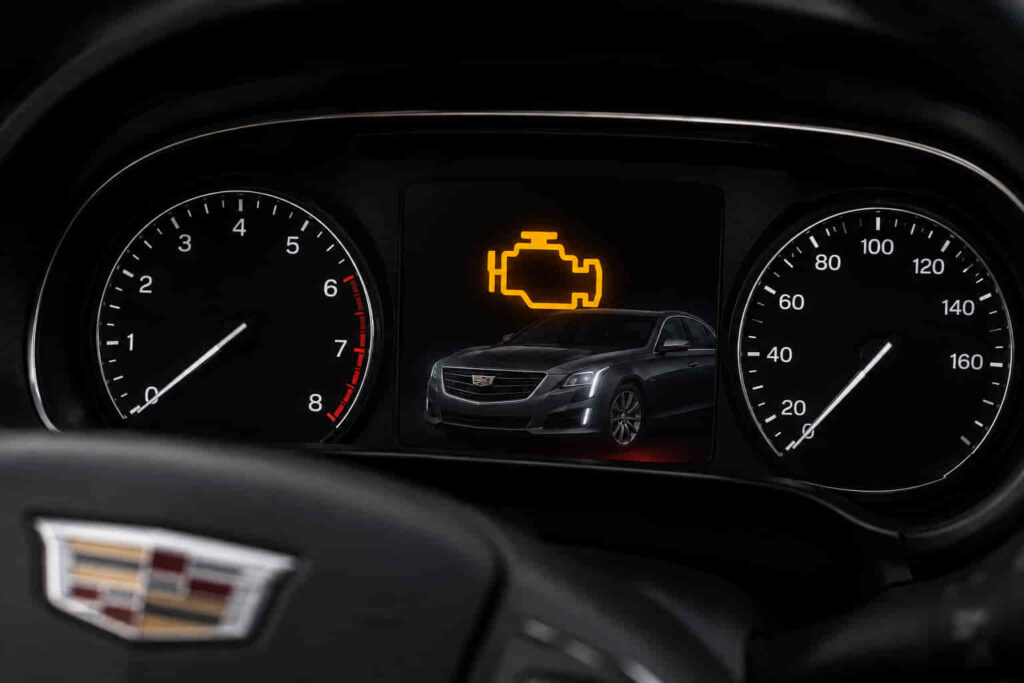
A Cadillac Engine Power Reduced message appears when the vehicle detects a problem within the engine control system and limits performance to protect the engine, transmission, or related components. This warning does not identify a single failed part. Instead, it indicates that the electronic systems responsible for managing engine power have detected abnormal information from sensors, throttle controls, electrical components, or fuel management systems.
Modern Cadillac vehicles use an integrated engine control system where the Engine Control Module (ECM) constantly monitors throttle position, accelerator input, airflow, fuel delivery, and engine operation. When the system detects a signal that does not match expected operating conditions, it can activate reduced power mode, also known as limp mode, to prevent potential damage.
Drivers may experience symptoms such as slow acceleration, limited throttle response, reduced engine performance, or a check engine light appearing at the same time. These symptoms occur because the vehicle intentionally restricts power output instead of allowing normal operation under unsafe conditions.
Fixing the Cadillac Engine Power Reduced message requires identifying the original cause rather than simply clearing the warning. Issues such as a faulty throttle body, sensor failure, wiring problems, low electrical voltage, or fuel system problems can all trigger the same message. This guide explains the most common solutions to restore normal engine performance and prevent the warning from returning.
Can a Faulty Throttle Body Cause Cadillac Engine Power Reduced?
A faulty throttle body can cause a Cadillac Engine Power Reduced message because the electronic throttle control system directly manages how much air enters the engine. Unlike older mechanical throttle systems that use a direct cable connection, modern Cadillac vehicles use electronic signals between the accelerator pedal, throttle body, and engine control module to regulate engine power.
The throttle body contains sensors and electronic components that allow the ECM to monitor and adjust throttle opening. When the system detects that the throttle position does not match the expected signal, it may reduce engine power to prevent uncontrolled acceleration or unstable engine operation.
Common throttle body-related issues include internal motor failure, throttle position sensor faults, carbon buildup around the throttle plate, and calibration problems after electrical repairs or component replacement. These problems can restrict airflow or create inaccurate position readings, causing the ECM to activate reduced power mode.
Drivers may notice symptoms such as delayed acceleration, limited throttle response, rough idling, or difficulty increasing engine speed. For example, a Cadillac that responds slowly when pressing the accelerator but still starts and runs normally may have an electronic throttle control problem rather than a mechanical engine failure.
Proper diagnosis requires checking throttle-related fault codes and inspecting the throttle body condition before replacement. Cleaning carbon deposits or correcting electrical connection issues may restore normal operation when the throttle assembly itself is still functional.
Can Accelerator Pedal Sensor Problems Reduce Cadillac Engine Power?
Accelerator pedal sensor problems can trigger a Cadillac Engine Power Reduced warning because the engine control system depends on accurate pedal input information to determine the driver’s requested acceleration. The accelerator pedal position sensor converts pedal movement into electronic signals that are sent to the ECM, which then controls throttle operation and engine output.
When the accelerator sensor provides incorrect, inconsistent, or missing signals, the ECM cannot accurately determine how much power the driver needs. As a safety response, the system may limit throttle operation and place the vehicle into reduced power mode.
Sensor problems can occur because of internal sensor wear, damaged wiring, connector corrosion, or communication problems between electronic control modules. These issues may create intermittent failures where the Cadillac operates normally at one moment but suddenly shows a reduced power warning during driving.
A faulty accelerator pedal sensor often creates symptoms such as poor acceleration response, inconsistent throttle behavior, or a noticeable delay between pressing the pedal and engine reaction. For example, if the throttle body functions correctly but the ECM receives incorrect accelerator input, replacing the throttle component will not solve the problem.
Testing sensor signals with proper diagnostic equipment helps determine whether the issue comes from the pedal sensor itself, wiring connections, or another part of the electronic throttle control system.
Read more: Northstar Engine Problems
Can Faulty Engine Sensors Trigger Reduced Power Mode?
Faulty engine sensors can trigger a Cadillac Engine Power Reduced message because the engine control module depends on accurate sensor data to calculate fuel delivery, airflow, ignition timing, and overall engine performance. The ECM continuously compares sensor signals with expected operating conditions, and any abnormal information can cause the system to limit engine output.
Cadillac vehicles use multiple sensors to maintain precise engine control, including the mass airflow sensor (MAF), oxygen sensors, crankshaft position sensor, and camshaft position sensor. Each sensor provides specific information that allows the ECM to adjust engine operation. When one of these sensors sends incorrect data or stops communicating properly, the ECM may reduce power as a protective response.
A failing MAF sensor can affect the measurement of incoming air, causing incorrect fuel calculations and poor engine performance. A crankshaft or camshaft position sensor failure can interrupt timing information, which may affect fuel injection and ignition control. These failures can create symptoms such as hesitation, rough running, reduced acceleration, or sudden activation of reduced power mode.
Diagnosing sensor-related problems requires reading stored diagnostic trouble codes and comparing sensor data with normal operating values. For example, a Cadillac showing Engine Power Reduced may not have a throttle problem if the actual issue is an inaccurate airflow reading from a faulty MAF sensor.
Can Electrical Problems Cause Cadillac Engine Power Reduced?
Electrical problems can cause a Cadillac Engine Power Reduced warning because stable voltage and reliable communication between electronic components are necessary for proper engine control operation. The engine control system depends on continuous electrical power to operate sensors, control modules, throttle components, and communication networks.
Common electrical causes include weak battery voltage, damaged wiring, poor grounding connections, and corroded electrical connectors. These issues can interrupt signals between the ECM and other control components, causing incorrect readings or temporary system failures.
Low voltage is especially important because many Cadillac systems rely on precise electronic communication. A weak battery or charging system problem can create multiple warning messages, including reduced engine power, even when the mechanical parts of the engine are functioning correctly.
Electrical problems can also appear intermittently because vibration, temperature changes, or moisture may affect damaged connections. For example, a Cadillac may display Engine Power Reduced during driving but return to normal after restarting because a temporary communication failure has cleared.
A complete electrical inspection should include checking battery condition, charging system performance, wiring integrity, and connector condition. Repairing the electrical cause is necessary because replacing sensors or throttle components will not solve a problem caused by unstable power supply or poor communication.
Can Fuel System Problems Reduce Cadillac Engine Power?
Fuel system problems can reduce Cadillac engine power because the engine requires a consistent supply of fuel at the correct pressure to maintain normal combustion and performance. When the fuel delivery system cannot provide enough fuel, the engine control module may detect abnormal operating conditions and activate the Engine Power Reduced mode to protect the vehicle.
The fuel system includes components such as the fuel pump, fuel injectors, fuel pressure system, and related electrical controls. A weak fuel pump may fail to maintain sufficient pressure, while clogged or malfunctioning fuel injectors can prevent the correct amount of fuel from reaching the combustion chamber. These problems can cause the engine to operate inefficiently and reduce available power.
Fuel-related issues often create symptoms beyond the warning message. Drivers may notice hesitation during acceleration, poor throttle response, rough engine operation, or difficulty maintaining speed under load. For example, a Cadillac that loses power when climbing hills may have a fuel pressure problem because the engine requires more fuel delivery during higher demand conditions.
Proper diagnosis requires checking fuel pressure, injector performance, and related fault codes before replacing components. A reduced power warning caused by insufficient fuel supply will not be resolved by replacing throttle components because the actual problem exists within the fuel delivery system.
How Do You Reset Cadillac Engine Power Reduced Message?
You can reset a Cadillac Engine Power Reduced message only after identifying and repairing the underlying problem because clearing the warning without fixing the cause will usually make the message return. The reduced power mode is a protective function created by the engine control module, not a standalone failure that can be permanently removed through a simple reset.
The first step in resolving the warning is scanning the vehicle with an OBD-II diagnostic tool to identify stored trouble codes. These codes provide information about which system triggered the reduced power condition, such as throttle control, sensor communication, electrical voltage, or fuel management problems.
After repairing the faulty component or correcting the system issue, the warning code can be cleared using a diagnostic scanner. In some situations, disconnecting the battery may temporarily remove the message, but this does not repair the original failure and may erase useful diagnostic information.
A proper reset process restores normal operation only when the engine control system receives accurate information again. For example, if a Cadillac shows Engine Power Reduced because of a damaged throttle position sensor, clearing the code without replacing the faulty sensor will only provide a temporary solution.
When Should You Contact a Mechanic for Cadillac Reduced Power Problems?
You should contact a mechanic when a Cadillac Engine Power Reduced message continues to appear after basic checks because repeated reduced power events usually indicate an unresolved problem within the engine control system. While some causes are related to simple issues such as loose electrical connections or temporary sensor errors, others require professional diagnostic equipment to identify accurately.
Professional inspection becomes necessary when the vehicle experiences severe power loss, repeated limp mode activation, poor acceleration, engine hesitation, or multiple warning lights appearing at the same time. These symptoms may indicate deeper problems involving the electronic throttle system, engine sensors, fuel delivery, wiring networks, or communication between control modules.
A technician can perform advanced diagnostic procedures such as scanning stored trouble codes, monitoring live sensor data, testing electrical circuits, checking throttle operation, and verifying fuel system performance. These tests help identify the actual failure point instead of replacing multiple components through trial and error.
Providing detailed vehicle information can make the diagnostic process more efficient. Important details include the Cadillac model, production year, mileage, recent repairs, warning messages, and the conditions when the reduced power warning appears. For example, a warning that appears only during acceleration may point toward a different cause than a warning that appears immediately after starting the vehicle.
How Can You Prevent Cadillac Engine Power Reduced Problems?
Preventing Cadillac Engine Power Reduced problems requires maintaining the electronic engine control system, electrical system, and related mechanical components because the warning is usually triggered by a communication or performance issue between multiple vehicle systems. Regular maintenance reduces the chance that small problems develop into conditions that force the ECM to limit engine power.
Keeping the throttle system clean, maintaining stable battery voltage, and inspecting electrical connections are important steps for reliable engine control operation. Electronic components depend on accurate signals and consistent power supply, so corrosion, weak voltage, or damaged connectors can create incorrect information that affects engine performance.
Regular diagnostic checks can also identify problems before they activate reduced power mode. Monitoring warning lights, addressing unusual acceleration behavior, and scanning fault codes when symptoms appear allow repairs to be completed earlier. A minor sensor issue is usually easier to correct than a prolonged problem that affects multiple control systems.
For example, replacing a weak battery before voltage instability affects electronic modules can prevent false warnings and communication problems. Proper maintenance helps Cadillac vehicles maintain normal throttle response, stable engine performance, and reliable operation without unnecessary reduced power activation.
How Can You Restore Normal Cadillac Engine Performance?
You can restore normal Cadillac engine performance by identifying and repairing the specific system that caused the Engine Power Reduced message instead of treating the warning as a single mechanical failure. The reduced power mode is a protective response from the engine control system designed to limit performance when the vehicle detects abnormal signals or operating conditions.
The most effective repair approach begins with understanding how the connected systems work together. The throttle body, accelerator pedal sensor, engine sensors, electrical system, fuel delivery system, and ECM all influence how much power the engine can produce. A failure in any of these areas can cause the same reduced power warning, which is why accurate diagnosis is more important than replacing parts based only on symptoms.
Regular maintenance also plays an important role in preventing future power reduction problems. Maintaining battery voltage, inspecting electrical connections, monitoring warning signs, and addressing sensor or throttle issues early can help keep the Cadillac engine control system operating correctly.
When the warning continues to return, professional diagnosis provides the most reliable solution. Using proper diagnostic equipment allows technicians to identify the root cause, repair the affected component, and restore normal throttle response and engine performance.
A Cadillac Engine Power Reduced message should not be ignored, but it also does not always indicate major engine damage. With correct troubleshooting and timely repair, most causes can be identified and resolved effectively.