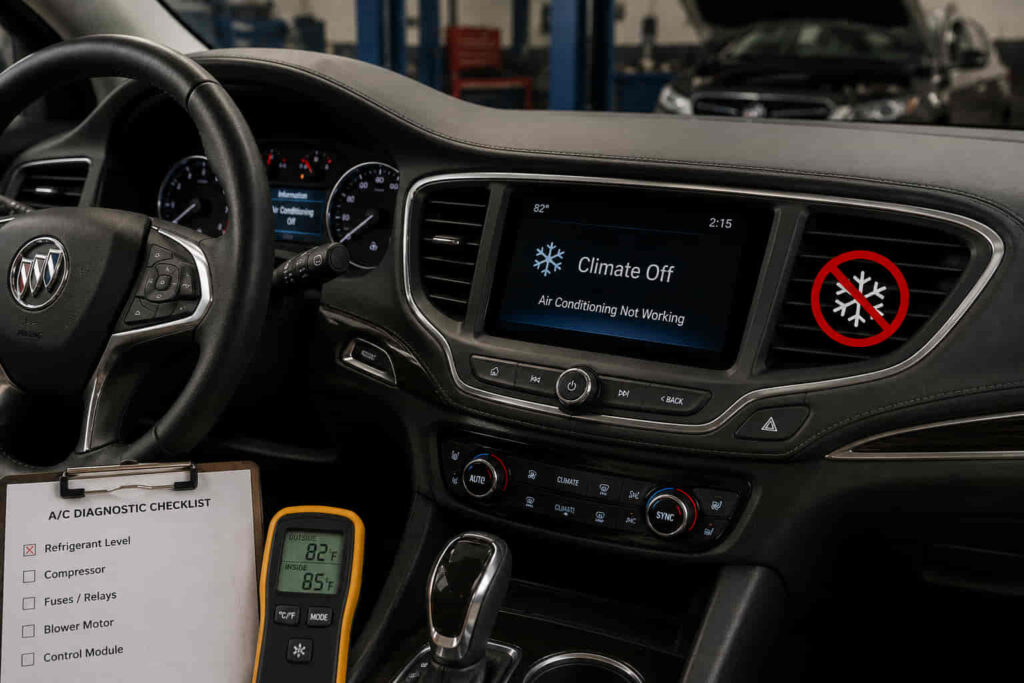
When a Buick Enclave air conditioning system is not working, the problem can come from several areas, including low refrigerant, compressor failure, electrical issues, airflow restrictions, or HVAC control problems. Because the AC system contains multiple connected components, identifying the correct cause is more important than replacing parts based only on symptoms.
The Buick Enclave uses a complex climate control system designed to cool a large three-row SUV cabin. Components such as the compressor, condenser, evaporator, blower motor, refrigerant system, and electronic controls must work together to produce consistent cold air. A failure in any one of these areas can reduce cooling performance or stop the system from working completely.
Many Buick Enclave owners notice AC problems through symptoms such as warm air from the vents, weak airflow, unusual compressor behavior, or different temperatures between the front and rear climate zones. However, the same symptom can have multiple causes. For example, warm air may result from low refrigerant, but it can also indicate a compressor problem or a malfunctioning temperature control component.
A proper diagnosis helps determine whether the vehicle needs an AC recharge, electrical repair, component replacement, or a simple maintenance procedure.
This guide explains the most common reasons why Buick Enclave air conditioning is not working, how to diagnose the problem, available repair solutions, expected costs, and ways to prevent future AC failures.
What Are the Most Common Causes of Buick Enclave AC Problems?
The most common causes of Buick Enclave air conditioning problems include low refrigerant, refrigerant leaks, AC compressor failure, blower motor issues, electrical faults, and HVAC control system problems. Each component in the AC system has a specific function, so a failure in one area can affect the entire cooling process.
Low refrigerant is one of the most common reasons a Buick Enclave stops producing cold air. The AC system depends on a precise amount of refrigerant to absorb heat from the cabin and release it outside the vehicle. When the refrigerant level becomes too low, the evaporator cannot remove enough heat, causing warm air or weak cooling performance.
However, refrigerant does not normally disappear during regular operation. A low refrigerant level usually indicates a leak somewhere in the system, such as damaged seals, refrigerant lines, the condenser, or other AC components. Simply adding refrigerant may temporarily improve cooling, but the system will continue losing performance if the leak is not repaired.
The AC compressor is another critical component because it circulates refrigerant throughout the system. When the compressor fails or cannot engage properly, the refrigerant cannot complete the cooling cycle. Drivers may notice warm air from the vents even when the climate control settings appear normal.
Airflow problems can also prevent the Buick Enclave AC system from working correctly. A failing blower motor, clogged cabin air filter, or airflow restriction can reduce the amount of cooled air entering the cabin. In this situation, the AC may actually be producing cold air, but the driver experiences weak cooling because the airflow is insufficient.
Electrical problems are another possible cause. The AC system relies on fuses, relays, sensors, wiring, and control modules to operate correctly. A faulty pressure sensor or damaged electrical connection can prevent the compressor from activating even when the mechanical components are in good condition.
For example, a Buick Enclave that suddenly stops blowing cold air may have a refrigerant issue, but it could also have a failed compressor relay or a sensor problem that requires electrical diagnosis.
Why Is Buick Enclave AC Blowing Warm Air?
A Buick Enclave AC system that blows warm air usually has a problem with refrigerant circulation, compressor operation, airflow control, or temperature regulation. Warm air from the vents is one of the most common AC complaints, but the underlying cause can vary significantly.
Low refrigerant is a frequent cause because the AC system cannot absorb and transfer heat effectively without enough refrigerant. When refrigerant pressure drops below the required level, the compressor may also cycle incorrectly to protect the system from damage.
A failing AC compressor can create a similar symptom because the compressor is responsible for pressurizing and circulating refrigerant. If the compressor clutch does not engage or the compressor cannot generate proper pressure, the system may continue blowing air without cooling it.
The condenser also plays an important role because it removes heat from the refrigerant after it leaves the compressor. If the condenser is blocked, damaged, or unable to release heat efficiently, the AC system may struggle to produce cold air, especially during hot weather or when the vehicle is stopped in traffic.
Temperature control components can also cause warm air problems. Buick Enclave models equipped with automatic climate control use sensors and actuators to regulate cabin temperature. A faulty blend door actuator can allow warm air to mix with cooled air, creating inconsistent temperatures from the vents.
Rear climate control problems can create additional confusion because a Buick Enclave has a larger cabin and may include separate controls for rear passengers. A problem in the rear HVAC system does not always indicate a complete AC system failure.
For example, if the front vents produce cold air but the rear vents remain warm, the issue may involve the rear climate control system rather than the main AC compressor or refrigerant supply.
Read more: Buick Enclave AC Recharge
Why Is the Buick Enclave AC Compressor Not Working?
The Buick Enclave AC compressor may stop working because of electrical problems, low refrigerant pressure, compressor wear, or failures in related control components. Since the compressor is the main component responsible for circulating refrigerant through the air conditioning system, any problem with its operation can prevent the vehicle from producing cold air.
The compressor works by compressing refrigerant and creating the pressure difference required for the cooling cycle. When it fails, the evaporator cannot receive properly conditioned refrigerant, causing the vents to blow warm or only slightly cool air.
One common cause of compressor problems is insufficient refrigerant pressure. The Buick Enclave AC system uses pressure sensors to protect the compressor from operating under unsafe conditions. If refrigerant levels become too low because of a leak, the system may prevent the compressor from engaging to avoid internal damage.
Electrical problems can also prevent compressor activation. The compressor relies on signals from fuses, relays, wiring connections, sensors, and the HVAC control module. A faulty relay or damaged electrical connection can create a situation where the compressor itself is functional but does not receive the signal needed to operate.
Mechanical wear is another possibility, especially on older Buick Enclave models with higher mileage. Over time, internal compressor components can wear down, reducing the ability to circulate refrigerant effectively. Symptoms may include unusual noises, intermittent cooling, or complete loss of cold air.
Proper diagnosis requires checking both the compressor and the surrounding AC system. Replacing a compressor without confirming the actual cause can result in unnecessary repair costs if the original problem is related to refrigerant leaks or electrical faults.
For example, a Buick Enclave with a compressor that does not engage may only need a relay replacement rather than a complete compressor replacement.
How Do You Diagnose a Buick Enclave Air Conditioning Problem?
Diagnosing a Buick Enclave air conditioning problem requires checking the system from basic airflow issues to more complex refrigerant and electrical failures. A structured diagnosis helps identify the actual cause instead of replacing components based only on symptoms.
The first step is evaluating the symptoms. Drivers should determine whether the problem involves warm air, weak airflow, no airflow, inconsistent temperatures, or unusual noises. These details provide important clues because different symptoms often point toward different system failures.
Airflow problems should be checked before performing more advanced repairs. A restricted cabin air filter, failing blower motor, or blocked air passage can reduce cooling performance even when the AC system itself is functioning correctly.
The refrigerant system should also be inspected because incorrect refrigerant pressure can prevent proper cooling. Technicians typically measure system pressure and compare the readings with manufacturer specifications to determine whether the system has low refrigerant, excessive refrigerant, or another pressure-related issue.
Electrical diagnosis is equally important because modern Buick Enclave HVAC systems rely heavily on electronic controls. Checking fuses, relays, sensors, wiring, and control modules can identify problems that are not visible through physical inspection.
A complete diagnosis may also include checking compressor engagement, condenser operation, temperature output, and HVAC actuator movement. These tests help determine whether the issue comes from the cooling cycle, airflow system, or electronic controls.
For example, if a Buick Enclave blows warm air but the compressor is running normally, the problem may involve refrigerant level or airflow rather than compressor failure.
How Do You Fix Buick Enclave Air Conditioning Problems?
Fixing a Buick Enclave air conditioning problem requires addressing the specific cause of the failure, whether it involves refrigerant, mechanical components, airflow, or electrical systems. Because the AC system contains multiple connected parts, the correct repair depends on accurate diagnosis rather than replacing components based only on symptoms.
If the problem is caused by low refrigerant, an AC recharge may restore cooling performance. However, recharge should only be performed after confirming that the system does not have a significant leak. If refrigerant continues to escape, the leak source must be repaired before adding more refrigerant.
Refrigerant leaks may require replacement of damaged seals, hoses, condenser components, evaporator components, or other AC system parts. The repair approach depends on the location and severity of the leak because some leaks are easier to access than others.
A failed AC compressor may require replacement because internal damage cannot always be repaired. Since the compressor is a central part of the cooling cycle, compressor replacement usually involves removing refrigerant, installing the new component, evacuating the system, and recharging it according to manufacturer specifications.
Airflow-related problems often have different solutions. A clogged cabin air filter may only require replacement, while a failed blower motor or HVAC actuator may require component repair. These issues can create symptoms similar to refrigerant problems but require different repairs.
Electrical problems may involve replacing a fuse, relay, sensor, or repairing wiring connections. Modern Buick Enclave models use electronic climate control systems, so proper diagnostic equipment is often required to identify communication or control failures.
For example, a Buick Enclave with weak airflow may only need a cabin air filter replacement, while another vehicle with the same symptom may require a blower motor repair.
How Much Does Buick Enclave AC Repair Cost?
The cost of repairing a Buick Enclave air conditioning system depends on the failed component, labor requirements, and whether the issue involves a simple service or a major repair. A refrigerant recharge is usually less expensive than replacing major AC components such as the compressor or evaporator.
A basic AC service may involve refrigerant inspection, pressure testing, and system evaluation. If the system only has low refrigerant without major component failure, the repair process is generally simpler than replacing damaged parts.
More complex repairs can become significantly more expensive because components such as compressors, condensers, and evaporators require more labor to access and replace. The final cost also depends on the model year, parts availability, and the repair facility performing the service.
Diagnostic costs should also be considered because AC problems often have similar symptoms with different causes. Paying for proper diagnosis can prevent unnecessary replacement of expensive components.
A common mistake among vehicle owners is replacing the compressor when the actual problem is a refrigerant leak, electrical issue, or sensor failure. Accurate testing helps ensure that repair money is spent on the correct solution.
For example, a Buick Enclave with warm air caused by low refrigerant may require a relatively simple repair, while the same symptom caused by a failed compressor may require a much larger investment.
How Can You Prevent Buick Enclave AC Problems?
Preventing Buick Enclave air conditioning problems requires regular maintenance, early diagnosis, and proper operation of the HVAC system. Although AC components are designed for long-term use, neglecting small issues can increase the chance of expensive repairs.
Maintaining proper refrigerant levels is important because the AC system depends on correct pressure to operate efficiently. If cooling performance gradually decreases, owners should inspect the system rather than waiting until the AC stops working completely.
Replacing the cabin air filter at recommended intervals also helps maintain airflow and reduces strain on the blower motor. A restricted filter can force the HVAC system to work harder and reduce overall comfort.
Using the air conditioning system periodically throughout the year can also help maintain component operation. Regular circulation allows internal components to continue functioning properly and helps identify developing problems earlier.
Drivers should pay attention to warning signs such as unusual compressor noises, inconsistent cooling, weak airflow, or repeated loss of refrigerant. Addressing these symptoms early can prevent smaller issues from developing into major repairs.
For example, a Buick Enclave owner who notices gradually weaker cooling before summer begins can diagnose the problem early and potentially avoid a complete AC system failure during extreme temperatures.