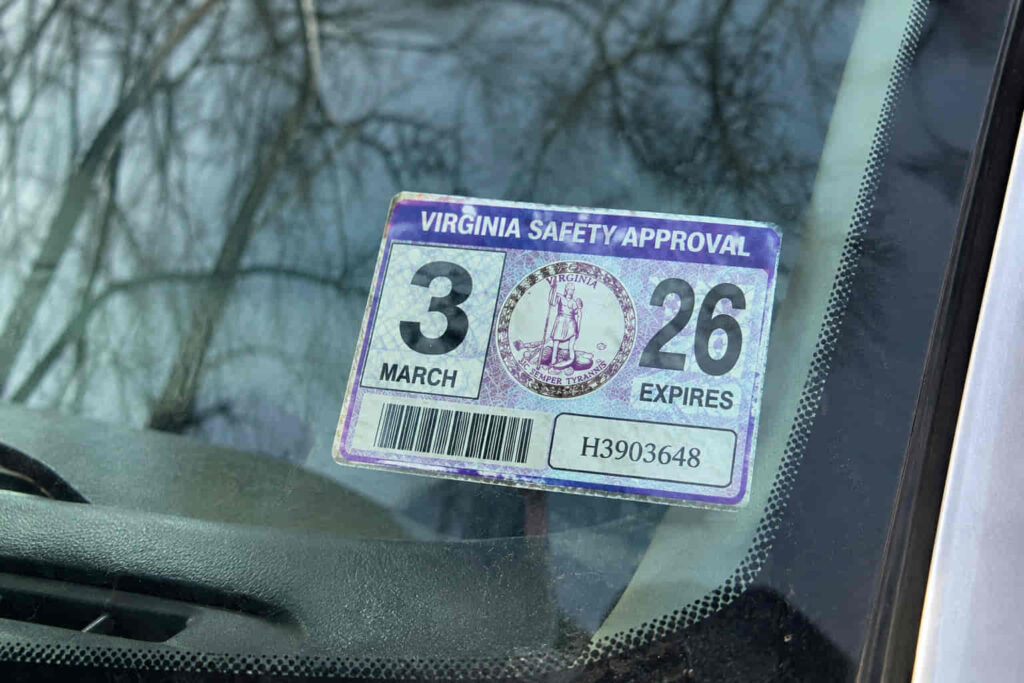
A Virginia state inspection sticker confirms that a vehicle has passed the safety inspection required under Virginia law. Most registered passenger vehicles must undergo a safety inspection every 12 months at an official Virginia inspection station. After the vehicle passes, a certified inspector issues an approval sticker showing the month and year the inspection expires.
The Virginia safety inspection evaluates essential vehicle components, including brakes, tires, steering, suspension, lights, and windshield condition. For standard passenger vehicles, the state-listed inspection fee is $20, excluding any repairs needed to correct safety defects. A vehicle that fails inspection receives a rejection sticker rather than an approval sticker and must have the identified problems addressed.
Renewing a Virginia inspection sticker requires another vehicle safety inspection, not an online sticker renewal. Drivers must also understand that an expired inspection sticker does not automatically qualify for a grace period, even though Virginia law places specific restrictions on traffic stops based solely on inspection expiration.
A Virginia safety inspection is separate from emissions testing, which applies to certain vehicles registered in designated areas. This guide explains inspection sticker requirements, costs, expiration dates, renewal procedures, failed inspections, replacement options, and where to obtain a valid sticker.
What Is a Virginia State Inspection Sticker?
A Virginia state inspection sticker is an official approval decal issued after a vehicle satisfies Virginia’s motor vehicle safety inspection requirements. The Virginia State Police administers the safety inspection program, while authorized inspection stations and certified inspectors conduct inspections according to state regulations. The sticker provides visible evidence that the vehicle passed the required inspection and identifies the month and year when its approval expires.
The sticker represents the vehicle’s inspection status at the time of examination, not a guarantee that every mechanical component will remain safe throughout the approval period. For example, a vehicle may pass inspection with tires that meet the applicable tread requirements, but those tires can become unsafe before the next scheduled inspection if they wear excessively or sustain damage. Vehicle owners remain responsible for maintaining equipment in safe operating condition after receiving an approval sticker.
Virginia inspection stickers are associated with specific vehicles and official inspection records. Under the state’s Motor Vehicle Inspection Program, certified inspectors document inspection information and issue the appropriate sticker after completing the required procedures. A sticker cannot legally substitute for an inspection performed by an authorized inspector, and displaying an approval sticker does not replace the vehicle’s registration requirements.
The distinction matters because vehicle registration, safety inspection, and emissions inspection serve different regulatory purposes. Registration establishes the vehicle’s legal registration status, while the safety inspection evaluates specified mechanical and safety equipment. An emissions inspection addresses applicable air pollution requirements. A Virginia driver may therefore need to satisfy more than one requirement to operate a vehicle legally, depending on its registration status, vehicle classification, and location.
Which Vehicles Need a Virginia State Inspection Sticker?
Most motor vehicles registered in Virginia and operated or parked on public highways must undergo periodic safety inspections. Under Virginia Code § 46.2-1157, the requirement applies to covered motor vehicles, trailers, and semitrailers unless a statutory exemption applies. Passenger cars, SUVs, pickup trucks, motorcycles, and many commercial vehicles fall within the inspection program. Vehicles subject to the requirement must be inspected at least once every 12 months after their initial inspection.
The inspection requirement is determined by vehicle classification and applicable law rather than whether a vehicle is used frequently. For example, a Virginia-registered passenger car driven only on weekends generally remains subject to annual inspection when operated or parked on public highways. Similarly, a pickup truck used for personal transportation does not become exempt simply because it is not operated commercially. Motorcycles also require safety inspections, although their inspection procedures and applicable equipment standards differ from those for passenger cars.
Virginia law provides exemptions for specific vehicle categories. Antique vehicles that meet the statutory definition and are properly registered with antique plates are exempt from the regular state inspection requirement. This exemption is tied to the vehicle’s qualifying registration and applicable operating restrictions, not merely its age. A vehicle that is 25 years old but registered and used as an ordinary passenger vehicle does not automatically qualify for the antique inspection exemption.
Other exempt categories include boat, utility, and travel trailers without brakes, mopeds, and low-speed vehicles. Certain commercial vehicles operating in interstate commerce may also qualify for an exemption when they satisfy the applicable federal inspection requirements and documentation conditions. These exemptions are established under Virginia Code § 46.2-1158.01 and should not be extended to vehicles that do not meet the specified criteria.
New vehicles require particular attention because the initial inspection rules differ from those for used vehicles. A new vehicle purchased in Virginia may satisfy its first inspection requirement through an eligible manufacturer or distributor inspection performed by the dealership. In that situation, the dealership may issue an inspection approval sticker under the applicable rules. The vehicle must still meet its subsequent inspection deadline, generally within 12 months of the initial inspection or purchase, and continue following the annual inspection schedule.
For drivers bringing a vehicle into Virginia, registration does not create a general inspection grace period. Virginia State Police advises that vehicles should be inspected before registration when practical and that vehicles registered in Virginia must satisfy the inspection requirement immediately. Limited statutory exceptions exist for certain vehicles entering Virginia or traveling directly to an inspection station, but these exceptions do not establish a blanket exemption for newly registered vehicles.
Vehicle owners should confirm the applicable requirements using the vehicle’s registration classification and the exemptions established in Virginia law. This approach is more reliable than assuming every vehicle requires the same inspection sticker or that every older, newly purchased, or commercially operated vehicle qualifies for an exemption.
Read more: ford 302 firing order
How Do You Get a Virginia State Inspection Sticker?
To get a Virginia state inspection sticker, you must take your vehicle to an official Virginia safety inspection station and have it pass the required safety inspection. These stations operate under the Virginia State Police Motor Vehicle Safety Inspection Program and use certified inspectors who are authorized to evaluate vehicles against state safety standards. An approval sticker is issued only after the inspection is completed and the vehicle meets the applicable requirements.
The process begins when you bring your vehicle to an authorized inspection station, such as a participating automotive repair shop or dealership. The inspector identifies the vehicle and conducts the required examination based on its classification. A passenger car, for example, is inspected according to the safety standards applicable to passenger vehicles, while a motorcycle follows a different set of equipment requirements. The inspection is intended to identify defects in components that directly affect safe vehicle operation.
During the examination, the inspector checks the condition and operation of the required safety equipment. Some components require visual inspection, while others must be operated or measured to determine whether they satisfy state standards. For example, the inspector may measure tire tread depth, examine brake components for excessive wear, and verify that required exterior lights function correctly. These checks are performed according to the Virginia Motor Vehicle Safety Inspection Manual rather than the repair shop’s individual preferences.
If the vehicle passes, the certified inspector issues and affixes an official approval sticker showing its inspection expiration month and year. The inspection station also maintains the required inspection record. The approval sticker confirms that the vehicle satisfied the applicable safety standards during that inspection. It does not certify that the vehicle is free from every possible mechanical problem or eliminate the owner’s responsibility to maintain it.
If the vehicle does not meet the inspection standards, the inspector identifies the defects and issues a rejection sticker under the applicable procedures. The owner must address the rejected items before the vehicle can receive an approval sticker. For example, a car with tires below the minimum permitted tread depth cannot pass simply because its brakes, steering, and lighting systems are functioning correctly. Every applicable inspection requirement must be satisfied.
A Virginia inspection sticker cannot be obtained legally by purchasing an unused decal, transferring another vehicle’s sticker, or submitting an online payment without the required inspection. Drivers should use an official inspection station and retain the inspection documentation provided. This ensures that the sticker corresponds to a legitimate inspection of the vehicle.
What Does a Virginia State Vehicle Inspection Check?
A Virginia state vehicle inspection checks the safety-related components that determine whether a vehicle meets the Commonwealth’s minimum operating standards. For passenger vehicles, the examination covers braking performance, steering and suspension condition, tire safety, required lighting, visibility equipment, and other regulated vehicle systems. The specific inspection procedures depend on the vehicle’s classification and the standards established in the Virginia Motor Vehicle Safety Inspection Manual.
The braking system is a primary inspection area because it controls the vehicle’s ability to slow down and stop safely. Inspectors evaluate applicable brake components for excessive wear, damage, leaks, and other defects that could interfere with normal braking. These components include brake pads or shoes, rotors or drums, hydraulic lines, and related equipment where applicable. For example, a vehicle with a leaking brake hose or braking components that fail the applicable inspection standards cannot receive an approval sticker until the problem is corrected.
Tires, wheels, steering, and suspension are also examined because they influence traction, directional control, and vehicle stability. Tire inspections address tread depth, visible damage, and other conditions that affect safe operation. Steering and suspension checks focus on components such as tie rods, ball joints, and other applicable connections that may develop excessive looseness or damage. A tire with exposed reinforcing material or a steering component with excessive play can result in inspection rejection even when the vehicle appears to drive normally.
The inspection also evaluates required exterior lighting and equipment that helps drivers see and communicate their intentions. Headlights, brake lights, turn signals, taillights, and other required lamps must meet the applicable operating standards. Inspectors examine the windshield, windshield wipers, mirrors, and related visibility equipment for defects that violate inspection requirements. For example, a windshield defect in a regulated area or a malfunctioning required brake light can prevent a vehicle from passing inspection.
Additional safety checks address equipment such as the horn, seat belts, exhaust system, and fuel system when applicable to the vehicle. These inspections identify conditions that could create safety hazards, including damaged required restraints, exhaust leaks, or fuel leaks. The inspection standards distinguish between defects that violate safety requirements and cosmetic imperfections that do not affect compliance. A minor scratch on a body panel, for example, does not automatically cause inspection failure, while a hazardous fuel leak presents a direct safety concern.
Passing a Virginia safety inspection means the vehicle satisfies the applicable inspection standards at the time it is examined. The inspection is not equivalent to a comprehensive mechanical diagnosis or a guarantee against future breakdowns. A vehicle can pass its safety inspection while still requiring routine maintenance, such as an engine oil change or replacement of a worn component that has not reached a rejection threshold.
Drivers can reduce the likelihood of rejection by checking visible safety equipment before visiting an inspection station. Confirming that required lights operate, tires are in acceptable condition, windshield wipers function properly, and no obvious fluid leaks are present can reveal problems that need attention. However, these preliminary checks do not replace the examination performed by a certified Virginia safety inspector.
The inspection’s purpose is to verify compliance with minimum vehicle safety standards, not to evaluate every aspect of vehicle performance. Understanding this distinction helps owners interpret inspection results correctly and recognize why a vehicle may pass one inspection category while failing another.
How Much Does a Virginia State Inspection Sticker Cost?
A Virginia state inspection costs $20 for a standard passenger vehicle, including most cars, SUVs, and pickup trucks. This is the state-authorized safety inspection fee, not a separate charge for purchasing the sticker. The fee covers the required inspection performed by a certified inspector at an official Virginia inspection station. When the vehicle passes, the approval sticker is issued as part of the inspection process.
Virginia inspection fees vary by vehicle classification. The Virginia State Police lists a $12 inspection fee for motorcycles and autocycles, while certain commercial vehicles, including qualifying trucks and tractor-trailers, are subject to a $51 inspection fee. These differences reflect the inspection categories established under Virginia’s Motor Vehicle Safety Inspection Program. Vehicle owners should confirm the applicable classification rather than assuming every vehicle is inspected at the passenger-car rate.
The inspection fee does not include the cost of repairing defects that prevent a vehicle from passing. For example, if a passenger car requires replacement brake pads or a damaged tire, the inspection charge remains separate from the parts and labor needed to correct those problems. A repair shop may provide an estimate for the required work, but the owner is not obligated to purchase repairs from the same business solely because that station performed the inspection.
A failed inspection can also create additional costs depending on where and when the vehicle is reinspected. Virginia’s reinspection rules allow a limited reinspection of previously rejected items under specified conditions, while a vehicle returning outside those conditions may require another complete inspection. Drivers should retain their rejection documentation and confirm the applicable reinspection procedure before returning to the station.
The total amount a driver pays therefore depends on whether the vehicle passes its initial inspection and whether any repairs or additional inspections are necessary. For a standard passenger car that meets every applicable safety requirement, the inspection itself costs $20. Additional maintenance or repairs should be treated as separate expenses rather than part of the official sticker fee.
How Long Is a Virginia State Inspection Sticker Valid?
A Virginia state inspection sticker is generally valid for 12 months, with the expiration date determined by the month and year displayed on the approval sticker. Virginia requires covered vehicles to undergo periodic safety inspections, and the approval sticker provides a visible reference for the next inspection deadline. Drivers should use the expiration information printed on the sticker rather than estimating the deadline from memory.
A Virginia inspection sticker remains valid through the final day of its printed expiration month. For example, a sticker displaying November 2026 remains valid through November 30, 2026, and expires when that month ends. A driver whose sticker displays March 2027 must complete the next required inspection before the beginning of April 2027 to avoid operating with an expired inspection sticker.
The expiration month is important because Virginia inspection validity is based on the sticker’s assigned expiration period, not an additional 12 months after the driver notices the sticker is about to expire. Completing an inspection does not create an unlimited extension of the previous approval. The expiration period for the new sticker must follow the applicable state rules, including provisions governing early inspections and initial inspections for qualifying vehicles.
Vehicle owners should also distinguish sticker validity from the mechanical condition of the vehicle. A valid inspection sticker confirms that the vehicle passed its required examination, but it does not authorize continued operation with unsafe equipment that develops afterward. For example, a vehicle with an unexpired sticker may still violate equipment requirements if a required brake light stops functioning or a tire becomes dangerously damaged.
The safest renewal schedule is to arrange the next inspection before the expiration month ends. Checking the windshield sticker in advance gives the owner time to address defects that could cause rejection. Waiting until the final day increases the risk of having an expired sticker if the vehicle fails inspection or an authorized station cannot complete the examination that day.
How Do You Renew a Virginia State Inspection Sticker?
To renew a Virginia state inspection sticker, you must have your vehicle pass another safety inspection at an official Virginia inspection station. The renewal process requires a new examination of the vehicle’s safety equipment rather than an online application or payment to extend the existing sticker. Once the vehicle meets the applicable inspection standards, a certified inspector issues a new approval sticker with the appropriate expiration information.
Vehicle owners should schedule their next inspection before the current sticker expires. This provides time to address mechanical defects that could prevent approval and reduces the risk of driving with an expired sticker. For example, a driver whose inspection sticker expires in September should arrange an inspection during that month or earlier, rather than waiting until the final day when an unexpected brake or tire problem could delay approval.
The inspection procedure for renewal follows the same applicable safety standards used during a regular vehicle inspection. A previously approved vehicle does not receive automatic approval simply because it passed the preceding year. Inspectors must evaluate the required components in their current condition, including equipment that may have deteriorated since the last examination. A vehicle that passed with acceptable tire tread during its previous inspection, for instance, may fail its renewal inspection if those tires have worn below the permitted limits.
The expiration date on a renewed Virginia inspection sticker is determined by the state’s sticker issuance rules. Vehicle owners should not assume that completing an inspection early always adds 12 months to the expiration date printed on the previous sticker. Virginia has specific procedures governing the issuance of approval stickers, including inspections performed before the existing sticker expires. The certified inspector must assign the correct expiration period under those rules.
Drivers who are temporarily outside Virginia when their inspection expires should not assume that an out-of-state safety inspection automatically replaces the Virginia requirement. Virginia’s inspection rules contain provisions for vehicles entering or returning to the Commonwealth, but the circumstances of the vehicle’s operation and registration determine which provisions apply. Owners should verify the applicable requirements before driving an uninspected vehicle on Virginia highways.
A successful renewal results in a new approval sticker and an updated inspection record. The owner should check that the sticker displays the correct expiration information and retain any documentation provided by the inspection station. Keeping track of the next inspection deadline helps prevent expiration-related problems and allows the owner to plan necessary maintenance before the following examination.
What Happens If Your Vehicle Fails a Virginia State Inspection?
If a vehicle fails a Virginia state safety inspection, the inspector issues a rejection sticker and identifies the defects that prevent approval. A rejection means the vehicle did not satisfy one or more applicable safety standards during the examination. The rejection sticker documents the inspection outcome but does not certify that the vehicle is safe or provide the same approval status as a valid inspection sticker.
The inspector must identify the reasons for rejection so the vehicle owner can determine what needs to be corrected. These defects may involve braking components, tires, steering equipment, lighting, or other regulated safety systems. For example, a passenger car with an inoperative required brake light and a tire that fails the applicable tread standard must have both defects corrected before it can receive an approval sticker. Repairing only one rejected item does not satisfy the inspection requirements.
A Virginia rejection sticker is valid for 15 days from its date of issuance under the state’s inspection rules. This period is intended to provide an opportunity to correct the identified defects and obtain the required reinspection. However, the rejection period should not be interpreted as unrestricted permission to operate an unsafe vehicle. Equipment violations and conditions that make a vehicle dangerous can still create legal and safety concerns during that period.
The reinspection procedure depends on whether the vehicle returns within the permitted period and meets the conditions established by the Virginia Motor Vehicle Safety Inspection Program. When a vehicle returns to the original inspection station within the applicable 15-day period, the reinspection can focus on the previously rejected items and other conditions required by the inspection rules. Returning after the permitted period, or choosing a different inspection station, may require a complete inspection rather than the limited reinspection procedure.
Vehicle owners should retain their rejection documentation because it identifies the original inspection and the defects requiring correction. The documentation also helps the inspector determine whether the vehicle qualifies for the applicable reinspection procedure. For example, if a vehicle is rejected for worn brake components, the owner can arrange the necessary repairs and return to the original station within the allowed period for verification.
A failed inspection does not require the vehicle owner to purchase repairs from the station that performed the examination. The owner may choose another qualified repair provider or arrange appropriate repairs independently. What matters for inspection approval is whether the vehicle satisfies the applicable safety standards when it is reinspected.
The vehicle receives an approval sticker only after the required defects have been corrected and the applicable inspection requirements are satisfied. If the vehicle continues to fail, the owner must address the remaining problems before approval can be issued. This process ensures that a rejection sticker serves as documentation of an unsuccessful inspection rather than a substitute for meeting Virginia’s vehicle safety requirements.
Where Should a Virginia State Inspection Sticker Be Placed?
A Virginia state inspection sticker must be placed in the lower-left corner of the windshield when viewed from inside the vehicle. Under 19VAC30-70-50, the sticker’s left edge must be positioned as close as practical to the windshield’s left edge without being closer than one inch. Its top edge should be approximately four inches above the bottom of the windshield. This standardized placement makes the sticker visible for inspection while limiting interference with the driver’s view.
The placement requirement applies to passenger cars and other vehicles equipped with conventional windshields. Certified safety inspectors are responsible for attaching approval stickers according to Virginia’s inspection regulations. Vehicle owners should not reposition the sticker for convenience because its location is governed by state requirements. For example, moving an inspection sticker to the upper corner of the windshield would not follow the standard placement rule for a passenger vehicle.
Virginia provides specific placement exceptions for certain windshield designs. If a windshield contains heating or grid elements that interfere with the normal sticker location, the sticker must be positioned above the grid according to the applicable regulation. Minor adjustments are also permitted when necessary to prevent the windshield’s identification markings from obscuring the sticker. These exceptions address physical windshield characteristics rather than personal preferences about sticker visibility.
Motorcycles and trailers have different inspection sticker placement requirements. A motorcycle inspection sticker is attached to the left side of the motorcycle in a location where it remains visible after mounting. It may be displayed on a securely fastened plate. For trailers subject to inspection, the sticker is generally placed on the left side near the front corner, attached to the trailer’s body or frame. These locations reflect the different structures of vehicles that do not have a conventional passenger-car windshield.
The inspection sticker must remain associated with the vehicle for which it was issued. Virginia prohibits transferring an approval sticker between vehicles, even when both vehicles belong to the same owner. An exception permits a valid sticker to be transferred from an old windshield to a replacement windshield on the same vehicle. The replacement process must preserve the sticker’s legitimacy and original expiration period.
Drivers should also verify that the sticker remains readable and securely attached. Its displayed expiration information provides an immediate reference for determining when the vehicle must undergo its next safety inspection. A sticker that becomes damaged, detached, or unreadable should be addressed through the appropriate replacement procedure rather than replaced with an unofficial decal.
What Happens If Your Virginia Inspection Sticker Expires?
Driving or parking a vehicle on a Virginia public highway with an expired safety inspection sticker can violate Virginia’s vehicle inspection requirements. Under Virginia Code § 46.2-1157, covered vehicles must comply with the state’s inspection rules, and each day a vehicle is operated or parked on a highway while out of compliance can constitute a separate offense. The inspection requirement remains in effect after the expiration date, even when the vehicle appears to be mechanically sound.
Virginia does not provide a general grace period that automatically extends an expired inspection sticker’s validity. A sticker expires at the end of its designated month, and the owner remains responsible for obtaining the required inspection. For example, a sticker showing November 2026 expires at the end of November 30, 2026. The vehicle does not retain a valid inspection approval merely because the owner intends to schedule an appointment in December.
However, Virginia law distinguishes an expired inspection sticker from the circumstances in which a police officer may initiate a traffic stop. Under § 46.2-1157(E), a law-enforcement officer cannot stop a motor vehicle due to an expired inspection sticker until the first day of the fourth month after its original expiration date. For a sticker that expires on November 30, 2026, that restriction applies until March 1, 2027.
This traffic stop restriction is not an inspection grace period. It limits enforcement through a stop based on the expired sticker during the specified interval, but it does not change the sticker’s expiration date or eliminate the underlying inspection requirement. A driver should not interpret the restriction as permission to postpone the required inspection for several months. Other lawful reasons for a traffic stop and separate vehicle equipment violations must also be considered.
An expired inspection sticker can result in a traffic citation and associated legal costs when enforcement is permitted. The final financial consequences depend on the applicable offense, court costs, and circumstances of the case rather than a single universal sticker-expiration fee. Virginia law also contains provisions addressing how courts may handle certain inspection violations when the vehicle owner provides evidence of subsequent compliance.
For example, a driver who discovers an expired sticker should arrange an inspection promptly instead of waiting for the traffic stop restriction to end. If the vehicle passes, the inspector issues a new approval sticker under the applicable rules. If it fails, the owner must follow the rejection and reinspection procedures rather than assuming that an expired approval sticker remains acceptable.
The correct response to an expired Virginia inspection sticker is to complete the required safety inspection as soon as possible. Understanding the difference between sticker validity and traffic stop restrictions helps drivers comply with Virginia law without relying on the mistaken belief that delayed enforcement creates additional inspection validity.
How Do You Replace a Lost or Damaged Virginia Inspection Sticker?
A lost, stolen, or damaged Virginia state inspection sticker may be replaced without another vehicle safety inspection if the owner meets the Virginia State Police replacement requirements. The replacement process is handled through the Virginia State Police Safety Division rather than through a regular inspection sticker purchase. The purpose is to restore proof of an existing, valid inspection without issuing a new approval to a vehicle that has not been properly inspected.
Vehicle owners should contact their nearest Virginia State Police Safety Division Area Office when an inspection sticker is missing, stolen, or damaged. The owner must provide the original vehicle safety inspection receipt showing that a valid approval sticker was issued to the vehicle within the previous 11 months. A Safety Division trooper uses the receipt to verify the inspection record and determine whether the vehicle qualifies for replacement. If the original sticker expires during the month of the replacement request, the vehicle must undergo another inspection instead.
A stolen inspection sticker requires proof that the theft was reported to law enforcement. This requirement distinguishes a stolen sticker from one that becomes damaged or separates from the windshield. The owner should report the theft to the appropriate law enforcement agency and retain the documentation needed for the replacement request. Without the required evidence, the Virginia State Police may be unable to issue a replacement through the standard procedure.
Windshield replacement is another situation that can affect an otherwise valid inspection sticker. Under Virginia Code § 46.2-1164, an existing inspection sticker may be removed for transfer to a replacement windshield on the same vehicle. Businesses performing windshield replacement must make a good-faith effort to transfer the original sticker. If the sticker is destroyed or damaged during the process, the business must give the damaged sticker to the customer so the owner can request assistance from the Virginia State Police.
For example, if a vehicle passes inspection in February and its windshield is replaced in June, the existing approval sticker should be transferred to the new windshield when possible. If the sticker is destroyed during removal, the owner can contact the nearest Safety Division office with the original inspection receipt and relevant documentation. Virginia State Police states that qualifying replacements involving windshield service are provided without charge when the owner has a valid inspection receipt.
A replacement inspection sticker does not extend the original inspection expiration date. It restores the vehicle’s existing approval status rather than creating a new inspection period. A Safety Division trooper may also decline to issue a replacement if obvious equipment defects are discovered during the replacement process. Vehicle owners should therefore preserve their original inspection receipts and follow the official replacement procedure instead of attempting to reproduce or transfer an unauthorized sticker.
Where Can You Get a Virginia State Inspection Sticker Near You?
You can obtain a Virginia state inspection sticker at an official safety inspection station authorized by the Virginia State Police. These stations include participating automotive repair shops, vehicle service centers, and dealerships with certified safety inspectors. The station must be authorized to perform Virginia safety inspections, and the vehicle must pass the applicable examination before an approval sticker can be issued.
An official Virginia inspection station can be identified by its large white sign with blue lettering indicating that it is an authorized inspection station. This designation is important because not every automotive repair business is approved to perform state safety inspections. A garage may provide tire replacement, brake repairs, and other maintenance services without having the certification required to issue Virginia inspection stickers.
Drivers can locate potential inspection stations by searching for Virginia state inspection services in their city or county and contacting the businesses directly. For example, a vehicle owner in Richmond can search for an official Virginia inspection station in Richmond, while a driver in Fairfax can look for authorized stations serving Fairfax County. Before visiting, the owner should confirm that the business currently performs state inspections, has a certified inspector available, and can inspect the relevant vehicle type.
Virginia State Police does not maintain a comprehensive public online directory of active inspection stations. According to the agency, station availability changes as businesses open, close, lose inspectors, or experience changes in authorization status. Virginia State Police reports approximately 4,200 inspection stations statewide, but that figure should not be interpreted as a guarantee that a particular location is currently operating or accepting vehicles.
If a driver cannot identify an authorized station, the nearest Virginia State Police Safety Division Area Office can provide assistance. The agency maintains seven Safety Division area offices serving different regions of the Commonwealth, including Richmond, Culpeper, Amherst, Wytheville, Waverly, Roanoke, and Fairfax. Contact information for these offices is available on the official Virginia State Police website.
Inspection availability may also depend on the vehicle’s classification. A station that inspects passenger cars may not necessarily offer inspections for every type of commercial vehicle or trailer. Owners of motorcycles, heavy trucks, and specialized vehicles should confirm that the station can perform the appropriate inspection before traveling there.
The most reliable way to find a Virginia inspection station is to verify its official authorization and current inspection availability before visiting. Once the vehicle passes the required safety inspection, the certified inspector issues the approval sticker. Choosing an authorized station ensures that the inspection is recorded through the state’s official program and that the sticker is legally issued to the vehicle.
Is a Virginia Safety Inspection the Same as an Emissions Inspection?
No, a Virginia safety inspection and an emissions inspection are two separate programs with different requirements and purposes. The Virginia safety inspection evaluates whether a vehicle meets the Commonwealth’s minimum safety standards, while the emissions inspection measures or verifies compliance with applicable vehicle air pollution requirements. Passing one inspection does not automatically satisfy the other.
The Virginia State Police administers the Motor Vehicle Safety Inspection Program, which applies to most covered vehicles operated or parked on Virginia public highways. The inspection focuses on equipment that affects vehicle safety, including brakes, tires, steering, suspension, and required lighting. When a vehicle passes, an authorized inspector issues the Virginia state inspection sticker. This sticker confirms safety inspection approval but does not establish that the vehicle has met emissions requirements.
Virginia emissions inspections apply to qualifying vehicles registered in designated Northern Virginia localities rather than to vehicles throughout the entire state. The program is administered by the Virginia Department of Environmental Quality, with emissions compliance connected to vehicle registration through the Virginia Department of Motor Vehicles. Covered localities include Fairfax, Loudoun, Prince William, Arlington, and Stafford counties, along with the cities of Alexandria, Fairfax, Falls Church, Manassas, and Manassas Park.
Emissions inspection requirements depend on factors such as the vehicle’s registration location, model year, fuel type, and applicable exemptions. Qualifying vehicles generally undergo emissions testing every two years, while the Virginia safety inspection requirement generally follows a 12-month cycle. For example, a qualifying passenger car registered in Fairfax County may need both an annual safety inspection and a biennial emissions inspection. A comparable vehicle registered in a Virginia locality outside the emissions program may need the safety inspection without being subject to the Northern Virginia emissions requirement.
The two inspections also produce different compliance records. A successful safety inspection results in an approval sticker displayed on the vehicle, while emissions compliance is recorded through the emissions inspection program and used to determine whether applicable registration requirements have been satisfied. An automotive service center may offer both inspections, but completing them at the same location does not combine their legal requirements.
Virginia drivers should verify safety inspection requirements and emissions eligibility separately. The Virginia State Police provides guidance on safety inspection stickers and authorized inspection stations, while the Virginia Department of Environmental Quality and Virginia DMV provide information about emissions testing and registration compliance. Checking both programs ensures that a vehicle meets the requirements applicable to its classification and registration location.