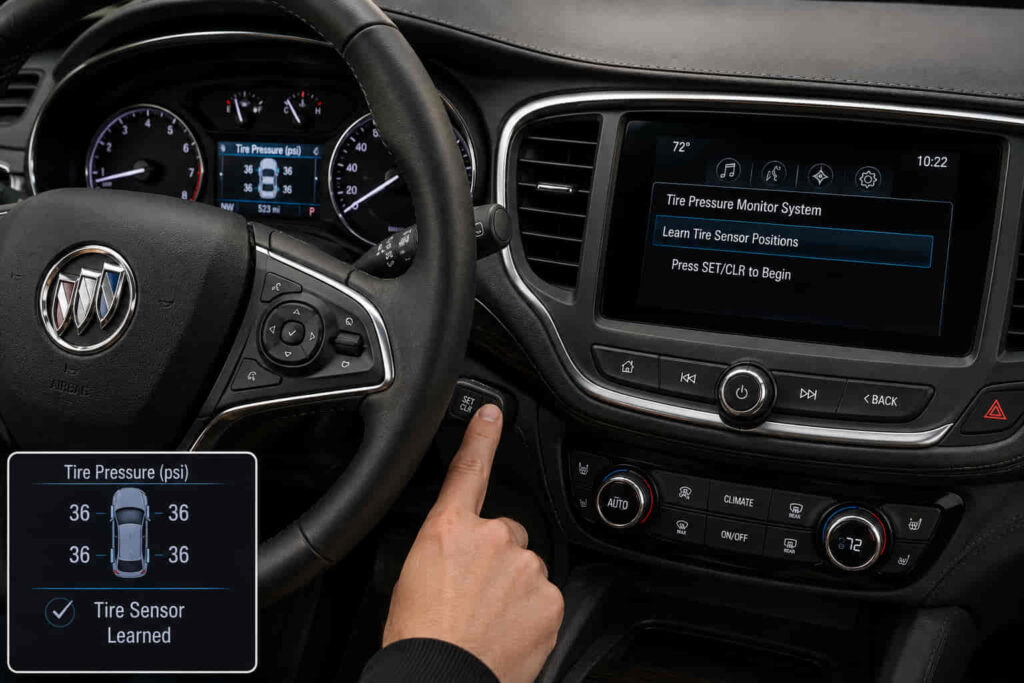
A Buick tire pressure sensor reset allows the vehicle’s TPMS system to recognize and communicate correctly with tire pressure sensors after changes such as tire replacement, sensor replacement, or wheel position changes. The reset process restores communication between the sensors mounted inside the wheels and the vehicle’s tire pressure monitoring system.
The Buick TPMS system is designed to monitor tire pressure continuously and alert the driver when one or more tires fall below the recommended pressure level. Each tire contains a sensor that measures pressure data and sends information to the vehicle’s control module. When the system loses track of sensor locations or receives incorrect data, a TPMS reset or relearn procedure may be required.
Many Buick owners search for tire pressure sensor reset information after seeing the TPMS warning light remain illuminated even after adjusting tire pressure. However, resetting the system is different from simply adding air to the tires. Proper tire pressure corrects the physical condition of the tire, while a TPMS reset allows the vehicle to recognize sensor information correctly.
A Buick TPMS relearn may be necessary after installing new tires, replacing sensors, rotating tires, or performing wheel-related repairs. Understanding when and how to reset the system helps prevent inaccurate warnings and ensures that the vehicle’s safety monitoring system operates correctly.
This guide explains when Buick tire pressure sensors need resetting, how the relearn process works, why TPMS warning lights remain active, and when sensor replacement may be required.
When Does a Buick TPMS Need to Be Reset?
A Buick TPMS system needs to be reset or relearned when the vehicle can no longer correctly identify tire pressure sensor information after changes to the wheels, tires, or sensors. The reset process allows the vehicle control module to update sensor identification and restore accurate communication between each tire and the monitoring system.
One of the most common situations requiring a TPMS relearn is tire replacement. When new tires are installed, the original sensors may be transferred to different wheel positions or new sensors may be installed. Because Buick vehicles associate sensor signals with specific wheel locations, the system may need to learn the new sensor positions.
Replacing a damaged tire pressure sensor is another common reason for resetting the system. TPMS sensors contain internal batteries and electronic components that can fail over time. When a new sensor is installed, the vehicle must recognize the replacement sensor before it can display accurate pressure information.
Tire rotation can also require attention depending on the Buick model and TPMS design. Some systems automatically recognize sensor locations, while others require a relearn procedure to update the position of each sensor after rotation.
A TPMS reset may also be needed after correcting certain system faults. For example, if the TPMS warning light remains on after tire pressure has been adjusted to the recommended level, the issue may involve sensor communication rather than incorrect tire inflation.
However, a reset does not fix every TPMS problem. If a sensor has a dead battery, incorrect programming, or physical damage, the system may continue displaying a warning even after a relearn procedure.
For example, a Buick Enclave owner who replaces one tire with a new TPMS sensor may need to complete a relearn process so the vehicle can recognize the new sensor and display accurate pressure readings.
How Does the Buick Tire Pressure Monitoring System Work?
The Buick Tire Pressure Monitoring System works by using electronic sensors inside the wheels to measure tire pressure and send data to the vehicle’s control module. This system helps drivers identify low tire pressure conditions before they affect handling, fuel efficiency, or tire durability.
Each TPMS sensor measures pressure and, in many cases, temperature information inside the tire. The sensor then transmits this data wirelessly to the vehicle’s receiver, which processes the information and displays warnings through the dashboard.
The system does not simply monitor whether a tire looks flat. It uses electronic measurements to compare actual tire pressure against recommended specifications stored for the vehicle. When pressure drops below the required threshold, the TPMS warning light alerts the driver.
Buick vehicles use direct TPMS systems, meaning each wheel typically contains a dedicated pressure sensor. This differs from indirect systems that estimate tire pressure changes through wheel speed sensors from the anti-lock braking system.
Because direct TPMS depends on communication between sensors and the vehicle module, sensor identification is important. When sensors are replaced or wheel positions change, the vehicle may need to relearn which sensor belongs to each wheel location.
For example, if the front-left and rear-right wheels are swapped during tire rotation, the Buick TPMS system may need updated sensor information to correctly identify which tire is reporting low pressure.
Read more: Buick Enclave Air Conditioning Not Working
How Do You Reset the Tire Pressure Sensor on a Buick?
Resetting the tire pressure sensor on a Buick requires the vehicle to relearn the identification and location of each TPMS sensor so the monitoring system can display accurate tire pressure information. The exact reset procedure depends on the Buick model year because different generations use different TPMS communication systems and relearn methods.
Before starting a TPMS reset, the tire pressures should be adjusted to the recommended specifications listed on the vehicle information label. A relearn procedure cannot correct incorrect tire pressure, and the system may continue showing warnings if one or more tires are actually underinflated.
The reset process usually begins by activating the TPMS relearn mode through the vehicle controls. Once the system enters relearn mode, each tire pressure sensor must communicate with the vehicle in the correct sequence. The vehicle then stores the sensor identification information and associates each sensor with its wheel position.
Some Buick models allow sensor activation through simple procedures, while others require a dedicated TPMS relearn tool to trigger each sensor. The tool communicates with the sensor and allows the vehicle control module to capture the new sensor information.
After all sensors are recognized, the system completes the relearn process and the TPMS warning light should turn off if there are no remaining issues. If the warning light stays illuminated, additional diagnosis may be necessary because the problem may involve a failed sensor, incorrect programming, or another system fault.
For example, after replacing a TPMS sensor on a Buick Encore, the vehicle may not display the correct tire pressure until the new sensor has been programmed and recognized by the TPMS module.
Does Buick Need a TPMS Relearn Tool?
Some Buick vehicles require a TPMS relearn tool to complete the sensor reset process, especially after replacing sensors or changing wheel positions. The tool allows technicians or owners to activate individual sensors and send their identification data to the vehicle’s TPMS control system.
A TPMS relearn tool works by communicating with the tire pressure sensor through a wireless signal. When placed near the tire valve stem area, the tool activates the sensor and allows the vehicle to record the sensor ID and wheel location.
Whether a relearn tool is necessary depends on the specific Buick model and production year. Some vehicles can complete relearn procedures through built-in vehicle controls, while others require specialized equipment after sensor replacement.
Professional repair shops often use TPMS diagnostic tools because they can also check sensor battery condition, communication strength, and stored fault information. This helps determine whether the problem is caused by incorrect programming or a damaged sensor.
Using the correct relearn method is important because a sensor that is physically installed but not properly programmed may not communicate with the vehicle. In this situation, the TPMS warning light can remain active even though tire pressure is correct.
For example, installing four new TPMS sensors on a Buick Envision without completing the required relearn procedure may result in the vehicle failing to recognize the new sensors.
Why Is My Buick TPMS Light Still On After Reset?
A Buick TPMS warning light that remains on after a reset usually indicates that the system has not completed the relearn process correctly or that another problem exists with the tire pressure monitoring system. Resetting the system only allows the vehicle to recognize sensor information; it does not repair damaged sensors, incorrect tire pressure, or communication failures.
One common cause is incorrect tire pressure. The TPMS system is designed to monitor actual tire pressure, so the warning light may remain active if one or more tires are still below the recommended level. Checking all four tires, including the spare tire if equipped with a sensor, helps confirm whether the pressure condition has been corrected.
A failed or weak TPMS sensor battery is another frequent cause. Tire pressure sensors contain built-in batteries that gradually lose power over time. When the sensor can no longer transmit accurate information, the vehicle may display a warning even after attempting a reset.
Incorrect sensor programming can also prevent the system from working properly. If a replacement sensor is installed but the vehicle does not recognize its identification code, the TPMS module cannot receive pressure data from that wheel.
Other possible causes include damaged sensor components, incorrect sensor type installation, communication problems between the TPMS module and sensors, or a malfunction in the vehicle control system.
For example, if a Buick Encore continues showing a TPMS warning after installing new tires, the issue may not be low tire pressure but rather a sensor that has not been programmed correctly.
How Long Do Buick Tire Pressure Sensors Last?
Buick tire pressure sensors typically last several years, but their lifespan depends on battery durability, driving conditions, and sensor usage. Because most TPMS sensors use sealed internal batteries, the entire sensor usually needs to be replaced when the battery reaches the end of its service life.
The average lifespan of a TPMS sensor is commonly around 5 to 10 years, although actual performance can vary. Vehicles that experience extreme temperatures, frequent driving, or harsh road conditions may experience shorter sensor life because electronic components are exposed to greater stress.
A failing TPMS sensor may produce several warning signs, including intermittent pressure readings, delayed updates, inaccurate tire information, or a TPMS warning light that returns after reset.
Sensor failure often becomes more common as vehicles age because the battery inside the sensor gradually loses the ability to transmit signals. This means older Buick models may require sensor replacement even if the tire itself is in good condition.
When replacing tires on a high-mileage Buick, many owners choose to inspect or replace aging TPMS sensors at the same time because the wheel is already removed during tire service.
For example, a 10-year-old Buick Enclave receiving new tires may benefit from replacing old TPMS sensors because the existing sensor batteries may fail soon after the tire installation.
How Much Does Buick TPMS Sensor Replacement Cost?
The cost of replacing Buick TPMS sensors depends on the sensor type, labor requirements, programming needs, and the number of sensors being replaced. The total expense usually includes the sensor itself, installation, and the relearn procedure required for the vehicle to recognize the new component.
A single failed sensor replacement is generally less expensive than replacing all four sensors. However, if multiple sensors are approaching the end of their expected lifespan, replacing them together may reduce future service costs because the vehicle already requires tire removal.
The replacement process involves removing the tire from the wheel, installing the new sensor, and programming the sensor to communicate with the Buick TPMS system. Because the sensor is mounted inside the wheel, professional equipment is often required.
After installation, the vehicle must complete a relearn procedure. Without this step, the new sensor may physically function but the vehicle may not display accurate pressure information.
The final cost also depends on whether the service is performed at a dealership, tire shop, or independent repair facility. Some locations include programming as part of installation, while others charge separately.
For example, replacing one TPMS sensor on a Buick Encore may require less work than replacing four sensors on a Buick Enclave with a larger wheel setup and more complex service requirements.
How Can You Maintain Buick TPMS System Performance?
Maintaining Buick TPMS performance requires regular tire inspections, correct inflation pressure, and proper handling of sensors during tire service. A healthy TPMS system depends on both accurate sensors and correct tire maintenance practices.
Checking tire pressure regularly is the most important step because TPMS is designed as a warning system rather than a replacement for manual inspection. Drivers should verify tire pressure according to the recommended specifications, especially before long trips or during major temperature changes.
When installing new tires or rotating wheels, technicians should inspect TPMS sensors carefully to ensure they are not damaged during service. Improper handling can affect sensor seals, valve components, and communication performance.
Addressing TPMS warnings quickly also helps maintain vehicle safety. Driving with incorrect tire pressure can increase tire wear, reduce fuel efficiency, and affect handling performance.
A properly functioning TPMS system provides valuable information, but it works best when combined with regular tire maintenance. Keeping sensors, tires, and wheel components in good condition helps ensure accurate pressure monitoring.
For example, a Buick owner who checks tire pressure monthly and verifies TPMS operation after tire service can reduce the chance of unexpected warning lights or inaccurate pressure readings.