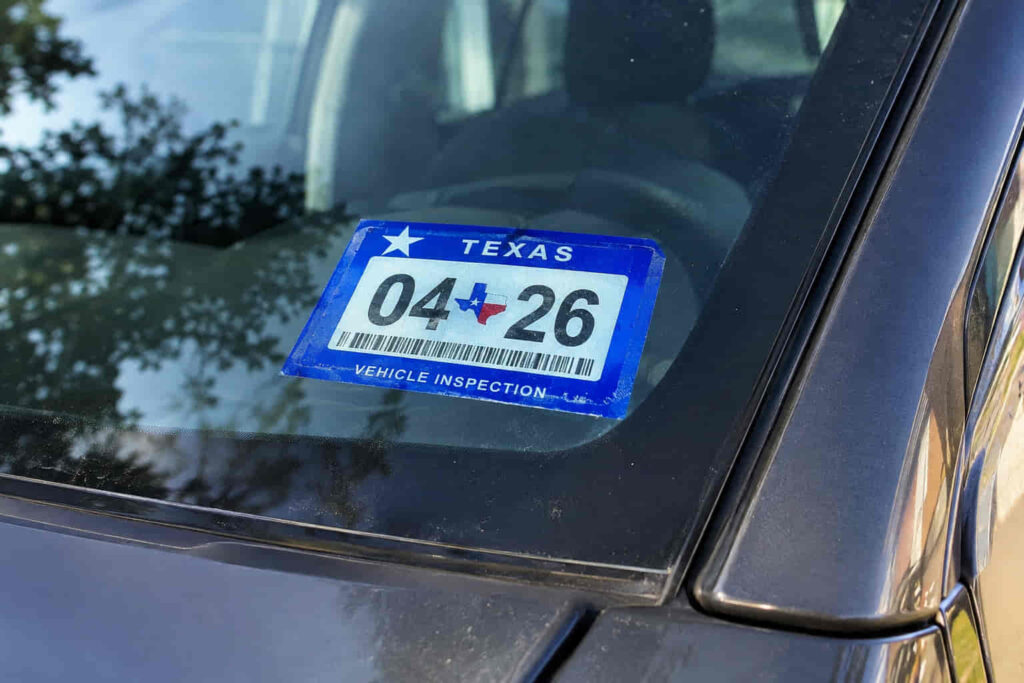
How much is an inspection sticker in Texas in 2026? Most non-commercial vehicle owners no longer need to purchase an annual safety inspection sticker because Texas eliminated mandatory annual safety inspections for these vehicles on January 1, 2025. However, the state generally charges a $7.50 annual inspection program replacement fee during vehicle registration or renewal. Qualifying new vehicles with an initial two-year registration typically pay $16.75 instead of the standard annual replacement fee.
Although annual safety inspections are no longer required for most non-commercial vehicles, emissions testing remains mandatory for eligible vehicles registered in designated Texas counties. Emissions inspection costs vary by location, with maximum station charges generally ranging from $11.50 to $18.50. Vehicle owners may also pay a separate emissions-related fee during registration. These charges are distinct from the inspection program replacement fee and standard vehicle registration costs.
Texas vehicle inspection requirements also differ for commercial vehicles, newly registered vehicles, and vehicles subject to emissions testing. Understanding these distinctions prevents confusion between the discontinued safety inspection requirement, the continuing emissions inspection program, and the windshield registration sticker.
This guide explains Texas inspection sticker costs in 2026, the inspection program replacement fee, emissions testing prices, vehicle eligibility, and the charges drivers should expect when registering or renewing a vehicle.
How Much Does a Texas Inspection Sticker Cost in 2026?
A Texas inspection sticker costs $0 for most non-commercial vehicles in 2026 because the state no longer requires annual safety inspections for these vehicles. Instead, Texas generally collects a $7.50 annual inspection program replacement fee when owners register or renew their vehicles. Qualifying new vehicles receiving an initial two-year registration pay a $16.75 replacement fee. These charges are registration-related fees rather than payments for a physical inspection sticker or an annual safety inspection.
The change took effect on January 1, 2025, under House Bill 3297, which eliminated mandatory annual safety inspections for most non-commercial vehicles registered in Texas. Before this change, drivers had to complete a vehicle safety inspection as part of the registration process. Under the current system, eligible owners no longer need to visit an inspection station solely to complete an annual safety inspection. However, removing the inspection requirement did not eliminate every fee previously associated with the inspection program.
The $7.50 inspection program replacement fee is collected through the vehicle registration process, regardless of whether a standard non-commercial vehicle requires an emissions inspection. For example, an eligible passenger car registered in a Texas county without mandatory emissions testing generally pays the $7.50 replacement fee as part of its annual registration charges without undergoing a routine safety inspection. The vehicle owner must still pay the applicable registration fees, which are separate from the replacement fee.
Vehicles registered in designated emissions-testing counties may have additional costs. Eligible gasoline-powered vehicles must pass the required emissions inspection before registration renewal, even though the annual safety inspection requirement has been removed. Depending on the county, the maximum emissions inspection station charge is generally $11.50 or $18.50, with an additional emissions-related fee collected during registration. These charges apply separately from the $7.50 inspection program replacement fee.
The total cost of complying with Texas vehicle inspection and registration requirements therefore depends on the vehicle’s classification, registration period, and emissions-testing eligibility. Most non-commercial vehicle owners do not pay for an annual safety inspection sticker, but they continue to pay the applicable replacement fee through registration. Commercial vehicles and vehicles subject to emissions testing must follow the inspection requirements that remain in effect for their respective categories.
Does Texas Still Require Vehicle Inspection Stickers in 2026?
Texas no longer requires annual safety inspections for most non-commercial vehicles, but it still requires emissions inspections for eligible vehicles in designated counties and safety inspections for certain commercial vehicles. The statewide change began on January 1, 2025, following the implementation of House Bill 3297. As a result, ordinary passenger vehicle owners generally do not need to obtain an annual safety inspection approval before renewing registration, provided their vehicle is not subject to another applicable inspection requirement.
Before 2025, Texas operated a vehicle inspection program that required covered vehicles to pass safety inspections as part of the registration process. The state had already transitioned away from separate windshield inspection stickers under its Two Steps, One Sticker system, which linked inspection compliance to vehicle registration. The 2025 legislative change removed the annual safety inspection requirement for most non-commercial vehicles rather than eliminating a separate inspection sticker that drivers were still purchasing.
The windshield registration sticker remains part of the Texas vehicle registration system. This sticker is different from a safety inspection sticker because it identifies the vehicle’s registration status rather than certifying completion of a separate annual safety inspection. For example, a driver renewing an eligible passenger vehicle in a county without emissions testing can generally complete the registration process without visiting a vehicle inspection station. The driver still receives the applicable registration documentation and windshield registration sticker after satisfying the registration requirements.
Emissions testing remains mandatory for eligible vehicles registered in designated Texas counties. These inspections evaluate emissions-related compliance and are separate from the discontinued annual safety inspection requirement. As of November 1, 2026, Bexar County joined the Texas emissions inspection program, expanding the geographic coverage of mandatory emissions testing. Owners of qualifying vehicles in affected counties must obtain a passing emissions inspection before completing registration renewal, even though they are exempt from the former annual safety inspection requirement.
Commercial vehicles are another important exception. Certain commercial vehicles remain subject to safety inspection requirements based on their classification and applicable state regulations. These vehicles cannot rely on the non-commercial vehicle exemption simply because Texas eliminated routine safety inspections for most passenger cars. Inspection requirements may also differ according to vehicle weight, registration category, and commercial operating status.
The correct way to determine whether a Texas vehicle still needs inspection is to identify its registration classification and emissions-testing requirements. A typical non-commercial passenger vehicle registered outside an emissions-testing county generally does not require an annual inspection, while an eligible gasoline-powered vehicle in an emissions-testing county must still satisfy the applicable emissions requirements. The distinction helps drivers avoid unnecessary inspection appointments while ensuring they complete the testing required for registration.
What Is the Texas Inspection Program Replacement Fee?
The Texas inspection program replacement fee is a registration-related charge that replaced the former annual safety inspection fee for most non-commercial vehicles. Under House Bill 3297, Texas eliminated mandatory annual safety inspections for these vehicles on January 1, 2025, but retained a fee collected through the vehicle registration process. Most eligible vehicles pay $7.50 annually, while qualifying new vehicles with an initial two-year registration pay $16.75.
The replacement fee is collected when a vehicle owner registers or renews a vehicle through the Texas Department of Motor Vehicles (TxDMV) and the applicable county tax office. Unlike the former safety inspection process, paying this fee does not require a standard non-commercial vehicle to undergo a physical safety inspection. For example, an owner renewing a passenger car registered in a county without mandatory emissions testing generally pays the $7.50 replacement fee alongside the regular registration charges without visiting an inspection station.
The amount depends on the vehicle’s registration category and initial registration period. The standard $7.50 charge applies to most eligible non-commercial vehicles registered annually. A qualifying new vehicle receiving its initial two-year registration is subject to a $16.75 replacement fee instead. Certain qualifying rental vehicles may be subject to a separate $22.25 initial registration fee arrangement. These distinctions reflect the applicable registration rules rather than differences in the price of a physical inspection sticker.
The inspection program replacement fee does not cover emissions testing or standard vehicle registration charges. A driver in a county that requires emissions inspections may need to pay the replacement fee, an emissions inspection station charge, and an additional emissions-related registration fee. The total amount due therefore depends on the vehicle’s registration classification, location, and inspection eligibility. Reviewing the itemized registration charges helps owners distinguish the inspection program replacement fee from other mandatory payments.
How Much Does an Emissions Inspection Cost in Texas?
A Texas emissions inspection generally costs up to $11.50 or $18.50 at the inspection station, depending on the county, with a separate $2.75 emissions-related fee collected during registration. These charges apply to eligible vehicles in counties participating in the state’s emissions inspection program. They are separate from the $7.50 annual inspection program replacement fee that most non-commercial vehicle owners pay through registration.
The maximum emissions inspection station charge is $11.50 in El Paso, Travis, and Williamson counties. In the Dallas–Fort Worth and Houston emissions inspection areas, the maximum station charge is $18.50. Bexar County, which entered the emissions inspection program on November 1, 2026, also has an $18.50 maximum station charge. These amounts represent the applicable inspection station fee limits, not the total cost of vehicle registration.
The additional $2.75 emissions-related fee is collected as part of the registration process rather than paid directly to the inspection station. For example, an eligible vehicle undergoing an emissions inspection in Travis County may incur an $11.50 station charge and a separate $2.75 registration-related emissions fee, producing $14.25 in emissions-related charges before the inspection program replacement fee and ordinary registration costs. In an area with an $18.50 station charge, the corresponding emissions-related total can reach $21.25 under the same fee structure.
Emissions inspection requirements depend on the vehicle’s fuel type, model year, age, and registration county. Eligible gasoline-powered vehicles registered in designated emissions-testing counties must generally pass the required emissions inspection before registration renewal. Fully electric vehicles do not produce tailpipe emissions and are exempt from this testing requirement. Other exemptions and inspection schedules depend on the applicable Texas Department of Public Safety and Texas Commission on Environmental Quality rules.
The total amount a Texas driver pays for inspection-related requirements is not the same as the price of an inspection sticker. Most non-commercial vehicles no longer require annual safety inspections, but eligible vehicles in emissions-testing counties still incur testing charges. Vehicle owners should confirm their county’s emissions requirements and the current authorized inspection fee before visiting a station, then review the separate inspection program replacement and emissions-related fees included in their registration charges.
Read more: nj inspection sticker
Which Texas Vehicles Still Need an Inspection in 2026?
Texas still requires emissions inspections for eligible vehicles in designated counties and safety inspections for certain commercial vehicles, even though annual safety inspections ended for most non-commercial vehicles on January 1, 2025. The inspection requirement depends on the vehicle’s registration classification, fuel type, model year, and county of registration. House Bill 3297 removed the routine safety inspection requirement for most passenger vehicles but did not eliminate the state’s emissions testing program or the safety inspection obligations that apply to commercial vehicles.
Eligible gasoline-powered vehicles registered in Texas emissions-testing counties must continue to pass an emissions inspection before registration renewal. As of November 1, 2026, the program covers 18 counties, including Dallas, Tarrant, Harris, Travis, Williamson, El Paso, and Bexar. These counties participate in the emissions program because of air quality requirements established under state and federal regulations. For example, a qualifying gasoline-powered passenger car registered in Harris County must complete an emissions inspection even though it no longer needs the former annual safety inspection.
Vehicle age and fuel type determine whether emissions testing applies. In general, qualifying gasoline-powered vehicles between two and 24 years old are subject to emissions inspection requirements in participating counties, while newer vehicles receive an initial exemption. Fully electric vehicles are exempt from tailpipe emissions inspections because they do not have gasoline or diesel exhaust emissions. Diesel-powered vehicles are also excluded from the standard gasoline vehicle emissions testing program, although other inspection requirements may apply depending on their commercial classification.
Commercial vehicles represent a separate inspection category. Certain commercial motor vehicles must continue undergoing annual safety inspections under Texas law, even when they operate in counties without emissions testing. These inspections evaluate safety-related components such as braking systems, tires, steering equipment, and lighting according to the applicable commercial vehicle inspection standards. For example, a commercial truck subject to annual safety inspection requirements cannot avoid that inspection simply because a privately owned passenger car no longer needs one.
Most privately owned passenger vehicles registered outside Texas emissions-testing counties do not need a routine annual inspection in 2026. Their owners generally pay the applicable inspection program replacement fee during registration without visiting an inspection station. However, vehicles subject to emissions testing or commercial safety inspection requirements must complete the appropriate inspection before satisfying the relevant registration or operating obligations. Checking the vehicle’s registration category and county requirements prevents unnecessary inspection appointments and helps owners identify the correct compliance procedure.
Where Can You Get a Vehicle Inspection in Texas?
Texas vehicle owners who still need an inspection can visit a Texas Department of Public Safety (DPS) licensed vehicle inspection station authorized to perform the required type of inspection. Eligible vehicles in emissions-testing counties must use a facility equipped and approved to conduct emissions inspections, while commercial vehicles subject to safety inspection requirements need a station authorized for the applicable commercial inspection. Not every inspection station performs every type of test, so confirming the facility’s services before visiting is important.
The Texas DPS maintains inspection station information that drivers can use to locate authorized facilities. Emissions inspection stations are available in counties participating in the emissions program, including major metropolitan areas such as Dallas–Fort Worth, Houston, Austin, El Paso, and San Antonio. For example, a qualifying gasoline-powered vehicle registered in Bexar County must complete the applicable emissions inspection at an authorized facility after the county’s emissions testing requirement took effect on November 1, 2026. Drivers should verify that the selected station performs the emissions test required for their vehicle.
Before visiting an emissions inspection station, owners should confirm the vehicle’s registration county, model year, and fuel type. These details determine whether testing is required and which inspection procedure applies. For vehicles equipped with an onboard diagnostic system, the inspection generally evaluates emissions-related diagnostic information, including malfunction indicator light status and readiness monitors. An illuminated check engine light or incomplete readiness monitors can prevent a vehicle from passing, so addressing known emissions problems before the appointment can reduce the likelihood of an unsuccessful inspection.
Inspection costs depend on the test and location. Authorized emissions inspection stations may charge up to the applicable county-specific maximum, while commercial safety inspection charges follow separate rules. Vehicle owners should confirm the inspection price directly with the facility and distinguish the station’s service charge from registration-related fees collected by the state. A passing inspection result is recorded through the applicable Texas inspection reporting system and used to verify compliance when the vehicle is registered or renewed.
Drivers whose non-commercial vehicles are exempt from emissions testing generally do not need to visit an inspection station before renewing Texas registration. The inspection program replacement fee is collected through registration rather than through a physical safety inspection. For vehicles that still require testing, selecting an authorized station, confirming the applicable inspection type, and resolving known vehicle problems beforehand helps complete the process efficiently and avoids unnecessary inspection expenses.
How Much Do You Pay When Renewing Vehicle Registration in Texas?
Renewing a standard passenger vehicle registration in Texas generally includes a $50.75 base registration fee, a $7.50 inspection program replacement fee, and applicable local and administrative charges. Vehicle owners in designated emissions-testing counties may also pay an emissions-related registration fee and the cost of a required emissions inspection. The final registration amount depends on the vehicle’s classification, registration county, and applicable fees rather than the former annual safety inspection sticker requirement.
The $50.75 base registration fee applies to standard passenger vehicles and light trucks within the applicable weight classification. Texas counties may collect additional local fees, including road and bridge or transportation-related charges authorized under state law. Registration transactions may also include processing and handling charges. For example, a passenger car registered in a county with a $10 local fee would have a $68.25 subtotal when combining the $50.75 base registration fee, $7.50 inspection program replacement fee, and $10 local charge. This example excludes other applicable administrative charges, taxes, and emissions-related fees.
The inspection program replacement fee is collected during registration renewal even when a non-commercial vehicle no longer needs an annual safety inspection. This arrangement began on January 1, 2025, when Texas eliminated routine safety inspections for most non-commercial vehicles under House Bill 3297. The $7.50 fee therefore represents a registration-related charge rather than payment for a physical inspection or a separate windshield inspection sticker. Paying the fee does not replace an emissions inspection when the vehicle is subject to mandatory emissions testing.
Vehicles registered in participating emissions-testing counties have additional requirements. Eligible gasoline-powered vehicles must pass an emissions inspection before completing registration renewal, and owners pay the applicable inspection station charge separately from registration. For example, a qualifying vehicle in Travis County may pay up to $11.50 at an authorized emissions inspection station, along with a $2.75 emissions-related fee collected during registration. These amounts are added to the applicable registration charges and the inspection program replacement fee. In counties with an $18.50 emissions inspection station maximum, the testing expense can be higher.
The amount shown on a Texas registration renewal notice is not the price of an inspection sticker. It combines the charges associated with registering the vehicle, including the inspection program replacement fee and any other applicable state or local fees. Vehicle owners should review their renewal notice or the Texas Department of Motor Vehicles registration fee information to determine the exact amount due. This distinction is especially important when comparing registration costs between counties with different local fees and emissions inspection requirements.
Do New Cars in Texas Have to Pay an Inspection Fee?
Qualifying new non-commercial vehicles in Texas generally pay a $16.75 inspection program replacement fee when receiving their initial two-year registration, even though they no longer require an annual safety inspection. This fee is collected through the registration process and replaces the former safety inspection-related charge. It does not mean the vehicle must undergo a physical inspection or purchase a separate inspection sticker before registration.
The $16.75 fee applies to qualifying new vehicles registered for an initial two-year period under Texas registration rules. Eligibility depends on the vehicle’s new-vehicle status and registration history, rather than simply whether the owner recently purchased it. For example, a newly purchased vehicle that has never been registered and qualifies for the initial two-year registration period may be assessed the $16.75 replacement fee. A previously registered used vehicle generally follows the applicable annual registration fee structure instead.
The initial two-year replacement fee differs from the standard $7.50 annual fee because it applies to a specific registration period and vehicle category. After the initial registration period ends, the vehicle generally transitions to the applicable annual registration process, including the standard inspection program replacement fee. Certain qualifying rental vehicles may be subject to a separate $22.25 initial registration fee arrangement under Texas rules. Owners should confirm the correct classification because the amount charged depends on the registration category and statutory fee provisions.
New vehicles may also qualify for an initial exemption from emissions testing. Texas generally exempts qualifying gasoline-powered vehicles during their first two years from the emissions inspection requirement, even when they are registered in participating emissions-testing counties. Once the exemption period ends, an eligible vehicle must comply with the emissions testing requirements applicable to its registration county and model year. For example, a qualifying new gasoline-powered car registered in Harris County may initially be exempt from emissions testing but become subject to the county’s inspection program after the new-vehicle exemption expires.
The inspection-related cost for a new Texas vehicle depends on its initial registration period, vehicle classification, and emissions testing eligibility. Most qualifying new non-commercial vehicles do not need a safety inspection before registration, but they still pay the applicable inspection program replacement fee. The owner must also pay standard registration charges and any other fees required for the transaction. Checking the vehicle’s registration eligibility and the current Texas DMV fee schedule helps distinguish the initial two-year replacement fee from ordinary annual registration costs.
Do You Need to Replace an Old Texas Inspection Sticker?
You do not need to replace an old Texas safety inspection sticker in 2026 because Texas no longer issues separate windshield stickers for routine vehicle safety inspections. The state discontinued individual inspection stickers in March 2015 when it introduced the Two Steps, One Sticker program, which combined inspection verification with vehicle registration. Since January 1, 2025, Texas has also eliminated annual safety inspection requirements for most non-commercial vehicles under House Bill 3297. As a result, eligible passenger vehicle owners do not need to purchase or replace a separate safety inspection sticker.
The Texas windshield registration sticker remains a separate requirement. Unlike the former inspection sticker, the registration sticker displays information associated with the vehicle’s registration and expiration period. Vehicle owners must continue renewing their registration according to the applicable Texas Department of Motor Vehicles (TxDMV) requirements. For example, a driver whose passenger vehicle registration expires in December 2026 must complete the registration renewal process even though the vehicle no longer requires an annual safety inspection. The inspection program replacement fee is included in the applicable registration charges rather than collected through the purchase of a separate inspection sticker.
Vehicles registered in designated emissions-testing counties must still satisfy applicable emissions inspection requirements before registration renewal. A passing emissions inspection is recorded electronically through the state’s inspection reporting system, allowing registration authorities to verify compliance without issuing a separate windshield inspection sticker. For example, an eligible gasoline-powered vehicle registered in Harris County must pass its required emissions inspection before renewal, while a comparable vehicle registered in a county without mandatory emissions testing generally does not need to visit an inspection station. Both vehicles remain subject to their applicable registration requirements.
If a Texas windshield registration sticker is lost, damaged, or removed during windshield replacement, the owner should follow the TxDMV replacement procedure rather than request a vehicle inspection sticker. A replacement registration sticker addresses the missing proof of registration and does not establish a new inspection requirement. Owners should contact their county tax assessor-collector’s office or consult TxDMV instructions to determine the documents and replacement fees applicable to their situation.
The key distinction is that Texas no longer requires a separate annual safety inspection sticker for most non-commercial vehicles, but vehicle registration and qualifying emissions inspections remain mandatory. Drivers should check their registration expiration date, confirm whether their county requires emissions testing, and pay the applicable registration-related fees. Understanding these separate requirements prevents unnecessary inspection appointments and avoids confusion between an outdated safety inspection sticker and the current Texas windshield registration sticker.