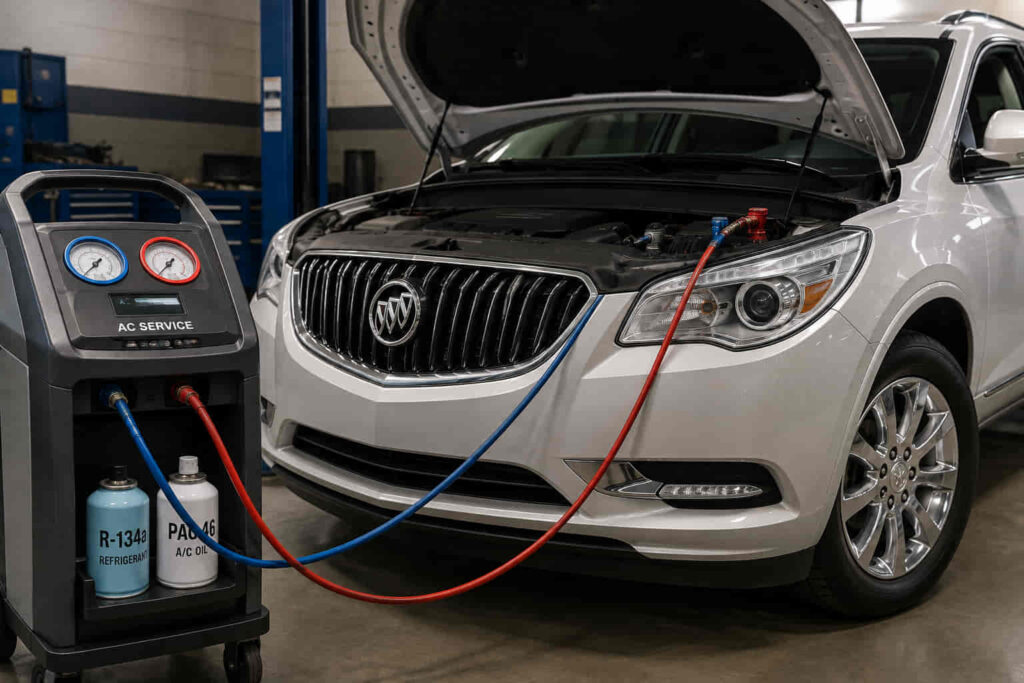
A Buick Enclave AC recharge restores the refrigerant level inside the air conditioning system when the vehicle loses cooling performance due to low refrigerant or a refrigerant leak. The recharge process can help restore cold air, but it is only effective when the rest of the AC system, including the compressor, condenser, evaporator, and related components, is operating correctly.
The Buick Enclave uses a complex HVAC system designed to cool a large three-row SUV cabin. Because the vehicle has more interior space than smaller vehicles, the air conditioning system must efficiently manage refrigerant pressure and airflow to maintain comfortable temperatures for all passengers.
Many owners search for Buick Enclave AC Recharge information when they notice symptoms such as weak airflow, warm air from the vents, inconsistent cooling, or longer cooling times. However, low refrigerant is usually a sign that the system has lost refrigerant through a leak rather than simply using it up over time.
Understanding the correct refrigerant type, recharge procedure, and possible causes of AC problems helps prevent unnecessary repairs. Adding refrigerant without identifying the underlying issue can temporarily improve cooling while allowing the original problem to continue.
This guide explains Buick Enclave AC recharge requirements, refrigerant information, signs of low refrigerant, recharge steps, service costs, and what to check when the AC system still does not cool properly after recharge.
Does Buick Enclave Need an AC Recharge?
A Buick Enclave needs an AC recharge when the air conditioning system has lost enough refrigerant to reduce cooling performance, but low refrigerant is usually caused by a leak rather than normal usage. Unlike engine oil or other fluids that are regularly replaced during maintenance, refrigerant is designed to remain inside a sealed AC system throughout the vehicle’s operation.
The air conditioning system works by circulating refrigerant between the compressor, condenser, expansion system, and evaporator. This process removes heat from the cabin air and releases it outside the vehicle. When the refrigerant level becomes too low, the system cannot create the pressure difference required for effective cooling.
Common signs that a Buick Enclave may need an AC recharge include air that feels warmer than normal, cooling performance that decreases over time, longer periods before the cabin becomes comfortable, or inconsistent temperature output from the vents. However, these symptoms can also be caused by other issues, such as a failing compressor, electrical problems, blocked airflow, or a refrigerant leak.
A proper diagnosis should happen before adding refrigerant. Simply recharging the system without finding the source of refrigerant loss may only provide temporary cooling and allow the underlying problem to continue.
For example, a Buick Enclave that blows cold air for several weeks after a recharge but gradually becomes warm again may have a slow refrigerant leak that requires inspection rather than another recharge.
What Refrigerant Does Buick Enclave Use?
The refrigerant used by a Buick Enclave depends on the model year and the specific HVAC system installed in the vehicle. Earlier Buick Enclave models commonly use R-134a refrigerant, while newer vehicles may use R-1234yf refrigerant as automotive manufacturers transition toward lower global warming potential refrigerants.
The refrigerant type is important because each system is designed around specific pressure characteristics, components, and service procedures. Using the incorrect refrigerant can affect cooling performance, damage AC components, and create safety concerns during service.
The first-generation Buick Enclave, produced from 2008 through 2017, was commonly equipped with AC systems using R-134a. Later vehicle production adopted newer refrigerant standards depending on the model year and manufacturing requirements.
Owners should confirm the correct refrigerant type through the vehicle information label, owner’s manual, or manufacturer service information before performing any AC service. The label under the hood typically identifies the refrigerant type and recommended service specifications.
The amount of refrigerant required also varies by model configuration. A Buick Enclave with additional rear climate control may require a different refrigerant capacity compared with a vehicle equipped with a simpler HVAC configuration.
For example, using a recharge kit designed for the wrong refrigerant type can result in poor cooling performance even if the system appears to accept the added refrigerant.
Read more: Buick Encore Turbo Recall
What Are the Signs Buick Enclave AC Needs a Recharge?
The most common signs that a Buick Enclave AC system may need a recharge include reduced cooling performance, warm air from the vents, inconsistent temperatures, and longer cooling times. These symptoms occur because insufficient refrigerant prevents the air conditioning system from completing the heat transfer process effectively.
When refrigerant levels drop, the evaporator cannot absorb enough heat from the cabin air, causing the system to produce air that feels less cold. In a large SUV like the Buick Enclave, this problem can become more noticeable because the AC system must cool a larger interior space compared with smaller vehicles.
One of the earliest signs is a gradual decrease in cooling ability. The air conditioning may still produce slightly cool air, but the cabin takes much longer to reach a comfortable temperature. Some drivers may notice that the front vents feel colder than the rear vents, especially on models equipped with rear climate control.
Unusual compressor behavior can also indicate refrigerant problems. The compressor may cycle on and off more frequently because the system pressure is outside the recommended range. However, compressor cycling issues can also result from electrical problems or faulty sensors, so proper diagnosis is necessary.
Visible refrigerant leaks, oily residue around AC components, or repeated loss of cooling after a recharge indicate that the system may have a leak. Adding more refrigerant without repairing the leak will not provide a long-term solution.
For example, if a Buick Enclave receives an AC recharge in early summer but loses cooling performance again within a few months, the system likely requires leak detection rather than another refrigerant refill.
How Do You Recharge AC on a Buick Enclave?
Recharging the AC system on a Buick Enclave involves checking the system condition, confirming the correct refrigerant type, measuring pressure, and adding the proper amount of refrigerant when needed. The process requires accuracy because both undercharging and overcharging can reduce cooling performance or damage AC components.
Before adding refrigerant, the system should be inspected to determine whether low refrigerant is actually the problem. A technician typically checks AC pressure readings, compressor operation, visible leaks, and overall system performance.
The recharge process begins by identifying the correct service port and connecting the appropriate equipment. Buick Enclave AC systems are designed with specific pressure requirements, so refrigerant should be added according to manufacturer specifications rather than estimated amounts.
After refrigerant is added, the system should be tested to confirm that cooling performance has improved. Temperature output, compressor operation, and pressure readings help determine whether the recharge solved the issue or whether additional repairs are required.
While many aftermarket recharge kits are available for vehicle owners, modern AC systems require careful handling because incorrect refrigerant levels can create additional problems. A system that is significantly low on refrigerant may also require leak testing before recharge.
For example, a Buick Enclave with a small refrigerant leak may temporarily produce cold air after a recharge, but the cooling performance will decline again if the source of the leak is not repaired.
Where Is the AC Recharge Port on a Buick Enclave?
The AC recharge port on a Buick Enclave is located on the low-pressure side of the air conditioning system, which is the service point used for adding refrigerant during an AC recharge procedure. The exact location can vary slightly depending on model year and engine configuration, but it is generally found in the engine compartment along the refrigerant lines between the evaporator and compressor.
The low-pressure service port is designed specifically for recharge equipment because it operates at a lower pressure level compared with the high-pressure side of the system. Using the correct port is important because connecting equipment to the wrong side can create inaccurate pressure readings and increase the risk of system damage.
The service port can usually be identified by its smaller service fitting and protective cap. The cap often has markings related to the AC system, but owners should always confirm the correct port before connecting any recharge equipment.
Finding the correct port is only one part of the recharge process. The refrigerant type, pressure measurement, and system condition are equally important because adding refrigerant to a damaged system may hide the original problem rather than fix it.
For example, if a Buick Enclave has low refrigerant because of a leaking condenser or damaged AC line, adding refrigerant through the low-pressure port may restore cooling temporarily, but the system will lose refrigerant again without a proper repair.
How Much Does Buick Enclave AC Recharge Cost?
The cost of a Buick Enclave AC recharge depends on whether the service only requires refrigerant replacement or whether additional repairs are needed to fix leaks or damaged components. A simple recharge is usually less expensive than a complete AC repair because it only addresses refrigerant levels.
A basic recharge service may include refrigerant, pressure testing, and system inspection. The final cost depends on the refrigerant type, the amount required, labor rates, and whether the vehicle needs additional diagnostic work.
A professional AC service may cost more because technicians can identify leaks, measure system pressure, and verify compressor operation. This approach is often more effective when the vehicle repeatedly loses cooling performance after previous recharge attempts.
DIY recharge kits may appear cheaper, but they do not always identify the reason refrigerant levels are low. If the system has a leak, adding more refrigerant without repairing the leak can result in repeated expenses and possible damage to AC components.
The Buick Enclave’s larger cabin and more complex HVAC system can also influence service requirements, especially on models equipped with rear climate control.
For example, a Buick Enclave that only needs a refrigerant refill may require a relatively simple service, while a vehicle with a leaking condenser or failing compressor may require a much larger repair investment.
Why Is Buick Enclave AC Still Not Cold After Recharge?
A Buick Enclave AC system that remains warm after a recharge usually has another problem beyond low refrigerant levels. Recharge restores refrigerant quantity, but it cannot repair mechanical failures, electrical problems, or leaks within the air conditioning system.
A refrigerant leak is one of the most common reasons cooling performance returns temporarily and then disappears. Leaks can occur in refrigerant lines, seals, the condenser, evaporator, or other AC components. Without repairing the source of the leak, the system will continue losing refrigerant.
The AC compressor is another important component that affects cooling performance. The compressor creates the pressure difference needed to circulate refrigerant, and a failing compressor may prevent the system from producing cold air even when refrigerant levels are correct.
Other possible causes include faulty pressure sensors, electrical issues, blocked airflow through the condenser, problems with the HVAC control system, or a malfunctioning expansion component.
Proper diagnosis is necessary because adding more refrigerant to a system that already has the correct amount can create excessive pressure and reduce performance.
For example, if a Buick Enclave receives an AC recharge but still blows warm air, the next step should be checking system pressures, compressor operation, and possible leaks instead of immediately adding more refrigerant.
How Can You Maintain Buick Enclave AC Performance?
Maintaining Buick Enclave AC performance requires regular inspection, proper system operation, and early attention to cooling problems. A well-maintained air conditioning system can provide consistent cooling performance and reduce the likelihood of expensive component failures.
Regular vehicle maintenance helps protect AC-related components because the system depends on proper engine operation, electrical performance, and refrigerant circulation. Keeping the cabin air filter clean also improves airflow and reduces unnecessary strain on the HVAC system.
Drivers should address cooling changes early rather than waiting until the AC completely stops working. A gradual decrease in cooling ability may indicate a small refrigerant leak or another developing issue that can become more expensive if ignored.
Using the AC system periodically, even during cooler months, can also help maintain system operation because refrigerant circulation helps lubricate certain AC components.
For example, a Buick Enclave owner who notices slightly weaker cooling during summer can inspect the system early, potentially identifying a small issue before it develops into compressor failure or a major repair.