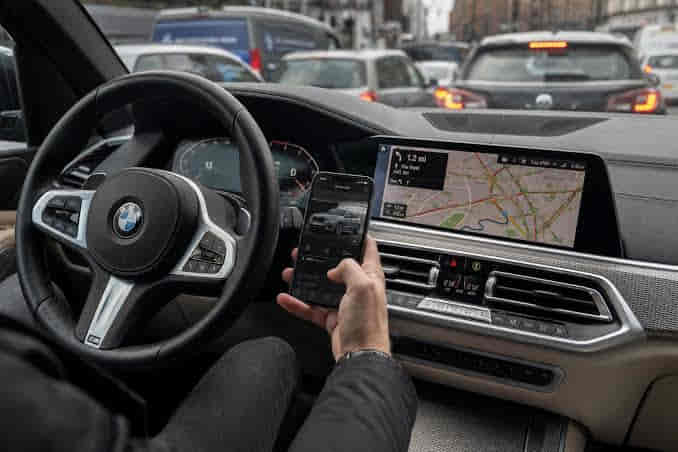
BMW Connected Package Professional is a bundle of digital services within the BMW ConnectedDrive ecosystem that provides eligible vehicles with connected functions through the vehicle and BMW’s digital services. The exact functions available should not be assumed to be identical for every BMW because package content, service availability, vehicle compatibility, and subscription terms can differ by model, equipment, software configuration, and market.
There are 5 key things to know about BMW Connected Package Professional: what the package is, which connected services it includes, how those services work with the vehicle, which BMWs are compatible, and how service periods or subscriptions affect access. These distinctions are important because BMW Connected Package Professional is not the same entity as BMW ConnectedDrive. ConnectedDrive represents the broader connected-services environment, while Connected Package Professional groups eligible services within that ecosystem.
This guide explains BMW Connected Package Professional from an ownership perspective, including its functions, compatibility, activation status, expiration, and value. It also explains how to determine what is actually available for a specific BMW rather than applying one package description to every model and market.
What Are the 5 Things to Know About BMW Connected Package Professional?
The 5 main things to know about BMW Connected Package Professional are its purpose, included connected services, integration with the vehicle, compatibility, and service or subscription status. These elements determine what the package actually provides to a BMW owner. The package should not be treated as a single standalone feature because it combines eligible digital services that operate within BMW’s broader connected-services environment.
The first point is that BMW Connected Package Professional functions as a service bundle rather than one individual vehicle function. This distinction matters because a driver may interact with navigation, traffic, remote, or other connected functions without opening something specifically labeled as the package each time. The package represents access to eligible services, while the individual functions appear through the interfaces and systems designed for them.
The second point concerns what is included. BMW Connected Package Professional should not be assumed to contain an identical set of services on every vehicle. Available functions can depend on the vehicle configuration, market, model year, software environment, and package offering associated with that BMW. A service mentioned for one vehicle or region therefore does not establish that every Connected Package Professional subscription includes the same function.
The third point is vehicle integration. Connected services depend on communication between the BMW, its digital systems, and the relevant online service infrastructure. Depending on the function and compatible vehicle, information may be presented through BMW iDrive, navigation-related interfaces, or BMW’s associated digital environment. The owner experiences the individual function, while Connected Package Professional provides the applicable service entitlement behind that functionality.
The fourth point is compatibility. A BMW model being capable of connected functions does not automatically mean that every Connected Package Professional service is available on that vehicle. Compatibility can depend on installed equipment, software, production specification, iDrive generation, market, and service availability. Two BMWs with the same model name can therefore have different connected-service options if their configurations or production periods differ.
The fifth point is service status. A compatible function and an active function are not necessarily the same thing. A vehicle can technically support a connected service while access depends on an active service period or applicable entitlement. This is why owners investigating a missing feature should check both vehicle compatibility and the current status of the relevant digital service rather than assuming the hardware has failed.
Together, these 5 factors provide the context needed to understand BMW Connected Package Professional accurately. The useful question is not simply whether a BMW “has ConnectedDrive,” but which Connected Package Professional services are available, compatible, and active for that specific vehicle. This vehicle-specific approach prevents package descriptions from one BMW or market from being generalized across the entire BMW range.
What Is BMW Connected Package Professional?
BMW Connected Package Professional is a bundled digital-services offering within BMW’s ConnectedDrive environment rather than a separate vehicle system. Its purpose is to provide access to eligible connected functions associated with a compatible BMW. This relationship places the package below ConnectedDrive in the entity hierarchy: ConnectedDrive represents the broader digital ecosystem, while Connected Package Professional represents a defined collection of services offered within that ecosystem.
This distinction explains why BMW Connected Package Professional and BMW ConnectedDrive should not be used as interchangeable terms. ConnectedDrive can encompass multiple digital functions, services, applications, and connectivity-related capabilities. Connected Package Professional refers more specifically to a package through which certain eligible services are made available to a particular vehicle. A BMW can therefore participate in the ConnectedDrive ecosystem without every ConnectedDrive function necessarily belonging to Connected Package Professional.
The package also should not be understood as additional physical hardware installed as one component in the vehicle. Its value comes primarily from access to connected functionality supported by the vehicle’s existing compatible systems and BMW’s digital-service infrastructure. The vehicle configuration determines what can be supported, while the applicable service entitlement determines which eligible connected functions are available to the owner.
From an ownership perspective, this distinction becomes important when comparing two BMWs or checking a used vehicle. Seeing ConnectedDrive functionality does not by itself confirm the exact Connected Package Professional content or its current service status. The specific vehicle and its active digital services provide the relevant context.
What Does BMW Connected Package Professional Include?
BMW Connected Package Professional can include multiple connected functions, but the exact services should be verified for the specific vehicle and market rather than treated as a universal package list. Navigation-related online services, traffic information, connected information functions, and other digital services can form part of BMW’s connected-service offerings, but availability is determined by the package definition applicable to the vehicle.
Navigation-related connectivity illustrates how the package can add functionality without replacing the vehicle’s navigation system itself. A compatible connected service can supply online information that enhances an existing navigation function, while the underlying navigation hardware and software remain part of the vehicle. The connected service and the physical or built-in vehicle feature are therefore related entities but not the same entity.
Real-time information follows a similar mechanism. Connected functions can use external data to provide information that would not remain current if it depended solely on data stored permanently in the vehicle. This is why connectivity and active service availability matter: a built-in interface may remain present even when an online information service associated with it is unavailable or no longer active.
Some functions can also interact with BMW’s broader digital environment outside the immediate in-car interface when the vehicle and service support that integration. However, My BMW App functionality, Remote Services, navigation services, and Connected Package Professional should not automatically be treated as one package merely because they belong to the broader BMW digital ecosystem. Each service needs to be associated with the actual package and vehicle before it is described as included.
For this reason, the most accurate Connected Package Professional feature list is the service list attached to the individual BMW’s package offering. A generic online list is useful for understanding the types of connected functions BMW offers, but it cannot establish the exact entitlement of every BMW across different production years and markets. Vehicle-specific package information should determine which services an owner actually receives.
How Does BMW Connected Package Professional Work?
BMW Connected Package Professional works by giving an eligible vehicle access to compatible online services that integrate with BMW’s in-car and digital environment. The package itself is not a separate application that performs every function. Instead, it provides the applicable service entitlement, while individual connected functions operate through the interfaces and vehicle systems designed to use them.
The process begins with vehicle compatibility. A BMW must have the hardware, software, and connectivity required by a particular digital service before that service can operate. An active package cannot create a hardware capability that the vehicle does not support. This is why Connected Package Professional should be understood as the service layer of the experience rather than as a physical upgrade to the vehicle.
Connectivity provides the link between the compatible BMW and online information used by individual services. A navigation-related connected function, for example, can receive current external information and display it through the vehicle’s navigation or iDrive interface. The driver interacts with the resulting function inside the vehicle, while the data connection and service entitlement operate behind that interface. This relationship explains why an installed navigation system and an active connected navigation service are related but separate components.
BMW’s wider digital environment can provide additional interaction points when a particular service supports them. BMW ID, iDrive, and compatible BMW digital applications can help associate a driver, vehicle, and supported services, but they should not be described as components of Connected Package Professional unless the specific package definition establishes that relationship. The broader BMW digital ecosystem contains multiple entities whose functions can overlap without being identical.
Service entitlement is the final part of the mechanism. A vehicle can possess the technical capability for a connected function while the corresponding service is inactive or unavailable. When troubleshooting a missing Connected Package Professional feature, both sides of this relationship matter: the BMW must support the function and the relevant service must be available to that vehicle. Checking only the vehicle hardware or only the subscription status can therefore provide an incomplete explanation.
Which BMW Models Support Connected Package Professional?
BMW Connected Package Professional compatibility depends on the specific vehicle configuration, model year, installed technology, software environment, and market rather than the BMW model name alone. A model that supports ConnectedDrive functions should not automatically be classified as supporting every service associated with Connected Package Professional.
Model year matters because BMW’s digital architecture changes over time. Different production periods can use different iDrive generations, connectivity technologies, and software configurations. As a result, a Connected Package Professional service available for a newer version of a BMW model may not necessarily exist in the same form on an older version. The reverse assumption is also unreliable because service offerings themselves can change.
Installed equipment creates another compatibility boundary. Connected services rely on vehicle systems capable of receiving, processing, or displaying the relevant information. A subscription or service entitlement does not substitute for required vehicle equipment. Two vehicles carrying the same BMW model designation can consequently have different connected capabilities when their factory specifications differ.
Market availability also affects support. BMW digital-service offerings can differ between countries or regions because service infrastructure, commercial packages, vehicle specifications, and availability are market-dependent. A Connected Package Professional description from one country should therefore not be treated as proof that an owner in another market receives an identical package.
For this reason, a universal list of supported BMW models is less reliable than vehicle-specific verification. The correct compatibility question is whether Connected Package Professional is offered for the exact BMW being checked, with its production specification and market taken into account. This approach connects package availability to the actual vehicle rather than generalizing from another BMW with a similar iDrive or ConnectedDrive interface.
How Can You Check If Your BMW Has Connected Package Professional?
You can determine whether your BMW has Connected Package Professional by checking the connected-service information associated with the specific vehicle and confirming that the package or relevant services are currently active. This verification should establish both availability and status because a compatible service is not necessarily an active service.
Vehicle-specific digital service information is more reliable than identifying the package from an icon or menu item alone. An interface can remain part of the vehicle’s software even when the online service associated with it is inactive, expired, or unavailable for that configuration. The presence of a navigation or connected-services menu therefore does not by itself prove that Connected Package Professional is currently active.
The owner’s BMW digital account or applicable vehicle-service information can provide the necessary context where supported. The objective is to associate the exact vehicle with its available or active connected services rather than searching only by model name. This becomes especially important with a used BMW because the vehicle’s hardware may remain unchanged while the status of time-limited digital services can differ from when the car was originally delivered.
A useful verification also distinguishes package status from individual service functionality. If one connected feature is unavailable, that does not automatically prove that the entire package is absent. The individual function can have its own compatibility, connectivity, software, or service conditions. Confirming the package entitlement first and then identifying the affected service provides a more precise troubleshooting path.
The key distinction is therefore support versus activation. Support means the vehicle has the necessary compatibility for the applicable service; activation means the service entitlement is currently available for use. BMW Connected Package Professional should be considered active only after the vehicle-specific service information confirms the applicable package or connected-service status.
Does BMW Connected Package Professional Require a Subscription?
BMW Connected Package Professional can be provided for a defined service period, and continued access to eligible functions can depend on the subscription or service entitlement associated with the specific vehicle and market. The package should not be described as permanently free or universally paid because BMW can provide connected services under different commercial terms depending on the vehicle, production period, market, and applicable service offering.
A service period determines how long an eligible BMW can access the connected functions covered by that entitlement. In some ownership situations, access may already be active when the vehicle is delivered or acquired, which can make the services appear to be standard vehicle features. However, an initially included service period and permanent access are different concepts. The relevant question is whether the service has an expiration date and whether BMW offers continued access after that date for the specific vehicle.
Subscription status also should be separated from vehicle compatibility. A compatible BMW has the technical configuration required to support an applicable connected service, while an active entitlement determines whether that service is currently available under the relevant package terms. Purchasing or renewing a digital service cannot add unsupported hardware to the vehicle. Conversely, having compatible hardware does not establish that every connected function remains active indefinitely.
This distinction is particularly important when evaluating a used BMW. The vehicle may still contain the same iDrive system, navigation interface, and connectivity-related hardware it had when new, while the digital-service entitlement may have changed or expired. A buyer should therefore verify the current Connected Package Professional or individual service status for the exact vehicle instead of assuming that features listed in an older sales description remain active.
The applicable cost and renewal period should also be checked for the individual BMW rather than generalized across the entire brand. BMW Connected Package Professional pricing, availability, and service duration should be treated as vehicle- and market-specific information. This prevents a subscription price or term associated with one market from being presented as a universal BMW Connected Package Professional cost.
What Happens When BMW Connected Package Professional Expires?
When an applicable BMW Connected Package Professional service period expires, connected functions that depend on that entitlement may become unavailable unless continued access is included or the relevant services can be renewed. Expiration affects the digital-service entitlement rather than automatically disabling the BMW’s underlying physical systems.
This distinction is important for navigation. A vehicle can have a built-in navigation system while additional online functions associated with navigation depend on an active connected service. If an applicable service expires, the loss of that online functionality should not automatically be described as removal of the entire navigation system. The built-in vehicle feature and the connected data service are separate entities even when they operate together during normal use.
The same principle applies to other online functions. A menu, interface, or compatible vehicle component can remain present after a service entitlement changes because the physical and software architecture has not necessarily been removed. What changes is access to the online function covered by the expired entitlement. This explains why an owner can still see a feature-related interface even when the corresponding connected service no longer operates as expected.
An expired package also does not establish that every connected function in the vehicle will stop simultaneously. Different digital functions can have different entitlements, availability conditions, or package relationships. The correct troubleshooting sequence is therefore to identify the unavailable function, determine which service provides it, and then check the status of that service for the vehicle.
Where renewal is offered, restoring the relevant entitlement can restore access to supported connected functions without adding new physical equipment. However, renewal availability should be confirmed for the exact BMW and market because an older service or package may not remain commercially available in the same form indefinitely. Service expiration is therefore an entitlement issue first, not evidence that the vehicle’s connected hardware has failed.
What Is the Difference Between BMW Connected Package Professional and ConnectedDrive?
BMW ConnectedDrive is the broader ecosystem of BMW digital and connected services, while BMW Connected Package Professional is a package that groups eligible services within that ecosystem. The two terms are related, but they describe different levels of BMW’s digital-service structure and should not be used as synonyms.
ConnectedDrive functions as the broader context connecting compatible BMW vehicles with digital services and online functionality. Within that environment, individual services can address specific functions such as connected information, navigation-related data, or other supported digital features. Packages can then combine eligible services under a particular offering. Connected Package Professional belongs at this package level rather than representing the entire ConnectedDrive environment.
This hierarchy explains why a BMW can have ConnectedDrive functionality without necessarily having an active Connected Package Professional entitlement. It also explains why the presence of one connected function does not prove that every service associated with a particular package is available. ConnectedDrive describes the ecosystem; Connected Package Professional describes a specific service bundle within that ecosystem.
The distinction becomes especially useful when checking compatibility, subscriptions, or missing features. Searching only for whether a BMW “has ConnectedDrive” answers a broader question than determining whether Connected Package Professional is active. The latter requires vehicle-specific package or service information because package content and entitlement status provide a more precise description of what the owner can currently use.
For BMW owners comparing digital services, treating ConnectedDrive, Connected Package Professional, and individual connected functions as separate but related entities produces the clearest structure. ConnectedDrive provides the ecosystem, the package organizes eligible services, and the individual services provide the functions experienced by the driver. This relationship makes it possible to identify whether an issue concerns vehicle compatibility, package entitlement, or one specific connected service.
Is BMW Connected Package Professional Worth It?
BMW Connected Package Professional is worth it when its included connected services match functions the driver uses regularly and the specific vehicle supports those services. Its value should be judged from the active functions available for the individual BMW rather than from the package name alone. A driver who regularly depends on BMW’s connected navigation and online vehicle services can receive more practical value from the package than an owner who rarely uses those functions or relies primarily on alternatives outside BMW’s digital ecosystem.
Usage frequency is the first factor that determines value. Connected functionality is most useful when it improves tasks the driver already performs frequently. Navigation-related online information, for example, has greater value for someone who drives in changing traffic conditions and regularly uses the vehicle’s built-in navigation environment. A feature used on most trips provides a different value proposition from a digital service that remains inactive even though it is included in the package.
Compatibility is equally important because a subscription cannot provide functionality that the vehicle does not technically support. The BMW’s production specification, installed systems, software environment, and market determine which eligible connected services can operate. This means two owners evaluating Connected Package Professional can reach different conclusions even when they drive vehicles with the same model name. The actual service set available to each vehicle is more important than a generic description of the package.
Existing alternatives also affect whether the package provides enough additional value. A driver who already performs navigation, traffic checking, or other digital tasks through another compatible platform should compare those functions with the BMW services included for the vehicle. The correct comparison is not simply “connected versus not connected.” It is whether BMW Connected Package Professional provides functionality, integration, or convenience that the driver will actually use beyond the alternatives already available.
Renewal cost should be evaluated only after the applicable services have been identified. A package with several compatible functions can still offer poor value to an owner who uses only one of them, while a smaller set of frequently used services can justify continued access for another driver. The useful value calculation is therefore based on active services, usage frequency, available alternatives, and the renewal terms for the exact vehicle. Package size alone does not determine value.
BMW owners should also verify service status before paying for renewal because an unavailable function is not always caused by an expired Connected Package Professional entitlement. Vehicle compatibility, connectivity, software conditions, individual service availability, and account or entitlement status can affect connected functionality. Identifying the affected service first prevents a package renewal from being treated as the solution to every connected-feature problem.
For most owners considering BMW Connected Package Professional, the decision should begin with the individual vehicle rather than with a generic recommendation. Check which services are available for the BMW, confirm which are currently active, identify the functions you use regularly, and compare that utility with the applicable renewal terms. Connected Package Professional provides the strongest value when its connected services are both compatible with the vehicle and consistently useful to the driver.