The main difference between 10-ply and 14-ply tires is their load-carrying rating and the heavy-duty capability associated with that rating. A 14-ply-rated tire is designed to handle higher-load applications than a comparable 10-ply-rated tire, while 10-ply tires are sufficient for many pickup trucks, trailers, and towing applications. However, a higher ply rating does not automatically make a tire better for every vehicle.
Modern 10-ply and 14-ply tires do not necessarily contain 10 or 14 physical layers. Ply rating originated as a way to describe tire strength based on older construction methods. Today, manufacturers use stronger materials and modern tire designs, so load range, load index, maximum load capacity, and inflation specifications provide more useful information when choosing a tire.
Choosing between 10-ply and 14-ply tires therefore depends on the vehicle’s specifications, actual load, towing or hauling requirements, wheel compatibility, and operating conditions. This comparison explains how the two ratings differ in load capacity, tire pressure, durability, towing performance, ride quality, fuel economy, and cost. It also explains when moving to a higher-rated tire is useful and when a 10-ply tire already provides the capacity the vehicle requires.
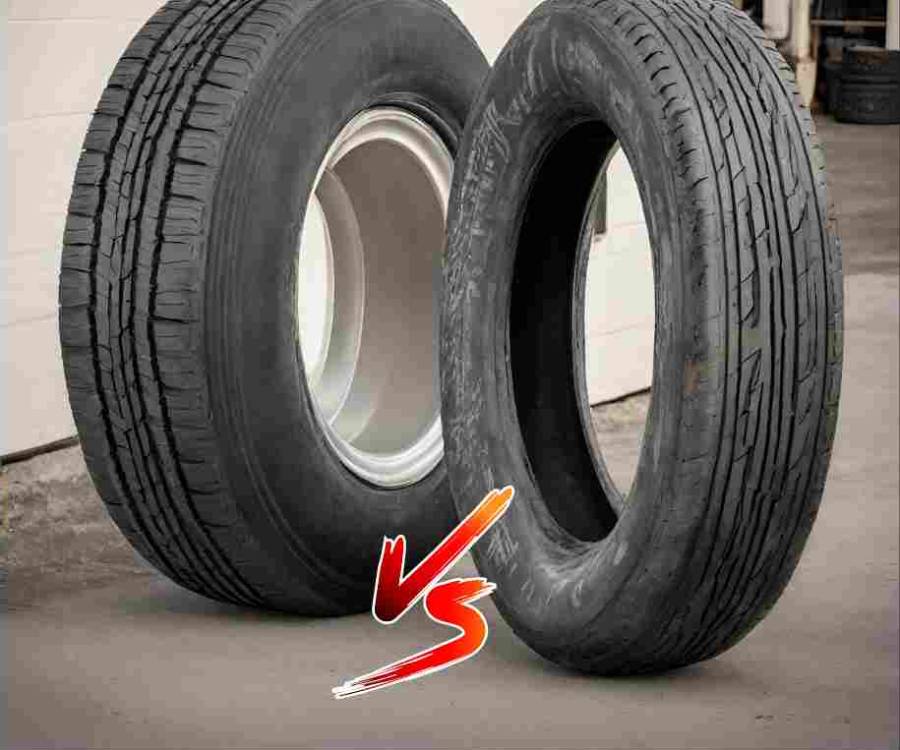
What Is the Difference Between 10-Ply and 14-Ply Tires?
The main difference between 10-ply and 14-ply tires is their load rating: 14-ply-rated tires are built for heavier-load applications than comparable 10-ply-rated tires. The difference affects load range, allowable inflation pressure, construction, sidewall stiffness, tire weight, and intended use. A 14-ply tire is therefore not automatically a better tire; its higher rating matters when a vehicle or trailer actually requires additional load-carrying capability.
The term “ply” can be misleading because a modern 10-ply tire does not necessarily contain 10 physical layers, and a 14-ply tire does not necessarily contain 14. Ply rating originated when tire strength was closely associated with the number of cotton fabric layers used in tire construction. Modern tires use stronger materials such as steel, polyester, and nylon, allowing manufacturers to achieve an equivalent strength rating with fewer physical layers. For this reason, ply rating should be treated as a strength classification rather than a literal layer count.
A 10-ply-rated tire is commonly associated with Load Range E, while a 14-ply-rated tire is commonly associated with Load Range G. The higher load range generally permits the tire to support heavier loads at higher inflation pressures when its size and construction are designed accordingly. Actual capacity is still tire-specific. Tire size, load index, construction, and manufacturer specifications must be checked before comparing two tires solely by their ply ratings.
| Attribute | 10-Ply Tires | 14-Ply Tires |
|---|---|---|
| Common load range | Load Range E | Load Range G |
| Load capability | Lower | Higher |
| Inflation capability | Lower | Higher |
| Construction | Heavy-duty | More heavy-duty |
| Sidewall stiffness | Generally less stiff | Generally stiffer |
| Tire weight | Generally lighter | Generally heavier |
| Ride quality | Generally more compliant | Generally firmer |
| Typical use | Trucks, trailers, moderate-to-heavy towing | Heavy trailers, hauling, commercial applications |
The practical difference is therefore best understood through the application. A pickup that operates within the capacity of an approved 10-ply tire does not gain a meaningful advantage simply because a 14-ply option has a higher rating. A heavily loaded trailer or commercial vehicle, by contrast, may require the additional capacity available from an appropriately sized 14-ply-rated tire.
How Do 10-Ply and 14-Ply Tires Compare in Load Capacity?
A 14-ply-rated tire generally provides greater load-carrying capability than a comparable 10-ply-rated tire, but ply rating alone does not state how many pounds a tire can carry. Actual maximum load capacity depends on tire size, load range, load index, inflation pressure, and the manufacturer’s specifications. Two tires carrying the same ply rating can therefore have different maximum load capacities.
Load capacity is connected to inflation because compressed air supports much of the load carried by a pneumatic tire. A higher load-range tire is engineered to operate within a higher load-and-pressure envelope, but the exact relationship must be determined from the manufacturer’s load and inflation specifications. This is why comparing a Load Range E tire and a Load Range G tire only by the words “10-ply” and “14-ply” leaves out information needed to make a safe selection.
The most reliable way to determine capacity is to check the maximum load information on the tire sidewall and the manufacturer’s load/inflation table. The sidewall identifies specifications such as tire size, load range, load index where applicable, and maximum load at a stated pressure. The manufacturer’s table provides more detail about how much load a particular tire can support at specified inflation pressures. These values are more useful than assuming that every 14-ply tire carries a fixed amount more than every 10-ply tire.
A higher tire rating also does not increase the vehicle’s manufacturer-rated payload, Gross Vehicle Weight Rating (GVWR), or Gross Axle Weight Rating (GAWR). A vehicle’s load limits depend on the complete system, including its axles, suspension, brakes, wheels, chassis, and tires. Installing tires capable of supporting more weight only increases the tire’s available load capacity; it does not change the ratings assigned to the rest of the vehicle.
For example, replacing an adequate 10-ply tire with a higher-rated 14-ply tire does not authorize the driver to exceed the truck’s stated payload or axle limits. The correct approach is to determine the actual load the tires must support and then select tires whose size and load ratings satisfy or exceed the vehicle manufacturer’s requirements. This keeps tire capacity aligned with the limits of the vehicle rather than treating ply rating as an independent measure of how much weight the entire vehicle can carry.
How Does Tire Pressure Differ Between 10-Ply and 14-Ply Tires?
14-ply tires generally have a higher maximum inflation capability than comparable 10-ply tires because their higher load range is designed to support heavier loads. A 10-ply-rated tire is commonly associated with Load Range E, while a 14-ply-rated tire is commonly associated with Load Range G. The higher pressure capability of a Load Range G tire helps it carry the greater loads for which that specific tire is rated.
Maximum inflation pressure, however, is not the pressure that should automatically be used during everyday driving. The number molded into a tire’s sidewall identifies a maximum specification for that tire under defined conditions; it does not mean every vehicle equipped with that tire should operate at that pressure. Correct inflation depends on factors including tire size, actual load, vehicle or trailer requirements, and the tire manufacturer’s load/inflation data.
This distinction matters when replacing 10-ply tires with 14-ply tires. Inflating the replacement tires to a higher pressure simply because they have a higher load range can change tire stiffness, ride quality, and contact with the road. Instead, the required pressure should be determined from the specifications applicable to the vehicle and tire combination. For towing and hauling applications, the actual load carried by each axle should also be considered when determining whether additional load capacity is necessary.
Wheel specifications are another constraint. A tire capable of operating at a higher pressure does not automatically make the wheel suitable for that pressure or load. The tire, wheel, valve hardware, and vehicle must function as a compatible system. A 14-ply tire’s additional inflation capability provides value when the application requires it, not simply because a higher maximum pressure is available.
Are 14-Ply Tires More Durable Than 10-Ply Tires?
14-ply tires are designed for more demanding load applications, but a 14-ply rating does not guarantee that the tire will last longer than a 10-ply tire. Higher-rated tires generally use construction suitable for greater loads and pressures, which can make them better suited to frequent heavy hauling, heavily loaded trailers, and commercial operation. Tire durability, however, depends on more than ply rating.
There are at least 6 major factors that influence tire service life: load, inflation pressure, tread compound and design, alignment, operating temperature, and road conditions. Overloading generates additional heat and stress within a tire. Underinflation can also increase flexing and heat buildup, while incorrect alignment can create uneven tread wear. A properly selected and maintained 10-ply tire can therefore outlast a poorly maintained 14-ply tire.
Puncture resistance should also be separated from load capacity. A higher ply rating describes the tire’s load-carrying strength classification; it does not provide a universal measurement of resistance to nails, screws, sharp rocks, or other road hazards. Actual puncture resistance is affected by the tire’s tread construction, sidewall design, materials, tread depth, and the location and type of impact. It is therefore inaccurate to assume that every 14-ply tire is more puncture-resistant than every 10-ply tire.
The same principle applies to tread life. Moving from a 10-ply to a 14-ply rating does not by itself increase the number of miles a tire will last. Tread compound, tread pattern, vehicle weight, driving conditions, alignment, rotation practices, and inflation all influence wear. A higher load-range tire provides its greatest durability advantage when a lower-rated tire would otherwise be operating close to or beyond the demands of the application.
For drivers who regularly carry heavy loads, the relevant question is therefore not whether 14-ply tires are universally more durable. The better question is whether the tire’s load rating, construction, and operating specifications match the load and conditions it will experience. Selecting sufficient capacity and maintaining correct inflation are more reliable strategies for tire durability than choosing the highest available ply rating.
Are 14-Ply Tires Better Than 10-Ply Tires for Towing?
14-ply tires are better than 10-ply tires for towing when the application requires the additional load capacity of the higher-rated tire. A 10-ply tire remains the more appropriate choice when its load rating already satisfies the requirements of the truck or trailer. Towing suitability should therefore be determined by actual load requirements rather than choosing the highest ply rating available.
There are 4 primary factors to check when selecting a tire for towing: actual loaded weight, axle load, individual tire load capacity, and vehicle or trailer manufacturer requirements. These factors establish how much weight the tires need to support. For example, a trailer whose properly loaded axle weights remain within the capacity of its specified 10-ply tires does not automatically require 14-ply tires simply because it is used for towing.
A 14-ply tire becomes more relevant as load requirements increase. Heavy trailers, frequent heavy hauling, high axle loads, and commercial applications can place greater demands on tires over extended periods. A properly specified higher-load-range tire provides additional load-carrying capability for these conditions. The benefit comes from matching the tire to the operating requirement rather than from the “14-ply” designation alone.
The vehicle and trailer limits still apply after installing higher-rated tires. A 14-ply tire does not increase the manufacturer’s GVWR, GAWR, payload rating, hitch rating, or towing capacity. For example, upgrading tires with greater load capacity cannot compensate for an axle, wheel, suspension component, or hitch that has already reached its rated limit. The lowest-rated relevant component continues to constrain the system.
10-ply tires are sufficient for towing when their size, load capacity, and inflation specifications meet the requirements of the loaded vehicle or trailer. This means there is no universal trailer weight at which every driver should switch from 10-ply to 14-ply tires. Two tires with different sizes can have different load capacities despite sharing the same ply rating, so the actual tire specifications must be checked before making the decision.
For heavy-duty towing, 14-ply tires make sense when the required capacity cannot be adequately provided by the approved 10-ply option or when the application specifically calls for the higher load range. The selection process should follow a clear order: determine loaded axle weights, establish the required capacity per tire, check manufacturer specifications, and then select a compatible tire with sufficient load capacity.
Do 14-Ply Tires Ride Rougher Than 10-Ply Tires?
14-ply tires generally produce a firmer ride than comparable 10-ply tires because their heavy-duty construction is designed for higher load and pressure requirements. The difference can be more noticeable on an unloaded or lightly loaded vehicle, where the additional stiffness is not being used to support a substantial load.
Sidewall and casing stiffness affect how much a tire deforms when it encounters bumps, expansion joints, potholes, and irregular road surfaces. A more compliant tire can absorb part of these disturbances through controlled deformation. A heavier-duty tire generally deforms less under the same conditions, allowing more of the road input to reach the suspension and vehicle body. This is one reason moving to a higher load range can change ride characteristics even when tire dimensions remain similar.
Inflation pressure also affects this comparison. A 14-ply tire should not be assumed to require its maximum allowable pressure during every trip. Operating pressure must correspond to the applicable load and manufacturer specifications. Excessive pressure for the actual operating conditions can contribute to a firmer ride, while insufficient pressure can create excessive flex, heat, and load-related problems.
For daily driving, a 10-ply tire can therefore be a better fit when it provides all the load capacity the vehicle requires. Pickup trucks used primarily for commuting, highway driving, and occasional towing do not necessarily benefit from moving to a heavier rating. Using additional tire capacity that the vehicle never requires can introduce compromises such as additional tire mass and a firmer ride without providing a useful load-carrying advantage.
The decision changes for vehicles that regularly operate under substantial loads. In heavy towing or hauling applications, ride softness becomes secondary to maintaining sufficient tire capacity for the operating load. A 14-ply tire may provide the more appropriate balance in that situation because its heavier-duty construction serves a specific load requirement.
The correct comparison is therefore required capacity versus operating conditions, not comfort versus strength in isolation. Choose a 10-ply tire when it meets the required specifications and provides the desired everyday characteristics. Choose a compatible 14-ply tire when the application requires the higher load rating, accepting that the heavier-duty construction can produce a firmer ride.
Do 14-Ply Tires Affect Fuel Economy More Than 10-Ply Tires?
14-ply tires can reduce fuel economy compared with comparable 10-ply tires when the heavier-duty tire adds weight or rolling resistance, but ply rating alone does not determine fuel consumption. Tire mass, tread design, rubber compound, inflation pressure, tire dimensions, vehicle load, and driving conditions all influence how much energy is required to move the vehicle.
Tire weight matters because the engine must accelerate both the vehicle and the rotating tire-and-wheel assembly. A heavier tire adds rotating mass, which can increase the energy required during acceleration. Because 14-ply-rated tires are designed for heavier-duty applications, comparable models may use additional or stronger structural materials and weigh more than lower-rated alternatives. The actual weight difference must still be checked for the specific tire models being compared.
Rolling resistance creates another potential difference. A tire loses energy as its tread and casing deform while moving through the contact patch. Construction, tread compound, tread depth, tire dimensions, inflation, and load all affect this process. Ply rating is only one characteristic within the complete tire design, so it is not accurate to state that every 14-ply tire has greater rolling resistance than every 10-ply tire.
Inflation also affects efficiency. An underinflated tire can deform excessively and increase rolling resistance, while using a higher pressure simply because a 14-ply tire permits it is not an appropriate fuel-saving strategy. Tire pressure should match the applicable vehicle, load, and tire specifications rather than being adjusted solely to pursue lower rolling resistance.
For this reason, there is no universal MPG penalty for switching from 10-ply to 14-ply tires. A driver comparing two options should examine their actual weight, dimensions, tread design, intended application, and required operating pressure. When a 10-ply tire already provides sufficient load capacity, moving to a heavier-duty tire solely for its higher ply rating may add characteristics the vehicle does not need without producing a corresponding performance benefit.
Are 14-Ply Tires More Expensive Than 10-Ply Tires?
14-ply tires are generally positioned as heavier-duty products, but ply rating alone cannot determine how much more a 14-ply tire will cost than a 10-ply tire. Tire size, manufacturer, model, tread design, application, construction, and load range all affect retail price. A premium 10-ply tire can therefore cost more than a 14-ply tire from another product line.
Purchase price should also be considered alongside the tire’s intended workload. Paying more for additional load capacity makes sense when that capacity is required for a heavy trailer, frequent hauling, or another demanding application. Paying for a higher load rating provides less practical value when the vehicle operates well within the specifications of an approved 10-ply tire.
Cost per mile provides a more complete comparison than purchase price alone, but it requires actual service-life data. For example, a more expensive tire can have a lower cost per mile if it lasts substantially longer in the same application. Conversely, paying more for a 14-ply tire does not guarantee lower long-term costs because ply rating alone does not determine tread life. Inflation, alignment, rotation, load, road surface, driving habits, and tread compound also influence how quickly a tire wears.
The most useful cost comparison is therefore between specific tires that satisfy the same vehicle requirements. Compare their purchase prices, rated capacities, warranties where applicable, expected use, and relevant performance characteristics. This approach prevents price from being evaluated independently of the job the tire needs to perform.
Can You Replace 10-Ply Tires With 14-Ply Tires?
You can replace 10-ply tires with 14-ply tires when the new tires are compatible with the vehicle, wheels, required tire dimensions, load requirements, and applicable manufacturer specifications. A higher ply rating alone is not enough to establish compatibility. The complete tire-and-wheel system must be suitable for the replacement.
There are 6 specifications to check before making the change: tire size, load capacity, speed rating where applicable, wheel load rating, wheel pressure capability, and vehicle manufacturer requirements. The replacement tire must also provide adequate clearance and be suitable for the intended application. These checks matter because a tire can offer greater load and pressure capability than the wheel or another vehicle component is rated to handle.
Wheel compatibility deserves particular attention when moving to a higher load range. A 14-ply tire may be capable of supporting loads at pressures beyond those associated with the existing tire, but installing that tire does not increase the wheel’s rating. The wheel and related hardware must remain within their specified load and pressure limits. Physical fitment alone does not prove that the combination is appropriate for heavy-load operation.
Drivers should also consider whether the upgrade serves a practical purpose. Replacing an adequate 10-ply tire with a compatible 14-ply tire may provide additional tire load capacity, but it does not increase the vehicle’s GVWR, GAWR, payload rating, or towing rating. If the existing tire already meets the required capacity, the higher rating may instead introduce additional weight or a firmer ride without increasing the amount of weight the vehicle is legally or mechanically rated to carry.
Replacing 14-ply tires with 10-ply tires requires the same compatibility analysis in reverse. A lower-rated tire should not replace a 14-ply tire when its load capacity is insufficient for the vehicle, trailer, or operating load. The replacement must meet the required specifications rather than simply match the tire’s physical dimensions.
For example, two tires may share the same nominal size while carrying different load ratings. Selecting the lower-rated option based only on size could leave insufficient capacity for a heavy trailer application. Tire size, load rating, wheel compatibility, and manufacturer requirements should therefore be evaluated together before either upgrading or downgrading the ply rating.
Should You Choose 10-Ply or 14-Ply Tires?
Choose 10-ply tires when they meet the vehicle’s required load capacity and intended use; choose 14-ply tires when the application requires the higher load capability of a compatible 14-ply-rated tire. The correct choice is determined by vehicle specifications and actual operating load, not by assuming that the higher ply rating is automatically better.
For daily driving and moderate-load use, 10-ply tires are often sufficient when they match the manufacturer’s requirements. Their lower-duty construction compared with 14-ply alternatives can also provide advantages when maximum load capacity is unnecessary, including potentially lower tire weight and a more compliant ride. Moving to a 14-ply tire provides little practical load-related benefit if the vehicle never approaches a load level requiring the additional tire capacity.
Towing requires a load-based decision. Determine the loaded axle weights and verify that the tires provide sufficient capacity for those loads. A 10-ply tire remains appropriate when its specific load rating meets the requirement. A 14-ply tire becomes relevant for applications requiring greater tire capacity, such as certain heavy trailers, frequent heavy hauling, and commercial operations.
The table below summarizes the selection direction for common applications.
| Situation | Tire selection direction |
|---|---|
| Daily driving | 10-ply if it meets vehicle specifications |
| Moderate towing | 10-ply if its load capacity is sufficient |
| Heavy trailer loads | 14-ply when the higher rating is required |
| Frequent heavy hauling | Consider a compatible 14-ply tire |
| Commercial heavy-duty use | 14-ply may be more appropriate |
| Existing wheels cannot support required load or pressure | Do not upgrade based on ply rating alone |
A higher rating should not be used to compensate for an overloaded vehicle. Tires are only one part of the load-carrying system. Axles, wheels, suspension, brakes, hitch components, and the vehicle structure retain their own limits after a tire upgrade. Installing 14-ply tires therefore does not authorize loads above the vehicle manufacturer’s GVWR, GAWR, payload, or towing limits.
A practical selection process follows 6 steps: check the vehicle specifications, determine the actual load, confirm the required tire size, compare tire load ratings, verify wheel compatibility, and evaluate the operating conditions. Following this sequence makes ply rating one part of the selection process rather than the sole deciding factor.
What Should You Check Before Buying 10-Ply or 14-Ply Tires?
Check 6 factors before buying 10-ply or 14-ply tires: vehicle specifications, tire size, load capacity, actual load, wheel ratings, and intended use. These factors determine whether a tire is suitable for the vehicle and provide more useful information than comparing ply ratings in isolation.
First, check the vehicle or trailer manufacturer’s tire requirements. The owner’s manual, certification label, tire information placard, and relevant manufacturer documentation provide the baseline specifications for tire selection. A replacement tire should satisfy the applicable size and load requirements rather than being selected solely because it carries a higher ply rating.
Second, confirm the correct tire size. Tire dimensions affect fitment, clearance, load capacity, and overall vehicle operation. Two tires described as 10-ply and 14-ply are not directly comparable if their sizes and intended applications differ substantially.
Third, verify the tire’s actual load capacity. Read the load information on the sidewall and consult the tire manufacturer’s specifications or load/inflation table when necessary. Ply rating is a category of strength; the tire’s stated load capacity provides the specific value needed for load calculations.
Fourth, determine the actual load the tires must support. For vehicles or trailers used for substantial towing and hauling, measured loaded axle weights provide more useful information than estimating from empty weight alone. The required tire capacity must remain consistent with the vehicle and axle limits.
Fifth, verify the wheels. A wheel has its own load and pressure limitations, so installing a higher-rated tire does not increase what the wheel can safely support. Tire dimensions, wheel dimensions, load capability, and applicable pressure requirements must work together.
Sixth, define the intended operating conditions. A truck used primarily for commuting has different tire demands from a commercial vehicle carrying substantial loads every working day. Likewise, a lightly loaded utility trailer and a heavy trailer should not receive the same tire recommendation merely because both are trailers.
These checks establish whether the additional capability of a 14-ply tire has a practical purpose. If an approved 10-ply tire satisfies every relevant requirement, choosing it avoids adding load capacity solely for the sake of having a higher rating. If the application requires greater tire capacity, a compatible 14-ply tire becomes the more appropriate option.
Where Can You Find a Tire’s Load Range and Maximum Pressure?
A tire’s load range, maximum load, and maximum inflation information can be found on the tire sidewall, while detailed load-at-pressure data should be checked in the tire manufacturer’s specifications or load/inflation tables. These sources provide the tire-specific information needed to compare 10-ply and 14-ply options accurately.
The sidewall contains several markings that identify the tire’s capabilities and construction. Depending on the tire type, these can include tire size, load range, load index, maximum load, maximum cold inflation pressure, speed rating, and other safety or construction information. For a buyer comparing 10-ply and 14-ply tires, the load-related markings are more useful than treating the ply designation as a complete specification.
Manufacturer load/inflation tables provide additional detail because tire capacity changes according to tire size and specified inflation conditions. These tables allow the buyer to connect a particular tire with its supported load rather than applying a generic capacity to every tire within the same load range. This is especially important for towing and hauling, where an incorrect assumption about tire capacity can affect the available safety margin.
The vehicle’s tire information placard and owner’s manual provide a different type of information: what the vehicle manufacturer specifies for the vehicle. The tire sidewall tells you what the tire is rated to handle, while the vehicle documentation establishes the requirements and limits that apply to the vehicle. Both sets of information should be considered when selecting replacements.
The final choice between 10-ply and 14-ply tires should therefore be based on specific ratings rather than the larger number on the ply designation. A 14-ply tire is the higher-load option when the application requires that capacity. A 10-ply tire is the appropriate choice when it already meets the vehicle, load, wheel, and operating requirements. This distinction prevents unnecessary upgrades while ensuring that heavy-duty applications receive tires with sufficient capacity.