Have you ever started your Jeep, pressed the accelerator, and suddenly noticed a warning message saying “Service Electronic Throttle Control” on your dashboard? For many Jeep owners, this warning can be confusing and stressful, especially when the vehicle begins to lose power, respond slowly, or enter a reduced-performance mode.
The Jeep Service Electronic Throttle Control warning indicates that your vehicle’s electronic throttle system has detected a problem that may affect how the engine receives and responds to acceleration commands. While some causes may be relatively simple, such as a dirty throttle body or a weak battery, others can involve faulty sensors, wiring issues, or throttle body failure.
Ignoring this warning can lead to frustrating driving problems, unexpected power loss, and potentially higher repair costs in the future. Understanding what causes electronic throttle control issues, how to identify the symptoms, and what repair options are available can help you make better decisions for your Jeep.
In this guide, we will explain the most common causes of the Jeep Service Electronic Throttle Control warning, effective troubleshooting methods, possible fixes, and the expected repair costs. Whether you drive a Jeep Wrangler, Grand Cherokee, Cherokee, Compass, or another model, this information will help you better understand this common throttle system issue.
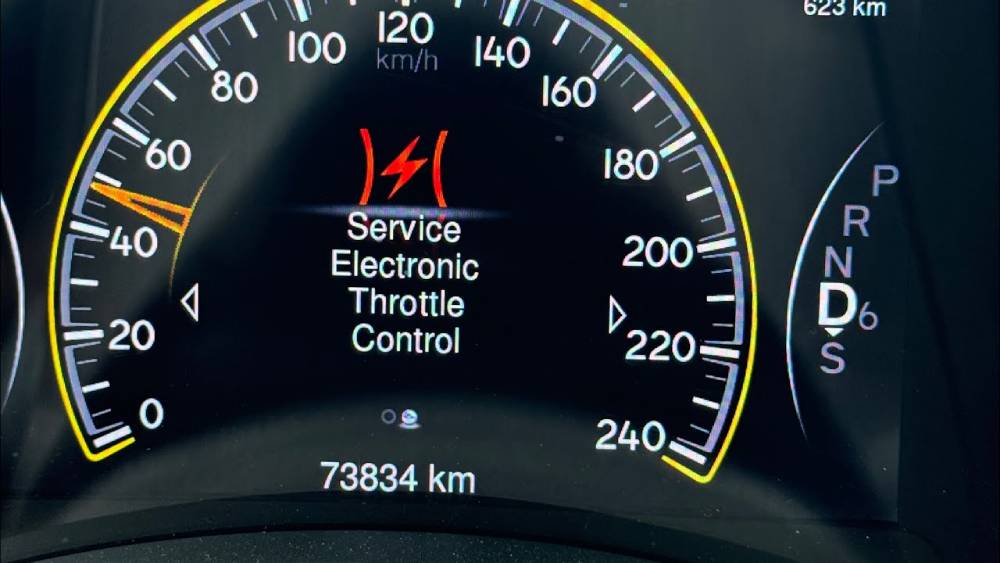
What Does Service Electronic Throttle Control Mean on a Jeep?
The Service Electronic Throttle Control message on a Jeep means that the vehicle’s computer system has detected an issue within the electronic throttle control system. Unlike older vehicles that used a mechanical cable connected directly between the accelerator pedal and the throttle body, modern Jeep models rely on electronic signals to control engine acceleration.
The Electronic Throttle Control (ETC) system uses several important components, including the accelerator pedal position sensor, throttle position sensor, throttle body motor, and the engine control module (ECM). These components work together to determine how much air enters the engine and how much power the vehicle should produce.
When the Jeep’s computer detects an abnormal signal or a malfunction in this system, it activates the Service Electronic Throttle Control warning as a safety measure. The vehicle may automatically reduce engine power to prevent further damage, which is commonly known as limp mode.
For some Jeep owners, this warning appears briefly and disappears after restarting the vehicle. However, repeated warnings should never be ignored because they may indicate an underlying problem that can affect driving performance.
Common issues associated with this warning include delayed throttle response, poor acceleration, rough engine operation, unexpected power reduction, or difficulty maintaining normal driving speed. In some situations, the vehicle may struggle to accelerate when merging onto highways or climbing steep roads.
Understanding what the Jeep Service Electronic Throttle Control warning means is the first step toward finding the correct solution. Proper diagnosis is important because the warning can be caused by something as simple as a dirty throttle body or as serious as a failing throttle control component.
Common Symptoms of Jeep Electronic Throttle Control Failure
Recognizing the symptoms of an electronic throttle control problem early can help Jeep owners avoid unexpected breakdowns and expensive repairs. Although the exact symptoms may vary depending on the vehicle model and the severity of the issue, several warning signs commonly appear when the ETC system begins to fail.
1. Reduced Engine Power and Slow Acceleration
One of the most noticeable symptoms is a sudden loss of engine power. Your Jeep may feel weak when pressing the accelerator, especially during highway driving or uphill acceleration.
This happens because the vehicle’s computer may limit throttle operation after detecting a problem. The system does this to protect the engine and prevent unsafe operating conditions.
2. Service Electronic Throttle Control Warning Light Appears
The most obvious sign is the appearance of the “Service Electronic Throttle Control” message on the dashboard. In many cases, this warning may appear together with the check engine light.
A warning message that disappears after restarting the vehicle does not always mean the problem is fixed. If the issue returns, further inspection is necessary.
3. Poor Throttle Response
A failing ETC system can cause a noticeable delay between pressing the accelerator pedal and the engine responding.
Drivers may experience situations where the pedal feels normal, but the Jeep does not accelerate immediately. This can become frustrating and potentially dangerous when quick acceleration is required.
4. Engine Rough Idle or Stalling
A faulty throttle body or inaccurate sensor readings can affect how much air enters the engine. As a result, the Jeep may experience unstable idling, shaking, or even unexpected engine shutdown.
5. Jeep Enters Limp Mode
Limp mode is a protective feature designed to prevent additional damage. When activated, the Jeep may limit speed, reduce acceleration, and make normal driving difficult.
If your Jeep frequently enters limp mode, the ETC system should be diagnosed as soon as possible.
6. Increased Fuel Consumption
Because the throttle system controls the air and fuel balance inside the engine, a malfunction can affect fuel efficiency. Some drivers notice that their Jeep uses more fuel than usual after experiencing ETC-related problems.
Identifying these symptoms early allows Jeep owners to address the problem before it develops into a more serious mechanical or electrical failure.
Main Causes of Jeep Service Electronic Throttle Control Warning
The Jeep Service Electronic Throttle Control warning can be triggered by several different problems. Because the ETC system depends on electronic communication between multiple components, identifying the exact cause requires proper diagnosis rather than simply replacing parts.
1. Faulty Throttle Body
The throttle body is one of the most common causes of electronic throttle control problems. It controls the amount of air entering the engine and contains electronic components that communicate with the vehicle’s computer.
Over time, the throttle body motor can wear out, internal sensors can fail, or the throttle plate can become damaged. When the throttle body cannot respond correctly, the Jeep may activate the ETC warning.
2. Dirty Throttle Body
Carbon buildup and dirt accumulation can prevent the throttle plate from moving smoothly. A dirty throttle body may cause incorrect airflow readings and create inconsistent engine performance.
Regular maintenance and proper cleaning can often prevent this issue, especially on Jeep models with higher mileage.
3. Failed Throttle Position Sensor
The throttle position sensor monitors the position of the throttle plate and sends information to the engine control module.
When this sensor provides inaccurate data, the computer may not know how much air is entering the engine. This can result in poor acceleration, hesitation, and ETC warning messages.
4. Accelerator Pedal Position Sensor Problems
The accelerator pedal position sensor tells the vehicle computer how much acceleration the driver is requesting.
If this sensor fails, the Jeep may not properly respond when the driver presses the pedal. This can lead to delayed acceleration or reduced engine power.
5. Electrical and Wiring Issues
Since the ETC system depends heavily on electronic communication, electrical problems can easily trigger warning messages.
Common electrical causes include weak batteries, low voltage, damaged wiring, loose connectors, corrosion, or poor grounding connections.
A battery that is nearing the end of its life can sometimes create unusual electronic problems in modern Jeep vehicles.
6. Engine Control Module or Software Issues
In some cases, the problem may come from the vehicle’s computer system itself. Software errors, outdated programming, or communication problems between modules can cause false ETC warnings.
Professional diagnostic equipment may be required to identify and correct these issues.
Finding the correct cause is essential because replacing the wrong component can result in unnecessary expenses. A complete diagnosis helps Jeep owners save money and ensures the repair solves the actual problem.
How To Diagnose Jeep Electronic Throttle Control Problems
Proper diagnosis is the most important step when dealing with a Jeep Service Electronic Throttle Control warning. Many different components can trigger the same warning message, which means replacing parts without identifying the real cause can lead to unnecessary expenses.
A professional diagnosis usually begins with scanning the vehicle’s computer system. Using an OBD II scanner, technicians can retrieve trouble codes stored in the engine control module. These codes provide valuable information about which part of the ETC system may be malfunctioning.
Some common diagnostic trouble codes related to electronic throttle control problems include:
P2110: Throttle actuator control system forced limited power
P2112: Throttle actuator control system stuck closed
P2118: Throttle actuator control motor current range or performance problem
P2135: Throttle position sensor voltage correlation issue
These codes help technicians understand whether the problem is related to the throttle body, sensors, wiring, or communication between electronic modules.
After reading the fault codes, a complete inspection should include checking the throttle body condition. Technicians look for carbon buildup, physical damage, unusual movement, or signs that the throttle plate is not operating correctly.
The accelerator pedal position sensor should also be tested because inaccurate pedal signals can cause incorrect throttle commands. If the vehicle computer receives conflicting information from different sensors, it may activate the ETC warning as a safety response.
Electrical testing is another important part of diagnosis. A weak battery, poor ground connection, damaged wiring, or corroded connectors can create electronic problems that appear to be throttle system failures.
In some cases, a simple battery replacement or wiring repair can solve the issue. In other situations, the throttle body or sensor may need replacement.
The key point is that clearing the warning light without finding the cause is only a temporary solution. A proper diagnosis ensures the repair addresses the actual problem and prevents the warning from returning.
How To Fix Service Electronic Throttle Control Jeep Warning
Fixing a Jeep Service Electronic Throttle Control warning depends on the specific cause behind the problem. Some solutions are simple maintenance procedures, while others require professional repair or replacement of electronic components.
1. Reset the Electronic Throttle Control System
In some situations, the ETC warning may appear because of a temporary electronic issue. A system reset can sometimes restore normal operation.
A basic reset procedure may involve turning off the vehicle, allowing the electronics to shut down completely, and restarting the engine. Some Jeep models may require a specific throttle relearn procedure after the battery has been disconnected.
However, a reset should not be considered a permanent repair if the warning returns. A recurring ETC warning usually indicates that an underlying issue still exists.
2. Clean the Throttle Body
A dirty throttle body is one of the most common and affordable causes of ETC problems.
Over time, carbon deposits can build up around the throttle plate and affect its movement. Cleaning the throttle body can help restore proper airflow and improve throttle response.
During cleaning, technicians inspect the throttle plate movement and check whether the electronic motor operates correctly.
Regular throttle body maintenance can help prevent performance problems, especially on Jeep vehicles with higher mileage.
3. Replace the Throttle Body
If the throttle body motor or internal sensors fail, replacement may be necessary.
Modern Jeep throttle bodies are electronic assemblies that often contain integrated sensors and motors. When these internal components fail, repair may not be practical, and replacing the entire unit is usually the recommended solution.
Symptoms that may indicate throttle body replacement include repeated ETC warnings, severe power loss, poor acceleration, and frequent limp mode activation.
4. Repair Electrical Problems
Electrical issues should not be overlooked because the ETC system depends entirely on electronic communication.
Possible repairs include:
Replacing a weak battery
Repairing damaged wiring
Cleaning corroded electrical connectors
Fixing poor ground connections
Updating vehicle software
Resolving electrical problems can often restore normal ETC operation without replacing expensive components.
5. Perform ECU Updates or Reprogramming
Some Jeep models may experience ETC warnings caused by software-related issues. In these cases, updating the engine control module software or performing a relearn procedure may correct the problem.
The best repair approach depends on accurate diagnosis. Attempting random repairs can waste money and may not solve the warning message permanently.
Jeep Electronic Throttle Control Repair Cost Estimate
The cost to repair a Jeep Service Electronic Throttle Control problem can vary significantly depending on the cause, vehicle model, labor rates, and replacement parts required.
Some ETC problems are relatively inexpensive to fix, while others may require major component replacement. Understanding the possible costs can help Jeep owners prepare before visiting a repair shop.
Diagnostic Cost
Before any repair begins, technicians usually perform a complete diagnostic scan.
The average diagnostic cost is typically between $50 and $150. This process helps identify the exact cause of the warning and prevents unnecessary part replacement.
Throttle Body Cleaning Cost
If carbon buildup is causing the problem, cleaning the throttle body is one of the most affordable solutions.
The average cost is usually around $100 to $200, depending on labor rates and vehicle accessibility.
Throttle Position Sensor Replacement Cost
If the throttle position sensor is faulty, replacement costs may range from $150 to $400, including parts and labor.
The final price depends on whether the sensor is sold separately or integrated into the throttle body assembly.
Throttle Body Replacement Cost
A complete throttle body replacement is one of the more expensive repairs.
The typical cost can range from $400 to $1,200. OEM parts may cost more but often provide better reliability and compatibility compared with lower-cost aftermarket alternatives.
Electrical Repair Cost
Electrical repairs can vary widely depending on the problem.
Simple connector cleaning may cost less than $100, while repairing damaged wiring or replacing electrical components may cost between $100 and $500.
ECU Programming Cost
If the issue requires software updates or module programming, the cost is usually around $100 to $300.
Several factors influence the total repair price, including the Jeep model, production year, location, labor rates, and whether original manufacturer parts are used.
Addressing the problem early can often reduce repair costs. Ignoring an ETC warning may allow a small issue to develop into a more expensive failure affecting multiple components.
Can You Drive a Jeep With Service Electronic Throttle Control Warning?
One of the biggest concerns for Jeep owners who see the Service Electronic Throttle Control warning is whether they can continue driving safely. The answer depends on the severity of the problem and how the vehicle is responding.
In some situations, a Jeep may continue operating normally after the warning appears. The engine may still respond properly, acceleration may feel normal, and there may be no noticeable performance issues. However, even if the vehicle appears fine, the warning should not be ignored because the problem may return unexpectedly.
If the electronic throttle control system detects a serious malfunction, the Jeep may enter limp mode. This safety feature reduces engine power to protect the vehicle and prevent possible damage. When this happens, drivers may notice limited acceleration, reduced speed, or difficulty maintaining normal traffic flow.
You should avoid continuing to drive if your Jeep experiences any of the following symptoms:
The vehicle suddenly loses power
The accelerator pedal becomes unresponsive
The engine starts shaking or running roughly
The Jeep repeatedly enters limp mode
The check engine light flashes
The vehicle stalls while driving
These symptoms can create dangerous situations, especially when driving on highways, merging into traffic, or traveling through areas where quick acceleration is necessary.
If your Jeep only displays the warning but still drives normally, schedule a diagnostic inspection as soon as possible. If the vehicle experiences significant power loss or unsafe driving behavior, it is better to stop driving and have it inspected by a qualified technician.
Ignoring an electronic throttle control issue may turn a manageable repair into a more expensive problem. Early diagnosis helps protect your vehicle, your budget, and your safety.
Frequently Asked Questions About Jeep Service Electronic Throttle Control
What does Service Electronic Throttle Control mean on a Jeep?
The Service Electronic Throttle Control warning means that the Jeep’s computer has detected a problem with the electronic throttle system. The issue may involve the throttle body, sensors, wiring, battery voltage, or communication between electronic components.
The system activates this warning when it detects information that does not match expected operating conditions. The vehicle may reduce engine power to protect itself.
How do I reset the electronic throttle control on my Jeep?
A temporary ETC reset may be possible by turning off the vehicle, allowing the electrical system to shut down, and restarting the engine. Some Jeep models may require a specific throttle relearn procedure.
However, resetting the system does not repair the underlying problem. If the warning appears again, the vehicle should be properly diagnosed.
Why does my Jeep keep saying Service Electronic Throttle Control?
If the warning keeps returning, there is likely an ongoing issue within the ETC system. Common causes include a failing throttle body, dirty throttle components, faulty sensors, electrical problems, or software-related issues.
Repeated warnings should be investigated because the problem may become worse over time.
Is electronic throttle control failure dangerous?
Electronic throttle control failure can become dangerous if it causes sudden power loss, delayed acceleration, or limp mode activation.
While some ETC issues are minor, others can affect vehicle performance and driving safety. Professional diagnosis is recommended whenever the warning appears.
How much does it cost to fix Jeep electronic throttle control?
The repair cost depends on the cause of the failure. Simple repairs, such as throttle body cleaning or electrical repairs, may cost a few hundred dollars or less. Replacing the throttle body or repairing complex electronic issues can cost significantly more.
Getting an accurate diagnosis before replacing parts is the best way to avoid unnecessary expenses.
Conclusion
The Jeep Service Electronic Throttle Control warning is an important message that should never be ignored. While some causes may be simple, such as a dirty throttle body or a weak battery, other issues can involve critical components like the throttle body assembly, sensors, wiring, or engine control module.
Understanding the symptoms, causes, repair options, and potential costs can help Jeep owners make better decisions when dealing with ETC problems. Early warning signs such as slow acceleration, reduced engine power, rough idling, or repeated dashboard alerts should be investigated before they develop into more serious issues.
The best approach is always proper diagnosis. Replacing parts without identifying the real cause can increase repair costs and may not solve the problem permanently. A professional inspection can save time, money, and prevent unexpected driving problems.
Whether you own a Jeep Wrangler, Grand Cherokee, Cherokee, Compass, or another model, maintaining the electronic throttle system is essential for reliable performance and safe driving.
Have you experienced a Jeep Service Electronic Throttle Control warning on your vehicle? Share your symptoms, Jeep model, and repair experience in the comments to help other Jeep owners understand this common issue.