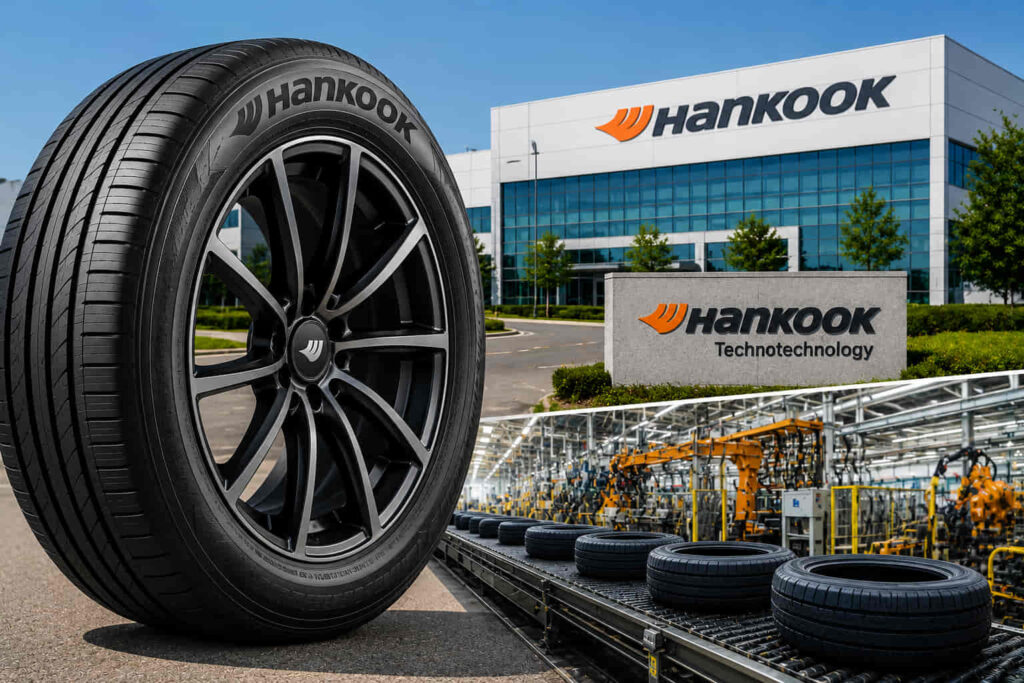
Hankook Tires are made by Hankook Tire & Technology, a South Korean tire manufacturer that has grown into one of the world’s leading tire companies. The company develops and produces tires for passenger vehicles, SUVs, trucks, commercial vehicles, and electric vehicles while supplying products to both replacement and original equipment markets.
Understanding who makes Hankook Tires helps explain why the brand has become widely recognized in the global automotive industry. The manufacturer behind a tire brand influences important factors such as engineering capability, manufacturing standards, research and development, and relationships with vehicle manufacturers.
Hankook began as a Korean tire company and expanded internationally through investment in technology, production facilities, and global distribution networks. Today, the brand is known for products such as the Ventus performance tire line, Kinergy touring tires, Dynapro SUV and truck tires, and iON tires designed specifically for electric vehicles.
Unlike many budget tire brands that compete mainly through lower prices, Hankook operates as a global tire manufacturer that focuses on technology, performance, and long-term market development. The company has also become an original equipment supplier for several automotive manufacturers, showing its ability to meet strict vehicle production requirements.
This guide explains who makes Hankook Tires, the company’s history, ownership structure, manufacturing locations, technology development, OEM partnerships, product range, and why Hankook has become a respected name in the tire industry.
What Is Hankook Tire & Technology Known For?
Hankook Tire & Technology is known as a South Korean tire manufacturer that develops and produces tires for passenger vehicles, SUVs, trucks, commercial vehicles, and electric vehicles. The company has grown from a domestic Korean tire producer into a global manufacturer competing in major automotive markets worldwide.
Hankook’s reputation is built around tire engineering, manufacturing capability, and partnerships with automotive manufacturers. Instead of focusing only on low-cost replacement products, the company invests in research and development to create tires that balance performance, durability, comfort, and efficiency.
One of Hankook’s important strengths is its ability to serve different vehicle categories. The company produces touring tires for everyday drivers, performance tires for enthusiasts, SUV and truck tires for larger vehicles, and specialized EV tires designed around the different requirements of electric vehicles.
The brand is also recognized through its OEM partnerships. Many vehicle manufacturers select Hankook tires as original equipment because OEM suppliers must meet strict requirements related to safety, performance, consistency, and production quality. This relationship demonstrates that Hankook has developed manufacturing systems capable of supporting large-scale automotive production.
Hankook’s product families reflect its market strategy. The Ventus series focuses on performance and handling, Kinergy products target comfort and everyday driving, Dynapro tires serve SUV and truck applications, while the iON series addresses the growing electric vehicle market.
For example, a driver purchasing a vehicle equipped with Hankook tires from the factory is choosing a product that has already passed the vehicle manufacturer’s evaluation process for that specific application.
Where Did Hankook Tires Start?
Hankook Tires started in South Korea and developed alongside the country’s rapid growth in automotive manufacturing and industrial technology. The company’s Korean origin remains a central part of its brand identity and helps explain its expansion into a global tire manufacturer.
Hankook was founded in 1941 as Korea’s first tire company, originally operating under the name Chosun Tire Company before later becoming Hankook Tire. Over decades of development, the company expanded its manufacturing capability, improved tire technology, and entered international markets.
The growth of South Korea’s automotive industry created opportunities for Hankook to develop alongside vehicle manufacturers. As Korean automotive companies expanded globally, Hankook also increased its ability to supply tires for different regions and vehicle categories.
The company’s international growth was supported by investment in production facilities, research centers, and distribution networks. This expansion allowed Hankook to compete with established tire manufacturers from Japan, Europe, and the United States.
Today, Hankook represents the evolution of a regional tire manufacturer into a global mobility technology company. Its history demonstrates how investment in engineering and manufacturing infrastructure can transform a local brand into an international competitor.
For example, Hankook’s transition from a Korean tire producer into a global OEM supplier shows how the company developed capabilities beyond basic replacement tire manufacturing.
Read more: Who Makes Toyo Tires
Who Owns Hankook Tires?
Hankook Tires is owned and operated by Hankook Tire & Technology, a South Korean tire manufacturer that manages the brand’s research, development, manufacturing, and global business operations. The company maintains its own identity as a dedicated tire manufacturer rather than operating as a subsidiary of a larger tire corporation.
Hankook Tire & Technology controls the development of Hankook products, including passenger tires, SUV tires, commercial tires, and electric vehicle tires. This structure allows the company to focus its resources on tire-specific innovation, manufacturing efficiency, and product improvement.
The ownership structure of Hankook is important because it explains the company’s ability to build specialized expertise. Unlike brands that depend on external manufacturing networks or focus mainly on distribution, Hankook operates as a full-scale tire manufacturer with its own engineering capabilities and production facilities.
The company has expanded internationally while maintaining its Korean identity. Through global operations, Hankook serves customers in different markets and works with automotive manufacturers that require consistent quality and technical performance.
Hankook’s independent position has also allowed the company to develop a clear market strategy. Instead of competing only through pricing, Hankook focuses on technology, OEM partnerships, performance development, and emerging automotive trends such as electric vehicles.
For example, Hankook’s investment in iON EV tires demonstrates how the company uses its manufacturing expertise to develop products for new vehicle technologies rather than only traditional combustion-engine vehicles.
Where Are Hankook Tires Made?
Hankook Tires are manufactured through a global production network that includes facilities in South Korea and other international locations. The company uses this worldwide manufacturing approach to serve different automotive markets while maintaining consistent production standards.
South Korea remains an important center for Hankook’s research, engineering, and manufacturing operations. The company’s Korean facilities support product development and contribute to the technical foundation behind the Hankook brand.
As Hankook expanded globally, it established manufacturing facilities in regions such as the United States, Hungary, Indonesia, and China. These locations allow the company to supply tires closer to major markets and improve distribution efficiency.
The specific manufacturing location of a Hankook tire depends on factors such as product model, market demand, and production planning. However, the country where a tire is produced does not determine its quality by itself. Engineering design, manufacturing processes, quality control, and testing standards have a greater impact on final tire performance.
Hankook applies similar technical principles across different production facilities. The company develops tires based on vehicle requirements, driving conditions, and market expectations, allowing products to serve different regions effectively.
For example, a Hankook tire designed for North American SUV drivers must meet requirements related to highway stability, durability, and all-season performance, while tires developed for European markets may emphasize different handling characteristics.
What Types of Tires Does Hankook Manufacture?
Hankook manufactures a wide range of tires for passenger cars, SUVs, trucks, commercial vehicles, and electric vehicles. The company’s product portfolio reflects its position as a global tire manufacturer capable of serving multiple automotive segments.
The Ventus series represents Hankook’s performance-focused products. These tires are designed for drivers who prioritize handling response, cornering stability, and high-speed performance. They are commonly used on performance vehicles and drivers seeking a more engaging driving experience.
The Kinergy series focuses on everyday driving needs. These tires are developed around comfort, durability, fuel efficiency, and balanced performance, making them suitable for commuters and general passenger vehicles.
The Dynapro series serves SUV and truck owners who need tires with stronger construction and greater versatility. These products are designed for larger vehicles that require stability, traction, and durability across different road conditions.
Hankook also produces Winter i*cept tires for cold-weather driving and iON tires specifically developed for electric vehicles. EV tires require different engineering considerations because electric vehicles produce instant torque, have heavier battery weight, and require lower rolling resistance to improve driving range.
The variety of Hankook’s product range shows the company’s ability to adapt to changing automotive requirements. From everyday passenger vehicles to advanced electric vehicles, Hankook develops products based on specific performance demands.
For example, a family sedan owner may choose Kinergy tires for comfortable daily driving, while an SUV owner may select Dynapro tires for improved durability and versatility.
Why Is Hankook Used as an OEM Tire Brand?
Hankook is used as an OEM tire supplier because the company has developed the manufacturing capability, engineering expertise, and quality standards required by global vehicle manufacturers. Original equipment manufacturers select tire suppliers based on strict criteria related to safety, performance, durability, efficiency, and consistency rather than only production cost.
Becoming an OEM supplier requires a tire manufacturer to develop products that match the specific characteristics of each vehicle. A tire installed on a vehicle during production must work together with the suspension system, braking system, steering response, vehicle weight, and intended driving conditions.
Hankook has established OEM relationships with several major automotive manufacturers, which has strengthened the brand’s reputation among consumers. When a vehicle manufacturer chooses Hankook tires from the factory, it demonstrates that the company can meet demanding technical requirements and maintain consistent manufacturing quality.
The company supplies tires for different vehicle categories, including passenger cars, SUVs, performance vehicles, and electric vehicles. This range shows Hankook’s ability to adapt tire designs based on different automotive platforms.
OEM partnerships also contribute to consumer confidence because factory-installed products are evaluated differently from general replacement tires. A tire selected for original equipment must pass development testing and meet the vehicle manufacturer’s specifications before entering production.
For example, a driver purchasing a new vehicle equipped with Hankook tires receives a product that was developed with consideration for that vehicle’s handling characteristics, weight distribution, and performance requirements.
How Has Hankook Developed Tire Technology?
Hankook has developed tire technology by investing in research, performance engineering, sustainability, and new mobility solutions such as electric vehicle tires. The company’s technology development strategy focuses on improving efficiency, safety, durability, and driving performance across different vehicle categories.
One important area of Hankook’s technology development is EV tire engineering. Electric vehicles create unique challenges because they produce instant torque, have heavier battery systems, and require reduced rolling resistance to maximize driving range. Hankook developed the iON tire family specifically to address these requirements.
Performance technology is another important part of Hankook’s development strategy. The Ventus product line reflects the company’s focus on handling, stability, and high-speed performance. These tires incorporate design features intended to improve steering response and road control.
Hankook has also used motorsport involvement as a platform for testing and developing tire technology. Competitive driving environments require manufacturers to improve areas such as grip, durability, heat resistance, and structural performance.
The company’s approach combines traditional tire engineering with emerging automotive trends. As vehicles become more connected, electric, and performance-oriented, tire manufacturers need to develop products that support changing vehicle technologies.
For example, EV tires require different design priorities compared with traditional gasoline vehicle tires because reducing energy loss and managing increased vehicle weight become more important factors.
How Does Hankook Compare With Other Tire Manufacturers?
Hankook competes with major global tire manufacturers by combining advanced technology, OEM experience, broad product coverage, and competitive pricing. The brand has moved beyond being considered only a regional manufacturer and now operates as a global tire company.
Compared with premium manufacturers such as Michelin, Bridgestone, and Continental, Hankook generally positions itself as a strong premium and mid-premium alternative. These companies often compete through decades of engineering experience, extensive product ranges, and advanced tire technologies.
Hankook’s advantage comes from its balance between technology and value. The company offers products with advanced features while often maintaining more competitive pricing compared with some traditional premium brands.
Compared with other Asian manufacturers such as Yokohama, Toyo, and Falken, Hankook competes across similar categories, including performance tires, SUV tires, and all-season products. The differences between these brands often depend on specific tire models, vehicle applications, and driver preferences.
Hankook has also developed a stronger position through its OEM partnerships and EV tire development. These areas demonstrate the company’s ability to meet modern automotive requirements rather than focusing only on replacement tire sales.
The brand’s position in the market is based on technical capability and reliability. While it may not have the same global brand recognition as Michelin or Bridgestone, Hankook has become a respected manufacturer among consumers and automotive companies.
For example, a driver comparing Hankook with another premium tire brand may evaluate factors such as warranty coverage, vehicle compatibility, performance needs, and price rather than assuming the most famous brand is always the best option.