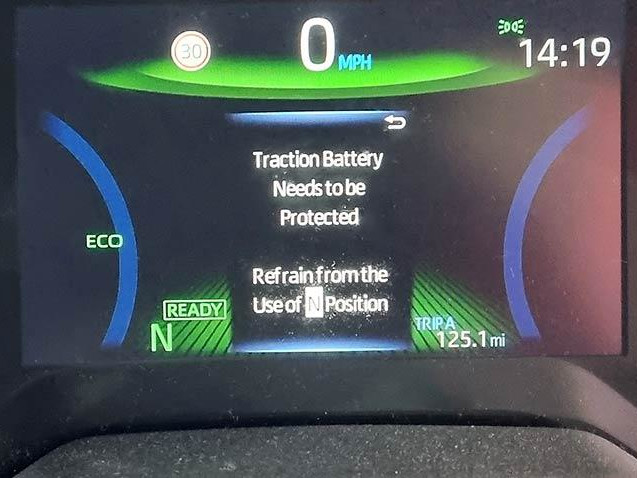
Few dashboard warnings can make an electric vehicle owner more anxious than seeing the message “Traction Battery Needs to Be Protected.” Because the traction battery is the heart of an electric or hybrid vehicle, any alert related to it naturally raises concerns about safety, performance, and potential repair costs.
If this warning appears while driving or charging your vehicle, your first thought might be that the battery is failing. Fortunately, that is not always the case. In many situations, the message is actually a protective response from the vehicle’s Battery Management System (BMS). The system continuously monitors battery temperature, voltage, charging conditions, and overall health. When it detects conditions that could potentially damage the battery, it may activate protective measures and display a warning to the driver.
Understanding what this message means is important because ignoring it could lead to reduced battery performance, accelerated battery degradation, or more serious mechanical issues over time. On the other hand, recognizing the underlying cause early can help you take the right action and avoid unnecessary repair expenses.
In this guide, you will learn what a traction battery is, why the warning appears, the most common causes behind it, whether it is safe to continue driving, and the steps you can take to diagnose and resolve the issue effectively.
What Is a Traction Battery?
A traction battery is the primary high-voltage battery pack that powers the electric motor in an electric vehicle (EV) or hybrid electric vehicle (HEV). Unlike the traditional 12-volt battery found in conventional vehicles, which mainly powers accessories such as lights, infotainment systems, and electronic controls, the traction battery is responsible for delivering the energy needed to move the vehicle.
Modern traction batteries are typically made up of hundreds or even thousands of individual lithium-ion cells arranged into modules and managed by sophisticated electronic systems. Together, these components store and deliver large amounts of electrical energy efficiently while maintaining safe operating conditions.
Traction Battery vs. 12-Volt Battery
Many drivers confuse the traction battery with the vehicle’s standard 12-volt battery, but they serve very different purposes.
| Traction Battery | 12-Volt Battery |
|---|---|
| Powers the electric motor | Powers accessories and electronics |
| High-voltage system | Low-voltage system |
| Stores large amounts of energy | Stores limited energy |
| Critical for vehicle propulsion | Supports vehicle operation |
| Much more expensive to replace | Relatively inexpensive |
If the 12-volt battery fails, certain vehicle functions may stop working. If the traction battery experiences problems, the vehicle’s ability to drive can be significantly affected.
Why Is the Traction Battery So Important?
The traction battery is often the most valuable component in an EV. Depending on the vehicle model, replacing a damaged battery pack can cost several thousand dollars. Because of this, manufacturers design advanced protection systems to maximize battery lifespan and prevent damage caused by overheating, overcharging, excessive discharge, or other harmful conditions.
The battery management system continuously monitors the battery’s condition and can automatically reduce performance or trigger warnings when abnormal conditions are detected. This is where messages such as “Traction Battery Needs to Be Protected” come into play.
Why Protection Matters
Lithium-ion batteries operate within specific temperature and voltage ranges. When those limits are exceeded, battery cells can degrade more rapidly, lose capacity, or suffer permanent damage. To prevent this, modern vehicles use multiple layers of protection, including cooling systems, voltage monitoring, temperature sensors, and intelligent charging controls.
The warning message is often a sign that one of these protective mechanisms has been activated. Rather than indicating immediate battery failure, it usually means the vehicle is attempting to safeguard one of its most critical and expensive components.
What Does “Traction Battery Needs to Be Protected” Mean?
When a vehicle displays the message “Traction Battery Needs to Be Protected,” it is typically informing the driver that the battery management system has detected conditions that could potentially harm the traction battery.
In simple terms, the vehicle is saying:
“The battery is experiencing conditions that require protective action to prevent damage.”
This warning does not automatically mean that the battery is defective or nearing failure. Instead, it often indicates that the vehicle has entered a protective mode designed to preserve battery health and ensure safe operation.
The Vehicle Is Protecting Itself
Modern EVs and hybrid vehicles are equipped with sophisticated monitoring systems that constantly evaluate:
- Battery temperature
- Cell voltage levels
- Charging rates
- Power demand
- Cooling system performance
- Overall battery health
If any of these parameters move outside safe operating limits, the system may trigger protective measures.
These measures can include:
- Limiting charging speed
- Reducing vehicle power output
- Restricting acceleration
- Adjusting battery temperature management
- Displaying warning messages
The goal is to prevent conditions that could shorten battery life or create safety concerns.
Protection Mode Does Not Always Mean Battery Failure
One of the most common misconceptions is that this warning means the battery must be replaced. In reality, many warnings are triggered by temporary operating conditions.
For example:
- Driving in extremely hot weather
- Fast charging multiple times in a short period
- Operating in very cold temperatures
- Low battery charge levels
- Temporary sensor anomalies
In these situations, the warning may disappear once normal conditions are restored.
How the Battery Management System Responds
The Battery Management System (BMS) acts as the brain of the battery pack. It continuously analyzes data from sensors located throughout the battery system.
When the BMS identifies a potential risk, it can intervene before damage occurs. This proactive approach is one of the reasons modern EV batteries often last much longer than many people expect.
For example, if battery temperatures rise too high during fast charging, the system may automatically reduce charging speed and display a protection warning. While this may seem inconvenient, it helps prevent long-term battery degradation and maintains overall battery health.
Understanding this protective function is essential before attempting any diagnosis because the warning is often a symptom of another underlying condition rather than a direct indication of battery failure.
Common Reasons the “Traction Battery Needs to Be Protected” Warning Appears
The warning message can be triggered by several different conditions. Some are temporary and easily resolved, while others may require professional diagnosis and repair. Understanding the most common causes can help determine whether the issue is minor or potentially serious.
Battery Overheating
Battery overheating is one of the most frequent reasons for a traction battery protection warning.
Lithium-ion batteries perform best within a specific temperature range. When temperatures rise beyond safe limits, the Battery Management System may activate protection mode to prevent damage.
Common causes of overheating include:
- Driving in extremely hot weather
- Frequent DC fast charging sessions
- Heavy acceleration for extended periods
- Towing heavy loads
- Driving long distances at high speeds
- Malfunctioning battery cooling systems
Signs that overheating may be the cause include:
- Reduced vehicle performance
- Slower charging speeds
- Cooling fans running continuously
- Battery temperature warnings appearing alongside the protection message
In many cases, allowing the vehicle to cool down naturally can help resolve the warning.
Extremely Low Temperatures
Cold weather can also trigger battery protection measures.
When temperatures drop significantly, chemical reactions inside lithium-ion cells slow down. This can reduce battery efficiency and increase internal resistance.
To prevent damage during charging and operation, the Battery Management System may temporarily restrict battery performance.
Common symptoms include:
- Reduced driving range
- Slower charging rates
- Limited acceleration
- Temporary protection warnings
Many modern EVs automatically warm the battery before charging, but extreme cold can still cause temporary alerts.
Battery Charge Level Problems
The battery’s state of charge plays a major role in overall battery health.
If the battery is repeatedly discharged to very low levels, the vehicle may enter protection mode to prevent excessive stress on the cells.
Potential triggers include:
- Driving until the battery is nearly empty
- Leaving the vehicle parked with a critically low charge
- Long periods of inactivity
- Deep discharge events
Manufacturers generally recommend maintaining a reasonable charge level rather than routinely allowing the battery to reach extremely low percentages.
Battery Cooling System Malfunctions
A properly functioning cooling system is essential for maintaining safe battery temperatures.
Many electric vehicles use either air-cooled or liquid-cooled battery systems. If these systems fail, battery temperatures can quickly exceed recommended limits.
Potential cooling system issues include:
- Cooling fan failure
- Coolant pump malfunction
- Low coolant levels
- Blocked airflow passages
- Damaged cooling components
When cooling problems occur, the Battery Management System may immediately limit performance to protect the battery pack.
Faulty Temperature or Voltage Sensors
The Battery Management System relies heavily on sensor data to make decisions.
If a sensor begins sending incorrect information, the system may mistakenly believe the battery is operating under unsafe conditions.
Common sensor-related problems include:
- Defective temperature sensors
- Faulty voltage sensors
- Damaged wiring harnesses
- Loose electrical connections
- Corroded connectors
In these cases, the battery itself may be healthy, but inaccurate sensor readings can still trigger protection warnings.
Battery Management System Software Issues
Modern EVs depend on complex software to manage battery performance and safety.
Occasionally, software bugs or communication errors can cause warning messages to appear even when no physical battery problem exists.
Possible causes include:
- Outdated vehicle software
- Failed software updates
- Communication faults between control modules
- Temporary electronic glitches
Manufacturers often release software updates that improve battery management algorithms and correct known issues.
Aging or Degraded Battery Cells
As batteries age, their capacity gradually decreases.
Over time, individual cells may begin performing differently from one another. If the Battery Management System detects abnormal voltage differences or excessive degradation, it may trigger protective measures.
Signs of battery aging may include:
- Reduced driving range
- Longer charging times
- Frequent warning messages
- Reduced power output
- Increased battery temperature fluctuations
While some degradation is normal, excessive degradation may require professional evaluation.
Physical Damage to the Battery Pack
Although less common, physical damage can also trigger protection mode.
Potential causes include:
- Road debris impacts
- Accident-related damage
- Water intrusion
- Corrosion
- Manufacturing defects
Because high-voltage batteries are involved, any suspected physical damage should be inspected by qualified technicians as soon as possible.
Is It Safe to Continue Driving?
One of the first questions drivers ask after seeing the warning is whether they can continue driving safely.
The answer depends on the underlying cause and any accompanying symptoms.
Situations Where Driving May Still Be Safe
You may be able to continue driving cautiously if:
- The warning appeared during extreme weather conditions.
- Vehicle performance remains normal.
- No unusual noises, smells, or additional warnings are present.
- The warning disappears after the battery temperature returns to normal.
In these situations, the protection system may simply be responding to temporary operating conditions.
Situations Where You Should Stop Driving
You should seek immediate assistance if the warning is accompanied by:
- Severe power reduction
- Battery overheating alerts
- Burning odors
- Smoke
- Rapid battery temperature increases
- Multiple high-voltage system warnings
- Unusual vehicle behavior
These symptoms may indicate a more serious issue that requires professional inspection.
When to Schedule Service
Even if the vehicle appears to drive normally, recurring battery protection warnings should never be ignored.
Repeated alerts may indicate:
- Cooling system problems
- Sensor failures
- Battery degradation
- Electrical faults
- Software issues
Addressing these problems early can help prevent more expensive repairs later.
How to Fix the “Traction Battery Needs to Be Protected” Warning
Once you understand what the warning means and the possible causes behind it, the next step is determining how to address the issue. While some situations can be resolved with simple troubleshooting, others may require professional diagnosis.
The key is to identify whether the warning is being triggered by temporary operating conditions or by an actual fault within the battery system.
Allow the Battery to Cool Down
If the warning appears after:
- Fast charging
- Driving in hot weather
- Climbing steep grades
- Heavy acceleration
- Long-distance driving
the battery may simply be operating above its preferred temperature range.
In this situation:
- Park the vehicle in a shaded area.
- Turn off the vehicle if recommended by the manufacturer.
- Allow the battery cooling system to operate if available.
- Wait until battery temperatures return to normal.
Many temperature-related warnings disappear automatically once the battery cools down.
Best Practice
Avoid immediately connecting the vehicle to a fast charger after a long drive in extreme heat. Giving the battery time to cool can reduce thermal stress and improve long-term battery health.
Check Charging Conditions
Charging-related issues can sometimes trigger battery protection warnings.
Inspect the following:
- Charging cable condition
- Charging port cleanliness
- Charger compatibility
- Charging station performance
- Charging environment temperature
If the warning appeared while charging:
- Stop the charging session.
- Disconnect the charger safely.
- Wait a few minutes.
- Reconnect and monitor the system.
If the warning returns repeatedly at the same charging station, try a different charger to determine whether the problem is vehicle-related or charger-related.
Restart the Vehicle
Modern vehicles contain dozens of electronic control modules that continuously communicate with one another.
Occasionally, temporary software glitches can trigger warning messages.
A simple restart may help:
- Turn off the vehicle completely.
- Wait several minutes.
- Restart the system.
- Check whether the warning remains active.
While this is not a permanent solution for underlying faults, it can help determine whether the issue was caused by a temporary communication error.
Inspect the Battery Cooling System
If the warning persists, the cooling system should be examined.
Potential issues include:
- Blocked cooling vents
- Dirty air filters
- Cooling fan failures
- Coolant leaks
- Coolant pump malfunctions
Some signs of cooling system problems include:
- Frequent overheating warnings
- Excessive fan noise
- Reduced charging speeds
- Repeated battery protection messages
Because cooling systems play a critical role in battery longevity, any suspected malfunction should be addressed promptly.
Scan for Diagnostic Trouble Codes (DTCs)
One of the most effective ways to identify the root cause is by scanning the vehicle for diagnostic trouble codes.
A diagnostic scan can reveal:
- Sensor faults
- Cooling system issues
- Battery module abnormalities
- Voltage imbalances
- Communication failures
- Battery Management System errors
Many EV-specific faults do not produce obvious symptoms beyond dashboard warnings, making diagnostic scanning an essential step in the troubleshooting process.
Update Vehicle Software
Manufacturers regularly release software updates that improve battery management performance.
Software updates may:
- Correct false warning messages
- Improve thermal management strategies
- Enhance charging behavior
- Fix communication errors
- Improve battery diagnostics
If your vehicle has not received recent updates, check with the manufacturer or authorized service center.
In some cases, a software update alone can resolve recurring protection warnings.
Seek Professional Inspection
If the warning remains active after basic troubleshooting, professional evaluation is strongly recommended.
Qualified technicians can perform:
- High-voltage system diagnostics
- Battery health assessments
- Thermal system inspections
- Cell balance analysis
- Electrical system testing
Because traction batteries operate at potentially dangerous voltage levels, attempting advanced repairs without proper training is not recommended.
How Much Could Repairs Cost?
The cost of resolving a traction battery protection warning varies significantly depending on the underlying issue.
In some cases, repairs may be relatively inexpensive. In others, major battery-related components may require replacement.
Software Updates
Potential Cost:
- Free under warranty
- Low service fee outside warranty
Software-related fixes are often the least expensive solution.
Sensor Replacement
Potential Cost:
- Low to moderate
Replacing a faulty temperature sensor or voltage sensor is generally much less expensive than repairing the battery itself.
Cooling System Repairs
Potential Cost:
- Moderate
Examples include:
- Cooling fan replacement
- Coolant pump replacement
- Coolant system service
- Airflow component repairs
These repairs are important because inadequate cooling can accelerate battery degradation.
Battery Module Repairs
Potential Cost:
- Moderate to high
Some vehicles allow individual battery modules to be repaired or replaced without changing the entire battery pack.
This can significantly reduce repair costs compared to full battery replacement.
Full Battery Replacement
Potential Cost:
- High
Battery replacement is typically the most expensive repair scenario.
Fortunately, a protection warning alone does not automatically indicate that battery replacement is necessary.
Many warnings are caused by external factors, sensor problems, cooling system issues, or software faults rather than catastrophic battery failure.
How to Prevent Future Traction Battery Protection Warnings
While some battery issues are unavoidable, many can be minimized through proper vehicle care and charging habits.
Avoid Frequent Deep Discharges
Repeatedly draining the battery to extremely low levels places additional stress on battery cells.
Whenever possible:
- Recharge before the battery becomes critically low.
- Follow the manufacturer’s recommended charging practices.
- Avoid leaving the vehicle parked with a nearly depleted battery.
Limit Excessive Fast Charging
Fast charging is convenient, but frequent use generates additional heat.
To reduce long-term battery stress:
- Use Level 2 charging when practical.
- Reserve DC fast charging for road trips and urgent charging needs.
- Avoid back-to-back fast charging sessions whenever possible.
Protect the Vehicle From Extreme Temperatures
Environmental conditions can significantly affect battery health.
Best practices include:
- Parking in shaded areas during hot weather.
- Using covered parking when available.
- Utilizing battery preconditioning features.
- Avoiding prolonged exposure to extreme heat or cold.
Follow Recommended Maintenance Schedules
Routine maintenance can help identify problems before they trigger warning messages.
Regular inspections may include:
- Cooling system checks
- Software updates
- Electrical system inspections
- Battery health evaluations
Preventive maintenance is often less expensive than major repairs.
Monitor Battery Performance
Pay attention to changes such as:
- Reduced driving range
- Slower charging speeds
- Increased battery temperatures
- Frequent warning messages
Early detection of abnormalities allows problems to be addressed before they become severe.
Frequently Asked Questions
Can I drive with a traction battery protection warning?
It depends on the cause. If the warning is related to temporary temperature conditions and the vehicle operates normally, limited driving may be possible. However, if the warning is accompanied by severe power reduction, overheating alerts, or unusual symptoms, professional inspection is recommended immediately.
Does this warning mean my battery is failing?
Not necessarily. Many protection warnings are triggered by environmental conditions, cooling system issues, sensor faults, or software problems rather than battery failure.
Will the warning disappear on its own?
In some cases, yes. Temperature-related warnings often clear once the battery returns to a normal operating range. Persistent warnings generally require diagnosis.
Can cold weather trigger this warning?
Yes. Extremely low temperatures can reduce battery efficiency and activate protective measures designed to prevent battery damage.
Should I ignore the warning if the vehicle seems normal?
No. Even if the vehicle continues to operate normally, recurring warnings may indicate an underlying issue that should be investigated.
Conclusion
The “Traction Battery Needs to Be Protected” warning is designed to safeguard one of the most valuable components in an electric or hybrid vehicle. Rather than indicating immediate battery failure, it often signals that the Battery Management System has detected conditions that could potentially harm the battery if left unaddressed.
Common causes range from overheating and extreme cold to cooling system malfunctions, sensor failures, software issues, and battery aging. In many situations, the warning serves as an early alert that allows drivers to take corrective action before serious damage occurs.
While some cases can be resolved through simple measures such as allowing the battery to cool down or updating vehicle software, persistent warnings should always be investigated. Ignoring repeated alerts can increase the risk of reduced battery performance, accelerated degradation, and costly repairs in the future.
By following proper charging habits, monitoring battery health, maintaining the cooling system, and addressing warnings promptly, EV owners can maximize battery lifespan and maintain reliable vehicle performance for years to come.