Few dashboard warnings are as concerning as seeing the message “AWD System Malfunction 2WD Mode Engaged” appear while driving your Toyota. Whether you own a Toyota RAV4, Highlander, Corolla Cross, Venza, or another all wheel drive model, this warning can leave you wondering if your vehicle is still safe to drive and how serious the problem might be.
In most cases, this message indicates that the vehicle’s All Wheel Drive (AWD) system has detected an abnormal condition and automatically disabled AWD operation to protect critical drivetrain components. As a result, the vehicle switches to Two Wheel Drive (2WD) mode, reducing traction and stability benefits that AWD normally provides, especially on slippery roads, snow, mud, or rough terrain.
The challenge for many owners is that this warning can be triggered by a wide range of issues. A simple wheel speed sensor fault, a weak battery, damaged wiring, software glitches, or even a more serious drivetrain problem may all cause the same message to appear. Without proper diagnosis, vehicle owners often spend unnecessary money replacing parts that are not actually defective.
In this guide, we will explain the most common causes of the Toyota AWD System Malfunction 2WD Mode Engaged warning, how to diagnose the problem, effective repair solutions, and what you can expect in terms of repair costs.
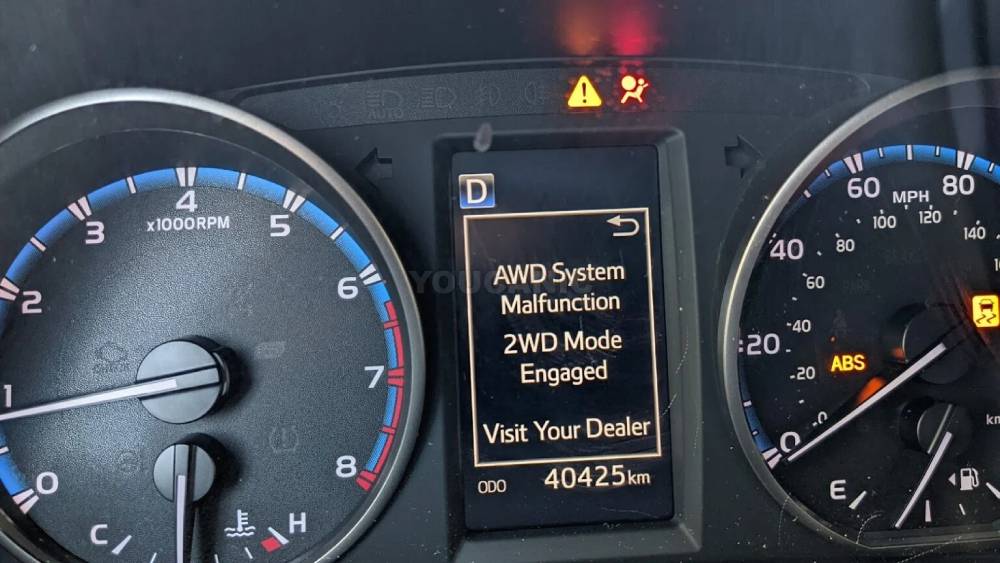
What Does “AWD System Malfunction 2WD Mode Engaged” Mean?
Toyota’s All Wheel Drive system is designed to automatically distribute power between the front and rear wheels to improve traction, stability, and overall driving performance. When the onboard computer detects a fault that could affect the AWD system’s operation, it may disable AWD functionality and switch the vehicle into Two Wheel Drive mode as a protective measure.
The warning message “AWD System Malfunction 2WD Mode Engaged” does not necessarily mean that the entire drivetrain has failed. In many cases, the vehicle remains drivable. However, the AWD system is no longer functioning as intended, which can reduce traction on slippery roads, steep inclines, gravel surfaces, or snowy conditions.
Toyota engineers designed this safeguard to prevent additional damage to expensive drivetrain components. Instead of allowing the AWD system to operate with faulty data or malfunctioning hardware, the control module temporarily limits the vehicle to 2WD operation until the underlying issue is diagnosed and repaired.
Drivers should understand that this warning is a symptom rather than a specific diagnosis. The actual cause may range from a minor electrical issue to a significant mechanical failure. Proper troubleshooting is essential before replacing any parts.
Common Symptoms That Accompany the AWD System Malfunction Warning
When the AWD warning appears, it is often accompanied by other warning lights or unusual vehicle behavior. Recognizing these symptoms can help narrow down the source of the problem.
One of the most common signs is the illumination of the Check Engine Light. Because modern Toyota vehicles rely on communication between multiple control modules, an engine related fault can sometimes trigger an AWD warning even when no mechanical AWD component has failed.
Drivers may also notice the ABS warning light or the traction control indicator appearing simultaneously. Since the AWD system relies heavily on wheel speed information from ABS sensors, any interruption in these signals can force the AWD system to shut down.
Some owners report reduced acceleration performance after the warning appears. Others notice that the vehicle feels less stable when driving on wet or uneven surfaces. In more severe cases, unusual noises, vibrations, or drivetrain shuddering may develop.
If the vehicle exhibits strong vibrations, burning smells, grinding sounds, or difficulty shifting gears, immediate inspection is recommended. These symptoms may indicate a more serious issue affecting drivetrain components rather than a simple sensor fault.
Top Causes of Toyota AWD System Malfunction 2WD Mode Engaged
Understanding the most common causes can save both time and repair expenses.
Faulty Wheel Speed Sensors
Wheel speed sensors are among the most frequent causes of AWD system warnings. These sensors provide critical data to the ABS, traction control, and AWD control modules. If one sensor sends inaccurate information or fails completely, the system may disable AWD operation.
Road debris, corrosion, damaged wiring, or sensor wear can all contribute to sensor failure.
ABS System Problems
The AWD system relies heavily on the Anti Lock Braking System. A malfunctioning ABS sensor, damaged tone ring, or ABS module issue may trigger both ABS and AWD warning messages simultaneously.
Weak Battery or Charging System Issues
Many drivers are surprised to learn that a weak battery can trigger AWD warnings. Modern Toyota vehicles require stable voltage for proper communication between electronic control units. Low voltage conditions can create false fault codes and system malfunctions.
A failing alternator may produce similar symptoms by causing voltage fluctuations while driving.
Damaged Wiring or Corroded Connectors
Electrical problems are common causes of intermittent AWD faults. Moisture intrusion, road salt, rodent damage, and aging connectors can interrupt communication between control modules and sensors.
Because these faults can be inconsistent, they are often difficult to diagnose without proper testing equipment.
AWD Control Module Software Errors
Certain Toyota models have experienced software related issues affecting AWD operation. Outdated programming or corrupted module data can trigger warning messages even when all hardware components remain functional.
In some cases, a software update performed by a dealership resolves the problem.
AWD Coupling or Transfer Case Problems
The AWD coupling and transfer case are responsible for distributing power throughout the drivetrain. Internal wear, overheating, lubrication issues, or mechanical failure can trigger protective shutdown modes.
These repairs are generally more expensive than sensor or electrical fixes and often require professional diagnosis.
Differential Issues
Front and rear differentials play a crucial role in AWD operation. Low fluid levels, contaminated lubricant, worn bearings, or internal gear damage can interfere with torque distribution and trigger warning messages.
Regular maintenance helps reduce the risk of differential related failures.
Traction Control System Malfunctions
Because traction control and AWD systems work together, faults within the traction control system can also disable AWD functionality. This commonly occurs when wheel slip data becomes unreliable.
Transmission Related Faults
Modern Toyota transmissions share data with the AWD control system. Certain transmission codes can indirectly trigger AWD warnings even though the AWD hardware itself remains functional.
System Overheating
Extended towing, off road driving, steep mountain climbs, or prolonged operation under heavy loads can generate excessive heat within the AWD system. To prevent component damage, the vehicle may temporarily disable AWD operation until temperatures return to normal levels.
How to Diagnose Toyota AWD System Malfunction 2WD Mode Engaged
Proper diagnosis is critical because the same warning message can be triggered by multiple systems. Replacing parts without identifying the root cause often leads to unnecessary expenses and recurring problems.
Check for Additional Warning Lights
Start by examining the instrument cluster. If the AWD warning appears alongside the Check Engine Light, ABS Light, or Traction Control Light, these additional indicators can provide valuable clues about the source of the malfunction.
For example, an AWD warning combined with an ABS warning often points to wheel speed sensor issues. If the Check Engine Light is present, the problem may be related to the engine management system rather than the AWD hardware itself.
Scan the Vehicle for Diagnostic Trouble Codes
Using an OBD II scanner is one of the most effective ways to identify the underlying issue. Modern Toyota vehicles store fault codes whenever a system detects abnormal operation.
Common codes associated with AWD system malfunctions include wheel speed sensor faults, communication errors between control modules, low voltage conditions, and drivetrain related problems.
Recording all stored and pending codes before clearing them can help technicians identify intermittent faults that may otherwise be difficult to reproduce.
Inspect Battery and Charging System Performance
Low system voltage is a surprisingly common cause of AWD warnings. Test the battery’s condition and verify charging voltage while the engine is running.
A healthy battery should maintain sufficient voltage when the vehicle is off, while the alternator should provide stable charging output during operation. Weak batteries, poor ground connections, and failing alternators can all trigger false system warnings.
Examine Wheel Speed Sensors and Wiring
Inspect each wheel speed sensor for physical damage, contamination, or loose connections. Dirt, rust, road debris, and damaged wiring can interfere with sensor signals and confuse the AWD control module.
Technicians often use live data from a scan tool to compare wheel speed readings while driving. A sensor providing inconsistent information can usually be identified quickly through this method.
Inspect AWD Components
If no electrical issues are found, attention should shift to the mechanical components of the AWD system. This includes the transfer case, differential assemblies, driveshafts, and AWD coupling unit.
Fluid leaks, unusual noises, excessive heat, or metal particles in lubricants may indicate internal wear or component failure.
How to Fix Toyota AWD System Malfunction 2WD Mode Engaged
The appropriate repair depends entirely on the underlying cause. Fortunately, many AWD warnings originate from relatively minor issues rather than major drivetrain failures.
Replace Faulty Wheel Speed Sensors
If diagnostic testing identifies a defective wheel speed sensor, replacement is usually straightforward and cost effective. Once the sensor is replaced and fault codes are cleared, AWD functionality often returns immediately.
Repair Damaged Wiring and Connectors
Corroded connectors, broken wires, and poor electrical connections can interrupt communication between sensors and control modules. Repairing damaged wiring frequently resolves intermittent AWD warnings that appear without any obvious mechanical symptoms.
Applying dielectric grease and ensuring proper sealing can help prevent future moisture related issues.
Replace a Weak Battery
A battery nearing the end of its service life can create voltage fluctuations that affect multiple vehicle systems. Installing a new battery and verifying charging system performance often eliminates recurring warning messages.
Many Toyota owners report that AWD warnings disappear after resolving battery related issues.
Update Software and Reprogram Control Modules
Manufacturers occasionally release software updates to address known electronic issues. If a software related fault is identified, updating the AWD control module or engine control module may restore normal operation.
This procedure is typically performed by a dealership or qualified repair facility with access to manufacturer software.
Service Differential and Transfer Case Fluids
Old or contaminated lubricants can contribute to excessive wear and overheating. Replacing differential and transfer case fluids according to Toyota’s maintenance schedule helps maintain proper AWD performance and prolong component life.
Replace Failed AWD Components
If internal damage is found within the AWD coupling, transfer case, or differential assemblies, component replacement may be necessary. Although these repairs are more expensive, addressing the issue promptly can prevent further drivetrain damage.
Can You Continue Driving with the AWD Warning Active?
One of the most common questions owners ask is whether it is safe to continue driving after the AWD System Malfunction 2WD Mode Engaged warning appears.
The answer depends on the severity of the problem and the symptoms accompanying the warning.
If the vehicle drives normally, accelerates smoothly, and shows no unusual noises or vibrations, short distance driving is often possible. In these situations, the vehicle has typically entered a protective mode that disables AWD while maintaining normal operation through two wheel drive.
However, drivers should remember that traction capabilities will be reduced. This may be particularly noticeable during rain, snow, ice, gravel road travel, or off road conditions where AWD would normally provide additional stability.
Immediate inspection is strongly recommended if any of the following symptoms occur:
The Check Engine Light is flashing.
The vehicle experiences significant power loss.
Grinding, clunking, or whining noises develop.
Strong vibrations are felt through the drivetrain.
A burning smell is present.
Transmission shifting becomes erratic.
Ignoring these warning signs can lead to more extensive and costly repairs. What begins as a minor electrical fault may eventually contribute to damage in other interconnected systems if left unresolved.
For the best outcome, schedule a diagnostic inspection as soon as possible after the warning first appears. Early detection not only reduces repair costs but also minimizes the risk of unexpected breakdowns and drivetrain damage.
Repair Costs for Toyota AWD System Malfunction 2WD Mode Engaged
Repair costs can vary significantly depending on the root cause of the warning. Some issues can be resolved with inexpensive sensor replacements, while others may require major drivetrain repairs.
A faulty wheel speed sensor is typically one of the least expensive repairs. Since these sensors are exposed to road debris, moisture, and harsh weather conditions, they naturally wear over time. Replacing a defective sensor often restores normal AWD operation without further repairs.
Battery related problems are also relatively affordable to fix. A weak battery or failing charging system can trigger multiple warning messages throughout the vehicle. Once proper voltage is restored, many electronic faults disappear.
Electrical wiring repairs can vary in cost depending on the location and severity of the damage. A simple connector repair may require minimal labor, while extensive wiring harness damage can become more time consuming.
Software updates generally represent one of the most cost effective solutions when available. In some cases, a dealership can resolve the problem by updating control module software without replacing any hardware.
More expensive repairs typically involve mechanical AWD components. A damaged AWD coupling, transfer case, differential assembly, or drivetrain module may require significant labor and specialized parts. The longer these issues remain unresolved, the greater the risk of additional component damage.
Vehicle owners can often reduce repair expenses by addressing warning messages early. Small electrical issues that are repaired promptly are less likely to develop into larger drivetrain failures.
How to Prevent AWD System Malfunction Issues in the Future
Although not every AWD malfunction can be prevented, proper maintenance greatly reduces the likelihood of experiencing this warning.
Follow Recommended Maintenance Intervals
Routine maintenance remains the most effective way to protect AWD components. Following Toyota’s recommended service schedule helps ensure that lubricants, filters, and drivetrain components remain in good condition.
Maintain Proper Fluid Levels
Differential fluid and transfer case fluid play a critical role in protecting internal gears and bearings. Low or contaminated fluid can increase friction, generate excessive heat, and accelerate wear.
Regular inspections help identify leaks before they become serious problems.
Monitor Battery Health
Many modern vehicle systems depend on stable electrical voltage. Testing the battery regularly and replacing it before failure can prevent numerous electronic malfunctions, including AWD related warnings.
Drivers who frequently take short trips should pay particular attention to battery condition because insufficient charging can shorten battery life.
Inspect Tires Regularly
AWD systems are highly sensitive to tire size differences. Using mismatched tires or operating with uneven tire wear can place additional stress on drivetrain components.
All four tires should be of the same size, type, and tread depth whenever possible.
Avoid Excessive Water Exposure
Driving through deep water can damage wheel speed sensors, electrical connectors, and control modules. Water intrusion remains a common cause of electrical faults in modern vehicles.
If the vehicle is exposed to flooding or deep standing water, a thorough inspection should be performed as soon as possible.
Address Warning Lights Immediately
Many drivers continue operating their vehicles for weeks or months after warning lights first appear. Unfortunately, delaying diagnosis often allows minor issues to become major repairs.
Prompt attention to warning messages helps preserve drivetrain reliability and reduce long term repair costs.
Frequently Asked Questions
What does AWD System Malfunction 2WD Mode Engaged mean on a Toyota?
This warning indicates that the vehicle has detected a fault affecting the All Wheel Drive system and has temporarily disabled AWD functionality. The vehicle switches into Two Wheel Drive mode to protect drivetrain components until the issue is diagnosed and repaired.
Can I drive with the AWD System Malfunction warning on?
In many cases, yes. If the vehicle operates normally and no unusual noises, vibrations, or severe performance issues are present, short distance driving is often possible. However, professional diagnosis should be scheduled as soon as possible.
Will the warning reset itself?
Sometimes. If the warning was triggered by a temporary electrical issue or low battery voltage, it may disappear after the condition is corrected. Persistent warnings usually indicate an underlying fault that requires inspection.
Can a bad battery cause an AWD malfunction warning?
Yes. Low voltage is a surprisingly common cause of electronic system warnings in modern Toyota vehicles. A weak battery or failing alternator can interfere with communication between control modules and trigger AWD related fault messages.
Is the AWD system damaged when this warning appears?
Not necessarily. Many cases involve sensor failures, wiring issues, software glitches, or voltage problems rather than actual mechanical damage. A diagnostic scan is required to determine the exact cause.
Which Toyota models commonly experience this warning?
The warning has been reported on several AWD equipped Toyota models, including the RAV4, Highlander, Corolla Cross, Venza, Sienna, and certain Lexus vehicles that share Toyota AWD technology.
Conclusion
Seeing the message “Toyota AWD System Malfunction 2WD Mode Engaged” can be alarming, but it does not automatically mean that your vehicle has suffered a major drivetrain failure. In many situations, the warning is triggered by relatively simple issues such as a faulty wheel speed sensor, low battery voltage, damaged wiring, or software related problems.
Understanding how the AWD system operates and recognizing the symptoms that accompany the warning can help owners make informed decisions. Early diagnosis is essential because the same warning can be caused by a wide range of conditions, from minor electrical faults to more serious mechanical failures involving the transfer case, differential, or AWD coupling.
The most effective approach is to scan the vehicle for diagnostic trouble codes, inspect the electrical system, and address any related warning lights immediately. Taking action early often prevents additional damage and keeps repair costs under control.
By following Toyota’s recommended maintenance schedule, monitoring battery health, maintaining proper fluid levels, and responding quickly to warning messages, drivers can significantly reduce the likelihood of future AWD system problems.
If your Toyota displays the AWD System Malfunction 2WD Mode Engaged warning, do not ignore it. A timely inspection can protect your vehicle’s drivetrain, improve safety, and help avoid costly repairs down the road.