When discussing GM’s legendary Gen IV small-block V8 engines, the L9H often stands out as one of the most capable yet underappreciated powerplants. Built for premium full-size trucks and SUVs, this 6.2L V8 combines impressive horsepower, strong low-end torque, and proven long-term durability. Whether you’re shopping for a used Chevrolet Silverado, GMC Sierra Denali, Cadillac Escalade, or researching an LS-based engine for a performance project, understanding the L9H engine specs is essential for making an informed decision.
Introduced as part of General Motors’ Gen IV small-block family, the L9H was engineered to deliver an ideal balance of power, towing capability, and everyday drivability. Its aluminum cylinder heads, robust cast-iron block, sequential fuel injection, and Flex Fuel compatibility allowed it to perform reliably under demanding conditions while maintaining respectable fuel efficiency for its class. These characteristics helped establish the L9H as one of GM’s most dependable truck engines during its production years.
In this comprehensive guide, we’ll explore every aspect of the L9H engine specs, including its complete technical specifications, engine architecture, horsepower and torque figures, performance characteristics, vehicle applications, reliability, common issues, maintenance requirements, and upgrade potential. Whether you’re an automotive enthusiast, a DIY mechanic, or a prospective buyer, this guide provides everything you need to understand what makes the L9H one of GM’s most respected V8 engines.
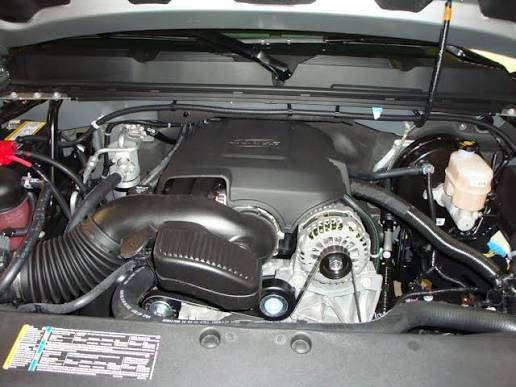
L9H Engine Overview
The L9H is a 6.2-liter naturally aspirated V8 gasoline engine developed by General Motors as part of its renowned Gen IV Small Block engine family. Designed primarily for premium full-size pickups and luxury SUVs, the L9H was engineered to deliver a combination of impressive towing capability, responsive acceleration, and long-term durability. Introduced for the 2009 model year, it served as one of GM’s flagship truck engines until it was gradually replaced by the next-generation EcoTec3 powerplants.
Unlike many earlier truck engines, the L9H features a deep-skirt cast-iron cylinder block paired with lightweight aluminum cylinder heads. This combination provides exceptional structural rigidity while reducing overall engine weight compared to traditional cast-iron head designs. The engine also incorporates sequential multi-port fuel injection and electronic throttle control to improve fuel delivery, throttle response, and emissions performance.
One of the defining characteristics of the L9H is its Flex Fuel capability. The engine is designed to operate on regular gasoline or E85 ethanol blends without requiring hardware modifications. This flexibility offered owners greater fuel options while maintaining nearly identical performance under most driving conditions.
The L9H also shares many design principles with other members of GM’s LS engine family, making it highly desirable among enthusiasts. Its robust architecture, aftermarket support, and compatibility with numerous performance components have made it a popular choice for engine swaps and high-performance builds.
L9H Engine Overview at a Glance
| Specification | Details |
|---|---|
| Manufacturer | General Motors |
| Engine Family | Gen IV Small Block V8 |
| Engine Code | L9H |
| Production Years | 2009–2013 |
| Displacement | 6.2L (6,162 cc) |
| Configuration | 90-degree V8 |
| Fuel System | Sequential Multi-Port Fuel Injection |
| Fuel Compatibility | Gasoline and E85 Flex Fuel |
| Aspiration | Naturally Aspirated |
| Valvetrain | OHV, 2 Valves per Cylinder |
| Primary Applications | Chevrolet, GMC, Cadillac Trucks and SUVs |
Complete L9H Engine Specs
Understanding the complete L9H engine specs provides valuable insight into why this engine earned a reputation for dependable performance. While its displacement and horsepower figures receive the most attention, every component contributes to its overall capability, from the oversized cylinder bore to its high-flow aluminum cylinder heads.
The L9H utilizes a 4.065-inch bore and a 3.622-inch stroke, resulting in a total displacement of 376 cubic inches or 6.2 liters. A relatively high 10.5:1 compression ratio allows the engine to produce excellent power while remaining compatible with regular gasoline and E85 fuel.
Factory output is rated at up to 403 horsepower and 417 lb-ft of torque, depending on the specific vehicle application. These figures place the L9H among the most powerful naturally aspirated truck engines produced by General Motors during its era.
Complete L9H Engine Specifications
| Specification | Value |
|---|---|
| Engine Code | L9H |
| Engine Family | Gen IV Small Block |
| Displacement | 6.2L (6,162 cc / 376 cu in) |
| Configuration | 90° V8 |
| Block Material | Cast Iron |
| Cylinder Head Material | Aluminum |
| Bore | 4.065 in (103.25 mm) |
| Stroke | 3.622 in (92 mm) |
| Compression Ratio | 10.5:1 |
| Horsepower | Up to 403 hp |
| Torque | Up to 417 lb-ft |
| Valvetrain | OHV, 16 Valves |
| Fuel Injection | Sequential Multi-Port Fuel Injection |
| Aspiration | Naturally Aspirated |
| Fuel Type | Gasoline / E85 Flex Fuel |
| Recommended Fuel | Regular or Premium Gasoline, E85 Compatible |
| Redline | Approximately 6,000 RPM |
| Oil Capacity | Approximately 6 quarts with filter |
| Cooling System | Liquid Cooled |
| Firing Order | 1-8-7-2-6-5-4-3 |
| Engine Weight | Approximately 560 lbs (254 kg) |
These specifications highlight the engine’s focus on producing strong low-end torque while maintaining sufficient airflow to deliver excellent high-RPM performance. The combination of a durable iron block and efficient aluminum heads also contributes to the L9H’s ability to withstand heavy towing, long highway trips, and high-mileage ownership.
L9H Engine Performance
Performance is where the L9H truly distinguishes itself from many other truck engines of its generation. Thanks to its large displacement, efficient cylinder head design, and high compression ratio, the engine delivers smooth yet commanding acceleration across a broad RPM range.
With a factory rating of up to 403 horsepower and 417 lb-ft of torque, the L9H provides immediate throttle response, making full-size trucks and SUVs feel remarkably responsive despite their substantial weight. Maximum torque arrives relatively early in the rev range, allowing confident launches from a stop, effortless highway merging, and strong passing performance without excessive downshifting.
The engine’s naturally aspirated design also contributes to predictable power delivery. Rather than relying on turbochargers or superchargers, the L9H produces linear acceleration that remains smooth from idle to redline. This characteristic is especially valuable for towing, where consistent torque output enhances vehicle control and stability under heavy loads.
Fuel economy is respectable considering the engine’s displacement and performance. Vehicles equipped with the L9H typically achieve fuel consumption figures in the mid-teens during city driving and approximately 20 mpg on the highway under favorable conditions. Drivers using E85 ethanol fuel may experience a slight reduction in fuel economy due to the lower energy density of ethanol, although horsepower remains largely unaffected.
Beyond daily driving, the L9H has earned a strong reputation within the performance community. Its robust bottom end, proven LS architecture, and extensive aftermarket support allow owners to unlock significantly more power through intake upgrades, exhaust modifications, ECU tuning, and camshaft replacements. With proper supporting modifications, the L9H is capable of producing substantially higher output while retaining excellent street manners and long-term reliability.
Vehicles Equipped with the L9H Engine
General Motors reserved the L9H engine for its premium trucks and full-size SUVs, where buyers expected greater performance, improved towing capability, and refined driving characteristics. Although the engine was never installed across GM’s entire truck lineup, it became the standard powerplant for several luxury-oriented models and high-end trims between 2009 and 2013.
One of the most recognizable applications was the Cadillac Escalade. As Cadillac’s flagship SUV, the Escalade required an engine capable of delivering smooth acceleration while comfortably moving a vehicle weighing well over 5,500 pounds. The L9H’s 403 horsepower and 417 lb-ft of torque provided confident highway passing, responsive city driving, and strong towing performance, making it an ideal match for the premium SUV.
The GMC Yukon Denali and Yukon XL Denali also benefited from the L9H. Designed as luxury alternatives to conventional SUVs, these models combined upscale interiors with substantial hauling and towing capabilities. The engine’s broad torque curve allowed effortless acceleration even when carrying passengers or towing heavy trailers.
In the pickup segment, the L9H appeared in selected Chevrolet Silverado 1500 and GMC Sierra 1500 models equipped with premium trim packages. These trucks offered buyers V8 performance without stepping up to heavy-duty platforms, making them popular among drivers who needed towing capability while maintaining everyday comfort.
The engine’s widespread use across multiple GM brands also simplified maintenance and parts availability. Since many internal components are shared with other Gen IV small-block engines, owners benefit from extensive aftermarket support and relatively straightforward servicing.
Vehicles Equipped with the L9H Engine
| Vehicle | Model Years | Horsepower | Torque |
|---|---|---|---|
| Cadillac Escalade | 2009–2013 | 403 hp | 417 lb-ft |
| Cadillac Escalade ESV | 2009–2013 | 403 hp | 417 lb-ft |
| Cadillac Escalade EXT | 2009–2013 | 403 hp | 417 lb-ft |
| GMC Yukon Denali | 2009–2013 | 403 hp | 417 lb-ft |
| GMC Yukon XL Denali | 2009–2013 | 403 hp | 417 lb-ft |
| Chevrolet Silverado 1500 (Selected Models) | 2009–2013 | Up to 403 hp | 417 lb-ft |
| GMC Sierra 1500 (Selected Models) | 2009–2013 | Up to 403 hp | 417 lb-ft |
L9H Engine Design and Internal Components
The L9H engine was engineered using many of the same proven design principles that helped establish the LS engine family as one of the most respected V8 platforms in automotive history. Rather than focusing solely on maximum horsepower, General Motors prioritized durability, structural rigidity, and long-term reliability under demanding operating conditions.
At the foundation of the engine is a deep-skirt cast-iron cylinder block. This design significantly increases block stiffness while minimizing crankshaft flex during heavy acceleration and towing. The block is paired with six-bolt main bearing caps, a feature that improves bottom-end strength and enables the engine to handle substantial power increases when modified.
The aluminum cylinder heads feature efficient cathedral-port intake runners designed to optimize airflow without sacrificing low-speed torque. Larger intake and exhaust valves further improve breathing efficiency, allowing the engine to produce strong power throughout the RPM range while maintaining excellent combustion stability.
Inside the rotating assembly, the forged steel crankshaft provides exceptional durability under continuous heavy loads. Powdered metal connecting rods and hypereutectic aluminum pistons were selected to balance strength, weight, and manufacturing efficiency. Together, these components enable the engine to deliver dependable performance across hundreds of thousands of miles when properly maintained.
The L9H also utilizes a hydraulic roller camshaft with overhead valve architecture. While the traditional pushrod layout may appear less sophisticated than dual overhead cam designs, it offers several advantages, including compact dimensions, fewer moving parts, and proven reliability. These characteristics have contributed to the enduring popularity of LS-based engines among enthusiasts and professional builders alike.
Key Internal Components
| Component | Material / Design |
|---|---|
| Engine Block | Deep-Skirt Cast Iron |
| Cylinder Heads | Aluminum |
| Crankshaft | Forged Steel |
| Connecting Rods | Powdered Metal |
| Pistons | Hypereutectic Aluminum |
| Main Bearing Caps | Six-Bolt Design |
| Valvetrain | OHV Hydraulic Roller |
| Camshaft | Hydraulic Roller Cam |
| Intake Manifold | Composite High-Flow Design |
| Fuel Injection | Sequential Multi-Port Injection |
L9H Engine Reliability
One of the strongest selling points of the L9H is its reputation for long-term reliability. Thanks to its robust construction, conservative factory tuning, and proven LS architecture, the engine is widely regarded as one of General Motors’ most dependable truck V8s. Many examples continue to operate reliably with well over 200,000 miles, while meticulously maintained engines have surpassed the 300,000-mile mark without requiring major internal repairs.
Several design choices contribute to this longevity. The cast-iron engine block resists cylinder distortion under heavy loads, while the forged steel crankshaft and durable rotating assembly provide exceptional strength during towing, hauling, and extended highway driving. Combined with efficient cooling and lubrication systems, these features help minimize wear throughout the engine’s service life.
Routine maintenance remains the most important factor in preserving reliability. Regular oil changes using high-quality engine oil, timely replacement of spark plugs and filters, proper cooling system maintenance, and periodic inspection of belts and hoses can significantly extend engine life. Vehicles that receive consistent preventative maintenance generally experience fewer mechanical issues than those with neglected service histories.
Although the L9H has earned an excellent reputation overall, no engine is completely free from potential problems. Some owners have reported issues related to oil consumption, aging cooling components, and exhaust manifold hardware as mileage increases. Fortunately, most of these concerns are well understood within the automotive community, and replacement parts are widely available at reasonable cost.
For buyers considering a used truck or SUV powered by the L9H, maintenance records are often a better indicator of long-term reliability than mileage alone. A well-maintained engine with higher mileage is frequently a safer investment than a low-mileage example that has been poorly serviced. This combination of durability, strong aftermarket support, and straightforward maintenance continues to make the L9H one of the most desirable naturally aspirated V8 engines in GM’s truck lineup.
Common L9H Engine Problems
Despite its outstanding reputation for durability, the L9H is not completely immune to mechanical issues. Like any high-mileage V8 engine, certain components are more susceptible to wear over time. Fortunately, most of these problems are well documented, relatively easy to diagnose, and can often be prevented through routine maintenance.
Excessive Oil Consumption
Some owners have reported higher-than-normal oil consumption, particularly on engines with significant mileage. Worn piston rings, valve seals, or extended oil change intervals can contribute to increased oil usage. Monitoring the oil level between service intervals and using the manufacturer-recommended oil viscosity can help reduce the risk of engine damage.
Common Symptoms
- Low engine oil level
- Blue exhaust smoke during startup
- Frequent oil top-offs
- Oil warning light
Water Pump Failure
The factory water pump generally provides many years of reliable service but eventually wears out due to bearing fatigue or seal deterioration. A failing water pump can quickly lead to overheating if left unattended.
Common Symptoms
- Coolant leaks
- Engine overheating
- Grinding or whining noise from the front of the engine
- Steam from the engine compartment
Exhaust Manifold Bolt Failure
Broken exhaust manifold bolts are a relatively common issue on GM truck engines. Heat cycles over thousands of miles can weaken the bolts, eventually allowing exhaust leaks to develop.
Common Symptoms
- Ticking noise during cold starts
- Exhaust odor
- Reduced engine efficiency
- Visible soot near the manifold
Knock Sensor Corrosion
Because the knock sensors are mounted beneath the intake manifold, moisture intrusion can eventually lead to corrosion or sensor failure. Although this issue is not unique to the L9H, it is commonly encountered on aging LS-based engines.
Common Symptoms
- Check Engine Light
- Reduced ignition timing
- Decreased fuel economy
- Lower engine performance
Carbon Deposits
Over time, combustion byproducts can accumulate on the intake valves, throttle body, and combustion chambers. While not typically severe, excessive carbon buildup may affect idle quality and throttle response.
Common Symptoms
- Rough idle
- Hesitation during acceleration
- Reduced fuel economy
- Minor power loss
Common L9H Engine Problems Summary
| Problem | Typical Mileage | Repair Difficulty | Preventive Maintenance |
|---|---|---|---|
| Oil Consumption | High Mileage | Moderate | Regular oil changes |
| Water Pump Failure | 100,000–150,000 miles | Moderate | Inspect cooling system |
| Exhaust Manifold Bolts | High Mileage | Moderate | Periodic inspections |
| Knock Sensor Failure | Varies | Moderate | Prevent moisture intrusion |
| Carbon Buildup | High Mileage | Easy to Moderate | Fuel system cleaning |
Overall, the L9H experiences relatively few serious mechanical failures compared to many modern engines. Most issues develop gradually and provide noticeable warning signs long before catastrophic damage occurs.
Maintenance Specifications
Proper maintenance is the key to maximizing the lifespan of the L9H engine. General Motors designed this powerplant for demanding truck and SUV applications, meaning routine service intervals should never be ignored, especially if the vehicle is frequently used for towing or hauling.
Engine oil should be replaced using a high-quality API-certified synthetic oil that meets GM specifications. Oil changes every 5,000 to 7,500 miles are generally recommended for normal driving, while severe-duty applications may require more frequent service.
Spark plugs typically last between 90,000 and 100,000 miles under normal operating conditions. Replacing them on schedule helps maintain efficient combustion, smooth idle quality, and optimal fuel economy.
The cooling system should also be inspected regularly. Coolant replacement intervals vary depending on the coolant formulation, but periodic inspections for leaks, hose deterioration, and proper coolant concentration are essential for preventing overheating.
Air filters, serpentine belts, and accessory drive components should be checked during routine maintenance to ensure maximum engine efficiency.
L9H Maintenance Specifications
| Service Item | Specification |
|---|---|
| Engine Oil Capacity | Approximately 6 quarts (with filter) |
| Recommended Oil | SAE 5W-30 Full Synthetic |
| Oil Change Interval | 5,000–7,500 miles |
| Coolant Type | Dex-Cool |
| Spark Plug Type | ACDelco Iridium |
| Spark Plug Gap | 0.040 inch |
| Air Filter Inspection | Every 15,000 miles |
| Engine Air Filter Replacement | 30,000–45,000 miles |
| Coolant Inspection | Every Oil Change |
| Coolant Replacement | Approximately 100,000 miles |
| Serpentine Belt Inspection | Every 30,000 miles |
| Fuel Filter | Integrated with fuel system on most applications |
Following these maintenance intervals can significantly extend engine life while reducing the likelihood of costly repairs.
L9H Performance Upgrades
One of the greatest strengths of the L9H is its exceptional aftermarket support. Because it shares its architecture with many engines in GM’s LS family, owners have access to thousands of performance components ranging from simple bolt-on upgrades to complete racing packages.
A cold air intake is often the first modification enthusiasts choose. By improving airflow into the engine, a quality intake system can enhance throttle response while producing a modest increase in horsepower.
Upgrading the exhaust system is another popular modification. Long-tube headers combined with a high-flow exhaust reduce backpressure, allowing the engine to breathe more efficiently. When paired with ECU tuning, these upgrades can produce noticeable improvements in both horsepower and torque.
Custom engine tuning remains one of the most effective modifications for naturally aspirated L9H engines. Optimizing ignition timing, fuel delivery, and transmission shift points can unlock additional performance while improving drivability.
For owners seeking substantial power gains, camshaft upgrades offer excellent results. A performance camshaft increases valve lift and duration, allowing more air to enter the combustion chambers. With proper supporting modifications, gains of 50 horsepower or more are common.
The L9H’s strong bottom end also makes it well suited for forced induction. Supercharger and turbocharger systems can dramatically increase output, although upgraded fuel system components, improved cooling, and professional tuning are essential to maintain reliability.
Popular Performance Upgrades
| Upgrade | Estimated Power Gain |
|---|---|
| Cold Air Intake | 5–10 hp |
| Cat-Back Exhaust | 5–15 hp |
| Long-Tube Headers | 15–25 hp |
| ECU Tune | 15–30 hp |
| Performance Camshaft | 40–70 hp |
| Intake Manifold Upgrade | 10–20 hp |
| Supercharger Kit | 150–250+ hp |
| Turbocharger System | 200–400+ hp |
The L9H’s combination of a durable cast-iron block, proven LS architecture, and extensive aftermarket support makes it one of the most rewarding GM truck engines for performance enthusiasts. Whether the goal is improving towing capability, enhancing daily drivability, or building a high-horsepower street truck, the L9H provides an excellent foundation for future upgrades.
L9H vs. L92 Engine
The L9H and L92 are closely related members of General Motors’ Gen IV Small Block V8 family. Because they share the same 6.2-liter displacement, aluminum cylinder heads, and overall architecture, many enthusiasts mistakenly assume they are identical engines. While they have many similarities, there are several key differences that distinguish the L9H from its predecessor.
The most notable difference is Flex Fuel capability. The L9H was specifically engineered to operate on both conventional gasoline and E85 ethanol, whereas the L92 was designed primarily for gasoline-powered applications. To support Flex Fuel operation, the L9H features revised engine calibration and fuel system components that allow it to automatically adjust ignition timing and fuel delivery based on ethanol content.
Performance figures remain nearly identical. Both engines produce around 403 horsepower and 417 lb-ft of torque in most applications, offering excellent towing capability and strong acceleration. Since the engines share many internal components, reliability is also comparable, with both earning a reputation for exceptional durability when properly maintained.
From an aftermarket perspective, the two engines are equally attractive. Performance parts such as camshafts, cylinder heads, intake manifolds, exhaust systems, and ECU tuning solutions are largely interchangeable. This compatibility gives enthusiasts a wide range of upgrade options regardless of which engine they own.
For buyers considering a used truck or SUV, the decision often comes down to vehicle condition rather than engine choice. A well-maintained L9H or L92 is likely to deliver years of dependable service, making either engine an excellent option for daily driving, towing, or performance modifications.
L9H vs. L92 Comparison
| Specification | L9H | L92 |
|---|---|---|
| Production Years | 2009–2013 | 2007–2008 |
| Displacement | 6.2L | 6.2L |
| Horsepower | Up to 403 hp | Up to 403 hp |
| Torque | 417 lb-ft | 417 lb-ft |
| Compression Ratio | 10.5:1 | 10.5:1 |
| Fuel Compatibility | Gasoline and E85 | Gasoline Only |
| Block Material | Cast Iron | Cast Iron |
| Cylinder Heads | Aluminum | Aluminum |
| Aftermarket Support | Excellent | Excellent |
| Overall Reliability | Excellent | Excellent |
Although the L9H introduced only incremental improvements over the L92, its Flex Fuel capability and updated calibration make it a slightly more versatile engine for drivers who want additional fueling options without sacrificing performance.
Frequently Asked Questions
What does the L9H engine code mean?
L9H is General Motors’ internal engine code for a 6.2-liter Gen IV Small Block V8 developed for premium trucks and SUVs. It identifies the engine’s specific configuration, calibration, and fuel system.
Is the L9H a good engine?
Yes. The L9H is widely regarded as one of GM’s most reliable naturally aspirated truck engines. Its durable cast-iron block, aluminum cylinder heads, and proven LS-based architecture allow many engines to exceed 200,000 miles with routine maintenance.
How much horsepower does the L9H produce?
Factory output is rated at up to 403 horsepower and 417 lb-ft of torque, although exact figures may vary slightly depending on the vehicle application.
Which vehicles came with the L9H engine?
The L9H was installed in several premium GM vehicles, including the Cadillac Escalade, Cadillac Escalade ESV, Cadillac Escalade EXT, GMC Yukon Denali, GMC Yukon XL Denali, and selected Chevrolet Silverado 1500 and GMC Sierra 1500 models.
Is the L9H part of the LS engine family?
Yes. The L9H belongs to GM’s Gen IV Small Block family, which is commonly referred to as the LS engine family. It shares many design features and components with other popular LS-based engines.
Can the L9H run E85 fuel?
Yes. One of the defining features of the L9H is its Flex Fuel capability, allowing it to operate on either regular gasoline or E85 ethanol without mechanical modifications.
How long does the L9H engine last?
With consistent maintenance, many L9H engines exceed 200,000 miles, while well-maintained examples can continue operating beyond 300,000 miles without requiring major internal repairs.
What is the oil capacity of the L9H engine?
The L9H requires approximately 6 quarts of SAE 5W-30 engine oil, including the oil filter. Always verify the specification in the owner’s manual for your specific vehicle.
Conclusion
The L9H engine specs demonstrate why this 6.2-liter V8 remains one of the most respected truck engines ever produced by General Motors. Combining a durable cast-iron block with lightweight aluminum cylinder heads, strong factory horsepower, and a proven LS-based design, the L9H delivers an impressive balance of performance, reliability, and long-term ownership value.
Whether installed in a Cadillac Escalade, GMC Yukon Denali, Chevrolet Silverado, or GMC Sierra, the engine provides confident acceleration, excellent towing capability, and dependable operation under demanding conditions. Its Flex Fuel compatibility further enhances versatility, while extensive aftermarket support gives enthusiasts virtually unlimited opportunities for performance upgrades.
Routine maintenance remains the key to maximizing engine life. Regular oil changes, cooling system inspections, and timely replacement of wear components can help the L9H continue performing reliably for hundreds of thousands of miles. Even high-mileage examples often remain excellent choices when backed by documented service history and proper care.
For truck owners, SUV enthusiasts, and performance builders alike, the L9H represents one of the finest examples of GM’s Gen IV Small Block engineering. Whether your goal is purchasing a used vehicle, planning future modifications, or simply learning more about this legendary V8, understanding the L9H engine specs provides the knowledge needed to make informed decisions. With its combination of strength, refinement, and proven durability, the L9H continues to earn its reputation as one of General Motors’ most capable and reliable V8 engines.