What Does the Toyota P2716 Code Mean?
The Toyota P2716 diagnostic trouble code indicates an electrical malfunction in the Pressure Control Solenoid D circuit within the automatic transmission. Modern Toyota transmissions rely on several electronically controlled pressure solenoids to regulate hydraulic pressure, allowing the transmission control module to determine when and how firmly each gear change occurs. When the control module detects an abnormal electrical signal from Pressure Control Solenoid D, it stores the P2716 code and may illuminate the Check Engine Light to warn the driver that transmission performance can no longer be guaranteed.
Unlike many generic engine-related trouble codes, Toyota P2716 directly affects transmission operation. Even a minor electrical fault can interfere with hydraulic pressure regulation, resulting in delayed shifting, harsh gear engagement, slipping, or the transmission entering fail-safe mode. Because the automatic transmission depends on accurate hydraulic pressure for every gear change, a malfunctioning pressure control solenoid can quickly lead to increased clutch wear, excessive heat, and costly internal damage if ignored.
Although P2716 specifically identifies an electrical issue, the root cause is not always the solenoid itself. Damaged wiring, corroded connectors, contaminated transmission fluid, a sticking valve body, or in rare situations, a faulty Transmission Control Module (TCM) may all trigger the same diagnostic code. This is why replacing the solenoid without performing a complete diagnostic procedure often fails to solve the problem permanently.
This guide explains everything Toyota owners need to know about the P2716 code, including how the pressure control system works, the symptoms you are likely to experience, the most common causes, professional diagnostic procedures, repair options, expected repair costs, and practical maintenance tips that can help prevent the code from returning. By understanding how these components interact inside the transmission, you can identify the real source of the fault and choose the most effective repair before more serious transmission damage occurs.
Common Symptoms of Toyota P2716
When the Toyota P2716 code is stored, the symptoms can vary depending on the transmission design, the severity of the electrical fault, and whether the pressure control solenoid can still respond to commands from the transmission control module. Because Pressure Control Solenoid D is involved in regulating hydraulic pressure, the first noticeable changes are often related to the way the vehicle shifts rather than the way the engine runs.
One of the most common signs is harsh or abnormal gear shifting. The transmission may engage a gear more aggressively than normal, particularly when shifting from Park into Drive or Reverse. During acceleration, the driver may also feel a noticeable bump, hesitation, or abrupt transition between gears. In some cases, the transmission may shift normally under light throttle but become harsh or delayed when the vehicle is accelerating more aggressively because the transmission requires more precise pressure control under changing load conditions.
Delayed engagement can occur when the hydraulic pressure commanded by the transmission control system does not correspond to the pressure actually produced inside the valve body. You may notice that the engine revs briefly after selecting Drive or Reverse before the transmission engages. This symptom should not automatically be attributed to low transmission fluid because an electrical problem affecting the pressure control solenoid can create a similar driving sensation.
Another possible symptom is transmission slipping. If hydraulic pressure is insufficient or incorrectly regulated, the internal clutch packs may not apply with the force required to maintain a solid mechanical connection. The engine may therefore increase in RPM without a proportional increase in vehicle speed. Continued driving under these conditions can generate additional heat and accelerate wear of the transmission’s friction components.
The Check Engine Light is also commonly associated with Toyota P2716. Depending on the vehicle and transmission strategy, the transmission control system may recognize the abnormal solenoid circuit and immediately store the diagnostic trouble code. Some Toyota vehicles can also enter a fail-safe or limp-home strategy. In this condition, the transmission may remain in a limited gear or restrict normal shifting to protect internal components and allow the vehicle to reach a repair facility.
Drivers may additionally notice reduced acceleration, unusual transmission behavior, or a change in fuel economy. These symptoms are not exclusive to P2716, which is why a proper diagnostic scan is important. Other transmission codes can appear at the same time, and those additional codes may provide important clues about whether the problem originates in the solenoid circuit, wiring, hydraulic system, valve body, or another transmission component.
The important point is that the severity of the symptoms does not always indicate the severity of the underlying electrical fault. A loose connector or damaged wire can produce a P2716 code before significant mechanical damage occurs, while continued operation with a genuine pressure-control problem can eventually cause much more expensive internal transmission problems. For that reason, Toyota P2716 should be diagnosed promptly rather than treated simply as a warning light that can be cleared and ignored.
The next step is determining what actually causes Toyota P2716, because the code identifies the affected control circuit but does not, by itself, identify the failed component. Understanding that distinction prevents unnecessary solenoid or transmission replacement.
Read more: Toyota B1650
Common Causes of Toyota P2716
The Toyota P2716 code is triggered when the transmission control system detects an electrical problem involving Pressure Control Solenoid D, but the code itself does not necessarily mean that the solenoid has failed. The transmission control module monitors the electrical circuit continuously and compares the expected response with the actual voltage, current, or circuit behavior. When that relationship falls outside the programmed range, P2716 can be stored. Finding the actual cause therefore requires examining the complete solenoid circuit rather than immediately replacing the component identified by the code.
A failed Pressure Control Solenoid D is one of the most direct causes. The solenoid is an electronically controlled hydraulic valve that regulates transmission fluid pressure in response to commands from the transmission control module. Over time, internal wear, contamination, electrical coil failure, or damage caused by excessive heat can prevent the solenoid from responding correctly. If the solenoid coil develops an open circuit or an abnormal resistance value, the control module may recognize the electrical condition and set P2716.
The wiring and electrical connectors deserve equal attention because the solenoid cannot operate correctly without a reliable electrical circuit. A damaged transmission wiring harness, broken conductor, poor connection, corrosion, or fluid contamination around a connector can interrupt the signal between the transmission and control module. Vibration and heat exposure can gradually damage wiring, while corrosion can increase electrical resistance and create an intermittent fault. This explains why P2716 may sometimes disappear temporarily after the vehicle is restarted and then return when the transmission reaches operating temperature or the wiring moves with vehicle vibration.
Transmission fluid condition can also contribute to pressure-control problems, although contaminated or degraded fluid does not automatically mean that it is the direct electrical cause of P2716. Automatic transmissions depend on clean fluid to operate their hydraulic circuits and valve bodies correctly. Excessive debris or degraded fluid can interfere with solenoid movement and hydraulic passages, allowing an electrical control problem to develop alongside a mechanical or hydraulic problem. A low fluid level can create additional transmission symptoms, but fluid level and condition should be evaluated according to the specific Toyota transmission service procedure rather than using fluid replacement as a substitute for electrical diagnosis.
The valve body is another important part of the diagnostic picture. It contains passages, valves, and hydraulic circuits that distribute transmission fluid pressure to the appropriate components. If a valve becomes restricted or sticks because of contamination or wear, the transmission may fail to achieve the pressure commanded by the control system. In this situation, the solenoid may be electrically functional even though the transmission does not respond as expected. This distinction is particularly important because replacing a functioning solenoid will not correct a mechanical restriction inside the valve body.
A problem with the transmission control module or its power and ground circuits is possible but generally should not be assumed before simpler causes have been eliminated. The module is responsible for controlling the pressure solenoid and interpreting feedback from the transmission circuit. If its power supply, ground connection, internal driver circuit, or communication with the transmission is compromised, it can potentially generate a solenoid-related diagnostic code. However, replacing a TCM based solely on P2716 is poor diagnostic practice because wiring, connectors, solenoid resistance, and circuit continuity should be verified first.
The transmission’s operating temperature can also influence how the fault appears. Electrical resistance changes with temperature, and a marginal connection or solenoid coil may behave differently when cold compared with when the transmission is fully warmed up. A vehicle that shifts normally after a cold start but develops harsh shifting or enters fail-safe mode after several minutes of driving may therefore require testing under the conditions in which the fault actually occurs.
Ultimately, Toyota P2716 is best understood as a circuit-level diagnostic problem rather than a simple parts-replacement code. The correct repair depends on establishing whether the abnormal condition originates from Pressure Control Solenoid D, its wiring, connector, power supply, transmission hydraulics, valve body, or control module. The next stage is therefore a systematic diagnostic procedure that can separate an electrical failure from a hydraulic or mechanical transmission problem.
How to Diagnose Toyota P2716
Diagnosing Toyota P2716 correctly starts with the diagnostic trouble codes already stored in the vehicle. A professional scan tool should be used to retrieve the transmission control module data rather than simply clearing the Check Engine Light. If additional transmission codes are present, they should be recorded before any repair is attempted because related codes can reveal whether the fault is isolated to Pressure Control Solenoid D or part of a broader transmission control problem. Freeze-frame data can also show the operating conditions under which P2716 was detected, including vehicle speed, engine load, transmission temperature, and other relevant parameters.
The next step is a visual inspection of the transmission electrical system. The wiring harness leading to the transmission should be examined for broken insulation, stretched wires, damaged terminals, corrosion, loose connections, or signs of transmission fluid contamination. Particular attention should be given to connectors because a poor terminal connection can create an intermittent electrical fault that behaves exactly like a defective solenoid. If the wiring looks damaged externally, continuity and circuit integrity should be verified with the appropriate electrical testing procedure.
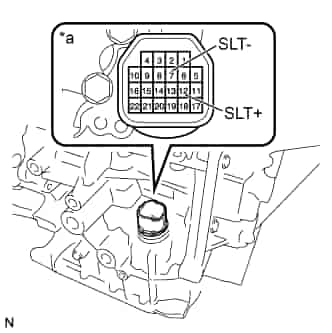
Pressure Control Solenoid D should then be tested according to the specifications for the particular Toyota transmission installed in the vehicle. Resistance measurements can help identify an open or shorted solenoid coil, but the exact specification varies between transmission families, so a generic resistance value should not be treated as a universal Toyota specification. A solenoid that passes a basic resistance test may still have an intermittent fault or mechanical restriction, which means electrical resistance alone cannot always confirm that the component is healthy.
Circuit testing is equally important. The technician needs to determine whether the solenoid is receiving the correct electrical supply and whether the control module can properly control the circuit. Depending on the transmission design, this may involve checking voltage, continuity, circuit resistance, grounds, and the control signal with suitable diagnostic equipment. Testing should follow the wiring diagram and factory service information for the specific Toyota model and transmission rather than relying on a generalized P2716 procedure.
Transmission fluid should be inspected during the diagnostic process as well. The technician should verify the fluid level using the correct Toyota procedure because many modern transmissions do not use a conventional dipstick and require fluid level checks at a specified temperature. The fluid’s condition can provide useful evidence about what is happening inside the transmission. Burnt fluid, excessive debris, or abnormal contamination may indicate that the vehicle has a hydraulic or internal mechanical problem in addition to the electrical fault.
If the solenoid circuit tests correctly but the transmission continues to exhibit pressure-related symptoms, attention should shift toward the valve body and hydraulic system. A sticking valve, restricted passage, internal leakage, or worn hydraulic component can prevent the transmission from achieving the pressure commanded by the control system. In such a case, replacing Pressure Control Solenoid D without investigating the hydraulic system may result in an expensive repair that does not resolve the original problem.
The transmission control module should normally be considered only after the solenoid, wiring, connectors, power supply, grounds, and relevant hydraulic components have been evaluated. A control module fault is possible, but it is a less appropriate starting point than verifying the components and circuits that can be tested directly. This diagnostic sequence reduces unnecessary parts replacement and helps establish a defensible connection between the stored P2716 code and the actual cause of the transmission malfunction.
A road test may be required after the initial electrical and mechanical checks. The vehicle can be monitored for shift quality, transmission temperature, commanded operation, and the conditions under which P2716 returns. If the code reappears only after the transmission reaches operating temperature, for example, the technician may need to reproduce that condition while monitoring the circuit. Once the fault has been identified and repaired, the codes should be cleared and the vehicle retested to confirm that the transmission operates normally and that P2716 does not return.
Because Toyota has used different automatic transmissions across its model range, the exact solenoid location, circuit configuration, testing values, fluid specification, and repair procedure can differ substantially. For that reason, the vehicle’s model year, engine, transmission family, and factory service information should always be confirmed before performing component-level testing. This vehicle-specific approach is essential for turning P2716 from a generic diagnostic code into an accurate repair decision.
How to Fix Toyota P2716
Fixing Toyota P2716 depends entirely on what the diagnostic process identifies as the source of the electrical malfunction. Because the code points to the Pressure Control Solenoid D circuit rather than automatically identifying a failed transmission component, the most effective repair is the one that restores proper electrical control and hydraulic operation without replacing parts unnecessarily.
If testing confirms that Pressure Control Solenoid D has an open circuit, short circuit, abnormal resistance, or another internal electrical failure, replacing the affected solenoid may resolve the code. The exact replacement procedure depends on the transmission design. On some Toyota automatic transmissions, the solenoid can be accessed after removing the transmission pan and valve body components, while other designs require substantially more disassembly. The replacement part should therefore be matched to the specific transmission rather than selected solely by vehicle model.
When the solenoid itself is functional, repairing the wiring or connector may be the correct solution. A damaged wire can interrupt the control signal even though the transmission’s internal components remain in good condition. Corroded terminals may need to be cleaned or replaced, while a broken conductor may require proper circuit repair. Simply moving a connector or clearing the diagnostic code can temporarily hide an intermittent fault without correcting the underlying electrical problem, allowing P2716 to return later.
Transmission fluid service can become part of the repair when the fluid is degraded, contaminated, or at an incorrect level. However, fluid replacement should be performed according to the manufacturer’s specified procedure and fluid type for the particular transmission. Modern Toyota automatic transmissions can have precise temperature-dependent fluid-level procedures, so adding fluid based on an arbitrary level or using an incompatible transmission fluid can create additional problems. Fluid service is most effective when it addresses an identified fluid or hydraulic condition rather than being used as a universal solution for P2716.
If inspection reveals a sticking valve, restricted hydraulic passage, or excessive wear inside the valve body, repairing or replacing the affected valve body components may be necessary. The valve body is responsible for directing transmission fluid through multiple hydraulic circuits, and even when the electrical solenoid signal is correct, mechanical restrictions can prevent the commanded pressure from being achieved. In these situations, a solenoid replacement alone may leave the original shifting problem unresolved.
A transmission control module repair or replacement should be considered only when diagnostic testing provides evidence that the module or its driver circuit is responsible for the fault. Before condemning the module, technicians should verify its power supply, grounds, communication circuits, and output control circuit. This is particularly important because a module can appear to be the source of a solenoid-related code when the actual problem is a poor connection or damaged wiring between the module and transmission.
After the identified repair is completed, the diagnostic trouble codes should be cleared and the vehicle should be driven through an appropriate verification procedure. Transmission operation should be monitored for abnormal engagement, harsh shifting, slipping, delayed shifts, and the conditions that originally caused P2716. If the code returns immediately or after the transmission reaches operating temperature, further diagnosis is necessary rather than repeatedly clearing the code.
In some cases, transmission adaptation or relearn procedures may also be relevant after repairs. Modern automatic transmissions continuously adjust pressure and shift behavior based on operating conditions and learned values. Whether a relearn procedure is required depends on the specific Toyota transmission and the repair performed. The appropriate factory procedure should be followed rather than assuming that every Toyota requires the same reset process.
The most important principle when repairing Toyota P2716 is to treat the code as evidence of a control-system fault, not as an instruction to replace the entire transmission. A properly diagnosed solenoid, wiring fault, connector problem, valve body issue, or control-module fault can require very different repairs and costs. Identifying the failed point in the system before purchasing parts is therefore the best way to avoid unnecessary transmission work and prevent the same diagnostic code from returning.
Toyota P2716 Repair Cost
The cost to repair Toyota P2716 can vary considerably because the diagnostic code identifies a problem with the Pressure Control Solenoid D electrical circuit, not a specific failed part. A vehicle with a damaged connector may require only a relatively minor electrical repair, while a transmission with a failed solenoid, damaged valve body, or internal hydraulic problem can require significantly more labor and parts. The Toyota model, transmission type, local labor rate, accessibility of the solenoid, and extent of secondary damage all influence the final repair bill.
If the diagnosis finds a damaged wire, loose terminal, or corroded connector, the repair is usually less expensive than replacing a transmission component. In this situation, the technician may need to repair the affected section of the wiring harness, restore the electrical connection, or replace a damaged connector. The total cost depends largely on how accessible the fault is and how much diagnostic time is required to reproduce an intermittent electrical problem.
A failed Pressure Control Solenoid D generally costs more because the repair can involve transmission fluid removal, pan removal, valve body access, solenoid replacement, and fluid-level adjustment. The price of the solenoid itself is only one part of the total expense. Labor can become a significant portion of the bill when the component is located inside the transmission and requires substantial disassembly for access.
A valve body repair can increase the cost further. If testing confirms that the solenoid circuit is functioning but a valve inside the hydraulic control system is sticking, worn, or leaking internally, the technician may need to remove and inspect the valve body. Depending on the transmission and the extent of wear, the repair may involve cleaning, replacing individual components, rebuilding the valve body, or installing a replacement assembly.
The most expensive scenario occurs when P2716 is accompanied by evidence of significant internal transmission damage. Persistent slipping, severe overheating, burnt transmission fluid, or substantial friction material in the fluid can indicate that the pressure-control problem has affected internal clutch components. At that point, repairing the electrical circuit alone will not restore normal transmission operation. A transmission rebuild or replacement may become necessary, although this should never be recommended solely because P2716 is stored.
Diagnostic cost should also be considered when estimating the total repair expense. Properly identifying Toyota P2716 may require a scan tool, wiring diagram, electrical measurements, circuit testing, transmission fluid inspection, and sometimes a road test under specific operating conditions. Spending money on accurate diagnosis at the beginning can actually reduce the overall repair cost by preventing unnecessary replacement of a solenoid, valve body, or transmission that is still functional.
For this reason, owners should be cautious when a repair shop immediately recommends replacing the entire transmission after finding P2716. The code does not prove that the transmission has suffered catastrophic internal failure. A professional diagnosis should establish a logical connection between the stored code, the electrical circuit, the transmission’s hydraulic behavior, and the component that ultimately needs repair.
The right question is therefore not simply how much it costs to fix Toyota P2716, but what caused P2716 on this particular vehicle. Once the failed component or circuit has been identified, the repair estimate becomes much more meaningful. This approach also helps distinguish a relatively straightforward electrical repair from a genuine transmission repair that requires more extensive work.
Can You Drive With Toyota P2716?
Whether you can continue driving with Toyota P2716 depends on how the transmission is behaving and what caused the code to appear. A vehicle that has only stored the code while continuing to shift normally is in a very different situation from one that is already experiencing slipping, harsh engagement, delayed shifting, or fail-safe operation. The diagnostic code should therefore be treated as a warning that requires investigation rather than as proof that the vehicle must immediately be towed in every situation.
If the Check Engine Light is on but the transmission continues to engage gears smoothly, a short and cautious drive to a repair facility may be possible. The purpose of that drive should be to obtain a proper diagnosis, not to continue using the vehicle normally for days or weeks. A pressure-control circuit fault can become more serious if the transmission is repeatedly operated under conditions where hydraulic pressure is incorrect.
Driving becomes considerably more concerning when the transmission begins slipping or engaging gears violently. Slipping can generate excessive heat because the internal clutch components are not fully applying, while harsh engagement can place additional stress on transmission components and driveline parts. If the vehicle enters limp mode, loses the ability to select the appropriate gears, or suddenly behaves unpredictably, continuing to drive can create a safety issue as well as increase the possibility of additional mechanical damage.
Unusual noises, a strong burning odor, severe fluid leakage, or a rapid deterioration in shifting behavior are additional reasons to stop driving and have the vehicle inspected. These symptoms can indicate that the problem extends beyond an electrical solenoid circuit and may involve the transmission’s hydraulic or internal mechanical components.
It is also important not to assume that clearing P2716 makes the vehicle safe to drive. Clearing the code only removes the stored diagnostic information; it does not repair the electrical circuit or transmission condition that caused the fault. If the underlying problem remains, the code may return as soon as the transmission control module detects the same abnormal condition.
The safest approach is to determine why Toyota P2716 was stored before returning the vehicle to normal use. If the cause is a simple wiring or connector problem, addressing it early may prevent unnecessary transmission damage. If the fault is related to a pressure control solenoid or hydraulic system, delaying the repair can allow abnormal transmission operation to continue. Early diagnosis is therefore much less expensive and less risky than waiting until the vehicle develops severe shifting problems.
The next important question is how P2716 compares with other Toyota transmission codes. Similar codes can involve different solenoids, circuits, or performance conditions, and understanding those distinctions can prevent a diagnosis based on the wrong component.
Toyota P2716 vs. Related Transmission Codes
Toyota P2716 belongs to a group of transmission diagnostic trouble codes associated with pressure control solenoids and automatic transmission hydraulic regulation. Although these codes can produce similar symptoms, they should not be treated as interchangeable. The specific code stored by the transmission control system provides an important starting point for determining which electrical circuit or pressure-control function requires further testing.
The key distinction with P2716 is that it identifies an electrical problem associated with Pressure Control Solenoid D. This means the diagnostic process should initially focus on the solenoid circuit, including the solenoid coil, wiring, connectors, power supply, control signal, and transmission control module. A vehicle can experience harsh shifting or slipping for many different reasons, but when P2716 is present, the electrical control system deserves particular attention before assuming that the transmission has suffered major internal damage.
Other P27-series transmission codes can point toward different pressure control solenoids or different types of faults. For example, one code may indicate a circuit problem while another may describe a performance or pressure-control condition. That difference matters because an electrical circuit fault can often be isolated with voltage, resistance, continuity, and connector testing, whereas a performance-related fault may require more extensive hydraulic testing and examination of the valve body.
P2714 and P2715 are examples of related diagnostic codes that can appear in the same general area of transmission control diagnosis, but the affected solenoid designation and diagnostic conditions can differ. The exact interpretation must always be confirmed against the service information for the particular Toyota transmission because Toyota has used different transmission designs and control strategies across its vehicle range. Assuming that every Toyota uses an identical solenoid layout or diagnostic specification can lead to an incorrect repair.
The presence of multiple transmission codes can provide even more valuable information. If P2716 appears together with other solenoid circuit codes, the problem may involve a shared power supply, transmission connector, wiring harness, ground, or control-module issue rather than several solenoids failing independently at the same time. Conversely, if P2716 is the only stored code and the electrical fault can be reproduced directly at the Pressure Control Solenoid D circuit, the diagnostic path becomes considerably narrower.
The distinction between an electrical fault and a hydraulic fault is particularly important when symptoms overlap. A defective solenoid may prevent the transmission from regulating pressure correctly, but a mechanically restricted valve body can produce similar shifting behavior even when the solenoid’s electrical circuit is operating normally. This is why the diagnostic code should be interpreted together with scan data, circuit measurements, fluid condition, transmission behavior, and vehicle-specific service information.
For Toyota owners, the most useful approach is therefore to treat P2716 as a starting point for diagnosis rather than a final diagnosis in itself. The code identifies an area of the transmission control system that requires attention, while the testing process determines whether the actual repair involves the solenoid, wiring, connector, valve body, control module, or another transmission component.
Understanding this distinction also explains why two vehicles displaying Toyota P2716 can require completely different repairs. One vehicle may have a simple electrical connection problem, while another may have a solenoid failure combined with hydraulic contamination. The code is the same, but the repair path is determined by the evidence collected during diagnosis.
How Pressure Control Solenoid D Works in Toyota Transmission
Pressure Control Solenoid D is part of the electro-hydraulic control system that allows an automatic transmission to adjust hydraulic pressure electronically. The transmission control module uses electrical commands to regulate the solenoid, while the solenoid controls the movement or flow of transmission fluid within the hydraulic circuit. This interaction allows the transmission to apply internal clutches and brakes with the pressure required for different driving conditions.
During normal operation, transmission pressure cannot remain at one fixed level. The required pressure changes according to vehicle speed, engine load, throttle position, transmission temperature, selected gear, and other operating conditions. The transmission control system continuously evaluates these inputs and adjusts the solenoid command accordingly. This is why a fault in the Pressure Control Solenoid D circuit can influence shift quality even though the original problem is electrical.
The solenoid contains an electromagnetic coil that responds to an electrical control signal. When the transmission control module changes the command, the solenoid changes the hydraulic behavior of the associated circuit. If the coil is open, shorted, electrically unstable, or unable to respond correctly, the hydraulic system may no longer receive the pressure control expected by the transmission computer. The resulting pressure imbalance can affect clutch application and shift timing.
This relationship explains why Toyota P2716 should not be interpreted simply as a mechanical transmission failure. The transmission control module may be functioning correctly and attempting to command the solenoid, while an electrical interruption prevents that command from reaching the component. Alternatively, the electrical signal may reach the solenoid normally while the solenoid itself has an internal fault or the hydraulic passage controlled by it is restricted.
The transmission fluid also plays an essential role because the solenoid operates within a hydraulic environment. Clean transmission fluid allows valves and passages to operate as designed, while contamination can interfere with precise hydraulic control. Excessive debris can affect the movement of small valves and may contribute to inconsistent pressure regulation. However, fluid contamination should be considered alongside electrical testing rather than automatically identified as the cause of P2716.
The exact function and location of Pressure Control Solenoid D depend on the transmission family installed in the Toyota vehicle. Toyota has used numerous automatic transmission designs, and the solenoid naming convention, circuit arrangement, resistance specification, connector configuration, and hydraulic function can differ between applications. Therefore, a diagnostic procedure or specification from one Toyota transmission should not automatically be applied to another.
This is also why accurate vehicle identification is important when diagnosing P2716. The model year, engine, transmission model, and regional specification can determine which service information applies. Once the correct transmission has been identified, the technician can use the appropriate wiring diagram and factory specifications to determine whether the solenoid circuit is electrically sound and whether the hydraulic system is responding correctly.
Understanding the relationship between the electrical circuit and hydraulic pressure makes the diagnostic process much clearer. If the circuit is open or shorted, the electrical problem must be repaired. If the circuit is correct but the solenoid does not respond mechanically, the solenoid or related hydraulic components require further inspection. If both the electrical and solenoid tests are normal but transmission pressure remains abnormal, the investigation needs to move deeper into the valve body or internal transmission system.
When Toyota P2716 Requires Major Transmission Repair
A Toyota P2716 code does not automatically mean that the transmission needs to be rebuilt or replaced. In many cases, the most important repair decision comes from distinguishing an electrical control fault from a hydraulic or mechanical transmission failure. This distinction can save a substantial amount of money because the same diagnostic code can appear on a vehicle with a relatively simple wiring problem as well as on a transmission that has suffered significant internal wear.
If testing identifies an open circuit, damaged wire, poor terminal connection, or corroded transmission connector, major transmission work may not be necessary. Restoring the electrical connection can allow Pressure Control Solenoid D to receive and respond to the correct control signal again. The vehicle should then be retested under the conditions that originally triggered the fault to verify that the repair has restored normal transmission operation.
A confirmed solenoid failure represents a more involved repair, but it still does not automatically justify replacing the complete transmission. Depending on the Toyota transmission design, the affected solenoid may be serviceable through the transmission pan and valve body area. Once the solenoid has been replaced, the technician should verify the electrical circuit, inspect the surrounding hydraulic components, use the correct transmission fluid, and complete any applicable initialization or relearn procedure specified for that transmission.
The situation changes when there is evidence of a valve body problem. A valve body that has excessive wear, a sticking valve, restricted passages, or internal hydraulic leakage can prevent the transmission from achieving the pressure required for correct clutch application. If the electrical circuit and solenoid are confirmed to be functional, investigating the valve body becomes more important. In some cases, the valve body can be repaired or rebuilt rather than replacing the entire transmission.
Internal transmission damage becomes a greater concern when P2716 is accompanied by persistent slipping, severe shift deterioration, overheating, abnormal noises, burnt fluid, or significant friction material and metal debris in the transmission fluid. These findings can indicate that the pressure-control problem has progressed beyond the electrical circuit. When internal clutch or mechanical components are damaged, correcting the original solenoid fault may not be sufficient to restore reliable transmission operation.
The presence of P2716 together with other diagnostic codes should also influence the repair decision. Multiple solenoid circuit codes can point toward a shared electrical problem, while pressure or ratio-related codes may indicate that the transmission is not responding hydraulically as expected. A complete scan of the transmission control system is therefore more informative than looking at P2716 in isolation.
Another important consideration is whether the fault is intermittent. An intermittent P2716 may be caused by a connector or wiring condition that changes with temperature, vibration, or transmission movement. These problems can be particularly frustrating because the vehicle may operate normally during a brief inspection. Reproducing the fault while monitoring the electrical circuit can be more valuable than replacing components based on symptoms alone.
For this reason, a major transmission repair should be supported by clear diagnostic evidence. A recommendation to rebuild or replace a Toyota transmission should ideally be based on demonstrated internal or hydraulic failure, not simply on the presence of P2716. This approach keeps the repair proportional to the actual problem and gives the vehicle owner a much better understanding of why a particular repair is necessary.
Once the repair has been completed, verification is just as important as the initial diagnosis. The transmission should be returned to normal operating temperature, driven through the relevant shift ranges, and monitored for the original symptoms. If P2716 remains absent and shift behavior is normal, the repair is more likely to have addressed the root cause rather than temporarily masking the fault.
How to Prevent Toyota P2716 From Returning
Preventing Toyota P2716 from returning begins with understanding that transmission reliability depends on the interaction between electrical control, hydraulic pressure, fluid condition, and mechanical components. Because the code can originate from several points within this system, replacing a failed component without correcting the underlying condition may only provide a temporary solution.
Proper transmission fluid maintenance is one of the most important factors. Automatic transmission fluid does more than lubricate internal components. It also transfers hydraulic pressure and allows the valve body and pressure control solenoids to operate precisely. Using the correct Toyota-approved fluid for the specific transmission and maintaining the appropriate fluid level can help preserve the hydraulic characteristics required for consistent operation. Service intervals should be based on the vehicle and transmission manufacturer’s recommendations as well as the vehicle’s actual operating conditions.
Electrical connections should also be kept in good condition. The transmission operates in an environment exposed to heat, vibration, moisture, and road contamination, all of which can affect wiring and connectors over time. A connector that appears intact externally can still have poor terminal tension or corrosion inside the connection. If a previous P2716 repair involved wiring or a connector, the repair should restore the circuit to an appropriate electrical and mechanical standard rather than relying on a temporary connection.
Transmission overheating is another condition worth preventing. Excessive heat can accelerate fluid degradation and increase stress on solenoids, seals, clutches, and other transmission components. Heavy towing, prolonged stop-and-go driving, high ambient temperatures, or operating a vehicle under demanding conditions can increase transmission temperature. Maintaining the transmission cooling system and addressing overheating symptoms early can help reduce long-term stress on the pressure-control system.
It is also important to investigate recurring transmission symptoms even when the Check Engine Light turns off. An intermittent fault may temporarily disappear without actually being repaired. If harsh shifting, delayed engagement, slipping, unusual transmission behavior, or recurring warning lights continue, the vehicle should be diagnosed rather than repeatedly driven until the code becomes permanent.
After repairing P2716, following the correct post-repair procedure is equally important. Depending on the Toyota transmission, the system may require specific initialization, adaptive learning, fluid-level adjustment, or a controlled road test. These procedures are transmission-specific, so the applicable factory service information should determine what needs to be performed.
The most effective long-term strategy is therefore not simply to prevent the code itself but to maintain the complete transmission control system. Clean and correctly specified fluid, reliable electrical connections, appropriate operating temperatures, timely diagnosis, and vehicle-specific maintenance all contribute to stable pressure control. When these factors are managed correctly, the risk of another Pressure Control Solenoid D circuit problem can be reduced while the overall service life of the automatic transmission is protected.
Frequently Asked Questions About Toyota P2716
What is Toyota P2716?
Toyota P2716 is a diagnostic trouble code associated with an electrical malfunction in the Pressure Control Solenoid D circuit. The exact circuit configuration and solenoid function can vary depending on the Toyota model and transmission, so the vehicle-specific service information should be used to confirm the correct diagnostic procedure.
Is Toyota P2716 a serious transmission code?
P2716 should be taken seriously because pressure control is essential to automatic transmission operation. However, the code does not automatically indicate catastrophic transmission failure. A damaged wire, connector, or solenoid can produce the same code without requiring a complete transmission replacement. The severity depends on the underlying cause and the transmission symptoms.
Can a bad transmission solenoid cause P2716?
Yes. A failed Pressure Control Solenoid D can cause P2716 if its electrical circuit develops an open circuit, short circuit, abnormal resistance, or another condition outside the transmission control module’s expected operating range. Electrical testing is necessary to confirm whether the solenoid itself is responsible.
Can low transmission fluid cause Toyota P2716?
Low or degraded transmission fluid can contribute to abnormal transmission operation and pressure-control problems, but it should not automatically be identified as the direct cause of P2716. Because P2716 specifically relates to an electrical solenoid circuit, the wiring, connector, solenoid, and control circuit should also be tested.
Can I fix Toyota P2716 myself?
A basic inspection for visible wiring damage or an obvious connector problem may be possible for an experienced vehicle owner. However, accurately diagnosing P2716 can require a scan tool, wiring diagrams, electrical measurements, transmission-specific specifications, and sometimes access to the valve body. Incorrect testing or unnecessary parts replacement can make the repair more expensive.
Does P2716 mean I need a new transmission?
No. P2716 alone does not prove that the transmission needs to be rebuilt or replaced. The fault may be caused by the solenoid circuit, wiring, connector, solenoid, valve body, or control system. A complete transmission replacement should only be considered when diagnostic evidence demonstrates significant internal damage.
How long can I drive with Toyota P2716?
There is no universal mileage or time limit because the risk depends on how the transmission is operating. If the vehicle is slipping, shifting violently, entering fail-safe mode, overheating, or producing a burning smell, continued driving should be avoided. Even when the vehicle appears to drive normally, P2716 should be diagnosed promptly rather than ignored.
Why does Toyota P2716 keep coming back after repair?
A recurring P2716 can indicate that the original fault was not fully corrected. Possible reasons include an intermittent wiring problem, poor connector contact, a defective replacement solenoid, contamination affecting the hydraulic system, a valve body problem, or an unresolved control-module issue. Repeatedly clearing the code without identifying the root cause will not provide a permanent solution.
Does Toyota P2716 require a transmission relearn?
A relearn or initialization procedure may be required on some Toyota transmissions after certain transmission repairs, but it is not a universal requirement for every P2716 repair. The correct procedure depends on the transmission and the work performed. Vehicle-specific factory service information should determine whether adaptation or initialization is necessary.
Conclusion
Toyota P2716 is a transmission-related diagnostic trouble code that points to an electrical malfunction involving the Pressure Control Solenoid D circuit. Although the code can be accompanied by harsh shifting, delayed engagement, slipping, reduced performance, or fail-safe operation, it should not automatically be interpreted as evidence of a failed transmission.
The most effective way to resolve P2716 is to diagnose the entire control system systematically. The solenoid itself may be defective, but damaged wiring, poor connector contact, corrosion, transmission fluid problems, valve body restrictions, and control-module faults can produce related symptoms or contribute to the condition. This is why replacing a solenoid or transmission based only on the stored code can result in unnecessary expense.
Early diagnosis is particularly important when the vehicle is already showing abnormal shifting behavior. Continued operation with slipping, severe engagement problems, overheating, or other serious symptoms can increase stress on internal transmission components and potentially turn a relatively contained electrical problem into a much more expensive repair.
The correct repair ultimately depends on the specific Toyota model, model year, engine, and transmission. Once the affected circuit and components have been properly tested, the repair can be targeted to the actual source of the problem, whether that means correcting wiring, replacing Pressure Control Solenoid D, servicing the valve body, addressing transmission fluid issues, or investigating the control module.
Understanding Toyota P2716 as a diagnostic starting point rather than a parts-replacement instruction is the key to an accurate and cost-effective repair. With proper testing and vehicle-specific service information, Toyota owners can identify the underlying fault, restore correct transmission pressure control, and reduce the likelihood of the code returning.
If your Toyota is currently displaying P2716, the most useful next step is to identify the exact model year, engine, and transmission and compare those details with the diagnostic results. That information can narrow the possible causes considerably and lead to a much more precise repair strategy.