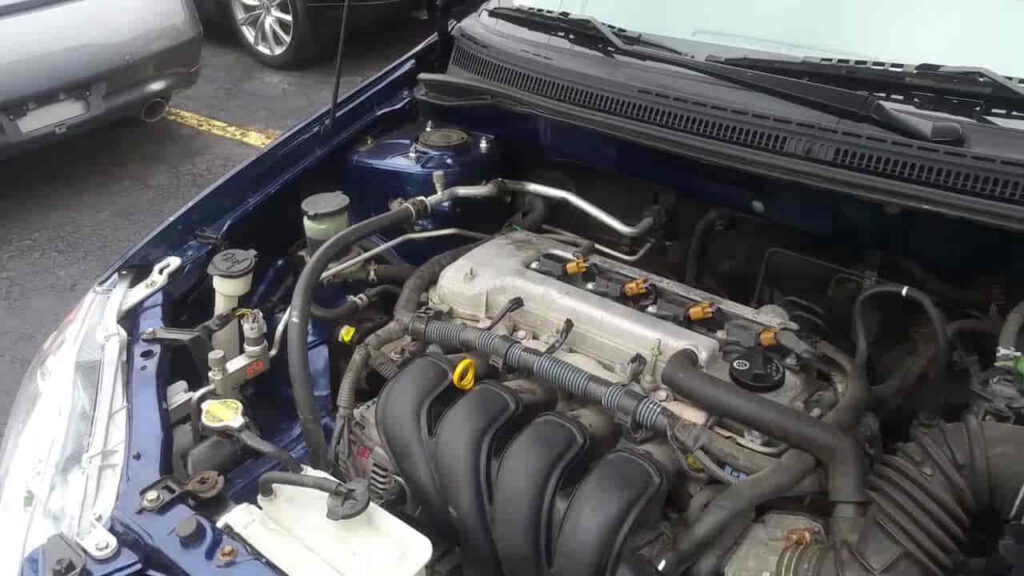
Seeing the Check Engine Light appear on your Toyota can be frustrating, especially when a diagnostic scan returns Toyota P0010 without explaining what actually failed. A P0010 code is associated with the camshaft position actuator circuit for Bank 1, which places the problem within the engine’s variable valve timing system rather than identifying a single component that must automatically be replaced. For many Toyota owners, the immediate concern is whether the code points to a simple VVT solenoid problem or something more serious involving camshaft timing, the timing chain, or the engine itself.
The challenge is that several different faults can produce related symptoms. A problem with the VVT solenoid or oil control valve can interfere with camshaft timing control, while damaged wiring, a poor electrical connection, contaminated engine oil, restricted oil passages, or a problem within the VVT actuator can create similar conditions. In some cases, another mechanical timing problem may also need to be investigated.
Understanding how these components work together is therefore essential before deciding what to replace. The engine control module monitors and commands the variable valve timing system to adjust camshaft timing according to engine operating conditions. When the electrical circuit for the Bank 1 camshaft actuator does not behave as expected, P0010 can be stored and engine performance may change.
This guide explains what Toyota P0010 means, the symptoms that can accompany it, the most likely causes, how the fault should be diagnosed, what repairs may be required, how much the repair can cost, and when the code may indicate a more serious engine timing problem. The goal is not simply to clear the code, but to identify the underlying fault and restore the VVT system to reliable operation.
Common Symptoms of Toyota P0010
When Toyota P0010 is stored, the symptoms can range from a Check Engine Light with almost no noticeable change in drivability to clear engine performance problems. The difference depends largely on whether the fault affects the VVT system continuously or only under certain operating conditions. Because the variable valve timing system influences when the intake or exhaust valves open and close, an electrical problem in the camshaft actuator circuit can eventually affect the way the engine produces power, responds to throttle input, and maintains a stable idle.
The Check Engine Light is often the first indication that something is wrong. The engine control module monitors the camshaft actuator circuit and can store P0010 when the electrical behavior of the circuit does not match the expected operating condition. A vehicle may still appear to drive normally at first, particularly when the VVT system is only needed under specific engine loads or speeds. This can make the problem easy to postpone, even though the underlying fault remains present.
Rough or unstable idling is another possible symptom. The engine depends on accurate valve timing to maintain efficient combustion at idle, and an incorrectly controlled camshaft can disturb that balance. The driver may notice an uneven idle, slight vibration, fluctuating engine speed, or a tendency for the engine to feel less smooth when stopped. These symptoms can also occur because of ignition, fuel, vacuum, or airflow problems, so rough idle alone cannot confirm P0010.
Reduced acceleration can become more noticeable when the vehicle is driven under load. The VVT system allows the engine to alter camshaft timing as operating conditions change, helping balance torque, efficiency, emissions, and responsiveness. If the actuator circuit is not functioning correctly, the camshaft may not reach the commanded position. The result can be hesitation when accelerating, slower throttle response, or a general feeling that the engine is not producing its usual power.
Some Toyota vehicles may also experience reduced fuel economy. Incorrect valve timing can prevent the engine from operating at its intended efficiency, particularly when the VVT system is unable to make the adjustments expected by the ECM. However, fuel economy changes are usually subtle and can be influenced by many other factors, so they should be considered supporting evidence rather than a definitive symptom.
Hard starting or occasional stalling can occur when a VVT-related fault significantly affects camshaft timing. These symptoms deserve greater attention because they can affect vehicle reliability and drivability. If the engine struggles to start, stalls repeatedly, or experiences a substantial loss of power, the vehicle should be diagnosed promptly rather than assuming that replacing the VVT solenoid will automatically solve the problem.
Another important characteristic is that symptoms may change as the engine warms up. Engine oil viscosity, electrical resistance, and VVT operating conditions change with temperature. A marginal wiring connection or actuator may therefore behave differently during a cold start compared with normal operating temperature. This can explain why a Toyota sometimes appears to run normally immediately after starting but develops roughness or hesitation after several minutes of driving.
Not every Toyota with P0010 will experience all of these symptoms. Some vehicles may only display the warning light and store the code, while others may show obvious changes in engine behavior. The absence of severe symptoms does not prove that the circuit is healthy, just as severe symptoms do not prove that the VVT actuator itself has failed. The next step is to identify the underlying cause by examining the electrical circuit, oil supply, VVT components, and engine timing as a connected system.
Read more: Toyota P2716
Common Causes of Toyota P0010
Toyota P0010 can be triggered by several different faults within the camshaft position actuator circuit, so the code should not be treated as proof that one particular component has failed. The ECM monitors the electrical circuit used to control the camshaft actuator and compares the system response with the expected operating condition. When the circuit behaves outside the expected range, P0010 may be stored. The actual cause can be electrical, mechanical, hydraulic, or related to engine timing.
One of the most common possibilities is a faulty VVT solenoid or oil control valve. This component receives an electrical command from the ECM and helps regulate oil flow to the variable valve timing mechanism. If the solenoid has an internal electrical failure, becomes mechanically stuck, or cannot respond correctly to the ECM command, the camshaft timing system may not operate as intended. In some Toyota engines, the terminology and component design differ by engine family, so the exact actuator configuration should be verified before replacing parts.
Wiring and connector problems are another important source of P0010. The circuit between the ECM and camshaft actuator can develop an open circuit, short circuit, damaged insulation, corrosion, loose terminals, or poor electrical contact. Heat and vibration in the engine compartment can gradually weaken wiring, while oil contamination or water intrusion can affect electrical connections. A visually normal connector does not necessarily mean the circuit is electrically sound, which is why continuity, resistance, voltage, and circuit-load testing may be necessary.
Engine oil condition can also influence VVT operation. Variable valve timing systems rely on clean engine oil with the correct viscosity to control hydraulic components and move the camshaft mechanism. Low oil level, degraded oil, sludge, or restricted oil passages can interfere with actuator movement. Although an oil-related problem does not always directly create an electrical P0010 fault, it can prevent the VVT system from responding correctly and may exist alongside an electrical problem.
A damaged camshaft actuator or VVT mechanism is another possible cause. If the mechanical actuator cannot move through its intended range, the ECM may detect that the commanded camshaft position cannot be achieved. Internal wear, contamination, mechanical binding, or other engine-specific VVT faults can produce symptoms that resemble an electrical actuator failure.
Engine timing problems should also remain in the diagnostic picture. A stretched or incorrectly installed timing chain, damaged timing component, or camshaft timing that has shifted can affect the relationship between commanded and actual valve timing. In these situations, replacing the VVT solenoid alone may not correct the problem because the underlying issue is mechanical rather than electrical.
Finally, an ECM or control-side fault is possible, although it should generally be considered only after the actuator, wiring, connectors, power supply, and related mechanical systems have been properly tested. Replacing an ECM based solely on P0010 can lead to unnecessary expense. A reliable diagnosis should establish why the actuator circuit is not producing the expected response before any major component is replaced.
Understanding these possible causes is important because Toyota P0010 is a system-level diagnostic clue rather than a direct parts-replacement instruction. The most effective repair begins by identifying whether the fault originates in the electrical circuit, VVT actuator, engine oil system, mechanical timing, or control system.
How to Diagnose Toyota P0010
Diagnosing Toyota P0010 correctly requires more than reading the code and replacing the VVT solenoid. The code identifies a problem associated with the camshaft position actuator circuit, but it does not automatically identify which component has failed. A reliable diagnosis should move from the simplest checks toward electrical, hydraulic, and mechanical testing while using the vehicle’s specific wiring diagram and engine service information as the reference.
The first step is to confirm the stored diagnostic trouble code with a capable scan tool. Before clearing anything, record P0010 along with any additional engine codes, freeze-frame information, engine speed, coolant temperature, load, and other available parameters. Related camshaft or crankshaft timing codes can provide valuable clues because they may indicate that the problem extends beyond the actuator circuit itself. If P0010 is accompanied by other VVT or timing-related codes, diagnosing the codes together is usually more informative than treating P0010 in isolation.
Next, inspect the engine oil level and condition. The VVT system depends on appropriate oil pressure and clean oil passages, so an incorrect oil level, heavily degraded oil, or obvious sludge can interfere with system operation. If the oil condition is questionable, it should be addressed according to the vehicle manufacturer’s specifications before drawing conclusions about the actuator. However, an oil service should not be considered a complete P0010 repair when an electrical circuit fault has not been tested.
The camshaft actuator circuit should then receive a careful visual inspection. Examine the VVT solenoid or actuator connector, wiring harness, terminal condition, insulation, and areas where the harness may contact hot engine components or moving parts. Look for corrosion, bent terminals, loose connections, damaged wires, or evidence of oil contamination. A circuit that appears intact externally can still have excessive resistance or an intermittent connection, so electrical testing remains important.
Using the appropriate wiring diagram, technicians can test the actuator circuit for power supply, ground or control signals, resistance, continuity, and unwanted shorts. The exact test values and test procedure vary between Toyota engines, which means generic resistance specifications should not be applied without confirming the engine code and service information. An actuator that measures correctly at rest can still fail under operating conditions, so a dynamic test may be necessary when the basic electrical checks do not identify the problem.
If the electrical circuit passes inspection, attention should move toward VVT operation and mechanical timing. The technician may need to verify whether the camshaft actuator responds to commanded changes and whether the actual camshaft position follows the expected movement. Scan-tool data, actuator tests, and comparison of commanded versus actual camshaft position can help determine whether the problem is electrical or mechanical.
When evidence points toward a mechanical timing problem, further inspection of the timing chain, camshaft timing components, and VVT actuator may be required. This is particularly important when P0010 is accompanied by abnormal engine noise, difficult starting, significant performance loss, or additional camshaft and crankshaft correlation codes.
The most important principle is to diagnose the circuit and system as a whole rather than assuming that P0010 means a defective solenoid. A structured process helps prevent unnecessary parts replacement and makes it easier to identify the actual source of the fault. Once the failed component or condition has been confirmed, the appropriate repair can be selected with much greater confidence.
How to Fix Toyota P0010
Fixing Toyota P0010 starts with identifying the actual failure behind the camshaft position actuator circuit problem. Because P0010 can originate from the VVT actuator, wiring, connectors, engine oil system, mechanical timing, or control circuit, replacing the first component that appears suspicious is not always the correct solution. The repair should follow the results of the diagnostic testing performed on the specific Toyota engine.
If the diagnosis confirms a faulty VVT solenoid or oil control valve, replacing the affected component may resolve the problem. The replacement should match the correct Toyota engine application, and the surrounding connector and wiring should be inspected at the same time. A new solenoid will not provide a lasting repair if the original electrical problem is caused by a damaged wire, loose terminal, corrosion, or poor connection.
When wiring is responsible for P0010, the repair may involve repairing or replacing the damaged section of the harness and restoring the electrical connection to the correct specification. Particular attention should be given to wiring exposed to engine heat, vibration, oil, and moisture. After the repair, the circuit should be tested again rather than assuming that the fault has been eliminated simply because the damaged wire is no longer visible.
If engine oil is contributing to improper VVT operation, the oil level and condition should be corrected using the specification appropriate for the vehicle. In cases involving sludge or restricted oil passages, a simple oil change may not completely resolve the problem. The technician may need to inspect the VVT oil control passages and related components to determine whether restricted oil flow is preventing the camshaft actuator from responding correctly.
A mechanically damaged VVT actuator requires a different repair approach. If testing confirms that the actuator cannot move correctly even though its electrical circuit is functioning, the affected timing component may need to be replaced. The repair can become more involved when the VVT mechanism is integrated with other timing components or when access requires partial disassembly of the engine.
Timing chain or camshaft timing problems should be corrected according to Toyota’s engine-specific timing procedure. If the chain has excessive wear, the timing has shifted, or a timing component has been installed incorrectly, repairing only the actuator circuit will not solve the underlying problem. This is why mechanical timing verification becomes especially important when P0010 appears alongside camshaft or crankshaft correlation codes.
An ECM should generally be considered only after the actuator, wiring, power supply, connectors, and mechanical systems have been tested and found to be functioning correctly. Control-module replacement can be expensive and may require programming or initialization procedures, so it should not be used as a first-line repair based solely on the presence of P0010.
After the repair, the diagnostic codes should be cleared and the vehicle should be driven through appropriate operating conditions while monitoring the VVT system and checking whether P0010 returns. A successful repair should restore the expected actuator response rather than simply turning off the Check Engine Light. If the code returns, the original diagnosis should be reviewed because an intermittent circuit fault, oil-flow restriction, or underlying mechanical timing problem may still be present.
The most reliable Toyota P0010 repair is therefore the one that addresses the confirmed cause. A targeted repair can prevent unnecessary parts replacement, reduce diagnostic costs, and lower the risk of having the same VVT problem return shortly after the vehicle leaves the workshop.
Toyota P0010 Repair Cost
The cost to repair Toyota P0010 can vary significantly because the diagnostic code does not identify a single failed component. A relatively simple wiring repair or VVT solenoid replacement can be far less expensive than repairing a timing chain problem or replacing a major VVT component. The final price also depends on the Toyota model, engine configuration, labor rates, parts availability, and whether additional diagnostic work is required.
If the problem is caused by a loose connector, damaged terminal, or broken section of wiring, the repair may be comparatively inexpensive. The main cost usually comes from diagnostic time and the labor required to locate and repair the electrical fault. Intermittent wiring problems can take longer to identify because the fault may disappear during a basic inspection and only occur under certain temperature, vibration, or engine operating conditions.
A faulty VVT solenoid or oil control valve generally represents a more moderate repair. The component itself is usually less expensive than major engine timing components, although access can vary considerably between Toyota engines. Some applications allow relatively straightforward access to the actuator, while others require additional labor to reach the component. Using the correct part for the specific engine is important because VVT components are not universally interchangeable across Toyota models.
Oil-related problems can sometimes be addressed with relatively limited expense when the issue is simply incorrect oil level or overdue maintenance. However, if sludge has restricted VVT oil passages or contaminated internal components, the repair can become more complicated. Additional inspection and cleaning may be required, and an oil change alone should not be assumed to have fixed P0010 if the code returns.
The repair becomes substantially more expensive when diagnosis confirms a damaged VVT actuator, timing chain problem, or other internal engine timing fault. These repairs can require significant disassembly and additional labor. If incorrect valve timing has caused secondary engine damage, the total cost can increase further.
An ECM-related repair can also be expensive because control-module replacement may involve programming, initialization, or additional diagnostic procedures. However, ECM replacement should remain a last-resort diagnosis rather than the default response to P0010.
Because of these variables, there is no single universal Toyota P0010 repair price that applies to every vehicle. The most useful way to estimate the cost is to identify the failed system first and then separate diagnostic labor, parts, and installation time. Getting a diagnosis before approving repairs can prevent paying for unnecessary VVT components when the actual problem is a connector, wiring fault, oil restriction, or mechanical timing issue.
For owners trying to control repair expenses, the most important question is not simply how much it costs to replace a P0010 component. The better question is what caused the code on the specific Toyota. Once that cause has been confirmed, the repair can be priced much more accurately and the risk of repeated repair costs can be reduced.
Can You Drive With Toyota P0010?
Whether you can continue driving with Toyota P0010 depends on how the engine is behaving and what caused the code. In some cases, the vehicle may continue to run normally with only the Check Engine Light illuminated. However, that does not mean the underlying VVT or camshaft actuator problem should be ignored. A fault that initially produces minor symptoms can become more noticeable as the electrical, oil control, or mechanical problem develops.
If the Toyota starts normally, maintains a stable idle, responds to the accelerator normally, and does not show a significant loss of power, a short drive to a repair facility may be reasonable. The purpose of this limited driving should be to obtain a proper diagnosis rather than continue using the vehicle indefinitely without addressing the fault.
Greater caution is necessary when P0010 is accompanied by rough running, hesitation, hard starting, stalling, unusual engine noise, or substantial loss of acceleration. These symptoms can indicate that the camshaft timing is not being controlled correctly or that another engine problem exists alongside the stored code. Continuing to drive under these conditions may reduce drivability and, depending on the underlying fault, could allow a mechanical timing problem or related engine issue to become more serious.
A flashing Check Engine Light requires particular attention because it can indicate a condition capable of causing significant emissions or engine problems. If the vehicle is running extremely poorly, repeatedly stalling, or experiencing severe power loss, it is safer to stop driving and have the vehicle inspected rather than attempting to reach a distant destination.
The cause of P0010 also matters when deciding how urgent the repair is. A damaged connector may represent a relatively contained electrical issue, while a timing chain problem can have much more serious consequences if valve timing continues to deteriorate. The diagnostic code itself cannot distinguish these situations, which is why symptom severity and proper testing are important.
For Toyota owners, the safest approach is to treat P0010 as a diagnostic warning rather than an automatic indication that the vehicle must immediately be towed. If the engine is operating normally, arrange a diagnosis soon and avoid unnecessary long-distance or heavy-load driving until the cause is confirmed. If the engine develops severe symptoms, stop driving and seek professional assistance.
Toyota P0010 vs. Related Engine Codes
Toyota P0010 can appear alongside other camshaft, crankshaft, and variable valve timing codes, especially when a single underlying problem affects more than one part of the engine timing system. Understanding the relationship between these codes can prevent a common diagnostic mistake: replacing a VVT component simply because P0010 is present without checking whether another code provides a more important clue.
P0010 generally points toward a problem with the camshaft position actuator circuit for Bank 1. The word “circuit” is important because it directs attention toward the electrical control side of the VVT system. This can involve the actuator or solenoid, wiring, connectors, power supply, or control circuit. It does not by itself prove that the camshaft is mechanically out of time.
Other camshaft actuator codes may identify a different bank or actuator circuit. When a Toyota engine has more than one camshaft control circuit, the bank designation and actuator identification become important for determining which component and wiring path should be inspected. The exact configuration depends on the engine design, so the vehicle’s engine code and factory service information should always be used to identify the correct circuit.
Camshaft or crankshaft correlation codes provide a different type of diagnostic information. These codes can indicate that the ECM has detected an unexpected relationship between camshaft and crankshaft position. When such a code appears together with P0010, the technician should consider whether the VVT actuator is failing to move the camshaft correctly, whether oil flow is restricted, or whether a timing chain or other mechanical timing component has developed a problem.
VVT performance-related codes can also help distinguish an electrical circuit fault from a system-response problem. If the actuator receives the correct electrical command but the camshaft position does not change as expected, the investigation may need to move beyond wiring and toward oil pressure, actuator movement, camshaft timing, or mechanical components.
The key distinction is that diagnostic trouble codes describe what the ECM has detected, not necessarily the failed part that must be replaced. Toyota P0010 should therefore be interpreted together with symptoms, freeze-frame data, related codes, wiring information, oil condition, and actual camshaft behavior. Looking at the complete pattern produces a more reliable diagnosis than treating each code as an isolated parts-replacement instruction.
How the Toyota VVT System Works
To understand Toyota P0010, it helps to understand how the engine’s variable valve timing system controls camshaft timing. The VVT system allows the engine control module to adjust camshaft position according to operating conditions instead of keeping valve timing fixed at all engine speeds. By changing when the valves open and close, the engine can balance power, fuel efficiency, emissions, and drivability more effectively.
The ECM continuously evaluates information from engine sensors and determines when a change in camshaft timing is appropriate. Depending on the Toyota engine, the system can use an electrically controlled oil control valve or VVT solenoid to regulate engine oil flow toward a camshaft actuator. Hydraulic oil pressure then moves the actuator, changing the relationship between the camshaft and the rest of the valve timing system.
The electrical circuit is therefore an important part of the VVT system. The ECM must be able to control the actuator and monitor the circuit’s electrical behavior. If the circuit contains excessive resistance, an open circuit, a short, damaged wiring, poor terminal contact, or an actuator with an internal electrical failure, the commanded VVT operation may not occur as expected. This is one reason P0010 should not automatically be interpreted as a mechanical camshaft timing failure.
Engine oil also plays a critical role. The VVT mechanism depends on the correct oil pressure and clean oil passages to move the actuator and maintain the desired camshaft position. Low oil level, incorrect oil viscosity, degraded oil, sludge, or restricted passages can interfere with hydraulic VVT operation. This creates an important diagnostic relationship between engine maintenance and camshaft actuator performance.
The ECM also relies on camshaft and crankshaft position information to determine whether the engine is responding correctly. When the commanded camshaft movement does not match the expected response, the control system can store diagnostic trouble codes. Depending on the specific engine and fault condition, this may result in P0010 appearing with other VVT or camshaft timing codes.
Because the VVT system combines electrical control, hydraulic oil flow, electronic feedback, and mechanical timing, a fault in one area can produce symptoms that appear to originate somewhere else. A wiring problem can prevent an actuator from operating, while an oil restriction can prevent a properly powered actuator from producing the expected camshaft movement. Likewise, a mechanical timing problem can make a healthy actuator appear ineffective.
This interconnected design explains why accurate Toyota P0010 diagnosis requires a system-level approach. Testing only the VVT solenoid may miss a wiring fault, while checking only the electrical circuit may overlook restricted oil flow or incorrect mechanical timing. Understanding how the ECM, actuator circuit, engine oil, camshaft actuator, and timing components interact provides the foundation for identifying the actual source of the fault.
When Toyota P0010 Requires Major Engine Repair
Toyota P0010 does not automatically mean that the engine needs major repair. In many cases, the underlying problem can be resolved through an electrical repair, connector replacement, wiring repair, or replacement of a faulty VVT solenoid or oil control valve. The important question is whether diagnostic testing shows that the camshaft actuator circuit is functioning correctly while the mechanical timing system is not.
A more serious situation can exist when P0010 appears together with persistent engine noise, difficult starting, severe loss of power, repeated stalling, or additional camshaft and crankshaft correlation codes. These symptoms can suggest that the problem extends beyond the electrical actuator circuit and may involve the timing chain, camshaft timing mechanism, VVT actuator, or another internal engine component.
A stretched or damaged timing chain is one example of a fault that can require significantly more labor. If the relationship between the crankshaft and camshaft has changed because of excessive chain wear or a timing component problem, replacing the VVT solenoid will not restore correct valve timing. The technician may need to inspect the timing system and verify mechanical alignment before determining the appropriate repair.
A damaged VVT actuator can also increase repair complexity. Although the actuator is part of the variable valve timing system, its accessibility and construction vary between Toyota engine families. If internal wear or mechanical binding prevents the actuator from responding correctly, replacement may require substantial disassembly.
The possibility of major engine repair should also be considered when the vehicle has been driven for an extended period with severe timing symptoms. Incorrect valve timing can affect combustion and engine operation, and in certain circumstances a mechanical timing failure can lead to more extensive internal damage. However, P0010 alone is not enough evidence to conclude that such damage has occurred.
Before approving an expensive repair, the diagnosis should establish a clear connection between the stored code and the suspected mechanical failure. Electrical circuit tests, actuator operation, scan-tool data, oil condition, and mechanical timing verification can help determine whether the problem is limited to VVT control or extends into the engine’s timing system.
For most Toyota owners, the best approach is therefore to avoid assuming the worst when P0010 appears. A systematic diagnosis can separate a relatively simple actuator or wiring problem from a genuine mechanical timing failure. This distinction can make a major difference in both repair cost and the amount of engine disassembly required.
How to Prevent Toyota P0010 From Returning
Preventing Toyota P0010 from returning requires more than replacing the component that originally triggered the code. Because the variable valve timing system depends on electrical control, clean engine oil, hydraulic operation, and accurate mechanical timing, long-term reliability comes from maintaining all of these areas together. A repair may clear the Check Engine Light temporarily, but the same code can return if the underlying condition remains unresolved.
Regular engine oil maintenance is one of the most important preventive measures. The VVT system relies on engine oil to operate the camshaft actuator, so using the correct oil specification and maintaining the proper oil level can help the system respond as designed. Delayed oil changes can allow contaminants and sludge to accumulate, potentially restricting oil passages or affecting VVT components. Following the maintenance schedule for the specific Toyota engine is therefore an important part of protecting the VVT system.
The electrical side of the system should also be kept in good condition. Wiring around the engine is exposed to heat, vibration, moisture, and chemical contamination, all of which can gradually damage insulation and electrical connections. During routine service, technicians should pay attention to the condition of VVT connectors and harnesses, particularly if the vehicle has previously experienced P0010 or another camshaft actuator circuit code.
Oil leaks should be addressed promptly as well. Oil contamination around electrical connectors can contribute to connection problems, while an external leak can eventually reduce engine oil level if it is ignored. Maintaining the correct oil level helps protect both the lubrication system and the hydraulic operation of the VVT mechanism.
Engine timing components also deserve attention as the vehicle accumulates mileage. If the Toyota uses a timing chain, abnormal chain noise, timing-related symptoms, or correlation codes should not be ignored. Excessive wear or a mechanical timing problem can affect camshaft positioning and may eventually create conditions that resemble or accompany a VVT actuator fault.
After repairing P0010, it is also important to confirm that the repair actually resolved the cause. Clearing the diagnostic code alone does not constitute a complete repair. The vehicle should be operated under appropriate conditions while the relevant engine data is monitored, and the system should be checked for a returning fault. If P0010 comes back, the original diagnosis should be reconsidered rather than repeatedly replacing the same component.
Ultimately, preventing Toyota P0010 is about maintaining the relationship between the ECM, actuator circuit, VVT mechanism, engine oil, and mechanical timing system. Proper maintenance combined with accurate diagnosis can reduce the chance of recurring faults and help preserve engine performance, fuel efficiency, and long-term reliability.
Frequently Asked Questions About Toyota P0010
What is Toyota P0010? Toyota P0010 is a diagnostic trouble code associated with the camshaft position actuator circuit for Bank 1. It indicates that the engine control system has detected an abnormal condition in the circuit used to control the variable valve timing system. The code does not automatically identify a defective VVT solenoid, because wiring, connectors, oil-related VVT problems, mechanical timing components, and control-system faults can also contribute to the condition.
Is Toyota P0010 a serious engine code? The seriousness of P0010 depends on the underlying cause and the symptoms. A minor wiring or connector problem may be relatively straightforward to repair, while a VVT actuator or mechanical timing problem can require more extensive work. If the Toyota has severe hesitation, repeated stalling, difficult starting, significant power loss, or abnormal engine noise, the vehicle should be inspected promptly rather than continuing to drive it normally.
Can a bad VVT solenoid cause Toyota P0010? Yes. A faulty VVT solenoid or oil control valve can cause P0010 when its internal electrical circuit does not operate as expected. However, replacing the solenoid should follow diagnostic testing because the same code can result from damaged wiring, poor connector contact, restricted oil flow, or another VVT-related problem.
Can low engine oil cause Toyota P0010? Low or degraded engine oil can interfere with VVT operation because the system relies on engine oil to control the camshaft actuator. However, low oil level does not necessarily mean it is the direct cause of an actuator circuit fault. The oil level and condition should be checked alongside the electrical circuit and VVT components rather than assuming that an oil change alone will resolve the code.
Can I fix Toyota P0010 myself? A mechanically experienced owner may be able to perform basic checks such as verifying engine oil level, inspecting the VVT connector, and looking for obvious wiring damage. More advanced diagnosis requires the correct wiring diagram, electrical test equipment, scan-tool data, and engine-specific specifications. Testing the circuit before replacing components is important because P0010 does not identify a single guaranteed failed part.
Does Toyota P0010 mean I need a new engine or transmission? No. P0010 is related to the engine’s camshaft position actuator and variable valve timing system, not the transmission. Most cases do not require engine replacement. Even when the fault involves mechanical timing components, the appropriate repair depends on what testing actually finds.
How long can I drive with Toyota P0010? There is no universal safe driving period because the code can be caused by different problems. If the engine runs normally, a short trip for diagnosis may be reasonable, but prolonged driving should not be treated as a solution. Severe symptoms such as stalling, major power loss, hard starting, or unusual engine noise increase the urgency of inspection.
Why does Toyota P0010 keep coming back after repair? A returning P0010 often means that the original cause was not fully identified. For example, replacing a VVT solenoid will not permanently solve the problem if damaged wiring, a poor electrical connection, restricted oil passages, or mechanical timing issues remain. Intermittent electrical faults can also be difficult to reproduce and may require additional testing under operating conditions.
Does Toyota P0010 require a VVT relearn or initialization? Some Toyota applications may have specific inspection, initialization, learning, or drive-cycle procedures after VVT-related repairs, while others may not require a dedicated relearn procedure. The correct procedure depends on the engine and model year. Vehicle-specific Toyota service information should therefore be followed rather than applying a generic reset procedure.
Conclusion
Toyota P0010 is a diagnostic clue that points to a problem involving the camshaft position actuator circuit for Bank 1, but it should not be treated as a direct instruction to replace one specific component. The actual cause can range from a damaged wire or poor electrical connection to a faulty VVT solenoid, contaminated engine oil, restricted oil passages, a malfunctioning camshaft actuator, or a mechanical timing problem.
The most effective way to resolve Toyota P0010 is to approach the engine as an interconnected system. The ECM, actuator circuit, VVT mechanism, engine oil, camshaft position, and mechanical timing components all influence how the system operates. Testing these relationships in the correct order helps distinguish a relatively simple electrical repair from a more involved engine timing problem.
Ignoring the code is rarely a good long-term strategy, especially when the Toyota develops rough idle, hesitation, reduced acceleration, hard starting, stalling, unusual engine noise, or other changes in engine performance. At the same time, P0010 alone does not mean that the engine needs major repair. Accurate diagnosis should come before expensive parts replacement.
For Toyota owners, the best response is to confirm the code, inspect the engine oil and electrical connections, test the camshaft actuator circuit, evaluate VVT operation, and investigate mechanical timing when the evidence points in that direction. Once the underlying cause has been confirmed, the repair can be targeted more precisely and the likelihood of the code returning can be reduced.
If your Toyota is showing P0010, identifying the exact model year, engine, symptoms, and any additional diagnostic codes can make the diagnosis much more precise. A vehicle-specific repair procedure is always preferable to relying on a generic P0010 solution.