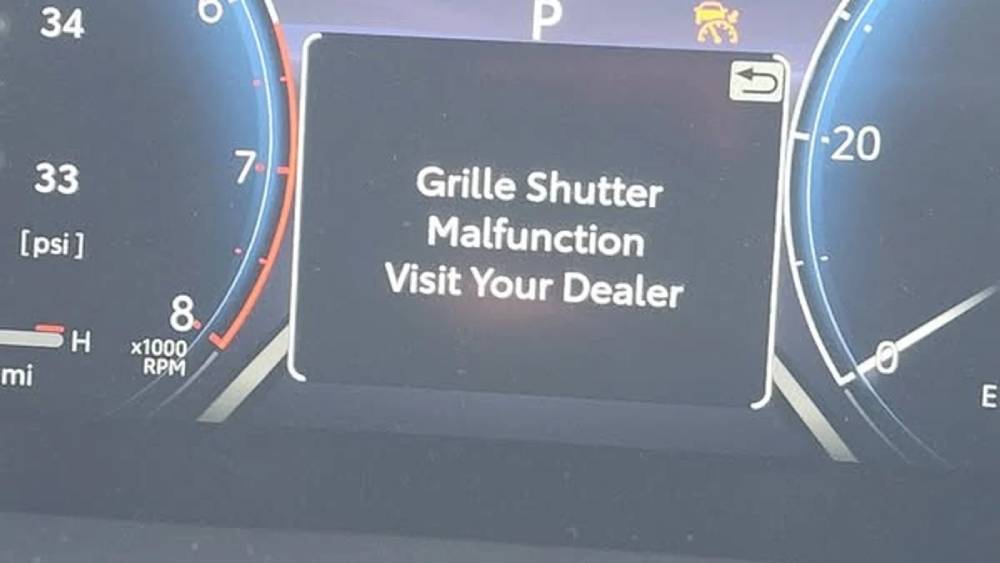
Imagine driving your Toyota on a normal day when a warning suddenly appears on the dashboard: “Grille Shutter Malfunction. Visit Your Dealer.” For many drivers, this message can be confusing and concerning. The vehicle may seem to operate normally, yet the warning suggests that something within the engine cooling or aerodynamic system is not functioning as intended.
Modern Toyota vehicles are equipped with an Active Grille Shutter system, a technology designed to improve fuel efficiency, reduce aerodynamic drag, and help the engine reach its optimal operating temperature more quickly. By automatically opening and closing shutters located behind the front grille, the system balances airflow according to driving conditions and engine demands.
However, like any electronic and mechanical component, the grille shutter system can develop problems over time. Debris, ice accumulation, faulty sensors, damaged wiring, actuator failure, or software issues can all trigger a malfunction warning. While some causes are relatively minor, others may affect engine cooling performance and should not be ignored.
In this guide, we’ll explain everything you need to know about a Toyota grille shutter malfunction, including its most common causes, warning signs, repair options, expected costs, and practical solutions to help keep your Toyota running safely and efficiently.
What Is Toyota’s Active Grille Shutter System?
Toyota’s Active Grille Shutter system is an advanced technology designed to improve both fuel efficiency and vehicle performance. Located behind the front grille, the system consists of a series of movable shutters that automatically open and close based on driving conditions, engine temperature, and cooling requirements.
When the engine is cold, the shutters typically remain closed. Restricting airflow allows the engine to warm up more quickly, helping it reach its optimal operating temperature in less time. A faster warm-up period can improve fuel economy, reduce emissions, and enhance overall engine efficiency.
As engine temperatures rise or additional cooling is needed, the shutters automatically open to allow more air to pass through the radiator and engine compartment. This helps maintain proper engine temperatures, especially during heavy acceleration, towing, hot weather, or prolonged driving.
Another important benefit of the system is improved aerodynamics. When the shutters are closed, airflow around the front of the vehicle becomes smoother, reducing drag and helping the vehicle consume less fuel at highway speeds. Although the savings may seem small on a single trip, they can contribute to measurable fuel economy improvements over the life of the vehicle.
Toyota has incorporated Active Grille Shutter technology into several modern models, including certain versions of the Camry, Corolla, RAV4, Highlander, and other vehicles equipped with advanced fuel-saving features. While the system is generally reliable, its combination of electronic sensors, motors, moving components, and control modules creates multiple potential points of failure that can eventually trigger a grille shutter malfunction warning.
Common Causes of Toyota Grille Shutter Malfunction
A grille shutter malfunction can occur for several reasons, ranging from simple obstructions to more complex electrical failures. Understanding the root cause is the first step toward an effective repair.
Debris Blocking the Shutter
One of the most common causes is physical blockage. Leaves, dirt, road debris, insects, and small stones can become lodged within the grille assembly. Over time, these obstructions may prevent the shutters from opening or closing properly, causing the system to detect abnormal movement and trigger a warning message.
Ice and Snow Accumulation
Drivers in colder climates frequently experience grille shutter issues during winter. Snow, slush, and ice can accumulate around the shutter blades and freeze moving components in place. When the actuator attempts to move the shutters but encounters resistance, the vehicle’s computer may interpret the situation as a malfunction.
Actuator Motor Failure
The actuator motor is responsible for controlling shutter movement. Like any electric motor, it can wear out over time. A failing actuator may move slowly, become stuck, produce unusual noises, or stop working altogether. Actuator failure is among the more expensive grille shutter repairs because replacement parts and labor costs can add up quickly.
Damaged Wiring and Connectors
The grille shutter system relies on electrical connections to communicate with the vehicle’s control modules. Exposure to moisture, road salt, vibration, and heat can damage wiring harnesses or corrode connectors. Even a minor electrical interruption may prevent proper operation and trigger a fault code.
Faulty Position Sensors
Position sensors monitor the exact location of the grille shutters and report that information to the vehicle’s computer. If a sensor provides inaccurate data, the control module may assume the shutters are stuck or operating incorrectly, even when the mechanical components are functioning normally.
Software and Control Module Issues
Although less common, software glitches can also cause grille shutter warnings. In some cases, Toyota may release software updates to improve system operation or correct known issues. A dealership or qualified technician can determine whether a software update is necessary.
Symptoms of a Toyota Grille Shutter Malfunction
The symptoms of a grille shutter malfunction can vary depending on the underlying problem. Some issues produce obvious warning signs, while others develop gradually over time.
The most noticeable symptom is a dashboard message indicating a grille shutter malfunction. Many drivers first become aware of the problem when this warning suddenly appears during startup or while driving.
In some situations, the Check Engine Light may illuminate alongside the grille shutter warning. When this occurs, the vehicle has often stored diagnostic trouble codes related to the shutter system, sensors, or actuator operation.
A reduction in fuel economy is another common symptom. Because the shutters help optimize airflow and aerodynamic efficiency, a malfunction can prevent the system from operating as intended. Drivers may notice slightly lower fuel mileage, particularly during highway driving.
Engine temperature fluctuations may also occur. If the shutters remain closed when additional cooling is needed, engine temperatures can rise higher than normal. Conversely, shutters stuck in the open position may cause the engine to take longer to reach optimal operating temperature, especially in colder weather.
Some drivers report unusual noises coming from the front grille area. Clicking, grinding, buzzing, or repeated motor sounds may indicate that the actuator is struggling to move the shutters or that mechanical components have become obstructed.
While these symptoms do not always indicate an immediate emergency, they should not be ignored. Early diagnosis often prevents minor issues from developing into more costly repairs and helps maintain the vehicle’s cooling efficiency, fuel economy, and long-term reliability.
Can You Drive with a Toyota Grille Shutter Malfunction?
One of the first questions most Toyota owners ask after seeing a grille shutter warning is whether it is safe to continue driving. The answer depends largely on the severity of the problem and the symptoms accompanying the warning message.
In many cases, the vehicle remains drivable even after the warning appears. If the shutters are stuck in the open position, the engine will typically continue receiving sufficient airflow for cooling. The primary consequences may include reduced fuel efficiency, slower engine warm-up times, and slightly decreased aerodynamic performance. While these issues are not ideal, they usually do not pose an immediate safety risk.
However, the situation becomes more serious if the shutters are stuck in the closed position. Restricted airflow can limit the radiator’s ability to cool the engine, particularly during hot weather, heavy traffic, mountain driving, or towing. If engine temperatures begin rising beyond normal levels, continued driving could potentially lead to overheating and expensive engine damage.
Drivers should also pay close attention to any additional warning lights. If the Check Engine Light appears alongside temperature-related warnings, or if the temperature gauge indicates unusually high readings, the vehicle should be inspected as soon as possible. Ignoring these signs may increase the likelihood of further damage to cooling system components.
As a general rule, a Toyota with a grille shutter malfunction can often be driven for a short period if no overheating symptoms are present. Nevertheless, scheduling a diagnostic inspection promptly is strongly recommended. Addressing the issue early is usually far less expensive than repairing damage caused by prolonged neglect.
How to Diagnose a Toyota Grille Shutter Problem
Proper diagnosis is essential before replacing any parts. Since several different components can trigger a grille shutter malfunction warning, identifying the exact cause can save both time and money.
The first step is performing a visual inspection. Examine the front grille area for leaves, dirt, mud, ice, snow, or other debris that may obstruct shutter movement. In many cases, a simple blockage is responsible for the warning message. Carefully cleaning the area may restore normal operation.
Next, observe the shutters while starting the vehicle. Depending on engine temperature and operating conditions, the shutters may perform a brief self-test. Failure to move or unusual movement patterns can provide clues about mechanical or electrical problems.
Using an OBD-II scanner is often the most effective diagnostic method. Modern Toyota vehicles store diagnostic trouble codes whenever the system detects abnormal operation. These codes can help identify actuator failures, sensor issues, communication faults, or electrical problems. A professional scan tool may provide even more detailed information than a basic consumer scanner.
Electrical components should also be inspected carefully. Wiring harnesses and connectors near the grille are exposed to moisture, road debris, and temperature changes. Look for loose connections, damaged insulation, corrosion, or signs of rodent damage that could interrupt communication between components.
If no obvious issues are found, testing the actuator motor and position sensors may be necessary. Professional technicians often use specialized diagnostic equipment to command shutter movement and verify that sensors accurately report shutter positions. This process helps isolate faults that may not be visible during a basic inspection.
A systematic diagnostic approach prevents unnecessary parts replacement and increases the likelihood of a successful repair on the first attempt.
How to Fix a Toyota Grille Shutter Malfunction
The appropriate repair depends entirely on the underlying cause of the malfunction. Fortunately, some fixes are relatively simple and inexpensive, while others require component replacement.
If debris is preventing shutter movement, thoroughly cleaning the grille area may solve the problem. Remove leaves, dirt, insects, and any foreign objects lodged between shutter blades. After cleaning, restarting the vehicle may allow the system to complete a self-check and clear the warning if no permanent damage exists.
For vehicles operating in cold climates, removing accumulated ice and snow may restore normal function. Parking the vehicle in a warm garage or carefully melting ice buildup can often free stuck shutters. Avoid using excessive force, as this could damage delicate plastic components.
When the actuator motor fails, replacement is usually required. Because the actuator controls shutter movement, a malfunctioning motor can prevent proper operation regardless of the condition of other components. Replacement costs vary depending on vehicle model and labor rates.
Damaged wiring or corroded connectors should be repaired or replaced as needed. Even a minor break in communication can trigger fault codes and disable the system. Electrical repairs should be performed carefully to ensure long-term reliability.
If diagnostic testing identifies faulty position sensors, replacing the affected sensor may resolve the issue. Accurate sensor readings are essential because the control module continuously monitors shutter position during operation.
In some situations, Toyota may release software updates addressing known grille shutter issues. A dealership can check whether updated software is available for the vehicle and install it if necessary.
For severe mechanical damage, replacing the entire grille shutter assembly may be the most practical solution. Although this option is generally the most expensive, it ensures that all integrated components operate correctly and often provides the most reliable long-term repair.
Toyota Grille Shutter Repair Costs
One of the biggest concerns for vehicle owners facing a grille shutter malfunction is the potential repair cost. The total expense can vary significantly depending on the specific cause of the problem, the Toyota model involved, labor rates in your area, and whether original equipment manufacturer (OEM) or aftermarket parts are used.
Minor issues are often the least expensive to resolve. If the warning is caused by debris, dirt accumulation, or ice buildup, a simple inspection and cleaning service may cost between $50 and $150. In some cases, owners can even perform the cleaning themselves, eliminating repair costs altogether.
Sensor-related repairs generally fall into the moderate price range. Replacing a faulty position sensor may cost between $100 and $350, including parts and labor. The exact amount depends on sensor accessibility and the complexity of the diagnostic process.
Electrical repairs can vary considerably. Repairing damaged wiring, corroded connectors, or communication faults may cost anywhere from $100 to $500. Simple connector repairs are typically inexpensive, while extensive wiring harness repairs can become more costly.
Actuator replacement is one of the more common repairs associated with grille shutter malfunctions. Depending on the vehicle model, actuator replacement typically ranges from $250 to $800. Labor costs often account for a significant portion of the total expense because access to the actuator may require removal of front-end components.
In cases involving severe damage, the entire grille shutter assembly may need replacement. This repair can range from approximately $500 to $1,500 or more, particularly on newer models with integrated sensors and electronic controls.
Vehicle owners should also consider warranty coverage. Some repairs may be covered under a manufacturer’s warranty, extended warranty plan, or service campaign. Checking with a Toyota dealership before authorizing repairs can sometimes result in substantial savings.
How to Prevent Future Grille Shutter Problems
Although not every grille shutter malfunction can be prevented, routine maintenance and regular inspections can significantly reduce the likelihood of future problems.
One of the simplest preventive measures is keeping the front grille area clean. Dirt, leaves, insects, and road debris can gradually accumulate around the shutter assembly and interfere with normal movement. Periodically inspecting and cleaning the grille helps ensure unrestricted operation.
Drivers who live in regions with harsh winters should pay special attention to snow and ice accumulation. After driving in snowy conditions, inspecting the grille area and removing packed snow can help prevent frozen shutters. Parking in a garage whenever possible may also reduce the risk of ice-related issues.
Routine vehicle washing is another effective preventive strategy. Road salt, moisture, and grime can accelerate corrosion of electrical connectors and wiring. Washing the front end of the vehicle regularly helps protect sensitive components from long-term damage.
During scheduled maintenance visits, technicians can inspect the grille shutter system for signs of wear, loose connections, or abnormal operation. Detecting minor issues early often prevents more expensive repairs later.
Owners should also address warning messages promptly. Ignoring a grille shutter malfunction warning may allow a small problem to develop into a larger and more costly repair. Early diagnosis often results in simpler and less expensive solutions.
Finally, ensuring that vehicle software remains up to date can help prevent certain control-related issues. Dealership service departments can verify whether any software updates are available for the vehicle’s control modules and install them when necessary.
Conclusion
A Toyota grille shutter malfunction may seem like a minor warning at first, but it should never be ignored. The Active Grille Shutter system plays an important role in maintaining fuel efficiency, improving aerodynamics, and helping the engine operate within its ideal temperature range.
Several factors can trigger a malfunction warning, including debris buildup, ice accumulation, actuator failure, damaged wiring, faulty sensors, and software issues. While some of these problems are relatively easy to fix, others may require professional diagnosis and component replacement.
Understanding the symptoms of a grille shutter malfunction can help drivers respond appropriately before the issue escalates. Warning messages, reduced fuel economy, unusual noises, and engine temperature fluctuations are all signs that the system may require attention. Prompt inspection and repair can prevent unnecessary strain on the cooling system and reduce the risk of more serious engine-related problems.
The good news is that many grille shutter issues are both diagnosable and repairable. Regular maintenance, routine inspections, and timely responses to warning messages can help keep the system functioning properly for years to come.
If your Toyota has recently displayed a grille shutter malfunction warning, consider scheduling a diagnostic inspection as soon as possible. Addressing the problem early can help protect your vehicle’s performance, improve reliability, and potentially save hundreds of dollars in future repair costs.
Have you experienced a grille shutter malfunction on your Toyota? Share your vehicle model, mileage, and symptoms to help other owners better understand this increasingly common issue.