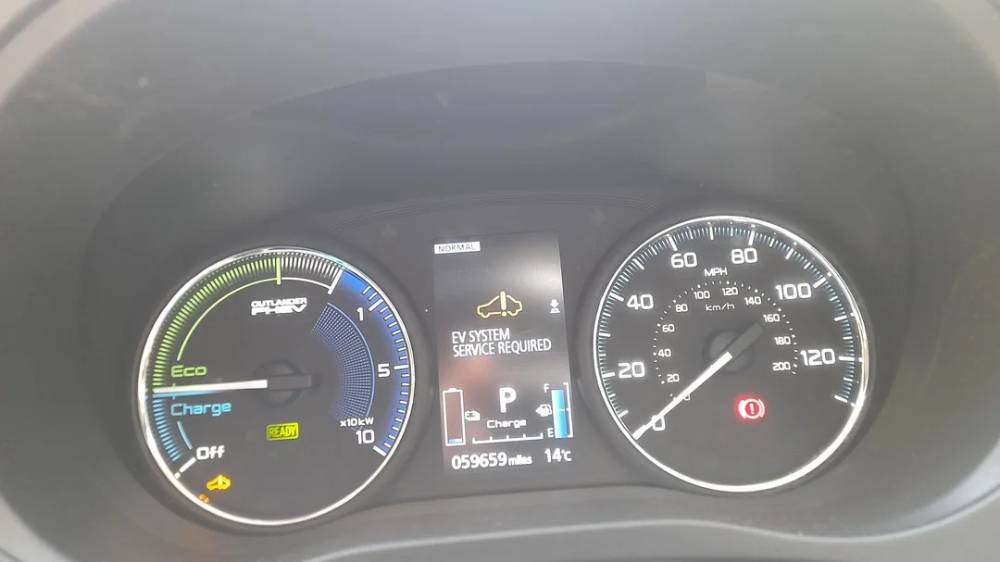
Seeing the “EV System Service Required” warning message appear on your Mitsubishi dashboard can be alarming, especially if you rely on your vehicle for daily commuting. Whether you own a Mitsubishi Outlander PHEV or another Mitsubishi electrified model, this warning often raises immediate questions: Is it safe to continue driving? Is the high-voltage battery failing? How much will the repair cost?
The good news is that this warning does not always indicate a major or expensive problem. In many cases, something as simple as a weak 12-volt battery can trigger the alert. However, the message can also point to more serious issues involving the vehicle’s hybrid system, battery management components, charging system, or electronic control units.
Ignoring the warning is never recommended. What begins as a minor electrical fault can eventually affect vehicle performance, reduce fuel efficiency, or even leave you stranded if left unresolved. Understanding the potential causes behind this message is the first step toward diagnosing the issue correctly and avoiding unnecessary repair expenses.
In this article, we will explore the 10 most common reasons why Mitsubishi vehicles display the EV System Service Required warning, explain the symptoms associated with each problem, and provide practical guidance on what drivers should do next. By the end of this guide, you will have a clearer understanding of the issue and be better prepared to make informed decisions about maintaining your Mitsubishi EV or plug-in hybrid vehicle.
1. Weak or Failing 12-Volt Battery
One of the most common yet frequently overlooked causes of the EV System Service Required warning is a weak or deteriorating 12-volt battery. Although Mitsubishi plug in hybrid vehicles rely on a high-voltage battery pack for propulsion, the 12-volt battery remains responsible for powering essential electronic systems and initiating communication between various control modules.
When the battery voltage drops below the required level, the vehicle’s electronic control units may begin to behave unpredictably. As a protective measure, the system can trigger warning messages related to the EV system, even when the high-voltage components are functioning normally.
Drivers often notice this issue after the vehicle has been parked for an extended period without use. Cold weather conditions can also accelerate battery degradation and increase the likelihood of warning messages appearing unexpectedly.
Common symptoms include:
• Difficulty starting the vehicle
• Multiple warning lights appearing simultaneously
• Intermittent EV system alerts that disappear after restarting the car
• Reduced responsiveness from electrical accessories
What you should do:
Begin by checking the battery voltage using a multimeter. A healthy 12-volt battery should typically read around 12.6 volts when the vehicle is off. If the reading is significantly lower, charging or replacing the battery may resolve the issue entirely. Because replacing a 12-volt battery is considerably less expensive than repairing high-voltage components, it should always be one of the first areas investigated.
2. Communication Failure Between Electronic Control Units
Modern Mitsubishi plug in hybrid vehicles rely on a sophisticated network of electronic control units to manage everything from battery performance to regenerative braking. These modules continuously exchange information to ensure the EV system operates efficiently and safely.
If communication between these control units becomes disrupted, the vehicle may interpret the interruption as a system malfunction and display the EV System Service Required warning.
Several factors can contribute to communication failures. Loose electrical connectors, damaged wiring, corrosion caused by moisture intrusion, or temporary software glitches may interfere with the data exchange process. In some situations, a failing control module itself may be responsible.
Common symptoms include:
• Warning messages that appear and disappear without a clear pattern
• Temporary loss of EV mode functionality
• Reduced vehicle performance
• Diagnostic trouble codes related to network communication
What you should do:
Professional diagnostic equipment is often required to identify the affected control module. Technicians can scan the vehicle for stored fault codes and determine whether the problem originates from wiring, connectors, software issues, or a defective ECU. Prompt diagnosis is important because unresolved communication problems may lead to additional system malfunctions over time.
3. High Voltage Battery Problems
The high-voltage battery is the heart of Mitsubishi’s plug in hybrid system. It stores the electrical energy used to power the electric motors and contributes significantly to fuel efficiency and overall vehicle performance. Because of its critical role, any irregularity within the battery pack can trigger the EV System Service Required warning.
Battery issues may develop gradually as the vehicle ages. Individual battery cells can lose capacity at different rates, resulting in an imbalance that affects the performance of the entire pack. Excessive heat exposure, repeated deep discharge cycles, and long term wear may all contribute to battery degradation.
Drivers experiencing battery related problems often notice changes in the way their vehicle operates. The car may rely more heavily on the gasoline engine, even during conditions where electric driving would normally occur. Charging times may increase, and the total electric driving range may become noticeably shorter than before.
Common symptoms include:
• Reduced EV driving range
• Frequent activation of the gasoline engine
• Difficulty achieving a full battery charge
• Decreased acceleration while operating in EV mode
• Persistent EV system warning messages
What you should do:
Because high-voltage systems involve specialized components and safety considerations, professional evaluation is strongly recommended. Certified technicians can assess battery health, identify weakened modules, and determine whether repairs, software updates, or battery replacement are necessary.
While high-voltage battery repairs can be costly, early detection may prevent further deterioration and help maintain the efficiency and reliability of your Mitsubishi plug in hybrid vehicle.
4. Battery Management System Malfunction
The Battery Management System, commonly known as the BMS, plays a vital role in maintaining the safety and efficiency of Mitsubishi’s plug in hybrid vehicles. This sophisticated component continuously monitors the condition of the high voltage battery by tracking parameters such as voltage levels, temperature variations, charging status, and overall battery health.
When the BMS detects abnormalities or begins to malfunction itself, it may generate inaccurate readings or fail to communicate correctly with other control modules. As a result, the vehicle can display the EV System Service Required warning even before noticeable performance issues develop.
In some situations, the BMS may intentionally restrict battery usage to protect the high voltage system from potential damage. While this protective function is beneficial, it often leaves drivers concerned about the severity of the problem.
Common symptoms include:
• Unexpected reductions in EV driving performance
• Difficulty charging the battery to full capacity
• Sudden fluctuations in the displayed battery level
• Warning messages that reappear shortly after being cleared
• Reduced power output during acceleration
What you should do:
Diagnosing a Battery Management System fault requires specialized diagnostic equipment capable of accessing Mitsubishi specific data. A qualified technician can evaluate battery balancing information, identify communication errors, and determine whether the issue involves software calibration, sensor input, or the BMS unit itself. Addressing these concerns early may prevent additional stress on the high voltage battery pack.
5. Charging System Malfunctions
Another potential cause of the EV System Service Required message involves problems within the vehicle’s charging system. Mitsubishi plug in hybrid models depend on a properly functioning charging infrastructure to replenish the high voltage battery safely and efficiently.
A fault can occur in several areas of the charging process. The onboard charger responsible for converting incoming electrical current may develop internal issues. Charging connectors may become contaminated by dirt or corrosion. External charging equipment with unstable power delivery can also contribute to charging interruptions and system warnings.
Drivers frequently encounter this problem when the vehicle repeatedly fails to charge or when charging sessions terminate unexpectedly before completion.
Common symptoms include:
• The vehicle does not begin charging after being connected
• Charging sessions stop prematurely
• Warning indicators appear during or immediately after charging
• Significantly extended charging times
• Inconsistent charging performance across different charging stations
What you should do:
Inspect the charging cable and connector for visible signs of damage or contamination. If possible, attempt charging using an alternative charging station to eliminate external equipment as the source of the problem. Should the warning persist, professional inspection of the onboard charging system may be necessary to identify defective components and restore reliable charging performance.
6. Cooling System Problems Affecting the EV Components
Heat management is essential for maintaining the longevity and efficiency of electric vehicle components. Mitsubishi plug in hybrid systems rely on cooling mechanisms to regulate temperatures within critical areas such as the battery pack, inverter, and associated electronic systems.
If cooling performance becomes compromised, the vehicle may activate the EV System Service Required warning to protect sensitive components from overheating. Excessive temperatures can accelerate battery degradation and reduce the effectiveness of the hybrid system.
Cooling related concerns may arise from malfunctioning fans, blocked airflow passages, faulty temperature sensors, or issues within the cooling circuits designed to dissipate heat effectively.
Drivers often notice these problems during periods of high ambient temperatures, prolonged uphill driving, or extended use under demanding operating conditions.
Common symptoms include:
• EV warning messages appearing after long drives
• Reduced electric driving capability during hot weather
• Audible cooling fans operating more frequently than usual
• Temporary limitations on vehicle power output
• Increased reliance on the gasoline engine
What you should do:
Regular maintenance inspections can help identify cooling system deficiencies before they develop into more serious concerns. Ensuring that ventilation pathways remain unobstructed and having cooling components evaluated during scheduled service visits can significantly reduce the likelihood of temperature related EV system warnings.
Because overheating may affect multiple high voltage components simultaneously, professional diagnosis is recommended whenever cooling system concerns are suspected. Early intervention can help preserve battery performance and minimize the risk of costly repairs in the future.
7. Faulty Sensors Within the EV System
Mitsubishi plug in hybrid vehicles depend on numerous sensors to monitor the condition of the high voltage system and ensure safe operation. These sensors collect critical data related to temperature, voltage, current flow, and other performance indicators. The information is then transmitted to the vehicle’s control modules, which make real time decisions regarding charging, power delivery, and battery protection.
When one or more sensors begin to fail, the data received by the control units may become inaccurate or inconsistent. Even if the actual EV components are functioning properly, the vehicle may interpret the abnormal readings as a potential safety risk and activate the EV System Service Required warning.
Sensor related issues can be difficult to identify because the symptoms often resemble those associated with more serious electrical faults. In some cases, the warning may appear only intermittently, making diagnosis even more challenging.
Common symptoms include:
• Warning lights that appear without noticeable performance changes
• Inconsistent battery level readings
• Unexpected transitions between EV mode and hybrid mode
• Temporary reductions in available power
• Diagnostic trouble codes related to sensor circuits
What you should do:
A comprehensive diagnostic scan is usually necessary to determine which sensor is providing incorrect information. Replacing a faulty sensor is often a straightforward repair compared with major EV component replacements. Addressing sensor problems promptly helps prevent unnecessary strain on other systems and restores confidence in the accuracy of vehicle monitoring functions.
8. Inverter Malfunctions
The inverter is one of the most important components in Mitsubishi’s electrified powertrain. Its primary function is to convert direct current stored in the high voltage battery into alternating current required by the electric motors. It also assists in managing energy flow during regenerative braking and battery charging processes.
Because the inverter operates under demanding electrical conditions, internal failures can occasionally occur. Overheating, age related wear, manufacturing defects, or electrical stress may contribute to inverter problems. When abnormalities are detected, the vehicle may limit power output and display the EV System Service Required warning to prevent further damage.
Unlike minor electrical issues, inverter malfunctions often have a noticeable impact on driving performance.
Common symptoms include:
• Loss of EV mode functionality
• Reduced acceleration performance
• Sudden decreases in available power
• Additional warning messages appearing on the dashboard
• Difficulty transitioning between electric and hybrid operation
What you should do:
Inverter diagnosis should be performed by technicians trained to work with high voltage systems. Specialized equipment is required to evaluate the inverter’s performance and identify internal faults. Although inverter repairs can be expensive, early intervention may help prevent secondary damage to other EV components.
9. Software Glitches and Outdated System Updates
Modern Mitsubishi vehicles rely heavily on software to coordinate communication between multiple electronic systems. From battery management to charging operations, software plays a crucial role in ensuring that all components function harmoniously.
Occasionally, software bugs or outdated programming can trigger false warnings, including the EV System Service Required message. In these situations, no physical defect may be present. Instead, the vehicle’s control units may simply require recalibration or updated software provided by Mitsubishi.
Drivers sometimes report that the warning disappears temporarily after restarting the vehicle, only to return later without any obvious changes in vehicle performance.
Common symptoms include:
• Warning messages that appear intermittently
• No noticeable mechanical or electrical issues
• Fault codes that cannot be linked to specific component failures
• Recurring alerts despite previous repairs
What you should do:
Consult a Mitsubishi dealership or qualified service center to determine whether software updates are available for your vehicle. Applying the latest updates may resolve communication errors, improve system stability, and eliminate unnecessary warning messages. Keeping vehicle software current is an important aspect of maintaining modern hybrid and electric vehicles.
10. Damaged Wiring and Loose Electrical Connections
Electrical wiring serves as the communication network connecting every component within Mitsubishi’s EV system. Over time, wiring harnesses and connectors may become damaged due to environmental exposure, vibration, accidental impacts, or even rodent activity.
A loose connector or partially damaged wire can interrupt communication between essential systems, resulting in intermittent faults that trigger the EV System Service Required warning. Because these issues may occur only under certain driving conditions, they can be particularly difficult to diagnose.
Vehicles operating in regions with high humidity or frequent exposure to road contaminants may be more susceptible to corrosion related electrical problems.
Common symptoms include:
• Warning messages that appear unpredictably
• Intermittent loss of EV functionality
• Electrical issues affecting multiple systems simultaneously
• Diagnostic codes related to communication failures
• Problems that worsen after driving in wet conditions
What you should do:
A detailed inspection of the vehicle’s wiring and connectors should be performed by an experienced technician. Identifying damaged sections of wiring early can prevent more extensive electrical failures and reduce repair costs. Routine maintenance inspections may also help detect signs of corrosion or connector deterioration before major problems develop.
Conclusion
The Mitsubishi EV System Service Required warning should never be ignored, but it does not automatically indicate catastrophic failure of the high voltage battery. As discussed throughout this guide, the underlying cause can range from something relatively simple, such as a weak 12 volt battery, to more complex issues involving the inverter, Battery Management System, charging components, or electronic communication networks.
Understanding these ten common causes allows vehicle owners to approach the situation with greater confidence and make informed decisions regarding diagnosis and repair. Early attention to warning messages often leads to simpler and less expensive solutions, while delaying inspection can increase the likelihood of component damage and higher repair costs.
If your Mitsubishi continues to display the EV System Service Required message, scheduling a professional diagnostic evaluation is the safest course of action. Accurate identification of the problem not only protects the reliability of your vehicle but also helps preserve the efficiency and longevity of its advanced electrified powertrain.
By staying proactive with maintenance, monitoring battery health, and addressing warning signs promptly, Mitsubishi owners can continue to enjoy the benefits of plug in hybrid technology with greater peace of mind.