Identifying a Ford 9 Inch rear end correctly helps you choose compatible parts, restore a classic Ford, and plan drivetrain upgrades with confidence. Many rear axles look similar at first glance. However, the Ford 9 Inch has several unique features that make accurate identification possible. Knowing what to inspect prevents costly mistakes and saves time during a restoration or performance build.
This guide explains how to identify a genuine Ford 9 Inch rear end step by step. You will learn how to inspect the housing, recognize the removable third member, decode axle tags, read casting numbers, and verify critical measurements. Each method confirms a different characteristic, so combining them produces a more reliable result than relying on appearance alone.
Whether you own a classic Mustang, an F-Series truck, a Bronco, or another vintage Ford, accurate identification is essential before buying replacement parts or aftermarket upgrades. This guide also compares the Ford 9 Inch with similar rear axles to help you avoid common identification mistakes. By the end of the article, you will know how to verify a genuine Ford 9 Inch rear end and select components that match your vehicle with confidence.
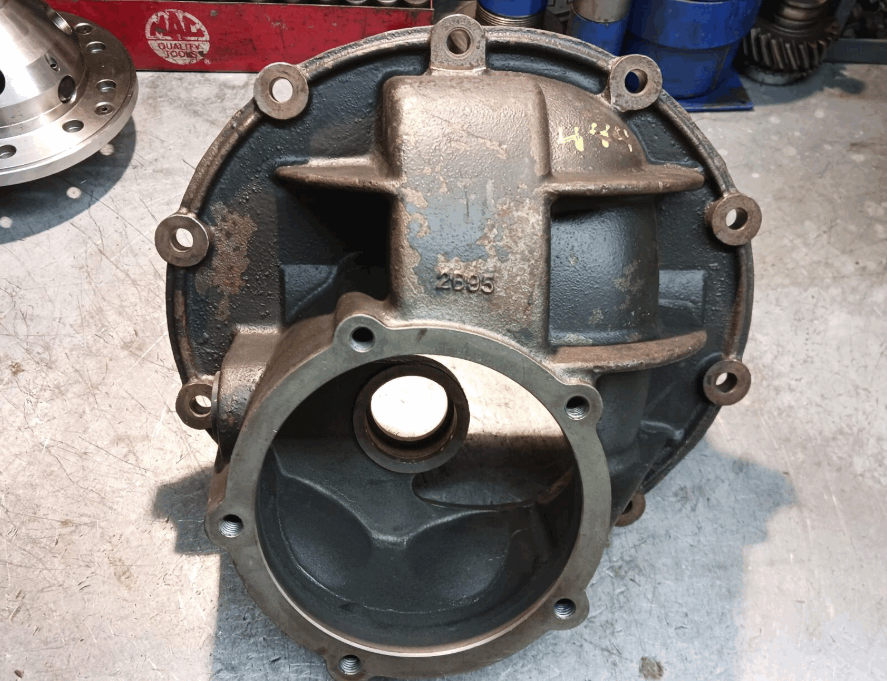
What Is a Ford 9 Inch Rear End?
A Ford 9 Inch rear end is a solid rear axle assembly that Ford introduced in 1957 for passenger cars and light trucks. It became one of the strongest production rear axles ever built because it combines exceptional durability with a removable third member. Unlike many other axle designs, the differential carrier mounts to the front of the housing instead of the rear. This design allows mechanics to remove the complete gear assembly without opening the axle housing, making gear changes and differential servicing much easier.
The Ford 9 Inch rear end consists of several key components that work together to transfer engine power to the rear wheels. The axle housing supports the entire assembly, while the third member contains the ring gear, pinion gear, differential, and carrier bearings. Axle shafts connect the differential to the wheels, and the housing ends support the axle bearings and brake assemblies. Each component contributes to the axle’s reputation for strength, reliability, and serviceability.
Ford installed the 9 Inch rear end in a wide range of vehicles, including the Mustang, Fairlane, Galaxie, Torino, Bronco, Ranchero, and F-Series trucks. Its impressive torque capacity soon attracted racers, restorers, and off-road enthusiasts. Today, many performance vehicles still use the Ford 9 Inch because it handles high horsepower, accepts numerous aftermarket upgrades, and remains easy to rebuild. Its proven design and broad parts availability continue to make it one of the most respected rear axle assemblies in the automotive industry.
What Features Make a Ford 9 Inch Rear End Easy to Identify?
Several distinctive design features make a Ford 9 Inch rear end easy to identify, even before you inspect the internal components. The most recognizable feature is the removable third member. Instead of removing a rear cover to access the differential, you remove the complete gear assembly from the front of the housing. This design creates a smooth rear housing with no removable inspection cover, making the Ford 9 Inch different from most modern rear axles.
Another reliable identification feature is the bolt arrangement that secures the third member to the housing. A genuine Ford 9 Inch uses ten retaining nuts around the carrier flange. One of these nuts sits directly behind the pinion support, making it difficult to access with a standard socket. This hidden fastener is one of the quickest visual clues because most similar rear axles do not share the same layout.
The pinion location also helps confirm the axle. Ford positioned the pinion gear lower than the axle centerline, creating a noticeable offset when viewed from the front. This design increases the contact area between the ring gear and pinion gear, allowing the axle to handle higher torque loads without sacrificing durability. As a result, the Ford 9 Inch earned a reputation for exceptional strength in both factory vehicles and high-performance applications.
You should also inspect the axle tubes and housing shape. Factory housings feature smoothly welded axle tubes that flow into a rounded center section without a removable rear cover. Many original housings also include stamped axle tags or casting numbers that support visual identification. Although aftermarket housings may differ slightly in appearance, the removable third member, smooth rear housing, hidden retaining nut, and offset pinion remain the defining characteristics of a genuine Ford 9 Inch rear end.
How Can You Identify a Ford 9 Inch Rear End Using Axle Tags and Casting Numbers?
Axle tags and casting numbers provide the most reliable way to verify a Ford 9 Inch rear end when the housing still retains its original identification marks. While visual inspection confirms the overall design, these factory markings reveal important specifications that help you determine whether the axle is genuine and identify its original configuration.
Ford attached a small metal axle tag beneath one of the carrier retaining nuts on the front of the housing. This tag contains stamped codes that identify the factory gear ratio, axle type, production date, and assembly information. Although many older rear ends have lost their original tags during repairs or restorations, finding an intact tag makes identification much easier. Comparing the stamped numbers with official Ford axle code references allows you to verify whether the housing matches its original specifications.
Casting numbers offer another valuable source of identification. Ford cast these numbers directly into the third member or the axle housing during manufacturing. Unlike an axle tag, a casting number identifies the component itself rather than the complete axle assembly. For this reason, casting numbers help determine the production period and design version but cannot always confirm the original gear ratio or axle configuration on their own.
The best approach combines both identification methods with a careful visual inspection. First, confirm the removable third member and the smooth rear housing. Next, locate the axle tag and record its stamped information. Finally, compare the casting numbers with trusted Ford reference data. Using all three methods together provides the highest level of accuracy and reduces the chance of confusing an original Ford 9 Inch rear end with an aftermarket housing or a similar axle assembly.
How Do You Measure a Ford 9 Inch Rear End Correctly?
Measuring a Ford 9 Inch rear end correctly confirms whether the axle fits your vehicle and helps you select compatible replacement parts. Even if two housings look identical, small differences in width, axle length, or housing ends can affect wheel alignment, brake installation, and suspension geometry. Accurate measurements eliminate guesswork and reduce the risk of purchasing the wrong components.
Begin by measuring the flange-to-flange width because it represents the overall width of the assembled rear axle. Place the axle on a level surface and measure from one axle flange to the opposite flange using a tape measure. This dimension determines how the rear wheels sit inside the wheel wells and whether the axle matches the original factory specifications. Next, measure the housing width from one housing end to the other. This measurement becomes especially important when replacing axle shafts or installing aftermarket housing ends.
You should also measure each axle shaft after removing it from the housing. Record the length from the end of the spline to the wheel flange and compare both sides carefully. Some Ford 9 Inch rear ends use different axle shaft lengths because the pinion sits slightly off center. Assuming both shafts are identical often leads to ordering incorrect replacement parts.
Always verify your measurements before making a purchase. Clean the housing to expose the true measuring points and use a quality tape measure or caliper for greater accuracy. If possible, compare your results with factory specifications for the original vehicle. Combining accurate measurements with axle tags, casting numbers, and visual inspection provides the most reliable method for identifying a genuine Ford 9 Inch rear end and ensuring every replacement component fits correctly.
How Can You Identify Big Bearing and Small Bearing Ford 9 Inch Housings?
Bearing size is one of the most important factors when identifying a Ford 9 Inch rear end because it determines axle compatibility, brake options, and load capacity. Although Big Bearing and Small Bearing housings share the same basic design, they differ in their housing ends, bearing dimensions, and intended applications. Identifying the correct version helps you choose replacement parts that fit properly and perform as expected.
Small Bearing housings appeared on many passenger cars equipped with lower-powered engines. They use a smaller axle bearing and a compact housing end that supports lighter loads. This design performs well in standard driving conditions, but it offers fewer upgrade options for vehicles that produce high horsepower or carry heavy loads. Many early Mustangs, Fairlanes, and Falcons originally left the factory with Small Bearing rear ends.
Big Bearing housings use larger axle bearings and stronger housing ends to increase durability. Ford installed them in heavier vehicles, high-performance models, and many trucks because they withstand greater torque and axle loads. Several Big Bearing variations also exist, including the popular Torino housing end, which accepts a wide range of modern brake kits and aftermarket axle shafts. As a result, many builders prefer this configuration for restoration and performance projects.
You can identify the bearing type by measuring the housing end, inspecting the axle bearing, and comparing the bolt pattern that secures the brake backing plate. Factory specifications and aftermarket reference charts also simplify the process when original parts remain in place. Confirming the correct bearing style before ordering axle shafts, bearings, seals, or brake components prevents installation problems and ensures every part matches the specifications of your Ford 9 Inch rear end.
How Can You Tell a Ford 9 Inch Apart from Similar Rear Axles?
Several rear axles resemble a Ford 9 Inch rear end. However, a few distinctive features make identification straightforward. Compare the housing design, differential access, and pinion location first. These details quickly separate a Ford 9 Inch from other popular rear axles.
The Ford 9 Inch and the Ford 8.8 are the models most often confused. They both appeared in many Ford vehicles. However, their designs differ significantly. The Ford 8.8 uses a removable rear inspection cover to access the differential. The Ford 9 Inch uses a removable third member that bolts to the front of the housing instead. It also has a smooth rear housing without an inspection cover. This difference is usually the easiest way to identify the axle.
The Dana 60 has its own distinctive appearance. It features a large rear inspection cover with an irregular shape. Its pinion sits near the center of the housing rather than below the axle centerline. The housing is also larger and heavier because it was designed for demanding truck and off-road applications. These characteristics make the Dana 60 easy to distinguish from a Ford 9 Inch.
The GM 12-Bolt uses another housing design. It includes a removable rear cover and a different bolt pattern. Its center section also has a noticeably different profile. By comparison, the Ford 9 Inch combines a smooth rear housing, a removable third member, and an offset pinion. Verifying these features together provides the most accurate way to identify a genuine Ford 9 Inch rear end.
Which Ford Vehicles Came with a Factory 9 Inch Rear End?
Ford installed the 9 Inch rear end in many passenger cars, muscle cars, light trucks, and utility vehicles between the late 1950s and the mid-1980s. However, not every model received this axle as standard equipment. The factory often selected the rear axle based on the engine, payload rating, towing package, or performance package. Knowing which vehicles originally used a Ford 9 Inch helps you identify an axle more accurately.
The Ford Mustang is one of the best-known applications. Many high-performance Mustangs built from the late 1960s through the early 1970s left the factory with a Ford 9 Inch rear end. Models equipped with larger V8 engines typically received this stronger axle because it could handle higher torque than smaller alternatives. Performance editions such as the Boss 302, Boss 429, and Mach 1 commonly featured the Ford 9 Inch.
Ford also installed the 9 Inch rear end in several full-size passenger cars. Popular examples include the Galaxie, Fairlane, Torino, Ranchero, and LTD. These vehicles often required a stronger rear axle for larger engines and heavier curb weights. Some Mercury models, including the Cougar and Cyclone, also shared the same axle because they used similar chassis and drivetrain components.
Light trucks and sport utility vehicles expanded the popularity of the Ford 9 Inch even further. Many F-Series trucks, Broncos, and Econoline vans relied on this axle for its durability and excellent load capacity. Even today, builders continue to search for these factory rear ends because they offer outstanding strength, broad aftermarket support, and excellent compatibility with restoration and performance projects.
What Should You Inspect Before Buying a Used Ford 9 Inch Rear End?
Inspecting a used Ford 9 Inch rear end before purchase helps you avoid expensive repairs and incompatible parts. Many used assemblies appear complete from the outside. However, hidden wear or incorrect components can significantly reduce their value. A careful inspection allows you to confirm both condition and authenticity.
Start by examining the axle housing for visible damage. Look for cracks, heavy rust, bent axle tubes, or poor-quality weld repairs. The housing should appear straight and free from major impact damage. Minor surface rust is usually acceptable. Structural damage is not. You should also inspect the housing ends because damaged bearing seats can require costly repairs.
Next, inspect the third member and the internal components. Rotate the pinion flange by hand and check for rough movement or excessive play. Listen for grinding noises while the gears turn. If the third member has already been removed, inspect the ring gear and pinion for chipped teeth, scoring, or unusual wear patterns. These signs often indicate poor maintenance or excessive mileage.
Finally, verify the axle’s specifications before completing the purchase. Check the axle tag, casting numbers, and overall width. Confirm the bearing type and axle spline count if possible. Make sure these specifications match your vehicle or project. A thorough inspection takes only a few minutes, but it can prevent expensive mistakes and ensure you purchase a genuine Ford 9 Inch rear end that is ready for rebuilding or installation.
What Are the Most Common Mistakes When Identifying a Ford 9 Inch Rear End?
Many people misidentify a Ford 9 Inch rear end because several rear axles share a similar appearance. A quick visual inspection is rarely enough. Accurate identification requires checking multiple features instead of relying on a single characteristic. Avoiding common mistakes helps you select the correct parts and prevents expensive purchasing errors.
One common mistake is assuming that every smooth rear housing is a Ford 9 Inch. While the smooth housing is a distinctive feature, it should never be the only factor you examine. Always confirm the removable third member, the ten retaining nuts, and the offset pinion. These features provide much stronger evidence than the housing shape alone.
Another frequent mistake is ignoring the axle tag and casting numbers. Many buyers focus only on the outside of the housing. However, factory identification marks often reveal the original gear ratio, production period, and axle configuration. If these markings are still present, compare them with trusted Ford reference data before making a final decision.
Incorrect measurements also lead to costly problems. Some buyers measure only the overall axle width and overlook the housing ends, axle shaft length, or bearing type. Others assume all Ford 9 Inch rear ends use identical components. In reality, several factory variations exist. Measuring carefully and verifying every specification ensures the rear end fits your vehicle and supports the parts you plan to install.
Finally, never assume a used axle is original simply because the seller says it is. Many Ford 9 Inch rear ends have been rebuilt with aftermarket housings, replacement third members, or upgraded axle shafts. A complete inspection, combined with factory identification marks and accurate measurements, provides the most reliable way to confirm that you are buying a genuine Ford 9 Inch rear end.
Conclusion
Identifying a Ford 9 Inch rear end is straightforward when you know what to inspect. Start by confirming the removable third member and the smooth rear housing. Next, examine the axle tag, casting numbers, bearing type, and housing dimensions. Each feature provides valuable information, and using them together produces the most accurate identification.
A careful inspection also helps you avoid costly mistakes when buying used parts or planning a restoration. Factory and aftermarket components often look similar, but important differences affect compatibility and performance. Verifying the specifications before purchasing replacement parts saves both time and money.
The Ford 9 Inch remains one of the most respected rear axles ever produced. Its exceptional strength, simple serviceability, and extensive aftermarket support continue to make it a popular choice for classic restorations, off-road builds, and high-performance vehicles. By following the identification methods in this guide, you can confidently verify a genuine Ford 9 Inch rear end and choose the right components for your project.
Frequently Asked Questions
How can I quickly identify a Ford 9 Inch rear end?
The fastest method is to look for a smooth rear housing with no inspection cover. Then confirm the removable third member, the ten retaining nuts, and the offset pinion position. These features distinguish the Ford 9 Inch from most other rear axles.
Are all Ford 9 Inch rear ends the same?
No. Ford produced several versions with different housing widths, axle shaft lengths, bearing sizes, spline counts, and gear ratios. Always verify the specifications before ordering replacement parts.
What vehicles came with a Ford 9 Inch rear end?
Many classic Ford vehicles used the 9 Inch rear end. Common examples include the Mustang, Fairlane, Galaxie, Torino, Ranchero, Bronco, F-Series trucks, and several Mercury models. Availability depended on the model year, engine, and factory equipment package.
Where can I find the axle tag on a Ford 9 Inch?
The factory axle tag is usually attached beneath one of the third-member retaining nuts on the front of the housing. The stamped codes identify the original axle specifications, including the gear ratio and production information.
Why is the Ford 9 Inch rear end so popular?
The Ford 9 Inch is known for its outstanding strength, removable third member, and excellent aftermarket support. These advantages make it easy to rebuild, upgrade, and maintain. It remains a popular choice for restoration projects and high-performance applications.