Ford rear axle codes are one of the most valuable factory identifiers for determining a vehicle’s rear axle configuration. Each code represents a specific combination of gear ratio, differential type, and axle assembly that directly influences towing capacity, acceleration, fuel efficiency, and overall driving performance. Whether you own a Ford F-150, Ranger, Bronco, Explorer, Mustang, or Super Duty truck, understanding your rear axle code helps you choose compatible replacement parts and make informed maintenance or upgrade decisions.
Many Ford owners discover an axle code on the Safety Compliance Certification Label or the axle tag but are unsure how to interpret it. A single letter or alphanumeric code may appear simple, yet it reveals critical information about the vehicle’s drivetrain. It can indicate whether the truck is equipped with an open differential, a limited-slip differential, or an electronic locking differential, while also identifying the factory-installed gear ratio.
This guide explains Ford rear axle codes from a practical and technical perspective. You will learn where to locate the axle code, how to decode it correctly, and how each code affects real-world vehicle performance. The article also includes a complete Ford rear axle code chart, gear ratio explanations, model-specific references, and identification methods for vehicles with missing labels. By the end of this guide, you will have the knowledge needed to identify your Ford rear axle confidently and select the correct OEM components for repair, replacement, or performance upgrades.
What Are Ford Rear Axle Codes and Why Do They Matter?
Ford rear axle codes identify the exact rear axle configuration installed at the factory. Each code represents a specific combination of gear ratio, differential type, and axle assembly. Ford uses these short identifiers to simplify vehicle identification. Owners and technicians can quickly confirm the correct drivetrain specifications without reading complex engineering data.
Every rear axle code affects how a Ford vehicle performs on the road. The gear ratio changes acceleration, towing capacity, highway engine speed, and fuel economy. The differential type determines how power reaches the rear wheels. An open differential suits daily driving, while a limited slip differential improves traction on loose or slippery surfaces. An electronic locking differential provides maximum traction during off road driving and heavy duty work.
Knowing the correct axle code also prevents costly mistakes during repairs. Many drivetrain components look similar but use different internal specifications. Installing the wrong ring and pinion gear, differential carrier, or axle assembly can reduce performance and increase wear. Checking the factory axle code first helps owners purchase compatible OEM or aftermarket parts with confidence.
Ford uses rear axle codes across many popular models, including the F 150, Super Duty, Ranger, Bronco, Explorer, Expedition, and Mustang. Although the code contains only one or two characters, it reveals valuable information about the vehicle’s drivetrain. Understanding these identifiers makes maintenance easier and helps owners choose the right upgrades for towing, off road driving, or everyday use.
Where Can You Find Ford Rear Axle Codes?
Ford places the rear axle code in several factory locations to make vehicle identification simple and accurate. The easiest place to start is the Safety Compliance Certification Label on the driver’s side door jamb. This label includes an “AXLE” field that displays a one or two character code. You can use this code to determine the original rear axle specifications without removing any drivetrain components.
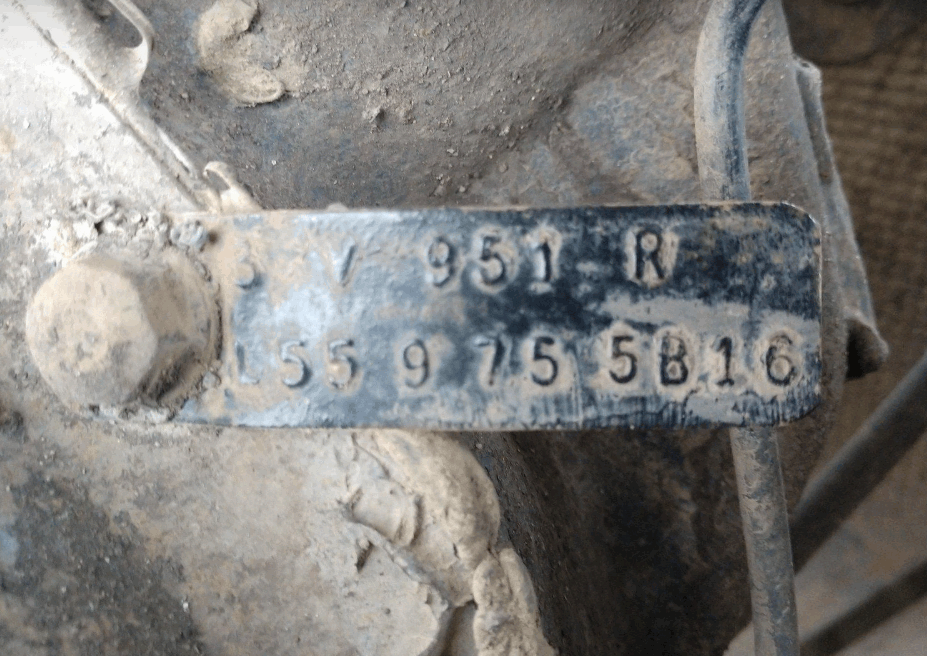
Many Ford vehicles also include an axle tag attached to the rear differential housing. This metal tag contains detailed information that goes beyond the door sticker. It often lists the gear ratio, axle model, manufacturing details, and part numbers. If the door label has faded or disappeared, the axle tag becomes the most reliable source for confirming the factory configuration.
Some owners prefer to identify the rear axle by using the Vehicle Identification Number. Although the VIN does not always display the axle code directly, Ford dealerships and authorized parts catalogs can match the VIN with the original build data. This method is especially useful when a vehicle has received replacement doors, modified axle assemblies, or missing identification labels.
Visual inspection can also help confirm the axle type. Ford 8.8, 9.75, Sterling, and Dana axles each have unique differential covers, axle housings, and mounting designs. Experienced technicians often compare these physical characteristics with factory specifications to verify the correct axle family. However, visual inspection should support the axle code instead of replacing it because similar axle housings may use different gear ratios or differential configurations.
Checking more than one identification source provides the most accurate result. Compare the door sticker, axle tag, and factory build information whenever possible. This simple verification process reduces the risk of ordering incorrect replacement parts and helps maintain the original performance, towing capacity, and reliability of your Ford vehicle.
Ford Rear Axle Codes Chart
A Ford rear axle codes chart helps you identify the original axle specifications installed in your Ford vehicle. First, each axle code connects to important details such as gear ratio, differential type, and axle family. As a result, you can understand your drivetrain configuration without removing the axle assembly.
In addition, the axle code helps you make better repair and upgrade decisions. For example, a 3.73 gear ratio provides stronger acceleration and towing performance than a higher ratio designed for highway efficiency. Therefore, checking the axle code before replacing gears or differentials prevents compatibility problems.
Furthermore, Ford axle codes link directly to factory engineering information. In other words, the code reveals the original rear axle setup selected during production. It can show whether your vehicle uses an open differential, limited slip differential, or electronic locking differential.
The following chart provides common Ford rear axle codes and their related specifications. However, Ford may use different codes across model years, vehicle models, and optional packages. For this reason, always verify the axle code with the door sticker, axle tag, or official build information before purchasing replacement parts.
| Axle Code | Gear Ratio | Differential Type | Axle Family |
|---|---|---|---|
| 15 | 3.15 | Open | Ford 8.8 |
| 19 | 3.55 | Limited Slip | Ford 8.8 |
| 27 | 3.31 | Electronic Locking | Ford 8.8 |
| H9 | 3.55 | Electronic Locking | Ford 9.75 |
| L9 | 3.55 | Limited Slip | Ford 9.75 |
Finally, use the chart as a reference rather than the only identification source. Therefore, confirming the factory axle information ensures accurate repairs and helps maintain the original performance of your Ford vehicle.
What Does Each Ford Rear Axle Code Mean?
Each Ford rear axle code identifies a specific combination of axle features, including gear ratio, differential type, and axle design. First, the code helps owners understand how their vehicle transfers engine power to the rear wheels. Therefore, learning the meaning behind each code makes maintenance and upgrades more accurate.
In addition, Ford axle codes often indicate the differential system inside the rear axle. An open differential sends power through the path with the least resistance. As a result, it works well for normal street driving. However, a limited slip differential improves traction by distributing torque more effectively between both rear wheels. Furthermore, an electronic locking differential provides maximum wheel control when driving on mud, snow, gravel, or uneven terrain.
The gear ratio represents another important part of the axle code. Specifically, the ratio shows how many times the driveshaft rotates compared with one complete wheel rotation. For example, a 3.73 gear ratio delivers stronger acceleration than a 3.15 ratio because it provides more wheel torque. Meanwhile, a lower numerical ratio often supports quieter highway driving and better fuel efficiency.
Besides identifying performance characteristics, Ford rear axle codes also identify the axle family. This information helps owners select compatible parts such as ring and pinion sets, differential carriers, and axle shafts. Therefore, checking the correct code before repairs reduces installation errors and protects the vehicle’s original performance.
Finally, remember that one axle code does not represent every Ford vehicle generation. Ford changes axle specifications according to model year, engine option, and vehicle purpose. For this reason, always confirm the code with official factory information before replacing or upgrading rear axle components.
How Do Gear Ratios Affect Towing, Fuel Economy, and Off Road Performance?
Ford rear axle gear ratios directly affect how a vehicle delivers engine power to the wheels. First, the gear ratio determines the balance between torque, acceleration, towing ability, and driving efficiency. Therefore, understanding the gear ratio helps owners choose the right axle configuration for their driving needs.
In addition, lower gear ratios provide more wheel torque. For example, a 3.73 or 4.10 gear ratio allows a Ford truck to accelerate faster and handle heavier loads more effectively. As a result, these ratios are common in vehicles used for towing trailers, carrying equipment, or driving in demanding conditions. However, higher numerical ratios also increase engine speed during highway driving.
Furthermore, higher gear ratios can improve fuel economy during long distance driving. A ratio such as 3.15 or 3.31 allows the engine to operate at lower RPMs when cruising. Consequently, the vehicle may reduce fuel consumption and provide a quieter driving experience. Meanwhile, these ratios may provide less pulling power compared with lower gear options.
For off road driving, gear ratio selection becomes even more important. Specifically, vehicles that travel through mud, rocks, or steep terrain benefit from additional low speed torque. Therefore, Ford models equipped with lower gear ratios often provide better control and traction in challenging environments.
Finally, the best gear ratio depends on how you use your vehicle. A towing focused truck, an off road Bronco, and a daily commuter require different axle setups. For this reason, checking the Ford rear axle code helps you understand the factory gear ratio and determine whether it matches your driving requirements.
Which Rear Axles Are Commonly Used in Ford Vehicles?
Ford uses several rear axle designs across its cars, SUVs, and trucks to match different performance requirements. First, each axle family provides different levels of strength, durability, and load capacity. Therefore, identifying the correct rear axle helps owners choose suitable replacement parts and understand their vehicle’s capabilities.
The Ford 8.8 axle is one of the most widely used rear axles in Ford vehicles. In addition, it appears in popular models such as the Mustang, Ranger, Explorer, and some F 150 configurations. This axle provides a strong balance between durability, weight, and performance. As a result, many enthusiasts choose the Ford 8.8 for street performance builds and moderate upgrades.
Furthermore, the Ford 9.75 axle supports higher torque applications. Ford commonly uses this axle in trucks and SUVs that require additional strength. For example, many F 150 and Expedition models use the 9.75 axle because it handles heavier loads and increased towing demands more effectively.
The Sterling axle family focuses on heavy duty applications. Specifically, Ford Super Duty trucks often use Sterling rear axles because they support high payload and towing requirements. Meanwhile, Dana axles appear in specific Ford models that need additional durability for commercial, off road, or specialized applications.
Finally, choosing the correct axle depends on the vehicle model, engine output, towing needs, and driving conditions. Therefore, the rear axle code remains the most reliable starting point for identifying the exact axle installed in your Ford vehicle. By understanding common axle families, owners can make better decisions about repairs, upgrades, and performance improvements.
Ford Rear Axle Codes by Vehicle Model
Ford rear axle codes vary between vehicle models because each vehicle has different performance requirements. First, Ford designs axle configurations based on factors such as engine power, towing capacity, vehicle weight, and intended use. Therefore, the same gear ratio or axle family may appear differently across different Ford models.
The Ford F 150 uses a wide range of rear axle configurations because it serves both daily driving and heavy duty applications. In addition, F 150 models commonly use Ford 8.8 and Ford 9.75 rear axles. For example, towing focused models often receive stronger axle assemblies with higher torque capacity and electronic locking differentials.
Furthermore, Ford Super Duty trucks use heavy duty rear axles designed for maximum towing and payload performance. These trucks commonly use Sterling axle assemblies because they handle demanding workloads. As a result, Super Duty axle codes often identify stronger components and lower gear ratios for commercial and towing applications.
The Ford Ranger uses compact but durable axle designs that balance efficiency and off road capability. Meanwhile, the Ford Bronco focuses on traction and adventure performance. Therefore, many Bronco models use axle configurations with locking differentials and gear ratios designed for difficult terrain.
In addition, Ford Mustang models use rear axle configurations that prioritize acceleration and performance handling. Many Mustang versions use the Ford 8.8 axle because it provides a strong foundation for performance upgrades.
Finally, Ford Explorer models combine passenger comfort with utility performance. Consequently, their rear axle codes often reflect the balance between fuel efficiency, traction, and everyday driving needs. For this reason, always check the specific vehicle model, production year, and axle code together before identifying replacement parts.
How Can You Identify a Ford Rear Axle Without the Door Sticker?
You can identify a Ford rear axle without the door sticker by checking the axle tag, VIN information, and physical axle characteristics. First, the door sticker provides the fastest identification method, but it may become unreadable or disappear after repairs. Therefore, owners need alternative methods to confirm the correct rear axle configuration.
The axle tag is usually the most reliable replacement source. In addition, this small metal tag attaches directly to the rear differential housing. It often contains information about the axle ratio, manufacturing details, and identification numbers. As a result, reading the axle tag can reveal important specifications without removing the axle components.
Furthermore, the Vehicle Identification Number can help confirm the original axle equipment. Ford dealerships and parts databases can use the VIN to access factory build information. However, the VIN does not always display the axle code directly. For this reason, VIN verification works best when combined with axle tag information.
Physical inspection also provides useful clues during axle identification. For example, different Ford axle families have unique housing shapes, differential covers, and component designs. Therefore, technicians can compare these features with Ford specifications to identify axle types such as the Ford 8.8, Ford 9.75, Sterling, or Dana axle.
Finally, accurate identification requires checking multiple sources whenever possible. Although one method may provide useful information, combining the axle tag, VIN records, and physical inspection creates a more reliable result. Consequently, owners can avoid incorrect part purchases and maintain the original performance of their Ford vehicle.
When Should You Replace or Upgrade a Ford Rear Axle?
You should replace or upgrade a Ford rear axle when the original assembly no longer meets your vehicle’s performance or reliability needs. First, axle problems often appear through symptoms such as unusual noise, fluid leaks, vibration, or reduced traction. Therefore, identifying these signs early helps prevent more expensive drivetrain damage.
In addition, a rear axle replacement may become necessary after severe mechanical failure. For example, worn bearings, damaged gears, cracked housings, or failed differential components can reduce vehicle reliability. As a result, replacing the damaged axle assembly may provide a more practical solution than repairing individual components.
Furthermore, some owners upgrade their Ford rear axle to support higher performance demands. A stronger axle can improve durability for towing, off road driving, or engine modifications. For instance, a truck owner who increases towing capacity may choose a heavier axle assembly with stronger internal components and a more suitable gear ratio.
However, selecting the correct replacement or upgrade requires careful planning. The axle must match the vehicle model, engine output, transmission, wheel size, and intended use. Therefore, owners should verify the original Ford rear axle code before choosing a different configuration.
Finally, an OEM replacement axle remains the safest option for maintaining factory performance and compatibility. Meanwhile, aftermarket upgrades can provide additional strength or performance benefits when the vehicle requires more capability. Consequently, understanding the original axle specifications helps owners make better decisions and avoid incompatible upgrades.
Frequently Asked Questions About Ford Rear Axle Codes
Ford rear axle codes help owners answer common questions about axle identification, performance, and replacement options. First, understanding these codes makes it easier to maintain a Ford vehicle correctly. Therefore, many owners use axle codes as a reference before purchasing parts or making drivetrain changes.
One common question is whether two Ford vehicles can have the same axle code. Yes, different Ford models can share the same axle code when they use the same axle configuration. However, the final specifications may still vary depending on the model year, engine option, and factory package.
Another frequent question is how owners can identify a limited slip differential. The axle code can often indicate whether the vehicle uses a limited slip differential, but additional verification may be necessary. For example, owners can check the axle tag, factory build information, or perform a physical inspection.
Many drivers also ask if they can change their Ford gear ratio without replacing the entire axle. Yes, a gear ratio change is possible in many Ford rear axles. However, the process requires compatible ring and pinion gears, proper setup, and professional installation.
In addition, some owners want to know if axle codes remain the same across all production years. Ford changes axle codes according to vehicle generation, drivetrain options, and production specifications. Therefore, checking the exact model year remains important.
Finally, Ford rear axle codes provide a reliable starting point for identification. Consequently, combining the axle code with VIN information and physical inspection creates the most accurate method for selecting replacement parts or planning upgrades.
Conclusion
Ford rear axle codes provide essential information about a vehicle’s drivetrain configuration, performance characteristics, and replacement requirements. First, these codes help owners identify the correct axle family, gear ratio, and differential type installed by Ford. Therefore, understanding the code makes maintenance decisions more accurate and reduces the risk of choosing incompatible components.
In addition, axle identification becomes especially important when repairing or upgrading a Ford vehicle. A correct axle code helps match replacement gears, differentials, axle shafts, and complete assemblies with the original factory specifications. Furthermore, drivers can use this information to understand how their vehicle performs during towing, highway driving, or off road conditions.
However, the axle code should not work as the only identification method. Instead, owners should compare the code with the door sticker, axle tag, VIN information, and factory build data. As a result, they can confirm the exact rear axle configuration before purchasing parts or making modifications.
Finally, Ford rear axle codes create a simple connection between a small factory identifier and important drivetrain details. Whether you own an F 150, Super Duty, Ranger, Bronco, Explorer, or Mustang, learning how to decode your axle information helps you protect vehicle reliability and choose the right upgrades for your driving needs.