If your AC is blowing hot air on the passenger side while the driver’s side remains cold, the problem usually points to a fault within the vehicle’s HVAC system rather than a complete air conditioning failure. In many cases, the air conditioner is still producing cold air, but one component is preventing that cooled air from reaching the passenger-side vents. This issue is especially common in vehicles equipped with dual-zone climate control, although it can also occur in some single-zone systems.
Several components can cause this uneven cooling performance. A faulty blend door actuator, a stuck blend door, low refrigerant, or an HVAC control module malfunction are among the most common reasons. However, replacing parts without confirming the actual cause often leads to unnecessary repair costs and does not solve the problem. A systematic diagnosis is always the most effective approach.
This guide explains why the passenger-side vents may blow warm air while the rest of the cabin stays cool. You will learn the most common causes, how to identify the source of the problem, the repair options available, the expected repair costs, and practical maintenance tips to help prevent the issue from happening again. By understanding how the HVAC system controls airflow and temperature, you can make informed repair decisions and avoid replacing components that are still working properly.
Why Is My AC Blowing Hot Air on the Passenger Side?
Your AC blows hot air on the passenger side because the HVAC system cannot deliver cold air evenly throughout the cabin. In most cases, the air conditioner still produces cold air. However, one component stops directing that air to the passenger-side vents. As a result, the driver’s side stays cool while the passenger side blows warm air.
A faulty blend door actuator is the most common cause. The actuator controls the blend door inside the HVAC housing. The blend door determines whether air passes through the evaporator or the heater core before it reaches the vents. When the actuator fails, the door can remain in the warm-air position. Cold air still circulates inside the system, but it never reaches the passenger side.
The vehicle’s climate control system also affects how this problem appears. Many modern vehicles use dual-zone climate control. Each side of the cabin has its own temperature settings and blend door. If the passenger-side actuator, temperature sensor, or control circuit fails, only the passenger side loses cooling. The driver’s side continues to operate normally because it relies on separate controls.
A single-zone HVAC system behaves differently. It usually develops uneven cooling because a blend door sticks, an air duct becomes blocked, or an internal HVAC component wears out. Although these failures are less common, they can still prevent cold air from reaching one side of the cabin.
The cooling pattern provides an important clue during diagnosis. If both sides blow warm air, the problem often involves low refrigerant, a failing compressor, or another system-wide fault. If only the passenger side blows hot air, the issue usually lies inside the passenger-side air distribution system. Identifying this difference helps you diagnose the problem faster and avoid replacing expensive parts that still work correctly.
What Are the Most Common Causes of AC Blowing Hot Air on the Passenger Side?
Several HVAC problems can cause the passenger-side AC to blow hot air. Some faults affect airflow, while others prevent the system from controlling temperature correctly. Identifying the exact cause is essential because each problem requires a different repair.
A faulty blend door actuator is the most frequent cause. This electric motor moves the blend door according to the temperature you select. When it fails, the door may stay in the heating position instead of directing air through the evaporator. The passenger-side vents then blow warm air even though the AC system continues to produce cold air.
A stuck or damaged blend door can create the same symptom. Dirt, worn gears, or broken plastic components may stop the door from moving freely. As a result, the passenger side receives heated air while the driver side continues to receive cold air. In many vehicles, technicians inspect both the actuator and the blend door because either component can cause identical symptoms.
Low refrigerant is another possible cause, although it is less common when only one side blows warm air. A low refrigerant level reduces the cooling capacity of the evaporator. The passenger side often loses cooling first because it sits farther from the evaporator outlet. If the refrigerant level continues to drop, both sides eventually begin blowing warm air.
A faulty temperature sensor or HVAC control module can also create uneven cooling. The temperature sensor sends cabin temperature data to the control module. The module then adjusts each blend door automatically. Incorrect sensor readings or software errors may cause the passenger-side blend door to move to the wrong position, even when the air conditioner is working correctly.
Electrical faults should not be overlooked. A damaged wiring harness, loose connector, or blown fuse can interrupt communication between the HVAC control module and the blend door actuator. When this happens, the actuator may stop responding or remain in its last position. The system continues operating, but the passenger side no longer receives cold air.
Although these causes produce similar symptoms, they do not require the same repair. A proper diagnosis helps identify the failed component, reduces unnecessary part replacements, and restores normal cooling more quickly.
How Can You Diagnose the Problem Before Replacing Parts?
You should diagnose the passenger-side AC problem before replacing any parts. Many HVAC components produce similar symptoms, and replacing the wrong part increases repair costs without fixing the issue. A step-by-step inspection helps identify the actual fault and prevents unnecessary repairs.
Start by checking whether your vehicle has a dual-zone climate control system. Set both temperature controls to the lowest setting and compare the air coming from the driver-side and passenger-side vents. If the driver side blows cold air while the passenger side remains warm, the problem usually affects the passenger-side temperature control rather than the entire air conditioning system.
Next, listen for unusual noises when changing the passenger-side temperature setting. A clicking, tapping, or repetitive knocking sound behind the dashboard often indicates a failing blend door actuator. The actuator should move the blend door smoothly whenever the temperature changes. Continuous noise usually means the internal gears have worn out or the actuator can no longer complete its movement.
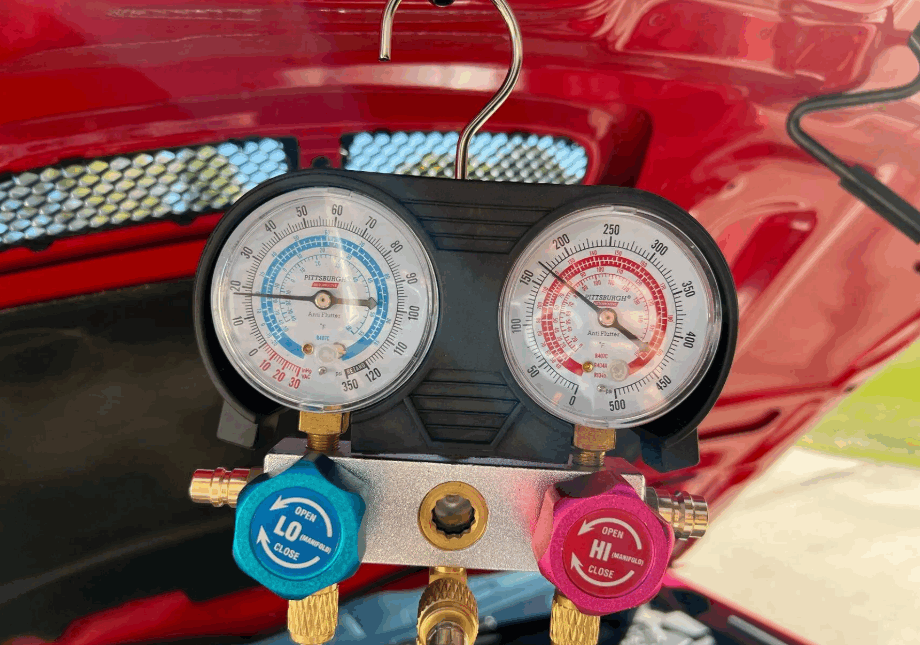
Inspect the refrigerant level before assuming an electrical or mechanical failure. Low refrigerant reduces the cooling efficiency of the entire system. Although one side may lose cooling first, both sides often become warmer as the refrigerant level continues to drop. Measuring system pressure with AC manifold gauges or following the manufacturer’s diagnostic procedure can confirm whether the refrigerant charge is within specification.
If the refrigerant level is normal, scan the HVAC control module for diagnostic trouble codes. Many modern vehicles store fault codes when an actuator, temperature sensor, or control circuit malfunctions. A professional scan tool can identify these faults in minutes and significantly reduce diagnostic time.
Finally, inspect the electrical system if no mechanical problem is visible. Check the HVAC fuse, wiring harness, and electrical connectors for signs of corrosion, loose connections, or damaged insulation. Electrical faults often interrupt communication between the control module and the blend door actuator. Correcting a damaged connection may restore normal operation without replacing any major HVAC components.
Following this diagnostic sequence allows you to eliminate simple causes first and confirm the actual source of the problem. This approach saves time, reduces repair expenses, and improves the accuracy of the final repair.
How Do You Fix AC Blowing Hot Air on the Passenger Side?
The best way to fix AC blowing hot air on the passenger side is to repair the component that causes the uneven cooling. Because several HVAC faults produce similar symptoms, you should always confirm the diagnosis before replacing any parts. This approach reduces repair costs and prevents repeated repairs.
Start with the simplest solution by resetting or recalibrating the HVAC system. Many modern vehicles allow the climate control module to relearn the blend door positions after the battery is disconnected or after a calibration procedure. If the problem results from incorrect actuator positioning instead of a mechanical failure, recalibration may restore normal airflow without replacing any components.
Replace the blend door actuator if it fails to respond or produces clicking noises during operation. A new actuator restores proper movement of the blend door and allows cold air to reach the passenger-side vents again. This repair solves the problem in many vehicles because the actuator is one of the most frequently damaged HVAC components.
Inspect the blend door if replacing the actuator does not resolve the issue. A cracked, warped, or jammed blend door cannot redirect airflow correctly. In some vehicles, technicians can replace the door without removing the entire dashboard. In others, the repair requires partial dashboard disassembly, which increases labor time.
Recharge the refrigerant only after confirming that the system is low. Simply adding refrigerant without checking for leaks provides only a temporary solution. If the refrigerant level drops again, the system should be inspected for leaking hoses, seals, condensers, or evaporators before another recharge.
Replace a faulty temperature sensor or repair damaged electrical wiring if diagnostic testing identifies an electrical problem. Incorrect sensor data or interrupted communication prevents the HVAC control module from adjusting the blend door accurately. Restoring these electrical connections allows the climate control system to regulate cabin temperature correctly.
Replace the HVAC control module only after eliminating all other possible causes. Control module failures occur less frequently than actuator or sensor failures, but they can prevent the entire passenger-side temperature control system from operating correctly. Most replacement modules also require programming or calibration to communicate with the vehicle’s electronic systems.
After completing any repair, test the air temperature at both the driver-side and passenger-side vents using the same climate control settings. Both sides should deliver consistent cold air unless different temperatures are intentionally selected in a dual-zone system. A final performance test confirms that the repair has resolved the original problem and that the HVAC system is operating as designed.
How Much Does It Cost to Repair Passenger-Side AC Problems?
The cost to repair AC blowing hot air on the passenger side depends on the failed component, the vehicle model, and the labor required to access the HVAC system. Simple repairs usually cost much less than repairs involving dashboard removal or electronic module replacement. An accurate diagnosis helps avoid replacing parts that are still functioning properly and keeps the total repair cost under control.
Replacing a blend door actuator is often the least expensive major repair. Most vehicles require a new actuator and one to three hours of labor, depending on its location. The total repair cost typically ranges from $150 to $500. Luxury vehicles and models with limited dashboard access usually fall at the higher end of this range.
A refrigerant recharge is another common repair when the system has a low refrigerant level. Most repair shops first perform a leak inspection before adding new refrigerant. If no leaks are found, the recharge generally costs between $150 and $300. However, repairing a leaking condenser, evaporator, or refrigerant line can increase the total cost to $500 or more.
Repairing or replacing a damaged blend door is usually more expensive because technicians often need to remove part of the dashboard to access the HVAC housing. Depending on the vehicle design, this repair typically costs between $400 and $1,200. Vehicles with complex dashboard assemblies require more labor, which significantly increases the final bill.
Electrical repairs vary according to the source of the fault. Replacing a damaged fuse or repairing a loose connector is relatively inexpensive. By comparison, replacing a faulty HVAC control module generally costs between $500 and $1,500, especially if the new module requires programming after installation.
Most repair shops also charge a diagnostic fee before performing any repairs. HVAC diagnostics usually cost between $100 and $200. Many shops deduct this fee from the final repair bill if you approve the recommended service. Paying for a proper diagnosis is often more economical than replacing multiple components through trial and error.
Obtaining an accurate diagnosis before authorizing repairs is the best way to reduce unnecessary expenses. Identifying the failed component early shortens repair time, lowers labor costs, and restores the air conditioning system more efficiently.
How Can You Prevent the Passenger Side from Blowing Hot Air Again?
Regular maintenance is the most effective way to prevent the passenger-side AC from blowing hot air. Although some HVAC components wear out over time, routine inspections and timely repairs reduce the risk of unexpected failures and help the air conditioning system operate efficiently throughout the year.
Replace the cabin air filter according to the manufacturer’s maintenance schedule. A clean filter allows air to flow freely through the HVAC system and helps maintain consistent cooling across the cabin. A clogged filter restricts airflow, forces the blower motor to work harder, and may reduce cooling performance, especially during hot weather.
Operate the air conditioner regularly, even during colder months. Running the AC for several minutes every few weeks keeps refrigerant circulating through the system and lubricates the compressor seals. This simple habit also reduces the risk of refrigerant leaks caused by dried or hardened seals.
Schedule periodic HVAC inspections to detect minor problems before they become expensive repairs. During an inspection, a technician can measure refrigerant pressure, evaluate cooling performance, inspect electrical connections, and verify that the blend door actuators respond correctly. Identifying these issues early often prevents more serious HVAC failures.
Pay attention to unusual sounds or inconsistent temperature changes. Clicking noises behind the dashboard, delayed airflow adjustments, or uneven cooling often indicate that a blend door actuator or another HVAC component is beginning to fail. Addressing these warning signs early usually costs less than waiting for the component to stop working completely.
Avoid adding refrigerant unless testing confirms that the system is low. An automotive air conditioning system is sealed and should not consume refrigerant during normal operation. If the refrigerant level drops, the system likely has a leak that requires repair. Fixing the leak instead of repeatedly recharging the system improves cooling performance and protects expensive components such as the compressor.
Consistent maintenance not only prevents uneven cooling but also extends the service life of the entire HVAC system. A well-maintained air conditioning system delivers stable cabin temperatures, improves driving comfort, and reduces the likelihood of costly repairs in the future.
Conclusion
If your AC is blowing hot air on the passenger side, the problem usually originates from the HVAC air distribution system rather than the entire air conditioning system. A faulty blend door actuator remains the most common cause, but low refrigerant, a damaged blend door, electrical faults, or a malfunctioning HVAC control module can produce similar symptoms. Understanding these possibilities helps narrow the diagnosis and prevents unnecessary part replacement.
Following a logical diagnostic process is the most reliable way to identify the failed component. Checking the climate control settings, inspecting the refrigerant level, scanning the HVAC module, and testing the electrical system allow you to eliminate simple causes before moving to more complex repairs. This approach saves time, reduces repair costs, and increases the likelihood of a successful repair.
Routine maintenance also plays an important role in preventing future HVAC problems. Replacing the cabin air filter, operating the air conditioner throughout the year, and scheduling regular system inspections help maintain consistent cooling performance and extend the life of key HVAC components.
When the passenger side begins blowing warm air while the driver side remains cold, do not assume the compressor or the entire AC system has failed. A professional diagnosis can quickly identify the true cause and restore balanced cooling throughout the cabin with the most appropriate repair.