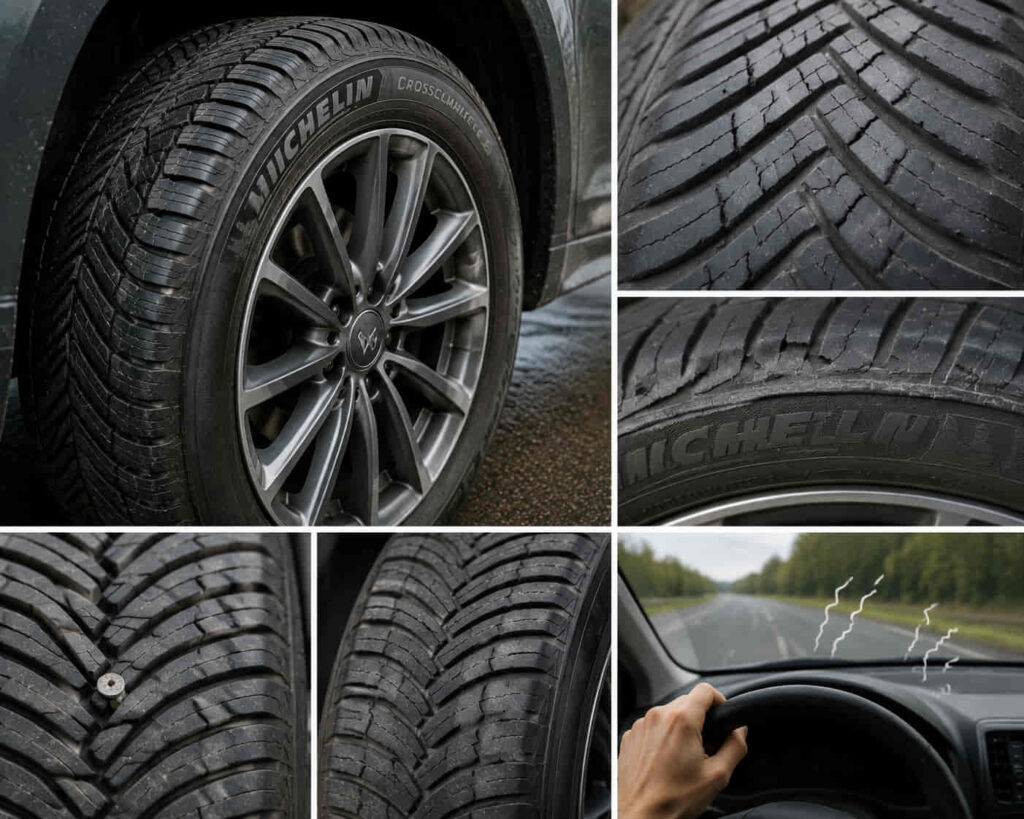
Michelin CrossClimate 2 is a premium all-weather tire designed to provide year-round performance in dry, wet, and light snow conditions, but some drivers report concerns related to road noise, ride comfort, dry handling, price, and performance trade-offs. Understanding these Michelin CrossClimate 2 problems helps buyers determine whether this tire matches their driving environment and expectations.
Unlike traditional all-season tires, CrossClimate 2 is engineered to perform across a wider range of weather conditions. Its directional V-shaped tread pattern, specialized rubber compound, and severe snow rating allow it to provide stronger winter capability while maintaining everyday usability. However, designing one tire for multiple climates requires balancing different performance characteristics.
Some reported issues with CrossClimate 2 are not necessarily signs of poor quality. Many concerns come from the compromises required in an all-weather tire design. A tire that provides improved snow traction and wet-weather capability may deliver a different road feel compared with a dedicated summer tire or a softer touring tire.
Drivers may notice differences in areas such as tread noise, steering response, ride firmness, or performance in extreme heat. These characteristics depend on vehicle type, road conditions, climate, and individual driving expectations.
This guide examines the most common Michelin CrossClimate 2 problems, explains why they occur, evaluates their real impact, and helps determine whether CrossClimate 2 remains a suitable choice for drivers looking for one tire that performs across changing weather conditions.
Does Michelin CrossClimate 2 Have Road Noise Problems?
Michelin CrossClimate 2 can produce more noticeable road noise than some traditional touring tires because of its aggressive all-weather tread design, but this does not mean the tire has a quality defect. The noise characteristics are mainly a result of the engineering choices required to improve traction across different weather conditions.
CrossClimate 2 uses a distinctive V-shaped directional tread pattern designed to move water efficiently, improve snow traction, and maintain stability throughout different seasons. However, larger tread blocks and deeper grooves can create more interaction between the tire and road surface, which may increase audible tread noise compared with smoother highway-focused tires.
Road conditions have a major impact on how much noise drivers experience. On smooth asphalt, CrossClimate 2 can provide a relatively refined ride, but rough concrete surfaces or coarse pavement may make the tread pattern more noticeable inside the cabin.
Vehicle design also influences noise perception. A luxury vehicle with strong insulation may minimize tire sound, while a compact car or SUV with less cabin isolation may make the same tire feel louder. Tire pressure, alignment, and uneven wear can also increase noise over time.
For example, a driver who replaces a quiet touring tire with CrossClimate 2 may notice a change in sound because the two tires are designed with different priorities. The CrossClimate 2 focuses more on all-weather capability, while some touring tires prioritize minimum road noise.
Michelin CrossClimate 2 is not generally considered an excessively noisy tire, but drivers who want the quietest possible highway experience should understand that its all-weather design involves some trade-offs in sound characteristics.
Does Michelin CrossClimate 2 Have Dry Handling Problems?
Michelin CrossClimate 2 provides reliable dry-road performance, but some drivers may find its handling feel different from dedicated summer tires or performance-oriented all-season tires. This difference comes from the tire’s purpose: CrossClimate 2 is engineered to perform across multiple weather conditions rather than maximize dry handling alone.
The tire’s tread design and compound are optimized for temperature changes, rain, and light snow while maintaining stable performance on dry pavement. This broad capability creates a balanced driving experience, but it may not deliver the sharp steering response or aggressive cornering feel expected from performance tires.
Some drivers report that CrossClimate 2 feels less sporty during quick direction changes or enthusiastic driving. This is because the tire prioritizes predictable behavior, traction consistency, and year-round usability rather than maximum steering feedback.
Temperature also affects performance. In very warm climates with frequent high-speed driving, a dedicated summer tire may provide stronger dry grip because its compound is specifically engineered for hot pavement conditions.
For example, a commuter driving a sedan throughout changing seasons may appreciate CrossClimate 2’s stability and versatility. A performance vehicle owner who prioritizes cornering response during summer driving may prefer a specialized performance tire.
Michelin CrossClimate 2 does not have a dry handling problem for its intended category. Its dry-road characteristics reflect the compromises of an all-weather tire designed to provide dependable performance in a wider range of conditions.
Read more: Michelin Defender 2 Problems
Is Michelin CrossClimate 2 Too Expensive?
Michelin CrossClimate 2 is more expensive than many conventional all-season tires because it is designed as a premium all-weather tire with broader performance capabilities. The higher price is one of the most common concerns among buyers, especially those comparing it with standard touring tires that focus mainly on everyday driving.
The cost of CrossClimate 2 comes from its advanced design features, including a directional tread pattern, specialized rubber compound, and engineering focused on maintaining traction across different weather conditions. Unlike a basic all-season tire, CrossClimate 2 is developed to provide stronger winter capability while still delivering reliable dry and wet performance.
However, the higher purchase price does not automatically mean every driver receives the same value. Drivers who live in regions with mild weather and rarely experience snow may not fully benefit from CrossClimate 2’s all-weather capabilities. In those conditions, a less expensive touring tire may provide sufficient performance at a lower upfront cost.
Long-term value should be evaluated through factors such as tread life, seasonal versatility, and replacement frequency. A tire that performs well throughout the year may reduce the need for seasonal tire changes in some regions, which can offset part of the initial investment.
For example, a driver living in an area with changing seasons may benefit from using one set of CrossClimate 2 tires year-round instead of maintaining separate summer and winter tires. A driver in a consistently warm climate may find that a summer or traditional all-season tire provides better value.
Michelin CrossClimate 2 is expensive compared with many alternatives, but its value depends on whether the driver benefits from its unique all-weather performance.
Does Michelin CrossClimate 2 Wear Faster in Hot Weather?
Michelin CrossClimate 2 can experience different wear characteristics in hot climates because its all-weather design must balance performance across cold, warm, wet, and snowy conditions. The tire is engineered to handle a wide temperature range, but extremely hot environments create different demands compared with the conditions where all-weather tires provide the greatest advantage.
Tire compounds respond differently to temperature changes. In very hot conditions, softer components designed to maintain flexibility in colder weather can experience increased stress when exposed to high pavement temperatures and aggressive driving. This does not mean CrossClimate 2 wears quickly by default, but climate and driving style influence its lifespan.
Frequent high-speed driving, heavy acceleration, heavy vehicle loads, and poor tire maintenance can accelerate wear in any tire. Correct inflation pressure and regular rotation are especially important in warmer regions because excessive heat buildup can increase stress on the rubber compound.
For example, a driver in a moderate climate using CrossClimate 2 for commuting and highway travel may achieve strong tread life. A driver in a hot region who frequently drives long distances at high speeds may experience faster wear compared with someone using a tire specifically optimized for hot-weather performance.
CrossClimate 2 remains suitable for many warm-weather drivers, especially those who value year-round capability. However, drivers in consistently hot climates should consider whether they need the tire’s winter and all-weather advantages or whether a summer-focused tire would better match their environment.
Does Michelin CrossClimate 2 Have Ride Comfort Issues?
Michelin CrossClimate 2 provides a stable and controlled ride, but some drivers may find its driving feel firmer compared with traditional touring tires designed primarily for maximum comfort. This difference comes from the tire’s construction and the need to balance multiple performance requirements across different weather conditions.
The CrossClimate 2 uses a more aggressive tread design and reinforced structure to improve traction in rain, cold temperatures, and light snow. These features help the tire maintain stability and grip, but they can also create a slightly more structured road feel compared with softer touring tires that prioritize absorbing small road imperfections.
Ride comfort is also affected by vehicle type, tire size, suspension setup, and road conditions. A vehicle with a softer suspension system may hide more of the tire’s firmness, while a vehicle with a sport suspension or lower-profile tires may make road feedback more noticeable.
Some drivers interpret this firmer feel as a comfort problem, especially if they are replacing a tire designed mainly for quiet highway cruising. However, the firmer response can also provide benefits such as improved stability during cornering and more predictable handling in changing conditions.
For example, a crossover owner driving in areas with seasonal weather changes may appreciate CrossClimate 2’s controlled ride and additional traction capability. A luxury sedan owner who prioritizes the softest possible ride may prefer a tire designed specifically around comfort.
Michelin CrossClimate 2 is not designed to be the softest touring tire available. Its ride characteristics reflect its purpose as an all-weather tire that prioritizes versatility, stability, and year-round performance.
Why Do Some Drivers Have Problems With Michelin CrossClimate 2?
Many Michelin CrossClimate 2 problems reported by drivers come from differences between expectations and the tire’s intended purpose rather than from major design failures. CrossClimate 2 is a specialized all-weather tire, and its performance characteristics are different from traditional all-season, summer, or winter tires.
One common reason for dissatisfaction is expecting one tire to deliver the highest possible performance in every category. CrossClimate 2 performs across multiple conditions, including rain, dry roads, and light snow, but achieving this balance requires compromises. A tire optimized for winter capability will not feel exactly like a high-performance summer tire, and a tire designed for long-term versatility may not provide the softest ride.
Vehicle application also affects user experience. A heavy SUV, compact sedan, and performance vehicle place different demands on tires. A tire that works well for one vehicle type may feel different on another because of differences in weight distribution, suspension tuning, and driving behavior.
Climate is another important factor. Drivers in regions with frequent snow and changing seasons may experience more benefits from CrossClimate 2, while drivers in consistently hot climates may not use its full capability.
For example, a driver who purchased CrossClimate 2 mainly for winter safety may be highly satisfied, while a driver who expected sports-car handling or luxury-level quietness may consider the same tire disappointing.
Understanding the role of CrossClimate 2 as an all-weather tire helps drivers evaluate its performance more accurately and avoid comparing it with products designed for completely different purposes.
How Can You Reduce Michelin CrossClimate 2 Problems?
Many Michelin CrossClimate 2 concerns can be reduced through proper maintenance, correct tire selection, and using the tire in conditions where its design provides the most value. Tire performance depends not only on the product itself but also on how the tire is installed, maintained, and operated throughout its lifespan.
Maintaining the correct tire pressure is one of the most important factors affecting CrossClimate 2 performance. Incorrect inflation can change handling response, increase uneven wear, reduce comfort, and contribute to higher road noise. Checking tire pressure regularly helps the tread maintain proper contact with the road.
Regular tire rotation and wheel alignment also help preserve consistent performance. Uneven tread wear can reduce wet traction, increase vibration, and create additional noise. Rotating tires according to the vehicle manufacturer’s recommendation allows the tread to wear more evenly and extends usable tire life.
Choosing the correct application is equally important. CrossClimate 2 performs best for drivers who need one tire that can handle different seasons, including rain, cold temperatures, and light snow. Drivers who mainly experience extreme heat or require maximum summer performance may benefit from a different tire category.
For example, a driver in a region with changing seasons can maximize CrossClimate 2’s benefits by maintaining proper inflation and using it as an all-weather solution. A driver in a consistently hot climate may reduce potential concerns by selecting a tire designed specifically for warmer conditions.
Proper maintenance does not change the fundamental characteristics of CrossClimate 2, but it helps ensure the tire delivers the performance it was designed to provide.
Is Michelin CrossClimate 2 Still Worth Buying?
Michelin CrossClimate 2 is still worth buying for drivers who want a premium all-weather tire that provides reliable performance across changing conditions. Although some users report concerns about road noise, firmer ride quality, higher price, or reduced specialization in extreme conditions, these characteristics are mainly the result of the tire’s multi-purpose design.
CrossClimate 2’s main advantage is its ability to combine several performance areas in one product. It provides stronger winter capability than many traditional all-season tires while maintaining dependable dry and wet performance for everyday driving. This makes it especially valuable for drivers who experience seasonal weather changes but do not want separate summer and winter tire sets.
However, CrossClimate 2 is not the perfect choice for every driver. Someone who prioritizes the quietest ride, maximum summer handling, or the lowest purchase price may find another tire category more suitable. The right choice depends on climate, vehicle type, driving habits, and personal priorities.
Overall, Michelin CrossClimate 2 remains one of the strongest all-weather tire options available. Understanding its limitations helps buyers make a more informed decision and determine whether its combination of versatility, durability, and year-round capability matches their driving needs.