A Mercedes Benz is known for its engineering, comfort, and long term reliability. Even so, no vehicle is immune to mechanical or electrical issues. One of the most frustrating situations is when your Mercedes Benz refuses to start. The problem may be simple, or it may require professional diagnosis. Knowing the difference can save both time and money.
Mercedes Benz starting problems do not always look the same. Sometimes the engine does not crank at all. In other cases, it cranks normally but never starts. You may also hear repeated clicking sounds or notice slow cranking. Some drivers see warning messages on the dashboard. Others experience an intermittent starting problem that appears without warning. Each symptom points to a different part of the starting system.
The battery is often the first component to inspect. However, it is not always the real cause. A failing starter motor, faulty ignition system, damaged fuel pump, defective engine sensor, or electronic control module can produce similar symptoms. This is why replacing parts without testing them often leads to unnecessary expenses.
This guide explains the most common Mercedes Benz starting problems and the symptoms that help identify them. You will also learn how to diagnose each issue step by step. In addition, you will discover practical solutions for common faults and understand when professional repair is the best option. Whether you own a C Class, E Class, GLC, GLE, S Class, or another Mercedes Benz model, this guide will help you identify the problem with greater confidence and avoid costly mistakes.
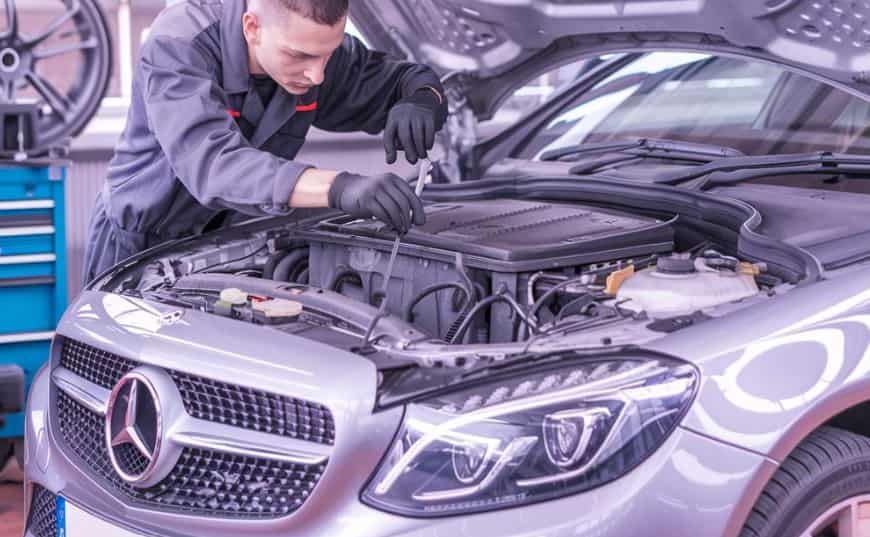
Why Is My Mercedes Benz Not Starting?
A Mercedes Benz may fail to start for several reasons. The most common causes include a weak battery, a faulty starter motor, poor battery connections, a defective key fob, fuel delivery problems, or failed engine sensors. The correct diagnosis depends on the exact symptom. For example, a vehicle that does not crank requires a different inspection process than one that cranks but does not start.
Before replacing any parts, pay close attention to how the vehicle behaves. Listen for unusual sounds, watch the dashboard warning lights, and notice whether the engine turns over. These details provide valuable clues and help narrow down the possible causes. A careful inspection often prevents unnecessary repairs and reduces overall maintenance costs.
The table below summarizes the most common starting symptoms and their likely causes.
| Starting Symptom | Most Likely Cause |
|---|---|
| No response when pressing the start button | Dead battery, faulty ignition switch, immobilizer issue |
| Single clicking sound | Weak battery, starter solenoid failure, loose battery cable |
| Rapid clicking noise | Low battery voltage or poor battery terminal connection |
| Slow engine cranking | Weak battery, corroded cables, worn starter motor |
| Engine cranks but does not start | Fuel pump failure, crankshaft position sensor, ignition system fault |
| Engine starts and immediately stalls | Immobilizer problem, fuel pressure issue, electronic control module fault |
| Intermittent starting | Failing relay, damaged wiring, faulty key fob, engine sensor failure |
Understanding Different Mercedes Benz Starting Problems
Not every starting problem has the same cause. Understanding the difference between common starting conditions is the first step toward an accurate diagnosis. A specific symptom often points to a specific system. This makes troubleshooting much faster and prevents replacing parts that are still working properly.
No Crank Condition
A no crank condition means the engine does not rotate when you press the start button or turn the key. You may hear nothing at all, or you may hear a single click from the starter area. In many cases, the battery does not have enough power to operate the starter motor. Loose battery terminals, a failed starter relay, or a faulty electronic ignition switch can produce the same result. An immobilizer problem may also prevent the vehicle from authorizing the start sequence.
Crank but No Start Condition
In this situation, the starter motor turns the engine normally, but the engine never begins running. This usually indicates that fuel, ignition, or engine management is missing. A failed fuel pump can stop fuel from reaching the engine. A faulty crankshaft position sensor may prevent the engine control module from delivering fuel and spark. Ignition system faults and electronic control module issues can also create this symptom.
Slow Crank Condition
A slow crank condition occurs when the engine turns over more slowly than normal. This usually points to low battery voltage or excessive resistance in the electrical circuit. Corroded battery terminals, damaged cables, and a worn starter motor are common causes. Cold weather can also reduce battery performance and make the engine harder to crank.
Intermittent Starting Problem
Some Mercedes Benz vehicles start perfectly one day and refuse to start the next. This type of problem is often the most difficult to diagnose because the fault may disappear before testing begins. Heat, vibration, moisture, loose electrical connections, failing relays, and worn engine sensors can all create intermittent starting issues. Recording the exact conditions when the problem occurs can help identify the root cause much faster.
Weak or Dead Battery
A weak or dead battery is one of the most common reasons behind Mercedes Benz starting problems. Every time you press the start button, the battery must deliver enough power to activate the starter motor and the vehicle’s electronic systems. If the battery voltage is too low, the engine may crank slowly, produce a rapid clicking sound, or fail to crank altogether. Many drivers assume the battery is healthy because the dashboard lights still turn on. However, those lights require much less power than the starter motor, so they are not a reliable indicator of battery condition.
Battery performance naturally declines with age, but several factors can speed up the process. Frequent short trips prevent the battery from fully recharging, while long periods without driving allow it to lose voltage over time. Extreme temperatures can also reduce battery efficiency, especially during winter. In some cases, a failing alternator or an electrical drain may slowly discharge the battery even when the vehicle is parked.
The best way to confirm a battery problem is to inspect the terminals first. Loose or corroded connections can restrict current flow and create symptoms similar to a failing battery. If the connections are clean and secure, measure the battery voltage with a digital multimeter or perform a professional load test. A battery that cannot maintain sufficient voltage under load should be replaced.
Regular battery inspections can help prevent unexpected starting issues. Cleaning the terminals, keeping the battery fully charged, and replacing an aging battery before it fails will improve starting reliability. If the battery passes every test but the engine still will not start, the next step is to inspect the battery cables and electrical connections.
Loose or Corroded Battery Connections
Loose or corroded battery connections can create the same symptoms as a weak battery, even when the battery itself is in good condition. The starter motor requires a strong and consistent flow of electrical current to crank the engine. If corrosion builds up on the battery terminals or the cable connections become loose, electrical resistance increases and restricts the flow of power. As a result, the engine may crank slowly, produce a clicking sound, or fail to start altogether.
Corrosion usually appears as a white, blue, or green residue around the battery terminals. It develops over time because of moisture, heat, and chemical reactions inside the battery. Loose terminals can also occur after battery replacement or regular vehicle vibration. Although these issues may seem minor, they can interrupt the starting circuit and lead to intermittent starting problems that are difficult to diagnose.
A careful visual inspection is often enough to identify the problem. Check both battery terminals for signs of corrosion, damaged cables, or loose connections. The ground cable should also be inspected because a poor ground connection can prevent the starter from receiving enough current. If corrosion is present, disconnect the battery safely and clean the terminals with a suitable battery cleaning solution before reconnecting them securely.
Routine maintenance can prevent most connection related issues. Keeping the battery terminals clean and ensuring that all cables remain tight helps maintain reliable electrical contact throughout the starting system. If the connections are clean and secure but the engine still refuses to start, the next component to inspect is the starter motor, which converts electrical power into the mechanical force needed to crank the engine.
Faulty Starter Motor or Starter Solenoid
A faulty starter motor or starter solenoid is another common cause of Mercedes Benz starting problems. The starter motor is responsible for turning the engine during startup, while the solenoid engages the starter gear and delivers electrical current to the motor. If either component fails, the engine cannot crank properly, even when the battery is fully charged and all other electrical systems appear to function normally.
Starter problems often develop gradually rather than occurring without warning. You may hear a single click when pressing the start button, notice that the engine cranks inconsistently, or find that the vehicle starts only after several attempts. In some cases, the starter may produce a grinding noise because the gear is no longer engaging the flywheel correctly. Heat can also affect a worn starter motor, causing it to work normally when the engine is cold but fail after the vehicle has been driven.
Diagnosing a faulty starter begins by confirming that the battery and cable connections are in good condition. If sufficient voltage reaches the starter but the engine still does not crank, the starter motor or solenoid becomes the most likely source of the problem. Professional technicians may also perform a voltage drop or current draw test to verify whether the starter is operating within the manufacturer’s specifications.
Replacing a worn starter motor is usually the most reliable solution once internal failure has been confirmed. Delaying the repair can leave the vehicle unable to start without warning. If the starter system passes every inspection, the next step is to examine the key fob and ignition authorization system, as electronic communication problems can also prevent a Mercedes Benz from starting.
Key Fob or Key Recognition Problem
A key fob or key recognition problem can prevent a Mercedes Benz from starting, even when the battery and starter system are working correctly. Modern Mercedes Benz vehicles rely on an electronic authorization system that verifies the key before allowing the engine to start. If the vehicle cannot recognize the key, the starting process is blocked to protect the car from unauthorized access.
The first sign of this problem is often a message such as Key Not Detected on the instrument cluster. In some cases, pressing the start button produces no response at all. The remote locking function may also become unreliable, or the vehicle may start only after several attempts. These symptoms are commonly caused by a weak key fob battery, but they can also result from a damaged transponder, a faulty antenna, or an issue with the electronic ignition system.
A simple inspection can help identify the cause. Replace the key fob battery first, as it is inexpensive and often solves the problem. If the issue continues, try using the spare key. If the spare key works normally, the original key may need to be repaired or replaced. When neither key is recognized, the fault is more likely to involve the vehicle’s electronic components rather than the key itself.
Ignoring key recognition issues can eventually leave the vehicle unable to start at all. Early diagnosis helps prevent unexpected breakdowns and avoids unnecessary replacement of other components. If the key is recognized correctly but the engine still does not respond, the next system to inspect is the electronic ignition switch, which manages communication between the key, the steering lock, and the engine control system.
Electronic Ignition Switch or Steering Lock Failure
A faulty electronic ignition switch or steering lock can stop a Mercedes Benz from starting, even when the battery, starter motor, and key fob are working properly. These components communicate with the vehicle’s security system before the engine receives permission to start. If this communication fails, the starting sequence is interrupted, and the engine remains inactive.
The problem often appears without much warning. You may notice that the start button does nothing, the steering wheel remains locked, or the dashboard fails to illuminate as expected. Some vehicles may recognize the key only after several attempts, while others display warning messages related to the ignition system. Because these symptoms are similar to other electrical faults, many owners mistakenly replace the battery or starter before identifying the real cause.
Diagnosing an electronic ignition switch or steering lock problem usually requires more than a basic visual inspection. Trying the spare key is a useful first step because it helps determine whether the issue is related to the key or the vehicle itself. If both keys produce the same result, a diagnostic scan can identify communication faults within the ignition system. In many cases, stored fault codes provide valuable information and reduce the time needed to locate the problem.
Once a defective module has been confirmed, replacement is often the only reliable solution. Most ignition switches and steering lock modules must be programmed to match the vehicle before they can operate correctly. For this reason, the repair is usually performed by a qualified technician with Mercedes Benz diagnostic equipment. If the ignition system functions normally, the next area to inspect is the fuse and starter relay, as a simple electrical fault can also prevent the engine from starting.
Blown Fuse or Faulty Starter Relay
A blown fuse or faulty starter relay can interrupt the electrical circuit that controls the starting system. Although these components are small, they play an essential role in delivering power to the starter motor. If either one fails, the engine may not crank even though the battery is fully charged and the dashboard lights appear normal. Because the symptoms often resemble a battery or starter problem, this fault is frequently overlooked during the initial inspection.
Fuse failure may occur because of age, moisture, corrosion, or an electrical short within the circuit. A starter relay can also wear out after years of repeated use. When this happens, it may fail to send power to the starter consistently. Some vehicles refuse to start every time, while others experience intermittent starting problems that become more frequent over time.
The first step is to locate the correct fuse and relay for your Mercedes Benz model. A visual inspection can reveal a blown fuse, but electrical testing provides a more reliable result because some damaged fuses appear normal. The relay should also be checked for signs of heat damage, corrosion, or loose connections. If another relay with the same specification is available in the fuse box, swapping them temporarily can help determine whether the relay is faulty.
Replacing a damaged fuse or relay is usually quick and inexpensive. However, a blown fuse should never be ignored because it may indicate an underlying electrical problem. Installing a fuse with a higher amperage is also unsafe and can damage the wiring or other electrical components. If every fuse and relay is operating correctly, the next step is to inspect the fuel delivery system, as an engine that cranks normally but does not start often points to a lack of fuel rather than an electrical fault.
Fuel Pump or Fuel Delivery Failure
A fuel pump or fuel delivery failure is a common reason why a Mercedes Benz cranks normally but refuses to start. While the starter motor is responsible for turning the engine, the fuel system delivers the fuel needed for combustion. If the engine does not receive enough fuel at the correct pressure, it cannot start no matter how long it cranks.
The problem often develops gradually before complete failure occurs. You may notice longer cranking times, occasional hesitation during acceleration, or a brief loss of engine power while driving. In some cases, the engine stalls unexpectedly and will not restart. Drivers may also notice that the usual humming sound from the fuel pump is missing when the ignition is switched on. These warning signs often indicate that the pump is struggling to maintain proper fuel pressure.
A systematic inspection helps identify the source of the problem. First, confirm that the fuel tank contains enough fuel, as an inaccurate fuel level sensor can sometimes create misleading readings. Next, listen for fuel pump operation and inspect the related fuse and relay. If no obvious fault is found, measuring fuel pressure is the most reliable way to determine whether the pump is supplying enough fuel to the engine. A diagnostic scan can also reveal fault codes related to fuel pressure or the fuel control system.
If testing confirms that the fuel pump has failed, replacement is usually necessary because internal wear cannot be repaired. Continuing to drive with a weak fuel pump may result in poor engine performance and unexpected breakdowns. If the fuel system is operating correctly but the engine still cranks without starting, the next component to inspect is the crankshaft position sensor, which provides critical timing information for fuel injection and ignition.
Faulty Crankshaft Position Sensor
A faulty crankshaft position sensor can prevent a Mercedes Benz from starting even when the battery, starter motor, and fuel system are working properly. This sensor monitors the position and rotational speed of the crankshaft, then sends that information to the engine control module. The control module uses the data to calculate ignition timing and fuel injection. If the signal is missing or inaccurate, the engine cannot synchronize these functions, making combustion impossible.
The symptoms usually become more noticeable as the sensor begins to fail. The engine may crank normally but refuse to start, especially after it has reached operating temperature. Some drivers notice that the vehicle starts again after cooling down, while others experience random stalling followed by a difficult restart. In many cases, the check engine light also appears because the control module detects an abnormal sensor signal. Since these symptoms can resemble fuel or ignition problems, the sensor is often overlooked during the initial diagnosis.
Testing the crankshaft position sensor requires more than simply checking for visible damage. A diagnostic scanner can reveal fault codes and display live engine speed data while the engine is cranking. If the scanner shows no engine speed, the sensor or its wiring may have failed. Inspecting the electrical connector is also important because corrosion or damaged wiring can interrupt the signal and create the same symptoms as a defective sensor.
Once the sensor has been confirmed as the source of the problem, replacement is the most reliable solution. The new sensor should always meet the manufacturer’s specifications to ensure accurate engine timing. If the crankshaft position sensor is working correctly, the next component to inspect is the camshaft position sensor, as both sensors work together to control engine operation and can produce similar starting problems.
Alternator or Charging System Failure
An alternator or charging system failure can create recurring Mercedes Benz starting problems, even if the battery has recently been replaced. While the battery provides the power needed to start the engine, the alternator recharges the battery and supplies electricity to the vehicle once the engine is running. If the alternator cannot maintain the correct charging voltage, the battery gradually loses its charge until it no longer has enough power to start the engine.
Charging system problems often develop slowly, giving drivers several warning signs before the vehicle refuses to start. You may notice the battery warning light on the dashboard, dim headlights, slow power windows, or electrical accessories that do not operate as expected. In more serious cases, the engine may stall while driving because the battery can no longer support the vehicle’s electrical demand. After the battery is completely discharged, the engine may crank slowly or fail to crank altogether.
A proper diagnosis should begin by measuring the charging voltage with the engine running. Most Mercedes Benz models should produce between 13.5 and 14.8 volts under normal operating conditions. Lower readings may indicate a worn alternator, a faulty voltage regulator, or poor electrical connections. The drive belt should also be inspected because a loose or damaged belt can reduce alternator performance. Checking the battery and charging system together provides a more accurate diagnosis than testing either component alone.
Replacing a failed alternator restores the charging system and prevents repeated battery discharge. However, it is equally important to identify any underlying wiring or connection issues that may have contributed to the failure. If the charging system is operating correctly but the vehicle still refuses to start, the next component to inspect is the immobilizer system, which can prevent the engine from starting even when every mechanical component is functioning normally.
Immobilizer or Anti Theft System Fault
An immobilizer or anti theft system fault can prevent a Mercedes Benz from starting even when the battery, starter motor, and fuel system work normally. The immobilizer protects the vehicle by allowing only an authorized key to start the engine. If the system cannot recognize the key or communicate with the engine control module, it immediately stops the starting sequence.
The symptoms can vary from one vehicle to another. Some engines crank but shut off within a few seconds. Others do not crank at all. You may also see a warning message that the key is not recognized or that the starting system is unavailable. In some cases, one key starts the vehicle without any issues while another key never works. These signs usually indicate a communication fault instead of a mechanical failure.
Start the diagnosis by testing the spare key if one is available. If the spare key starts the vehicle, the original key may have a weak battery or a damaged transponder. If neither key works, inspect the immobilizer system, the electronic ignition switch, and the related control modules. A professional diagnostic scan can quickly identify stored fault codes and reveal where the authorization process fails.
Repairing the fault depends on the test results. You may need to replace the key, program a new immobilizer, or repair a damaged control module. Most of these procedures require specialized Mercedes Benz diagnostic equipment. If the immobilizer operates correctly but the engine still refuses to start, the next step is to inspect the engine control module and the vehicle’s communication network for hidden electrical faults.
Engine Control Module or Electrical Communication Fault
The engine control module manages nearly every function required to start and run a Mercedes Benz. It receives information from multiple sensors, processes the data, and controls fuel injection, ignition timing, and other critical systems. If the module loses power or cannot communicate with other control units, the engine may fail to start even though the battery and starter appear to work normally.
Electrical communication problems often produce confusing symptoms because they affect several systems at the same time. The dashboard may display multiple warning lights, the diagnostic scanner may fail to communicate with certain modules, or the cooling fan may run continuously after the ignition is switched on. In some cases, the engine cranks normally but never starts because the control module cannot activate the fuel injectors or ignition system.
Begin the diagnosis by checking the battery voltage, fuses, and ground connections. Low voltage can interrupt communication between control modules and create false fault codes. Next, inspect the wiring harness and electrical connectors for signs of corrosion, moisture, or physical damage. A professional diagnostic scan can then identify communication errors and determine whether the problem lies in the engine control module or another electronic component connected to the network.
Do not replace the engine control module before completing a full diagnosis. Wiring faults, damaged connectors, and low system voltage often create symptoms that closely resemble module failure. Identifying the root cause first reduces unnecessary repair costs and prevents repeated starting problems. If the engine control module communicates normally, the next step is to inspect components that affect cold starting, especially on diesel powered Mercedes Benz models.
Glow Plug or Diesel Starting Problems
Diesel powered Mercedes Benz models rely on glow plugs to start efficiently, especially in cold weather. Unlike gasoline engines, diesel engines ignite fuel through compression rather than spark. Glow plugs heat the combustion chamber before startup and create the temperature needed for reliable ignition. When one or more glow plugs fail, the engine may struggle to start or require several attempts before it begins running.
The problem usually becomes more noticeable as temperatures drop. The engine may crank for an extended period, start roughly, or produce white smoke during the first few minutes of operation. Some drivers also notice reduced engine performance immediately after startup. In many cases, the glow plug warning light remains illuminated, indicating that the system requires attention. Although these symptoms often point to worn glow plugs, a faulty glow plug control module or low fuel pressure can produce similar results.
A proper diagnosis begins with a scan for fault codes related to the glow plug system. The glow plugs should then be tested individually because a single failed plug can affect starting performance. Inspecting the control module and electrical connections is equally important, as damaged wiring may interrupt power even when the glow plugs remain in good condition. Fuel quality and air trapped in the fuel system should also be checked because both issues can make cold starts more difficult.
Replacing worn glow plugs at the recommended service interval helps maintain reliable starting performance and reduces unnecessary strain on the battery and starter motor. If the glow plug system operates correctly but the engine still struggles to start during winter, the next step is to examine how cold weather affects the entire starting system, including the battery, engine oil, and fuel delivery.
Cold Weather Starting Problems
Cold weather can make Mercedes Benz starting problems more noticeable, even when the vehicle performs well during warmer months. Low temperatures reduce battery capacity and make engine oil thicker, forcing the starter motor to work harder. At the same time, diesel engines depend on glow plugs to generate enough heat for combustion. When several cold weather factors occur together, the engine may crank slowly or fail to start completely.
Drivers often notice the first signs on cold mornings. The engine may turn over more slowly than usual, require several attempts before starting, or idle roughly for a short time after it starts. In diesel models, white exhaust smoke during startup may also indicate incomplete combustion caused by low cylinder temperatures. Although these symptoms appear seasonally, they should not be ignored because cold weather often exposes components that are already beginning to fail.
Preparing the vehicle before winter can greatly reduce the risk of starting problems. Test the battery before temperatures drop and replace it if its performance has declined. Use the engine oil recommended by Mercedes Benz because the correct viscosity improves lubrication during cold starts. Diesel owners should also ensure that the glow plug system operates properly and use high quality winter diesel fuel where appropriate. Driving the vehicle regularly helps maintain battery charge and prevents long periods of inactivity that can weaken the electrical system.
If your Mercedes Benz starts normally in warm weather but struggles every winter, the underlying cause is often a component that is already losing efficiency rather than the temperature itself. After checking these common causes, the next step is to follow a structured diagnostic process that identifies the exact fault before any parts are replaced.
How to Diagnose Mercedes Benz Starting Problems Step by Step
Diagnosing Mercedes Benz starting problems is much easier when you follow a logical process. Many owners replace expensive parts too early because they assume they know the cause. This approach often wastes both time and money. A structured inspection helps you identify the real fault before replacing any components.
Start by identifying the exact symptom. Check whether the engine does not crank, cranks slowly, cranks normally without starting, or starts and stalls after a few seconds. Each symptom points to a different system and immediately narrows the possible causes.
Next, look at the dashboard before making another start attempt. Warning lights and information messages often provide valuable clues. A battery warning may indicate a charging problem. A key recognition message usually points to an immobilizer issue. A check engine light may suggest a sensor or engine management fault.
Now inspect the battery and its cable connections. Look for loose terminals, corrosion, or damaged wiring that could restrict current flow. Then measure the battery voltage because a weak battery can trigger several electrical problems at the same time.
After that, listen carefully while starting the engine. Rapid clicking usually indicates low battery voltage. A single click often points to the starter system. If the engine cranks normally but refuses to start, shift your attention to the fuel system, ignition system, or engine sensors.
Continue by checking the related fuses and starter relay. These small components can interrupt the entire starting circuit when they fail. Then connect a compatible diagnostic scanner and inspect every available control module instead of reading only engine fault codes. Mercedes Benz vehicles store important diagnostic information across multiple electronic systems, and those records often reveal the source of the problem much faster than a visual inspection.
Follow this process from beginning to end before replacing any parts. A careful diagnosis saves money, shortens repair time, and greatly increases the chance of fixing the problem on the first attempt.
Easy Fixes You Can Try Safely
Not every Mercedes Benz starting problem requires an expensive repair. In many cases, a few simple checks can identify the cause or even restore normal operation. The key is to focus on safe inspections and avoid replacing parts before confirming the fault.
Begin by checking the battery terminals. Make sure they are clean, tight, and free from corrosion. Loose connections can interrupt the flow of electricity and prevent the starter motor from operating correctly. If the battery appears weak, measure its voltage or use a compatible battery charger before attempting another start.
Next, inspect the key fob. A weak key fob battery can prevent the immobilizer from recognizing the key. Replacing the battery is quick, inexpensive, and often resolves key recognition issues. If you have a spare key, test it as well because this simple step can help determine whether the problem is related to the key or the vehicle.
You should also inspect the related fuses and listen carefully while starting the engine. A rapid clicking sound usually points to a weak battery, while a single click often indicates a starter system issue. If the engine cranks normally but does not start, avoid repeated start attempts because they can drain the battery and make diagnosis more difficult.
If these basic checks do not solve the problem, connect a compatible diagnostic scanner and read the stored fault codes before replacing any components. This approach provides valuable information and reduces unnecessary repair costs. When the vehicle continues to refuse to start after these inspections, professional diagnosis is the safest option because advanced electrical or programming faults require specialized equipment.
When Should You Call a Mercedes Benz Specialist?
Some Mercedes Benz starting problems have simple solutions, but others require specialized knowledge and diagnostic equipment. If the vehicle still refuses to start after completing the basic inspections, professional diagnosis becomes the safest and most cost effective choice. Continuing to guess or replace parts without testing can increase repair costs and make the original fault more difficult to identify.
You should seek professional assistance if the engine repeatedly fails to start, even after the battery has been charged or replaced. Grinding noises from the starter motor, repeated battery discharge, or warning messages related to the immobilizer or electronic ignition system also require further investigation. These symptoms often indicate problems that cannot be confirmed with basic tools alone.
Modern Mercedes Benz vehicles contain multiple control modules that communicate through a complex electronic network. Diagnosing these systems usually requires manufacturer specific diagnostic software that can read live data, perform system tests, and identify communication faults. Many repairs also require programming or coding after replacing electronic components. Without the proper equipment, even a correct replacement part may not restore normal operation.
Seeking professional help early can reduce repair time and prevent unnecessary component replacement. A qualified technician can identify the root cause, confirm the diagnosis, and recommend the most effective repair. This approach not only improves reliability but also protects other electrical and mechanical systems from additional damage. Once the problem has been repaired, regular maintenance and routine inspections will help prevent many starting issues from returning in the future.
How to Prevent Future Mercedes Benz Starting Problems
Preventing Mercedes Benz starting problems is often easier and less expensive than repairing them. Most starting issues develop gradually, giving drivers enough time to notice early warning signs. Regular maintenance and routine inspections can reduce the risk of unexpected breakdowns and help keep the starting system in good condition.
Start by checking the battery at least once a year, especially before winter. A weak battery may still start the engine in warm weather, but its performance can decline quickly when temperatures drop. Keeping the battery terminals clean and securely connected also improves electrical performance and reduces unnecessary resistance.
Driving the vehicle regularly is another important habit. Short trips do not always give the alternator enough time to recharge the battery fully. If the vehicle remains parked for long periods, consider using a battery maintainer to keep the battery at the proper charge level. This simple step can extend battery life and improve starting reliability.
You should also replace the key fob battery before it becomes completely discharged. A weak key battery can cause intermittent communication problems and eventually prevent the immobilizer from recognizing the key. In addition, pay attention to warning lights, unusual sounds, or changes in starting performance. Addressing small problems early often prevents more expensive repairs later.
Following the recommended Mercedes Benz maintenance schedule is the best way to protect the starting system. Regular inspections allow technicians to identify worn components before they fail unexpectedly. By combining routine maintenance with early diagnosis, you can improve vehicle reliability, reduce repair costs, and minimize the risk of future starting problems.
Frequently Asked Questions
Why does my Mercedes Benz click but not start?
A clicking sound usually indicates that the starter is not receiving enough electrical power. The most common causes include a weak battery, loose battery terminals, corroded cables, or a faulty starter solenoid. Testing the battery and inspecting the cable connections should always be the first step.
Why does my Mercedes Benz have power but still not start?
Dashboard lights and electrical accessories require much less power than the starter motor. A battery may still operate these systems while lacking enough current to crank the engine. The problem may also involve the starter motor, ignition system, or immobilizer.
Why does my Mercedes Benz crank but not start?
If the engine cranks normally but does not start, the fault usually involves the fuel system, ignition system, or engine management. A failed fuel pump, faulty crankshaft position sensor, or immobilizer issue can all prevent the engine from starting.
Can a key fob prevent my Mercedes Benz from starting?
Yes. Modern Mercedes Benz models require the immobilizer to recognize the key before allowing the engine to start. A weak key fob battery, damaged transponder, or communication fault can interrupt this process.
Can I jump start a Mercedes Benz safely?
Yes, provided you follow the manufacturer’s recommended procedure and use the correct jump start terminals. Incorrect connections may damage sensitive electronic components.
How can I tell if the battery or the starter is faulty?
A weak battery often causes slow cranking or rapid clicking sounds. A faulty starter usually produces a single click or no response even when the battery has sufficient voltage. Battery testing and starter circuit testing provide the most accurate diagnosis.
Can a bad alternator cause starting problems?
Yes. The alternator keeps the battery charged while the engine is running. If it fails, the battery gradually loses power until it can no longer start the engine.
Conclusion
Mercedes Benz starting problems can result from many different causes, including a weak battery, poor electrical connections, a faulty starter motor, fuel delivery issues, damaged engine sensors, or electronic communication faults. Although these problems often produce similar symptoms, each one requires a different diagnostic approach. Identifying the exact symptom before replacing any parts is the most effective way to avoid unnecessary repair costs.
Begin with the simplest inspections, including the battery, cable connections, key fob, and related fuses. Then continue with a systematic diagnosis of the starter system, fuel delivery, engine sensors, and electronic control modules if the problem remains unresolved. This method reduces guesswork and improves the chances of finding the real cause quickly.
If your Mercedes Benz still refuses to start after completing these checks, consult a qualified technician with Mercedes specific diagnostic equipment. Professional testing can identify complex electrical or programming faults that basic tools cannot detect.
Have you experienced Mercedes Benz starting problems with your vehicle? Share your model, model year, engine type, and the exact symptoms in the comments. The more details you provide, the easier it will be to identify the most likely cause and recommend the right solution.