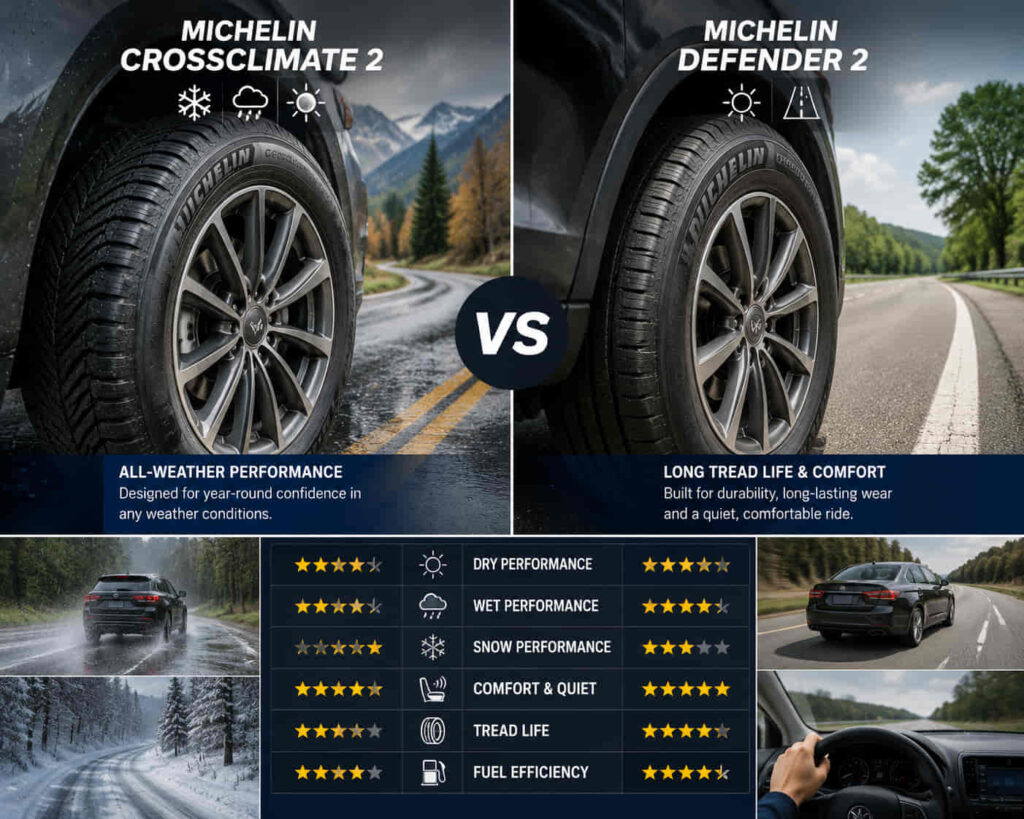
Michelin CrossClimate 2 and Michelin Defender 2 are both premium tires, but they are designed for different driving priorities. CrossClimate 2 focuses on all-weather performance with stronger capability in rain, cold temperatures, and light snow, while Defender 2 focuses on long tread life, comfort, and dependable everyday touring performance.
The main difference between these two Michelin tires comes from their intended purpose. CrossClimate 2 belongs to the all-weather tire category, which means it is engineered to provide reliable performance across a wider range of seasonal conditions. Its design combines features of all-season and winter-oriented tires to improve traction when temperatures drop or road conditions become challenging.
Defender 2 is a touring all-season tire designed around durability, quiet operation, and long-distance comfort. It is built for drivers who spend most of their time on highways, city roads, and normal commuting routes where consistent performance and extended tread life are the highest priorities.
Choosing between Michelin CrossClimate 2 and Defender 2 is not simply about finding which tire is better overall. The better choice depends on climate, driving habits, road conditions, and what the driver values most. A person living in an area with changing seasons may benefit from CrossClimate 2’s weather versatility, while a high-mileage commuter may prefer Defender 2’s touring characteristics.
This comparison examines the differences between CrossClimate 2 and Defender 2 in performance, comfort, durability, weather capability, and real-world usage to help drivers select the right Michelin tire for their needs.
Which Tire Performs Better in Dry Conditions?
Michelin CrossClimate 2 and Defender 2 both provide strong dry-road performance, but they deliver different driving experiences because they are designed for different purposes. CrossClimate 2 focuses on maintaining versatile performance across changing conditions, while Defender 2 prioritizes smooth, predictable touring performance and long-term reliability.
On dry roads, CrossClimate 2 provides confident handling with a more responsive feel due to its directional tread design and all-weather-focused construction. The tire is engineered to maintain traction across different temperatures, which helps drivers experience consistent control when weather conditions change from warm to cool.
Defender 2 offers a more traditional touring tire experience. Its design focuses on stability, comfort, and predictable handling during daily driving and highway travel. The steering response feels more relaxed compared with CrossClimate 2, making it suitable for drivers who prioritize a smooth and effortless driving experience.
The difference becomes more noticeable during aggressive cornering or quick steering inputs. CrossClimate 2 generally provides a more connected driving feel because of its performance-oriented all-weather design, while Defender 2 emphasizes comfort and long-distance refinement.
For example, a driver who frequently travels on winding roads or experiences seasonal temperature changes may appreciate CrossClimate 2’s more responsive characteristics. A commuter who mainly drives on highways and city streets may prefer Defender 2’s comfortable and stable behavior.
Neither tire has a disadvantage in normal dry driving conditions. The better option depends on whether the driver values a more versatile performance approach or a comfort-focused touring experience.
Is Michelin CrossClimate 2 Better Than Defender 2 in Rain and Snow?
Michelin CrossClimate 2 has a clear advantage over Defender 2 in wet, cold, and snowy conditions because it is specifically designed as an all-weather tire with stronger seasonal capability. Defender 2 performs well in normal rain and mild conditions, but its design priorities are focused more on touring performance and tread longevity.
CrossClimate 2 uses a directional V-shaped tread pattern and all-weather compound technology to improve water evacuation and maintain flexibility in lower temperatures. These characteristics help the tire provide stronger traction when roads become wet, cold, or lightly covered with snow.
One of the biggest differences is winter capability. CrossClimate 2 carries the Three-Peak Mountain Snowflake (3PMSF) certification, indicating that it meets specific performance requirements for severe snow conditions. Defender 2 is an all-season touring tire and does not target the same level of cold-weather traction.
Wet performance is also influenced by tread design. CrossClimate 2’s aggressive pattern helps move water away from the contact patch, improving stability during heavy rain. Defender 2 still provides reliable wet-road performance for everyday driving but is not engineered around the same level of seasonal versatility.
For example, a driver living in an area with frequent rain, temperature changes, or occasional snowfall may benefit more from CrossClimate 2. A driver in a region with mostly mild weather and dry roads may find Defender 2 provides all the performance needed.
CrossClimate 2 is the stronger choice for unpredictable weather conditions, while Defender 2 remains a dependable option for drivers who mainly need reliable all-season touring performance.
Read more: Are Mickey Thompson Tires Good
Which Tire Is Quieter and More Comfortable?
Michelin Defender 2 is generally more comfortable and quieter than CrossClimate 2 because it is designed specifically as a touring all-season tire focused on ride quality, low road noise, and long-distance driving comfort. CrossClimate 2 provides a more capable all-weather experience, but its aggressive tread design creates a different driving feel.
Defender 2 uses a touring-oriented tread pattern that helps reduce road noise and provides a smoother ride on highways and city roads. The tire is designed for drivers who spend many hours behind the wheel and want consistent comfort during everyday commuting and long-distance travel.
CrossClimate 2 has a more distinctive directional tread pattern with larger tread features designed to improve traction in changing weather conditions. These design elements help the tire perform better in rain, cold temperatures, and light snow, but they can create slightly more noticeable tread noise compared with a comfort-focused touring tire.
Ride quality also depends on vehicle type, tire size, and suspension design. On a vehicle with strong cabin insulation, the difference between the two tires may feel minor. On vehicles with less insulation or firmer suspension systems, Defender 2’s comfort-focused design may become more noticeable.
For example, a driver who regularly travels hundreds of miles on highways may appreciate Defender 2’s quieter and smoother ride. A driver who values year-round traction and occasionally encounters winter conditions may accept a slightly different ride feel from CrossClimate 2 in exchange for additional weather capability.
Defender 2 is the better choice for maximum comfort and quiet operation, while CrossClimate 2 provides a better balance between comfort and all-weather performance.
Which Tire Lasts Longer: CrossClimate 2 or Defender 2?
Michelin Defender 2 generally has an advantage in tread longevity because it is specifically engineered as a long-lasting touring tire, while CrossClimate 2 balances durability with broader weather performance. Both tires offer strong durability, but their priorities are different.
Defender 2 is designed for drivers who accumulate high mileage and want a tire that maintains reliable performance over many years of use. Its touring-focused construction and tread technology are optimized for consistent wear during regular highway and commuting conditions.
CrossClimate 2 also provides impressive durability, but its design includes additional features that improve performance in colder temperatures and challenging weather. These characteristics require a balance between tread life, traction, and seasonal capability.
Driving conditions have a major impact on lifespan. A Defender 2 used mainly for highway commuting may achieve excellent mileage because the tire experiences predictable road conditions. A CrossClimate 2 used in regions with changing weather can provide strong long-term value because it eliminates the need for seasonal tire changes in many situations.
Maintenance practices also influence how long either tire lasts. Proper inflation, regular rotation, correct alignment, and appropriate driving habits help both tires maintain their designed performance.
For example, a high-mileage driver who spends most of the year on highways may benefit more from Defender 2’s touring durability. A driver who needs one tire for year-round conditions may find CrossClimate 2 provides better overall value despite its different performance balance.
Defender 2 is typically the stronger choice for maximum tread life, while CrossClimate 2 offers durability combined with greater seasonal versatility.
Which Tire Is Better for Highway Driving?
Michelin Defender 2 is generally the better choice for highway driving because it is designed around long-distance comfort, stability, low noise, and extended tread life. While CrossClimate 2 also performs well on highways, its main advantage comes from providing additional capability in changing weather conditions rather than maximizing touring comfort.
Defender 2 is built for drivers who spend significant time on highways and want a predictable, relaxed driving experience. Its touring-oriented construction helps maintain a smooth ride, reduce road noise, and provide consistent handling during long-distance travel. These characteristics make it suitable for commuters, families, and drivers who accumulate high annual mileage.
CrossClimate 2 offers strong highway stability as well, but its design includes features that support all-weather performance. The directional tread pattern and specialized compound help the tire remain effective in cold temperatures and wet conditions, which means the driving feel can be slightly different from a traditional touring tire.
Fuel efficiency can also vary between the two tires. Defender 2’s touring design is optimized for everyday efficiency and long-distance use, while CrossClimate 2’s additional traction capabilities may involve different rolling characteristics depending on the vehicle and driving conditions.
For example, a driver who spends most of the year traveling on interstate highways in a mild climate may prefer Defender 2 because comfort and longevity are the primary benefits. A driver who frequently travels through areas with unpredictable weather may choose CrossClimate 2 because it provides additional confidence when conditions change.
Defender 2 is the stronger highway touring option, while CrossClimate 2 is better suited for drivers who want highway performance combined with broader weather capability.
Which Tire Is Better for Changing Weather Conditions?
Michelin CrossClimate 2 is the better choice for drivers who experience changing weather conditions because it is specifically engineered to provide reliable performance across multiple seasons. Defender 2 performs well as an all-season touring tire, but it is not designed to provide the same level of cold-weather and snow capability.
The key difference comes from the tire category. CrossClimate 2 belongs to the all-weather segment, which focuses on maintaining traction in warmer temperatures, rain, cold conditions, and light snow. Its tread design and compound are developed to remain effective when temperatures fluctuate throughout the year.
Defender 2 is designed for traditional all-season touring use. It provides dependable performance in dry and wet conditions, making it suitable for drivers in regions with moderate climates where severe winter conditions are uncommon.
Cold temperature performance is where CrossClimate 2 creates the biggest separation. As temperatures drop, some standard all-season tires can lose flexibility and traction. CrossClimate 2 is designed to maintain better grip in colder environments, making it a stronger option for areas with seasonal weather changes.
For example, a driver living in a region with hot summers, rainy seasons, and occasional snowfall may benefit from CrossClimate 2 because one set of tires can handle a wider range of conditions. A driver living in a warm climate with mostly dry roads may not need the additional capability and may prefer Defender 2.
CrossClimate 2 is the better choice for unpredictable weather, while Defender 2 remains a strong option for drivers who primarily experience mild and consistent conditions.
Who Should Buy Michelin CrossClimate 2?
Michelin CrossClimate 2 is the better choice for drivers who need year-round versatility, stronger wet-weather performance, and improved capability in cold temperatures or light snow conditions. It is designed for people who want one tire that can handle a wider range of weather situations without switching between seasonal tire sets.
CrossClimate 2 is especially suitable for drivers living in regions where weather changes throughout the year. Areas with frequent rain, temperature fluctuations, and occasional winter conditions benefit more from the tire’s all-weather design because its strengths are most noticeable when road conditions become unpredictable.
The tire is also a strong option for drivers who value confidence over maximum comfort. Its tread design provides additional traction capability, but the driving experience may feel slightly different compared with a traditional touring tire focused only on smoothness and quiet operation.
For example, a driver in a northern climate who experiences cold mornings, wet roads, and occasional snow may find CrossClimate 2 provides better year-round security. A driver who rarely encounters winter conditions may not fully benefit from its additional capability.
CrossClimate 2 is not simply an upgrade over Defender 2. It is a different type of tire designed for a different driving environment.
Who Should Buy Michelin Defender 2?
Michelin Defender 2 is the better choice for drivers who prioritize long tread life, comfortable highway driving, quiet operation, and reliable everyday performance. It is designed for people who spend most of their time on paved roads and want a dependable touring tire that can deliver consistent performance over many miles.
Defender 2 is particularly suitable for commuters, families, and high-mileage drivers who value low maintenance costs and a smooth driving experience. Its strengths come from its touring-focused design, which emphasizes durability and comfort rather than maximum performance in extreme weather conditions.
Drivers in regions with mild climates are likely to benefit most from Defender 2. When severe cold temperatures and snow are uncommon, the additional winter capability of CrossClimate 2 may not provide enough value to justify choosing it over a tire designed specifically for long-term touring use.
For example, a driver who travels mostly on highways, drives thousands of miles annually, and wants a quiet ride may find Defender 2 to be the more suitable option. Its design matches the needs of everyday driving where reliability and comfort are the main priorities.
Defender 2 is the ideal choice for drivers who want maximum practicality, while CrossClimate 2 is better for those who need broader weather capability.
Michelin CrossClimate 2 vs Defender 2: Which Tire Is Better?
The better tire between Michelin CrossClimate 2 and Defender 2 depends on the driver’s environment, priorities, and driving habits rather than one tire being universally superior. Both tires represent Michelin’s premium engineering, but they solve different problems.
CrossClimate 2 is the stronger option for drivers who experience changing weather, need better cold-weather performance, or want an all-weather tire capable of handling rain and light snow. Its main advantage is versatility across multiple seasons.
Defender 2 is the stronger option for drivers who prioritize comfort, quiet operation, and long tread life. Its touring design makes it ideal for highway commuters and drivers who spend most of their time on normal roads.
A driver who lives in a region with unpredictable weather will likely benefit more from CrossClimate 2, while someone focused on long-distance comfort and durability may find Defender 2 offers better value.
Overall, Michelin CrossClimate 2 and Defender 2 are both excellent tires, but they serve different purposes. Choosing the right tire requires matching the product’s design with real-world driving conditions, not simply choosing the model with the highest performance rating.