Tesla air conditioner not working is a common issue that affects cabin comfort, especially during hot weather when drivers depend on the climate control system to maintain a stable interior temperature. The problem can happen because of software errors, HVAC component failures, airflow restrictions, refrigerant issues, or problems within Tesla’s thermal management system.
Unlike traditional gasoline vehicles, Tesla models use an electric HVAC system that integrates with battery management, heat pump technology, and vehicle software. This means an air conditioning problem may not always come from a simple mechanical failure. A software update, incorrect climate setting, or temporary system error can also prevent the AC from operating normally.
This guide explains the main reasons why a Tesla air conditioner stops working and how to troubleshoot the issue step by step. You will learn how to identify common symptoms, check basic system problems, understand when professional repair is required, and prevent future HVAC failures.
Whether your Tesla AC is not turning on, blowing warm air, producing weak airflow, or showing climate control errors, understanding the cause is the first step toward restoring proper cooling performance.
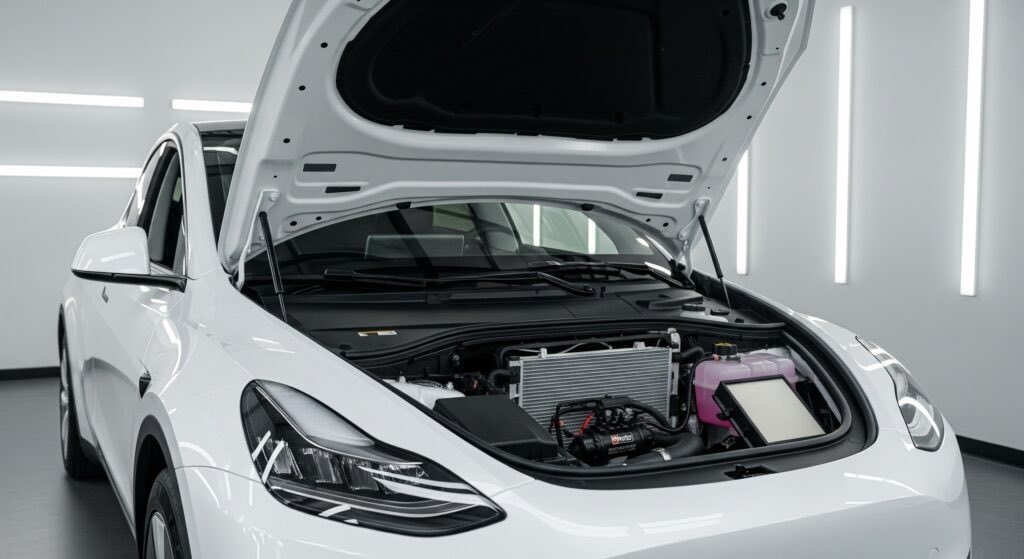
Why is my Tesla air conditioner not working?
Tesla air conditioner not working is usually caused by problems in one of five main areas: software control, HVAC components, airflow system, refrigerant system, or Tesla’s thermal management system. Identifying the exact symptom is the first step because each failure point creates different signs inside the vehicle.
A Tesla AC system depends on communication between climate control software, sensors, compressors, heat pumps, and battery thermal management components. Unlike a traditional vehicle air conditioner that mainly relies on an engine-driven compressor, Tesla uses an electric HVAC architecture that requires both hardware and software components to work correctly.
One common reason a Tesla air conditioner stops working is a temporary software issue. Tesla vehicles use software-controlled climate systems, meaning a firmware error, failed update, or system communication problem can prevent the AC from responding correctly. In some cases, restarting the vehicle system or installing the latest software update restores normal operation without replacing any physical component.
Another possible cause is a low battery state of charge. Tesla prioritizes battery protection when energy levels become limited, which can affect non-essential systems such as cabin climate control. If the battery level is extremely low, the vehicle may reduce or disable air conditioning performance to preserve driving range.
Mechanical problems within the HVAC system can also stop the Tesla AC from cooling. Components such as the compressor, heat pump, evaporator, condenser, and refrigerant circuit are responsible for transferring heat away from the cabin. When one of these components fails, the system may still produce airflow but fail to reduce cabin temperature.
Airflow restriction is another issue that affects Tesla climate performance. A blocked cabin air filter can reduce the amount of cooled air entering the cabin, making the AC appear weak even when the cooling system is operating normally. Drivers may notice reduced airflow from the vents, unusual odors, or slower temperature changes.
Environmental conditions can also influence Tesla air conditioning performance. Extremely hot temperatures place higher demand on the HVAC system because it must remove more heat from the cabin and manage battery temperature simultaneously. If the thermal management system cannot maintain the required operating conditions, cooling performance may decrease.
Understanding these causes helps Tesla owners separate simple problems from failures that require professional repair. Checking software status, battery level, airflow strength, and warning messages provides useful information before scheduling a service appointment.
How do I troubleshoot a Tesla air conditioner that is not working?
To troubleshoot a Tesla air conditioner that is not working, check the climate settings, vehicle software, battery condition, airflow system, and warning notifications before scheduling professional repair. A structured diagnosis helps determine whether the problem comes from a temporary system issue or a failed HVAC component.
The first step is to check the Tesla climate control settings on the touchscreen. Make sure the temperature setting is lower than the current cabin temperature, the AC function is enabled, and the airflow direction is correctly selected. A Tesla may appear to have an AC problem when the system is actually operating in a different mode, such as ventilation mode or a temperature setting that does not activate active cooling.
Restarting the Tesla system can resolve temporary climate control problems caused by software communication errors. Tesla vehicles rely heavily on software integration, so a climate control malfunction may occur after a system process fails or after an incomplete software transition. Performing a vehicle restart allows the control modules to reload and restore normal communication between the touchscreen, HVAC system, and thermal management components.
Checking software updates is another important troubleshooting step. Tesla frequently improves vehicle functions through over-the-air updates, and some updates include improvements to climate control operation. If the vehicle has outdated software or recently experienced an update issue, the HVAC system may not respond correctly until the software installation is completed.
The battery state of charge should also be checked because Tesla limits certain functions when energy levels become critically low. When the battery requires energy conservation, climate control performance may decrease or shut down temporarily. Charging the vehicle and testing the AC again can help determine whether battery protection was the cause.
Inspecting airflow performance helps identify possible cabin air filter or ventilation problems. If the AC produces cold air but airflow is weak, the cabin air filter may be restricted by dust, debris, or accumulated particles. A blocked filter reduces air volume entering the cabin and makes the cooling system feel ineffective even when the refrigeration system is working properly.
Tesla owners should also review any warning messages displayed on the vehicle touchscreen. Error notifications related to HVAC, thermal management, or vehicle systems provide valuable diagnostic information. Persistent warnings, unusual sounds from the front compartment, or complete loss of cooling after basic troubleshooting usually indicate a problem requiring Tesla service inspection.
A systematic troubleshooting process prevents unnecessary repairs and helps identify whether the issue is caused by settings, software, energy management, airflow restriction, or a mechanical HVAC failure. Basic checks can solve temporary problems, while component failures require professional diagnosis.
Why is my Tesla AC blowing warm air?
Tesla AC blowing warm air is one of the most common signs that the vehicle’s climate control system is not removing heat from the cabin correctly. This problem usually indicates an issue with cooling components, refrigerant circulation, airflow management, or the thermal management system rather than a simple temperature setting error.
When a Tesla air conditioner runs but only produces warm or room-temperature air, the first component to consider is the cooling cycle. The HVAC system must complete several processes to reduce cabin temperature, including refrigerant compression, heat transfer through the condenser and evaporator, and controlled airflow through the vents. If one part of this process fails, the cabin may continue receiving air without effective cooling.
A failing heat pump can affect Tesla AC performance, especially in newer Tesla models that use heat pump-based thermal systems. The heat pump manages heat movement between the cabin, battery, and external environment. When the system experiences a malfunction, the vehicle may struggle to regulate temperature because it cannot efficiently transfer heat away from the passenger compartment.
The compressor is another critical component that can cause warm air problems. The compressor pressurizes refrigerant and starts the cooling process inside the HVAC system. If the compressor fails or does not receive the correct electrical signal, the refrigerant cycle cannot operate normally. As a result, the vents may continue blowing air while the cabin temperature remains high.
Low refrigerant levels can also prevent Tesla AC from producing cold air. Refrigerant is responsible for absorbing heat from inside the cabin and releasing it outside the vehicle. A leak or insufficient refrigerant amount reduces cooling capacity and may cause the AC system to run continuously without achieving the selected temperature.
A blocked condenser or restricted airflow path can create similar symptoms. The condenser needs sufficient airflow to release heat from the refrigerant system. When airflow is limited by debris, contamination, or component damage, the HVAC system becomes less efficient and may produce warmer air during high-temperature conditions.
Tesla owners should also consider whether the problem occurs only in specific situations. For example, an AC system that performs normally in mild weather but struggles during extreme heat may indicate a thermal management issue rather than a complete HVAC failure. Observing when the problem appears helps technicians identify the affected component more accurately.
If a Tesla AC continues blowing warm air after checking climate settings, restarting the system, and updating software, professional diagnosis may be required. Persistent cooling failure often involves components that require specialized equipment, such as refrigerant pressure testing or HVAC system diagnostics.
How does Tesla climate control system work?
Tesla climate control system works by combining electric HVAC components, software controls, and thermal management technology to regulate cabin temperature efficiently. Unlike traditional gasoline vehicles that use engine power to operate the air conditioning compressor, Tesla vehicles use an electric system designed to manage both passenger comfort and battery temperature.
The Tesla HVAC system consists of several connected components, including the compressor, heat pump, evaporator, condenser, refrigerant circuit, and sensors. Each component performs a specific function in the cooling process. The compressor circulates refrigerant through the system, the evaporator absorbs heat from inside the cabin, and the condenser releases heat outside the vehicle.
The heat pump plays an important role in newer Tesla models because it improves energy efficiency by transferring heat instead of generating it directly. The system can move heat between different areas of the vehicle, including the cabin, battery pack, and external environment. This integration allows Tesla to reduce energy consumption while maintaining cabin temperature.
Tesla’s thermal management system connects climate control with battery operation. Electric vehicle batteries require controlled temperatures to maintain performance, charging efficiency, and long-term durability. Because of this connection, HVAC problems may sometimes involve battery thermal management rather than only the cabin cooling system.
Software also controls many parts of Tesla climate operation. The vehicle continuously monitors temperature sensors, battery conditions, and user settings to determine how much cooling or heating is required. This software-based approach allows Tesla to adjust climate performance automatically but also means software errors can affect HVAC behavior.
Tesla vehicles include features such as scheduled climate, cabin overheat protection, and remote climate control through the Tesla mobile application. These functions rely on communication between the vehicle software, HVAC system, and battery management system. When these systems communicate incorrectly, climate control functions may become unavailable or operate incorrectly.
Understanding how Tesla climate control works helps owners diagnose problems more accurately. A Tesla AC failure is not always caused by a single damaged part because the HVAC system operates as a network of mechanical components, electronic controls, and software processes.
When should I take my Tesla to a service center for AC problems?
A Tesla air conditioner problem requires professional service when basic troubleshooting steps do not restore cooling performance or when the issue involves complex HVAC components. Tesla’s climate system combines electrical components, software controls, and thermal management technology, so some failures require specialized diagnostic tools and repair procedures.
A persistent lack of cooling after restarting the vehicle, checking settings, and installing software updates is a sign that the problem may involve hardware. If the AC continues to blow warm air, produces unusual noises, or stops responding completely, the vehicle should be inspected by a qualified Tesla technician.
Compressor failure is one of the problems that usually requires professional repair. The compressor is responsible for circulating refrigerant through the cooling system, and a malfunction can prevent the entire AC cycle from operating. Symptoms of compressor problems include no cold air, clicking or unusual operating sounds, and climate control performance that changes inconsistently.
Refrigerant leaks also require professional attention because the cooling system must maintain a specific refrigerant level to operate efficiently. A leak reduces cooling capacity and can damage other HVAC components if the system continues running without proper refrigerant pressure. Technicians use specialized equipment to detect leaks, recover refrigerant, and recharge the system correctly.
Electrical faults within the HVAC system are another reason to visit a service center. Tesla climate control depends on multiple electronic modules, sensors, and communication networks. A damaged sensor, wiring problem, or control module failure can prevent the system from receiving accurate temperature information or activating the correct cooling functions.
Tesla owners should also seek professional diagnosis when the touchscreen displays HVAC-related error messages. These warnings can indicate problems with the heat pump, thermal management system, or other vehicle systems connected to climate control. Ignoring repeated warnings may allow a small issue to develop into a more expensive repair.
Repair costs depend on the failed component, vehicle model, warranty coverage, and the complexity of the repair. Simple issues such as cabin air filter replacement or software-related problems are usually less complex than repairs involving compressors, refrigerant systems, or thermal management components.
Professional inspection is especially important because Tesla HVAC systems are integrated with the vehicle’s battery and energy management systems. Correct diagnosis ensures that the repair addresses the actual cause instead of replacing unnecessary parts.
How can I prevent Tesla air conditioner problems?
Preventing Tesla air conditioner problems requires regular maintenance, software management, and proper use of the vehicle’s climate system. Although Tesla HVAC systems are designed for long-term operation, regular care helps maintain cooling performance and reduces the risk of unexpected failures.
Replacing the cabin air filter regularly is one of the simplest ways to maintain Tesla AC performance. The cabin air filter removes dust, pollen, and airborne particles before air enters the passenger compartment. When the filter becomes clogged, airflow decreases and the HVAC system must work harder to maintain the selected temperature.
Keeping Tesla software updated is another important maintenance step. Tesla vehicles receive over-the-air software updates that can improve vehicle systems, including climate control performance. Updated software helps ensure that HVAC controls, sensors, and thermal management functions operate with the latest system improvements.
Monitoring unusual climate control behavior allows owners to identify problems before they become major failures. Signs such as weaker airflow, unusual sounds, inconsistent cooling, longer cooling times, or repeated climate warnings indicate that the HVAC system may require inspection.
Maintaining proper battery condition also supports Tesla air conditioning performance. Because Tesla integrates cabin climate control with battery thermal management, battery temperature and energy availability influence HVAC operation. Avoiding extremely low battery levels and following recommended charging practices helps maintain stable vehicle operation.
Using climate features correctly can also reduce unnecessary stress on the HVAC system. Preconditioning the cabin while the vehicle is connected to charging allows Tesla to use external power instead of relying entirely on the battery. This reduces energy demand during driving and helps the vehicle reach a comfortable temperature more efficiently.
Regular professional inspections are useful when a Tesla shows repeated HVAC symptoms. Early diagnosis can identify issues such as refrigerant leaks, sensor problems, or component wear before they affect other connected systems.
A preventive maintenance approach helps Tesla owners maintain reliable climate performance throughout different weather conditions. Combining software updates, filter replacement, battery care, and early problem detection reduces the likelihood of major air conditioning failures.