A K&N air filter is worth it for drivers who want more airflow, a reusable filter, and a long service life. However, not every driver needs one. Its value depends on your vehicle, ownership period, performance goals, and willingness to maintain the filter.
Most standard paper air filters require replacement when they become dirty. In contrast, many K&N engine air filters use washable cotton filter media. Owners can clean and reuse these filters instead of buying a new filter at each replacement interval. This design can reduce replacement costs during long term vehicle ownership.
K&N also designs its filters to reduce airflow restriction. More airflow can benefit some engines, especially when other modifications increase their air demand. However, a K&N filter alone does not guarantee noticeable horsepower gains or better gas mileage.
Drivers should also consider filtration, maintenance, and engine protection before buying one. Cleaning the filter takes more effort than replacing a disposable paper filter. Incorrect maintenance can also create problems. For example, applying too much filter oil may cause concerns around sensitive intake components.
This guide compares performance, filtration, lifespan, maintenance, and cost. It also explains which drivers can benefit from a K&N air filter and who should stay with a conventional paper filter.
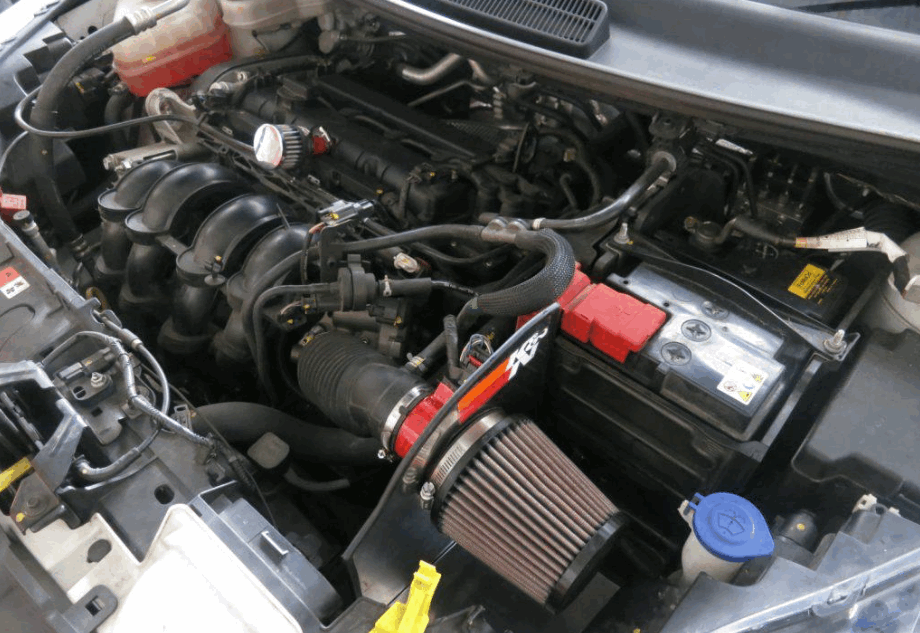
Is a K&N Air Filter Worth It?
A K&N air filter is worth it if you plan to reuse it for several years and value higher airflow. It makes less sense if you want the lowest upfront cost and simple maintenance. The final value depends on cost, performance, filtration, service life, and driving conditions.
K&N filters cost more upfront than most disposable paper filters. However, many K&N engine air filters use washable cotton filter media. You can clean and reuse the same filter instead of replacing it when it gets dirty. This design gives long term owners more time to recover the higher purchase price.
Performance also affects the value. K&N designs its performance filters to reduce intake restriction and allow more airflow. An engine can benefit from this feature when its intake system limits airflow. However, a stock engine may show a small performance change. Drivers should not expect a filter replacement alone to transform engine output.
Maintenance creates another difference. A paper filter offers a simple replacement process. A reusable K&N filter requires periodic inspection and cleaning. Some K&N filters also require filter oil after cleaning. This extra work matters when comparing ownership convenience.
The table below summarizes the main differences.
| Factor | K&N Air Filter | Paper Air Filter |
|---|---|---|
| Upfront cost | Higher | Lower |
| Reusable | Yes | No |
| Maintenance | Cleaning and proper care | Replacement |
| Airflow | Designed for lower restriction | Depends on filter design |
| Long term value | Better for some long term owners | Better for simple maintenance |
A K&N filter therefore offers the most value when its reusable design and airflow match your priorities.
What Are the Pros and Cons of a K&N Air Filter?
The main advantages of a K&N air filter are reusability, long service life, and reduced airflow restriction. Its main disadvantages include a higher purchase price and additional maintenance. These factors affect each driver differently.
Reusability provides the clearest ownership benefit. Instead of discarding the filter after it becomes dirty, you can clean many K&N filters and put them back into service. This feature reduces the need to buy replacement filters. The financial benefit becomes more relevant as the ownership period increases.
Airflow provides the main performance benefit. A less restrictive filter lets the engine draw air through the intake with less resistance. This characteristic can support engines that need greater airflow. Modified engines may benefit more because performance upgrades can increase air demand.
However, increased airflow does not guarantee a large horsepower gain. The engine, intake system, exhaust system, ECU calibration, and other components also affect output. A stock daily driver may produce little noticeable change after a filter swap.
Maintenance presents the main tradeoff. Owners must inspect and clean reusable filters when necessary. They must also follow the correct oiling procedure for filters that require oil. Too much oil can create unnecessary contamination inside the intake system. Poor cleaning can also reduce the benefits of using a reusable filter.
A K&N air filter therefore suits drivers who accept extra maintenance in exchange for reusability and performance focused airflow. A paper filter remains simpler for drivers who prefer quick replacement and minimal maintenance.
Does a K&N Air Filter Increase Horsepower?
A K&N air filter can increase horsepower when the original air filter restricts the airflow that the engine needs. However, the filter alone may produce a small change on a stock engine. The result depends on the engine, intake system, and existing airflow restriction.
An engine needs enough air to support combustion. The air filter creates resistance as air moves through its filter media. A less restrictive filter can reduce this resistance and help the intake supply air more freely. K&N designs its performance filters with airflow as a primary consideration.
More airflow does not always create more horsepower. The engine must have enough demand for the additional air. Other components can also restrict the intake system. For example, the airbox, intake tube, throttle body, or engine calibration may limit the benefit of a higher flowing filter.
Vehicle modifications can change the result. An engine with performance upgrades may demand more air than a stock engine. In that situation, reducing intake restriction can become more valuable. A standard daily driver may experience a smaller difference because its original intake already supplies enough air.
Drivers may also notice a change in throttle response or intake sound. However, these changes do not prove that the engine gained significant horsepower. A controlled performance test provides a better way to measure an actual power change.
A K&N air filter therefore has the greatest performance value when airflow restriction limits the engine. Drivers should not treat a filter swap as a guaranteed horsepower upgrade.
Does a K&N Air Filter Improve Gas Mileage?
A K&N air filter does not guarantee better gas mileage because fuel economy depends on more than intake airflow. Engine load, ECU control, vehicle condition, speed, and driving behavior all affect fuel consumption.
Modern engines manage the relationship between incoming air and fuel. Sensors provide information that helps the engine control system adjust combustion. Increasing airflow does not mean the engine will automatically use less fuel. The engine may adjust fuel delivery according to operating conditions.
The condition of the existing filter also matters. Replacing a severely restricted filter can restore normal airflow. However, replacing a clean and functional filter with a performance filter creates a different situation. Drivers should not assume both changes will produce the same effect on fuel consumption.
Driving behavior can also outweigh a small change in intake restriction. Frequent acceleration, high speeds, heavy loads, and extended idling can increase fuel use. Tire pressure and vehicle maintenance can influence fuel economy as well. These factors make it difficult to attribute an MPG change to the air filter alone.
A reusable K&N filter can still provide financial value without improving gas mileage. Its long service life may reduce the number of disposable filters an owner buys. That saving comes from reusability rather than lower fuel consumption.
Drivers should therefore view fuel economy as a possible secondary consideration, not the primary reason to buy a K&N air filter.
Does a K&N Air Filter Filter Dirt as Well as a Paper Air Filter?
A K&N air filter and a paper air filter use different filter media, so they balance airflow and particle capture in different ways. Drivers should compare both filtration and airflow instead of judging either filter by airflow alone.
Many K&N performance air filters use layers of cotton filter media. Filter oil helps the media capture contaminants while air passes through the filter. This design also aims to reduce intake restriction. A conventional paper filter uses dense pleated media to capture particles as air enters the engine.
Filtration matters because the engine needs protection from airborne contaminants. Dust, dirt, and other particles can enter the intake with outside air. The air filter captures these contaminants before they reach sensitive engine components. Effective filtration therefore supports engine protection and long term reliability.
Driving conditions can change the importance of each attribute. A vehicle that spends most of its time on paved roads faces different conditions from one that regularly travels on dusty roads. Heavy dust exposure increases the amount of contamination that the filter must capture. It can also increase the need for inspection and maintenance.
Drivers should not assume that higher airflow means better overall filtration. Airflow measures how easily air passes through the filter. Filtration measures how effectively the filter captures contaminants. These attributes answer different questions.
The better choice depends on the vehicle and its operating environment. Drivers should consider airflow, filtration needs, maintenance requirements, and driving conditions together when comparing K&N and paper filters.
Can a K&N Air Filter Damage Your Engine or MAF Sensor?
A properly installed and maintained K&N air filter should not damage an engine simply because it uses a reusable design. Problems become more relevant when installation, cleaning, or oiling introduces contamination into the intake system.
Installation affects engine protection because intake air should pass through the filter media. A filter that does not sit correctly in its housing can create gaps. Contaminated air may then bypass the filter. Owners should confirm that the filter fits correctly before closing the airbox.
Maintenance also matters for reusable filters. Many K&N cotton filters use filter oil as part of their filtration system. Owners must apply the correct amount after cleaning filters that require re-oiling. Excess oil creates unnecessary residue and can move beyond the filter under certain conditions.
The mass airflow sensor is one component that receives attention in discussions about oiled filters. The MAF sensor measures incoming air so the engine management system can calculate operating requirements. Contamination on a sensitive sensor can affect its readings. However, a MAF problem requires proper diagnosis because several contaminants and electrical faults can cause similar symptoms.
Cleaning technique also affects filter condition. Owners should use the correct cleaning process and allow the filter to dry as directed. They should then apply filter oil correctly before reinstalling an oiled filter.
Correct installation and maintenance reduce avoidable risks. Drivers who prefer not to clean and re-oil a filter may find a disposable paper filter more convenient.
How Long Does a K&N Air Filter Last?
A K&N air filter can last much longer than a disposable paper filter because owners can clean and reuse it. Its actual service life depends on the filter type, driving conditions, maintenance, and physical condition.
Reusable construction creates this difference. A paper air filter eventually collects enough dirt to require replacement. Owners normally discard the old filter and install a new one. Many K&N engine air filters follow a different maintenance cycle. Owners clean the filter and return it to service instead of replacing it after each cleaning interval.
Filter lifespan and cleaning interval describe two different things. Lifespan refers to how long the filter remains suitable for service. The cleaning interval tells an owner when the filter needs maintenance. A reusable filter may require several cleaning cycles during its total service life.
Driving conditions affect both factors. A vehicle that operates around dust, dirt, or other airborne contaminants can load its filter faster. Normal road driving may expose the filter to less severe contamination. Owners should therefore consider the operating environment instead of relying only on time or mileage.
Physical condition also determines whether continued use makes sense. Owners should inspect the filter for damaged media, sealing problems, or other defects during maintenance. Cleaning cannot correct physical damage that prevents the filter from working as intended.
The long service life creates one of the strongest reasons to consider a K&N air filter. However, owners only receive this benefit when they maintain the filter correctly throughout its usable life.
How Often Should You Clean a K&N Air Filter?
You should clean a K&N air filter according to its specific service guidance and the conditions in which you drive. Dirt exposure matters because two vehicles can load their filters at very different rates.
Inspection provides a practical starting point. Owners can check the filter during routine vehicle maintenance and look for accumulated contamination. A vehicle that regularly encounters dusty conditions may need closer attention. A vehicle used mainly on paved roads can experience a different contamination rate.
Cleaning a reusable filter involves more than removing visible dirt. Owners need to follow the correct procedure for their specific K&N filter. For an oiled cotton filter, maintenance includes cleaning the media and allowing it to dry correctly. The owner then applies the appropriate filter oil before installation.
Correct oil application matters. Adding more oil than required does not improve the filter simply because it increases the amount of oil. Excess product can create unnecessary residue. Owners should follow the specified procedure rather than estimate the amount based on appearance alone.
Maintenance requirements also affect the value of a reusable filter. Some drivers accept periodic cleaning because they want to keep the same filter for years. Other drivers prefer to remove a dirty paper filter and install a new one.
A K&N filter makes more sense when its maintenance cycle matches the owner’s habits. Drivers who neglect routine filter care may not receive the full benefit of its reusable design.
How Much Does a K&N Air Filter Cost?
A K&N air filter usually costs more upfront than a conventional disposable paper filter. The actual price depends on the vehicle, filter size, product design, and application. Drivers should therefore compare filters made for the same vehicle rather than use one price for every K&N product.
Product type creates an important price difference. A replacement K&N engine air filter fits into the existing airbox. A complete performance intake system includes additional components and serves a different purpose. Comparing the price of a replacement filter with a complete intake system would give an inaccurate cost comparison.
Vehicle application also affects the purchase price. Different engines use different filter shapes, dimensions, and designs. For this reason, two drivers can pay different prices for K&N filters even when both products perform the same basic function.
The initial price does not show the complete ownership cost. A disposable paper filter requires another purchase each time the owner replaces it. A reusable K&N filter spreads its purchase price across multiple service cycles. However, owners should also consider the cost of cleaning products and filter oil when required.
Drivers should compare total ownership cost instead of purchase price alone. The higher initial cost becomes easier to justify when the owner keeps and reuses the filter for a long period. For short term ownership, there may be less time to recover that additional expense.
Does a K&N Air Filter Save Money Over Time?
A reusable K&N air filter can save money over time when avoided replacement costs exceed its higher purchase and maintenance costs. The ownership period and replacement frequency determine when those savings begin.
A simple calculation can show the difference. Start with the K&N purchase price. Add the cost of cleaning supplies and filter oil used during ownership. Then compare that total with the cost of buying disposable paper filters over the same period.
The basic calculation is:
K&N ownership cost = filter purchase price + maintenance costs
Paper filter ownership cost = filter price × number of replacements
The break even point occurs when the accumulated cost of paper filters reaches the total cost of owning and maintaining the reusable filter. After this point, additional paper filter replacements can increase the financial advantage of continuing to reuse the K&N filter.
Ownership duration therefore matters. A driver who keeps a vehicle for several years has more opportunities to reuse the same filter. A driver who sells the vehicle soon after buying the filter has fewer opportunities to recover the initial cost.
Replacement frequency matters as well. Driving conditions can affect how quickly an air filter collects contaminants. However, owners should follow the correct service guidance instead of replacing or cleaning filters only to reach a financial target.
Long term savings are one potential benefit of a K&N air filter, but they are not automatic. The filter saves money only when its actual reuse offsets the higher upfront and maintenance costs.
Is a K&N Air Filter Better Than a Paper Air Filter?
A K&N air filter is better for reusability and performance focused airflow, while a paper filter is better for simple maintenance and lower upfront cost. Neither option is better in every category. The right choice depends on what the driver expects from the filter.
The two filters use different approaches. Many K&N engine air filters use washable cotton media and filter oil. Owners can clean the filter and return it to service. Most conventional paper filters use disposable pleated media. Owners replace the entire filter when it reaches the end of its service interval.
Airflow creates another difference. K&N designs its performance filters to reduce intake restriction. This feature can provide more value when an engine needs greater airflow. However, airflow alone does not determine overall filter quality. Drivers must also consider filtration requirements and engine protection.
Paper filters provide a simpler ownership experience. The owner removes the used filter and installs a new one. A reusable K&N filter requires cleaning and proper care. This extra maintenance supports repeated use but requires more owner involvement.
| Factor | K&N Air Filter | Paper Air Filter |
|---|---|---|
| Upfront cost | Higher | Lower |
| Reusability | Reusable | Disposable |
| Airflow focus | Lower restriction | Varies by design |
| Maintenance | Cleaning and proper care | Replacement |
| Service life | Designed for repeated use | Ends at replacement |
| Ownership effort | Higher | Lower |
| Best fit | Long term and performance focused use | Simple routine maintenance |
Drivers should therefore define what “better” means before choosing. K&N offers advantages for reuse and airflow. Paper filters offer advantages for simplicity and initial cost.
Who Should Buy a K&N Air Filter?
Long term vehicle owners and performance focused drivers have the strongest reasons to consider a K&N air filter. Daily drivers can also benefit, but the reusable design must provide enough value to justify the higher purchase price and added maintenance.
Long term owners can take advantage of repeated use. Each cleaning cycle allows them to continue using the same filter instead of buying another disposable one. A longer ownership period also provides more opportunities to recover the higher initial cost.
Performance focused drivers have a different reason to consider K&N. Reduced intake restriction can support an engine that needs greater airflow. This factor becomes more relevant when other modifications increase engine air demand. However, drivers should evaluate the entire intake system before expecting a filter alone to create a major performance change.
Daily drivers should focus on ownership value. A K&N filter can make sense for a commuter vehicle when the owner plans to keep it for years. Reusability may matter more than horsepower in this situation. The driver must still accept periodic inspection, cleaning, and proper filter care.
A conventional paper filter suits another type of owner. Drivers who want a low purchase price and simple replacement may prefer a disposable filter. They avoid the cleaning process and replace the filter when necessary.
The best K&N buyer therefore values at least one of three attributes: reusability, long term ownership value, or performance focused airflow. Drivers who do not value these attributes have less reason to pay the higher initial cost.
So, Is a K&N Air Filter Worth It?
A K&N air filter is worth it for drivers who value reusability, long term ownership, and performance focused airflow. It becomes less attractive for drivers who prioritize low upfront cost and simple maintenance. Your vehicle, driving conditions, and ownership period should guide the final decision.
Long term owners have a strong reason to consider a K&N filter. They can clean and reuse the filter instead of purchasing a new disposable filter at each replacement cycle. Repeated use also gives owners more time to offset the higher initial purchase price.
Performance focused drivers may value the reduced airflow restriction. This benefit matters most when the engine can use the additional airflow. However, installing a K&N filter does not guarantee a significant horsepower increase or better gas mileage. The engine and complete intake system determine the actual result.
Maintenance remains the main tradeoff. Reusable filters require proper inspection and cleaning. Owners must also follow the correct oiling procedure for filters that require filter oil. Drivers who prefer a simple replacement process may find a conventional paper filter more practical.
The final choice depends on your priorities. Choose a K&N air filter when reusability, long term value, and airflow justify the extra maintenance. Choose a paper air filter when lower initial cost and maintenance simplicity matter more.