Engine oil protects moving engine parts and helps reduce friction, heat, and wear. As a vehicle gets older, many drivers wonder whether switching to high mileage oil is the right decision. Most oil manufacturers recommend it for vehicles with more than 75,000 miles. However, mileage alone does not determine whether your engine actually needs it.
High mileage oil is worth using when an engine shows signs of wear, oil consumption, or minor seal leaks. It is not automatically the best choice for every older vehicle. A well-maintained engine may continue to perform perfectly with the oil recommended by the manufacturer. On the other hand, an aging engine with visible wear may benefit from a specialized formula.
High mileage oil contains additives that help protect older engines. These additives condition rubber seals, reduce oil leaks, minimize oil consumption, and improve wear protection. They support aging engine components, but they cannot repair damaged seals, worn piston rings, or other mechanical failures.
This guide explains how high mileage oil works and whether it justifies the extra cost. It also compares high mileage oil with regular and full synthetic oil. Finally, you will learn who should use it, who should avoid it, and how to choose the right product based on your engine’s condition instead of its mileage.
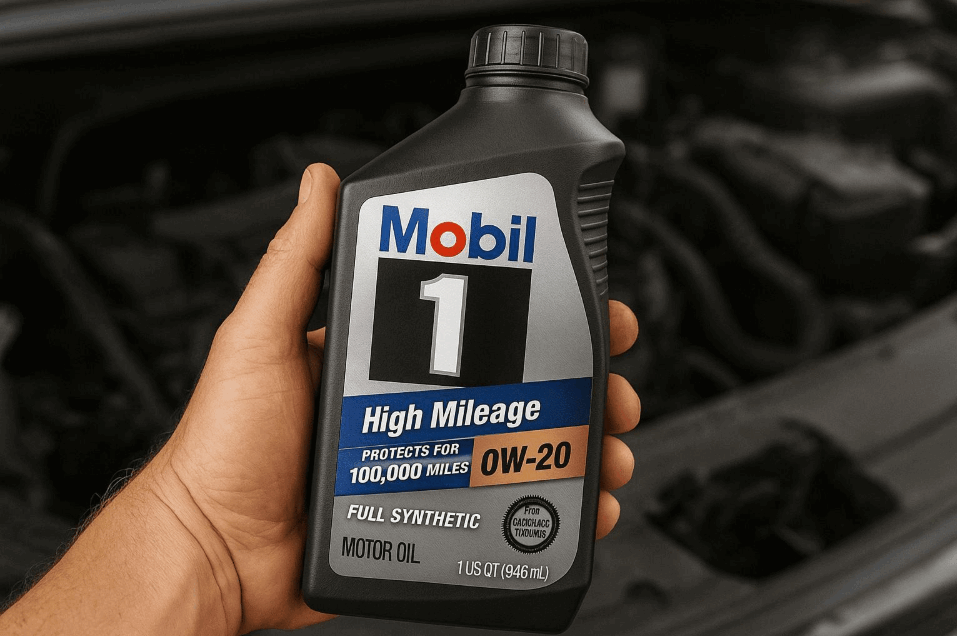
Is High Mileage Oil Worth It?
High mileage oil is worth the extra cost when an engine shows age-related wear that standard motor oil cannot address as effectively. Vehicles with minor oil leaks, increased oil consumption, or worn internal seals often benefit the most from a high mileage formula. If the engine remains clean, performs well, and consumes little oil, switching may provide only limited advantages.
High mileage oil contains a specialized additive package designed for aging engines. Seal conditioners help keep rubber seals flexible, reducing the risk of small oil leaks. Additional detergents remove deposits that accumulate over thousands of miles, while anti-wear additives strengthen the protective film between moving metal components. Together, these additives improve engine protection without changing how the engine operates.
The condition of the engine matters more than the number shown on the odometer. Some vehicles exceed 150,000 miles with excellent maintenance and show no signs of excessive wear. Others develop leaks or consume oil before reaching 75,000 miles because of severe driving conditions or inconsistent maintenance. Choosing engine oil based only on mileage often leads to unnecessary spending or missed maintenance opportunities.
High mileage oil also delivers better long-term value when it helps delay expensive repairs. Reducing oil consumption lowers the need for frequent top-offs, while minimizing small leaks helps keep the engine cleaner. These benefits cannot repair worn piston rings, damaged gaskets, or major mechanical failures, but they can slow the progression of normal engine aging.
For most drivers, high mileage oil is a worthwhile investment only when the engine shows clear symptoms of wear or the manufacturer approves its use. Evaluating the engine’s overall condition instead of relying on mileage alone leads to a more cost-effective and reliable maintenance decision.
What Is High Mileage Oil and How Does It Work?
High mileage oil is a motor oil formulated for engines that have accumulated significant wear over time. Most manufacturers recommend it for vehicles with more than 75,000 miles, although the actual need depends on engine condition rather than mileage alone. Its primary purpose is to protect aging engine components and address common problems that develop after years of regular use.
The biggest difference between high mileage oil and regular motor oil is its additive package. High mileage formulas contain seal conditioners that help maintain the flexibility of rubber seals and gaskets. They also include higher levels of detergents to remove harmful deposits and additional anti-wear additives that strengthen the protective oil film between moving engine parts. These features help older engines operate more efficiently under normal driving conditions.
High mileage oil also helps reduce the effects of long-term engine wear. As internal components age, small clearances become larger and seals gradually harden. These changes often lead to minor oil leaks or increased oil consumption. Seal conditioners reduce seal shrinkage, while the enhanced additive package improves lubrication and limits friction between worn metal surfaces. This combination helps maintain engine performance without changing the engine’s original design.
High mileage oil supports aging engines, but it does not repair mechanical damage. It cannot restore worn piston rings, replace damaged gaskets, or fix internal engine failures. Instead, it slows normal wear and helps aging components perform more effectively. Drivers should view high mileage oil as a preventive maintenance product rather than a mechanical solution. Choosing the correct viscosity and following the manufacturer’s specifications remain the most important factors for long-term engine reliability.
What Are the Benefits of High Mileage Oil?
High mileage oil provides additional protection for aging engines by reducing wear, limiting oil consumption, and helping prevent minor oil leaks. These benefits come from a specialized additive package instead of a different base oil. When used in the right engine, high mileage oil supports long-term reliability and helps maintain consistent performance.
One of its most valuable benefits is improved seal protection. Rubber seals naturally lose flexibility as they age, allowing small amounts of oil to escape. High mileage oil contains seal conditioners that help restore elasticity and reduce minor leaks. This protection also helps maintain proper oil pressure and reduces the need to add oil between scheduled oil changes.
High mileage oil also improves wear protection inside the engine. Enhanced anti-wear additives create a stronger lubricating film between moving components such as camshafts, bearings, and valve train parts. At the same time, additional detergents help remove sludge and deposits that build up over years of operation. A cleaner engine circulates oil more efficiently and reduces unnecessary friction during daily driving.
Another important advantage is lower oil consumption. Older engines often burn more oil because internal components gradually wear over time. High mileage oil helps reduce this problem by supporting seal performance and maintaining stable lubrication under high temperatures. Although it cannot eliminate excessive oil burning caused by serious mechanical damage, it often reduces oil loss in engines with normal age-related wear.
High mileage oil delivers the greatest value when it matches the engine’s actual condition. It helps aging engines stay cleaner, reduces the progression of normal wear, and supports consistent lubrication throughout the oil change interval. While it cannot replace mechanical repairs, it can extend the service life of a healthy engine and reduce maintenance costs over time.
What Are the Drawbacks of High Mileage Oil?
High mileage oil has limitations, and it is not the right solution for every engine. While it offers additional protection for aging vehicles, the extra additives provide little value if the engine remains in excellent condition. Drivers should evaluate the engine’s performance before deciding whether the higher price is justified.
The first drawback is the additional cost. High mileage oil usually costs more than conventional motor oil because it contains specialized additives. For an engine with no leaks, no unusual oil consumption, and a consistent maintenance history, those additives may deliver few noticeable benefits. In this situation, using the manufacturer-recommended oil often remains the most practical option.
High mileage oil also cannot solve mechanical problems. Many drivers expect it to stop heavy oil burning or repair damaged engine components. In reality, no motor oil can restore worn piston rings, cracked gaskets, or failed valve seals. The additives only support components that still function properly. If the engine has serious mechanical wear, professional repairs remain the only effective solution.
Another limitation is unrealistic expectations. Some vehicle owners switch to high mileage oil because the odometer reaches a specific number. However, mileage does not always reflect engine health. A well-maintained engine with 180,000 miles may require no changes, while a poorly maintained engine with fewer miles may already have significant wear. Choosing oil based only on mileage often leads to the wrong decision.
High mileage oil works best as preventive maintenance rather than a repair product. It helps manage normal engine aging, but it cannot reverse years of wear or replace proper servicing. Understanding these limitations allows drivers to choose the right oil with realistic expectations and avoid unnecessary maintenance costs.
Who Should Use High Mileage Oil?
High mileage oil is best suited for vehicles that show clear signs of normal engine aging rather than vehicles that simply have a high odometer reading. Many manufacturers recommend it after 75,000 miles, but mileage should serve as a guideline instead of a rule. The engine’s condition always provides a more reliable indicator.
Drivers who notice minor oil leaks, gradual oil consumption, or reduced engine smoothness often benefit the most from high mileage oil. These symptoms usually appear as rubber seals lose flexibility and internal engine components experience years of normal wear. The specialized additives in high mileage oil help support these aging parts and maintain more consistent lubrication between oil changes.
Vehicles that operate under demanding conditions may also benefit from a high mileage formula. Frequent stop-and-go traffic, towing heavy loads, long highway trips, and extreme temperatures place additional stress on engine components. Even if the vehicle has not reached 75,000 miles, these operating conditions can accelerate wear. In these situations, high mileage oil may provide extra protection when the manufacturer approves its use.
Not every older vehicle requires high mileage oil. An engine with a complete maintenance history, stable oil consumption, and no visible leaks may continue to perform well with the oil specified in the owner’s manual. Switching to high mileage oil simply because the vehicle reaches a certain mileage does not always improve performance or extend engine life. Following the manufacturer’s viscosity recommendation remains more important than choosing a specialized formula.
The best candidates for high mileage oil are engines that show mild wear but remain mechanically healthy. It supports aging components, helps reduce common age-related problems, and improves long-term protection. However, drivers should base their decision on the engine’s actual condition instead of relying only on the mileage displayed on the dashboard.
High Mileage Oil vs Regular Oil: Which Is Better?
High mileage oil offers better protection for aging engines, while regular motor oil remains the best choice for healthy engines that meet the manufacturer’s specifications. Neither option is universally better because each formula is designed for a different purpose. Choosing the correct oil depends on engine condition instead of vehicle age alone.
The biggest difference lies in the additive package. Regular motor oil focuses on lubrication, cleaning, and wear protection for engines in normal condition. High mileage oil contains the same core functions but adds seal conditioners, enhanced detergents, and extra anti-wear additives. These additions help reduce minor oil leaks and support engine components that have experienced years of mechanical wear.
Wear protection also differs between the two products. As engines age, internal clearances gradually increase and lubrication becomes more demanding. High mileage oil forms a stronger protective film that helps reduce friction between moving parts. Regular motor oil continues to protect the engine effectively, but it does not provide the same level of support for worn seals or aging components.
Long-term maintenance costs should also be considered. High mileage oil typically costs more than regular motor oil, but it may reduce oil consumption and slow the development of minor leaks. These benefits can lower maintenance expenses for older vehicles that remain mechanically sound. In contrast, drivers of newer vehicles may spend more without receiving meaningful performance improvements.
High mileage oil is the better choice for engines that show normal signs of aging, while regular motor oil remains the right option for engines in good condition. The most important decision is to use the correct viscosity and select an oil that meets the manufacturer’s specifications. Matching the oil to the engine’s actual condition provides better protection than choosing a product based only on mileage.
High Mileage Oil vs Full Synthetic Oil
High mileage oil and full synthetic oil are not competing products because they solve different problems. Full synthetic oil focuses on maximum lubrication and performance, while high mileage oil targets the needs of aging engines. Some products combine both technologies to deliver advanced protection for high-mileage vehicles.
Full synthetic oil uses high-quality base oils that resist heat, oxidation, and viscosity breakdown more effectively than conventional oil. It performs well in extreme temperatures and provides excellent protection during cold starts, heavy loads, and extended driving. These characteristics make it the preferred choice for many modern engines, especially those equipped with turbochargers or advanced fuel injection systems.
High mileage oil places greater emphasis on engine condition. Its specialized additives help condition aging seals, reduce minor oil leaks, and improve wear protection for components that have experienced years of operation. Many manufacturers also produce full synthetic high mileage oil, combining the durability of synthetic base oils with additives designed for older engines. This option offers the advantages of both formulations without sacrificing protection.
Choosing between the two depends on the vehicle rather than the mileage alone. A newer vehicle that operates under severe driving conditions often benefits most from full synthetic oil. An older engine with minor leaks or increased oil consumption usually gains additional protection from a high mileage formula. When both conditions apply, full synthetic high mileage oil often provides the most balanced solution.
The best motor oil is the one that matches both the manufacturer’s specifications and the engine’s current condition. Drivers should confirm the correct viscosity, API certification, and OEM approval before changing oil types. Selecting the appropriate formulation improves engine protection and supports reliable performance throughout the recommended oil change interval.
How Do You Choose the Best High Mileage Oil?
Choosing the right high mileage oil depends on your engine’s condition, the manufacturer’s specifications, and your driving habits. Many drivers focus only on mileage, but the correct viscosity and oil certification have a greater impact on engine protection. Selecting the wrong product can reduce performance and shorten engine life, even if it is labeled as a high mileage formula.
Start by checking the viscosity grade recommended in the owner’s manual. Manufacturers design each engine to operate with a specific oil viscosity, such as 5W-30 or 0W-20. Using the correct viscosity ensures proper lubrication during cold starts and maintains a stable protective film when the engine reaches normal operating temperature. High mileage oil should always match these specifications unless the manufacturer recommends otherwise.
Next, verify that the oil meets the required API and OEM standards. Certifications confirm that the oil has passed industry performance tests for wear protection, oxidation resistance, sludge control, and fuel economy. Choosing a product that meets the manufacturer’s requirements provides greater confidence than relying on marketing claims alone.
You should also consider the engine’s overall condition before selecting a formula. An engine with minor oil leaks or increased oil consumption often benefits from a full synthetic high mileage oil because it combines advanced base oils with specialized additives. An engine that remains clean and operates normally may continue performing well with the standard oil recommended by the manufacturer. The goal is to match the oil to the engine’s actual needs rather than its age.
The best high mileage oil is the one that meets the manufacturer’s specifications and addresses the engine’s current condition. A careful selection improves lubrication, supports aging components, and helps maintain reliable performance throughout every oil change interval.
Frequently Asked Questions
Is high mileage oil worth it after 100,000 miles?
Yes, it can be worth using after 100,000 miles if the engine shows normal signs of aging. Minor oil leaks, increased oil consumption, and gradual wear are common at this stage. However, mileage alone should never determine your decision. A well-maintained engine may continue to perform well with the oil recommended by the manufacturer.
Can high mileage oil stop oil burning?
No, high mileage oil cannot stop oil burning caused by serious mechanical problems. It may reduce mild oil consumption by improving seal performance and maintaining stable lubrication. However, worn piston rings, damaged valve seals, or other internal engine failures require mechanical repairs instead of a different motor oil.
Can you switch back to regular oil?
Yes, you can switch back to regular motor oil if the new oil meets the manufacturer’s viscosity and performance requirements. High mileage oil does not permanently change the engine or prevent future oil changes. Drivers often change oil types as vehicle conditions or maintenance needs evolve.
Can you mix high mileage oil with regular oil?
Yes, both oils are generally compatible when they share the same viscosity grade and meet the required industry specifications. Mixing them occasionally does not usually harm the engine. However, using one complete formula throughout the oil change interval provides more consistent performance and additive protection.
How often should high mileage oil be changed?
High mileage oil should be changed according to the interval recommended by the vehicle manufacturer or the oil producer. Driving conditions, engine condition, climate, and oil type all influence the correct schedule. Following the maintenance manual and checking the oil level regularly remain the most reliable ways to protect engine performance.
Conclusion
High mileage oil is worth the investment when an aging engine needs additional protection, but it is not a universal solution for every high-mileage vehicle. Its specialized additives help reduce minor oil leaks, limit oil consumption, and improve wear protection for engines that remain mechanically sound. These benefits support long-term reliability, but they cannot repair worn internal components or replace proper maintenance.
The most important factor is the engine’s condition rather than the number displayed on the odometer. A well-maintained engine with high mileage may continue to perform efficiently with the manufacturer’s recommended oil, while another vehicle with fewer miles may benefit from a high mileage formula because of demanding driving conditions or normal age-related wear. Evaluating symptoms instead of relying only on mileage leads to a more informed maintenance decision.
Selecting the correct viscosity, verifying API and OEM approvals, and following the recommended oil change interval remain essential for engine longevity. Choosing the right motor oil based on actual engine condition instead of marketing claims helps maximize performance, reduce maintenance costs, and extend engine life over the long term.