Many drivers ask one simple question before buying engine oil: Who makes Kirkland Motor Oil? Costco sells this full synthetic oil at a much lower price than many premium brands. As a result, many vehicle owners wonder who manufactures it and whether it delivers reliable engine protection.
Kirkland Motor Oil has become a popular choice for drivers who want quality synthetic oil without paying a premium price. However, Costco does not prominently identify the manufacturer on the label. This creates confusion about the product’s origin and overall quality. It also raises questions about whether the oil meets the same standards as leading brands.
The manufacturer is only one part of the buying decision. Industry certifications, oil specifications, and performance tests often reveal far more about engine protection than the brand name alone. Drivers should evaluate these factors before choosing any motor oil.
This guide explains who makes Kirkland Motor Oil and how Costco sources its private-label products. It also examines the oil’s quality standards, certifications, and real-world performance. Finally, you will learn how Kirkland Motor Oil compares with brands such as Mobil 1, Pennzoil, Valvoline, and Castrol. By the end of this article, you will know whether it is the right oil for your vehicle.
Who Makes Kirkland Motor Oil?
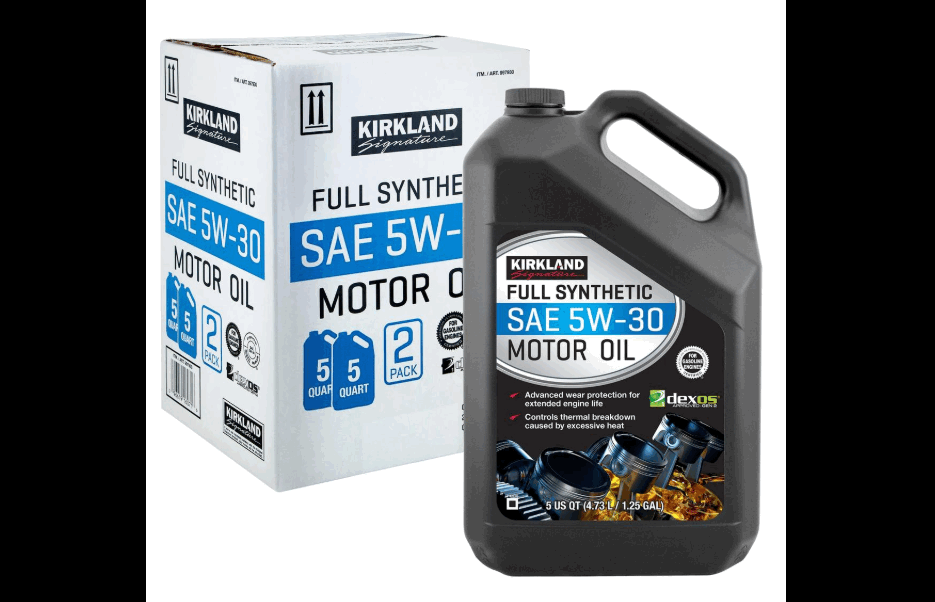
Kirkland Motor Oil is a private-label engine oil that Costco sells under its Kirkland Signature brand. Costco does not publicly identify the manufacturer on the product label. However, industry evidence and product documentation indicate that Warren Distribution has manufactured many Kirkland Motor Oil products sold in the United States. Like many private-label products, the manufacturing partner may change over time as Costco negotiates new supply agreements or expands production capacity.
Costco follows a private-label business model instead of operating its own oil refinery or lubricant blending facilities. The company works with established lubricant manufacturers that already produce engine oils for well-known automotive brands. This approach allows Costco to offer a full synthetic motor oil at a competitive price while maintaining consistent product quality. The retailer focuses on supplier selection, product specifications, and quality assurance rather than manufacturing the oil itself.
The manufacturer plays an important role, but it should not be the only factor when evaluating engine oil. Reputable lubricant companies follow strict production processes, quality control procedures, and industry certification requirements regardless of the brand printed on the bottle. For this reason, two different brands can offer similar levels of engine protection even when they have different labels and pricing strategies.
Kirkland Motor Oil must also satisfy the technical requirements specified by Costco before it reaches store shelves. These requirements include compliance with current API service categories, viscosity specifications, and performance standards for modern gasoline engines. Meeting these standards demonstrates that the oil has passed recognized industry testing rather than relying solely on the reputation of its manufacturer.
For most vehicle owners, the better question is not simply who makes Kirkland Motor Oil. A more useful question is whether the oil meets the specifications recommended by the vehicle manufacturer. If the viscosity grade and industry certifications match your owner’s manual, the oil can provide reliable lubrication, engine cleanliness, wear protection, and temperature stability for everyday driving.
Is Kirkland Motor Oil a Private Label Product?
Yes, Kirkland Motor Oil is a private-label product sold exclusively under the Kirkland Signature brand. Costco owns the brand but does not manufacture the oil. Instead, it partners with experienced lubricant producers that formulate and package the product according to Costco’s technical requirements. This business model allows the retailer to deliver consistent quality while keeping prices lower than many national brands.
Private-label motor oil follows the same production process as many branded lubricants. The manufacturer blends high-quality base oils with additive packages that improve wear protection, oxidation resistance, sludge control, and temperature stability. After blending, the oil undergoes testing to verify that it meets the required industry specifications before it reaches consumers. The difference is that the finished product carries Costco’s brand instead of the manufacturer’s name.
Many drivers assume that private-label products offer lower quality than well-known brands. In reality, product quality depends on the formulation and certifications rather than the label on the bottle. A private-label motor oil can deliver reliable performance when it satisfies current API and ILSAC requirements. For this reason, many automotive retailers, warehouse clubs, and national chains use the same manufacturing model for their own engine oils.
Costco also reduces costs through its business strategy instead of lowering product quality. The company sells a limited selection of automotive products, purchases large volumes, and operates with relatively low marketing expenses. These advantages allow Costco to offer competitive pricing while maintaining products that meet modern engine requirements. Customers often pay less because of Costco’s efficient retail model rather than because the oil contains lower-quality ingredients.
Understanding the private-label model helps explain why the manufacturer receives less attention than the product specifications. Drivers should focus on viscosity grade, industry certifications, and vehicle compatibility before making a purchase. These factors have a greater impact on engine performance and long-term protection than the name of the company that blended the oil.
What Quality Standards Does Kirkland Motor Oil Meet?
Kirkland Motor Oil meets several recognized industry standards that verify its performance and compatibility with modern gasoline engines. The exact certifications may vary by viscosity grade and product generation, but many Kirkland Full Synthetic oils carry the latest API and ILSAC approvals. These certifications confirm that the oil has passed standardized laboratory and engine tests before reaching consumers.
One of the most important certifications is the American Petroleum Institute, commonly known as API. Current Kirkland Full Synthetic products typically meet the API SP service category, which supports modern engines by reducing wear, preventing low-speed pre-ignition, and minimizing sludge formation. API SP also improves oxidation resistance and helps engines maintain stable performance during extended service intervals.
Kirkland Motor Oil also meets ILSAC GF-6 standards for many viscosity grades. This specification focuses on fuel economy, timing chain protection, piston cleanliness, and engine durability. Oils that satisfy ILSAC GF-6 requirements help manufacturers improve engine efficiency while maintaining reliable protection under normal driving conditions. These benefits make the oil suitable for many late-model passenger vehicles.
Another important factor is viscosity. Kirkland Motor Oil is available in common SAE grades such as 0W-20, 5W-20, and 5W-30. Each viscosity grade performs differently under cold starts and high operating temperatures. Drivers should always select the viscosity recommended by the vehicle manufacturer because using the correct grade has a greater impact on engine protection than choosing a particular oil brand.
Industry certifications provide a more reliable measure of quality than the manufacturer’s name alone. An engine oil that meets the correct API, ILSAC, and vehicle manufacturer specifications can deliver dependable lubrication, thermal stability, deposit control, and wear protection throughout the recommended oil change interval. For most drivers, matching these specifications with the owner’s manual remains the safest way to choose the right motor oil.
How Does Kirkland Motor Oil Compare With Major Brands?
Kirkland Motor Oil competes well with several leading full synthetic motor oils, especially for everyday driving. It meets the same core industry certifications as many premium brands, including API SP and ILSAC GF-6. This means it satisfies the minimum performance requirements for wear protection, engine cleanliness, oxidation resistance, and fuel efficiency. The biggest difference often comes down to formulation, additive technology, and long-term performance under demanding conditions.
Mobil 1 is widely recognized for its advanced synthetic base oils and premium additive package. It performs exceptionally well in extreme temperatures, extended oil change intervals, and high-performance engines. Many Mobil 1 products also carry a broader range of OEM approvals from manufacturers such as General Motors, Mercedes-Benz, Porsche, and Volkswagen. These additional approvals make Mobil 1 a stronger choice for vehicles that require manufacturer-specific specifications.
Pennzoil Platinum and Castrol EDGE also target drivers who demand maximum engine protection. Pennzoil Platinum uses natural gas-based base oils to improve cleanliness and reduce engine deposits. Castrol EDGE focuses on high-film strength to protect engine components under heavy loads and high temperatures. Both brands invest heavily in research and product development, which supports their reputation in performance applications.
Kirkland Motor Oil offers a different value proposition. It provides the certifications and protection required by most modern passenger vehicles while maintaining a significantly lower purchase price. For drivers who follow the recommended oil change interval and use the correct viscosity grade, the real-world performance difference may be small during normal commuting and highway driving. Many vehicle owners choose Kirkland because it delivers dependable protection without the premium cost.
Price remains one of Kirkland Motor Oil’s strongest advantages. Costco’s private-label business model reduces marketing and distribution expenses, allowing the company to sell a certified full synthetic oil at a competitive price. Drivers who prioritize value, routine maintenance, and manufacturer-recommended service intervals often find Kirkland Motor Oil to be a practical alternative to more expensive national brands.
Is Kirkland Motor Oil Good for Your Engine?
Yes, Kirkland Motor Oil is a good choice for many modern gasoline engines when you use the correct viscosity grade and follow the vehicle manufacturer’s maintenance schedule. Its API and ILSAC certifications confirm that it meets current industry requirements for wear protection, engine cleanliness, oxidation resistance, and fuel economy. These certifications provide greater confidence than the brand name alone because they are based on standardized performance testing.
Kirkland Full Synthetic Motor Oil performs well during everyday driving conditions. It creates a protective lubricating film that reduces friction between moving engine parts and helps prevent premature wear. The oil also resists thermal breakdown at high operating temperatures and flows quickly during cold starts. These characteristics help protect critical engine components throughout normal commuting, highway travel, and seasonal temperature changes.
Drivers with naturally aspirated engines, family vehicles, pickup trucks, and daily commuters are likely to benefit the most from Kirkland Motor Oil. When the oil matches the viscosity grade and specifications listed in the owner’s manual, it can provide reliable performance throughout the recommended oil change interval. Regular oil changes and proper maintenance have a greater impact on engine life than switching between certified full synthetic brands.
Some driving situations may require a different approach. High-performance sports cars, vehicles used for towing heavy loads, and engines operated under severe conditions often benefit from oils that carry additional OEM approvals or support extended drain intervals. Premium brands may offer specialized formulations for these applications. However, this does not mean Kirkland Motor Oil is unsuitable. It simply means drivers should choose an oil that meets the exact requirements of their vehicle and driving conditions.
The most important factor is compatibility rather than popularity. An engine oil that matches the recommended viscosity grade, API service category, and manufacturer specifications can protect the engine effectively regardless of whether it carries a premium brand name or a private-label label. For most drivers, Kirkland Motor Oil offers a dependable combination of quality, certified performance, and overall value.
Should You Buy Kirkland Motor Oil?
Kirkland Motor Oil is worth buying if your vehicle requires a full synthetic oil that meets its recommended specifications. It combines recognized industry certifications with a competitive price, making it an attractive option for drivers who want reliable engine protection without paying for a premium brand. For many passenger vehicles, it delivers the performance needed for routine maintenance and everyday driving.
One of Kirkland Motor Oil’s biggest advantages is its value. Costco sells the oil in multi-quart packages at a lower cost than many competing brands. Despite the lower price, the oil still meets important standards such as API SP and ILSAC GF-6 for many formulations. This combination allows drivers to reduce maintenance costs while using an engine oil that satisfies current industry requirements.
Kirkland Motor Oil is an excellent choice for daily commuters, family SUVs, light-duty pickup trucks, and many modern gasoline-powered vehicles. Drivers who change their oil at the recommended interval are unlikely to notice a significant difference in everyday performance compared with many premium full synthetic oils. The oil provides dependable lubrication, helps control engine deposits, and protects critical engine components under normal operating conditions.
However, every vehicle has different requirements. Some luxury brands and high-performance engines require motor oils with manufacturer-specific approvals, such as GM dexos, Mercedes-Benz, BMW Longlife, or Volkswagen standards. In these situations, drivers should always follow the owner’s manual instead of choosing an oil based on price alone. Using the correct specification is more important than selecting a familiar brand name.
The final decision should depend on your vehicle’s recommended specifications, driving habits, and maintenance schedule. If Kirkland Motor Oil matches the required viscosity grade and certifications listed by the vehicle manufacturer, it offers an excellent balance of quality, protection, and affordability. For most drivers, it represents one of the best values in the full synthetic motor oil market.
Conclusion
The answer to “Who makes Kirkland Motor Oil?” is only part of the story. Industry evidence indicates that established lubricant manufacturers have produced Kirkland Motor Oil for Costco under private-label agreements. More importantly, the oil is formulated to meet recognized industry standards that support modern engine performance and long-term reliability.
When choosing motor oil, focus on the specifications that matter most. Check the recommended viscosity grade, verify the required API and ILSAC certifications, and confirm whether your vehicle requires additional OEM approvals. These factors have a greater impact on engine protection than the company that blends the oil.
For most everyday drivers, Kirkland Motor Oil delivers a strong combination of certified quality, dependable performance, and outstanding value. When it matches your vehicle’s requirements, it can serve as a practical alternative to many higher-priced full synthetic motor oils while helping maintain reliable engine performance throughout the recommended service interval.