How to Keep Your Car Cool in Summer: 10 Effective Ways
Keeping your car cool in summer requires reducing direct sunlight, limiting heat buildup inside the cabin, improving ventilation, and using the air conditioning system efficiently. Parking in the shade, installing a reflective windshield sunshade, ventilating the cabin before driving, and maintaining the AC system are effective ways to reduce interior heat and improve driving comfort during hot weather.
A parked car heats up because solar radiation passes through its windows and is absorbed by interior surfaces, including the dashboard, seats, and steering wheel. These surfaces transfer heat to the surrounding air, causing cabin temperatures to rise above the outdoor temperature. Research published in Pediatrics found that parked vehicles can experience substantial temperature increases within the first 30 minutes of sun exposure, even when outside temperatures are relatively mild.
Preventing heat buildup is more effective than relying entirely on air conditioning after entering a hot vehicle. Reflective sunshades and shaded parking reduce incoming solar energy, while proper ventilation helps release accumulated hot air. An efficiently operating AC system then removes heat from the cabin to maintain a comfortable temperature while driving.
This guide explains 10 practical ways to keep your car cool in summer, including parking strategies, sun protection, cabin ventilation, air conditioning techniques, and preventive maintenance. It also covers the causes of vehicle heat buildup and essential safety precautions during extreme temperatures.
How Can You Keep Your Car Cool in Summer?
The most effective way to keep your car cool in summer is to reduce solar heat entering the cabin, prevent interior surfaces from absorbing excessive heat, and remove accumulated hot air before driving. Combining shaded parking, reflective sunshades, proper ventilation, and efficient air conditioning provides better temperature control than relying on a single cooling method. Each technique addresses a different part of the heat buildup process.
Direct sunlight is a major source of heat inside a parked vehicle. Solar radiation passes through the windshield and side windows, where it is absorbed by the dashboard, seats, steering wheel, and other interior surfaces. As these materials become hotter, they transfer heat to the surrounding air. Parking in a shaded location and using reflective window protection reduce the amount of solar energy reaching these surfaces, helping limit the temperature increase while the vehicle is parked.
Ventilation and air conditioning serve different purposes in maintaining a comfortable cabin. Ventilation allows hot interior air to escape and be replaced by outside air, which is especially useful when the cabin temperature exceeds the outdoor temperature. Air conditioning actively removes heat and moisture from the cabin air, making it essential for sustained cooling while driving. Opening the windows briefly before activating the AC system can help release trapped heat, while switching to recirculation mode after the cabin begins cooling reduces the amount of hot outside air entering the vehicle.
Interior protection also contributes to summer comfort. Windshield sunshades, properly fitted window covers, and suitable seat coverings reduce direct exposure to sunlight and limit how hot frequently touched surfaces become. Maintaining the cabin air filter and addressing air conditioning problems helps preserve airflow and cooling performance. Together, these measures reduce heat exposure while parked and make it easier to reach a comfortable cabin temperature after starting the vehicle.
How Does Parking in the Shade Keep Your Car Cooler?
Parking in the shade helps keep your car cooler by reducing the direct solar radiation reaching its windows, roof, and exterior panels. When sunlight strikes a vehicle, part of its energy is absorbed by the body and interior surfaces, increasing their temperature. Shaded parking interrupts much of this direct exposure, reducing the heat transferred into the cabin and limiting how quickly the interior warms up.
Covered parking structures, garages, and carports provide consistent protection because they block direct sunlight across a substantial portion of the vehicle. Trees and nearby buildings can also provide useful shade, although their effectiveness changes as the sun moves throughout the day. A parking space shaded in the morning may receive direct sunlight during the afternoon, when outdoor temperatures are higher. Choosing a location that remains shaded during the expected parking period provides more reliable heat protection.
Shade is particularly useful for protecting the dashboard, steering wheel, and seats from prolonged solar exposure. These surfaces can become uncomfortable to touch after extended parking in direct sunlight, even when the outside air temperature is moderate. Reducing sunlight exposure limits surface heating and helps decrease the amount of heat that must be removed when the air conditioning system starts operating.
However, shaded parking does not prevent a vehicle from becoming dangerously hot. The cabin can still warm as outdoor temperatures rise, and heat can enter through the vehicle body and surrounding air. For this reason, shade should be treated as a heat-reduction method rather than a way to maintain a safe temperature inside an unattended vehicle. Combining shaded parking with a reflective windshield sunshade provides additional protection against solar heat entering through exposed glass.
Read more: how to remove rust from car frame
How Does a Windshield Sunshade Keep Your Car Cool?
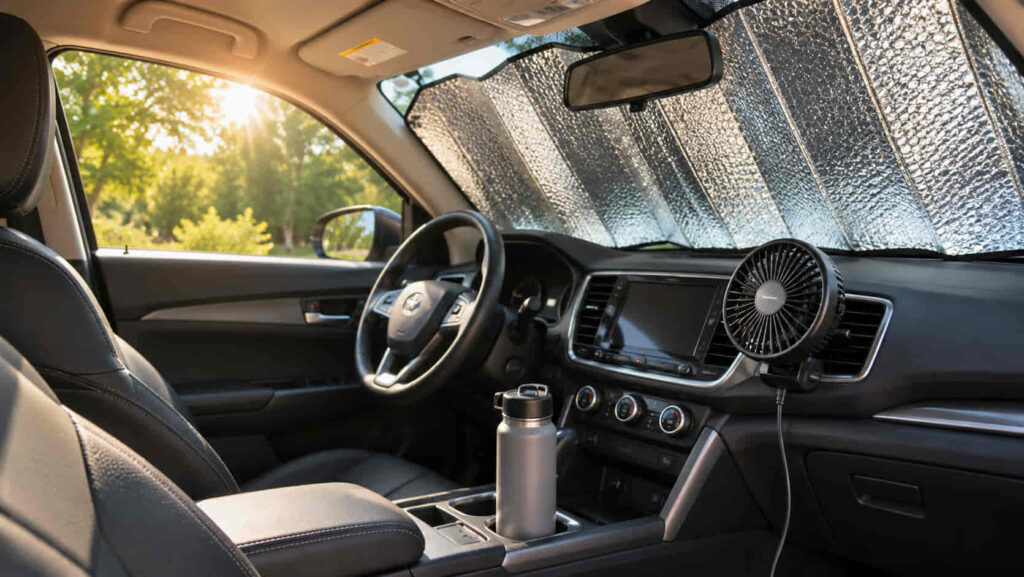
A windshield sunshade helps keep your car cool by reflecting incoming sunlight away from the cabin and reducing the amount of solar energy absorbed by interior surfaces. When a vehicle is parked in direct sunlight, solar radiation passes through the windshield and heats the dashboard, steering wheel, front seats, and other exposed materials. A properly fitted reflective sunshade reduces this exposure, helping limit surface temperatures and the heat transferred into the surrounding cabin air.
Reflective sunshades typically use a metallic or light-colored surface designed to redirect part of the incoming solar radiation. Their effectiveness depends on material reflectivity, windshield coverage, and how closely the shade fits against the glass. A sunshade that covers most of the windshield provides more consistent protection than one that leaves large gaps around the edges. For effective use, position the reflective surface toward the windshield and secure the shade according to the manufacturer’s instructions. This helps block sunlight before it reaches heat-absorbing interior components.
Windshield sunshades are particularly useful for reducing heat exposure on the dashboard and steering wheel. These surfaces receive substantial sunlight through the front glass and can become uncomfortable to touch after prolonged parking. Limiting their exposure improves comfort when entering the vehicle and reduces the amount of stored heat released into the cabin. A reflective shade can also help protect interior materials from prolonged sunlight exposure, although the level of protection depends on the product’s construction and the vehicle’s existing glass.
However, a windshield sunshade reduces heat gain rather than actively cooling the cabin. Heat can still enter through side windows, the roof, and the vehicle body, while the interior continues to exchange heat with the surrounding environment. A sunshade cannot maintain a safe temperature inside a parked vehicle during hot weather. For better heat control, combine windshield protection with shaded parking and other appropriate measures that reduce direct sunlight exposure.
Does Cracking Car Windows Help Keep the Interior Cool?
Cracking car windows can reduce heat buildup in a parked vehicle by allowing some hot cabin air to escape, but the cooling effect is limited and depends on outdoor temperature, airflow, and window opening size. When sunlight heats the cabin, the interior air can become considerably warmer than the surrounding environment. A partially opened window provides a path for air exchange, allowing some of that accumulated heat to leave the vehicle.
Natural ventilation works through air movement caused by wind and temperature differences. When outdoor air moves across a window opening, it can help replace warmer cabin air with air from outside. However, a small opening does not guarantee sufficient circulation, especially when the vehicle is parked in a sheltered location with little wind. As the cabin temperature approaches the outdoor temperature, passive ventilation also becomes less effective because the temperature difference driving heat exchange decreases.
The practical benefit of cracking windows must be balanced against security and weather exposure. Leaving windows partially open can create opportunities for theft and allow rain, dust, or insects to enter the cabin. Drivers should consider local conditions and avoid leaving openings that compromise vehicle security. If the vehicle is parked in a public location or unattended for an extended period, reflective sun protection and shaded parking are generally more practical ways to reduce direct heat exposure without leaving the cabin accessible.
Partially opened windows do not make a parked car safe for children or pets. Solar radiation continues heating interior surfaces even when limited ventilation is available, and cabin temperatures can still reach dangerous levels. The same limitation applies to shaded parking and windshield sunshades. These measures improve heat management but cannot replace active supervision or appropriate climate control. Children and pets should never be left unattended in a parked vehicle during hot weather, regardless of whether the windows are slightly open.
How Can You Cool Down a Hot Car Quickly Before Driving?
The fastest practical way to cool down a hot car before driving is to release trapped cabin heat, start the air conditioning system, and switch to recirculation once the interior air becomes cooler than the outside air. This approach combines ventilation with active cooling, reducing the amount of accumulated heat the AC system must remove.
When a vehicle sits in direct sunlight, the dashboard, seats, and other interior surfaces absorb solar energy and transfer heat to the surrounding air. As a result, the cabin can become considerably hotter than the outdoor environment. Opening the doors or windows briefly allows some of this overheated air to escape and be replaced by cooler outside air. This initial air exchange is particularly useful when the vehicle has been parked in the sun for an extended period.
After releasing the hottest air, start the engine and activate the air conditioning system according to the vehicle manufacturer’s instructions. Select a comfortable temperature and use a higher fan setting initially to circulate cooled air throughout the cabin. If the interior remains substantially hotter than the outside air, allowing fresh outside air to enter briefly can help remove residual heat. Once the cabin begins cooling and its air temperature falls below the outdoor temperature, switching to recirculation mode reduces the amount of hot outside air entering the system.
Recirculation improves cooling efficiency by repeatedly passing already-cooled cabin air through the AC evaporator. This reduces the cooling demand compared with continuously drawing in hotter outside air. However, the best settings depend on the vehicle’s climate-control system, humidity, and passenger comfort. Automatic climate-control systems may manage airflow and recirculation without manual adjustments.
The vehicle should be ventilated and cooled while parked safely or during normal driving, not while idling unnecessarily in an enclosed garage. Never operate the engine in a closed or poorly ventilated space because exhaust gases can accumulate and create a serious carbon monoxide hazard.
How Should You Use Your Car’s Air Conditioning in Summer?
To use your car’s air conditioning efficiently in summer, remove excess cabin heat first, select an appropriate temperature, and use recirculation mode when the cabin air is cooler than the outside air. The AC system removes heat and moisture from the air passing through its evaporator, helping maintain a comfortable interior even when outdoor temperatures are high.
Automotive air conditioning works by circulating refrigerant through a closed system that includes the compressor, condenser, expansion device, and evaporator. The evaporator absorbs heat from the cabin airflow, while the condenser releases that heat outside the vehicle. The blower then distributes cooled air through the dashboard vents. Because the system transfers heat rather than simply producing cold air, its performance depends on airflow, refrigerant conditions, and the temperature difference between the cabin and the surrounding environment.
Fan speed and temperature settings influence how quickly occupants experience cooling. A higher fan setting initially moves more air through the cabin and helps distribute cooled air across hot interior surfaces. Once the desired temperature is reached, reducing fan speed can improve comfort and lower cabin noise. In vehicles with automatic climate control, selecting a reasonable target temperature and allowing the system to regulate airflow is generally more effective than repeatedly changing the controls. Setting the lowest possible temperature does not necessarily make an automatic system cool the cabin faster when it is already operating at maximum cooling capacity.
Air recirculation is especially useful during hot weather because it limits the amount of warm outside air entering the cabin. However, fresh-air operation may be appropriate when ventilation is needed, windows are fogging, or the manufacturer recommends a different setting. Directing airflow toward the upper body can provide immediate comfort, while keeping vents unobstructed helps distribute cooled air effectively.
Efficient AC operation also depends on the condition of the cooling system. Restricted airflow, a dirty cabin air filter, condenser problems, or an incorrect refrigerant charge can reduce cooling performance. If the vents continue blowing warm air or cooling becomes inconsistent, the system should be inspected rather than assuming that changing the temperature setting will resolve the problem.
How Do You Keep Your Car’s AC System Cooling Efficiently?
Keeping your car’s air conditioning system cooling efficiently requires maintaining unrestricted airflow, ensuring the refrigeration components operate correctly, and addressing cooling problems before they worsen. A properly functioning AC system removes heat from cabin air and releases it outside the vehicle. When airflow becomes restricted or a refrigeration component develops a fault, the system may take longer to cool the interior or fail to maintain a comfortable temperature during hot weather.
The cabin air filter is an important maintenance component because it captures dust, pollen, and airborne debris before air enters the passenger compartment. As the filter accumulates contaminants, airflow through the ventilation system can decrease. Reduced airflow limits the volume of conditioned air reaching the cabin, even when the AC system is producing sufficiently cold air. Inspecting and replacing the cabin air filter according to the manufacturer’s maintenance schedule helps preserve ventilation performance. Vehicles operated on dusty roads may require more frequent inspections.
The condenser and cooling fans also influence air conditioning performance. The condenser releases heat absorbed from the cabin into the outside environment, while airflow across its surface supports this heat transfer. Road debris, damaged condenser fins, or malfunctioning cooling fans can reduce heat rejection, particularly when the vehicle is stationary or moving slowly. A vehicle that cools adequately at highway speeds but struggles in traffic may have a condenser airflow problem, although professional diagnosis is necessary to identify the actual cause.
Refrigerant should not require routine refilling in a properly sealed AC system. An insufficient refrigerant charge generally indicates a leak or another service issue, while overcharging can also impair performance and damage components. If the air conditioner blows warm air, produces inconsistent temperatures, or stops cooling effectively, a qualified technician should inspect the system using the manufacturer’s diagnostic procedures. Maintaining the correct refrigerant charge and repairing defective components helps restore reliable cooling without unnecessary servicing.
How Can You Keep Car Seats and the Steering Wheel Cool in Summer?
You can keep car seats and the steering wheel cooler in summer by reducing their exposure to direct sunlight and using suitable protective coverings while the vehicle is parked. These interior components absorb solar energy through the windshield and side windows, causing their surface temperatures to rise. Because seats and steering wheels come into direct contact with occupants, excessive surface heat can make entering and driving a parked vehicle uncomfortable.
A reflective windshield sunshade helps protect the steering wheel, dashboard, and front seating area by reducing the sunlight reaching these surfaces. Its effectiveness depends on windshield coverage and the direction of sunlight. When the sun enters through a side window, a properly fitted side-window shade used while parked can provide additional protection. Covering exposed surfaces before leaving the vehicle also limits direct solar heating, although the material and color of the covering influence how much heat it absorbs.
Seat materials affect how heat is experienced by occupants. Leather, vinyl, and fabric upholstery differ in their thermal properties, surface textures, and response to sunlight. Dark-colored surfaces absorb a greater proportion of visible solar radiation than comparable light-colored surfaces, but actual seat temperatures also depend on material construction and exposure conditions. A suitable light-colored seat covering can reduce direct sunlight exposure and make the seating surface more comfortable when returning to the vehicle.
Protective accessories must not interfere with vehicle safety systems. Seat covers should be compatible with the vehicle’s seat-mounted side airbags, and steering wheel accessories must not reduce grip or obstruct controls. Temporary steering wheel coverings intended only for sun protection should be removed before driving if they are not designed for use while operating the vehicle. After entering a hot car, allowing the air conditioning system to circulate cooled air across the seating area further improves comfort.
Reducing surface heat is different from lowering the temperature of the entire cabin. Seat coverings and steering wheel protection primarily limit heat absorption by specific components, while shaded parking, ventilation, and air conditioning address the broader cabin environment. Combining these methods improves comfort without relying on interior accessories as the primary cooling solution.
Can Car Window Covers Reduce Heat Inside a Parked Car?
Car window covers can reduce heat buildup inside a parked vehicle by blocking or reflecting sunlight before it reaches the seats, door panels, and other interior surfaces. Their effectiveness depends on the material, coverage area, and direction of sunlight. Reflective covers that fit closely against the glass provide more consistent solar protection than coverings that leave substantial portions of the window exposed.
Side windows allow sunlight to enter the cabin from different angles throughout the day. When this radiation strikes interior materials, part of its energy is absorbed and converted into heat. The warmed surfaces then transfer heat to the surrounding air, contributing to the cabin temperature increase. Installing suitable side-window covers while parked reduces direct exposure and limits the amount of solar energy absorbed by these components.
Reflective window covers are designed to redirect part of the incoming solar radiation, while ordinary fabric coverings primarily block visible sunlight. A dark fabric shade may prevent direct sunlight from reaching a seat but can absorb considerable heat itself. Its overall cooling performance therefore depends on its material properties and how heat is transferred from the covering into the cabin. External reflective covers can intercept sunlight before it passes through the glass, although they must be secured properly to prevent movement or damage.
Window covers are most useful when they protect glass surfaces exposed to direct sunlight. However, they do not actively cool the air or prevent heat from entering through the vehicle body. Any cover that obstructs the driver’s view or interferes with vehicle controls must be removed before driving. Using window covers together with shaded parking and windshield protection provides broader solar coverage without treating any single accessory as a complete cooling solution.
How Can You Reduce Heat Buildup in Your Car During Summer Parking?
Reducing heat buildup during summer parking requires limiting solar energy entering the vehicle, minimizing heat absorption by interior surfaces, and managing ventilation when conditions permit. The most effective approach combines appropriate parking location with protection for exposed glass and interior materials. These measures reduce heat gain while the vehicle is stationary, making the cabin more comfortable when the driver returns.
The amount of heat entering a parked vehicle depends on sunlight intensity, exposure duration, window orientation, and the thermal properties of the vehicle’s materials. Direct sunlight entering through uncovered glass can heat seats, the dashboard, and interior trim even when other parts of the vehicle remain shaded. For this reason, protection should account for the direction of sunlight during the expected parking period rather than focusing exclusively on the windshield.
A practical example is a vehicle parked outdoors for several hours during the afternoon. Positioning it beneath a suitable shade structure reduces direct sunlight reaching the body and windows. A reflective windshield sunshade limits additional solar exposure at the front of the cabin, while properly fitted side-window covers protect areas that remain exposed. These methods work together by reducing heat gain through different parts of the vehicle rather than repeatedly addressing the same surface.
Ventilation provides a separate function because it allows some accumulated hot air to escape. However, passive airflow cannot reliably maintain a comfortable cabin temperature when outdoor conditions are extremely hot. Window openings also introduce security and weather concerns, making them unsuitable for every parking location. Drivers should prioritize secure, practical heat-prevention measures and use ventilation only when the circumstances allow.
Heat prevention reduces the cooling demand placed on the air conditioning system when driving resumes, but it cannot guarantee a safe temperature inside an unattended vehicle. Even with multiple protective measures, the cabin can become dangerously hot during summer weather. The purpose of combining shade, reflective coverings, and appropriate ventilation is to reduce unnecessary heat accumulation and improve comfort, not to create a safe environment for leaving people or animals inside a parked car.
Why Does the Inside of a Car Get So Hot in Summer?
The inside of a car gets extremely hot in summer because sunlight enters through the windows, heats interior surfaces, and causes heat to accumulate faster than it can escape. This process is driven by solar radiation, heat absorption, and restricted air exchange. As a result, a parked vehicle can become substantially hotter than the surrounding outdoor air, even when the windows are slightly open.
Solar radiation passes through automotive glass and reaches the dashboard, seats, floor, and interior trim. These surfaces absorb part of the incoming energy and increase in temperature. They then release heat through convection, conduction, and thermal radiation. Although some heat escapes through the windows and vehicle body, the enclosed cabin limits air exchange with the surrounding environment. The temperature continues rising until heat entering the vehicle is balanced by heat leaving it.
Vehicle temperature studies demonstrate how quickly this process occurs. A study published in Pediatrics in 2005, titled Heat Stress From Enclosed Vehicles: Moderate Ambient Temperatures Cause Significant Temperature Rise in Enclosed Vehicles, found that the temperature inside a parked vehicle increased by an average of approximately 19°F (11°C) within the first 10 minutes under the study conditions. The researchers also found that leaving windows slightly open had little effect on the overall temperature increase. These findings illustrate why dangerous cabin temperatures can develop rapidly, even when the weather does not appear exceptionally hot.
The rate of heat buildup depends on sunlight intensity, outdoor temperature, window area, vehicle orientation, and interior materials. A car parked under direct afternoon sunlight generally receives greater solar exposure than one protected by a covered parking structure. Dark interior surfaces can also absorb more solar radiation than comparable light-colored materials. However, no vehicle color or interior design can eliminate the risk of dangerous heat accumulation during prolonged sun exposure.
Does Window Tint Help Keep Your Car Cool in Summer?
Automotive window tint can help keep a car cooler in summer by reducing the amount of solar energy transmitted through the glass into the cabin. High-performance window films are designed to reject portions of incoming solar radiation, limiting heat absorption by the seats, dashboard, and other interior surfaces. Their effectiveness depends on the film’s solar energy rejection characteristics, installation quality, and the amount of glass covered.
Solar radiation includes ultraviolet, visible, and infrared wavelengths. Window films interact with these wavelengths differently depending on their materials and construction. Some films primarily reduce visible light transmission, while others are engineered to reject a larger proportion of solar energy, including infrared radiation. For evaluating heat control, total solar energy rejection (TSER) is generally more informative than tint darkness alone because it describes the proportion of total incident solar energy rejected by the glazing and film combination.
A darker window tint does not automatically provide better heat rejection. Visible light transmission (VLT) measures how much visible light passes through the glass, but it does not directly indicate how effectively the film limits total solar heat gain. For example, a relatively light-colored film with strong solar energy rejection properties may provide better heat control than a darker film designed primarily for privacy. Comparing verified TSER values under consistent test conditions provides a more meaningful basis for evaluating cooling performance.
Window tint can also reduce glare and ultraviolet exposure, although the level of protection varies by product and glazing configuration. However, even high-performance film cannot prevent a parked vehicle from becoming dangerously hot because heat continues entering through the roof, body panels, and remaining exposed surfaces. Tint should therefore be considered a supplementary heat-reduction measure rather than a replacement for shaded parking or appropriate cabin cooling.
Before installing automotive window film, drivers must check applicable regulations governing windshield and side-window tint. Legal limits vary by jurisdiction and may specify minimum visible light transmission or restrict certain windshield applications. Choosing compliant film with documented performance specifications helps balance heat reduction, visibility, and road safety.
Is It Safe to Leave Children or Pets in a Parked Car During Summer?
It is never safe to leave children or pets unattended in a parked car during summer, even when the windows are slightly open or the vehicle is parked in the shade. Interior temperatures can rise rapidly as sunlight heats the seats, dashboard, and other cabin surfaces. These surfaces transfer heat to the surrounding air, creating conditions that can cause life-threatening heat-related illness within a short period.
Children are particularly vulnerable to heatstroke because their bodies regulate temperature differently from those of adults, and young children cannot reliably recognize danger or leave a locked vehicle. Pets also face serious risks because their ability to release excess body heat is limited. Dogs, for example, rely heavily on panting to regulate body temperature, which becomes less effective as environmental temperatures increase. Prolonged exposure to a hot vehicle can lead to dehydration, organ damage, heatstroke, and death.
Cracked windows, windshield sunshades, and shaded parking do not provide reliable protection against dangerous cabin temperatures. Although these measures reduce certain sources of heat gain, they cannot guarantee adequate cooling in an unattended vehicle. Leaving the air conditioning running is also not a dependable substitute for supervision because the engine or climate-control system may stop operating unexpectedly.
If a child or pet appears trapped in a dangerously hot vehicle, contact local emergency services immediately and follow their instructions. Signs of severe heat stress can include confusion, weakness, collapse, or loss of consciousness in children, and excessive panting, drooling, weakness, or collapse in dogs. Emergency responders can assess the situation and provide appropriate assistance.
The safest approach is to take children and pets with you whenever you leave the vehicle. Before locking the doors, check the rear seats and passenger areas to ensure nobody remains inside. Keeping a car cool in summer improves driving comfort, but preventing heat-related emergencies requires never leaving vulnerable occupants unattended in a parked vehicle.