A tire alignment typically costs between $50 and $200, with a front-end or two-wheel alignment generally costing less than a four-wheel alignment. The final price depends on the alignment type, vehicle design, local labor rates, and whether worn steering or suspension components require repair before the wheels can be adjusted correctly.
A basic alignment service measures and adjusts the wheel angles so they match the vehicle manufacturer’s specifications. Technicians primarily evaluate toe, camber, and caster, although the adjustments available depend on the vehicle’s suspension design. A four-wheel alignment generally costs more because the technician checks the relationship between the front and rear wheels and makes adjustments where the vehicle allows them.
The advertised alignment price does not always represent the total amount a driver will pay. Worn tie rods, ball joints, damaged suspension parts, or other mechanical problems may need to be repaired before an accurate alignment can be completed. Understanding these additional costs is important when comparing quotes from tire shops, independent repair shops, and dealerships. This guide explains typical tire alignment costs, the factors that determine the price, what the service includes, and when paying for an alignment is worthwhile.
How Much Does a Tire Alignment Cost?
A tire alignment typically costs $50 to $200 for a standard passenger vehicle, depending primarily on whether the service covers two wheels or all four wheels. A front-end or two-wheel alignment generally falls near the lower end of the range, while a four-wheel alignment costs more because the technician must measure the relationship between both axles and make additional adjustments when the vehicle’s suspension allows them.
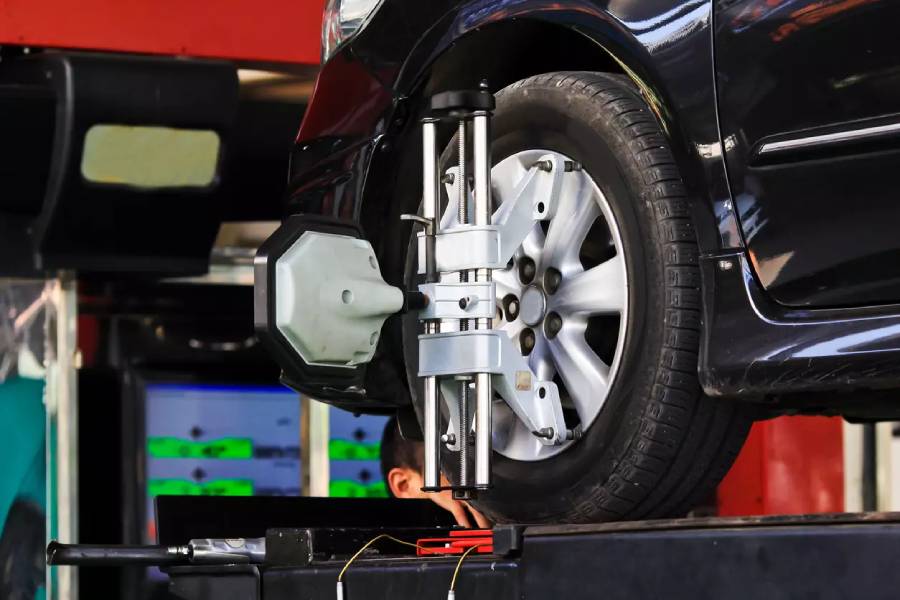
The alignment fee primarily covers inspection, measurement, labor, and adjustment rather than replacement parts. A technician places the vehicle on an alignment rack, attaches measuring equipment to the wheels, compares the wheel angles with manufacturer specifications, and adjusts applicable alignment angles. The three primary angles evaluated during this process are toe, camber, and caster. The exact adjustments available depend on the suspension design of the vehicle.
The quoted alignment price and the final repair bill are not always the same. An alignment normally does not include the cost of replacing worn or damaged steering and suspension components. For example, a vehicle with a worn tie rod end may require that component to be replaced before the technician can accurately set the toe angle. Damage from a pothole or curb impact can also increase the total bill when suspension or steering parts require repair in addition to the alignment itself.
Drivers should therefore compare alignment quotes based on the service provided rather than price alone. A lower advertised price may cover only a front-end alignment, while another quote may include a four-wheel measurement, adjustments, a before-and-after alignment report, or a limited service warranty. Vehicle type, suspension configuration, shop labor rates, and required repairs can all move the final cost outside the typical range.
How Much Does a Front-End or Two-Wheel Alignment Cost?
A front-end or two-wheel alignment generally costs about $50 to $100. This service concentrates on the front wheels and is appropriate for vehicles whose rear suspension does not provide the same alignment adjustments as the front. The technician measures the wheel angles, compares them with the manufacturer’s specifications, and adjusts the applicable front alignment settings.
A two-wheel alignment costs less than many four-wheel services because fewer alignment points require adjustment. However, “front-end alignment” and “two-wheel alignment” should not automatically be treated as the correct service for every vehicle. Modern suspension systems differ considerably, and the appropriate alignment procedure depends on the vehicle’s drivetrain, suspension geometry, and manufacturer specifications.
The price also depends on what the repair facility includes in its alignment service. For example, one shop may quote only the measurement and standard adjustments, while another may include an initial suspension inspection and a printed alignment report showing the wheel angles before and after adjustment. Drivers comparing a $60 service with a $90 service should therefore check whether both quotes cover the same procedure.
A front-end alignment also becomes more expensive when a mechanical problem must be corrected first. Worn tie rods, ball joints, control-arm components, or other steering and suspension parts can prevent the wheels from holding the specified angles. In that situation, the repair cost is added to the alignment fee rather than being part of the basic two-wheel alignment price.
How Much Does a Four-Wheel Alignment Cost?
A four-wheel alignment typically costs $100 to $200 for a standard passenger vehicle. The service generally costs more than a front-end or two-wheel alignment because the technician measures all four wheels, evaluates the relationship between the front and rear axles, and makes the adjustments supported by the vehicle’s suspension design.
A four-wheel alignment does not necessarily mean that every alignment angle on all four wheels will be adjusted. The technician first measures the wheel positions against the vehicle manufacturer’s specifications. The available adjustments depend on the suspension system. Some vehicles provide rear toe and camber adjustments, while others have fewer factory-adjustable settings. The objective is to establish the correct relationship among the wheels rather than simply make the same adjustment at all four corners.
Vehicle configuration is therefore an important factor when determining whether a four-wheel alignment is appropriate. Many vehicles with independent rear suspension require all four wheels to be considered because rear-wheel alignment can influence the vehicle’s thrust direction and the relationship between the steering wheel and the direction of travel. Performing only a front alignment in these cases may leave an existing rear alignment problem unaddressed.
The $100 to $200 service price normally applies to the alignment procedure itself. Mechanical repairs can increase the final bill. For example, worn steering or suspension components may prevent a technician from bringing a wheel within specification or keeping it there after adjustment. These components must be repaired when their condition prevents an accurate alignment, with the repair charges added separately to the alignment cost.
What Factors Affect the Cost of a Tire Alignment?
There are 6 primary factors that affect tire alignment cost: alignment type, vehicle design, local labor rates, service provider, suspension condition, and the scope of the alignment service. These factors explain why two drivers can receive different quotes even when both vehicles require wheel alignment.
Alignment type affects the price because a two-wheel and four-wheel alignment involve different amounts of measurement and adjustment. A front-end alignment concentrates primarily on the front axle, while a four-wheel service evaluates the relationship among all four wheels. This difference helps explain why a $50 to $100 two-wheel alignment can cost less than a $100 to $200 four-wheel service.
Vehicle design affects alignment cost because suspension systems differ in both complexity and adjustability. The technician must work according to the alignment specifications and adjustment procedures established for the vehicle. A suspension that provides several adjustable alignment points can require a different procedure from a vehicle with limited factory adjustments. Vehicle-specific procedures can therefore influence the labor involved in completing the service.
Local labor rates affect the final price because wheel alignment requires specialized equipment and technician time. Repair facilities in markets with higher operating and labor costs can charge more for the same general service. The difference does not necessarily indicate that one vehicle requires substantially more work; part of the variation can come from the local cost of providing automotive services.
The service provider also affects alignment pricing. Dealerships, independent repair facilities, and tire shops can use different labor rates, service packages, equipment, and warranty policies. For example, one advertised price may cover a single alignment, while another package may include follow-up adjustments within a defined warranty period. Comparing only the advertised dollar amount can therefore give an incomplete picture of the service’s value.
Suspension and steering condition can create the largest difference between the alignment price and the total repair bill. Worn tie rods, ball joints, control-arm components, or other parts can make an accurate alignment impossible until the mechanical problem is corrected. A driver who arrives expecting to pay only for an alignment may consequently receive a higher estimate when an inspection identifies a component that requires replacement.
The scope of the service affects what the quoted alignment price actually buys. An alignment service can include initial measurements, inspection of relevant components, wheel-angle adjustments, final measurements, and a before-and-after alignment report. Drivers should confirm what is included before comparing prices between repair facilities because two services advertised as a “wheel alignment” may not contain exactly the same procedures.
What Is Included in the Cost of a Wheel Alignment?
A standard wheel alignment typically includes an initial inspection, wheel-angle measurements, comparison with manufacturer specifications, necessary alignment adjustments, and final measurements. The service focuses on positioning the wheels correctly relative to the vehicle and each other. Replacement steering or suspension parts are generally separate from the basic alignment charge.
The process begins with evaluating the vehicle’s current alignment condition and relevant steering and suspension components. The vehicle is then positioned on an alignment rack, where specialized equipment measures the angles of the wheels. These measurements allow the technician to identify which wheels are outside the specifications established for that vehicle.
Three important alignment angles are toe, camber, and caster. Toe describes the direction the tires point relative to each other when viewed from above. Camber describes the inward or outward tilt of a wheel when viewed from the front. Caster relates to the steering axis when viewed from the side and influences steering stability and return. The technician evaluates the applicable angles and makes adjustments where the vehicle’s suspension design permits them.
The service should end with another set of measurements to determine whether the applicable wheel angles are within specification after adjustment. Some repair facilities provide a before-and-after alignment report so the driver can see the measured values and resulting changes. The exact procedures included in an advertised alignment package can differ by shop, so drivers should confirm whether the quoted price covers inspection, adjustments, final measurements, and any service warranty before comparing offers.
Does a Wheel Alignment Cost More If Your Car Needs Repairs?
Yes. The total cost can exceed the advertised wheel alignment price when worn or damaged steering or suspension components must be repaired first. An alignment changes wheel angles; it does not repair mechanical components that are loose, worn, bent, or damaged. The alignment fee and the cost of correcting those mechanical problems should therefore be treated as separate expenses.
Worn components can prevent the technician from setting or maintaining the correct wheel position. For example, excessive movement in a worn tie rod end can interfere with an accurate toe adjustment. Problems involving ball joints, control-arm components, or other steering and suspension parts can create similar limitations. Replacing the affected component adds parts and labor charges to the original alignment expense.
Road impacts can also turn a routine alignment visit into a larger repair. Hitting a severe pothole or curb can change wheel alignment, but an impact can also damage a wheel, tire, or suspension component. Simply adjusting the alignment does not correct a physically damaged component. The technician must identify and address relevant mechanical damage before the vehicle can be aligned correctly when that damage prevents the wheels from reaching specification.
Drivers should therefore distinguish between the alignment service price and the total cost required to correct an alignment-related problem. A quoted alignment may cover measurement and adjustment only, while the final bill can include replacement parts and additional labor when mechanical defects are found. Requesting an explanation of required repairs and the alignment measurements helps determine why the final estimate differs from the advertised service price.
How Do You Know If Your Car Needs a Tire Alignment?
The main signs that your car may need a tire alignment are uneven tire wear, pulling to one side, an off-center steering wheel, and changes in steering or handling. These symptoms indicate that the wheels or steering geometry should be inspected, but they do not prove that misalignment is the only cause. Tire condition, tire pressure, worn steering components, and suspension problems can produce similar symptoms.
Uneven tire wear is one of the most visible reasons to have the alignment checked. Incorrect wheel angles change how the tire’s tread contacts the road, which can concentrate wear on particular areas instead of distributing it evenly across the tread. For example, excessive positive or negative camber can contribute to greater wear toward one side of the tire. An alignment inspection can determine whether the measured wheel angles are outside the manufacturer’s specifications.
A vehicle that consistently pulls to one side also warrants inspection. Misalignment can change how the wheels track and cause the vehicle to drift away from a straight path. However, pulling can have causes other than alignment, including differences in tire pressure, tire condition, road surface, or mechanical problems. Checking these variables helps prevent paying for an alignment that does not address the actual cause.
An off-center steering wheel is another common reason to check wheel alignment. When driving straight on a relatively level road, the steering wheel should normally remain close to its centered position. A steering wheel that remains noticeably rotated while the vehicle travels straight can indicate that the wheel and steering positions are not correctly synchronized. An alignment measurement can identify whether the relevant angles require adjustment.
Changes in steering or handling should also be evaluated when they appear after hitting a pothole, striking a curb, or completing steering or suspension repairs. A significant impact can alter alignment or damage mechanical components, while replacing certain suspension and steering parts can change wheel geometry. In either situation, inspection is more reliable than assuming that an alignment alone will solve the problem.
How Often Should You Get a Tire Alignment?
There is no single wheel alignment interval that applies to every vehicle. Alignment should be checked according to the vehicle manufacturer’s service guidance and when tire wear, steering behavior, road impacts, or steering and suspension work indicate that the wheel angles may have changed.
Driving conditions influence how frequently an alignment check becomes relevant. Repeated pothole impacts, curb strikes, and rough roads place additional loads on tires, wheels, and suspension components. A single significant impact can also justify an inspection when the vehicle begins pulling, the steering wheel becomes off-center, or abnormal tire wear develops afterward.
Tire condition provides another practical checkpoint. Inspecting tread wear during routine tire maintenance can reveal patterns that justify an alignment measurement before substantial tread life is lost. Alignment should not be treated as a method for repairing existing tire damage; instead, correcting an actual alignment problem helps prevent the same abnormal wear pattern from continuing.
Steering and suspension repairs can also create a reason to check alignment. Replacing components that influence wheel position or steering geometry can change alignment settings, making measurement and adjustment necessary as part of the repair process. The exact requirement depends on the component replaced and the vehicle’s suspension design.
For these reasons, drivers should base alignment timing on manufacturer guidance and measurable vehicle conditions rather than an arbitrary mileage rule alone. Checking the alignment when symptoms or relevant maintenance events occur helps direct the service toward an identifiable need instead of treating wheel alignment as a fixed, universal maintenance interval.
Do You Need an Alignment After Getting New Tires?
You do not automatically need a wheel alignment every time you get new tires, but an alignment check is worthwhile when the vehicle shows signs of misalignment or has an existing alignment problem. Installing new tires does not itself change the vehicle’s wheel angles. However, fitting new tires without correcting an existing alignment issue can allow abnormal tread wear to continue on the new set.
The condition of the old tires can provide useful evidence before replacement. Uneven wear concentrated on one edge or an unusual wear pattern can indicate a problem that deserves further inspection. Alignment is not the only possible cause because incorrect tire pressure and worn steering or suspension components can also affect tread wear. Measuring the wheel angles determines whether alignment is contributing to the problem instead of relying on the appearance of the tires alone.
Protecting new tires is the main reason to address an existing alignment problem promptly. Tires are designed to contact the road in a specific orientation, and incorrect wheel angles can concentrate loads on particular areas of the tread. Replacing worn tires without correcting confirmed misalignment allows the underlying condition to remain, potentially reducing the usable life of the replacement tires.
An alignment check is particularly relevant when new tires are installed after the vehicle has developed an off-center steering wheel, persistent pulling, abnormal tire wear, or a significant pothole or curb impact. It can also be appropriate after steering or suspension work that affects wheel geometry. Drivers without these conditions should follow the vehicle manufacturer’s guidance rather than assume that purchasing tires automatically requires purchasing an alignment.
Is a Tire Alignment Worth the Cost?
A tire alignment is worth the cost when measurements show that the wheels are outside the vehicle manufacturer’s alignment specifications. Correcting confirmed misalignment addresses the wheel geometry that can contribute to abnormal tire wear, an off-center steering wheel, and changes in how the vehicle tracks. Paying for an alignment without evidence of an alignment problem provides less clear value.
Tire wear is one of the strongest economic reasons to correct misalignment. Incorrect wheel angles can place uneven loads across the tread and cause specific areas of a tire to wear faster than intended. Alignment cannot restore tread that has already been lost, but correcting the wheel angles can stop a confirmed alignment problem from continuing to create the same wear pattern. This makes the service particularly relevant when the tires still have substantial usable tread or when a new set has just been installed.
Alignment can also be worthwhile when it corrects a steering or tracking problem caused by wheel geometry. A vehicle that pulls to one side or has an off-center steering wheel should first be evaluated because these symptoms have several possible causes. When alignment measurements identify wheel angles outside specification, adjustment addresses a measurable problem rather than relying on symptoms alone.
The value of the service depends on the underlying mechanical condition of the vehicle. An alignment cannot compensate for a worn tie rod, damaged suspension component, or another mechanical defect that prevents the wheels from maintaining their specified positions. In these cases, repairing the defective component first and aligning the wheels afterward addresses both the cause and the resulting wheel geometry.
For vehicle owners comparing the alignment price with the potential cost of abnormal tire wear, the most useful question is not whether every car needs regular alignment service, but whether the specific vehicle is currently outside alignment specifications. Confirming the condition through measurement makes it possible to spend the alignment cost on a documented maintenance need rather than an unnecessary service.