A tire alignment typically takes 30 to 60 minutes for a standard passenger vehicle when the suspension and steering components are in good condition. The exact service time depends on the type of wheel alignment, the vehicle’s suspension design, the number of adjustments required, and whether worn or damaged components are discovered during the initial inspection. A straightforward alignment can stay within the typical time range, while additional diagnosis or repairs can extend the service beyond an hour.
During a wheel alignment, a technician does more than reposition the wheels. The vehicle is inspected and placed on alignment equipment, where the technician measures wheel angles such as camber, caster, and toe. These measurements are compared with the vehicle manufacturer’s specifications before adjustable components are corrected and measured again. Problems such as worn tie rods, damaged suspension parts, seized adjustment hardware, or previous curb and pothole impacts can add time to this process.
This guide explains how long different types of tire alignment take, what happens during the service, which factors cause delays, and when an alignment can take longer than expected. It also covers what drivers should expect before and after the service.
How Long Does a Tire Alignment Take?
A tire alignment usually takes 30 to 60 minutes for a standard passenger vehicle when no suspension or steering problems interfere with the service. This time includes positioning the vehicle on the alignment rack, measuring the wheel angles, comparing those measurements with manufacturer specifications, making the necessary adjustments, and verifying the final measurements. The actual adjustment may take only part of the appointment because inspection and measurement are essential parts of the alignment process.
The service can take less time when the vehicle requires only minor adjustments and its alignment components are easy to access. For example, a technician who finds that the toe angle is slightly outside specification may be able to correct it without extensive additional work. More adjustments increase service time because the technician must change the relevant components and measure the wheel angles again to confirm that they are within the specified range.
A tire alignment can take more than 60 minutes when the technician discovers worn suspension parts, loose steering components, seized adjustment hardware, or damage caused by a pothole, curb strike, or collision. These conditions can prevent accurate alignment because the wheels may not maintain their specified angles. The underlying mechanical problem may therefore need diagnosis or repair before the alignment can be completed.
The 30-to-60-minute estimate refers to the alignment service itself, not necessarily the total time spent at the repair shop. A vehicle may remain at the shop longer because of check-in, technician availability, other scheduled vehicles, additional inspections, or required repairs. For example, a 45-minute alignment does not mean a customer who arrives without an appointment will receive the vehicle back within 45 minutes.
How Long Do Different Types of Wheel Alignment Take?
Different types of wheel alignment can require different amounts of time because they involve different measurements and adjustments. The three common approaches are front-end alignment, four-wheel alignment, and thrust alignment. Vehicle suspension design determines which method is appropriate, so drivers should not select an alignment type simply because one appears faster.
A front-end alignment, also called a two-wheel alignment in some contexts, focuses primarily on the front wheels. The technician measures the relevant front-wheel angles and makes adjustments permitted by the vehicle’s suspension design. Because the rear wheels are not adjusted in the same way, the procedure can involve fewer adjustments than a full four-wheel alignment. However, fewer wheels do not guarantee a shorter appointment if the front suspension has worn, damaged, or difficult-to-adjust components.
A four-wheel alignment measures the alignment of all four wheels and their relationship to one another. This approach is commonly relevant to vehicles with independently adjustable rear suspension because rear-wheel geometry can affect the vehicle’s direction of travel and the reference used to align the front wheels. Measuring and correcting additional angles can increase the amount of work compared with a straightforward front-end alignment, although a routine four-wheel alignment can still fall within the typical service window.
A thrust alignment considers the direction in which the rear wheels or rear axle push the vehicle relative to its geometric centerline. The front wheels are then aligned with that thrust direction. The time required depends on the vehicle configuration and whether the technician discovers a significant difference between the rear thrust angle and the intended direction of travel.
The alignment type is therefore only one factor determining service duration. Vehicle condition, suspension design, available adjustment points, and the number of corrections required can affect alignment time more than the number of wheels being measured. A four-wheel alignment on a well-maintained vehicle may be completed more easily than a front-end alignment on a vehicle with seized or worn suspension components.
What Happens During a Wheel Alignment?
A wheel alignment follows a measurement, adjustment, and verification process designed to bring the vehicle’s wheel angles within manufacturer specifications. The technician does not physically straighten the tires themselves. Instead, the service involves checking the suspension geometry that determines how each wheel sits and points relative to the vehicle and road.
The process begins with an inspection of the tires, steering system, and suspension components. The technician checks tire pressure and tire condition while looking for excessive movement or damage in components such as tie rods, ball joints, control arms, and bushings. This inspection matters because worn or loose parts can allow a wheel to move after measurements are taken. Adjusting alignment without addressing significant mechanical play can therefore produce measurements that do not remain consistent.
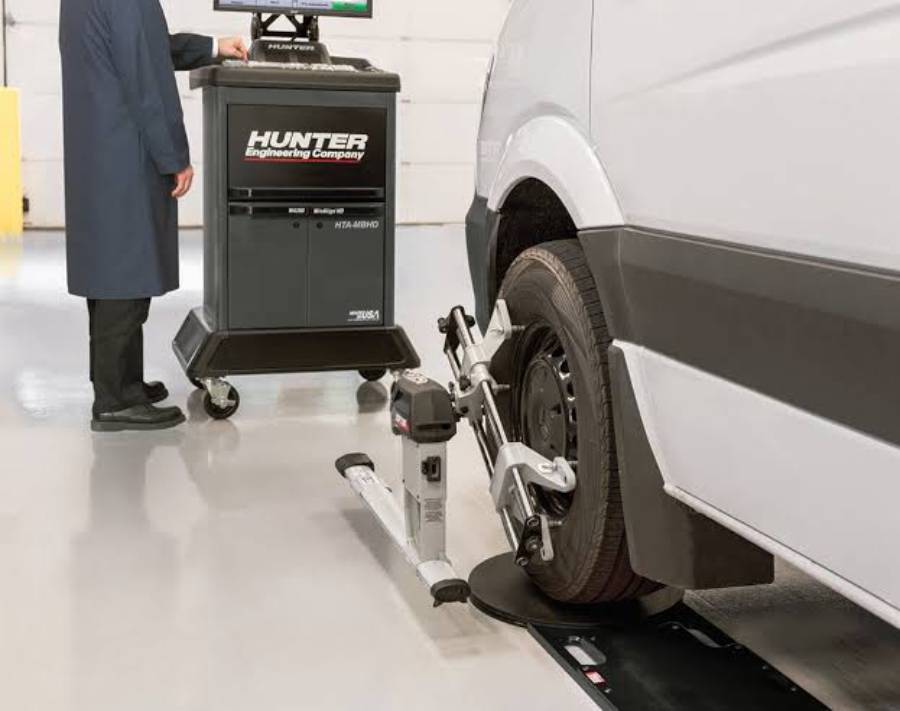
The vehicle is then positioned on an alignment rack, and measuring equipment is attached to or referenced against the wheels. The equipment measures camber, caster, and toe where applicable. Camber describes the inward or outward tilt of a wheel when viewed from the front. Caster describes the angle of the steering axis when viewed from the side. Toe describes whether the wheels point slightly inward or outward when viewed from above. The technician compares these measurements with specifications established for the vehicle.
The technician adjusts the available suspension or steering points when measurements fall outside specification. Not every angle is adjustable on every vehicle, so the exact procedure depends on suspension design. Toe, for example, is commonly corrected through steering linkage adjustments, while camber and caster adjustments depend more heavily on how the manufacturer designed the suspension.
Measurements are checked again after adjustments. This verification step confirms whether the corrected angles fall within the specified ranges and whether another adjustment is required. A technician may also check steering-wheel position and perform a road test when necessary. These repeated measurements explain why a professional wheel alignment requires more time than simply making a single mechanical adjustment.
What Can Make a Tire Alignment Take Longer?
There are 5 main factors that can make a tire alignment take longer than expected: worn components, seized hardware, complex suspension designs, suspension modifications, and previous vehicle damage. Each factor can interfere with either accurate measurement or the technician’s ability to make the required adjustment.
Worn suspension or steering components can delay an alignment because the wheels must remain mechanically stable for accurate adjustment. Tie rods, ball joints, control-arm bushings, and related parts help control wheel position. Excessive wear in one of these components can allow unwanted movement, making alignment measurements inconsistent. For example, a worn tie-rod end may need replacement before the technician can reliably set the toe angle. Repair time is separate from the alignment itself and can extend the vehicle’s total time at the shop.
Rusted or seized adjustment hardware increases the time required to make corrections. Alignment depends on mechanical adjustment points that must move when a technician changes an angle. Corrosion can make bolts, nuts, sleeves, or other adjustable components difficult to move. Instead of immediately making the required correction, the technician may first need to free the affected hardware. Severe corrosion can require component replacement before the alignment can proceed.
Vehicle and suspension design affects how easily alignment adjustments can be completed. Passenger cars, SUVs, pickup trucks, and performance vehicles can use different suspension configurations and provide different adjustment points. Access to these components also varies between models. A vehicle that requires several adjustments or has components that are difficult to access can take longer than a vehicle with a simpler, readily adjustable suspension.
Modified suspension can add complexity because changing ride height alters suspension geometry. Lowering a car or lifting a truck changes the position in which suspension components operate and can move wheel angles away from their original specifications. Aftermarket control arms, adjustable links, coilovers, and similar components can also introduce additional adjustment points. The technician may therefore need more measurements and corrections to achieve the intended alignment settings.
Previous pothole, curb, or collision damage can extend alignment time when the impact affects suspension geometry or steering components. A hard impact can bend or damage a wheel, tie rod, control arm, strut, or another component involved in maintaining wheel position. An alignment machine can identify angles that are outside specification, but alignment adjustments cannot correct a physically damaged component. The technician must identify and address the mechanical problem before a reliable alignment can be completed.
These factors explain why two vehicles receiving the same type of alignment can require different amounts of time. A routine alignment primarily involves inspection, measurement, adjustment, and verification, while a problematic vehicle can require diagnosis or repair before those steps can be completed successfully.
Can a Wheel Alignment Take More Than an Hour?
Yes, a wheel alignment can take more than an hour when the vehicle requires additional inspection, difficult adjustments, diagnosis, or repairs before the alignment can be completed. A routine alignment on a vehicle with functional steering and suspension components generally involves inspection, measurement, adjustment, and verification. When problems appear during any of these stages, the total service time increases.
Mechanical problems are a common reason an alignment extends beyond the expected service window. A technician cannot reliably align a wheel when a worn tie rod, loose ball joint, damaged control arm, or deteriorated bushing allows its position to change. In this situation, replacing the affected component becomes necessary before final alignment measurements can be established. The additional repair should be considered separately from the actual alignment time.
Seized adjustment hardware can also turn a routine service into a longer job. For example, a technician may identify an incorrect toe or camber measurement immediately but still be unable to correct it until a corroded adjustment point can move. The measurement itself is not causing the delay; accessing and adjusting the mechanical component is.
Modified or damaged suspension systems can require additional diagnostic work. A lifted truck, lowered car, or vehicle that has struck a curb or large pothole may have wheel angles substantially different from the intended specifications. If normal adjustment cannot bring those angles into the required range, the technician must determine whether an aftermarket component, incorrect ride height, or damaged suspension part is responsible.
For this reason, an alignment taking longer than 60 minutes does not automatically indicate a problem with the repair shop or alignment equipment. The important distinction is whether the additional time comes from the alignment itself or from mechanical work required to make an accurate alignment possible.
Can You Wait at the Shop While Getting a Wheel Alignment?
Yes, you can usually wait at the shop during a routine wheel alignment, especially when the vehicle does not require additional repairs. Because a straightforward alignment commonly fits within a relatively short service appointment, many drivers choose to remain in the waiting area rather than leave the vehicle for the day.
However, actual alignment time and total shop time are different measurements. Total visit time includes vehicle check-in, waiting for an available technician or alignment rack, the initial inspection, the alignment itself, and final verification. A 45-minute alignment can therefore result in a longer visit when other vehicles are scheduled ahead of yours.
Unexpected mechanical problems also affect whether waiting is practical. For example, an inspection may reveal a worn tie rod that must be replaced before toe can be set accurately. The vehicle now requires both a repair and an alignment rather than only the originally scheduled service. Parts availability and technician workload can extend the appointment further.
Drivers who need the vehicle back by a specific time should ask the shop for an estimated total completion time rather than only the expected alignment duration. This distinction provides a more realistic estimate of how long the vehicle will remain at the facility.
Can You Drive Immediately After a Wheel Alignment?
Yes, you can normally drive a vehicle immediately after a wheel alignment once the technician has completed the adjustments and final checks. Wheel alignment does not require a curing, cooling, or break-in period. Corrected suspension and steering geometry takes effect as soon as the adjustments are secured and the vehicle is returned to the road.
A properly aligned vehicle may show immediate changes in steering behavior when its previous alignment was significantly incorrect. The steering wheel should remain closer to its centered position while traveling straight, and alignment-related pulling may be reduced. Correct wheel angles also help the tires contact the road as intended, which reduces the risk of abnormal wear caused by misalignment.
Continued symptoms after the service deserve further inspection. A steering wheel that remains noticeably off-center, persistent pulling, or unstable steering does not automatically prove that the alignment was performed incorrectly because tire condition, road crown, brakes, and worn steering or suspension components can produce related symptoms. The vehicle should be rechecked when the problem remains pronounced after alignment.
No special driving technique is normally required after the service. The driver can resume normal driving immediately unless the repair shop provides specific instructions related to other suspension, steering, tire, or repair work performed at the same appointment.
How Often Should You Get a Wheel Alignment?
There is no single wheel alignment interval that applies to every vehicle. Alignment should be checked according to the vehicle manufacturer’s maintenance guidance and when driving conditions, tire wear, suspension work, or an impact indicates that the wheel angles may have changed. Unlike engine oil, wheel alignment does not become incorrect simply because a fixed amount of time has passed.
Driving conditions influence how long correct alignment can be maintained. Repeated impacts from potholes, curbs, rough roads, and road debris can place substantial force on wheels and suspension components. A single severe impact can also change alignment or damage a component. Drivers who regularly use poorly maintained roads may therefore need alignment inspections sooner than drivers operating primarily on smooth roads.
Tire condition provides another reason to check alignment. Uneven or abnormal tread wear can develop when incorrect wheel angles cause sections of a tire to carry more load or scrub against the road. An alignment check is particularly useful when abnormal wear appears without another obvious explanation. Correcting the underlying alignment problem helps prevent the same wear pattern from continuing, although it cannot restore tread that has already worn away.
Suspension and steering work can also justify an alignment check because replacing components may change wheel geometry. For example, work involving tie rods, control arms, struts, or other components that influence wheel position can affect alignment measurements. The appropriate timing depends on which component was replaced and how the vehicle’s suspension is designed.
Instead of relying exclusively on a fixed calendar interval, drivers should treat manufacturer recommendations, abnormal tire wear, steering changes, suspension repairs, and significant road impacts as the primary reasons to check wheel alignment.
What Are the Signs That Your Car Needs a Wheel Alignment?
There are 4 common signs that a car may need its wheel alignment checked: uneven tire wear, an off-center steering wheel, pulling to one side, and unstable steering behavior. These symptoms justify an inspection, but they do not prove that alignment is the only cause because tire, brake, steering, and suspension problems can produce similar effects.
Uneven tire wear is one of the clearest reasons to investigate wheel alignment. Incorrect toe or camber can change how the tire tread contacts and moves across the road surface. For example, excessive toe can cause the tread to scrub as the vehicle travels forward, while excessive camber can concentrate wear toward one side of the tread. Comparing wear across all four tires can help identify patterns that warrant further inspection.
An off-center steering wheel while the vehicle travels straight can indicate an alignment problem. The steering wheel should normally remain close to its centered position when the vehicle follows a straight path on a suitable road. If it consistently sits noticeably to the left or right, the relationship between the steering system and wheel direction may require adjustment. A technician can use alignment measurements to determine whether wheel geometry is responsible.
A vehicle that consistently pulls to one side may also need an alignment inspection. Differences in wheel angles can cause the vehicle to favor one direction instead of tracking straight. However, tire pressure differences, tire construction, brake problems, suspension faults, and road crown can also contribute to pulling. Alignment measurements are therefore necessary before attributing the symptom to wheel geometry alone.
Unstable or inconsistent steering can indicate a broader steering or suspension problem that includes incorrect alignment. A vehicle may feel less predictable when wheel geometry is outside specification, but looseness in tie rods, ball joints, bushings, or other components can create similar behavior. These mechanical problems are especially important because worn parts may need repair before an accurate alignment can be performed.
Recognizing these signs early can also reduce secondary tire damage. An alignment check identifies whether wheel angles are outside manufacturer specifications and whether adjustment or additional mechanical inspection is required.
Should You Get a Wheel Alignment After Installing New Tires?
You do not automatically need a wheel alignment simply because you installed new tires, but checking the alignment can help protect the new tires when the vehicle already has an alignment problem. Installing tires does not normally change suspension geometry by itself. Alignment becomes relevant when existing wheel angles, steering behavior, tire wear patterns, or recent suspension work indicate that the vehicle may be outside specification.
Incorrect alignment can shorten the useful life of new tires by creating uneven tread wear. For example, excessive toe can cause the tires to scrub across the road rather than roll in their intended direction. Incorrect camber can place greater load on one portion of the tread. Installing new tires without correcting an existing alignment problem allows the same mechanical condition to begin affecting the replacement tires.
The condition of the old tires can provide useful information before replacement. Uneven wear concentrated on an inner or outer edge, unusual tread patterns, or substantially different wear between comparable tires can justify an alignment inspection. The technician can measure camber, caster, and toe where applicable and compare the results with manufacturer specifications instead of assuming that the wear was caused by alignment.
An alignment check is also relevant when new tires are installed after suspension or steering repairs. Components such as tie rods, control arms, and struts can influence wheel position, so work involving these parts may change alignment geometry. The reason for checking alignment after new tires is therefore to identify and correct an existing geometry problem, not because new tires inherently require alignment.
Is Wheel Alignment the Same as Tire Balancing?
No. Wheel alignment and tire balancing correct different conditions. Wheel alignment deals with the angles and directional relationships of the wheels, while tire balancing addresses uneven weight distribution within a rotating tire-and-wheel assembly. The services use different equipment and solve different mechanical problems.
During an alignment, a technician measures angles such as camber, caster, and toe and compares them with manufacturer specifications. Adjustments are made through the vehicle’s steering or suspension system where the design permits. The objective is to position the wheels according to the specified geometry so the vehicle tracks correctly and the tires contact the road as intended.
Tire balancing focuses on rotation rather than suspension geometry. A tire-and-wheel assembly can have small differences in weight around its circumference. At higher rotational speeds, this imbalance can produce vibration. Balancing equipment identifies the location and magnitude of the imbalance so corrective weights can be positioned on the wheel.
The symptoms can also differ. Alignment problems are commonly associated with abnormal tire wear, an off-center steering wheel, or directional pulling, while wheel imbalance is more strongly associated with speed-related vibration. These symptoms can overlap with other vehicle problems, so they should be treated as diagnostic clues rather than proof of a specific fault.
A vehicle can need one service without needing the other. It can also require both when incorrect alignment and wheel imbalance exist at the same time. For this reason, balancing the tires does not correct wheel angles, and performing an alignment does not balance the tire-and-wheel assemblies.
Can You Do a Wheel Alignment Yourself?
Basic wheel-alignment measurements can be performed at home, but achieving and verifying a precise alignment is more difficult without professional alignment equipment. DIY methods can provide an approximate indication of wheel position, while a professional system measures wheel angles and compares them with specifications for the specific vehicle.
The difficulty comes from the precision required. Small changes in toe, camber, or caster can affect how the vehicle tracks and how the tires contact the road. The available adjustments also depend on suspension design. Some vehicles provide several factory adjustment points, while others require different procedures or components when an angle falls outside specification.
A DIY approach also needs to account for the mechanical condition of the vehicle. Worn tie rods, ball joints, bushings, or damaged suspension components can make measurements unreliable. Adjusting around a worn component does not correct the underlying mechanical movement, and the wheel may fail to maintain the intended position during driving.
Professional alignment equipment provides a more controlled method for measuring wheel geometry and verifying adjustments against vehicle specifications. For drivers primarily concerned with how long a tire alignment takes, scheduling a professional alignment is generally the more predictable option because a routine service can be measured, adjusted, and verified during the same appointment when no additional repairs are required.