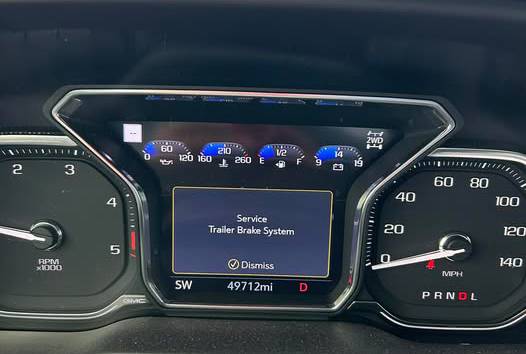
If you’ve started your GMC truck only to see the “Service Trailer Brake System” message appear on the dashboard, you’re not alone. This warning is a common issue reported by owners of GMC Sierra, Yukon, and other towing-capable models. While it may seem like a minor electrical glitch, ignoring it can lead to reduced trailer braking performance, compromised towing safety, and even costly repairs if the underlying problem worsens over time.
The trailer brake system is designed to synchronize your vehicle’s braking with your trailer’s electric brakes, providing greater control and stability when towing heavy loads. When the system detects a fault in the brake controller, wiring, trailer connector, or another critical component, it displays the Service Trailer Brake System message to alert the driver that the system requires inspection. In some cases, the warning may appear intermittently and disappear after restarting the vehicle, making it difficult to determine whether the issue is serious or simply a false alarm.
Fortunately, many causes of this warning can be identified and resolved without replacing expensive components. Problems such as corroded trailer connectors, damaged wiring, blown fuses, or loose electrical connections are among the most common culprits and are often straightforward to fix. However, more complex issues involving the integrated trailer brake controller, ABS module, or body control module may require advanced diagnostics.
In this guide, you’ll learn what the GMC Service Trailer Brake System message means, the most common reasons it appears, how to diagnose the problem step by step, proven repair methods, reset procedures, estimated repair costs, and practical maintenance tips to help prevent the warning from returning. Whether you’re preparing for a long towing trip or simply want to eliminate an annoying dashboard alert, this guide will help you restore your trailer braking system safely and confidently.
What Does the GMC Service Trailer Brake System Message Mean?
The GMC Service Trailer Brake System message indicates that your vehicle has detected a fault within the integrated trailer braking system. This warning is generated when the truck’s onboard computer identifies an issue that could affect communication or performance between the vehicle and the trailer’s electric brakes. Rather than pointing to a single failed component, the message serves as a general alert that one or more parts of the trailer brake system require inspection.
Modern GMC trucks such as the Sierra 1500, Sierra HD, Yukon, and Yukon XL are equipped with an Integrated Trailer Brake Controller (ITBC). This controller works alongside the Anti-lock Braking System (ABS), Body Control Module (BCM), and Trailer Brake Control Module to deliver proportional braking force to the trailer. When you apply the brakes, the controller automatically adjusts the trailer’s braking power based on your vehicle’s speed and braking intensity. This synchronized operation improves stability, shortens stopping distances, and reduces trailer sway, especially when towing heavy loads.
If any component within this network fails to communicate correctly, the vehicle may disable or limit trailer brake functionality as a protective measure. The warning message can appear due to electrical faults, damaged wiring, corroded connectors, software issues, sensor failures, or a malfunctioning brake controller. In many cases, the dashboard warning may also be accompanied by messages such as “Trailer Brake Controller Unavailable,” “Check Trailer Wiring,” or an illuminated ABS warning light.
It’s important to understand that this warning does not always mean the trailer brakes have completely stopped working. Sometimes the issue is intermittent and caused by moisture, vibration, or a poor electrical connection. However, because the trailer braking system plays a critical role in towing safety, drivers should never ignore the message, especially before hauling a heavy trailer over long distances.
Understanding what this warning means is the first step toward identifying the root cause and restoring safe, reliable towing performance.
Common Symptoms That Accompany the Warning
The Service Trailer Brake System message rarely appears by itself. In most cases, it is accompanied by one or more symptoms that can help narrow down the source of the problem. Paying close attention to these warning signs can make troubleshooting faster and prevent unnecessary parts replacement.
One of the most common symptoms is the warning message appearing immediately after starting the engine or connecting a trailer. In some cases, the message disappears after restarting the vehicle, only to return later during driving. This intermittent behavior often points to loose electrical connections, corrosion, or damaged wiring rather than complete component failure.
Another common symptom is that the trailer brakes stop responding altogether. Drivers may notice that the trailer does not slow down as expected when the brake pedal is pressed, forcing the tow vehicle to handle more of the braking load. This can significantly increase stopping distance and place additional stress on the truck’s braking system.
Many GMC owners also report receiving a “Trailer Brake Controller Unavailable” message. When this occurs, the integrated brake controller may become disabled, preventing the driver from manually applying trailer brakes using the controller’s manual override switch. This condition typically indicates a communication problem between the brake controller and other control modules.
Some vehicles experience warning chimes or repeated dashboard notifications while driving. The message may flash briefly before disappearing, then reappear several minutes later. These intermittent alerts often suggest vibration-related wiring issues, poor grounding, or moisture inside the trailer connector.
Additional warning lights may also illuminate at the same time. Depending on the underlying fault, you may see the ABS warning light, Stabilitrak warning, traction control indicator, or Check Engine Light. Because these systems share information across the vehicle’s communication network, a failure in one module can trigger warnings in several others.
When towing, drivers may notice reduced braking performance, delayed trailer brake engagement, or uneven braking that causes the trailer to push the tow vehicle during stops. These symptoms should never be ignored, as they directly affect towing safety and vehicle control.
Recognizing these accompanying symptoms provides valuable clues that can help determine whether the issue originates from the trailer, the truck, or the electrical connection between them.
Top Causes of the GMC Service Trailer Brake System Message
Several different problems can trigger the GMC Service Trailer Brake System message, ranging from simple maintenance issues to complex electronic failures. Identifying the most likely cause before replacing parts can save both time and money.
One of the leading causes is a corroded or dirty trailer connector. The seven pin trailer connector is constantly exposed to rain, road salt, mud, and debris. Over time, corrosion builds up on the electrical terminals, interrupting communication between the truck and trailer. Even a small amount of oxidation can create enough electrical resistance to trigger warning messages. Cleaning the connector and applying dielectric grease is often enough to resolve the issue.
Another common cause is damaged trailer wiring. Wiring harnesses located underneath the vehicle are vulnerable to road debris, heat, vibration, and accidental damage. Broken wires, worn insulation, loose connectors, or poor grounding can interrupt the electrical signals required for proper trailer brake operation. Wiring problems are especially common on trucks that frequently tow heavy trailers or travel on rough roads.
A faulty Integrated Trailer Brake Controller can also generate the warning. Although the controller is designed for long-term reliability, internal electronic failures, software glitches, or calibration issues may prevent it from communicating correctly with the vehicle’s braking system. In some cases, updating the vehicle’s software resolves the problem, while more severe failures require controller replacement.
A blown fuse or failed relay is another relatively simple cause that is often overlooked. If power to the trailer brake controller is interrupted, the system immediately detects the loss of communication and displays the warning message. Checking the owner’s manual to locate the appropriate trailer brake fuse is an easy diagnostic step before investigating more expensive components.
The ABS module and wheel speed sensors can also contribute to trailer brake system warnings. Since the integrated brake controller relies on wheel speed data to calculate proportional braking force, inaccurate sensor readings or communication failures within the ABS system may trigger both ABS and trailer brake warnings simultaneously.
In some cases, the issue originates from the Body Control Module (BCM) or other electronic control modules. Software corruption, voltage fluctuations, or communication errors on the vehicle’s Controller Area Network (CAN Bus) can prevent modules from exchanging information correctly. These issues often require professional diagnostic equipment to identify and repair.
Finally, the problem may not be with the truck at all. A trailer with faulty electric brakes, damaged brake magnets, poor wiring, or a defective breakaway switch can also cause the vehicle to display the Service Trailer Brake System message. Before assuming the truck is at fault, it’s always wise to inspect both the tow vehicle and the trailer as a complete system.
By understanding these common causes, you can follow a logical troubleshooting process instead of replacing parts based on guesswork, ultimately reducing repair costs and restoring safe towing performance.
Step-by-Step Guide to Fix the GMC Service Trailer Brake System Message
Fixing the GMC Service Trailer Brake System message begins with identifying the source of the fault instead of immediately replacing expensive components. In many cases, the issue is caused by poor electrical connections or minor wiring problems that can be corrected with basic tools. Following a systematic troubleshooting process will help you isolate the problem and restore normal trailer brake operation.
Step 1: Inspect the Trailer Connector
Start by examining the seven pin trailer connector on both the truck and the trailer. Dirt, moisture, bent pins, and corrosion are among the most common causes of communication failures. Carefully inspect each terminal for discoloration, rust, broken pins, or loose contacts. Even if the connector appears clean from the outside, debris inside the terminals can interrupt electrical signals.
Step 2: Clean the Electrical Connections
If corrosion is present, disconnect the trailer and clean the connector using electrical contact cleaner and a soft nylon brush. Avoid using excessive force that could damage the terminals. After cleaning, allow the connector to dry completely before applying a thin layer of dielectric grease. This helps prevent future corrosion while maintaining reliable electrical contact.
Step 3: Inspect the Trailer Wiring
Follow the wiring harness from the rear bumper to the trailer brake controller. Look for cracked insulation, pinched wires, exposed conductors, loose connectors, or signs of rodent damage. Pay particular attention to areas where the harness passes near the frame or suspension components, as vibration can gradually wear through the insulation.
If you tow multiple trailers, inspect the trailer wiring as well. A wiring fault on the trailer can trigger the warning even if the truck itself is functioning properly.
Step 4: Check the Trailer Brake Fuse and Relay
Locate the fuse box using your owner’s manual and inspect the trailer brake controller fuse and related relays. A blown fuse may indicate an electrical short somewhere in the system, so simply replacing the fuse without identifying the underlying cause could result in repeated failures. Replace any damaged fuse with one that matches the manufacturer’s specified amperage.
Step 5: Test the Integrated Trailer Brake Controller
With the trailer connected, verify that the Integrated Trailer Brake Controller recognizes the trailer. The dashboard should display trailer connection information without warning messages. Use the manual override lever on the brake controller to confirm that the trailer brakes respond correctly. If no braking force is applied, the controller or its communication circuit may require further diagnosis.
Step 6: Scan for Diagnostic Trouble Codes
Use an advanced OBD-II scanner capable of accessing ABS, Body Control Module, and Trailer Brake Controller data. Generic code readers often cannot retrieve manufacturer-specific fault codes related to the trailer brake system. Record any stored Diagnostic Trouble Codes before clearing them, as they provide valuable information about the source of the malfunction.
Step 7: Repair or Replace Damaged Components
If diagnostics identify damaged wiring, corroded connectors, failed wheel speed sensors, or a faulty brake controller, repair or replace the affected components. Use high-quality replacement parts that meet OEM specifications to ensure compatibility with the vehicle’s towing system.
Step 8: Verify Proper Operation
After completing repairs, reconnect the trailer and perform a functional test in a safe location. Confirm that the dashboard warning has disappeared and that the trailer brakes engage smoothly during normal braking and when using the manual override control. A successful road test helps verify that the repair has fully resolved the issue before towing heavy loads.
How to Reset the GMC Service Trailer Brake System Message
After repairing the underlying problem, the warning message may disappear automatically. However, in some cases, the system stores a fault code that must be cleared before the dashboard returns to normal. Resetting the warning should always be performed after the repair has been completed rather than as a substitute for proper diagnosis.
The simplest reset method is to turn the ignition off, remove the key, and wait several minutes before restarting the vehicle. Many temporary communication faults are cleared during a complete ignition cycle. If the message does not return after restarting, the issue may have been caused by a brief electrical interruption.
Another common method involves disconnecting the negative battery terminal for approximately ten to fifteen minutes. This allows certain electronic control modules to power down completely and may clear temporary memory. Before disconnecting the battery, be aware that radio presets, clock settings, and other stored preferences may need to be reconfigured afterward.
If the warning remains, use a professional scan tool to erase any stored Diagnostic Trouble Codes. Clearing codes without correcting the underlying fault is not recommended because the warning will typically return as soon as the system detects the problem again.
After clearing the codes, reconnect the trailer and verify that it is properly recognized by the Integrated Trailer Brake Controller. Check the dashboard for trailer connection status and test the manual trailer brake control. If the controller operates normally and no warning messages reappear, the reset has been successful.
In some situations, GMC dealerships may recommend updating the software for the Body Control Module, Trailer Brake Control Module, or other electronic systems. Software updates can resolve known communication issues and false warning messages that cannot be corrected through mechanical repairs alone.
If the warning persists after all repairs and reset procedures have been completed, further diagnosis using manufacturer-level diagnostic equipment may be necessary to identify hidden electrical or module communication faults.
Can You Drive with This Warning On?
Whether you can continue driving after seeing the Service Trailer Brake System message depends largely on whether you are towing a trailer and what symptoms accompany the warning. While the truck itself may continue to operate normally, the trailer braking system may not function as intended, creating a significant safety risk during towing.
If you are not towing a trailer, the vehicle can often be driven carefully to a repair facility without immediate danger. However, the warning should still be investigated as soon as possible because it may indicate an electrical issue that could affect other vehicle systems. Ignoring the problem for an extended period increases the likelihood of more expensive repairs later.
If you are towing a trailer, extra caution is required. A malfunctioning trailer brake system reduces the trailer’s ability to assist with braking, forcing the tow vehicle to absorb the additional stopping force. This can increase stopping distances, accelerate brake wear, and reduce vehicle stability, particularly when descending steep grades or making emergency stops.
You should avoid towing if you notice any of the following conditions:
- The trailer brakes do not respond during manual testing.
- The brake controller displays “Trailer Brake Controller Unavailable.”
- The trailer sways excessively while braking.
- ABS or Stabilitrak warning lights appear together with the trailer brake warning.
- The vehicle repeatedly loses communication with the trailer during driving.
In these situations, continuing to tow could compromise vehicle control and increase the risk of an accident. The safest approach is to diagnose and repair the fault before resuming normal towing operations.
Before every trip, perform a quick inspection of the trailer connector, wiring, safety chains, breakaway cable, lighting system, and brake controller. Spending a few minutes checking these components can prevent unexpected warning messages and help ensure a safer towing experience on the road.
Estimated Repair Costs
The cost to repair the GMC Service Trailer Brake System message can vary significantly depending on the root cause of the problem. Some issues require nothing more than cleaning the trailer connector, while others may involve replacing electronic control modules or repairing damaged wiring. Obtaining an accurate diagnosis before replacing parts is the best way to avoid unnecessary expenses.
The least expensive repair is cleaning a corroded trailer connector. Most owners can complete this task themselves using electrical contact cleaner, a small brush, and dielectric grease. If performed by a repair shop, labor costs are usually minimal because the procedure takes less than an hour.
Damaged wiring is another relatively affordable repair, provided the damage is limited to a small section of the harness. Repair costs increase if the wiring harness must be replaced entirely or if multiple circuits have been damaged by corrosion or road debris.
Replacing a blown fuse is one of the simplest and least expensive repairs. However, if the new fuse fails shortly after installation, a short circuit somewhere in the electrical system must be located and repaired before replacing additional fuses.
A faulty Integrated Trailer Brake Controller is considerably more expensive. Depending on the vehicle model and trim level, the controller may require programming after installation. Labor charges also increase because the repair often involves diagnostic testing and system calibration.
If the problem originates from the ABS module or Body Control Module, repair costs can rise substantially. These modules are complex electronic components that often require dealership-level diagnostic equipment and software programming after replacement.
The following table provides general repair cost estimates. Actual prices vary depending on vehicle model, location, labor rates, and whether OEM or aftermarket parts are used.
| Repair Item | Estimated Cost (USD) |
|---|---|
| Clean trailer connector | $10 to $40 |
| Replace trailer connector | $50 to $180 |
| Repair trailer wiring | $100 to $350 |
| Replace fuse or relay | $10 to $60 |
| Replace wheel speed sensor | $120 to $300 |
| Replace trailer brake controller | $300 to $800 |
| ABS module replacement | $700 to $1,500 |
| BCM programming or replacement | $400 to $1,200 |
| Professional diagnostic service | $100 to $200 |
Routine inspections and preventive maintenance can often eliminate minor issues before they develop into expensive electrical repairs. Regularly cleaning connectors, inspecting wiring, and checking trailer brake operation before each trip are simple habits that can save hundreds of dollars over the life of the vehicle.
Frequently Asked Questions
What causes the GMC Service Trailer Brake System message?
The warning is typically caused by communication problems within the trailer braking system. Common causes include corroded trailer connectors, damaged wiring, faulty brake controllers, blown fuses, defective wheel speed sensors, software issues, or electronic control module failures. In some cases, the trailer itself may have wiring or brake component problems that trigger the warning.
Can I drive with the Service Trailer Brake System message displayed?
Yes, if you are not towing a trailer, you can usually drive the vehicle carefully to a repair shop. However, if you are towing, you should inspect the system immediately because the trailer brakes may not function properly. Reduced trailer braking can increase stopping distance and compromise vehicle stability.
How do I reset the Service Trailer Brake System warning?
After repairing the underlying problem, restart the vehicle to see if the message clears automatically. If it remains, disconnecting the battery for several minutes or clearing Diagnostic Trouble Codes with a professional scan tool may reset the warning. If the fault still exists, the message will return until the issue is properly repaired.
Can a bad trailer trigger the warning message?
Yes. Faulty trailer wiring, damaged brake magnets, corroded connectors, or a defective breakaway switch can all cause the truck to display the Service Trailer Brake System message. Testing the truck with another trailer is often an effective way to determine whether the issue originates from the vehicle or the trailer.
Does cold or wet weather affect the trailer brake system?
Moisture, snow, road salt, and freezing temperatures can contribute to corrosion and poor electrical connections. Water entering the trailer connector is one of the most common causes of intermittent trailer brake warnings during winter or rainy seasons.
Will replacing the brake controller solve the problem?
Not necessarily. While a failed brake controller can cause the warning, replacing it without proper diagnosis may not fix the issue. Many cases are caused by damaged wiring, poor ground connections, or trailer-related electrical faults. A complete diagnostic inspection should always be performed before replacing expensive electronic components.
How often should I inspect the trailer brake system?
If you tow regularly, inspect the trailer connector, wiring harness, and brake controller before every trip. A more thorough inspection of the entire braking system should be performed at least once a year or whenever you notice warning messages, inconsistent braking performance, or unusual trailer behavior.
Conclusion
The GMC Service Trailer Brake System message should never be ignored, especially if you frequently tow heavy trailers. Although the warning may be triggered by something as simple as a dirty electrical connector, it can also indicate more serious problems involving the brake controller, wiring harness, ABS module, or other electronic systems. Understanding the most common causes allows you to troubleshoot the issue efficiently and avoid replacing unnecessary parts.
A systematic inspection beginning with the trailer connector, wiring, fuses, and brake controller will resolve many problems without expensive repairs. When simple troubleshooting does not eliminate the warning, scanning the vehicle for Diagnostic Trouble Codes can provide valuable information that helps pinpoint the exact source of the fault. In more complex cases involving electronic control modules or software issues, professional diagnosis may be the safest and most cost-effective solution.
Preventive maintenance remains the best defense against recurring trailer brake problems. Keeping connectors clean, protecting electrical terminals from corrosion, inspecting wiring before each towing trip, and testing trailer brake operation regularly can significantly reduce the likelihood of future warning messages. These simple maintenance practices also improve towing safety and help extend the life of both your truck and trailer braking systems.
If the GMC Service Trailer Brake System message continues to appear after completing the recommended troubleshooting steps, consult a qualified GMC technician for a comprehensive diagnostic inspection. Addressing the issue promptly will help ensure reliable braking performance, protect your towing equipment, and provide greater confidence every time you hit the road.