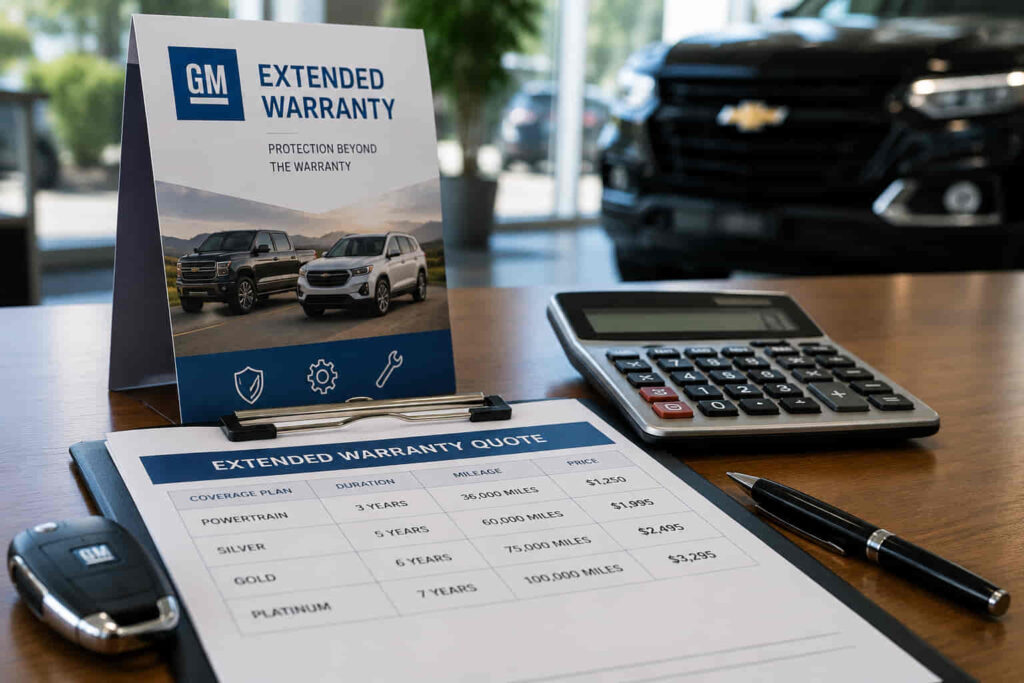
Unexpected vehicle repairs can quickly turn routine ownership into an expensive experience, especially after the factory warranty expires. That is why many Chevrolet, GMC, Buick, and Cadillac owners consider purchasing a GM extended warranty to protect themselves from future repair bills. However, one of the first questions buyers ask is how much a GM Extended Warranty actually costs. Unlike a standard retail product with a fixed price, a GM Protection Plan is customized for each vehicle, meaning two owners may receive completely different quotes even when purchasing coverage from the same dealership.
The total cost of a GM Extended Warranty depends on several variables, including the vehicle model, age, mileage, coverage level, contract length, deductible, and dealership pricing strategy. Understanding these factors helps buyers compare plans more effectively and avoid paying for coverage they may never need. It also makes it easier to determine whether the protection plan provides better long-term value than paying for repairs out of pocket or choosing a third-party vehicle service contract.
This guide explains how much a GM Extended Warranty typically costs, what influences pricing, how GM Protection Plans compare with independent warranty providers, and when purchasing extended coverage makes financial sense. By the end of this article, you will have a clear understanding of the factors that determine warranty pricing and how to choose a plan that matches both your vehicle and your ownership goals.
How Much Does a GM Extended Warranty Cost?
A GM Extended Warranty typically costs between $1,500 and $4,000, although the final price varies according to the vehicle, coverage level, contract length, mileage, deductible, and dealership. Unlike the original factory warranty that is included with a new vehicle, a GM Protection Plan is sold as an optional vehicle service contract. Because every contract is customized, General Motors does not publish a universal price list that applies to every Chevrolet, GMC, Buick, or Cadillac model.
Vehicle type is one of the largest pricing factors. Luxury vehicles such as Cadillac models generally cost more to protect than compact Chevrolet sedans because replacement parts, labor rates, and repair complexity are typically higher. Similarly, trucks and full-size SUVs equipped with advanced towing systems, four-wheel-drive components, or sophisticated electronic technologies often carry higher warranty premiums than smaller passenger vehicles due to their increased repair costs.
Coverage level also plays a significant role in determining the total contract price. Comprehensive plans that protect thousands of mechanical, electrical, and electronic components naturally cost more than limited powertrain coverage because they transfer a greater portion of future repair risk from the vehicle owner to the warranty provider. Longer protection periods and higher mileage limits further increase pricing since the provider assumes responsibility for a greater number of potential repairs over an extended ownership period.
Although online price estimates provide a useful benchmark, they should not be treated as guaranteed quotations. GM dealerships have flexibility in pricing vehicle service contracts, meaning two authorized dealers may offer different prices for identical coverage. For this reason, obtaining multiple quotes before purchasing a GM Protection Plan often allows buyers to identify more competitive pricing without sacrificing factory-backed coverage. Comparing deductible options at the same time can also reduce the overall ownership cost, as a higher deductible generally lowers the upfront contract price while a lower deductible increases the initial investment in exchange for reduced out-of-pocket repair expenses later.
GM Extended Warranty Cost: 10 Things That Affect Pricing
Unexpected vehicle repairs can quickly turn routine ownership into an expensive experience, especially after the factory warranty expires. That is why many Chevrolet, GMC, Buick, and Cadillac owners consider purchasing a GM extended warranty to protect themselves from future repair bills. However, one of the first questions buyers ask is how much a GM Extended Warranty actually costs. Unlike a standard retail product with a fixed price, a GM Protection Plan is customized for each vehicle, meaning two owners may receive completely different quotes even when purchasing coverage from the same dealership.
The total cost of a GM Extended Warranty depends on several variables, including the vehicle model, age, mileage, coverage level, contract length, deductible, and dealership pricing strategy. Understanding these factors helps buyers compare plans more effectively and avoid paying for coverage they may never need. It also makes it easier to determine whether the protection plan provides better long-term value than paying for repairs out of pocket or choosing a third-party vehicle service contract.
This guide explains how much a GM Extended Warranty typically costs, what influences pricing, how GM Protection Plans compare with independent warranty providers, and when purchasing extended coverage makes financial sense. By the end of this article, you will have a clear understanding of the factors that determine warranty pricing and how to choose a plan that matches both your vehicle and your ownership goals.
How Much Does a GM Extended Warranty Cost?
A GM Extended Warranty typically costs between $1,500 and $4,000, although the final price varies according to the vehicle, coverage level, contract length, mileage, deductible, and dealership. Unlike the original factory warranty that is included with a new vehicle, a GM Protection Plan is sold as an optional vehicle service contract. Because every contract is customized, General Motors does not publish a universal price list that applies to every Chevrolet, GMC, Buick, or Cadillac model.
Vehicle type is one of the largest pricing factors. Luxury vehicles such as Cadillac models generally cost more to protect than compact Chevrolet sedans because replacement parts, labor rates, and repair complexity are typically higher. Similarly, trucks and full-size SUVs equipped with advanced towing systems, four-wheel-drive components, or sophisticated electronic technologies often carry higher warranty premiums than smaller passenger vehicles due to their increased repair costs.
Coverage level also plays a significant role in determining the total contract price. Comprehensive plans that protect thousands of mechanical, electrical, and electronic components naturally cost more than limited powertrain coverage because they transfer a greater portion of future repair risk from the vehicle owner to the warranty provider. Longer protection periods and higher mileage limits further increase pricing since the provider assumes responsibility for a greater number of potential repairs over an extended ownership period.
Although online price estimates provide a useful benchmark, they should not be treated as guaranteed quotations. GM dealerships have flexibility in pricing vehicle service contracts, meaning two authorized dealers may offer different prices for identical coverage. For this reason, obtaining multiple quotes before purchasing a GM Protection Plan often allows buyers to identify more competitive pricing without sacrificing factory-backed coverage. Comparing deductible options at the same time can also reduce the overall ownership cost, as a higher deductible generally lowers the upfront contract price while a lower deductible increases the initial investment in exchange for reduced out-of-pocket repair expenses later.
Read more: Does Advance Auto Parts Take Used Oil
What Factors Affect GM Extended Warranty Cost?
Several variables determine the final price of a GM Extended Warranty, which is why two vehicle owners rarely receive the same quote. Every GM Protection Plan is calculated based on the level of financial risk associated with the vehicle and the likelihood of future repair claims. Dealers and warranty administrators evaluate characteristics such as the vehicle’s model, age, mileage, selected coverage, contract duration, and deductible before determining the contract price. Understanding these pricing factors allows buyers to compare quotes more accurately and choose coverage that delivers the best value rather than simply selecting the lowest advertised price.
The vehicle model is one of the most significant cost drivers because repair expenses differ substantially across the General Motors lineup. A Chevrolet Malibu with fewer electronic systems typically costs less to insure than a Cadillac Escalade equipped with advanced driver assistance technologies, air suspension, premium infotainment systems, and sophisticated powertrain components. Likewise, heavy-duty GMC trucks used for towing or commercial purposes generally present greater repair risks than smaller passenger vehicles, resulting in higher warranty premiums.
Vehicle age and accumulated mileage also have a direct impact on warranty pricing. As a vehicle gets older and travels more miles, the probability of component failure increases, raising the expected cost of future repairs. Purchasing a GM Protection Plan while the factory warranty is still active often results in a lower contract price because the vehicle has experienced less wear and has a more predictable maintenance history. Waiting until the original warranty expires may reduce available coverage options and increase the total cost of protection.
Coverage level represents another major pricing factor because each GM Protection Plan includes a different scope of component protection. Comprehensive plans covering thousands of mechanical, electrical, and electronic parts naturally cost more than limited plans that focus primarily on major drivetrain components. The broader the coverage, the greater the financial responsibility assumed by the warranty provider whenever an eligible repair occurs. Buyers should therefore evaluate which vehicle systems are most valuable to protect based on their ownership plans and the complexity of modern automotive technology.
Contract length and mileage limits further influence the overall price because they define how long the warranty provider remains responsible for covered repairs. A contract extending protection for seven years or 100,000 miles generally costs less than one providing eight years or 150,000 miles since the longer agreement exposes the provider to additional repair claims over time. Owners planning to keep their vehicle well beyond the factory warranty often find that selecting an appropriate contract term delivers better long-term financial protection than purchasing the minimum available coverage.
Deductible selection also changes the total contract price. Choosing a higher deductible reduces the upfront cost because the vehicle owner agrees to contribute more whenever a covered repair is performed. Conversely, selecting a zero-dollar or low deductible increases the purchase price but minimizes out-of-pocket expenses during future service visits. The most suitable deductible depends on how frequently the vehicle is driven, the owner’s financial preferences, and the expected likelihood of repair claims throughout the ownership period.
Finally, dealership pricing contributes to noticeable differences in GM Extended Warranty costs. Although the coverage itself is backed by General Motors, participating dealerships often retain flexibility in establishing retail pricing. Promotional discounts, seasonal incentives, financing packages, and regional competition may all influence the final quotation. Obtaining estimates from multiple authorized GM dealerships is therefore one of the most effective strategies for securing competitive pricing without sacrificing genuine factory-backed coverage.
Which GM Protection Plan Costs the Most?
Among the available GM Protection Plans, Platinum Protection is typically the most expensive because it provides the broadest level of coverage. This plan is designed to protect thousands of factory-installed mechanical, electrical, and high-tech components, making it the closest alternative to the original bumper-to-bumper warranty that accompanies many new GM vehicles. Since modern vehicles rely heavily on advanced electronics, sensors, cameras, infotainment systems, and computerized safety technologies, comprehensive protection significantly reduces the financial risk associated with unexpected repairs after the factory warranty expires.
Mid-level protection plans, often marketed under names such as Silver Protection, generally cost less because they exclude selected comfort, convenience, and electronic systems while continuing to cover many essential vehicle components. These plans appeal to owners seeking a balance between purchase price and repair protection. Although they do not provide the same level of coverage as Platinum Protection, they can represent a cost-effective solution for drivers who primarily want protection against common mechanical failures rather than every possible repair scenario.
Powertrain-focused plans are usually the least expensive option because they concentrate on the vehicle’s most essential mechanical components, including the engine, transmission, and drive system. While these contracts protect against some of the most expensive repairs a vehicle can experience, they exclude many electrical, climate control, suspension, infotainment, and convenience features that commonly require service as vehicles age. As a result, lower pricing is accompanied by narrower coverage and greater financial responsibility for repairs that fall outside the contract.
Choosing the most appropriate GM Protection Plan should not depend solely on the purchase price. A less expensive warranty may appear attractive initially but could result in substantially higher repair expenses if critical electronic or comfort-related systems fail during ownership. Conversely, paying for the highest level of coverage may not provide sufficient value for owners who expect to sell or trade in their vehicle before the extended warranty period is fully utilized. Evaluating expected ownership duration, annual mileage, vehicle reliability, and potential repair costs provides a more accurate basis for selecting the protection plan that delivers the strongest overall value rather than simply the lowest premium.
Is a GM Extended Warranty Worth the Cost?
Whether a GM Extended Warranty is worth the cost depends on how long you plan to keep your vehicle, how many miles you drive each year, and your willingness to pay for unexpected repairs out of pocket. For many owners, an extended warranty is less about reducing total ownership costs and more about providing financial predictability. Instead of facing a large repair bill when a major component fails, the owner pays a fixed contract price in exchange for coverage over a defined period.
The value of a GM Protection Plan increases as modern vehicles become more technologically advanced. Today’s Chevrolet, GMC, Buick, and Cadillac models incorporate sophisticated infotainment systems, driver assistance technologies, electronic control modules, adaptive suspension systems, and turbocharged powertrains. While these innovations improve performance and comfort, they also increase repair complexity and replacement costs once the factory warranty expires. A single repair involving electronic modules or advanced safety equipment can cost hundreds or even thousands of dollars, making extended coverage more attractive for owners planning long-term ownership.
Driving habits also influence whether the investment makes financial sense. Owners who accumulate high annual mileage place greater wear on critical components and are more likely to encounter covered mechanical or electrical failures during the life of the vehicle. In contrast, drivers who use their vehicle occasionally and replace it every three or four years may never utilize enough warranty benefits to recover the cost of the contract. Evaluating expected ownership duration rather than simply considering the purchase price provides a more realistic assessment of overall value.
Vehicle reliability should also be considered before purchasing extended coverage. Some GM models have established records of dependable long-term performance with relatively low repair frequency, while others contain more complex powertrains or electronic systems that may generate higher maintenance expenses as mileage increases. Reviewing long-term reliability trends alongside expected repair costs helps determine whether transferring repair risk to the warranty provider is financially justified.
Another advantage of a factory-backed GM Protection Plan is the confidence it provides throughout vehicle ownership. Covered repairs are performed by authorized GM dealerships using trained technicians and genuine GM parts, helping maintain factory repair standards and simplifying the claims process. For owners who prioritize convenience, nationwide dealership support, and predictable maintenance expenses, these non-financial benefits often contribute as much value as the repair coverage itself.
Ultimately, a GM Extended Warranty should be evaluated as a form of risk management rather than a guaranteed method of saving money. Some owners may never file a claim, while others could recover the full contract value through one or two major repairs. The decision is most beneficial when coverage aligns with the vehicle’s expected lifespan, anticipated repair exposure, and the owner’s long-term financial priorities.
How Does GM Extended Warranty Compare to Third-Party Warranties?
A GM Extended Warranty differs from third-party extended warranty providers primarily in terms of coverage administration, repair authorization, and manufacturer integration. The GM Protection Plan is backed by General Motors and designed specifically for GM vehicles, allowing covered repairs to be completed at authorized GM dealerships using factory-trained technicians and genuine OEM parts. This direct relationship with the manufacturer often creates a more seamless ownership experience because repair procedures, replacement components, and service documentation follow GM’s established standards.
Third-party warranty companies such as Endurance, CARCHEX, and CarShield generally offer greater flexibility in plan design and pricing. Their contracts may cover vehicles from multiple manufacturers, including older or higher-mileage models that no longer qualify for certain manufacturer-backed protection plans. This broader eligibility makes third-party warranties attractive for owners who purchase used vehicles or missed the opportunity to buy a GM Protection Plan while their factory warranty remained active.
Pricing is another area where significant differences exist. Manufacturer-backed warranties often command a higher purchase price because they emphasize OEM repair quality, dealership service, and comprehensive factory support. Third-party providers may advertise lower introductory pricing or more flexible payment options, but coverage details, claim procedures, exclusions, and reimbursement policies vary considerably between companies. Comparing contract terms rather than focusing exclusively on price is essential because two warranties with similar premiums may provide substantially different levels of protection.
Repair network accessibility also affects the ownership experience. A GM Protection Plan is primarily intended for repairs performed within the authorized GM dealership network, ensuring technicians have direct access to manufacturer service information, specialized diagnostic equipment, and original replacement parts. Third-party providers frequently allow repairs at a wider range of licensed repair facilities, which can improve convenience for some owners but may also introduce differences in claims approval procedures depending on the warranty administrator.
Contract flexibility is another important distinction. Many third-party providers offer customizable contract lengths, deductible options, and coverage levels that accommodate a broader variety of ownership situations. GM Protection Plans, on the other hand, are specifically structured around GM vehicles and are intended to complement the manufacturer’s existing warranty program. Owners seeking factory-backed protection often value this consistency, while buyers prioritizing lower premiums or extended eligibility may prefer an independent warranty provider.
The best choice depends on individual priorities rather than price alone. Owners who value factory-authorized repairs, OEM parts, nationwide dealership support, and seamless integration with General Motors service operations often find the GM Protection Plan offers greater peace of mind. Those looking for lower upfront costs, flexible eligibility requirements, or protection for older vehicles may discover that a reputable third-party warranty provides a better balance between affordability and coverage. Comparing the total cost, covered components, exclusions, deductible structure, and claims process before signing any contract remains the most effective way to determine which option delivers the highest long-term value.
How Can You Save Money on a GM Extended Warranty?
Although a GM Extended Warranty is a valuable investment for many vehicle owners, paying the first quoted price is not always necessary. The cost of a GM Protection Plan can vary between authorized dealerships, contract options, and purchasing periods, giving buyers several opportunities to reduce the overall expense without sacrificing factory-backed coverage. Understanding when and how to purchase the plan is often just as important as selecting the appropriate level of protection.
One of the most effective ways to lower the cost is to purchase the GM Protection Plan before the original factory warranty expires. Vehicles that remain within their factory warranty period generally represent lower financial risk because they have accumulated fewer miles and have a documented maintenance history. As a result, warranty providers frequently offer more favorable pricing and broader coverage options than they do for older vehicles that have already exceeded the manufacturer’s warranty limits.
Comparing quotes from multiple authorized GM dealerships is another practical strategy. Although the protection plan is backed by General Motors, dealerships often have flexibility in determining the retail selling price of vehicle service contracts. Some dealers offer seasonal promotions, financing incentives, or discounted warranty pricing to attract customers, while others maintain higher margins. Requesting several quotes allows buyers to identify competitive pricing while receiving identical factory-supported coverage.
Choosing an appropriate deductible can also influence the total contract cost. A higher deductible generally lowers the purchase price because the owner agrees to contribute more toward each covered repair. Conversely, selecting a lower deductible increases the upfront investment but minimizes future out-of-pocket expenses whenever warranty claims are approved. Evaluating expected repair frequency, annual mileage, and personal budgeting preferences helps determine which deductible structure provides the greatest long-term value.
Selecting coverage that matches actual ownership plans is equally important. Purchasing the highest level of protection may appear reassuring, but owners who intend to sell or trade in their vehicle within a few years may never fully utilize an extended eight-year contract with maximum mileage limits. Likewise, drivers who plan to keep their vehicle well beyond 100,000 miles often benefit from broader protection because repair exposure increases as components continue to age. Matching the contract length and coverage level to expected ownership prevents paying for benefits that are unlikely to be used.
Finally, buyers should carefully review every contract before signing rather than focusing exclusively on the purchase price. Coverage exclusions, deductible terms, cancellation policies, transferability, roadside assistance, rental vehicle reimbursement, and claim procedures all contribute to the overall value of a GM Protection Plan. A warranty with a slightly higher purchase price may ultimately provide better financial protection if it includes broader component coverage and a smoother claims experience throughout the ownership period.
Frequently Asked Questions
A common question is whether a GM Extended Warranty can be transferred to a new owner. In many cases, GM Protection Plans are transferable when specific eligibility requirements are satisfied. Transferable coverage may increase the resale value of a vehicle because prospective buyers gain additional confidence knowing factory-backed protection remains in effect. Owners should review the contract terms to understand applicable transfer fees, deadlines, and administrative requirements.
Another frequently asked question concerns whether the warranty can be purchased after the factory warranty expires. Eligibility depends on the condition of the vehicle, its age, mileage, and the specific GM Protection Plan being considered. While certain vehicles may still qualify for extended coverage after the original warranty has ended, delaying the purchase often reduces available plan options and may increase the overall contract cost. Purchasing coverage earlier generally provides greater flexibility and more competitive pricing.
Many buyers also ask whether GM offers financing or monthly payment options for an extended warranty. Payment availability varies by dealership, and some authorized GM dealers allow customers to finance the cost of the protection plan as part of the vehicle purchase or through separate payment arrangements. Financing can make the initial investment more manageable, although buyers should consider any applicable interest charges when comparing the total cost of ownership.
Cancellation policies are another important consideration. Most GM Protection Plans include cancellation provisions that allow owners to terminate the contract under specific conditions. Depending on when the cancellation occurs and whether claims have already been paid, the owner may receive either a full refund or a prorated refund according to the contract terms. Understanding these conditions before purchasing helps prevent misunderstandings if ownership circumstances change.
Vehicle owners also frequently ask whether a GM Extended Warranty covers electrical and electronic components. The answer depends on the selected coverage level. Comprehensive plans such as Platinum Protection generally include a much broader range of electrical systems, infotainment equipment, driver assistance technologies, and electronic control modules than entry-level powertrain plans. Reviewing the contract’s list of covered components remains the most reliable way to determine whether specific systems are protected.
Choosing a GM Extended Warranty ultimately requires balancing purchase price, expected ownership period, vehicle reliability, and potential repair expenses. Rather than viewing the contract simply as an added cost, owners should evaluate it as a long-term strategy for managing repair risk. Comparing multiple dealership quotes, understanding coverage details, and selecting a plan that reflects real driving habits will help ensure the investment delivers meaningful financial protection throughout the life of the vehicle.